Bekomm eine E-Mail, wenn Joe in einem Podcast zu Gast istPodAppear prüft neue Folgen, sobald sie erscheinen, und lässt die weg, in denen Joe nur erwähnt wird. Bis zu 15 Personen kostenlos, ohne Kreditkarte.Bis zu 15 Personen kostenlos, ohne Kreditkarte.
The UK is headed for another energy crisis. The war in Iran has choked energy markets and will be felt as another hit for inflation weary consumers and for the UK's beleagured economy.
What should government do now? And how can it act to make sure that it doesn't waste the crisis?
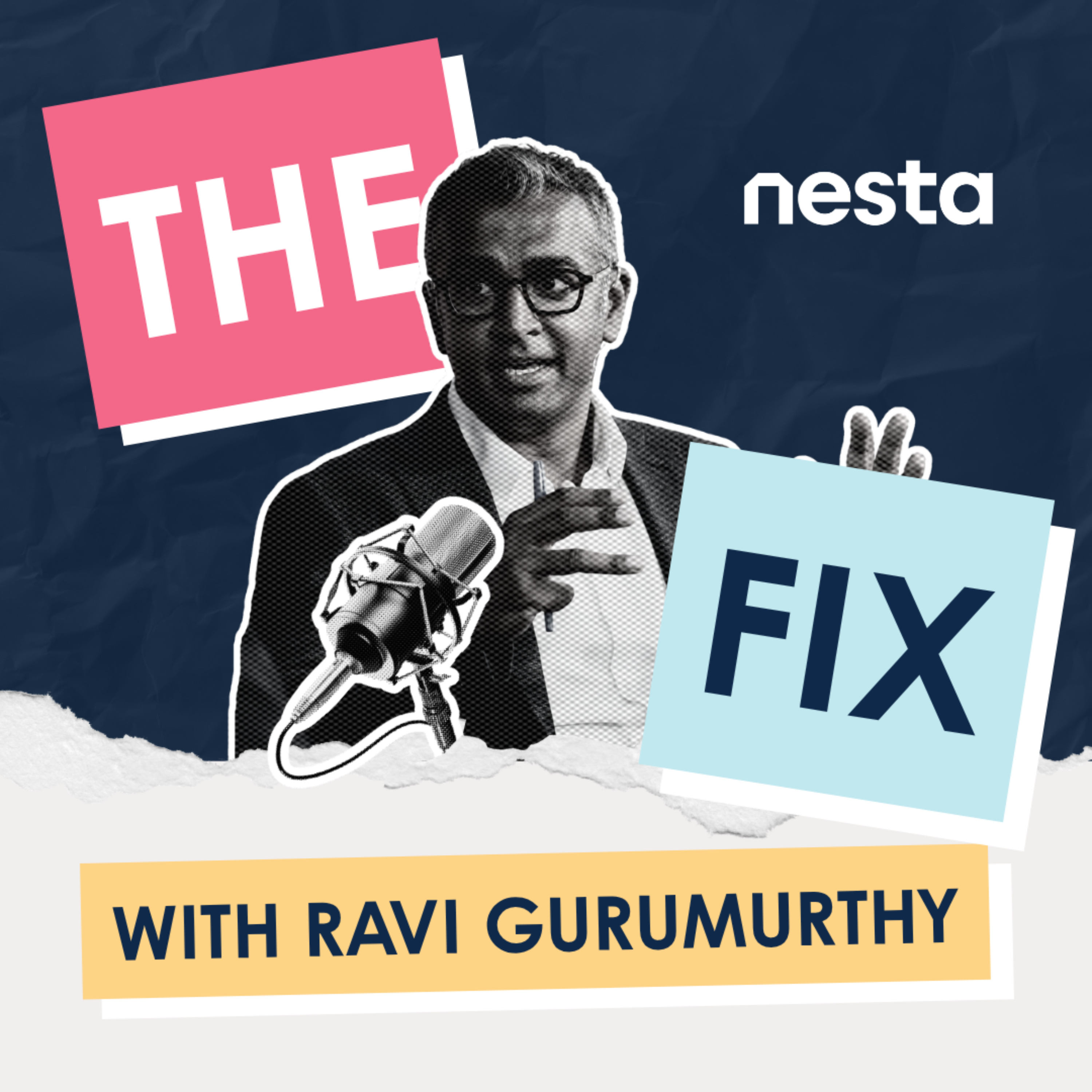
In this episode of Policy Fix, host Joe Owen sits down with Nesta CEO Ravi Gurumurthy and director of Nesta's sustainable future mission, Madeleine Gabriel to untangle the acute effects of this latest energy shock from more long running challenges in the UK's energy economy.
They explore:
Why the UK is so exposed to energy shocks
How this crisis differs from the gas spike caused by the invasion by Russia of Ukraine
What the government should and shouldn't do to support consumers on rising bills
How to make electricity cheaper
What do to about North Sea Oil
How to run a massive energy saving campaign
If you're interested or work in energy policy, climate change, or economics, this episode is essential listening.
Nesta is a politically impartial research and innovation charity designing, testing, and scaling solutions to society's biggest problems. Subscribe wherever you listen to podcasts.
CHAPTERS
00:00 Introduction and teaser
01:11 Welcome and episode overview
02:30 How the war in Iran is affecting energy markets
03:57 Is the UK more exposed than other countries?
04:35 How this crisis compares to the 2022 Ukraine gas spike
07:00 Lessons from 2022: what should government do now?
09:42 When and how should government intervene?
13:05 Supporting households: targeted vs general subsidies
16:27 Turbocharging electrification through the crisis
22:16 Making the electricity-to-gas price ratio work
23:26 How to pay for it all
25:19 The North Sea oil debate
29:17 What households can do for themselves
32:08 The case for a national energy-saving campaign
33:43 The politics of decarbonisation
37:11 Closing thoughts: what should Keir Starmer prioritise?
One in five children aged 3–5 already owns a smartphone and 95% of 13–15 year-olds have a social media profile. Is the UK's Online Safety Act failing to protect them and is a blanket ban on social media the answer?
In this episode of Policy Fix, host Joe Owen sits down with Tony Curzon Price, economist and policy fellow at Nesta, and Hannah Perry, Director at Demos, to untangle one of the most urgent policy debates of our time: how do we regulate social media for children without doing more harm than good?
They explore:
Why the Online Safety Act has 'barely touched the sides' and what went wrong
The evidence base for social media harm, from Jonathan Haidt's correlations to natural experiments tracking Facebook's campus rollout
Why Australia's age-based ban may push kids toward riskier, less regulated spaces
The case for product regulation - treating social media like a dangerous car that should be made safer, rather than trying to ban driving
Tony's bold proposal: a BBC Club Kids social network, launched by 2028
Hannah's vision for community-rooted digital spaces and epistemic sovereignty
What the government consultation should actually deliver, including bringing AI chatbots inside the scope of the Online Safety Act
If you work in policy, edtech, child welfare, or digital regulation or if you're a parent trying to make sense of a system that feels broken this episode is essential listening. Note that this episode was recorded before the recent judgement against Meta and YouTube in the US.
Nesta is a politically impartial research and innovation charity designing, testing, and scaling solutions to society's biggest problems. Subscribe wherever you listen to podcasts.
Episode Chapters
00:00 What’s coming up: "A full-time job for parents": the social media treadmill
01:09 Welcome to Policy Fix. Introducing Joe, Tony Curzon Price & Hannah Perry
02:01 Setting the scene: is this a moral panic, or something genuinely different?
03:43 The stats: 1 in 5 toddlers has a phone; 95% of teens on social media
04:03 Evidence of harm. Child deaths, compulsive scrolling & displaced real-world activity
05:01 The causality debate: what Jonathan Haidt's research actually shows
06:30 The Facebook campus study — a natural experiment pointing to causality
07:33 The willingness-to-pay study: users know they're trapped and want out
08:25 How did we get here? The attention-harvesting business model explained
10:13 The algorithm arms race. Sarah Wynn-Williams and the Facebook whistleblower revelations
11:26 From Father Coughlin to Facebook: what radio history tells us about regulating media
13:23 Why the Online Safety Act has barely touched the sides
15:35 Why has this crisis bubbled back up the agenda now?
17:43 Should we ban social media for children? Tony makes the case against
19:05 The upside of social media why a blanket ban risks throwing the baby out with the bathwater
21:16 Hannah on the ban: 50% of parents would evade it, and it breaks trust with kids
23:34 Are "cuter" regulatory solutions also doomed to fail?
23:50 Tony's alternative: a public service construction of a good platform
26:44 Hannah's vision. BBC charter renewal, epistemic sovereignty & community digital spaces
29:31 What should the BBC practically do in the upcoming charter renewal?
32:26 The wider policy toolkit: no silver bullet, but an array of solutions
34:45 Tony on family-level solutions, network monitoring without surveillance
37:53 Australia's ban evaluation: is it reducing family conflict?
38:22 The BBC's new role in media literacy and cultural norm shift
39:05 What to watch for after the consultation closes
39:27 Hannah's ask: include AI chatbots in the Online Safety Act
40:08 Tony's ask: the BBC must become the platform, not feed it
41:52 One thing for Keir Starmer. Tony on cyberspace experimentation
42:49 Hannah's closing call: strengthen the Online Safety Act with safety-by-design
43:14 Sign-off
42 minAbspielen in:
Warum PodAppear
Folge Menschen, nicht Podcasts.
Du hast Joe in einer Sendung gehört. PodAppear findet für dich die nächste, und genauso für alle anderen, die du hören willst.
Eine Meldung, wenn die Person zu Gast istPer E-Mail: sofort oder gebündelt als Tages- oder Wochenübersicht. Dann nur noch auf Play drücken.
Gäste statt bloßer ErwähnungenFolgen, in denen ein Name nur fällt, landen getrennt. Eine Meldung heißt: Die Person ist wirklich in der Sendung.
Alle in einem FeedGründerinnen, Autoren, Sportler, Forscherinnen. Folge allen mit Namen, quer durch jede Sendung, in der sie auftreten.