Bekomm eine E-Mail, wenn Joe in einem Podcast zu Gast istPodAppear prüft neue Folgen, sobald sie erscheinen, und lässt die weg, in denen Joe nur erwähnt wird. Bis zu 15 Personen kostenlos, ohne Kreditkarte.Bis zu 15 Personen kostenlos, ohne Kreditkarte.
Psychedelics Today co-founders Joe Moore and Kyle Buller look back on the first Vital Conference, held November 6 to 10, 2026, in Breckenridge, Colorado.
In this episode, Joe and Kyle talk about what happened at the conference, the hands on music workshop that ran alongside it, the launch of Vital 6 and the new Vital Core course, and how Vital differs from the licensed facilitator training tracks in Oregon and Colorado.
Vital 6 begins April 19, 2027. Applications are open at vitalpsychedelictraining.com.
Recorded November 24, 2026.
Denver mushroom decriminalization changed the national conversation around psilocybin access, personal use, and grassroots psychedelic reform. In this episode of Psychedelics Today, Joe Moore speaks with Travis Tyler Fluck, an autognostic mycologist, educator, activist, end-of-life doula, and longtime Colorado mushroom community organizer.
Fluck was involved in Denver's 2019 psilocybin campaign, which made adult personal use and possession of psilocybin mushrooms the city's lowest law enforcement priority. The campaign passed by a narrow margin and helped open the door for later reforms in Oakland, Washington, D.C., Oregon, Colorado, and beyond.
This conversation looks at the people, ethics, and tensions behind Denver mushroom decriminalization. It also explores what happens after a law changes: how communities educate themselves, how personal use spaces develop, and how grassroots access fits alongside regulated psychedelic services.
Aspen Psychedelic Symposium is the focus of this conversation with Martha Hammel of the Aspen Psychedelic Resource Center and Tasia Poinsatte of Healing Advocacy Fund. They join Joe Moore to discuss this year's symposium, how it fits into Colorado's evolving natural medicine landscape, and why Aspen has become a strong setting for serious public conversations about psychedelics.
Hammel explains that the symposium is now in its third year and is designed to bring major psychedelic voices to Colorado's West Slope. She also outlines the local roots of the Aspen Psychedelic Resource Center, which grew out of education and outreach work around decriminalization and the Natural Medicine Health Act. Poinsatte describes Healing Advocacy Fund's broader role across Oregon, Colorado, and New Mexico, where the group works on safe access, implementation, affordability, and public education.
Seeing What Is There is at the center of this conversation with journalist and author Erica Rex, who joins Joe Moore to discuss her book Seeing What Is There: My Search for Sanity in the Psychedelic Era. Rex brings an unusual mix of personal experience and scientific rigor. She came to psychedelic medicine after breast cancer, participation in Roland Griffiths' clinical trial for cancer-related depression, and a long career in journalism covering science, nature, climate, and technology.
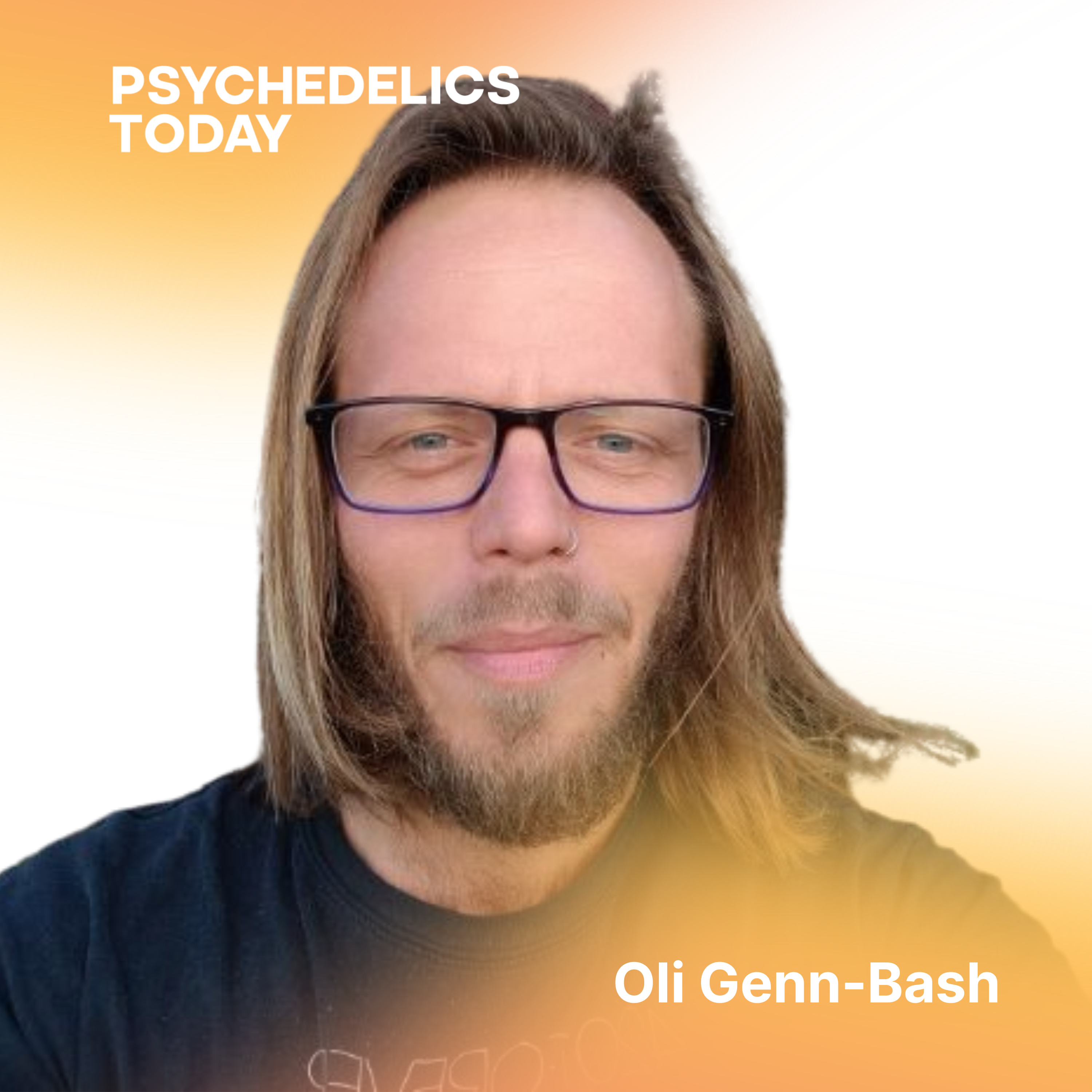
Oli Genn-Bash (Brighton, UK) joins Joe Moore for a grounded conversation on the boom in functional mushrooms and why the category may be moving too quickly. As the founder of The Fungi Consultant, Oli works with consumers and brands to demystify functional mushrooms, with a focus on education, traceability, and realistic expectations.
The conversation begins with a critique of wellness hype cycles. Oli explains how consumer desperation for help with anxiety, sleep, stress, and cognition can create an opening for a rapid wave of products that are not always grounded in careful sourcing or clear science. Using lion's mane as a case study, he contrasts popular cognitive claims with traditional use, arguing that the most useful path forward is to slow down, get more literate about mechanisms, and build a market that can sustain trust over time.
Systems and Culture
Oli describes how individual health is inseparable from community realities, including food access, class dynamics, and what wellness advice can sound like when it lands from a place of privilege. They discuss mycelial thinking as a practical framework for collaboration and resource-sharing, and why mushrooms tend to attract unusually generous "teach everyone" communities.
They also explore the role of mushrooms in meaning-making and consciousness. Oli shares personal reflections on mushrooms as allies, the felt sense of "agency" in psychedelic experiences, and how those experiences can encourage behavioral change without forcing it. The conversation touches on alcohol culture in the UK and the possibility of non-alcoholic alternatives, including how functional mushrooms, microdosing, and other botanicals can support social confidence and energy for some people.
Finally, they look ahead at fungal innovation beyond supplements: materials, soil health, regenerative approaches, bioremediation, and what the broader psychedelic movement might learn from fungi's patience, symbiosis, and balance.
Key themes and takeaways
1) Why functional mushrooms feel "too fast" right now
Oli argues that functional mushrooms have accelerated into a high-pressure wellness marketplace, with brands rushing products to market and consumers struggling to determine what is legitimate, traceable, and effective. He draws parallels to the UK CBD market, describing how oversaturation and inconsistent quality can erode trust and collapse prices.
2) Lion's mane, tradition, and mechanism
Lion's mane is a useful example of how modern marketing can outrun nuance. Oli notes the gap between popular cognitive claims and traditional use, and points toward the gut-brain axis as one plausible bridge that requires more careful explanation and patience.
3) "Functional mushrooms" as a frame
Oli prefers the term functional mushrooms over medicinal mushrooms, emphasizing systems-level support rather than a pharmaceutical model. He describes a view of health that starts on the cellular level and asks what supports function, resilience, and prevention.
4) Health is individual and collective
Oli speaks candidly about barriers to wellness in the UK, including food poverty, access to education about cooking, and how class dynamics shape what health messaging sounds like. The broader point is structural: it is difficult to talk about supplements without considering the baseline conditions of daily life.
5) Mycelial thinking, futures work, and collaboration
The conversation highlights "mycelial thinking" as more than a metaphor. Oli describes collaborations in futures-oriented communities and how fungal logic can inform collaboration, non-zero-sum outcomes, and resource sharing.
6) Mushroom culture and the instinct to share
Joe notes how strikingly generous mushroom communities can be, especially around cultivation and identification. Oli agrees and adds a provocative angle: the possibility of "agency" in fungi and a sense that mushrooms invite humans into relationship, curiosity, and participation.
7) Alcohol culture and alternatives
Oli reflects on nearly three years without alcohol and describes how functional mushrooms and other botanicals can support mood, energy, and social confidence for some people. They also discuss the realities of events culture, including the need for more inclusive non-alcoholic options and sensitivity to addiction histories.
8) The next 10 years of fungi
They look at the expansion of fungi into materials, fashion, regenerative agriculture, soil health, and bioremediation. Oli emphasizes balance: fungal innovations are promising, but scaling and real-world constraints matter.
9) What the psychedelic movement can learn from fungi
Oli critiques extractive, capital-driven dynamics in the psychedelic ecosystem and suggests fungi offer a different ethic: patience, humility, symbiosis, and realism about parasitism and imbalance.
1 h 15 minAbspielen in:
Warum PodAppear
Folge Menschen, nicht Podcasts.
Du hast Joe in einer Sendung gehört. PodAppear findet für dich die nächste, und genauso für alle anderen, die du hören willst.
Eine Meldung, wenn die Person zu Gast istPer E-Mail: sofort oder gebündelt als Tages- oder Wochenübersicht. Dann nur noch auf Play drücken.
Gäste statt bloßer ErwähnungenFolgen, in denen ein Name nur fällt, landen getrennt. Eine Meldung heißt: Die Person ist wirklich in der Sendung.
Alle in einem FeedGründerinnen, Autoren, Sportler, Forscherinnen. Folge allen mit Namen, quer durch jede Sendung, in der sie auftreten.