Get an email when Jane is a guest on a podcastPodAppear checks new episodes as they come out and leaves out the ones that only mention Jane. Free for up to 15 people, no card needed.Free for up to 15 people, no card needed.
As part of Voices of British Ballet’s Reflections series Jane Pritchard, former curator of Dance at the Victoria and Albert Museum, talks to Patricia Linton, founder and director of Voices of British Ballet, about the Russian ballerina and teacher, Serafina Asatfieva.
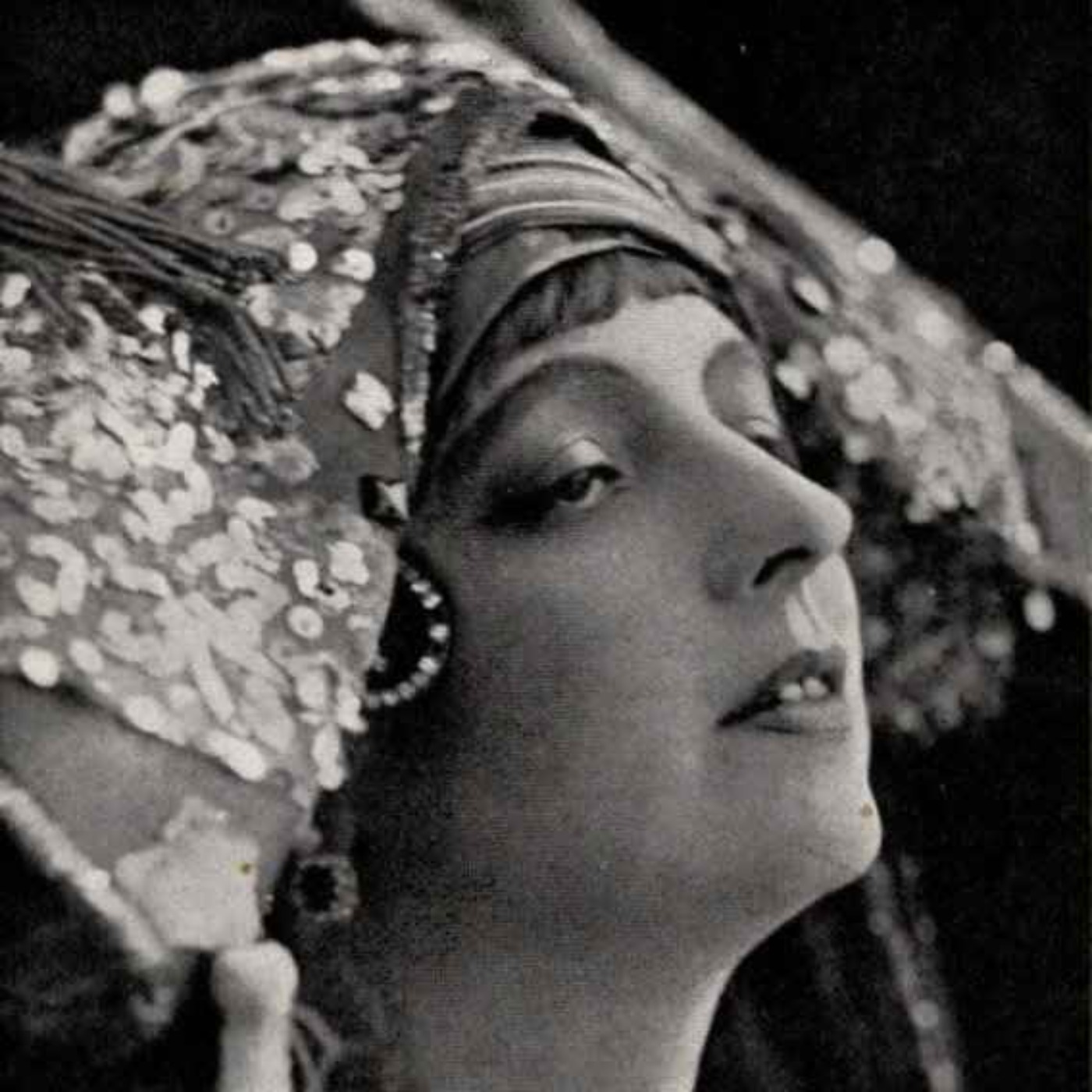
Born in St Petersburg in 1876, Serafina Astafieva became an important teacher in London in the early years of the 20th century. She ran a school on the King’s Road in Chelsea. Her pupils included Anton Dolin, Alicia Markova and Margot Fonteyn.
Reflections is a collection of personal responses to the topics and ideas that our archives highlight. These illuminating recordings sit alongside the Grace Notes section of our website. Grace Notes is a nod to the musical practice of embellishment, and also to British composer Arthur Bliss, who used the words to describe his “Grace Notes on Ballet” in Peter Noble’s 1949 book, British Ballet.
Dancers spend their careers engaging with the ideas of choreographers. Thus, having a colourful and enriched perspective on the world around them is essential. Ballet does not live in a bubble. These embellishments, both written on our website, and recorded in this special Reflections series, show the wider social and artistic context from which ballet springs and within which it thrives.
Hosted on Acast. See acast.com/privacy for more information.
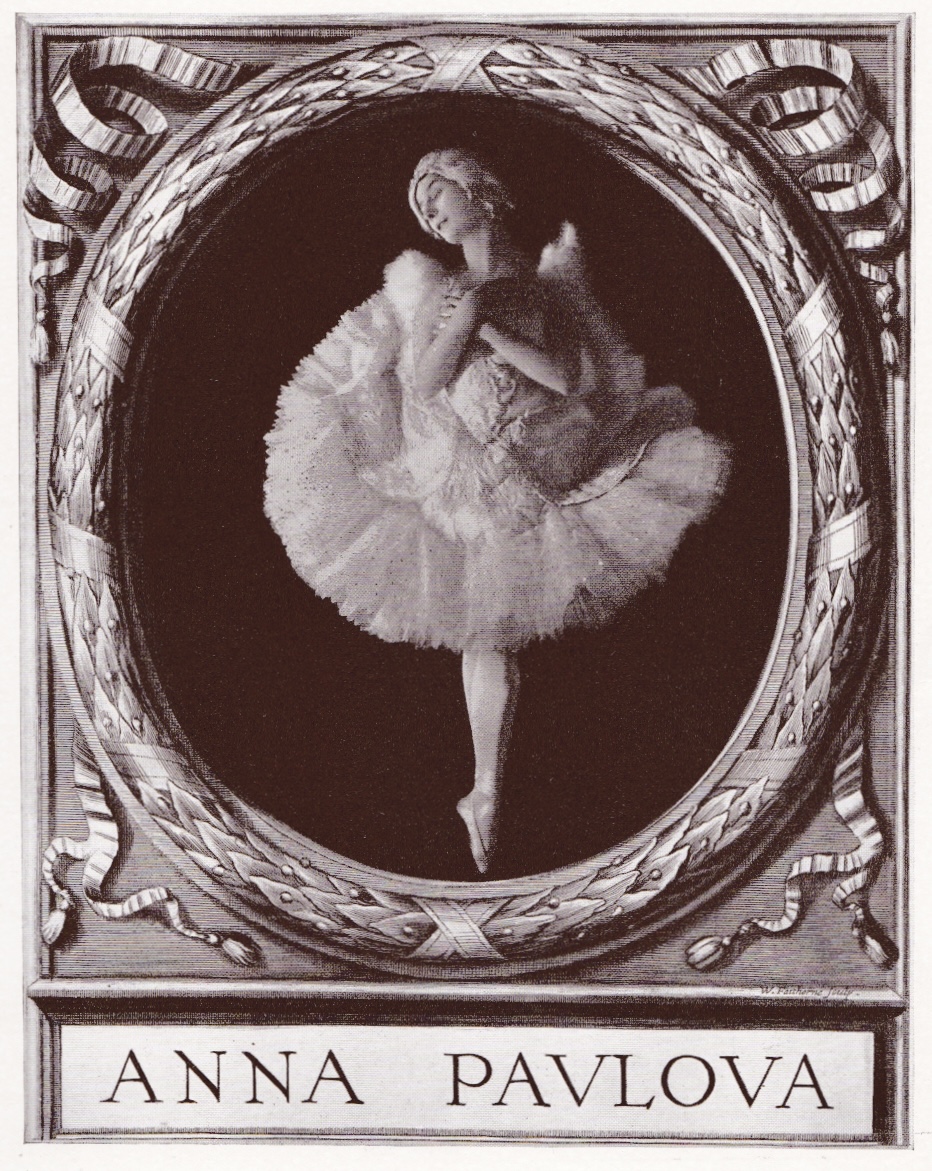
As part of Voices of British Ballet’s Reflections series Jane Pritchard, curator of Dance at the Victoria and Albert Museum, talks to Patricia Linton, founder and director of Voices of British Ballet, about the Russian ballerina Anna Pavlova and her influence on Frederick Ashton.
Anna Pavlova is one of the few names in ballet whose fame was worldwide and enduring. Apart from her unrivalled quality as a dancer, in her later years she did more than any of her contemporaries to bring ballet to audiences all over the world, often to audiences with no previous experience of the artform.
Born in St Petersburg in 1881, Pavlova entered the Imperial Ballet School in 1891 after being inspired by a performance of The Sleeping Beauty at the Maryinsky Theatre in 1890. Her teachers included Pavel Gerdt, Christian Johansson and, later, Enrico Cecchetti. In 1897 she first danced on the Maryinsky stage, and graduated in 1899 in False Dryads, a ballet arranged by Gerdt. She danced Giselle in 1903, Princess Aurora in 1908 and Nikiya (from Marius Petipa’s La Bayadère) in 1909. She was accorded ballerina status in 1906, the year when she also danced in Moscow and began a famous and long-lasting partnership with Mikhail Mordkin. In 1907, she created Armida in Mikhail Fokine’s Le Pavillon d’Armide, and in the same year he created on her Pavlova’s famous Dying Swan solo, with which she became indissolubly linked. In all she danced 18 major roles on the Maryinsky stage on which she also appeared with Vaslav Nijinksy in Les Sylphides.
Pavlova began touring abroad in 1908, partnered first by Adolph Bolm and then by Nicholas Legat. In 1909 she was Serge Diaghilev’s first ballerina for his Ballets Russes in Paris. She made her debuts in London and New York in 1910, and in 1912 she bought Ivy House in London, which became her permanent home.
The ballerina made her final Russian appearance in June 1914. She then formed her own company, consisting mainly of British dancers. She was sympathetic to the work of Fokine and had danced in several of Diaghilev’s early seasons, but after leaving Russia she preferred the autonomy of her own company, using her own repertoire and conforming to her tastes. For some this could seem mediocre and unexciting, but Pavlova had triumphant success all over the world, and she inspired many people with a love and enthusiasm for ballet, including notably the young Frederick Ashton, when she came to perform in Lima, Peru, where he was living as a schoolboy.
Anna Pavlova married Victor Dandré in 1914, who outlived her. She died in Holland in 1931.
Reflections is a collection of personal responses to the topics and ideas that our archives highlight. These illuminating recordings sit alongside the Grace Notes section of our website. Grace Notes is a nod to the musical practice of embellishment, and also to British composer Arthur Bliss, who used the words to describe his “Grace Notes on Ballet” in Peter Noble’s 1949 book, British Ballet.
Dancers spend their careers engaging with the ideas of choreographers. Thus, having a colourful and enriched perspective on the world around them is essential. Ballet does not live in a bubble. These embellishments, both written on our website, and recorded in this special Reflections series, show the wider social and artistic context from which ballet springs and within which it thrives.
Hosted on Acast. See acast.com/privacy for more information.
In this interview with Patricia Linton, founder and director of Voices of British Ballet, Barbara Vernon illustrates that it is not all plain sailing out of the mainstream of the ballet world and gives a glimpse of a different sort of struggle, where dedication and belief are not quite enough – especially without funds. The interview, which was recorded in 2003, is introduced by the dance historian Jane Pritchard.
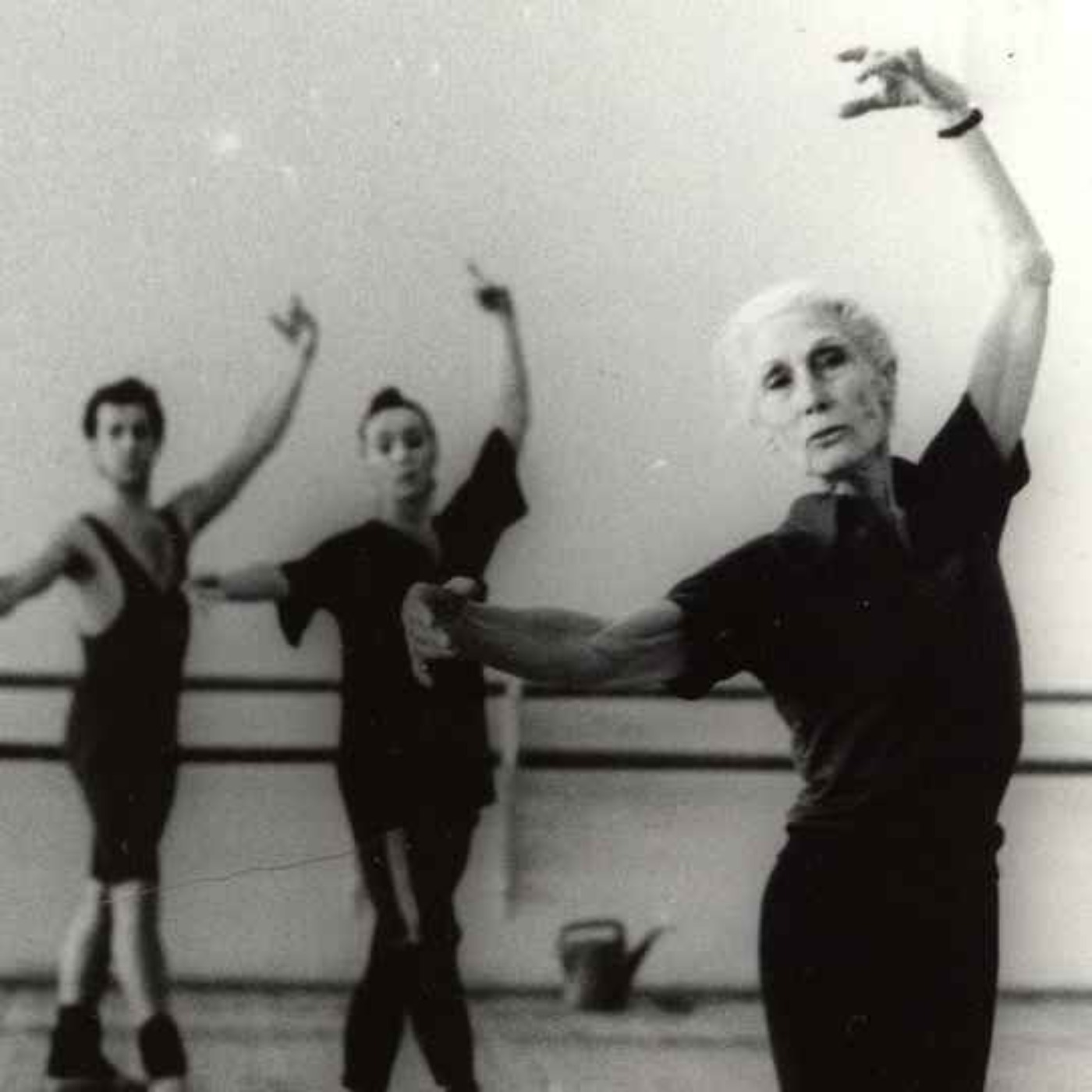
Born in 1918, Barbara Vernon’s mother was aware that she was an artistic child and supported her in her endeavours. Her first ballet classes were in Birmingham, where she trained in the syllabus as set by the Royal Academy of Dance (RAD). From the age of 16, she danced with various small groups, but it was whilst performing in pantomime at the Gaiety Theatre in Dublin that her future life was set. There, she heard about the teaching of a Russian émigré ballet master, Nicholas Legat. When back in London in 1936, she joined his classes at 46, Colet Gardens. Legat died the following year, and Vernon then found her way to Léonide Massine’s studio in Monte Carlo, where she learnt a wonderful variety of repertoire.
These two momentous happenings – the teaching of Legat and the repertoire of Massine – were to shape and inform the whole of Vernon’s future life. During World War Two, she danced with various companies, including Mona Inglesby’s International Ballet, and the Anglo-Polish Ballet. It was whilst she was in the latter company that she met John Gregory, the multi-talented actor, artist, dancer and writer, John Gregory. The couple married in 1945 and later had two children together. In 1949 the pair created the School of Russian Classical Ballet in Chelsea, which developed into the Harlequin Ballet ten years later. This little group took ballet to the people for the following decade. From that time onwards they taught, lectured and wrote, and in 1995 the couple inaugurated the Legat Foundation. John Gregory died in 1996, and Barbara Vernon in 2007
Hosted on Acast. See acast.com/privacy for more information.
What agony to hear this gorgeous, beguiling woman lament the lack of interest she feels was shown to her generation in passing on their knowledge and experience to the next. Irina Baronova’s no nonsense approach is mysteriously interwoven with intuitive artistry – we could expect no less from one of the original “Baby Ballerinas” of the Ballet Russe de Monte Carlo. In this interview, recorded in 2006, Irina Baronova is interviewed by Patricia Linton, founder and director of Voices of British Ballet. The interview is introduced by Jane Pritchard of the V&A.
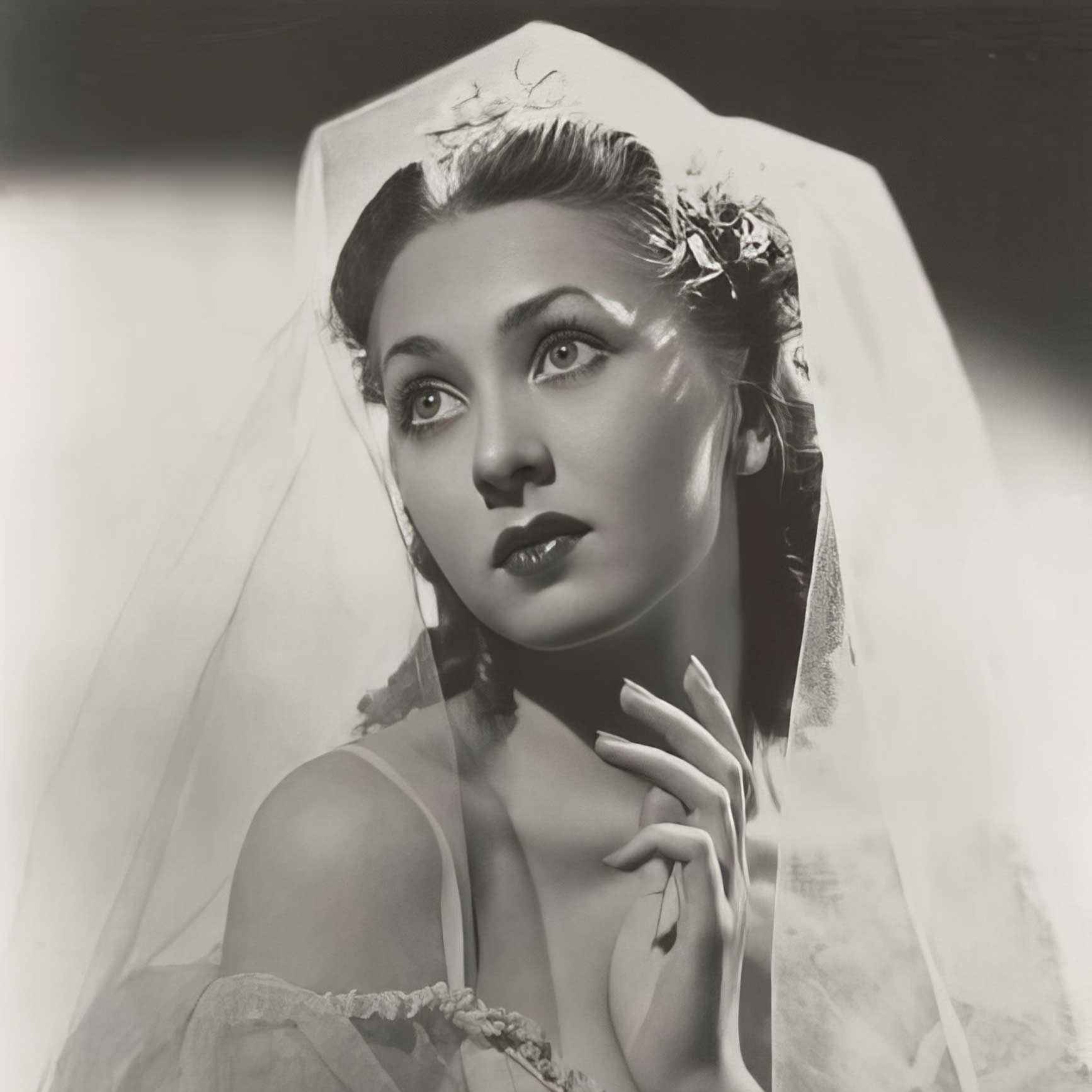
Irina Baronova was a Russian-born ballerina and actress, known as one of the “Baby ballerinas” of the Ballet Russe de Monte Carlo. She was born in Petrograd in 1919. Her father, Mikhail Baronov, was a lieutenant in the Imperial Navy, and in 1920 he and his family had to flee the country following the Russian Revolution. They crossed the border into Romania disguised as peasants and eventually settled in Bucharest. They had no money in a foreign country where they did not know or speak the language. Baronov eventually found a job at a factory, and the family spent the following years living in the city slums.
At the age of seven, Baronova began taking her first ballet classes when her mother (who was a ballet enthusiast) found her a teacher, Madame Majaiska, a former corps de ballet member of the Imperial Russian Ballet. She was also a refugee from Russia and so conducted Baronova’s classes in the kitchen of her one-bedroom house, using the kitchen table as a barre. To provide Irina with professional training, the family moved to Paris when she was ten years old, where she was taught by Olga Preobrajenska and Mathilde Kschessinska. In 1930, at the age of 11, Baronova made her debut at the Paris Opéra. The catalyst for her career came in 1932, just before her 13th birthday, when George Balanchine engaged her for the Ballet Russe de Monte Carlo, along with the equally youthful Tamara Toumanova and Tatiana Riabouchinska. The English critic Arnold Haskell dubbed this illustrious trio the “Baby Ballerinas”.
Baronova was 14 when she was given her first principal role, as Odette in Act II of Swan Lake, in which she was partnered by Anton Dolin. At the age of 17, she eloped with an older Russian man, German (Jerry) Sevastianov, in order to get married. Their marriage came two years later, in 1938, with a ceremony in Sydney, Australia. Baronova then joined Ballet Theatre (now American Ballet Theatre) in the United States of America, subsequently divorcing Sevastianov. In 1946, in the United Kingdon, she met the theatrical agent Cecil Tennant who asked her to marry him, which she did, retiring from her career in ballet at the age of 27.
Between 1940 and 1951, Baronova appeared in several films, including Ealing Studio’s Train of Events (1949). Much later she worked as ballet mistress on the 1980 Hollywood film Nijinsky. During her marriage to Tennant, she gave birth to three children: Victoria, Irina and Robert. In 1967, Tennant was killed in a car accident, and Baronova subsequently moved to Switzerland. She then resumed her marriage with her first husband, Sevastianov, who died in 1974. Baronova then began teaching master classes in the UK and the USA. In 1986 she staged Mikhail Fokine’s Les Sylphides for The Australian Ballet, and in 1992 returned to Russia to help the Maryinsky Theatre with an archival project. In 1996 she received a Vaslav Nijinsky Medal in Poland and an honorary doctorate from the North Carolina School of the Arts. In 2000, she went to live in Australia with her daughter, Irina. In 2005 she appeared in a documentary on the Ballet Russe, and published her autobiography Irina: Ballet, Life and Love. She died in her sleep in Byron Bay, Australia, on June 28, 2008, at the age of 89.
Hosted on Acast. See acast.com/privacy for more information.
28 minPlay in:
Why PodAppear
Follow people, not podcasts.
You heard Jane on one show. PodAppear finds the next one for you, and every other person you want to hear.
An alert when they are a guestBy email as it happens, or as a daily or weekly digest. Then press play.
Guests, not name-dropsEpisodes that only mention a name are kept apart, so an alert means they are really on the show.
Everyone in one feedFounders, authors, athletes, scientists. Follow anyone by name, across every show they visit.