Bekomm eine E-Mail, wenn Jane in einem Podcast zu Gast istPodAppear prüft neue Folgen, sobald sie erscheinen, und lässt die weg, in denen Jane nur erwähnt wird. Bis zu 15 Personen kostenlos, ohne Kreditkarte.Bis zu 15 Personen kostenlos, ohne Kreditkarte.
Jane kostenlos folgen
JG

Jane Gilmour

Zwei Jahre auf Sendung

GastHostErwähnt

Selbst moderierte Folgen

Mi23Sep
'Mind the Kids': an ACAMH podcast

'Mind the Kids': an ACAMH podcastHost

424: Parenting Intervention: Finding the Goldilocks Zone. A 'Mind the Kids' podcast

This episode of the Mind the Kids podcast is called "Parenting Intervention: Finding the Goldilocks Zone." Hosts Dr. Jane Gilmour, honorary consultant clinical psychologist and Child Development Programme Director at UCL, and Professor Umar Toseeb, Professor of Psychology at the University of York specialising in children and young people's mental health and special educational needs, are joined by a trio of experts: Julia Ruggiero, advanced PhD student in clinical psychology at the University of Oregon, Dr. Xiaolan Liao from the University of Oklahoma, and Professor Elizabeth Skowron from Penn State University. The guests are co-authors of "Effects of Parent-Child Interaction Therapy Dosage on Child and Parent Outcomes: Differentiating Child-Directed Interaction and Parent-Directed Interaction Session Impacts in Child Welfare-Involved Families," published in the Journal of Child Psychology and Psychiatry (JCPP). Drawing on a sample of 204 child welfare-involved families, the study examines how the dosage of the two phases of Parent-Child Interaction Therapy (PCIT) — child-directed interaction (CDI), which builds warmth and relationship quality, and parent-directed interaction (PDI), which teaches safe, effective discipline and limit-setting — shapes parenting skills and child behaviour outcomes. The conversation explores: - What Parent-Child Interaction Therapy actually looks like in the room, including the therapist "in the parent's ear" coaching model - Why the relationship-building CDI phase and the limit-setting PDI phase teach parents distinct skills, and how the two phases interact with each other - The evidence base for PCIT with child welfare-involved families, including striking three-year re-abuse rates and cost-effectiveness data - Why the study's key finding — that dosage in one phase interacts with dosage in the other — challenges the assumption that "more sessions" always means "better outcomes" - Barriers to engagement facing families experiencing deprivation, and practical strategies (transport, childcare, food, community-based delivery) that improve treatment completion - How the core principles of PCIT, connection before correction, might translate differently across developmental stages, from preschoolers to teenagers - Why caution is needed before drawing strong causal conclusions from dose-response data that wasn't itself randomised This episode is essential listening for clinical psychologists, child welfare practitioners, family therapists, researchers, and policymakers interested in evidence-based parenting interventions, child welfare services, and how treatment dosage and sequencing affect outcomes for vulnerable families. 📄 Read the full paper, published in the Journal of Child Psychology and Psychiatry: 'Effects of parent–child interaction therapy dosage on child and parent outcomes: differentiating child-directed interaction and parent-directed interaction session impacts in child welfare-involved families' Xiaolan Liao, Julia P. Ruggiero, David E. Bard, Adon F. G. Rosen, Elizabeth A. Skowron First published: 03 February 2026 https://doi.org/10.1111/jcpp.70106 Mind the Kids is brought to you by ACAMH (Association for Child and Adolescent Mental Health), translating the latest child and adolescent mental health research into evidence-based conversation. 🔔 Subscribe for more conversations on child development, social policy, and the evidence shaping child and adolescent mental health. Get a free CPD/CME certificate for listening to this podcast by registering for a FREE ACAMH Learn account at https://bit.ly/4fF4BBW Visit https://www.acamh.org Facebook and LinkedIn search / ACAMH Instagram https://www.instagram.com/assoc.camh Bluesky https://bsky.app/profile/acamh.bsky.social X https://x.com/acamh #MindTheKids #ParentChildInteractionTherapy #PCIT #ChildWelfare #EvidenceBasedParenting #ChildMentalHealth #ParentingSupport #ACAMH #MentalHealthResearch
48 minAbspielen in:

Fr11Sep
'Mind the Kids': an ACAMH podcast

'Mind the Kids': an ACAMH podcastHost

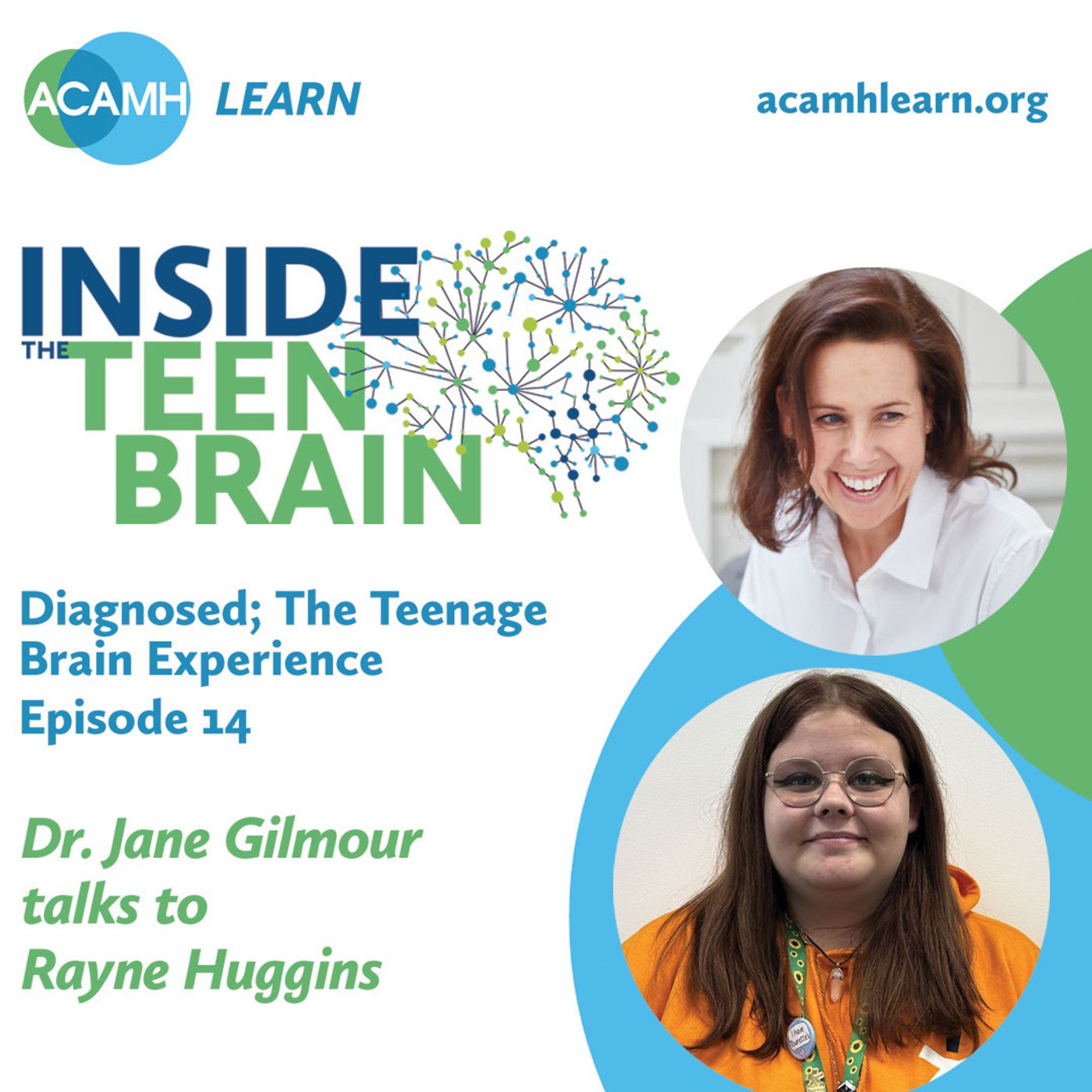
422: Diagnosed; The Teenage Brain Experience. An 'Inside the Teen Brain' podcast

Watch the interview on ACAMH Learn at https://bit.ly/Diagnosed-Experience and get a free CPD/CME certificate by registering for a FREE ACAMH Learn account at https://bit.ly/4fF4BBW In this episode of Inside the Teen Brain, Dr. Jane Gilmour speaks with Rayne Huggins about the experience of being diagnosed with Tourette syndrome. Drawing on personal lived experience, Rayne reflects on what a diagnosis can mean for a young person and explores the pros and cons of receiving one. Together, they consider how a diagnosis can shape not only how a person understands themselves, but also their sense of identity and connection to a wider community. Honest and thought-provoking, the conversation offers a valuable first-hand perspective on living with Tourette syndrome and what diagnosis can come to represent. Learning Objectives A. To understand what it means to be diagnosed with tourette syndrome. B. To explore pros and cons of attaining a diagnosis of tourette syndrome. C. To explore how this may shape identity and community Get a free CPD/CME certificate for listening to this podcast by registering for a FREE ACAMH Learn account at https://bit.ly/4fF4BBW Visit https://www.acamh.org Facebook and LinkedIn search / ACAMH Instagram https://www.instagram.com/assoc.camh Bluesky https://bsky.app/profile/acamh.bsky.social X https://x.com/acamh

33 minAbspielen in:

Mi9Sep
'Mind the Kids': an ACAMH podcast

'Mind the Kids': an ACAMH podcastHost

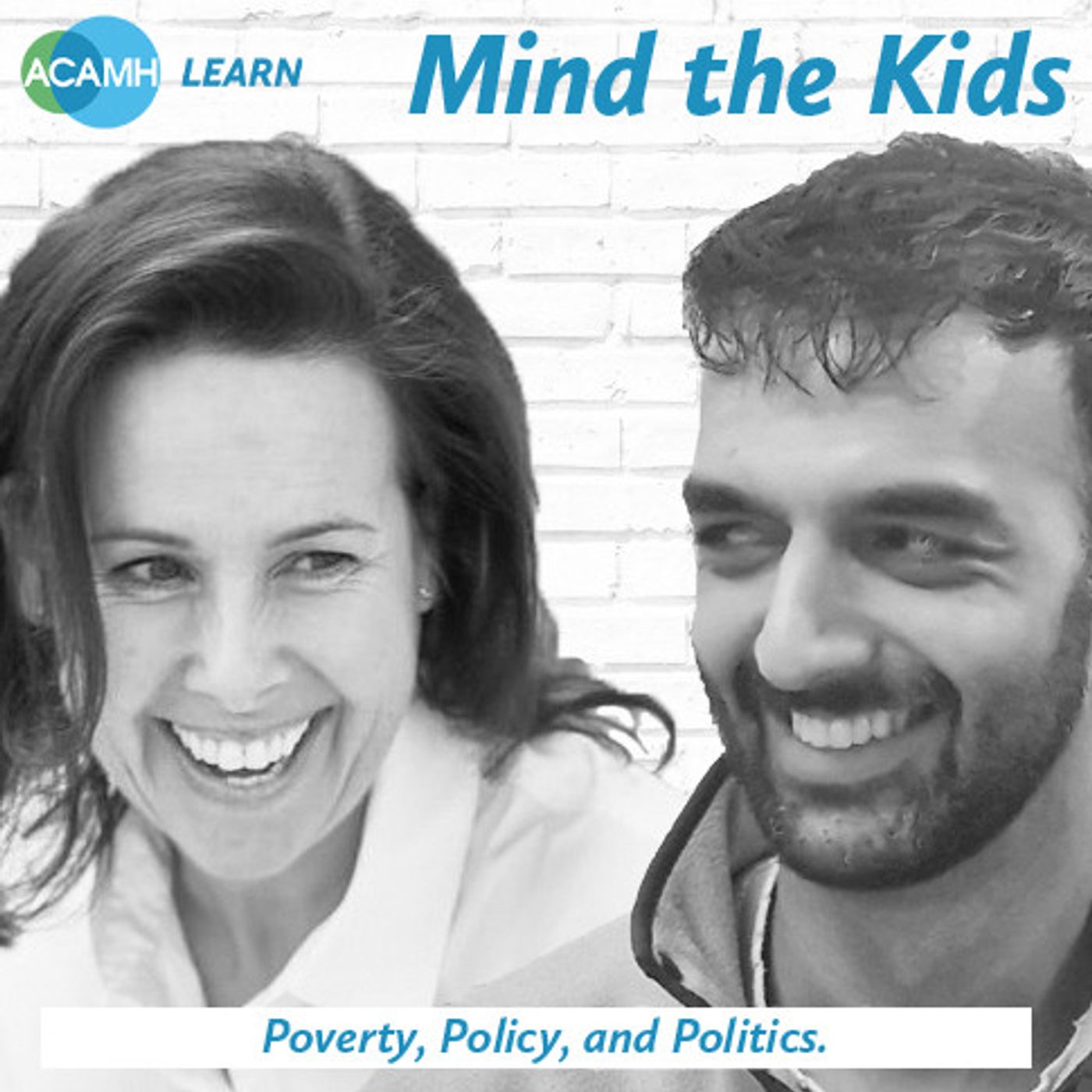
421: Poverty, Policy, and Politics. A Mind the Kids podcast

How does research actually change government policy? In this episode of Mind the Kids, hosts Dr Jane Gilmour (UCL) and Professor Umar Toseeb (University of York) sit down with Baroness Ruth Lister — Emeritus Professor of Social Policy at Loughborough University, Fellow of the British Academy, and a Labour peer in the House of Lords — to unpack how evidence, political will and public appetite combine (or collide) to shape social policy for children living in poverty. This conversation goes behind the headlines of the UK's child poverty strategy, including the abolition of the two-child benefit limit from April 2026 — a change expected to be the single biggest reduction in child poverty any UK government has delivered at a stroke, after CPAG research linked the policy to roughly 109 children entering poverty every day. In this episode we cover: – How the House of Lords scrutinises legislation, and Baroness Lister's role as a backbench "critical friend" – Why politicians cherry-pick evidence — and when evidence gets overridden by ideology or public appetite – The real story behind scrapping the two-child benefit limit, and why the benefit cap remains in place despite similar evidence of harm – Why UK child poverty sits at 27% (down from around 30% following a measurement change) and what's really driving it — frozen benefits, insecure work, and rising housing costs – The civil service vs. ministers vs. MPs: who academics should really be talking to for policy impact – Why "child poverty," not "family poverty," was the deliberately chosen framing that built public support – The power of lived experience in policymaking, including the Changing Realities project and the Timms PIP review – Interpersonal relationships and community interventions as a positive, low-cost buffer against the harms of poverty – Why child poverty is a mental health issue — and how squeezed welfare budgets often resurface as pressure on CAMHS and schools Whether you're a researcher trying to translate evidence into real-world impact, a clinician working with families affected by poverty, or simply want to understand how policy really gets made in Westminster, this episode is essential listening. Mind the Kids is brought to you by ACAMH (Association for Child and Adolescent Mental Health), translating the latest child and adolescent mental health research into evidence-based conversation. 🔔 Subscribe for more conversations on child development, social policy, and the evidence shaping child and adolescent mental health. Get a free CPD/CME certificate for listening to this podcast by registering for a FREE ACAMH Learn account at https://bit.ly/4fF4BBW Visit https://www.acamh.org Facebook and LinkedIn search / ACAMH Instagram https://www.instagram.com/assoc.camh Bluesky https://bsky.app/profile/acamh.bsky.social X https://x.com/acamh

42 minAbspielen in:

Fr28Aug
'Mind the Kids': an ACAMH podcast

'Mind the Kids': an ACAMH podcastHost

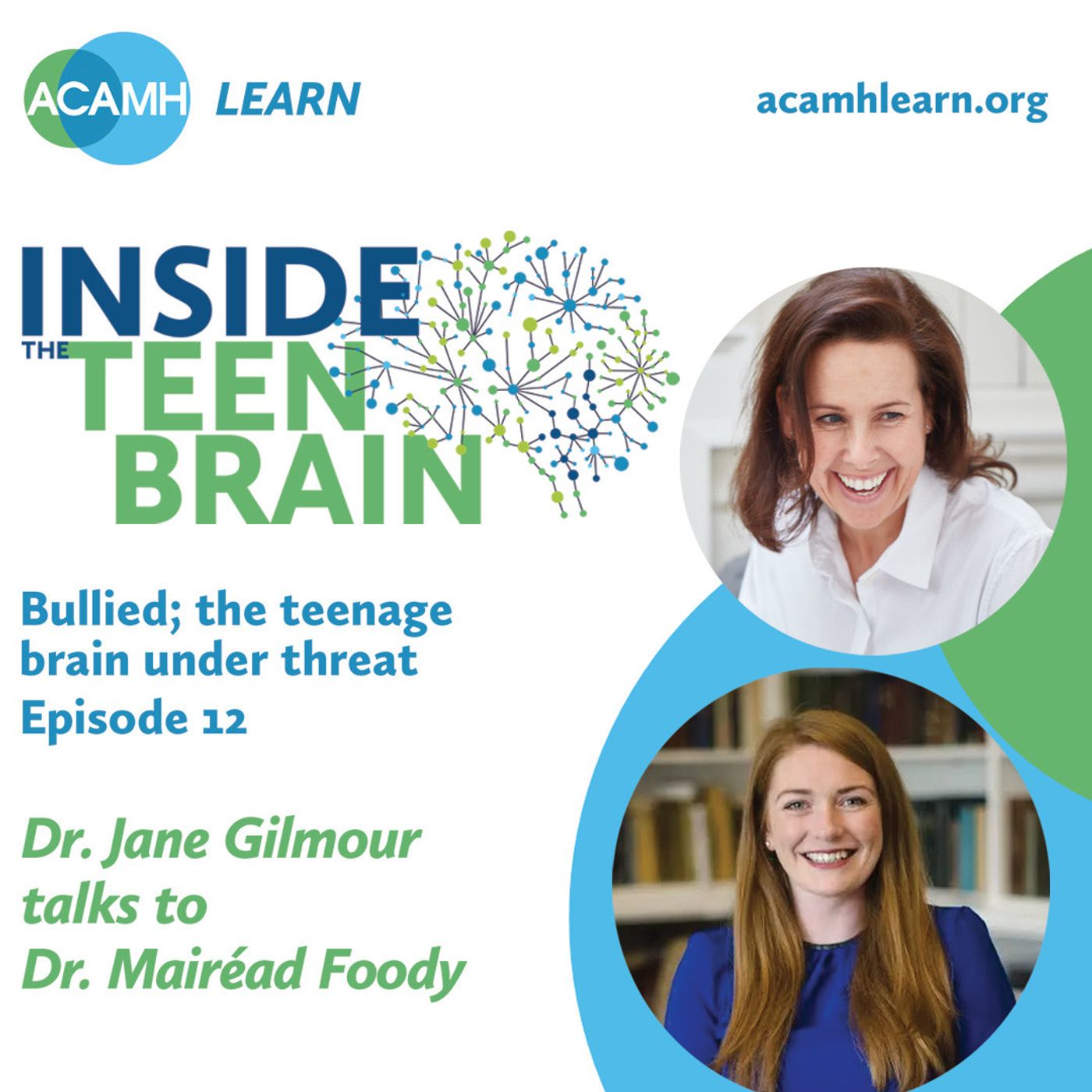
418: Bullied; the teenage brain under threat. An 'Inside the Teen Brain' podcast

Watch the interview on ACAMH Learn at https://bit.ly/Teen-Brain-Bullied and get a free CPD/CME certificate by registering for a FREE ACAMH Learn account at https://bit.ly/4fF4BBW In this interview, Dr. Jane Gilmour talks to Mairéad Foody, Assistant Lecturer in Psychology at University of Galway, Ireland. Bullying is a harmful experience for many children and young people, affecting their mental health, relationships, and wellbeing into adulthood. This talk will help listeners understand what bullying and cyberbullying are, and why they happens. It will discuss the impact of victimisation on children and adolescents and it will outline the different roles involved in bullying/cyberbullying situations (not just bullies and victims, but also bystanders and defenders). Overall, the goal is to provide a clearer picture of how complex bullying and cyberbullying really are and why effective responses must consider individuals, peer groups, families, and schools together. Learning Objectives A. To understand what bullying and cyberbullying are and their prevalence. B. To outline the impact of bullying and cyberbullying on children and adolescents. C. To describe anti-bullying interventions. Visit https://www.acamh.org Facebook and LinkedIn search / ACAMH Instagram https://www.instagram.com/assoc.camh Bluesky https://bsky.app/profile/acamh.bsky.social X https://x.com/acamh

40 minAbspielen in:

Fr21Aug
'Mind the Kids': an ACAMH podcast

'Mind the Kids': an ACAMH podcastHost

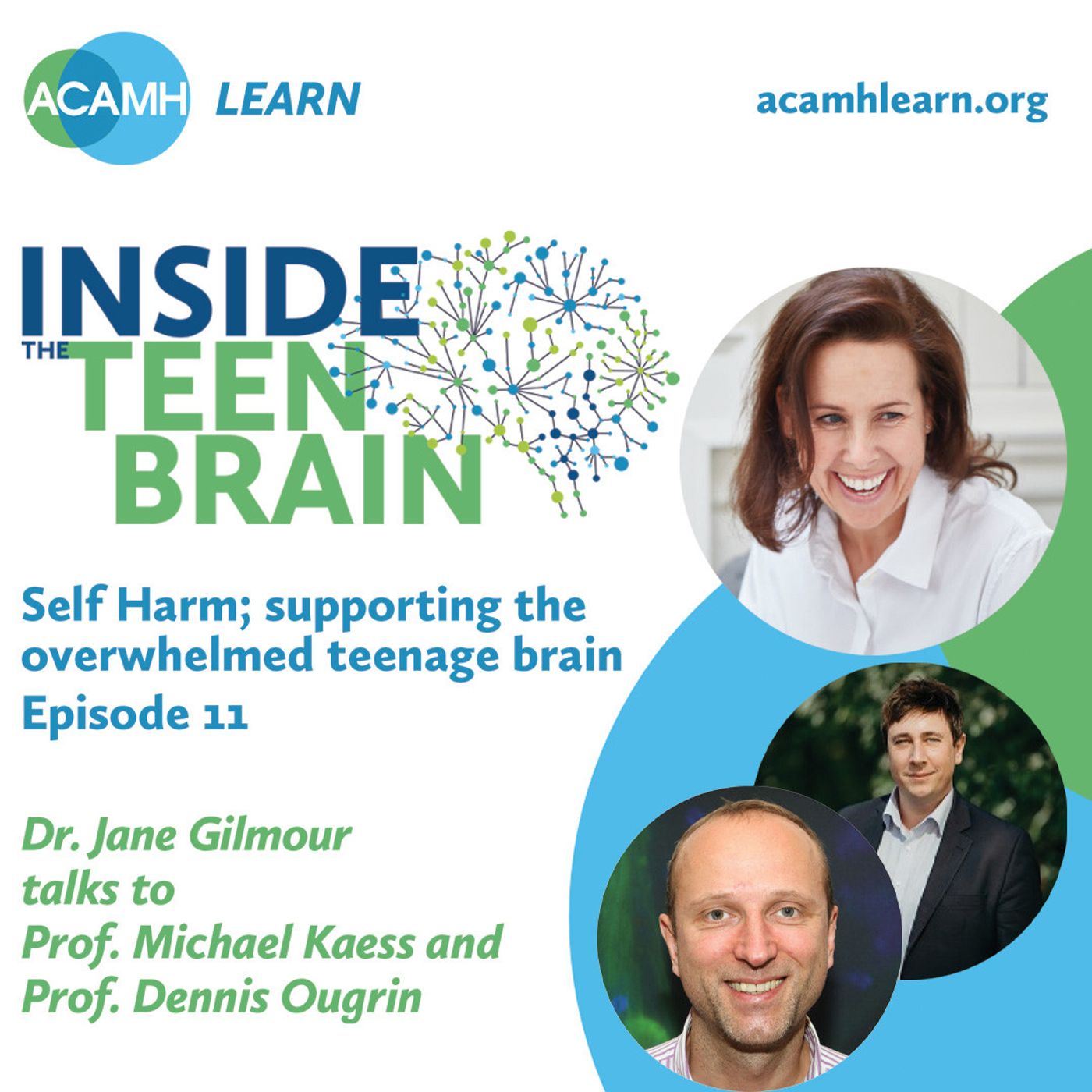
416: Self Harm; supporting the overwhelmed teenage brain. An 'Inside the Teen Brain' podcast

Get a free CPD/CME certificate for listening to this podcast by registering for a FREE ACAMH Learn account at https://bit.ly/4fF4BBW In this interview, Dr. Jane Gilmour talks to Professor Michael Kaess and Professor Dennis Ougrin, who describe self-harm as self-injury or self-poisoning, irrespective of suicidal intent, encompassing both non-suicidal self-injury and suicide attempts.  They highlight that the lifetime prevalence of self-harm is approximately 20% among young people. They outline that initial assessment should include evaluation of risk, development of a safety plan, and a therapeutic component focused on understanding the nature of self-harm, instilling hope, and linking young people with follow-up treatment.  They discuss evidence-based approaches to intervention, noting that Dialectical Behaviour Therapy should be offered to young people with severe self-harm. They also consider preventative approaches, including school-based interventions such as the Youth Aware of Mental Health programme, which may reduce self-harm in young people. Learning Objectives A. To define self-harm B. To understand the prevalence and risk factors C. To critically evaluate treatment evidence-base Visit https://www.acamh.org Facebook and LinkedIn search / ACAMH Instagram https://www.instagram.com/assoc.camh Bluesky https://bsky.app/profile/acamh.bsky.social X https://x.com/acamh

44 minAbspielen in:

Warum PodAppear

Folge Menschen, nicht Podcasts.

Du hast Jane in einer Sendung gehört. PodAppear findet für dich die nächste, und genauso für alle anderen, die du hören willst.

  • Eine Meldung, wenn die Person zu Gast istPer E-Mail: sofort oder gebündelt als Tages- oder Wochenübersicht. Dann nur noch auf Play drücken.
  • Gäste statt bloßer ErwähnungenFolgen, in denen ein Name nur fällt, landen getrennt. Eine Meldung heißt: Die Person ist wirklich in der Sendung.
  • Alle in einem FeedGründerinnen, Autoren, Sportler, Forscherinnen. Folge allen mit Namen, quer durch jede Sendung, in der sie auftreten.

Bis zu 15 Personen kostenlos, ohne Kreditkarte.

Fr14Aug
'Mind the Kids': an ACAMH podcast

'Mind the Kids': an ACAMH podcastHost

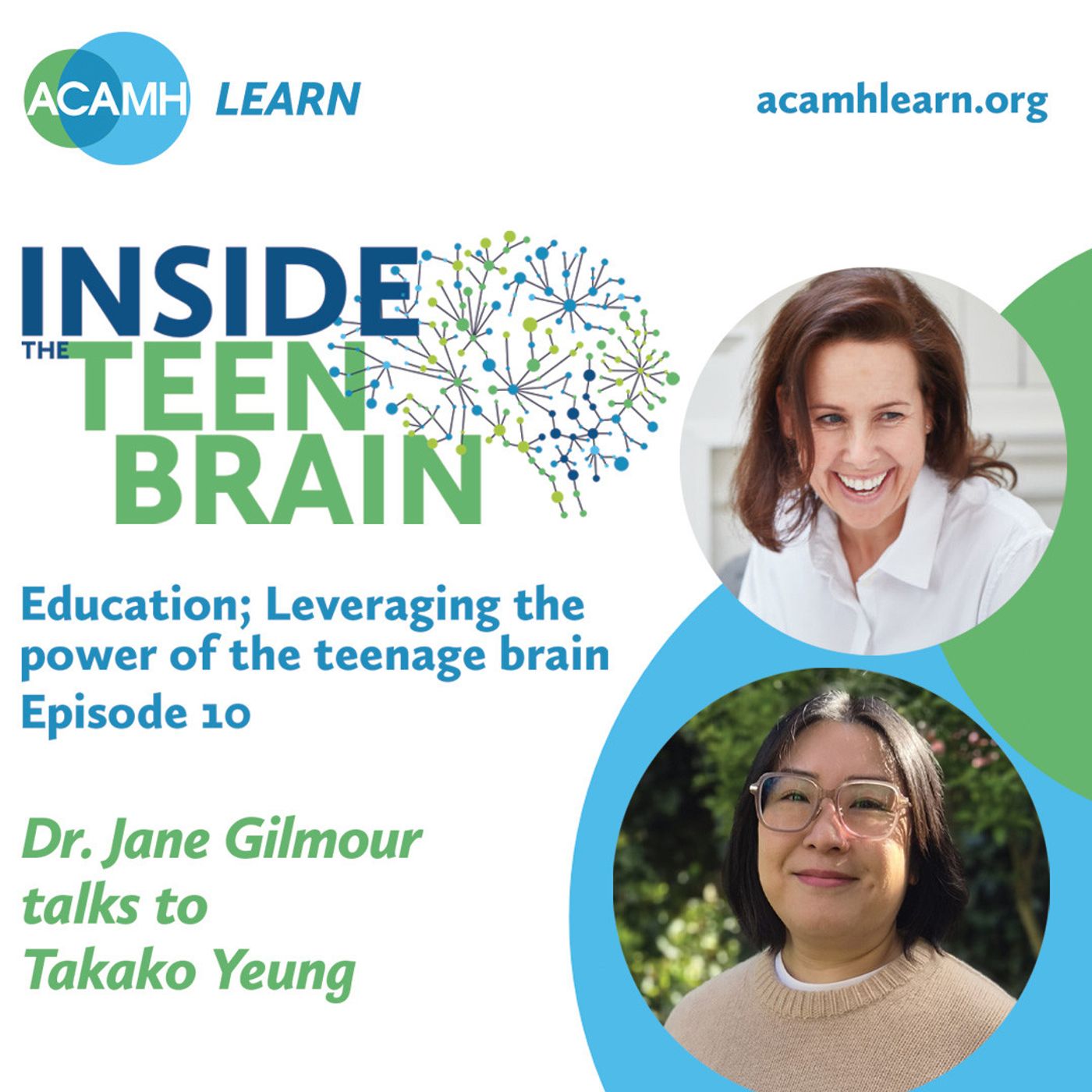
414: Education; Leveraging the power of the teenage brain. An 'Inside the Teen Brain' podcast

In this episode of Inside the Teen Brain, Takako Yeung explores how neuroscience can inform everyday teaching practice. Drawing on more than twenty years of experience driving systemic change in education, Takako discusses how the adolescent brain's heightened sensitivity to social and emotional cues makes the student–teacher relationship a powerful lever for both wellbeing and academic attainment. In conversation with Dr Jane Gilmour, Takako reflects on what it means to truly value and believe in each young person, and how that belief shapes the way teachers respond, set expectations, and support students through the ups and downs of adolescence. Her insights offer a thoughtful look at how small shifts in practice can make a lasting difference. Learning Objectives A. To understand how the adolescent brain's heightened sensitivity to social and emotional cues shapes learning and influences academic attainment. B. To explore how strong student–teacher relationships can be built and used to support young people's wellbeing, motivation, and engagement. C. To consider practical strategies for setting appropriately high expectations and supporting students through challenges without fuelling stress or perfectionism. Get a free CPD/CME certificate for listening to this podcast by registering for a FREE ACAMH Learn account at https://bit.ly/4fF4BBW Visit https://www.acamh.org Facebook and LinkedIn search / ACAMH Instagram https://www.instagram.com/assoc.camh Bluesky https://bsky.app/profile/acamh.bsky.social X https://x.com/acamh

42 minAbspielen in:

Fr7Aug
'Mind the Kids': an ACAMH podcast

'Mind the Kids': an ACAMH podcastHost

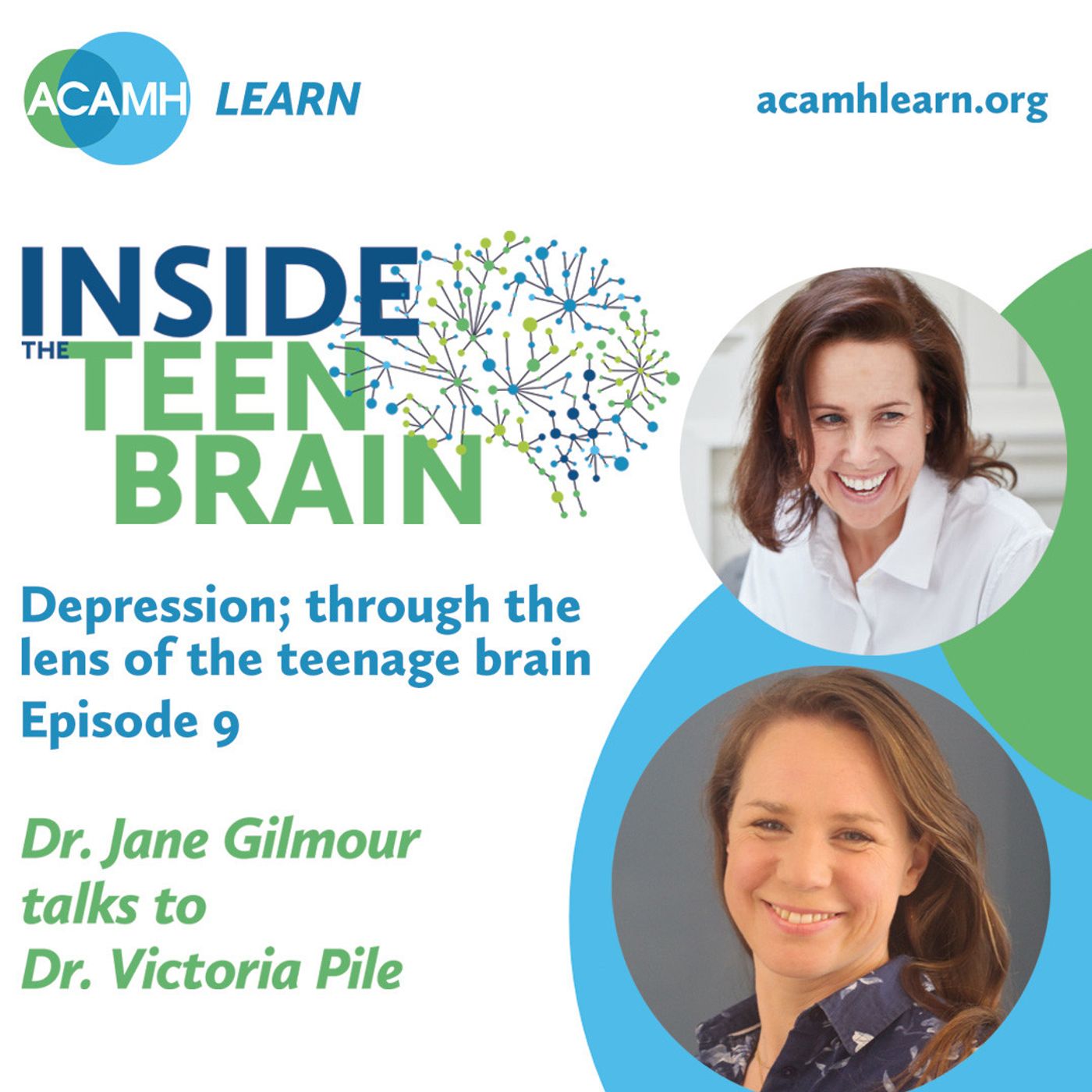
412: Depression; through the lens of the teenage brain. An 'Inside the Teen Brain' podcast

Dr. Jane Gilmour returns with Inside the Teen Brain. In this episode Jane talks to Dr. Victoria Pile about depression. This talk explores the presentation, recognition, and psychological intervention for depression in adolescence, a developmental period marked by heightened vulnerability and significant opportunity for intervention. Depression commonly emerges during adolescence and is associated with substantial long-term consequences, including social and academic impairment.  Despite its prevalence and impact, the majority of young people with depression do not receive timely or effective support. The talk highlights how adolescent depression is often under-recognised, perhaps due to its overlap with developmental changes and its heterogeneous clinical presentation.  Recent work that highlights central symptoms of depression is discussed. Current treatment approaches are described and evidence explored that suggests many established interventions show only modest efficacy, and a substantial proportion of young people do not respond. In response, emerging approaches are discussed that aim to improve both access and effectiveness. These include school-based delivery models and the co-development of treatments with young people.  Finally, the talk considers a shift toward targeting specific symptoms and psychological mechanisms, such as self-compassion, sleep, and emotional mental imagery. Novel interventions are presented as promising avenues for improving outcomes. Overall, the talk suggests a more developmentally informed, accessible, and mechanism-focused approach to addressing adolescent depression. Learning Objectives To understand the presentation and challenges of recognising adolescent depression. To appreciate the effectiveness and limitations of current psychological interventions for adolescent depression To explore emerging, developmentally informed approaches to intervention Get a free CPD/CME certificate for listening to this podcast by registering for a FREE ACAMH Learn account at https://bit.ly/4fF4BBW Visit https://www.acamh.org Facebook and LinkedIn search / ACAMH Instagram https://www.instagram.com/assoc.camh Bluesky https://bsky.app/profile/acamh.bsky.social X https://x.com/acamh

32 minAbspielen in:

Mi29Apr
'Mind the Kids': an ACAMH podcast

'Mind the Kids': an ACAMH podcastHost

S7 Ep9: Mind the Kids: ‘Delivering School Intervention: Culture, Context and Conflict’

What does it take to support children’s mental health and learning when their classrooms are in the middle of a conflict zone? In this Mind the Kids episode ‘Delivering School Intervention: Culture, Context and Conflict’ we explore how research can really work for children and young people in the real world, not just on paper. Dr. Jane Gilmour and Professor Umar Toseeb sit down with Professor Jean Francois Trani to delve into a classroom based psychosocial intervention delivered in rural Afghan primary schools during a period of political upheaval. Together, they unpack how an international research team and local community partners co designed and delivered a universal, school based programme that aimed to improve mental health, boost learning, and reduce stigma in a setting marked by decades of conflict. They discuss what it means to adapt activities to local culture, the difference between accumulated and intergenerational trauma, and why task shifting to trained community members can be so powerful in low resource settings. If you’re interested in community led interventions, global South research, or how universal school provision can support both wellbeing and inclusion, you won’t want to miss this. Get a free CPD/CME certificate for listening to this podcast by registering for a FREE ACAMH Learn account at https://bit.ly/4fF4BBW Visit https://www.acamh.org Facebook and LinkedIn search / ACAMH Instagram https://www.instagram.com/assoc.camh Bluesky https://bsky.app/profile/acamh.bsky.social X https://x.com/acamh

43 minAbspielen in:

Mi15Apr
'Mind the Kids': an ACAMH podcast

'Mind the Kids': an ACAMH podcastHost

S7 Ep7: Mind the Kids ‘Regular sleep, the balm of hurt minds'

Why do some teenagers seem permanently jet lagged, wide awake at midnight and exhausted at 8am? And what does that actually do to their mood, their learning, and their long term mental health? In this episode of Mind the Kids, titled ‘Regular sleep, the balm of hurt minds’, Dr. Konstantin Drexl joins hosts Dr. Jane Gilmour and Professor Umar Toseeb, to unpack the science of adolescent sleep: from what terms like chronotype, circadian rhythm and REM sleep really mean, to how sleep loss and anxiety feed into each other in everyday life. Together, they explore why regular sleep can act as a protective factor for some young people, why others seem especially sensitive to even small disruptions, and what this might mean for school start times, smartphones at bedtime, and whole family sleep hygiene. Whether you are a parent, teacher, clinician or researcher, this conversation offers clear, practical insights into how supporting teenage sleep could be one of the simplest ways to support teenage minds. You can read the main JCPP Advances paper discussed in this episode, “Toward an idiographic understanding of the role of sleep-mood dynamics in adolescents' internalizing symptoms” https://doi.org/10.1002/jcv2.70082 Get a free CPD/CME certificate for listening to this podcast by registering for a FREE ACAMH Learn account at https://www.acamhlearn.org Visit https://www.acamh.org Facebook and LinkedIn search / ACAMH Instagram https://www.instagram.com/assoc.camh Bluesky https://bsky.app/profile/acamh.bsky.social X https://x.com/acamh

45 minAbspielen in:

Mi8Apr
'Mind the Kids': an ACAMH podcast

'Mind the Kids': an ACAMH podcastHost

S7 Ep5: Children with MID, a multi-factored intervention offers best protection

Children with mild intellectual difficulties are often overlooked, but the evidence suggests they may face real challenges in emotional wellbeing, behaviour and education, especially when support is patchy or late. In this Mind the Kids episode, Dr. Foteini Tseliou joins hosts Dr. Jane Gilmour and Prof Umar Toseeb to discuss the paper 'Factors Associated with Better Emotional, Behavioural and Educational Outcomes in Children with Mild Intellectual Disabilities'. They highlight three big messages: many children with mild intellectual difficulties are in mainstream schools and may not be formally identified; peer relationships emerge as one of the strongest protective factors across outcomes; and it is the accumulation of support across home, school and friendships that seems to matter most, rather than any single intervention on its own. At the same time, the conversation makes clear that outcomes are not fixed by IQ. With the right support, many children with mild intellectual difficulties can do well, and the protective factors that help them often help other children too – which makes a strong case for universal, inclusive provision rather than waiting until problems become severe. You can read the main JCPPA Advances journal paper discussed in this episode, “Factors associated with better emotional, behavioural and educational outcomes in children with mild intellectual difficulties” https://doi.org/10.1002/jcv2.70072 Get a free CPD/CME certificate for listening to this podcast by registering for a FREE ACAMH Learn account at https://www.acamhlearn.org Visit https://www.acamh.org Facebook and LinkedIn search / ACAMH Instagram https://www.instagram.com/assoc.camh Bluesky https://bsky.app/profile/acamh.bsky.social X https://x.com/acamh

45 minAbspielen in: