Zwei Jahre auf Sendung
GastHostErwähnt
Dez. 2024MärJunSepDez. 2025MärJunNov. 2026
Selbst moderierte Folgen
Do29Okt
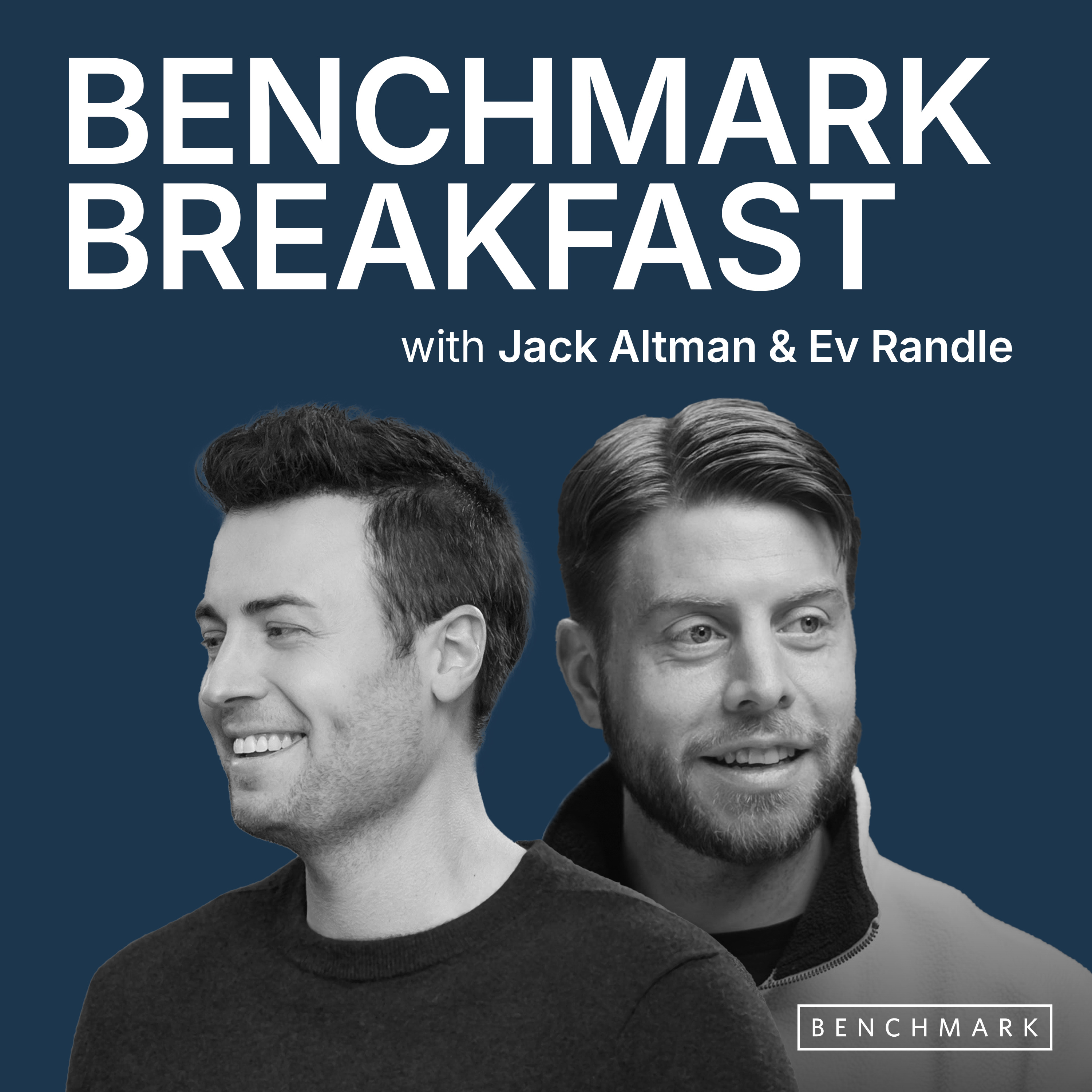
Uncapped | Benchmark BreakfastHost
Benchmark Breakfast is a recurring conversation between Benchmark partners Jack Altman and Ev Randle. It’s a window into the firm’s Monday no-agenda partner meetings, where five partners sit around and talk about whatever came up that week.
In this inaugural episode, Jack and Ev dig into the Anthropic S-1: what the revenue-to-compute chart actually shows, why growth volatility and consumption-based revenue complicate the public market story, and whether code gen is the most impactful PMF moment in the history of technology. They steelman open source vs. closed source, run the numbers on what the inference cloud market actually looks like, and get into AI’s emerging cybersecurity threat — including “abliterated models,” open-weight models with safeguards removed that adversaries are already using. They close on why bio and robotics may ultimately matter more than all the software gains combined, and what Manhattan Project-scale investment in the physical world could actually unlock.
TIMESTAMPS:
(0:00) Intro
(0:45) Introducing Benchmark Breakfast
(2:09) Anthropic S-1 drops
(3:59) The revenue vs. compute chart
(6:19) Growth volatility and consumption-based revenue
(7:11) The race for the best model
(10:21) Code gen saturation and software factories
(13:39) The AI-bottleneck trade
(17:39) Code gen as the most impactful PMF in history
(21:27) Durability is hard to call
(23:36) Investing in the trend vs. calling the next one
(26:09) Circular revenue vs. outside customers
(28:15) Open source vs. closed source steelman
(34:25) Own your intelligence
(36:29) Open source as a % of frontier spend
(40:52) AI and cybersecurity
(44:35) Abliterated models
(48:08) Bio, robotics, and physical abundance
(51:52) Why physical feedback loops are slower
(54:12) Ev’s dad and the promise of bio
(55:13) Halloween plans and the iPhone Duo
LINKS:
https://x.com/jaltma
https://x.com/everettrandle
56 min
So4Okt

The a16z ShowHost
a16z General Partner David George joins Jack Altman on Uncapped to make the case that many of the biggest debates in AI are framed the wrong way. Frontier models or open source? Labs or applications? David’s answer is often “and.” With AI adoption still concentrated among a relatively small group of heavy users, he argues there could be room for multiple layers of the stack to grow at once.
David and Jack discuss why demand for compute continues to outstrip supply, why applications can thrive even as frontier labs expand into new products, and why consumer AI may still be at the beginning of its biggest shift, from reactive chatbots to proactive assistants that can act on our behalf.
They also zoom out to autonomy, robotics, healthcare, and the next generation of technology companies, before turning to venture itself: why David believes today’s product cycle is unusually strong, how capital can accelerate AI companies in ways it couldn’t during the SaaS era, and why founders and narrative become increasingly important as companies scale.
This conversation originally appeared on Jack Altman’s Uncapped.
Resources:
Follow David George on X: https://x.com/DavidGeorge83
Follow Jack Altman: https://x.com/jaltma
Listen to more from Uncapped: https://www.youtube.com/@uncappedpod
Stay Updated:
Find a16z on YouTube: YouTube
Find a16z on X
Find a16z on LinkedIn
Listen to the a16z Show on Spotify
Listen to the a16z Show on Apple Podcasts
Follow our host: https://twitter.com/eriktorenberg
Please note that the content here is for informational purposes only; should NOT be taken as legal, business, tax, or investment advice or be used to evaluate any investment or security; and is not directed at any investors or potential investors in any a16z fund. a16z and its affiliates may maintain investments in the companies discussed. For more details please see a16z.com/disclosures.
Hosted by Simplecast, an AdsWizz company. See pcm.adswizz.com for information about our collection and use of personal data for advertising.
55 min