Bekomm eine E-Mail, wenn Iain in einem Podcast zu Gast istPodAppear prüft neue Folgen, sobald sie erscheinen, und lässt die weg, in denen Iain nur erwähnt wird. Bis zu 15 Personen kostenlos, ohne Kreditkarte.Bis zu 15 Personen kostenlos, ohne Kreditkarte.
Iain kostenlos folgen
IF

Iain Farrell

Zwei Jahre auf Sendung

GastHostErwähnt

Selbst moderierte Folgen

Mi11Nov
Prime Lenses

Prime LensesHost

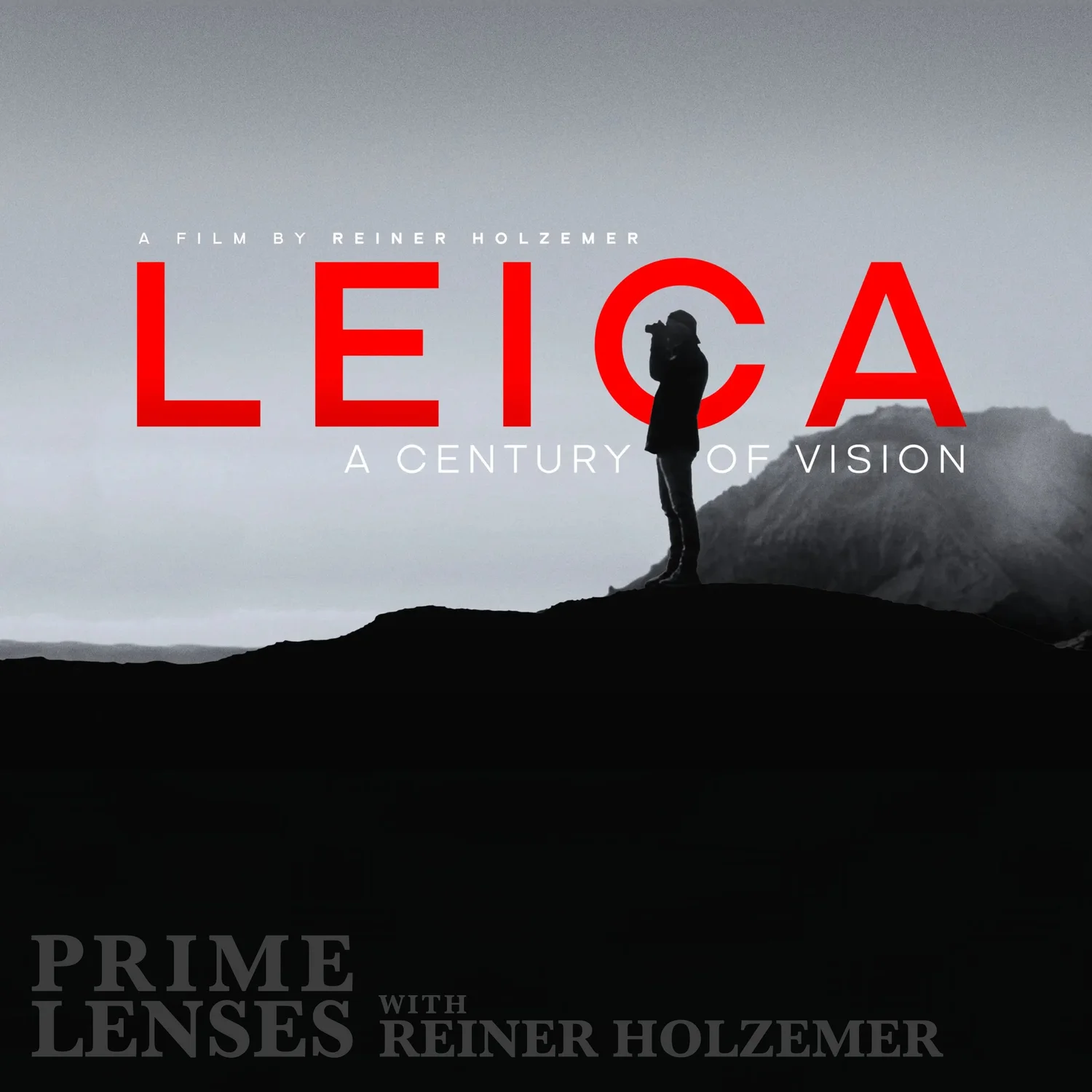
Leica - A Century of Vision with Reiner Holzemer

Today, my guest is Reiner Holzemer, the director of Leica A Century of Vision, a documentary made last year to celebrate the 100th anniversary of the production of the first serialised Leica 35 mm camera. The film is not, as you might expect, just a film about Leica the brand, but rather a celebration of photography and recognition of the momentous impact that the invention of 35 mm cameras, the industry that it spawned, and the capability that it gave photographers. Reiner is fortunate enough to speak with some great photographers in this documentary, previous guests of the show that you may recognise, like Joel Meyerwitz, like Sarah M. Lee, and like Misan Harriman, but also people like Sir Johnny Ive, who worked with Marc Newson to design a one of one M camera, as well as legends in the field like Evelyn Jane Atwood, Ralph Gibson, Steve McCurry, and of course the late great Sebastião Salgado. I was lucky enough to see the film last year at a screening as part of the 100th anniversary event held in Wetzlar in Germany, and it's fair to say that a room full of people who’d just had dinner and were looking forward to Jamie Cullum coming on stage did not particularly want to watch a movie for 90 minutes. However, within minutes you could hear a pin drop in that room and the early appearance of Salgado on screen in a room filled with people who had known and worked with him was a very big moment that I won't forget. Leica: A Century of Vision, with Reiner Holzemer The director on making a documentary about 100 years of 35mm photography, and why it isn’t a film about a brand. Guest: Reiner Holzemer, director of Leica – A Century of Vision In this episode A short, special episode. Reiner Holzemer made Leica – A Century of Vision to mark 100 years since the first series-produced Leica, but it is a celebration of photography far more than it is a brand film. I saw it last year at the centenary screening and the room went quiet within minutes. Reiner tells me how it started with a friend who ran Leica, why he insisted on making it as an independent documentary, and how the photographers came on board once they knew his earlier films. We talk about the Wetzlar archive footage, the books Ragnar Axelsson sent him, how Andy Summers ended up co-writing the score, and the film’s opening in German cinemas on 12 November. Highlights Early: Reiner explains how a friendship with Leica’s then CEO led to a meeting with the owning family, and permission to make the film. Early: He had no interest in a commercial piece. He wanted a homage to 35mm photography, made the way he makes all his documentaries. About a third in: Why the photographers said yes. Several told him they already knew his earlier films, so he never had to introduce himself. About a third in: Ragnar Axelsson sent ten of his books straight after their first call. Reiner admits he hadn’t known the work. Around the middle: The Berlin screening at Kino International, a near-sold-out Sunday morning, and Leica employees who didn’t know how important the company’s invention was. Around the middle: Asked in Berlin why the film omits Leica’s history during the Third Reich, Reiner says he has no knowledge of it, that it’s an important subject, and that his film focuses on photography. Two thirds in: Fear of failing as a motivator, with a nod to a Thom Yorke interview, and why Reiner prefers humble perfectionists. Late: How Andy Summers came to write six or seven pieces for the score, with composer Ben Brunema writing the rest. Close: The release plan: Germany from 12 November on 100 copies, Austria in December, and the rest hoped for next year. Chapters (approximate positions, no timestamps in the source) Start Intro, and a clip from the trailer ~11% How it began: a friend at Leica, and the Kaufmann family ~22% A film about photography, not a brand film ~26% Choosing the photographers, and Ragnar Axelsson’s books ~34% Working independently, and the archive footage ~39% Wetzlar, and what the film adds to the museum ~52% German release and plans for other countries ~56% Did it turn out as planned? Audience reactions ~81% Andy Summers and the score ~97% Release dates and wrap-up Mentioned in this episode The film Leica – A Century of Vision — official page | leica-camera.com Reiner Holzemer Film — director’s page for the film | reinerholzemer.com German cinema listing — release 12 November 2026 | city-kinos.de People in the film Andy Summers — guitarist, photographer and co-composer of the score | andysummers.com Ragnar Axelsson (RAX) — Icelandic photographer | rax.is Sarah M. Lee — Guardian and Observer photographer | sarahmlee.com Joel Meyerowitz — photographer | joelmeyerowitz.com Ralph Gibson — photographer and guitar player | ralphgibson.com Steve McCurry — photographer | stevemccurry.com Sebastião Salgado (1944–2025) — photographer | contactpressimages.com Jane Evelyn Atwood — photographer | agencevu.com Quotes “I’m only interested in good photography.” — Reiner Holzemer, Early “This was done like a real documentary.” — Reiner Holzemer, About a third in Mentioned but not linked • Jony Ive and Marc Newson’s one-of-one Leica camera (intro) • Greg Williams, and the Leica contact Stefan Keil • Oscar Barnack and the original Leica I • Reiner’s earlier portrait films on Henri Cartier-Bresson, René Burri, William Eggleston, Anton Corbijn, Jürgen Teller and August Sander • The Ernst Leitz Museum and archive in Wetzlar • Kino International, Berlin • Composer Ben Brunema • Reiner’s new fashion documentary, released in Belgium this week • The earlier Prime Lenses episode with the makers of the Joel and Maggie film Credits Host: Iain Farrell. Guest: Reiner Holzemer. Subscribe to Prime Lenses wherever you get podcasts, including Apple Podcasts. Sign up for emails at primelensespodcast.com.
Abspielen in:

So1Nov
Prime Lenses

Prime LensesHost

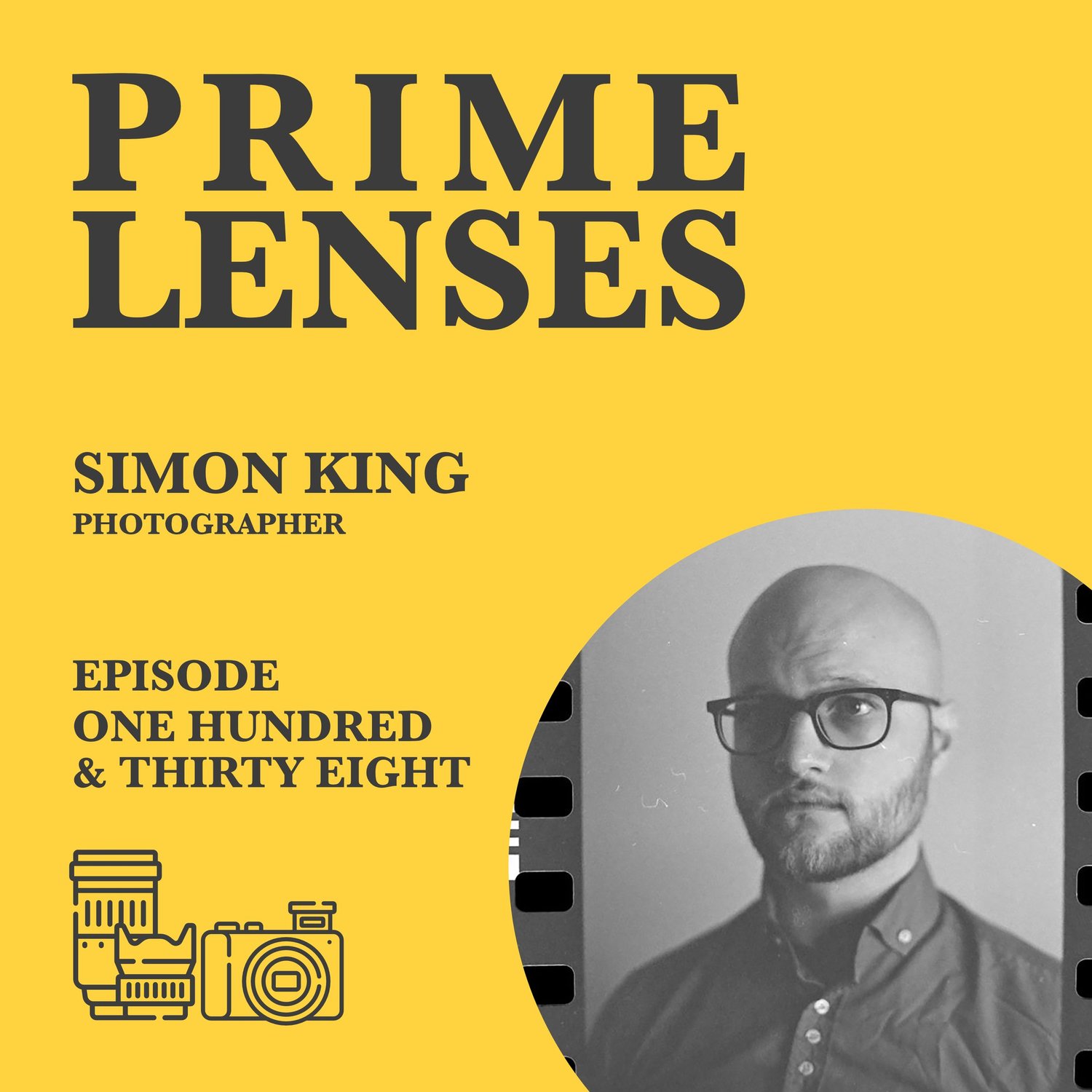
Episode 138 - Simon King

138. Simon King He made a feature film about 27 London street photographers on a camcorder, and now he isn't sure who his next one is for. Guest: Simon King, a London documentary photographer and teacher, and the director of Everything Happens All the Time · Instagram · Blog · 35mmc author page In this episode Simon King spent about four months shooting Everything Happens All the Time, a free, feature-length film of 27 London street photographers talking to him and, in the edit, to each other. I'd watched it before we sat down and loved it, so this conversation started early and wandered: why the film lets photographers talk about whatever they like, what a photography community looks like when nobody is lurking in a doorway with a long lens, and why cheap kit isn't the barrier it's made out to be. Then it gets harder. What do you become once the thing is finished? Simon is candid about the slump that follows a project, about not caring whether anyone sees his work, and about why he thinks the making has to be the part you enjoy. There's also a very good story about a portrait that ended up on somebody's mum's fridge. Highlights Positions are approximate (percentage of the way through the conversation) until real timestamps are added. • [~7%] Why the film shows photographers as people hanging out, not noir detectives with long lenses • [~11%] The production company that bought the cheapest CCTV tape going so marginalised communities could see themselves on TV • [~12%] Why the easiest film to make on a phone tends to be an aggro one, and the £3 karaoke-toy microphone going to India instead • [~25%] Around 35 interviews shot, 27 kept, and why street photography is a niche of a niche that most people only meet through controversy • [~42%] "So I'm making it for no one": the problem with a second film • [~47%] The slump after finishing, and why he doesn't buy the romantic version of it • [~64%] Why leaving your work behind sounds to him like litter, and the print that ended up on a fridge • [~72%] The electrician on a film set, and why the process has to be the enjoyable bit Chapters Approximate positions, not timestamps. Replace with real times from the edit before pasting into a host that reads chapter markers. ~0% Warm-up: swearing, Scotland and first reactions to the film ~3% The film lets photographers talk about what they want to talk about ~6% Community, loneliness and "go outside" ~9% Is cheap kit a barrier? Camcorders, phones and the CCTV-tape story ~12% Why accessible filmmaking drifts to aggro, a £3 microphone and a trip to India ~16% Krishnamurti, dissatisfaction and the problem with gear talk ~19% The mock sign-off ("a great 17 minutes") ~20% The proper start: why make a film about this group of people ~24% 27 interviews kept, around 35 shot ~25% Street photography's image problem and Tatsuo Suzuki ~29% One voice, many versions of themselves ~32% Joey, and London as an overlooked photographic city ~35% Photographer first, filmmaker second ~42% "So I'm making it for no one" ~47% The sense of defeat after finishing ~55% Not arting well, and step counts versus frames ~61% Why make and share work at all ~64% Legacy, litter and Vivian Maier ~67% A portrait on a fridge, and a footballer who nailed it first take ~72% Enjoying the process: the electrician on a film set ~76% One-person production, books and the zine that fell flat ~84% Finding the right medium: video versus audio, and experimenting ~92% How the film was made: Nipon's one take and a gallery opening ~97% Where to watch it Mentioned in this episode People • Simon King, the guest. His D.C. Exclusion Zone series, on the Biden inauguration, is likely the DC project we mention · [~3%] • Daniel Milnor, photographer, Blurb creative ambassador and a past Prime Lenses guest; his Shifter post on the film is likely the blog piece mentioned · [~3%] • Tatsuo Suzuki, the Tokyo street photographer at the centre of the 2020 Fujifilm X100V advert row · Wikipedia · PetaPixel on the controversy · [~25%] • Joshua K. Jackson, street photographer in the film (Simon calls him "Josh") · Street Life podcast episode · [~20%] • Joey Nutkins, the cinematographer Simon wants me to have on, working in anamorphic and making a short-film series about photographers · [~32%] • Also in the film and named in the episode: Mike Chudley, Tim Jamieson, Cal Holland, Nicole Louw, Trisha Lyon-O'Neill and Nipon Ravel. Full cast is in the film's YouTube description. Books and reading • Think on These Things by J. Krishnamurti (1964, HarperOne edition), the book a friend recommended to me, with a chapter on creativity and constant dissatisfaction · Krishnamurti Foundation Trust · [~16%] Music, film and video • Everything Happens All the Time (2026), Simon's film · Watch on YouTube · IMDb · Letterboxd · [~0%] • How the film was shot, in Simon's words: British Cinematographer · PetaPixel · Digital Camera World Watch and listen The film is free and runs 1 hour 45 minutes. It plays well as audio, which we also talk about. Everything Happens All the Time (2026), full documentary Quotes It's easy to get a response from someone if you're being aggro. And so that's where you get so much fight content just filmed. — Simon King, ~12% I get nothing from the knowledge that out there somewhere someone has enjoyed something I made that's not connected to me. The enjoyment is from the making of the work and then the mutual enjoyment with others in either making or experiencing that work. — Simon King, ~64% The process of making something is not the process of looking at that thing. So if you're an electrician on a film set, if you only enjoy watching films and you don't enjoy being an electrician, you're not going to enjoy what you're actually doing. — Simon King, ~72% Mentioned but not linked • "When I die, burn my negatives" [~64%]: Simon's blog article on legacy. Couldn't find the post; probably on his blog above. • Simon's DC book [~3%]: Daniel Milnor "loved your book". I found the project but couldn't confirm the book's title or a page for it. • Matty's book on Gaza [~5%]: my guest, who also photographed in Ukraine. Couldn't pin down who. • The CCTV-tape production company [~11%]: Simon half-remembers it as "the people's production company", filming marginalised communities in the 70s and 80s. Nothing confirmable. • Saga [~39%]: photographer and filmmaker who made a video for Ilford with his own drumming as the soundtrack. Not found. • AP Leslie [~84%]: my recent video episode about his film. Link your own episode page. • Still in Street, at the Photobook Café [~95%]: the gallery opening where Simon grabbed last interviews. Couldn't confirm the exhibition or host. • The film on Dailymotion and the Internet Archive [~97%]: Simon says it's on both, as well as YouTube. Couldn't find either copy. • Name-checked in passing: David Lynch and Eraserhead, Werner Herzog, Vivian Maier, Harmony Korine, Taika Waititi. Credits Hosted and produced by Iain Farrell. primelensespodcast.com

Abspielen in:

So25Okt
Prime Lenses

Prime LensesHost

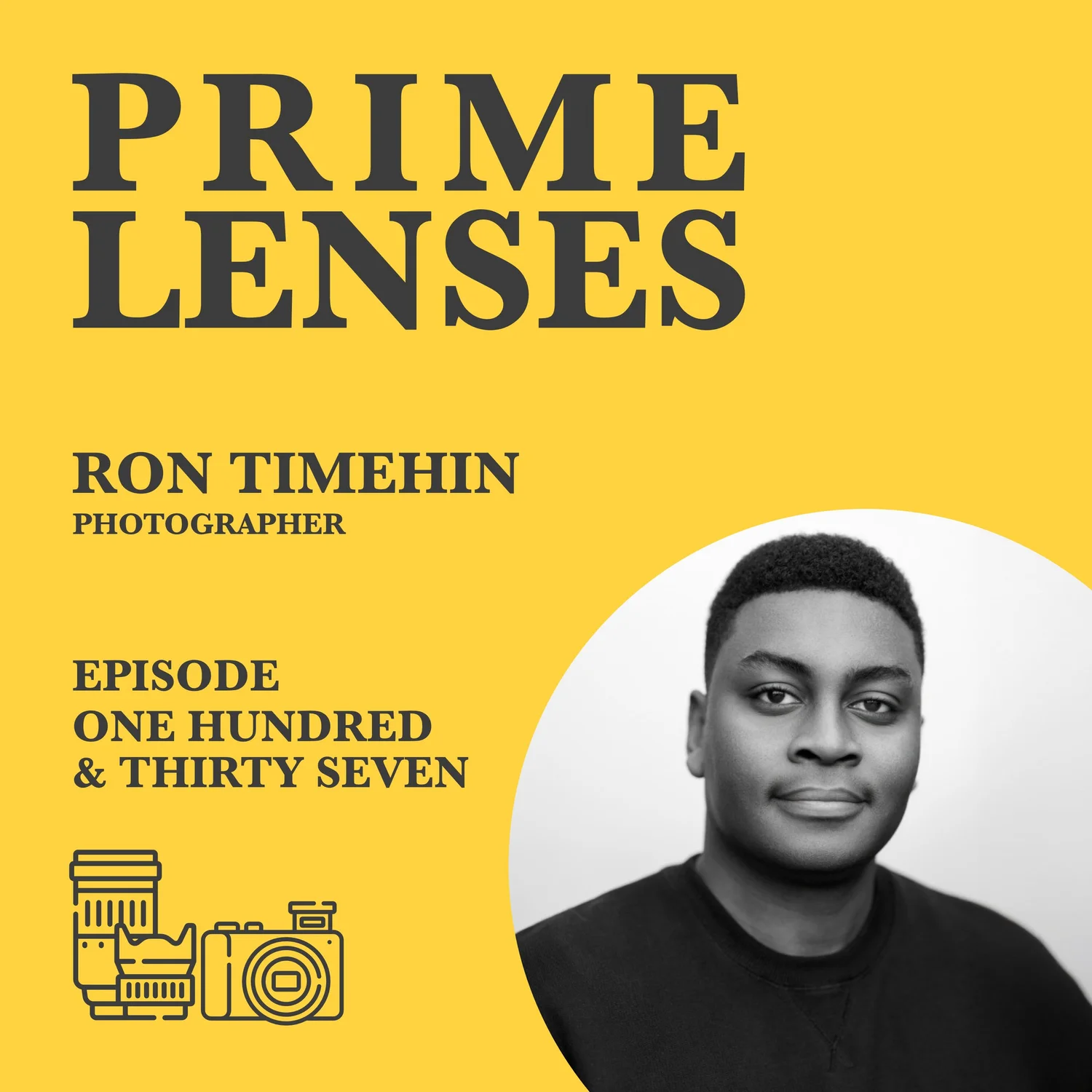
Episode 137 - Ron Timehin

137. The World’s Best Visa Ron Timehin on trumpets, fog, Vogue, burnout, and why a body of work outlives a post. Guest: Ron Timehin — London photographer and director, Sony European imaging ambassador · https://www.rontimehin.com · https://www.instagram.com/rontimehin In this episode Ron Timehin started as a trumpet-playing teenager, was made an Instagram suggested user before his pictures were good enough, and chose to get good rather than hide. Sixteen years on he has shot on the team behind British Vogue’s September 2020 issue, directed a Dove film about hair discrimination in schools, and this year has work at Somerset House and heading for the National Portrait Gallery. We talk about practice as scales rather than volume, why he won’t pick up the camera until a sitter has been given a chair and some music, the Canon-to-Sony story that ended with a 35mm f/2.8 Zeiss on an A7CR, the burnout that followed his first solo show, and why work built as a series lives longer than a post. It closes on The Black Rainbow, the project he is a third of the way through, and a practical plea to back up your hard drives. Highlights No audio timestamps were in the transcript. Positions below are approximate: how far through the transcript the moment falls. ≈12% He studied the business of music as a compromise with his parents, skipped lectures to photograph instead, then got a two-week Instagram feature that jumped his following by around 25,000 while he thought his photos weren’t very good. ≈16% Practice as scales: why targeted practice beats random practice, and how classical trumpet fundamentals carried into jazz and then into lighting and composition. ≈25% How a shoot starts long before the camera: emails, research, music playing, a team who are warm, and hair and makeup before a single frame. ≈38% After his first solo exhibition he couldn’t do anything for a month. Burnout, rent, and why personal projects keep leading to commissions. ≈41% Vogue found him through a photo essay on the George Floyd protests in London, which is how he ended up on the September 2020 team. ≈52% Iain’s airport story: socially engineered into buying a 35mm f/2.8 Zeiss. Ron’s version of that lens lives on his A7CR as his daily carry. ≈71% The foggy afternoon at Tower Bridge when he spotted a young Black trumpeter in an air cadet band and the portrait work began. ≈82% Photography as the world’s best visa: it gets you into rooms, and out of conversations with weird Uncle Ted. ≈86% What’s next: the National Portrait Gallery show, and The Black Rainbow. Chapters Positional only (no timestamps in the source). Swap in real HH:MM:SS from the edit if you want podcast-host chapter markers. ≈0% Opening banter and sound check ≈1% The studio, Tom Oldham, and how Iain and Ron met ≈4% Paying it forward: trumpet, mentors, planting seeds ≈9% Parents, expectations, and building a creative circle ≈12% Music business degree, Instagram, and getting serious ≈16% Practice, scales, and fundamentals ≈21% Why people: belonging, and preparing the room ≈27% The playlist (Coltrane, Cleo Sol) ≈30% A big year: Vogue, Dove, Portrait of Britain, Somerset House, NPG ≈38% Burnout, personal projects, and Misan ≈46% First cameras: point-and-shoot, Canon, then Sony ≈52% The 35mm f/2.8 Zeiss, the A7CR, and the workhorse ≈59% Play, small cameras, and other creative outlets ≈65% London Fog, books, zines, and rapid iteration ≈71% The air cadet trumpeter and the shift to portraits ≈78% From hero shots to bodies of work; Favela Brass ≈82% The world’s best visa ≈86% What’s next: NPG, Soho House, The Black Rainbow ≈91% Andrew Scott and "openly gay" ≈96% Where to find Ron, backups, and NAS prices Mentioned in this episode People Ron Timehin — guest; photographer, director, Sony European imaging ambassador · https://www.rontimehin.com Tom Oldham — portrait photographer; shares the London studio Ron is calling from, and has been on the show · https://worldphoto.org/node/4839 · ≈1% Misan Harriman — lead photographer of the Vogue September 2020 cover; now chair of the Southbank Centre · https://en.wikipedia.org/wiki/Misan_Harriman · ≈32% Adwoa Aboah and Marcus Rashford — the two cover subjects of that issue · https://en.wikipedia.org/wiki/Adwoa_Aboah · ≈31% Alan Schaller — black-and-white street photographer, a former musician and past guest · https://teneues.com/en/authors-photographers/alan-schaller · ≈15% Judah Passow — photojournalist and past guest, mentioned for access in conflict zones · https://www.hachette.co.uk/contributor/judah-passow/ · ≈83% Tom Ashe — British trumpeter who founded Favela Brass in Rio · https://favelabrass.org/about · ≈78% Books and reading London Fog — Ron’s first book, published by Trope Publishing in 2019 · https://photobite.uk/the-word/trope-publishing-announce-london-photobooks-pop-up-exhibition-featuring-emerging-photographers/ · ≈65% "I’ve been exploring what it means to be queer with African heritage" — 1854 Photography interview with Ron about The Black Rainbow · https://www.1854.photography/?p=76394 · ≈87% Tools and products Sony Alpha 7CR — 61MP compact full-frame body Ron carries daily · https://community.sony.es/t5/discover-sony/two-new-alpha-7c-series-cameras-have-launched/ba-p/3924123 · ≈54% Sony Alpha 7R VI — the successor to the A7R V that Ron uses for jobs; announced May 2026 · https://sony.mediaroom.com/2026-05-13-Sony-Electronics-Accelerates-High-Resolution-Photography-with-the-Alpha-7R-VI · ≈55% Companies and institutions Sony Alpha Universe: Ron Timehin — Sony ambassador profile · https://www.sony.co.uk/alphauniverse/ambassadors/ron-timehin Dove: Reclaiming School Picture Day — the hair-discrimination film Ron directed · https://www.lovethework.com/work-awards/campaigns/reclaiming-school-picture-day-1525417 · ≈33% Vogue, September 2020 — Misan Harriman on the issue · https://www.pbs.org/wnet/amanpour-and-company/video/misan-harriman-on-his-historic-vogue-cover/ · ≈31% Favela Brass — free music school in Rio de Janeiro · https://favelabrass.org/about · ≈78% Places and events Winston Taylor Photo Portrait Prize 2026 (formerly Taylor Wessing) — National Portrait Gallery, London, 5 November 2026 – 17 January 2027 · https://npg.org.uk/PhotoPrize · ≈35% Sony World Photography Awards 2026 — Professional competition; exhibition at Somerset House · https://www.sony.eu/presscentre/sony-world-photography-awards-professional-competition-finalists--shortlists-okswt7 · ≈29% Quotes “Photography gives you the world’s best visa, because it allows you into spaces and places you would not be allowed otherwise.” — Ron Timehin, ≈82% “As much as you are planting seeds in your garden, make sure you’re planting seeds in others as well. So you can watch them flourish.” — Ron Timehin, passing on a line from Chadwick Boseman, ≈5% “It was like my two worlds colliding.” — Ron Timehin, on the air cadet trumpeter, ≈72% Mentioned but not linked Portrait of Britain — Ron’s image shown on screens across the UK this year · ≈33% The Labadi Community — likely the Ghana series shortlisted at Sony World Photography Awards 2026; not confirmed from a primary source · ≈34% The Black Rainbow — Ron’s current project; no project page found · ≈87% Andrew Scott clip on "openly gay" — couldn’t find the clip · ≈91% Brandon Talbot — YouTuber and a friend of Iain’s, mentioned as an athlete who knows about putting in the reps; no channel link confirmed · ≈16% Tobishinobi — close friend Ron shot with every day, who gave him a spare Sony A7 and started his switch to Sony; no profile link confirmed · ≈48% "Sam" — mutual acquaintance who vouched for the first A7 · ≈50% Photography Show / London video and photography event — where they first met; exact event unconfirmed · ≈2% 28 Sunbury — the studio location; unconfirmed · ≈1% Zeiss 35mm f/2.8 — the lens; model not confirmed · ≈50% Misan’s Soho House workshop — end of October; details not confirmed · ≈87% Cleo Sol, John Coltrane — on Ron’s studio playlist (Iain also mentions Superfly) · ≈27% Credits Hosted by Iain Farrell. Guest: Ron Timehin. Prime Lenses is an audio-only photography podcast, new episodes every Sunday.

Abspielen in:

So11Okt
Prime Lenses

Prime LensesHost

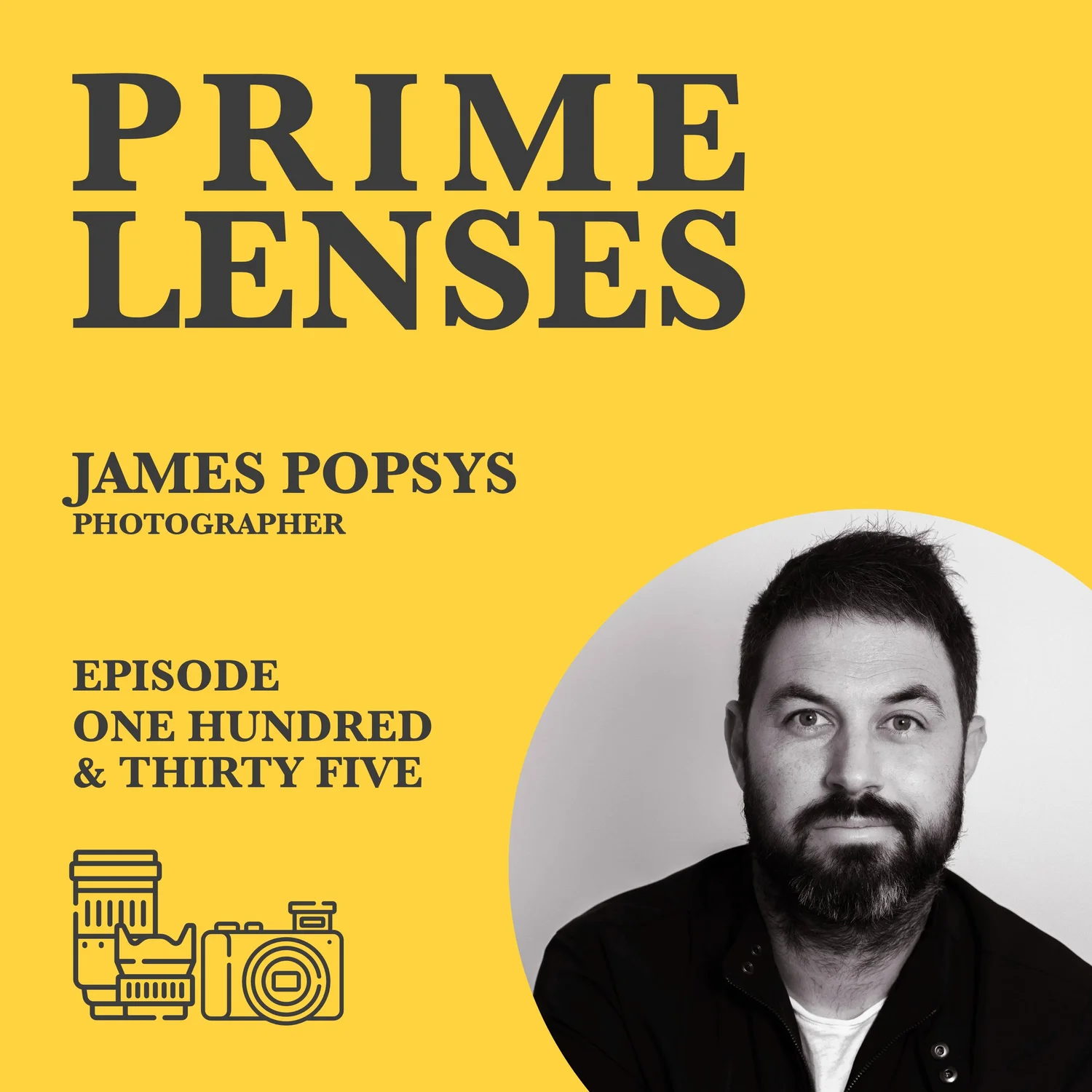
Episode 135 - James Popsys

135. James Popsys What if the goal isn't to make photography easy - what if the difficulty is the whole point? Guest: James Popsys. Photographer, YouTuber and author based in Snowdonia, North Wales · jamespopsys.com · YouTube and Instagram: search "James Popsys" (P-O-P-S-Y-S) In this episode James has been on my list of dream guests for ages, so I was thrilled to finally sit down with him. We start, as these things do, with lawnmowers and film scanners, before getting into the real story: a marketing job in London, weekend photo walks, a conceptual composite of the London Eye as a bicycle wheel, and a move to Sydney that somehow led to a YouTube channel he started almost by accident in New Zealand. James talks about guarding his own individuality by deliberately not watching other photographers' videos, connecting the dots backwards to find the worldview running through his work, and what it took to commit thousands of prints to paper for his book Human Nature. We get into his one-lens, one-body philosophy, why he thinks difficulty is a feature of photography rather than a bug, and why he'd still rather be surprised by an ordinary place than get the photo 3,000 other people already have. He's off to East Greenland in a few days to experiment with a more hybrid, video-forward workflow, and this conversation is a lovely primer for anyone who wants to know how he got there. Highlights [Opening] Film scanners, darkroom chemistry, and a cold open about finding surprise in unremarkable places [Opening] A very serious digression into battery-powered lawnmowers [First third] The London Eye as a bicycle wheel, and the Sydney-to-YouTube origin story [First third] "You can't connect the dots going forward" - finding the worldview that was there all along [Middle] Making Human Nature: watching the zeroes stack up on a 15-metre printer [Middle] The horses-through-the-window print, and why James is a "one body, one lens" traveller [Middle] A Leica SL3's peeling grip, and 21-year-old Leica R8 and R9 bodies that still work [Second half] Guarding individuality by not watching other people's videos [Second half] AI, disclosure scandals, and why nobody's asking for more of it [Late] Street photography, Britt Bradley's Gen-AI-vs-wet-plate test, and heading to East Greenland Chapters Positions are approximate. The transcript has no timestamps. Opening Cold open: finding surprise in unremarkable places Opening Film scanning setups and darkroom chemistry Opening Kit Young's 400-roll film habit Opening North Wales weather and the lawnmower tangent First third James's origin story: London, Sydney, and an accidental YouTube channel First third Connecting the dots backwards to find a worldview First third Guarding individuality; avoiding other photographers' and podcasters' work First third Human Nature: starting the book, and the RISD-style question of what comes after book one Middle Printing day: watching thousands of pounds turn into ink Middle The horses-through-the-window print and limited-run prints Middle A 140kg Canon PRO-2600 printer in the house Middle Exhibitions, introversion, and whether James should "try anything once" Middle Why a photo feels finished when it's printed Second half The New York school-bus photo, 40mm, and shooting at "imperfect" times of day Second half Not doing YouTube gurning thumbnails Second half Dabbling in filmmaking and switching to DaVinci Resolve Second half One body, one lens, and heading to East Greenland with Jeroen Van Nieuwenhove Second half Gear rules, a Leica SL3's peeling grip, and the Leica R8/R9 Late AI disclosure scandals and the Ricoh promotional-material controversy Late Britt Bradley's Gen-AI vs wet-plate test Late Running a business to sustain people, not to maximise returns Close Where to find James, and lawnmowers revisited Mentioned in this episode People Thomas Heaton - landscape photographer and one of the first photography YouTubers James watched early on · YouTube · [First third] Joe Allam - travel and street photographer and YouTuber James cites as an early influence · joeallam.co.uk · [First third] Nigel Danson - landscape photographer and friend who reassured James his printer inks would last for years · nigeldanson.com · [Middle] Ed Smith - photographer local to me, mentioned for his exhibition work · [Second half] Josh Edgoose - London street photographer known for finding humour in the everyday, featured in a video with Sean Tucker that stuck with me · Fujifilm profile · [Second half] Sean Tucker - photographer and YouTuber who filmed the Josh Edgoose video I mentioned · [Second half] Jack Lodge - former guest and South Coast photographer known for returning to the same spot across every season · [Second half] Cal Henderson - former guest whose film street photography I mentioned · [Second half] Britt Bradley (Nitrate Fox) - former guest and wet-plate collodion artist who posted a Gen-AI-vs-real comparison that fooled me completely · Lens Culture profile · [Late] Kit Young - former guest, film photographer who buys film in 400-roll packs and views his work exclusively as prints · [Opening] Jeroen Van Nieuwenhove - landscape photographer and workshop leader James is running an East Greenland trip with · jvn.photo · [Second half] Books Human Nature by James Popsys - his first photo book, self-published in 2024, exploring the relationship between man-made structures and nature · [First third] Tools and products Valoi Easy120 - the film scanning rig Iain is using and James is considering · Valoi · [Opening] Ilford XP2 Super - the black-and-white film James shoots that develops in a standard colour C-41 process · Ilford · [Opening] Kodak Portra - the colour film Iain is buying more of · [Opening] Canon imagePROGRAF PRO-2600 - James's 140kg, 24-inch-wide print studio-in-a-house · Canon · [Middle] Leica SL3 - the camera James used briefly before its grip started peeling · Leica · [Middle] Leica R8 / R9 - Iain's 21-year-old film SLRs, one fitted with a 10-megapixel digital back · [Middle] Panasonic Lumix GX1 - a small Micro Four Thirds camera James recently rediscovered with an added viewfinder · [Second half] DJI Osmo Pocket - the compact camera both James and Iain use for lightweight, all-in-one shooting · DJI · [Second half] Peak Design sling - the camera bag both James and Iain independently landed on · Peak Design · [Second half] DaVinci Resolve - the video editor James switched to after leaving Adobe's subscription model · Blackmagic Design · [Second half] Ricoh GR - the viewfinder-less compact camera at the centre of a promotional-material AI controversy · Ricoh · [Late] Places and events Ammassalik / Tasiilaq, East Greenland - where James is headed days after this recording, to experiment with a hybrid stills-and-video workflow · jvn.photo workshop listing · [Second half] New Zealand - where James shot his first, unplanned videos before starting his YouTube channel · [First third] Chinatown, London - setting for the Josh Jackson/Josh Edgoose street photography video James remembered · [Second half] Quotes I found most joy in getting something that I think is really interesting in a place that isn't particularly interesting. James Popsys, [Opening] The idea of one day can quite easily slip away, can't it? James Popsys, [Second half] What if we just ran the business to sustain the people that work there and that's it, and we didn't worry about maximising returns? Iain Farrell, [Late] Mentioned but not linked "The name of the car is a little bit." [Close] - the transcript's final line is garbled and I couldn't reconstruct it. Please check the audio. Rico / Ricoh promotional-material story [Late] - James says he "heard" about this but didn't know the details; I couldn't independently verify which campaign is meant. The Hasselblad competition "coke bottle" story [Late] - referenced in passing; I couldn't confirm the specific competition or year. GoPro disclosure controversy [Late] - mentioned without a name attached, so I couldn't research or link it. Credits Hosted and produced by Iain Farrell. Subscribe: Apple Podcasts · Spotify · Patreon

Abspielen in:

Warum PodAppear

Folge Menschen, nicht Podcasts.

Du hast Iain in einer Sendung gehört. PodAppear findet für dich die nächste, und genauso für alle anderen, die du hören willst.

  • Eine Meldung, wenn die Person zu Gast istPer E-Mail: sofort oder gebündelt als Tages- oder Wochenübersicht. Dann nur noch auf Play drücken.
  • Gäste statt bloßer ErwähnungenFolgen, in denen ein Name nur fällt, landen getrennt. Eine Meldung heißt: Die Person ist wirklich in der Sendung.
  • Alle in einem FeedGründerinnen, Autoren, Sportler, Forscherinnen. Folge allen mit Namen, quer durch jede Sendung, in der sie auftreten.

Bis zu 15 Personen kostenlos, ohne Kreditkarte.