Bekomm eine E-Mail, wenn Hannah in einem Podcast zu Gast istPodAppear prüft neue Folgen, sobald sie erscheinen, und lässt die weg, in denen Hannah nur erwähnt wird. Bis zu 15 Personen kostenlos, ohne Kreditkarte.Bis zu 15 Personen kostenlos, ohne Kreditkarte.
What do ancient Roman weapons have to do with neutrino detectors? This 2,000 year old lead sling bullet may hold the answer.
In this episode of The Rest Is Science, Professor Hannah Fry and Michael Stevens (Vsauce) celebrate one year of the show with a Field Notes special. Hannah brings an ancient weapon for Michael to guess, and it takes him nine minutes.
Lead is so dense that a sling bullet didn't need to pierce armour: it could break the bones underneath. The Roman medical writer Celsus described how to dig them out of wounds, and the most famous slingers came from the Balearic Islands, fighting for Carthage and later Rome.
Then the physics. Smelting strips out the uranium, so radioactive lead-210 stops being topped up and slowly decays away. That's why physicists take lead from ancient shipwrecks to shield neutrino detectors. Roman smelting was so intense that its lead pollution was even trapped in Greenland ice cores, rising and falling with wars and plague.
Plus, your questions:
Why does this 2012 audio CAPTCHA sound so creepy, and did CAPTCHAs help train AI?
What does Cory Doctorow mean by a "reverse centaur"?
What's the best way to micro-dose information if you struggle to concentrate?
What are contronyms, the words like "off" and "dust" that mean their own opposite?
-------------------
For more information about Cancer Research UK, their research, breakthroughs and how you can support them, visit https://cancerresearchuk.org/restisscience
Cancer Research UK is a registered charity in England and Wales (1089464), Scotland (SC041666), the Isle of Man (1103) and Jersey (247). A company limited by guarantee. Registered company in England and Wales (4325234) and the Isle of Man (5713F). Registered address: 2 Redman Place, London, E20 1JQ.
-------------------
Video Editor: Oli Oakley + adam Thornton + Jack Meek
Animator: Sam Benson
Video & Social: Bex Tyrrell
Producer: Simona Rata + Lucy Lipscombe
Senior Producer: Lauren Armstrong-Carter
Chief Digital Officer: Samuel Oakley
Exec Producer: Neil Fearn
Learn more about your ad choices. Visit podcastchoices.com/adchoices
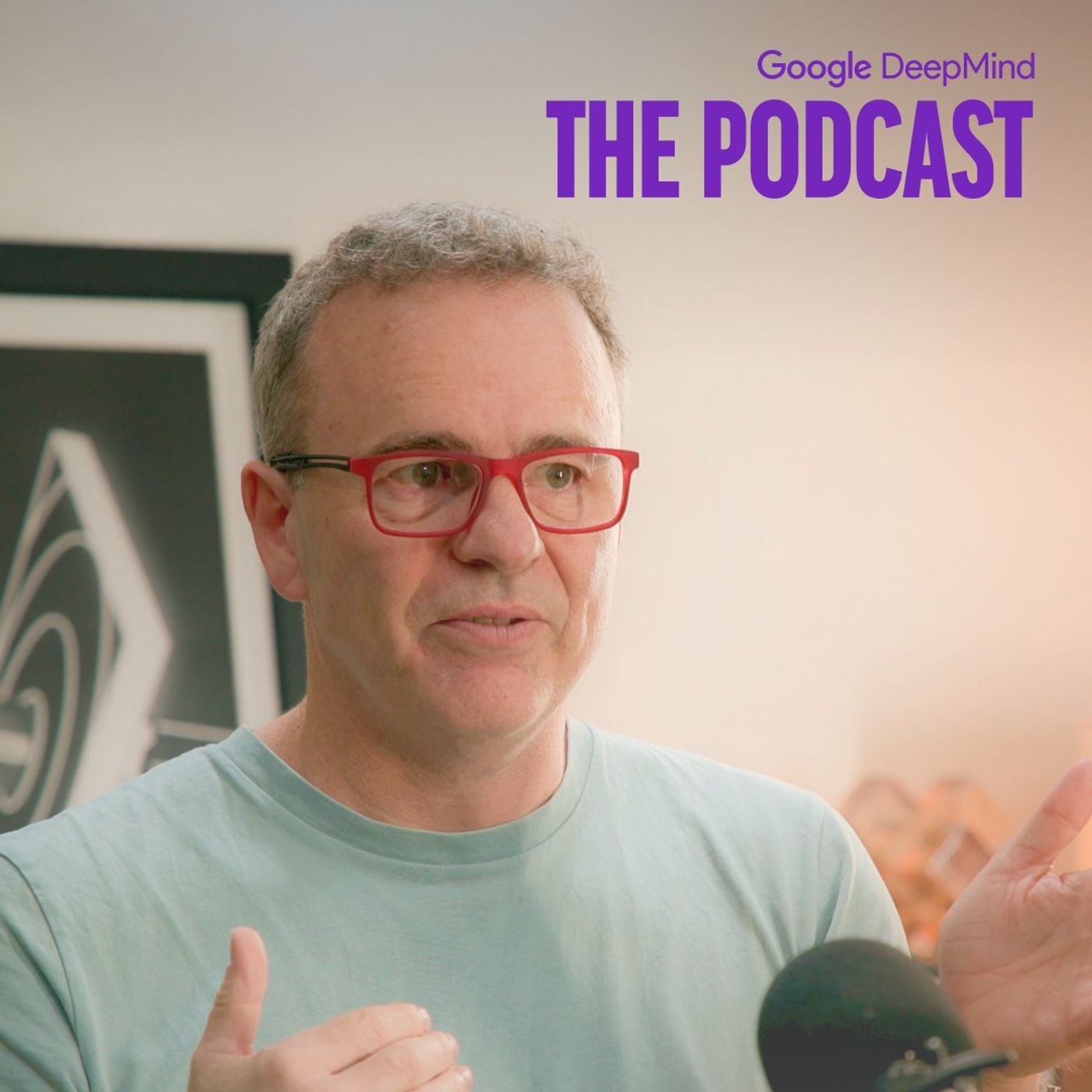
Seven years after their last conversation at Google DeepMind’s London office, Professor Hannah Fry reunites with Koray Kavukcuoglu, SVP of Google DeepMind and Chief AI Architect at Google. Back then, DeepMind was focused on specialized breakthroughs like AlphaGo and AlphaFold; today, Koray is leading the charge toward general-purpose intelligence with Gemini. In this episode, they discuss why real-world products are essential to building AGI, how Gemini’s architecture continuously evolves, and the topic on everyone's mind: recursive self-improvement. Please leave us a review on Spotify or Apple Podcasts if you enjoyed
this episode. We always want to hear from our audience whether that's in
the form of feedback, new idea or a guest recommendation!
Hosted by Simplecast, an AdsWizz company. See https://pcm.adswizz.com
for information about our collection and use of personal data for
advertising.
Why can’t eating more stop the wasting syndrome that cancer can cause?
In The Rest Is Science’s first ever interview, Professor Hannah Fry and Michael Stevens (Vsauce) sit down with Professor Mariam Jamal-Hanjani, lung cancer specialist and Chief Clinician at Cancer Research UK.
Cachexia is a wasting syndrome that affects around 80% of people with advanced cancer. Some patients die from it rather than from cancer itself. Professor Mariam explains how cancer hijacks the body’s metabolism, and how Team CANCAN.
They also explore what the PEACE autopsy study reveals about how cancer spreads, how the TRACERx study led to LungVax, the first ever lung cancer prevention vaccine trial, and the rogue extrachromosomal DNA (ecDNA) found in aggressive cancers.
Along the way: lung cancer in people who’ve never smoked, how immunotherapy changed cancer treatment, and Hannah’s own experience of cervical cancer and what the HPV vaccine could mean for future generations.
Could we one day vaccinate against the most common cancers? Mariam says that’s the dream, and she wants everyone to leave with hope.
-------------------
For more information about Cancer Research UK, their research, breakthroughs and how you can support them, visit https://cancerresearchuk.org/restisscience
Cancer Research UK is a registered charity in England and Wales (1089464), Scotland (SC041666), the Isle of Man (1103) and Jersey (247). A company limited by guarantee. Registered company in England and Wales (4325234) and the Isle of Man (5713F). Registered address: 2 Redman Place, London, E20 1JQ.
-------------------
Find The Rest Is Science all over the internet by clicking here.
-------------------
Video Producer: Adam Thornton + Oli Oakley + Jack Meek
Animator: Sam Benson
Video & Social: Bex Tyrrell
Producer: Simona Rata + Lucy Lipscombe
Senior Producer: Lauren Armstrong-Carter
Chief Digital Officer: Samuel Oakley
Exec Producer: Neil Fearn
Learn more about your ad choices. Visit podcastchoices.com/adchoices
Is it better to own something amazing, or to actually experience it? Michael has built a collected a whole shelf of things he refuses to look at, smell or open, and he's about to defend every one of them.
Professor Hannah Fry and Michael Stevens (Vsauce) are back with Field Notes, a show-and-tell where the star attractions stay firmly sealed.
Is a puzzle still a puzzle if the answer is staring you in the face?
What does the tail of a comet smell like, and why will Michael never find out? And what is hiding inside a mystery can that's been sitting on his shelf for years?
Then it's over to your questions.
Can you wake up from surgery knowing something you never learned? What is the oldest everyday object we still use, and where does Lizzo come into it?
------------------
For more information about Cancer Research UK, their research, breakthroughs and how you can support them, visit https://cancerresearchuk.org/restisscience
Cancer Research UK is a registered charity in England and Wales (1089464), Scotland (SC041666), the Isle of Man (1103) and Jersey (247). A company limited by guarantee. Registered company in England and Wales (4325234) and the Isle of Man (5713F). Registered address: 2 Redman Place, London, E20 1JQ.
-------------------
Find The Rest Is Science all over the internet by clicking here.
-------------------
Video Producer: Adam Thornton + Oli Oakley + Jack Meek
Animator: Sam Benson
Video & Social: Bex Tyrrell
Producer: Simona Rata + Lucy Lipscombe
Senior Producer: Lauren Armstrong-Carter
Chief Digital Officer: Samuel Oakley
Exec Producer: Neil Fearn
Learn more about your ad choices. Visit podcastchoices.com/adchoices
What happens when you give water a really good shake? You might expect splashing, spilling and general aquatic chaos - but under exactly the right conditions, something much stranger can happen...
In this episode, Hannah Fry and Dara Ó Briain dive into the world of 'Faraday waves': amazing geometric patterns that, in certain circumstances, will appear on the surface of a vibrating liquid. They discover how the renowned physicist Michael Faraday accidentally discovered this remarkable phenomenon in the 19th Century; debate whether they could ever occur in a swimming pool; and find out what on earth alligators have to do with it.
Along the way, the pair encounter eerie ‘square’ seas and learn about new ways satellites are helping us to understand the ocean’s wildest waves!
If you have an everyday mystery for the team to investigate, contact them on curiouscases@bbc.co.uk.
Contributors:
Cédric Beaume - Associate Professor in Applied Mathematics at the University of Leeds
Lucy Bricheno - Group Head of Coastal Ocean at Liverpool’s National Oceanography Centre
Glynn Holt - Former Professor of Mechanical Engineering at Boston University
Producer: Lucy Taylor
Executive Producer: Sasha Feachem
A BBC Studios Production
28 minAbspielen in:
Warum PodAppear
Folge Menschen, nicht Podcasts.
Du hast Hannah in einer Sendung gehört. PodAppear findet für dich die nächste, und genauso für alle anderen, die du hören willst.
Eine Meldung, wenn die Person zu Gast istPer E-Mail: sofort oder gebündelt als Tages- oder Wochenübersicht. Dann nur noch auf Play drücken.
Gäste statt bloßer ErwähnungenFolgen, in denen ein Name nur fällt, landen getrennt. Eine Meldung heißt: Die Person ist wirklich in der Sendung.
Alle in einem FeedGründerinnen, Autoren, Sportler, Forscherinnen. Folge allen mit Namen, quer durch jede Sendung, in der sie auftreten.
Why do we turn on innocent people? A convincing story, a suspicious glance and suddenly everyone’s an armchair detective. But what happens when the crowd gets it completely wrong?
Hannah Fry and Michael Stevens explore the psychology of false accusations, witch hunts and mob mentality, starting with Richard Jewell, the security guard hailed as a hero after the 1996 Atlanta Olympics bombing before becoming the target of a media storm.
From the Salem witch trials and the Satanic Panic to internet detectives and social media pile-ons, they investigate how a hunch snowballs into certainty. Along the way: confirmation bias, beliefs that refuse to budge, and the famous Asch conformity experiments that show how easily we join the crowd, even when the crowd is obviously wrong.
Plus, Michael tackles accusations that Vsauce’s Mind Field was faked, Hannah shares her own brush with conspiracy theories, and they ask why we’re so convinced we can spot a liar when the evidence suggests we’re barely better than a coin toss.
It’s a journey through outrage, misinformation and our very human enthusiasm for pointing the finger. Because once people think you’re guilty, even defending yourself can look suspicious.
-------------------
For more information about Cancer Research UK, their research, breakthroughs and how you can support them, visit https://www.cancerresearchuk.org/our-research/rest-is-science
Cancer Research UK is a registered charity in England and Wales (1089464), Scotland (SC041666), the Isle of Man (1103) and Jersey (247). A company limited by guarantee. Registered company in England and Wales (4325234) and the Isle of Man (5713F). Registered address: 2 Redman Place, London, E20 1JQ.
-------------------
Find The Rest Is Science all over the internet by clicking here.
-------------------
Video Producer: Adam Thornton + Oli Oakley + Jack Meek
Animator: Sam Benson
Video & Social: Bex Tyrrell
Assistant Producer: Lucy Lipscombe
Producer: Simona Rata
Senior Producer: Lauren Armstrong-Carter
Chief Digital Officer: Samuel Oakley
Exec Producer: Neil Fearn
Learn more about your ad choices. Visit podcastchoices.com/adchoices
Can artificial intelligence solve one of science’s most chaotic physics puzzles? In this episode, Professor Hannah Fry sits down with Peter Battaglia, Senior Director of Research at Google DeepMind, to explore how machine learning is transforming global weather forecasting. From providing critical early warnings for Category 5 storms like Hurricane Melissa to predicting renewable energy supply and agricultural impacts, see how models like GraphCast and WeatherNext 3 are building upon decades of numerical physics to reshape our understanding of the atmosphere.
Learn more about WeatherNext 3, our most advanced global weather AI model yet: https://deepmind.google/science/weathernext/
Timestamps:
00:00 Introduction
00:38 Hurricane Melissa
11:50 Why weather forecasting is hard
14:13 Traditional models vs AI models
21:55 Probabilistic forecasting
26:00 WeatherNext 3
33:00 Future outlook
43:44 Hannah's reflections
Please leave us a review on Spotify or Apple Podcasts if you enjoyed this episode. We always want to hear from our audience whether that's in the form of feedback, new idea or a guest recommendation!
Hosted by Simplecast, an AdsWizz company. See pcm.adswizz.com for information about our collection and use of personal data for advertising.
What if one of the most valuable objects on Earth has been sitting untouched at the bottom of the ocean for 100 million years?
In this Field Notes episode, Professor Hannah Fry brings Michael Stevens (VSauce) a strange metallic rock formed in the deepest parts of the Atlantic over millions of years.
What begins with a bizarre Cold War CIA cover story involving Howard Hughes and a sunken Soviet submarine quickly turns into a journey through deep sea geology, natural “electric” rocks, and the environmental dilemma of mining the ocean floor for the rare metals used in electric car batteries.
Plus: can you train yourself to become ambidextrous? are giraffes more vulnerable to lightning strikes than other animals? Does damp cold really feel colder than dry cold? And do humans actually sense wetness at all?
-------------------
For more information about Cancer Research UK, their research, breakthroughs and how you can support them, visit https://cancerresearchuk.org/restisscience
Cancer Research UK is a registered charity in England and Wales (1089464), Scotland (SC041666), the Isle of Man (1103) and Jersey (247). A company limited by guarantee. Registered company in England and Wales (4325234) and the Isle of Man (5713F). Registered address: 2 Redman Place, London, E20 1JQ.
-------------------
Find The Rest Is Science all over the internet by clicking here.
-------------------
Video Producers: Adam Thornton + Oli Oakley + Jack Meek
Animator: Sam Benson
Video & Social: Bex Tyrrell
Assistant Producer: Lucy Lipscombe
Producer: Simona Rata
Senior Producer: Lauren Armstrong-Carter
Head Of Digital: Samuel Oakley
Exec Producer: Neil Fearn
Learn more about your ad choices. Visit podcastchoices.com/adchoices
Why were the ancient Greeks absolutely terrified of the infinite? How did a boundless mathematical concept start bitter historical feuds? And what happens to reality when you realise that some infinities are actually bigger than others?
Professor Hannah Fry and Michael Stevens (VSauce) plunge back into the mind-bending history of infinity, tracking the spectacular panic it caused across the centuries. From individuals trying to mathematically contain it, to others wrestling with its endless quantities, they explore how the greatest thinkers clashed over the universe's most impossible idea.
The chaos truly peaks with Georg Cantor, the man who completely broke maths by proving that infinity comes in different sizes.
Building on part one, where Hannah and Michael desperately tried to figure out if this strange beast is an actual number or just a brilliant hallucination, this second episode looks at the human cost of counting forever.
-------------------
For more information about Cancer Research UK, their research, breakthroughs and how you can support them, visit https://cancerresearchuk.org/restisscience
Cancer Research UK is a registered charity in England and Wales (1089464), Scotland (SC041666), the Isle of Man (1103) and Jersey (247). A company limited by guarantee. Registered company in England and Wales (4325234) and the Isle of Man (5713F). Registered address: 2 Redman Place, London, E20 1JQ.
-------------------
Find The Rest Is Science all over the internet by clicking here.
-------------------
Video Producer: Adam Thornton + Oli Oakley
Video & Social: Bex Tyrrell
Assistant Producer: Imee Marriott
Producer: Simona Rata
Senior Producer: Lauren Armstrong-Carter
Head Of Digital: Samuel Oakley
Exec Producer: Neil Fearn
Learn more about your ad choices. Visit podcastchoices.com/adchoices
Is infinity actually a real number, or just a brilliant mathematical hallucination? Professor Hannah Fry and Michael Stevens (VSauce) tumble down the numerical rabbit hole to explore the mind-bending origins of infinity. They unpick exactly how humanity managed to trap the endless void. From ancient paradoxes to endless hotel rooms, they dive into the bizarre history of our universe's most impossible idea.
-------------------
For more information about Cancer Research UK, their research, breakthroughs and how you can support them, visit https://cancerresearchuk.org/restisscience
Cancer Research UK is a registered charity in England and Wales (1089464), Scotland (SC041666), the Isle of Man (1103) and Jersey (247). A company limited by guarantee. Registered company in England and Wales (4325234) and the Isle of Man (5713F). Registered address: 2 Redman Place, London, E20 1JQ.
-------------------
Find The Rest Is Science all over the internet by clicking here.
-------------------
Video Producer: Adam Thornton + Oli Oakley
Video & Social: Bex Tyrrell
Assistant Producer: Imee Marriott
Researcher: Lucy Lipscomb
Producer: Simona Rata
Senior Producer: Lauren Armstrong-Carter
Head Of Digital: Samuel Oakley
Exec Producer: Neil Fearn
Learn more about your ad choices. Visit podcastchoices.com/adchoices
What do Bill Bryson, Daniel Wegner and J.R.R. Tolkien have in common? They are all part of Michael's reading recommendations. On this episode of Field Notes we answer one of our most frequent inbox questions... "What do you both read?"
Alongside that Professor Hannah Fry and Michael Stevens delve into whether some numbers give off "vibes" and the optimal way to use airflow to rid your car of dog hairs and unwanted smells.
A handy list of Michael's books (Hannah's will come in the future)!
Sum by David Eagleman
A Short History of Nearly Everything by Bill Bryson
The Seven Mysteries of Life by Guy Murchie
Thinking Physics: Understandable Practical Reality by Lewis Carroll Epstein
The Discovery of Dynamics: A Study from a Machian Point of View of the Discovery and the Structure of Dynamical Theories by Julian Barbour
The Outer Limits of Reason: What Science, Mathematics, and Logic Cannot Tell Us by Noson S. Yanofsky
Mortal Questions by Thomas Nagel
The User Illusion: Cutting Consciousness Down to Size by Tor Nørretranders
The Illusion of Conscious Will by Daniel Wegner
-------------------
For more information about Cancer Research UK, their research, breakthroughs and how you can support them, visit https://cancerresearchuk.org/restisscience
Cancer Research UK is a registered charity in England and Wales (1089464), Scotland (SC041666), the Isle of Man (1103) and Jersey (247). A company limited by guarantee. Registered company in England and Wales (4325234) and the Isle of Man (5713F). Registered address: 2 Redman Place, London, E20 1JQ.
-------------------
Find The Rest Is Science all over the internet by clicking here.
-------------------
Video Producer: Adam Thornton + Oli Oakley
Video & Social: Bex Tyrrell
Assistant Producer: Imee Marriott
Producer: Simona Rata
Senior Producer: Lauren Armstrong-Carter
Head Of Digital: Samuel Oakley
Exec Producer: Neil Fearn
Learn more about your ad choices. Visit podcastchoices.com/adchoices
Does your native language physically sculpt your face? And could a swarm of bees be trained to run computer code?
Two of your questions answer in this Field Notes with Professor Hannah Fry and YouTube's Michael Stevens, plus Michael’s object of the week is a visualization of the Holocene Calendar. By simply adding ten thousand years to our current year, it transforms our perception of history from a brief modern blip into an unbroken, monumental narrative of human progress.
Check out the calendar here
-------------------
For more information about Cancer Research UK, their research, breakthroughs and how you can support them, visit https://cancerresearchuk.org/restisscience
Cancer Research UK is a registered charity in England and Wales (1089464), Scotland (SC041666), the Isle of Man (1103) and Jersey (247). A company limited by guarantee. Registered company in England and Wales (4325234) and the Isle of Man (5713F). Registered address: 2 Redman Place, London, E20 1JQ.
-------------------
Find The Rest Is Science all over the internet by clicking here.
-------------------
Video Producer: Adam Thornton + Oli Oakley
Video & Social: Bex Tyrrell
Assistant Producer: Imee Marriott
Senior Producer: Lauren Armstrong-Carter
Head Of Digital: Samuel Oakley
Exec Producer: Neil Fearn
Learn more about your ad choices. Visit podcastchoices.com/adchoices
Rockets are built to slice cleanly through the atmosphere on the way up. Coming home, it turns out, requires... not turning into a fireball before a bellyflop
When Space Shuttles reenter Earth’s atmosphere at 17,000 miles per hour, they don’t dive nose first. Instead they turn broadside to the atmosphere, deliberately creating more drag, more friction, more heat. At those speeds, oncoming air compresses into a shockwave hotter than molten lava.
In this episode of Field Notes, Professor Hannah Fry and Michael Stevens explore the strange physics of coming home. Why is leaving Earth easier than returning to it? And what does a small, almost empty black tile reveal about the problem of meeting the world at 17,000 miles per hour?
Along the way, they revisit controversial experiments in human fear, calculate which superhero power would bankrupt you in calories, and reflect on the thin boundary between surface and survival.
-------------------
For more information about Cancer Research UK, their research, breakthroughs and how you can support them, visit https://cancerresearchuk.org/restisscience
Cancer Research UK is a registered charity in England and Wales (1089464), Scotland (SC041666), the Isle of Man (1103) and Jersey (247). A company limited by guarantee. Registered company in England and Wales (4325234) and the Isle of Man (5713F). Registered address: 2 Redman Place, London, E20 1JQ.
-------------------
Find The Rest Is Science all over the internet by clicking here.
-------------------
Video Producer: Adam Thornton + Oli Oakley
Video & Social: Bex Tyrrell
Assistant Producer: Imee Marriott
Senior Producer: Lauren Armstrong-Carter
Head Of Digital: Samuel Oakley
Exec Producer: Neil Fearn
Learn more about your ad choices. Visit podcastchoices.com/adchoices
Further reading
Levels of AGI paper: https://arxiv.org/abs/2311.02462
The road to AGI (Google DeepMind Podcast, S2): https://youtu.be/Uy4OYU7PQYA
Thanks to everyone who made this possible, including but not limited to:
Presenter: Professor Hannah Fry
Series Producer: Dan Hardoon
Editor: Rami Tzabar
Commissioner & Producer: Emma Yousif
Music composition: Eleni Shaw
Audio engineer: Richard Courtice
Please leave us a review on Spotify or Apple Podcasts if you enjoyed this episode. We always want to hear from our audience whether that's in the form of feedback, new idea or a guest recommendation!
Hosted by Simplecast, an AdsWizz company. See pcm.adswizz.com for information about our collection and use of personal data for advertising.