Bekomm eine E-Mail, wenn Glen in einem Podcast zu Gast istPodAppear prüft neue Folgen, sobald sie erscheinen, und lässt die weg, in denen Glen nur erwähnt wird. Bis zu 15 Personen kostenlos, ohne Kreditkarte.Bis zu 15 Personen kostenlos, ohne Kreditkarte.
Glen kostenlos folgen
GG
Gerade überall zu Gast: 3 Podcasts in 6 Monaten

Glen Galaich

Zwei Jahre auf Sendung

GastHostErwähnt

Selbst moderierte Folgen

Mi18Nov
Break Fake Rules: Change Big Giving For Good

Break Fake Rules: Change Big Giving For GoodHost

Philanthropy's Biggest Blind Spot Is Its Own Power feat. Shane Murphy Goldsmith

What if philanthropy’s biggest blind spot is the power it already holds? In this episode, co-hosts Ralph Lewin, Executive Director of the Peter E. Haas Jr. Family Fund, and Glen Galaich sit down with Shane Murphy Goldsmith, President and CEO of the Liberty Hill Foundation, to examine what Shane calls philanthropy’s “power blindness.” Drawing on Dr. Martin Luther King Jr.'s Letter from Birmingham Jail, Shane challenges the contradiction of championing social change while expecting community organizations to operate within funders’ rules, timelines, and definitions of success. Shane draws on Liberty Hill’s decades of supporting grassroots organizing in Los Angeles to make the case that the people closest to the pain should also be closest to the power. She shares how community-led organizing has uncovered solutions that institutions overlooked, and why she believes organizing is essential to the practice of democracy. Together, Shane, Ralph, and Glen examine philanthropy’s complicated relationship with power, including its reliance on the very systems it seeks to change. Their conversation challenges a fundamental fake rule: that grantees must answer to foundations rather than the communities they serve. If philanthropy wants to strengthen democracy, Shane argues, it must reconsider who holds power, who makes decisions, and who gets to hold organizations accountable. 💡 Shane Murphy Goldsmith: “I believe community organizing is the antidote to authoritarianism, precisely because of how community organizing creates the practice of democracy. It animates democracy. It teaches people how to be in a democracy.” Explore the Liberty Hill Foundation and its work supporting grassroots community organizing and building community power across Los Angeles. Listen to Shane's podcast, Conversations from the Frontlines, and hear Glen's conversation with her on the episode, Who Controls Change? Discover More Perfect Union and its approach to reporting on the issues affecting working people. Read Dr. Martin Luther King Jr.’s Letter from Birmingham Jail, which Shane draws on to question philanthropy’s preference for moderation and maintaining the status quo over meaningful social change. Order your copy of Glen’s book, CONTROL: Why Big Giving Falls Short. Learn about the Stupski Foundation. Co-Hosts: Ralph Lewin & Glen Galaich Guests: Shane Murphy Goldsmith Production Team: Podfly Graphic Design: Middle MGMT

23 minAbspielen in:

Mi11Nov
Break Fake Rules: Change Big Giving For Good

Break Fake Rules: Change Big Giving For GoodHost

Is Institutional Philanthropy Undermining Our Democracy? feat. Aparna Rae

In the wake of the midterm elections, the question remains: will institutional philanthropy strengthen our communities and democracy, or will it continue operating by fake rules that entrench inequality forever? Co-hosts Eric Brown, Principal of Brownbridge Strategies, and Glen Galaich, CEO of the Stupski Foundation, break down the results and outline the opportunity ahead for philanthropy to fuel the changes communities overwhelmingly demanded at the ballot box. Special guest Aparna Rae, speaker, workshop facilitator, journalist, and Forbes contributor, joins them to question whether institutional philanthropy strengthens democracy or reinforces the inequalities it claims to address. Drawing on her reporting on the nonprofit workforce crisis, Aparna describes widespread layoffs, financial insecurity, and a sector struggling to measure the true extent of its losses. Aparna argues the problem goes far beyond inadequate funding. She challenges a system in which publicly subsidized wealth remains under private control while nonprofits struggle to sustain their workers and communities. From foundation investments that may perpetuate the problems philanthropy seeks to solve to charitable dollars sitting in donor-advised funds, Aparna questions whether these institutions are serving the public or simply preserving themselves. Her proposal is provocative: use philanthropy to help dismantle philanthropy. 💡 Aparna Rae: “We need philanthropy to help dismantle philanthropy. I'm not saying that we give up the idea of helping people in need, but modern philanthropy, I think, is extremely caustic.” 💡 Eric Brown: “What can philanthropy, if it can at all do, to be a part of that of a solution that allows us to reclaim a democracy, solidify the things that we value in this country, and move beyond the crazy little moment?” Read Aparna Rae's Forbes article, The Invisible Job Crisis: America's Third-Largest Employer Is Hemorrhaging Talent, which examines the employment crisis affecting nonprofit workers and the sector's ability to serve communities. Explore her follow-up article, Nonprofit Workers Are In Crisis. Funders And Policymakers Have The Tools To Fix It., on the funding practices and working conditions contributing to the crisis. Read Catherine Liu's Virtue Hoarders: The Case Against the Professional Managerial Class, which Aparna recommends during the conversation about professional privilege and institutional power. Read Glen’s latest Substack on What Comes After a Win? Order your copy of Glen's book, CONTROL: Why Big Giving Falls Short. Learn about the Stupski Foundation. Co-Hosts: Eric Brown & Glen Galaich Guest: Aparna Rae Production Team: Podfly Graphic Design: Middle MGMT

31 minAbspielen in:

Mi28Okt
Break Fake Rules: Change Big Giving For Good

Break Fake Rules: Change Big Giving For GoodHost

Rewriting Foundation Board Rules feat. Carol Cheney & Katie Carter

What if a foundation board’s most important exercise of power is knowing when to share it? In this live crossover episode with the Can we talk about…? podcast filmed at Philanthropy Northwest’s conference, co-hosts Mares Asfaha, Associate Director of Programs at Philanthropy Northwest, and Glen Galaich, CEO of the Stupski Foundation, are joined by Carol Cheney, CEO of The Collins Foundation, and Katie Carter, CEO of Pride Foundation, to challenge long-held assumptions about board authority and accountability. Together, they explore how inherited governance practices can shape whose voices are heard, whose priorities prevail, and who ultimately gets to make decisions that affect communities. Their experiences reveal that fake board rules often hold our sector back from realizing lasting change. Together, they question where power resides, how to build trust across an organization, and reconsider what it means to honor a legacy. From fiduciary responsibility to perpetuity, they challenge a fundamental assumption in philanthropy: that accountability requires control. This episode is also available on Can we talk about...?'s feed. Listen to more conversations about equity-centered philanthropy and subscribe here. 💡 Katie Carter: “It turns out that the best role for the board was not deeply reviewing all of these grants, making that whole process take a whole lot longer and making it harder for us to get resources out to community.” 💡 Carol Cheney: “The big question is, what is a legacy, and really examining what that really means for different people. And you know, a legacy can happen today. We can make a legacy happen right now.” 💡 Mares Asfaha: “And maybe this is another fake rule we talk about. It's either 5% or perpetuity. There are so many numbers between five and 100.” 💡 Glen Galaich: “This system has been built very much on centering donors and what donors need, much more than it's built on focusing on what communities need.” Explore Philanthropy Northwest and its work over 50 years to shift resources and power toward underinvested communities across the Northwest and beyond. Check out the Mentimeter results to see which foundation board rules audience members are ready to challenge. Visit The Collins Foundation to learn more about its work rethinking legacy, equity, and how a family foundation can respond to the needs of communities today. Explore Pride Foundation and its approach to putting decision-making power closer to the people and strategies shaping the work. Order your copy of Glen’s book, CONTROL: Why Big Giving Falls Short. Learn about the Stupski Foundation. Co-Hosts: Mares Asfaha & Glen Galaich Guests: Carol Cheney & Katie Carter Executive Producers: Claire Callahan, Aya Tsuruta & Emily Daman Production Team: SeeBoundless & Podfly Graphic Design: Middle MGMT

31 minAbspielen in:

Mi21Okt
Break Fake Rules: Change Big Giving For Good

Break Fake Rules: Change Big Giving For GoodHost

If You Want Nonprofits to Win, Fund the People Who Make It Possible feat. Jennifer Haas

What becomes possible when philanthropy invests in the well-being of the people doing the work? In this episode, co-hosts Jamie Allison, Executive Director of the Walter & Elise Haas Fund, and Glen Galaich sit down with Jennifer Haas, President of the Levi Strauss Foundation and founder of the Women’s Leadership and Wellbeing Award, to examine the connection between philanthropic impact and nonprofit worker wellness. Jennifer’s own experiment offers a different model. Through the Women’s Leadership and Wellbeing Award, women social justice leaders receive $15,000 tax-free personal checks with no proposal, reporting requirement, or prescribed definition of what well-being should look like. That choice opens a much larger conversation about trust, proximity, and philanthropy’s attachment to control. The question running through the episode is deceptively simple: if philanthropy is serious about helping organizations win, are its own practices designed to make that possible? 💡 Jennifer Haas: “You're almost throwing money away if you give a grant to an organization and you don't consider the well-being of the staff and the team.” 💡 Jamie Allison: “You can't contribute toward building a healthy community through unhealthy organizations. If the people inside of an organization are not doing well, that's going to take away from the community impact.” Learn more about Jennifer Haas and the Women’s Leadership and Wellbeing Award through the Levi Strauss Foundation. Order your copy of Glen’s book, CONTROL: Why Big Giving Falls Short. Learn about the Stupski Foundation. Co-Hosts: Jamie Allison & Glen Galaich Guest: Jennifer Haas Executive Producer: Claire Callahan Production Team: Podfly Video Editing: Edith Belmont Graphic Design: Middle MGMT

30 minAbspielen in:

Mi16Sep
Break Fake Rules: Change Big Giving For Good

Break Fake Rules: Change Big Giving For GoodHost

Put Your Money Where Your Mission Is feat. Daniel Gould

When does protecting an endowment get in the way of the mission? In this episode, co-hosts Glen Galaich and Dr. Carmen Rojas, President and CEO of the Marguerite Casey Foundation, unpack the foundation’s bold decision to double its grantmaking over the next decade. They get into what fiduciary duty should really mean and why a mission has to show up in the dollars a foundation invests, not only the dollars it gives away. They’re joined by Daniel Gould, Vice President of Investments and Operations at Marguerite Casey Foundation, who helped move the foundation from roughly 12% to 100% mission-aligned assets. Daniel reveals what went into the foundation’s decision to give $500 million over the next decade, a timely move to increase its grantmaking in alignment with its mission. Together, they challenge funders to question inherited norms around endowments, investment committees, and what responsible stewardship is supposed to look like. 💡Daniel Gould: “Don’t accept norms in this sector as facts or laws. You have to interrogate a lot of the underlying norms in our sector.” Learn more about Marguerite Casey Foundation and its bold decision to double its grantmaking in service of its mission. Read the RAND study on the nearly $80 trillion redistributed from the bottom 90% to the top 1% since 1975. Order your copy of Glen’s book, CONTROL: Why Big Giving Falls Short. Learn about the Stupski Foundation. Co-Hosts: Dr. Carmen Rojas & Glen Galaich Guests: Daniel Gould Executive Producer: Claire Callahan Production Team: Podfly & Gary Community Ventures Video Editing: Edith Belmont Graphic Design: Middle MGMT

32 minAbspielen in:

Warum PodAppear

Folge Menschen, nicht Podcasts.

Du hast Glen in einer Sendung gehört. PodAppear findet für dich die nächste, und genauso für alle anderen, die du hören willst.

  • Eine Meldung, wenn die Person zu Gast istPer E-Mail: sofort oder gebündelt als Tages- oder Wochenübersicht. Dann nur noch auf Play drücken.
  • Gäste statt bloßer ErwähnungenFolgen, in denen ein Name nur fällt, landen getrennt. Eine Meldung heißt: Die Person ist wirklich in der Sendung.
  • Alle in einem FeedGründerinnen, Autoren, Sportler, Forscherinnen. Folge allen mit Namen, quer durch jede Sendung, in der sie auftreten.

Bis zu 15 Personen kostenlos, ohne Kreditkarte.

Mi2Sep
Break Fake Rules: Change Big Giving For Good

Break Fake Rules: Change Big Giving For GoodHost

Is Philanthropy Funding Democracy With the Wrong Tools? feat. Leah Greenberg

What will it take for philanthropy to unlock the extraordinary potential of 501(c)(4)s? In this episode, co-hosts Glen Galaich and Ralph Lewin, Executive Director of the Peter E. Haas Jr. Family Fund, challenge the fake rules telling philanthropy to stay neutral, avoid risk, stick to funding 501(c)(3)s, and keep political work at arm’s length. They’re joined by Leah Greenberg, Co-Founder and Co-Executive Director of Indivisible, a nationwide movement of everyday people organizing across all 50 states. Leah pulls back the curtain on what happens after the protest: local organizing, voter registration, advocacy, mutual aid, relationship-building, and the hard work of turning moments of public anger into sustained political participation. She also challenges funders to stop treating 501(c)(3) status as a moral status and to take seriously what well-resourced 501(c)(4) work can unlock. Together, Leah, Ralph, and Glen pose a sharper question to philanthropy: if the goal is real democratic change, are funders willing to back the people actually organizing to win? 💡Leah Greenberg: “Anybody who's frustrated with, “why am I not unlocking the impact that I should have with the amount of resources that I am putting in,” should really think about whether they're actually putting their resources in in a way that allows us to tap into that impact.” 💡Ralph Lewin: “Organized people shift what's possible, and then institutions and politicians follow.” Learn more and get involved with Indivisible. Check out its Hands Off Our Vote movement, supporting efforts to ensure eligible voters can cast their ballots and have those ballots counted. Order your copy of Glen’s book, CONTROL: Why Big Giving Falls Short. Learn about the Stupski Foundation. Co-Hosts: Ralph Lewin & Glen Galaich Guest: Leah Greenberg Executive Producer: Claire Callahan Production Team: Podfly Video Editing: Edith Belmont Graphic Design: Middle MGMT

29 minAbspielen in:

Mi19Aug
Break Fake Rules: Change Big Giving For Good

Break Fake Rules: Change Big Giving For GoodHost

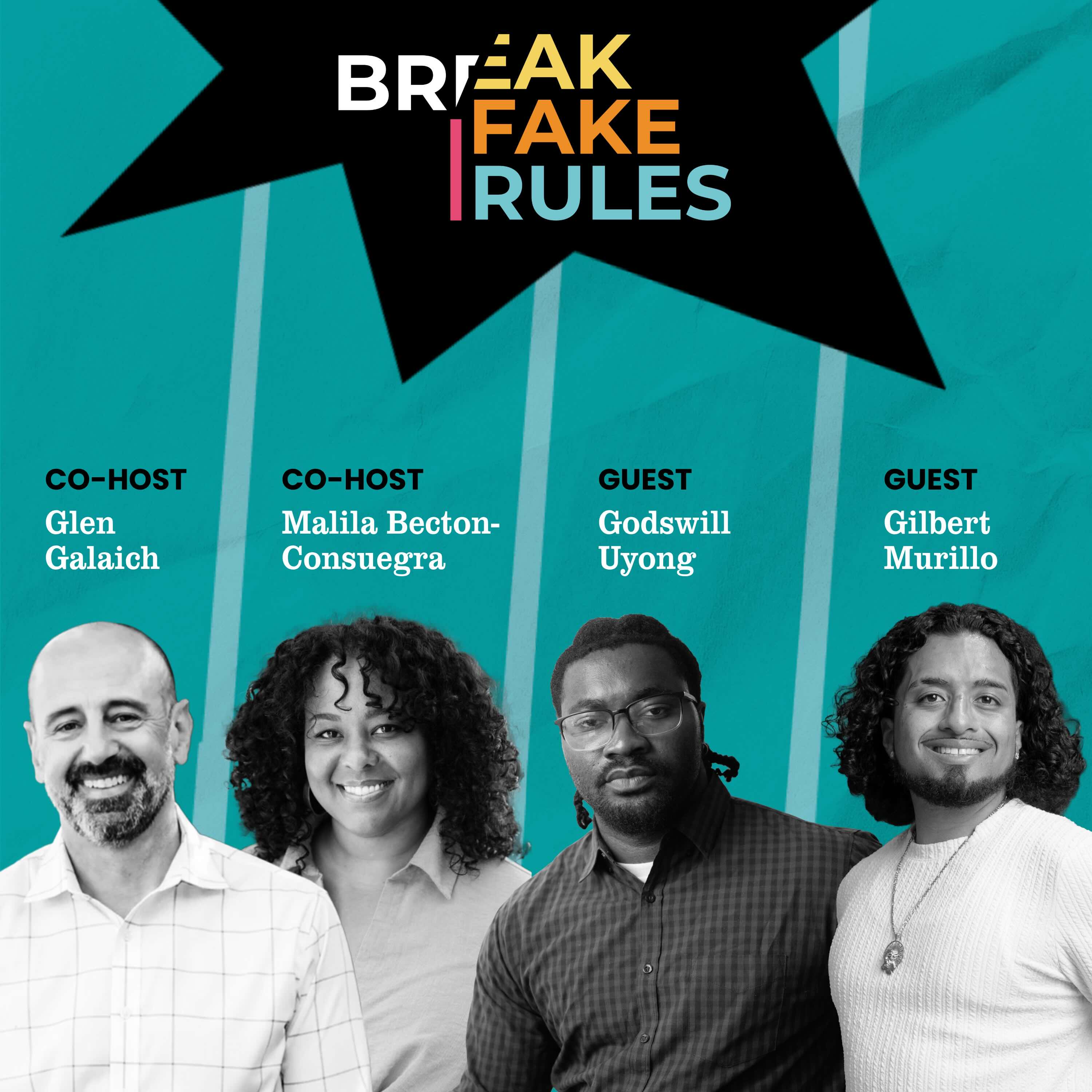
Philanthropy Needs a Youth-Led Update feat. Gilbert Murillo & Godswill Uyong

Philanthropy needs a reboot. Youth are nearly non-existent in the rooms where decisions are made about where charitable dollars flow. So what changes when we bring in young people to help direct these dollars? In this episode, co-hosts, Stupski Foundation CEO Glen Galaich and Malila Becton-Consuegra, Stupski’s Bay Area Postsecondary Success Program Officer, welcome two young leaders in philanthropy, Gilbert Murillo and Godswill Uyong, for a conversation about youth voice, power, and who gets to decide where dollars go. Part case study, part vision for the future, they use Stupski’s six-year internship program as an example of how philanthropy can give young people real grantmaking responsibility, space to question established practices, and access to a field whose decisions directly affect their communities. Gilbert and Godswill share their perspectives on philanthropy and what they learned from interviewing nonprofit leaders about Stupski’s spend down. They challenge the idea that foundations should preserve wealth in perpetuity, question why the 5% payout minimum so often becomes a ceiling, and call on philanthropy to move beyond transactional giving. Glen and Malila also consider how foundations can teach young people about the sector without training away the fresh perspectives that make their participation so valuable. At the heart of the conversation is a call to recognize youth leadership as essential to better decision-making and bring relationship, accountability, and love back into philanthropy. 💡Gilbert Murillo: “The rules aren't fake. They are designed the way they're designed, and it's been like that for 400 plus years already.” 💡Godswill Uyong: “When youth help drive grant making, factually, there's more collective knowledge and experience being used to make decisions.” Learn more about California Youth Power Fund, its youth leadership work co-led with Youth Organize! California (YO! Cali), and its partnership with Northern California Grantmakers. Order your copy of Glen’s book, CONTROL: Why Big Giving Falls Short. Learn about the Stupski Foundation. Co-Hosts: Glen Galaich & Malia Becton Consuegra Guests: Gilbert Murillo and Godswill Uyong Executive Producer: Claire Callahan Production Team: Podfly & Gary Community Ventures Video Editing: Edith Belmont Graphic Design: Middle MGMT

30 minAbspielen in:

Mi22Jul
Break Fake Rules: Change Big Giving For Good

Break Fake Rules: Change Big Giving For GoodHost

Is The Future of Philanthropy Impermanence? feat. Santhosh Ramdoss

What changes when we embrace impermanence instead of trying to live forever? In this episode, Glen Galaich sits down with Santhosh Ramdoss, president and CEO of Gary Community Ventures, for a conversation about impermanence and legacy. Guided by Gary’s commitment to move all its assets into the community by 2035, Santhosh debunks the fake rule that philanthropic impact depends on institutional permanence. He invites the sector to imagine a legacy rooted in stronger systems, durable public funding, and the beauty, love, and care we leave behind. In a Break Fake Rules exclusive, Santhosh rolls out a new game, The Philanthropy Challenge, that funders can play to respond to urgent crises and see where philanthropic funds can have the greatest impact. At the heart of the conversation is a more expansive question for wealth holders and foundation leaders: what if ending an institution is not a loss, but a strategic opening? And what becomes possible when philanthropy brings more joy, wonder, and imagination into the work of building a world that can outlast any one foundation? 💡Santhoush Ramdoss: “I think one of the practices that philanthropy does need a lot more of is joy and wonder. I think we've lost our capacity to see what's possible, and sometimes the moment of being in that wondrous possibility of what systems could be is lost.” Learn more about Gary Community Ventures and play The Philanthropy Challenge for yourself! Order your copy of Glen’s book, CONTROL: Why Big Giving Falls Short. Learn about the Stupski Foundation. Host: Glen Galaich Guest: Santhosh Ramdoss Executive Producer: Claire Callahan Production Team: Podfly & Gary Community Ventures Video Editing: Edith Belmont Graphic Design: Middle MGMT

24 minAbspielen in:

Mi8Jul
Break Fake Rules: Change Big Giving For Good

Break Fake Rules: Change Big Giving For GoodHost

Philanthropy Needs Its Critics feat. Gara LaMarche

What happens when philanthropy’s sharpest critique comes from inside the sector itself? In this episode, Stupski Foundation CEO Glen Galaich and co-host Eric Brown sit down with Gara LaMarche - longtime philanthropic leader, democracy advocate, and one of the OG fake rule breakers. Gara worked with George Soros at Open Society Institute, and Chuck Feeney at The Atlantic Philanthropies, and famously served as the “prosecutor” where he put philanthropy on trial in a 2011 mock trial before thousands of foundation leaders. Gara takes on the fake rule that people inside philanthropy are not supposed to criticize it, arguing that philanthropy should release its obsession with ego and that foundations should treat their resources as a public trust. Along the way, he digs into investing in power building, questions philanthropy’s instinct to be overly cautious, and calls on foundation leaders to use their influence to support communities, even when it’s uncomfortable or inconvenient. 💡 Gara LaMarche: If you can't speak out about authoritarianism or attacks on the very communities that you're purporting to protect, if not now, when? Learn more about Gara LaMarche and his work advancing philanthropy, democracy, human rights, and social justice. Watch Gara put philanthropy on trial. Order your copy of Glen’s book, CONTROL: Why Big Giving Falls Short. Learn about the Stupski Foundation. Co-Hosts: Eric Brown & Glen Galaich Guest: Gara LaMarche Executive Producer: Claire Callahan Production Team: Podfly Video Editor: Edith Belmont Graphic Design: Middle MGMT

32 minAbspielen in:

Mi17Jun
Break Fake Rules: Change Big Giving For Good

Break Fake Rules: Change Big Giving For GoodHost

What If America’s 250th Becomes a Turning Point for Repair? feat. Aria Florant

Fake rules tell us funding reparations is too complicated, too controversial, or too distant. So what will it take for us to see that repair is a responsibility we all carry? In this episode, Glen Galaich and co-host Malia Becton-Consuegra, Stupski Foundation’s Bay Area post-secondary success program officer (who also leads reparations work at the foundation), sit down with a visionary leader in the reparations movement, Aria Florant, co-founder and executive director of Liberation Ventures. They discuss repair, narrative power, and what it takes to build a truly multiracial democracy. As the U.S. gears up to celebrate Juneteenth and its 250th anniversary, Aria challenges the fake rule that supporting reparations is politically impossible, unprecedented, or simply too hard. Instead, she invites us to imagine a country where reparations lay the foundation for enduring generational change. Aria shares how Liberation Ventures is investing in heart-and-mind change, with a Beloved Repair campaign to move reparations from the margins to the mainstream. At the center of it all is a bold, hopeful question: What becomes possible when reparations stop feeling radical and become common sense? 💡Aria Florant: “We should be contending for the hearts and minds of everyone. This is not just about Black people, and all people can and should be doing this work, and in particular, doing it in their own communities with their own people, because we know that peer-to-peer organizing is one of the most effective ways to change culture.” Learn more about Liberation Ventures’work to support Black-led efforts for repair, racial healing, and reparations. Check out their Beloved Repair campaign. Learn about the Stupski Foundation. Co-Hosts: Glen Galaich & Malia Becton Consuegra Guest: Aria Florant Executive Producer: Claire Callahan Production Team: Podfly Video Editing: Edith Belmont Graphic Design: Middle MGMT

30 minAbspielen in:

Mi3Jun
Break Fake Rules: Change Big Giving For Good

Break Fake Rules: Change Big Giving For GoodHost

Can Funders Beat Thanos Without Engaging in Politics? feat. Vu Le

There’s a dirty word philanthropy doesn’t like to talk about - politics. But does staying above the political fray actually prevent us from supporting the communities and issues we claim to care about? In this live audience episode, Glen Galaich sits down with Vu Le, author of Reimagining Nonprofits and Philanthropy and the voice behind Nonprofit AF, for a funny, urgent, and table-flipping conversation. With his signature humor and candor, Vu challenges the fake rule that serious work has to be humorless, and pushes the sector to look at what conservative funders have built, what progressive funders keep avoiding, and what it would take to actually fund the future they say they want. Together, Glen and Vu dig into the power dynamics that keep nonprofits begging for crumbs, the limits of donor-centered philanthropy, and the need to make transformative, generational investments to support our democracy today, rather than waiting for it to crumble around us. At the center of it all is Vu’s challenge: philanthropy cannot fight for democracy, equity, justice, and a livable future while staying detached from power. We must harness our imagination and give all our resources like our future depends on it. 💡Vu Le - “We say foundations are not effective, philanthropy is not effective. That's not true. Progressive-leaning philanthropy is not effective because conservative funders have been extremely effective for like four decades now, and we're still here scrambling to do stuff to catch up." Buy your copy of Vu Le’s book, Reimagining Nonprofits and Philanthropy, and read Vu’s latest musings on NonprofitAf.com. Order your copy of Glen’s book, CONTROL: Why Big Giving Falls Short. Learn about the Stupski Foundation. Host: Glen Galaich Guest: Vu Le Executive Producer: Claire Callahan Production Team: Podfly Graphic Design: Middle MGMT

26 minAbspielen in:

Mi27Mai
Break Fake Rules: Change Big Giving For Good

Break Fake Rules: Change Big Giving For GoodHost

Asset-Framing to End Philanthropy's Savior Complex feat. Trabian Shorters

Philanthropy has a mindset problem, and it’s harming the very communities it claims to support. But what if philanthropy shifted its perspectives to see people through their aspirations, contributions, and power instead of their challenges? Co-hosts Glen Galaich and Eric Brown sit down with Trabian Shorters, a leading social entrepreneur, founder of BMe Community, and developer of the award-winning cognitive framework Asset-Framing®. Together, they explore why Asset-Framing is far more than a communications strategy—and how it fundamentally shifts how the brain understands people, problems, and possibilities. Trabian challenges the fake rule that fear is the strongest motivator, making clear that fear may trigger an initial reaction, but it cannot move us toward justice, equity, or lasting change. From there, he reframes what philanthropy can become when it stops treating communities as problems to solve and starts investing in people as the protagonists of their own lives. 💡Trabian Shorters: When you think about folks just based on what is wrong with them, you won't even consider the other half of their life and the types of options that are available. There's more going on in your life than what's wrong with you. So if you can understand it for yourself, then you can understand it for other people. Learn more about Trabian Shorters and his work with BMe Community, where he is helping leaders across philanthropy, journalism, and social impact change how people and communities are understood, funded, and supported. Order your copy of Glen’s book, CONTROL: Why Big Giving Falls Short. Learn about the Stupski Foundation. Co-Hosts: Eric Brown & Glen Galaich Guest: Trabian Shorters Executive Producer: Claire Callahan Production Team: Podfly Graphic Design: Middle MGMT

28 minAbspielen in:

Mi20Mai
Break Fake Rules: Change Big Giving For Good

Break Fake Rules: Change Big Giving For GoodHost

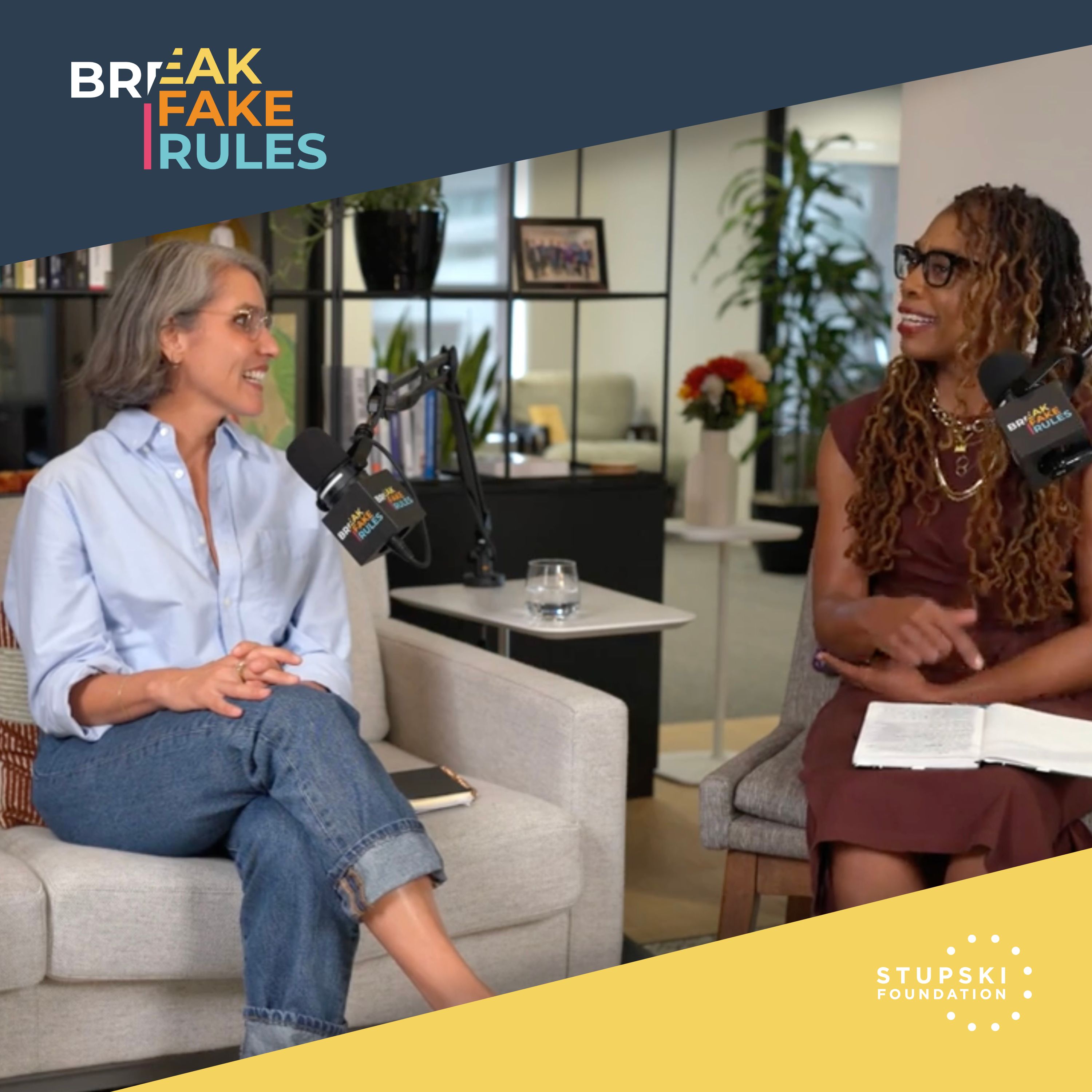
New Data Highlights Reality Gap Between Nonprofits & Funders feat. Elisha Smith Arrillaga

Nonprofit leaders are ringing alarm bells, but foundations are still deciding whether this moment is different enough to act. In this episode, Stupski Foundation CEO, Glen Galaich, and co-host Eric Brown sit down with Elisha Smith Arrillaga, Ph.D., vice president of research at the Center for Effective Philanthropy, to discuss what CEP’s recent research reveals about the widening gap between how foundations think they are showing up and how nonprofits are experiencing this moment. Together, they dig into the findings in CEP’s latest report, State of Nonprofits 2026, including rising deficits, CEO burnout, possible mergers, foundation caution, and the risks facing the people who rely on nonprofit services. Elisha challenges one of philanthropy’s most familiar fake rules: that every urgent problem needs a long strategy process before funders can take action. Sometimes the data is already clear. Sometimes the need is immediate. And sometimes the bridge from foundation thinking to nonprofit reality is not another plan, but the courage to move resources now. 💡Elisha Smith Arrillaga: I believe the most important fake rule to break is that we need a strategy to solve every problem...sometimes we get caught up in the need to have a plan. Sometimes it doesn't necessarily require a plan, but requires some action. Learn more about The Center for Effective Philanthropy and its research, including the State of Nonprofits 2026 and A Sector in Crisis: How U.S. Nonprofits and Foundations Are Responding to Threats Order your copy of Glen’s book, CONTROL: Why Big Giving Falls Short. Learn about the Stupski Foundation. Co-Hosts: Eric Brown & Glen Galaich Guest: Elisha Smith Arrillaga, Ph.D. Executive Producer: Claire Callahan Production Team: Podfly Graphic Design: Middle MGMT
31 minAbspielen in:

Mi13Mai
Break Fake Rules: Change Big Giving For Good

Break Fake Rules: Change Big Giving For GoodHost

The F Word Philanthropy Avoids Is the One It Needs Most feat. Nwamaka Agbo

What will it take for us to stop treating failure like a private embarrassment and start seeing it as a way to learn, grow, and take better risks? In this episode, Stupski Foundation CEO Glen Galaich sits down with Nwamaka Agbo, CEO of the Kataly Foundation, for a candid conversation about the fake rules that keep philanthropy playing it safe when communities need funders to move with more courage. Together, Glen and Nwamaka explore philanthropy’s complicated relationship with the F word: failure. Nwamaka makes the case that failure is already happening across the sector, but when foundations fail in secret, they miss the chance to learn and help others avoid the same mistakes. She also pushes philanthropy to think beyond what feels legally convenient and toward what is morally necessary in this moment, including moving capital beyond traditional 501(c)(3) structures. The conversation invites funders to lower the wall between investment and grantmaking, question their own risk tolerance, and consider what becomes possible when failure is treated not as a source of shame but as a powerful tool for change. 💡Nwamaka Agbo: If you run a really good experiment, chances are every once in a while that experiment is going to fail, and the failure actually gives you more information, more indication for how to improve your work going forward. And so if we can share our failures with our colleagues in philanthropy, more widely, more broadly, then all of us don't have to fail as frequently, and we don't have to fail alone. Learn more about the Kataly Foundation and how they are challenging philanthropy to move capital with greater accountability, transparency, and courage. Check out their failure series. Order your copy of Glen’s book, CONTROL: Why Big Giving Falls Short. Learn about the Stupski Foundation. Host: Glen Galaich Guest: Nwamaka Agbo | Kataly Foundation Executive Producer: Claire Callahan Production Team: Podfly Graphic Design: Middle MGMT
27 minAbspielen in:

Mi6Mai
Break Fake Rules: Change Big Giving For Good

Break Fake Rules: Change Big Giving For GoodHost

When We Invest in Women, We Transform Democracy for Generations feat. Jennifer Siebel Newsom & Dr. Kimberlé Crenshaw

What happens when philanthropy stops treating women and girls as a side issue and starts seeing them as a powerful lens through which we can better understand the major fights for justice, democracy, safety, and human dignity? In this live episode, recorded at The Giving List Women “Doing It Differently” Summit in Santa Barbara, Glen Galaich, CEO of the Stupski Foundation, and co-host Gwyn Lurie, Co-Founder and CEO of The Giving List Women, sit down with two leaders who have spent their careers challenging the stories, systems, and assumptions that shape our society: Jennifer Siebel Newsom, First Partner of California and award-winning documentary filmmaker behind Miss Representation and the new documentary Miss Representation: Rise Up, and Dr. Kimberlé Crenshaw, professor of law at UCLA and Columbia Law School, co-founder and executive director of the African American Policy Forum, host of Intersectionality Matters!, and author of the new book Backtalker. Together, they take on one of the most dangerous fake rules in philanthropy and culture— the idea that women and girls are a “lane” instead of a lens for understanding the defining issues of our time. Drawing on law, media, narrative, movements, and lived experience, they call out the short‑sighted practice of measuring impact in one‑ or two‑year cycles while anti‑democratic backlashes are funded for generations, and challenge funders to abandon outdated frameworks. They make clear that investing in women’s health, safety, financial security, and leadership is central to building a healthier democracy and a more just future. 💡Dr. Kimberlé Crenshaw: The old frameworks that we've used to determine how to spend money, where to invest. We've got to throw that out. We’ve got to look at what this war is right now, and it's very, very different from the way we typically think about it. 💡 Jennifer Siebel Newsom: “When we center women, when we invest in women's health, their safety, their financial security, women will be the most transformative leaders in world history.” Learn more about The Giving List Women, created to inspire donors, leaders, and changemakers to apply the lens of women and girls to philanthropic and other forms of investment, and to build partnerships that fuel a more gender-balanced world. Order your copy of Dr. Kimberlé Crenshaw’s book, Backtalker. Order your copy of Glen’s book, CONTROL: Why Big Giving Falls Short. Learn about the Stupski Foundation. Co-Hosts: Gwyn Lurie & Glen Galaich Guests: Jennifer Siebel Newsom - The Representation Project | Miss Representation: Rise Up Dr. Kimberlé W. Crenshaw- Backtalker | Intersectionality Matters! Executive Producer: Claire Callahan Video Production Team: SeeBoundless Audio Production Team: Podfly Graphic Design: Middle MGMT

33 minAbspielen in:

Mi29Apr
Break Fake Rules: Change Big Giving For Good

Break Fake Rules: Change Big Giving For GoodHost

The Biggest Fake Rule in the Media? OBJECTIVITY. feat. Faiz Shakir

What happens when journalism stops pretending objectivity is the same thing as truth telling? In this episode, Glen Galaich and co-host Dr. Carmen Rojas take Break Fake Rules to Kansas City for another conversation from Common Thread, the national event series from the Marguerite Casey Foundation bringing people together around the issues shaping working-class life in America. They welcome Faiz Shakir, founder of More Perfect Union, the Emmy Award-winning nonprofit newsroom redefining what news can look like when it actually centers working-class people. Together, they explore how More Perfect Union’s reporting has become a powerful tool for policy change and corporate accountability. The conversation takes on one of the media's biggest fake rules: the myth of objectivity. Faiz makes the case for an honest form of advocacy journalism, one that stays grounded in facts while refusing to hide its investment in the lives of working people. As Glen, Carmen, and Faiz talk through the stories that much mainstream media still fails to tell, a bigger idea comes into focus: journalism can do more than describe a rigged economy. It can help people understand the forces shaping their lives, see themselves as actors in that story, and build power to change it. 💡Faiz Shakir: We used to live in an America in which earning a paycheck was the way you got wealth, and was the way you helped take care of your family. Now your labor, your W2 paychecks, are really the source of pain and angst for you, because you can't get by with that. Learn more about More Perfect Union and how they are building power through advocacy journalism. Order your copy of Glen’s book, CONTROL: Why Big Giving Falls Short. Learn about the Stupski Foundation. Co-Hosts: Dr. Carmen Rojas & Glen Galaich Guest: Faiz Shakir | More Perfect Union Executive Producer: Claire Callahan Production Team: Podfly Graphic Design: Middle MGMT
22 minAbspielen in:

Mi22Apr
Break Fake Rules: Change Big Giving For Good

Break Fake Rules: Change Big Giving For GoodHost

Philanthropy Gets Smarter When Youth Direct Where Funds Flow feat. Josh Lee

What happens when philanthropy stops assuming young people are not ready to lead and starts trusting them when it matters most? In this episode, co-hosts Glen Galaich and Ralph Lewin, Executive Director of the Peter E. Haas Jr. Family Fund, bust open a fake rule that assumes young people do not know enough to help shape the future of our democracy. Together, they reflect on their own first experiences making grants, what philanthropy misses when it decides what is best for young people without them, and why involving youth in funding decisions can strengthen both grantmaking and democracy. They are joined by Josh Lee, director of the Youth Power Fund, a California collaborative fund where young people do not just advise on funding decisions, they drive them. Josh makes the case for involving young people where it matters most: where resources are allocated. 💡Josh Lee: Contrary to what we might think, young people, in my opinion, are not the leaders of tomorrow. They're leading right now, today. Learn more about Youth Power Fund and how they are working to ensure more young people, the Boldest Among Us, can shape funding decisions, build power, and drive change in their communities. Order your copy of Glen’s book, CONTROL: Why Big Giving Falls Short. Learn about the Stupski Foundation. Co-Hosts: Ralph Lewin & Glen Galaich Guest: Josh Lee | Youth Power Fund Executive Producer: Claire Callahan Production Team: Podfly Graphic Design: Middle MGMT
30 minAbspielen in:

Mi15Apr
Break Fake Rules: Change Big Giving For Good

Break Fake Rules: Change Big Giving For GoodHost

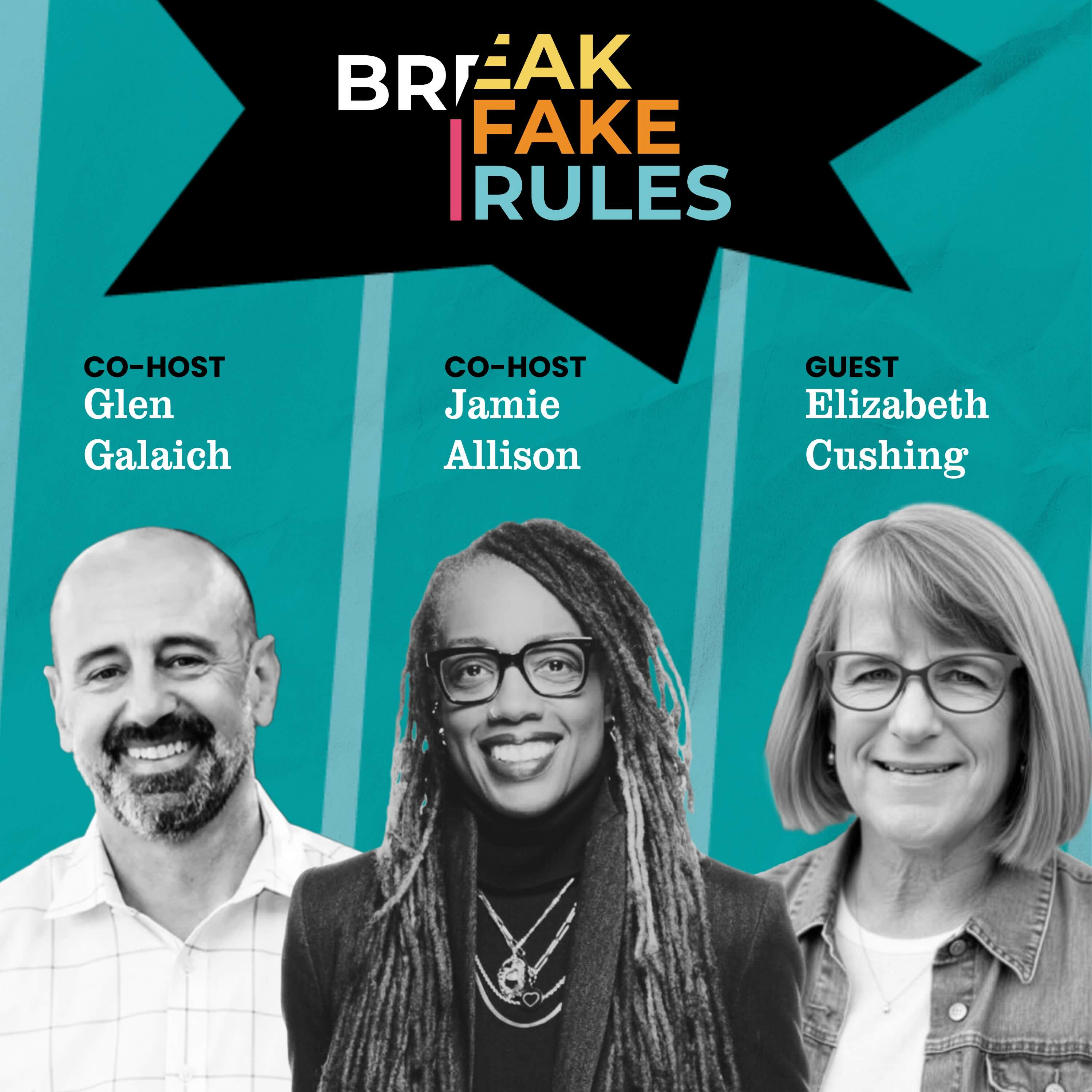
Beyond 5%: Philanthropy as a Bridge, Not Backup Government with Jamie Allison feat. Elizabeth Cushing

What happens when one of the most dreaded days on the calendar gets reimagined as a celebration of collective care? In this episode, Stupski Foundation CEO Glen Galaich and co-host Jamie Allison, executive director of the Walter and Elise Haas Fund, use Tax Day to open up a bigger conversation about public responsibility, private wealth, and what taxes make possible. Jamie makes a joyful case for loving Tax Day, not in spite of what it asks of us, but because taxes fund the schools, roads, clean water, and public systems that hold our lives together. Together, she and Glen ask what it would mean to stop treating taxes as something to avoid and start seeing them as an investment in one another, while also asking whether philanthropy is putting its own tax-advantaged dollars to work with that same sense of responsibility. They are joined by Elizabeth Cushing, CEO of Playworks, a national nonprofit that helps nearly 1 million children each year build belonging, resolve conflict, and return to class ready to learn through structured play and recess. Elizabeth lays out the damaging impact of federal education funding cuts and tightening state budgets on kids across the country. She reframes the question of “how can philanthropy possibly backfill federal funding cuts” to “how can philanthropy act as a bridge in this moment to help nonprofits survive the next few hard years instead of forcing nonprofits to go it alone?” 💡Elizabeth Cushing: I'm hopeful that the midterms put some folks in Congress that prioritize children's well being, and I don't care which side of the aisle they're on, that is what our country is responsible for. Learn more about Playworks and how they help kids build belonging, resolve conflict, and experience the power of play every day. Order your copy of Glen’s book, CONTROL: Why Big Giving Falls Short. Learn about the Stupski Foundation. Co-Hosts: Jamie Allison & Glen Galaich Guest: Elizabeth Cushing | Playworks Executive Producer: Claire Callahan Production Team: Podfly Graphic Design: Middle MGMT
31 minAbspielen in:

Mi8Apr
Break Fake Rules: Change Big Giving For Good

Break Fake Rules: Change Big Giving For GoodHost

We Need Plans, Not Pledges feat. Renee Kaplan

What happens when we stop designing philanthropy around preservation, control, and donor comfort, and start asking how to put more capital, trust, and collective action to work? In this episode, Glen Galaich speaks with Renee Kaplan, CEO of Forward Global, in a conversation recorded at the Forward Global Summit in Whistler. They challenge the fake rules that keep philanthropy cautious and exclusive, and explore what opens up when wealth holders, nonprofit leaders, entrepreneurs, and other changemakers come together to solve problems side by side. Renee shares how Forward Global has evolved into a global community and impact platform built to amplify what works, accelerate collective action, and move resources at the pace this moment demands. If you’re ready to replace judgment and rigid boundaries with trust, openness, and a shared belief that no single person can drive lasting change alone, this episode is for you. 💡Renee Kaplan: Are you ready to deploy, or are you only into preservation? Learn more about Forward Global and how you can join their global community. Order your copy of Glen’s book, CONTROL: Why Big Giving Falls Short. Learn about the Stupski Foundation. Guest: Renee Kaplan | Forward Global Executive Producer: Claire Callahan Visual Production Team: SeeBoundless Production Team: Podfly Graphic Design: Middle MGMT
24 minAbspielen in:

Mi1Apr
Break Fake Rules: Change Big Giving For Good

Break Fake Rules: Change Big Giving For GoodHost

How Do We Break the Rules of Individualism to Build Interconnected Freedom? feat. Mia Birdsong

What happens when we stop chasing individual freedom and start asking what it would mean to be free together? In this episode, Stupski Foundation CEO Glen Galaich sits down with Mia Birdsong, founder and executive director of Next River, where she is creating the cultural conditions necessary for a truly free world to emerge. Together, they break the fake rules of individualism, redefine what freedom actually is, and explore how we might pivot from a society organized around separation and scarcity to one rooted in care, connection, and collective well being. 💡Mia Birdsong: I understand the kind of fear and anxiety that has us wanting to grip tightly to what's familiar, because it feels safe, but it's not safe. It's never been safe. 💡Mia Birdsong: If we can find the courage to let go of trying to hold on to this thing, trying to fix this thing, and trust that together, if we are oriented toward our collective care and well being, we can build something better. Learn more about Next River and their work to create the cultural conditions for a truly free world to emerge. Order your copy of Glen’s book, CONTROL: Why Big Giving Falls Short. Learn about the Stupski Foundation. Guest: Mia Birdsong | How We Show Up Executive Producer: Claire Callahan Production Team: Podfly Graphic Design: Middle MGMT
25 minAbspielen in:

Mi11Mär
Break Fake Rules: Change Big Giving For Good

Break Fake Rules: Change Big Giving For GoodHost

How Do We Break the Rules of a Broken Immigration System? with Dr. Carmen Rojas feat. Nikki Marín Baena

What happens when philanthropy treats this moment like a true crisis and local organizers refuse to let cruelty become normal? In this episode, Glen Galaich is joined by co-host Dr. Carmen Rojas, President and CEO of the Marguerite Casey Foundation, for a conversation filmed at the first of a series of events called Common Thread, a new initiative designed to bring people together through conversation, culture, and connection. Glen and Carmen talk about how people can get involved and attend future Common Thread events this year, then turn to the urgent realities of immigrant rights and due process as communities confront detention, deportation, and government overreach. Carmen reflects on using her LinkedIn community and platform to humanize the lives affected by disappearances and deportations. She also challenges some of philanthropy’s most entrenched assumptions, including the idea that institutions must hold tightly to wealth even in moments they themselves call a crisis. Then local organizer, Nikki Marín Baena, co-founder and co-director of Siembra NC, joins the conversation to talk about who pays when philanthropy plays it safe on immigrant rights. Nikki shares what organizing for immigrant rights looks like on the ground in North Carolina. From helping neighbors connect, making communities safer, supporting Know Your Rights efforts, building Fourth Amendment workplace trainings, and responding to immigration operations that reshape daily life for workers and families. Together, Nikki, Glen and Carmen uncover the fake rules forming around immigration and mass deportation in America, and call on philanthropy to embrace risk in support of the people doing this work. 💡Nikki Marín Baena: I think that we are taking it for granted that this moment of big hatred that we're in is the way that it has to be. We don't have to accept that there's just widespread hatred. We can find another way. Learn more about Siembra NC and their work to protect immigrant communities and build collective power in North Carolina. Sign up to volunteer! Preorder your copy of Glen’s book, CONTROL: Why Big Giving Falls Short. Learn about the Stupski Foundation. Co-Hosts: Carmen Rojas & Glen Galaich Guest: Nikki Marín Baena - Siembra NC | Defend and Recruit | LinkedIn Executive Producer: Claire Callahan Production Team: Podfly Graphic Design: Middle MGMT

30 minAbspielen in:

Mi4Mär
Break Fake Rules: Change Big Giving For Good

Break Fake Rules: Change Big Giving For GoodHost

The Overhead Myth Is Undermining Impact with Jamie Allison feat. Rusty Stahl

What happens when philanthropy stops treating the people doing the work as an unnecessary expense and starts funding nonprofit partners like it actually wants them to win? In this episode, Stupski Foundation CEO Glen Galaich and returning co-host Jamie Allison, Executive Director of the Walter and Elise Haas Fund, react to a Chronicle of Philanthropy piece on the high cost of low nonprofit salaries and the dangerous backlash nonprofits are facing right now. They are joined by guest Rusty Stahl, president and CEO of Fund the People, a leading advocate for investing in nonprofit workers, to make the case that strengthening the nonprofit workforce is not just a strategic investment, it is crucial to protecting democracy itself. 💡Rusty Stahl: What we're seeing in our research is the more money you put into the staff and the people doing the work, the better the program is, and the greater the impact and results. Learn more about Fund the People and their work to strengthen the nonprofit workforce so organizations can win for their missions. Preorder your copy of Glen’s book, CONTROL: Why Big Giving Falls Short. Learn about the Stupski Foundation. Co-Hosts: Jamie Allison & Glen Galaich Guest: Rusty Stahl: Fund the People | Fund the People Podcast Executive Producer: Claire Callahan Production Team: Podfly Graphic Design: Middle MGMT
27 minAbspielen in:

Mi25Feb
Break Fake Rules: Change Big Giving For Good

Break Fake Rules: Change Big Giving For GoodHost

Systems Don’t Change Unless People Do with Jamie Allison feat. Catherine Bracy

What happens when we stop pretending that systems will fix themselves, and ask what it really takes to change them? In this episode, Stupski Foundation CEO Glen Galaich and returning co-host Jamie Allison, Executive Director of the Walter and Elise Haas Fund, first discuss the Endeavor Fund and what it means to back organizations with long-term, trust-based support. Then they sit down with guest Catherine Bracy, founder and CEO of TechEquity and author of World Eaters: How Venture Capital Is Cannibalizing the Economy, to examine how venture capital shapes our everyday lives. Catherine traces how venture capital shifted from funding innovation to driving financialization, and why wealth inequality functions as a strategy as much as an outcome. She breaks down the power law logic that underwrites the entire system, what it extracts from workers and communities, and why it matters when foundations are more invested in venture than the organizations doing the work on the ground. The conversation lands on a challenge that’s hard to ignore: if philanthropy wants different outcomes, it has to question the assumptions behind where its money is parked, and prioritize community benefit over donor comfort. 💡Catherine Bracy: The dirty little secret of venture capital is that it’s organized like a power law itself. The vast majority of these funds do not outperform the S&P 500, so what are you actually getting for that money? Learn more about TechEquity and their work to build a more equitable tech economy. Preorder your copy of Glen’s book, CONTROL: Why Big Giving Falls Short. Learn about the Stupski Foundation. Co-Hosts: Jamie Allison & Glen Galaich Guest: Catherine Bracy | World Eaters: How Venture Capital is Cannibalizing the Economy Executive Producer: Claire Callahan Production Team: Podfly Graphic Design: Middle MGMT
31 minAbspielen in:

Mi18Feb
Break Fake Rules: Change Big Giving For Good

Break Fake Rules: Change Big Giving For GoodHost

The Only Honest Philanthropy Abolishes Itself with Eric Brown feat. Marlene Engelhorn

What happens when someone born into a family fortune decides that keeping control of that wealth is the real problem? In this episode, Stupski Foundation CEO Glen Galaich and co-host Eric Brown, principal of Brown Bridge Strategies and co-host of Let’s Hear It, sit down with Austria-based activist Marlene Engelhorn, co-founder of Tax Me Now. Marlene inherited many millions of dollars and chose to give most of it away by creating a Citizens’ Council of 50 everyday Austrians to decide where the money should go. Together, they dig into what it means to institutionalize philanthropy, and what it takes to dismantle it. Glen and Eric start with a jaw-dropping snapshot of the sector from the Center for Effective Philanthropy report: A Sector in Crisis. In it, 40% of surveyed nonprofit leaders say funders are less helpful now, while 20% of foundations believe they have little responsibility to help nonprofits navigate this moment. It’s a stark disconnect: foundations feel secure while nonprofits face existential crises. Against that backdrop, Marlene talks about “rich fragility,” the ways wealth holders defend their privilege, and why she believes any philanthropic approach that keeps people dependent on private goodwill misses the point. 💡 Marlene Engelhorn: I don't want to protect my privilege. I want it gone. I think that's the only genuine approach to philanthropy. It's to basically make sure that it abolishes itself. Learn more about taxmenow and their campaign to challenge inherited wealth and push for democratic tax reform. Explore the Guter Rat (Citizens’ Council) and how the process works. Preorder your copy of Glen’s book, CONTROL: Why Big Giving Falls Short. Learn about the Stupski Foundation. Co-Hosts: Eric Brown & Glen Galaich Guest: Marlene Engelhorn Executive Producer: Claire Callahan Production Team: Podfly Graphic Design: Middle MGMT
28 minAbspielen in:

Mi28Jan
Break Fake Rules: Change Big Giving For Good

Break Fake Rules: Change Big Giving For GoodHost

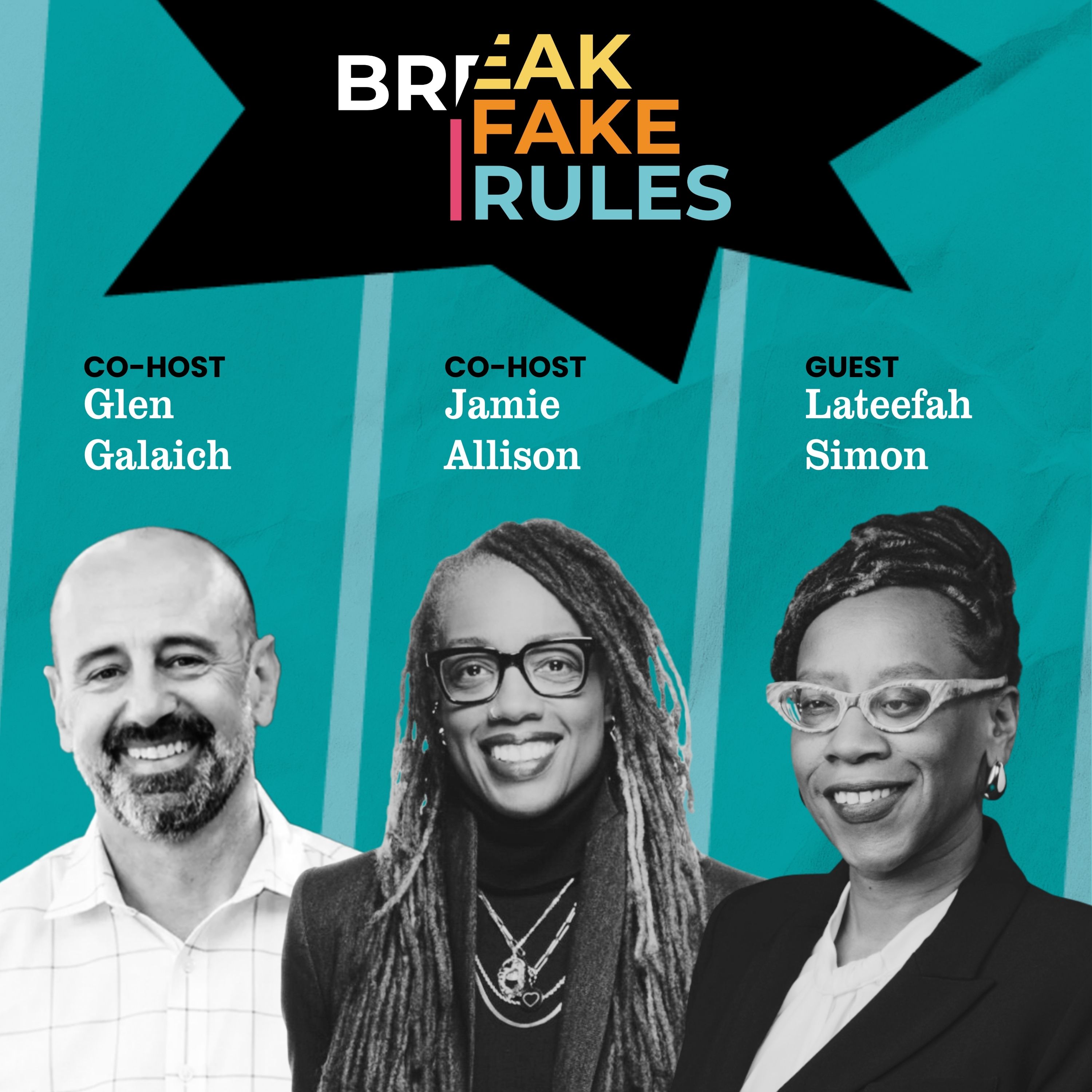
Go Hard or Go Home with Jamie Allison feat. Representative Lateefah Simon

Welcome back to Break Fake Rules! In the season three premiere, Jamie Allison, Executive Director of the Walter and Elise Haas Fund, co-hosts with Glen Galaich to discuss the fake rules we need to break to relieve the pressure nonprofits are under at the outset of 2026. Special guest, Representative Lateefah Simon (CA-12), joins from Capitol Hill to reflect on her journey from nonprofit leader to federal policymaker. At a moment of intensifying fear and political division, Representative Simon calls on us to reject division, protect nonprofits, and do more for our communities. 💡Representative Lateefah Simon: “If we’re not going to go hard, we should go home.” Tune in for a candid conversation about breaking through partisan divides and making real change in our communities. Learn about Representative Lateefah Simon’s work and subscribe to her newsletter. Break Fake Rules is a podcast that brings today’s news and big philanthropic issues into focus to change Big Giving for good. Learn more about the Walter and Elise Haas Fund. Learn about the Stupski Foundation. Co-Hosts: Jamie Allison & Glen Galaich Guest: Representative Lateefah Simon Executive Producer: Claire Callahan Production Team: Podfly

30 minAbspielen in:

Mi10Dez 25
Break Fake Rules: Change Big Giving For Good

Break Fake Rules: Change Big Giving For GoodHost

BONUS EPISODE: Season 2 Roundup

That’s a wrap on season 2! In this bonus episode of Break Fake Rules, hear some of Glen and Claire’s favorite moments from the season. And spoiler alert - they drop exciting updates about what’s coming next season on Break Fake Rules. Break Fake Rules is a podcast from the Stupski Foundation that questions philanthropy’s self-imposed rules and looks for ways philanthropy can better serve communities and contribute to lasting change. Learn about the Stupski Foundation’s work. Host: Glen Galaich Guest & Producer: Claire Callahan

37 minAbspielen in:

Di9Dez 25
Break Fake Rules: Change Big Giving For Good

Break Fake Rules: Change Big Giving For GoodHost

Where Do We Go From Here? with Jamie Allison and Carmen Rojas

In the season wrap of Break Fake Rules, Carmen Rojas (CEO & President, Marguerite Casey Foundation) and Jamie Allison (Executive Director, Walter & Elise Haas Fund) bring the vibes to a year-defining conversation with host Glen Galaich. Together, they reflect on how philanthropy showed up in 2025—and how it needs to evolve in 2026. Jamie Allison calls on the sector to embrace courage and purpose: “Our communities and nonprofit leaders need from us what they've always needed from us. They need us to be courageous and to show that the project of philanthropy is about redistributing privilege and resources.” Carmen Rojas offers a bold vision for the road ahead, challenging philanthropy to think generationally and confront its own complicity: “We have an opportunity… to reset that table.” And: “We need to reconcile and have a meaningful conversation about the ways each of our institutions is enabling… this political movement.” Looking ahead at 2026, Glen Galaich reminds us why imagination matters: “So many foundations limit themselves to a cap… It stops us from dreaming and imagining things that could be leveraged for a better society.” Tune in for a finale filled with the kind of rule-breaking energy that sets the stage for a transformative 2026. Learn more about the Walter and Elise Haas Fund and the We Initiative to cultivate belonging. Explore the Marguerite Casey Foundation and learn about their decision to significantly increase grantmaking to protect communities under attack. Break Fake Rules is a podcast from the Stupski Foundation that questions philanthropy’s self-imposed rules and looks for ways philanthropy can better serve communities and contribute to lasting change. Learn about the Stupski Foundation’s work. Host: Glen Galaich Guests: Jamie Allison & Carmen Rojas Producer: Claire Callahan

44 minAbspielen in: