
Bekomm eine E-Mail, wenn Gergely in einem Podcast zu Gast istPodAppear prüft neue Folgen, sobald sie erscheinen, und lässt die weg, in denen Gergely nur erwähnt wird. Bis zu 15 Personen kostenlos, ohne Kreditkarte.Bis zu 15 Personen kostenlos, ohne Kreditkarte.
Gergely kostenlos folgen
GO

Gergely Orosz

Zwei Jahre auf Sendung

GastHostErwähnt

Selbst moderierte Folgen

Mi18Nov
The Pragmatic Engineer

The Pragmatic EngineerHost

Software factories and code reviews with Harjot Gill

Brought to You By: • turbopuffer – a vector and full-text search engine built on object storage. It’s fast, cheap, and extremely scalable. • Entire – The Git forge for agent-human collaboration. Built for the scale and throughput of agentic coding. • WorkOS – everything you need to make your app enterprise-ready. — In this conversation, we step into the world of an AI-pilled CEO to explore how their startup works. This episode might as well be a way of succeeding that contradicts the growing convention that AI spending costs are too high and must be clamped down on.  Harjot Gill is founder and CEO of CodeRabbit, an AI code review business, and he shipped over 5,000 pull requests last month, spending on AI at a monthly run rate of $250,000(!) It’s certainly not a conventional approach and Harjot gets into detail about the thinking and reasoning behind it. In this episode of The Pragmatic Engineer Podcast, we talk about his background in building software and founding infra startups for the last 30 years, and how things changed into the era of building software factories at CodeRabbit. We talk about why he believes human code review is dead, and how his team maintains quality while shipping at unprecedented speed. We also get into the rising costs of AI development, why Harjot is convinced that tech startups need more funding than ever, and how AI is changing recruitment and the skills for success. Timestamps 00:00 Intro 03:17 How Harjot shipped over 5,000 pull requests in a month 08:46 Harjot’s path into tech and his first startups 12:25 Early conviction around AI and founding CodeRabbit 14:40 Switching to AI coding 20:35 Software factories explained 25:37 What’s replacing human code review 38:44 Technical debt and deslopping tests 46:05 Evals 50:25 Formal methods 52:05 AI cost at CodeRabbit 54:57 Startup funding in 2026 and the value of AI spend 1:08:20 Hiring 1:13:03 Work pace, sleep, and burnout 1:21:55 Skills for the AI era 1:24:30 Book recommendation — The Pragmatic Engineer deepdives relevant for this episode: • Inside OpenAI’s agentic software factory • What is happening with code reviews? • What’s the ROI of software engineers’ spending on AI? • Why Ramp built its own in-house coding agent, Inspect • AI SRE: what is it, how could it change on-call – and does it work? • Context engineering with Dex Horthy • Formal methods with Hillel Wayne  • Building Codex with Tibo Sottiaux — Production and marketing by ⁠⁠⁠⁠⁠⁠⁠⁠https://penname.co/⁠⁠⁠⁠⁠⁠⁠⁠. For inquiries about sponsoring the podcast, email podcast@pragmaticengineer.com. Get full access to The Pragmatic Engineer at newsletter.pragmaticengineer.com/subscribe


1 h 27 minAbspielen in:

Mo16Nov
The Pragmatic Engineer

The Pragmatic EngineerHost

Software engineering after code becomes cheap with Satya Nadella

Brought to You By: • turbopuffer – a vector and full-text search engine built on object storage. It’s fast, cheap, and extremely scalable. • Linear – the product development system for teams and agents. • WorkOS – everything you need to make your app enterprise ready. — What does software engineering look like when generating code becomes cheap, and verifying it becomes the hard part? Today’s guest is Satya Nadella, Microsoft’s CEO, who is one of the very few Big Tech CEOs who started his career as a software engineer (back at Sun Microsystems). He joins me to discuss how building software is changing inside Microsoft, and what these changes mean for engineers. We start with Microsoft’s embrace of open source and the lessons from building VS Code in the open. I also ask how Microsoft went from an early lead with GitHub Copilot to catching up with Cursor and Claude Code, and what this reveals about building products around rapidly improving models. Satya explains what a “software factory” means to him, why specifications and verification are becoming more important, and how teams working on existing products like Windows are adapting. We discuss Microsoft’s voluntary exit offers, the anxiety around AI and engineering careers, and why he cautions against drawing long-term conclusions from the slowdown in junior hiring. We also explore open and local models, why companies need to control their own AI infrastructure, and how to build safeguards around increasingly capable agents. Satya closes with advice for engineers who want to excel through this change, and why he’d like to spend more time building himself. Sidenote: we recorded this episode, in Redmond, a few hours before Microsoft’s day-long Outlook outage started: and so there was no way we could have touched on that topic - but expect for me to follow up on that massive outage in a future The Pragmatic Engineer episode. Timestamps 00:00 Intro 02:12 Microsoft’s open-source shift 04:15 Building VS Code in the open 05:55 Copilot, Cursor, and Claude Code 09:52 Decision engines 12:32 Verifying AI-generated code 15:39 The software factory 20:45 Bringing AI to existing products 24:06 Why adopting AI is different to adopting React 26:29 The changing role of software engineers 29:25 Microsoft’s voluntary exit offers 34:05 AI anxiety and changing roles 36:35 Junior hiring 42:36 Open models 45:39 Owning your AI infrastructure 51:21 Building trust in AI agents 53:48 Local models and hybrid intelligence 56:39 Microsoft’s model strategy 59:26 Advice for engineers 1:01:21 Closing takeaways — The Pragmatic Engineer deepdives relevant for this episode: • How will AI change operating systems? A deepdive into Windows  • A pragmatic guide to LLM evals for devs • What is “loop engineering?” • What is inference engineering? A deepdive • What are Forward Deployed Engineers, and why are they so in demand? • What is happening with code reviews? • Building MCP servers in the real world • Microsoft is dogfooding AI dev tools’ future — Production and marketing by ⁠⁠⁠⁠⁠⁠⁠⁠https://penname.co/⁠⁠⁠⁠⁠⁠⁠⁠. For inquiries about sponsoring the podcast, email podcast@pragmaticengineer.com. Get full access to The Pragmatic Engineer at newsletter.pragmaticengineer.com/subscribe

1 h 03 minAbspielen in:

Do5Nov
The Pragmatic Engineer

The Pragmatic EngineerHost

Scaling Slack and GitHub with Maude Lemaire

Brought to You By: • Antithesis – verify your system’s correctness without human review or traditional integration tests – and avoid bugs or outages. • turbopuffer – a vector and full-text search engine built on object storage. It’s fast, cheap, and extremely scalable. • Entire – The Git forge for agent-human collaboration. Built for the scale and throughput of agentic coding. — What is involved in scaling up large, popular products at places like Slack and GitHub?  We get an insider’s view on this from Maude Lemaire, a principal engineer and author of ‘Refactoring at Scale: Regaining Control of Your Codebase.’ She spent nearly eight years at Slack, where she led the backend performance infrastructure team, before joining GitHub to tackle database scaling challenges. Most recently, she worked on improving performance at Cursor – including time to first token. In this episode of The Pragmatic Engineer, Maude and I dig into the challenges of scaling some of the world's largest software products. We explore how Slack handled growing numbers of enterprise customers, how it evolved its approach to load testing, and the lessons Maude learned during nearly eight years of scaling Slack's infrastructure. She also tells us what it was like joining GitHub in 2024 when Copilot was taking off, the challenges of working with GitHub's gigantic Rails monolith, and how Maude uses AI in her work – while keeping judgment calls and decision-making firmly in her own hands. Timestamps 00:00 Intro 03:15 Early years and path to software engineering 07:32 First job at Rent the Runway 09:17 The HipChat data leak 10:54 Joining Slack and the challenges of scaling 26:30 Load testing and thundering herds 32:29 Event floods 38:30 Evolving load testing at Slack 48:38 Joining GitHub in 2024 56:52 The challenges of the Rails monolith 1:02:26 How Maude uses AI 1:12:40 Advice for engineers interested in product/platform work — The Pragmatic Engineer deepdives relevant for this episode: • Real-world engineering challenges: building Cursor • Pushing software engineering limits with “napkin math” • What is happening with code reviews? • Why reliability is hard at scale: learnings from infrastructure outages  • What is Reliability Engineering?  • Migrations Done Well  • Shipping to Production  • The Platform and Program Split at Uber • The present, past and future of GitHub • Why performant code matters (but gets widely ignored), with Casey Muratori • Designing Data-intensive Applications with Martin Kleppmann — Production and marketing by ⁠⁠⁠⁠⁠⁠⁠⁠https://penname.co/⁠⁠⁠⁠⁠⁠⁠⁠. For inquiries about sponsoring the podcast, email podcast@pragmaticengineer.com. Get full access to The Pragmatic Engineer at newsletter.pragmaticengineer.com/subscribe

1 h 19 minAbspielen in:

Do29Okt
The Pragmatic Engineer

The Pragmatic EngineerHost

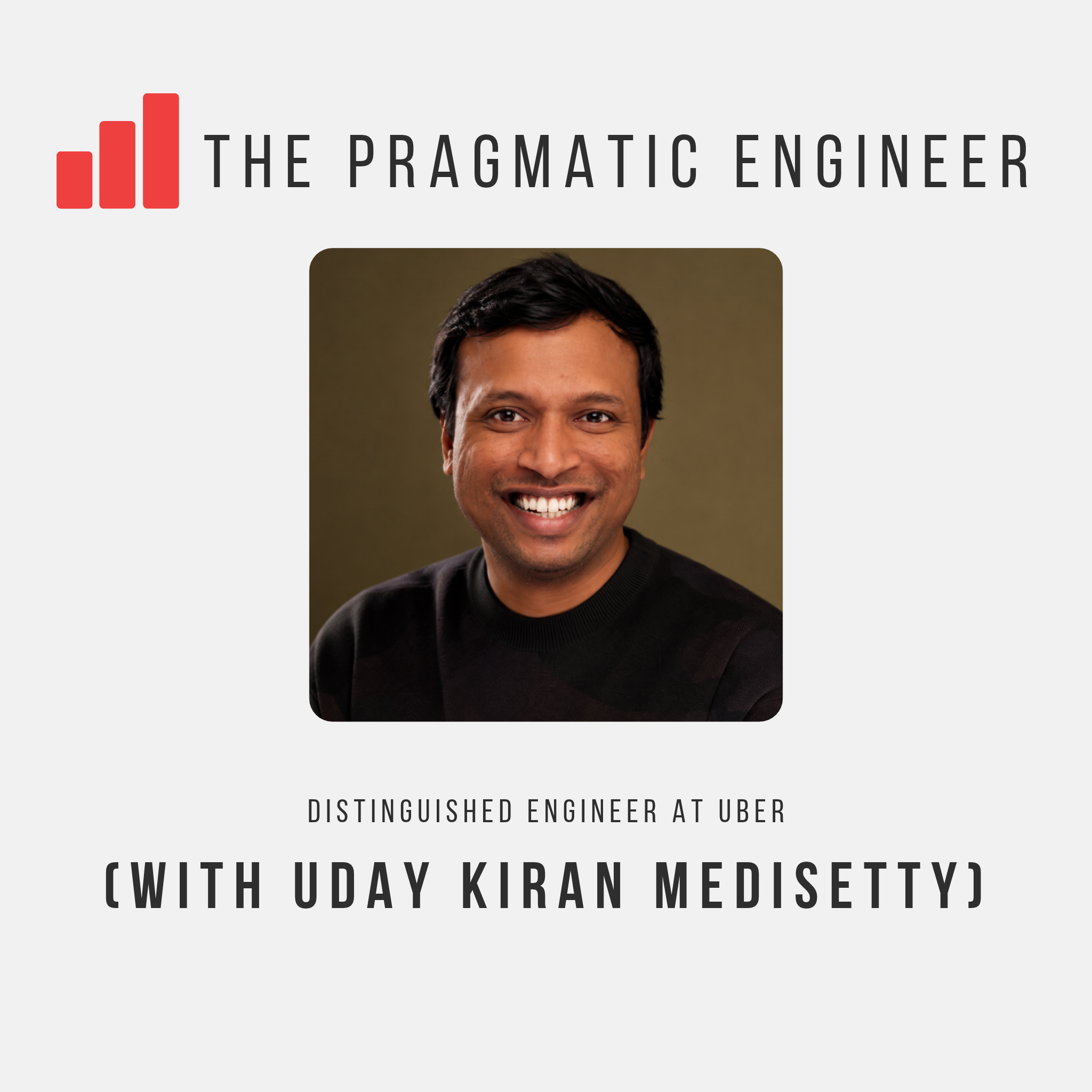
Software engineering at Google & CS education with Titus Winters

Brought to You By: • turbopuffer – a vector and full-text search engine built on object storage. It’s fast, cheap, and extremely scalable • Linear – the product development system for teams and agents • WorkOS – everything you need to make your app enterprise ready. — An engineer who helped create today’s software engineering curriculum now says to burn down almost all of it. What’s the cause of this contradiction? We find out from the lead author of Software Engineering at Google. Titus Winters spent more than a decade at Google, where he led its readability program and built Abseil, Google’s open-sourced foundational C++ libraries. He is currently a Senior Principal Scientist at Adobe, where he focuses on developer experience and productivity. In this episode of The Pragmatic Engineer podcast, Titus and I discuss how his team tackled a massive refactoring project across Google's 250-million-line C++ codebase, why Google made testing mandatory, and his work on updating the ACM/IEEE undergraduate computer science curriculum guidelines. We also explore why traditional productivity metrics miss some of AI’s biggest benefits, what needs to change in CS education, and how new engineers can stand out. Timestamps 00:00 Intro 07:01 Getting hired by Google 09:48 Finding his niche at Google 14:32 Why Google made testing mandatory 17:45 Why new engineers fear making mistakes 20:40 Abseil: C++ foundations at Google 23:09 Google’s massive C++ refactoring 30:48 AI for rewrites 39:07 Software Engineering at Google: the book 43:10 Google’s readability reviews 47:18 Why teams still matter 52:41 Psychological safety 58:17 Layoffs and culture 1:02:11 Measuring developer productivity 1:11:17 Rethinking CS education 1:22:56 What new grads should learn 1:32:08 Titus’s ideal software engineering curriculum 1:36:27 Advice for breaking into tech 1:38:35 Book recommendation — The Pragmatic Engineer deepdives relevant for this episode: • The state of the tech industry in 2026 • Inside Google's Engineering Culture • Slow down to speed up when working with AI agents • Measuring developer productivity? A response to McKinsey • How tech companies measure the impact of AI on software development • What is happening with code reviews? • When AI writes almost all code, what happens to software engineering? • Developer productivity with Dr. Nicole Forsgren (creator of DORA, co-creator of SPACE)  • Measuring the impact of AI on software engineering – with Laura Tacho — Production and marketing by ⁠⁠⁠⁠⁠⁠⁠⁠https://penname.co/⁠⁠⁠⁠⁠⁠⁠⁠. For inquiries about sponsoring the podcast, email podcast@pragmaticengineer.com. Get full access to The Pragmatic Engineer at newsletter.pragmaticengineer.com/subscribe
1 h 40 minAbspielen in:

Mi21Okt
The Pragmatic Engineer

The Pragmatic EngineerHost

The revised rules of engineering management with Will Larson

Brought to You By: • turbopuffer – a vector and full-text search engine built on object storage. It’s fast, cheap, and extremely scalable. • Entire – Git hosting, rebuilt for the agentic era. Every agent session, prompt and tool calls: stored in your repo. • Antithesis – verify your system’s correctness without human review or traditional integration tests – and avoid bugs or outages. — What’s changed in “the unwritten rules” of engineering management since the 2010s, what drove the shift to today, and what has it done to the engineer-to-CTO career path? Today’s guest is one of the best people I know who can tackle these questions. Will Larson is CTO of Imprint, was an engineering executive for 10+ years, and is the author of several popular books on engineering leadership, including ‘The Engineering Executive's Primer,’ ‘Staff Engineer, An Elegant Puzzle,’ and ‘Crafting Engineering Strategy.’ Previously, he was also CTO at Carta and Calm, and an engineering leader at Stripe and Uber. In this episode, we explore how engineering leadership has evolved from management practices shaped in the long post-financial-crisis ZIRP era to the altered expectations of engineers and managers today. Is middle management an increasingly precarious career path, and might managers need to reskill and return to hands-on technical work – or even consider retirement? Will makes the case, and we hear why the traditional path to engineering executive roles is changing, as well as why taking one step backward might sometimes be the best way forward. We discuss Will's early career, and get his first-hand account of Digg's disastrous relaunch, his own path to CTO, and he tells us why career ladders still matter. We also explore how AI is changing engineering roles and bringing technical decision-making back to leadership. Timestamps 00:00 Intro 08:20 Stories from Yahoo! 12:47 Digg’s v4 rewrite: the insider story 26:02 Will’s path to eng leadership 30:03 Uber, Stripe, Carta, and Calm 35:11 What does a CTO do? 38:09 Will’s role at Imprint 42:48 How engineering management has evolved 51:08 ZIRP’s impact on tech 57:21 Career ladders 1:01:03 Eng 1 vs Eng 2 1:06:58 How software engineering roles are changing 1:16:25 Revised rules of engineering leadership 1:21:57 The risks of becoming a bureaucrat as an EM 1:25:57 How to become a CTO? 1:31:33 Middle management vs. line management 1:41:36 Will’s writing 1:52:13 Book recommendations — The Pragmatic Engineer deepdives relevant for this episode: • The end of ZIRP and what it means for startups and the tech industry • Getting an Engineering Executive Job – an excerpt from Will’s book, The Engineering Executive's Primer • What is a Staff+ Engineer? • Inside Stripe’s engineering culture  • Engineering career paths at Big Tech and startups  • Staying technical as an engineering manager • Performance calibrations at tech companies • Scaling Uber with Thuan Pham (Uber’s first CTO) • Hypergrowth startups: Uber and CloudKitchens — Production and marketing by ⁠⁠⁠⁠⁠⁠⁠⁠https://penname.co/⁠⁠⁠⁠⁠⁠⁠⁠. For inquiries about sponsoring the podcast, email podcast@pragmaticengineer.com. Get full access to The Pragmatic Engineer at newsletter.pragmaticengineer.com/subscribe
1 h 56 minAbspielen in:

Warum PodAppear

Folge Menschen, nicht Podcasts.

Du hast Gergely in einer Sendung gehört. PodAppear findet für dich die nächste, und genauso für alle anderen, die du hören willst.

  • Eine Meldung, wenn die Person zu Gast istPer E-Mail: sofort oder gebündelt als Tages- oder Wochenübersicht. Dann nur noch auf Play drücken.
  • Gäste statt bloßer ErwähnungenFolgen, in denen ein Name nur fällt, landen getrennt. Eine Meldung heißt: Die Person ist wirklich in der Sendung.
  • Alle in einem FeedGründerinnen, Autoren, Sportler, Forscherinnen. Folge allen mit Namen, quer durch jede Sendung, in der sie auftreten.

Bis zu 15 Personen kostenlos, ohne Kreditkarte.

Mi14Okt
The Pragmatic Engineer

The Pragmatic EngineerHost

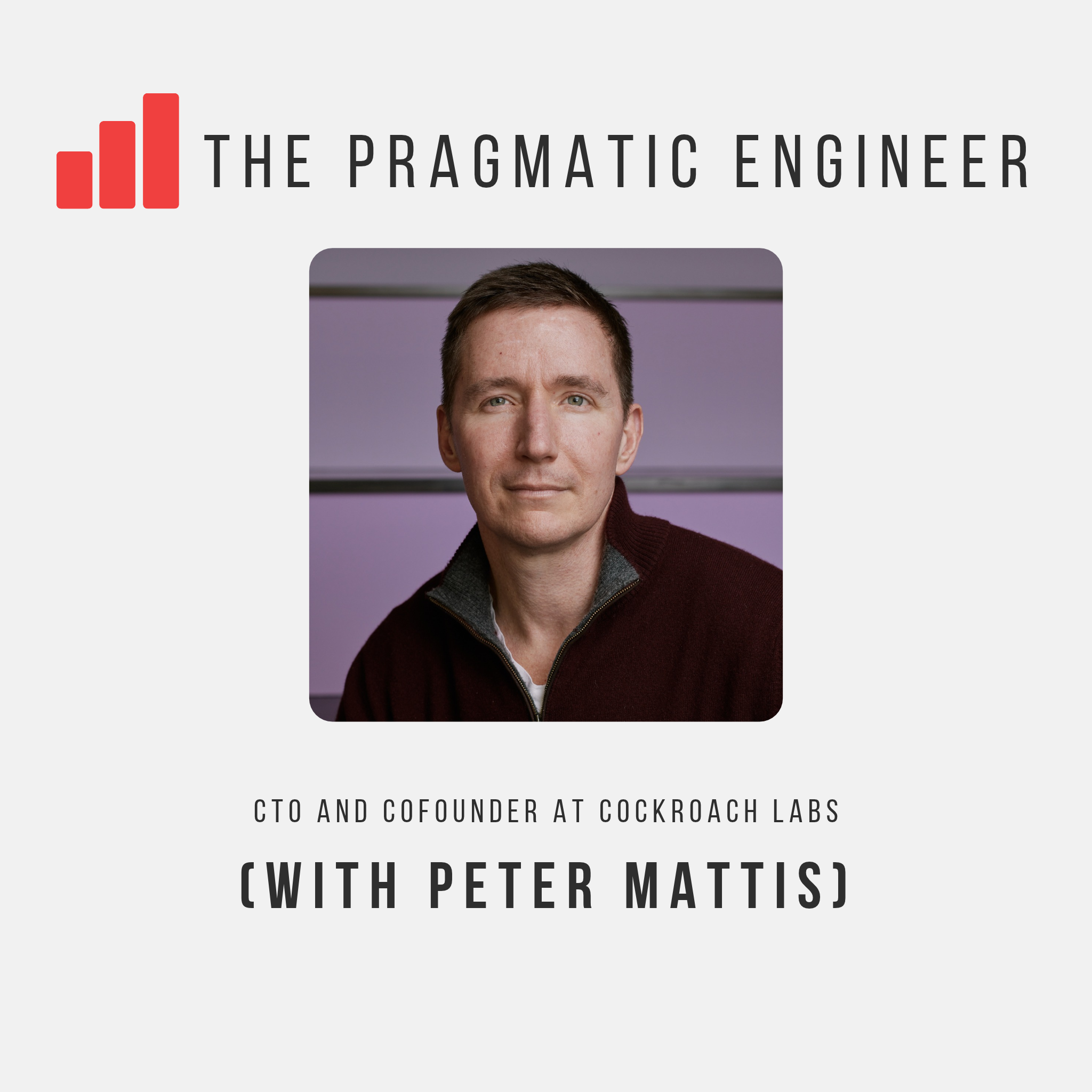
Uber’s AI infra, from the inside

Brought to You By: • turbopuffer – a vector and full-text search engine built on object storage. It’s fast, cheap, and extremely scalable • Linear – the product development system for teams and agents • WorkOS – everything you need to make your app enterprise-ready. — What do developer tools look like inside of Uber, today? They are very different from what you would see at most places. For example, can you guess what service a system called DevPods, Code Inbox, Slate or Wisdom would be providing to engineers? Today’s episode is a deepdive into the day-to-day tools of devs at Uber, our tour guide being on of Uber’s longest-tenured engineers: Uday Kiran Medisetty. Uday is one of the few Distinguished Engineers at the company, and leads much of the work on agentic AI, today. With Uday, we talk through how Uber’s developer infrastructure prepared it for AI agents. We look at the systems Uber built before generative AI and the new tools that connect agents to its code, internal services, and engineering knowledge. Uday explains how engineers use background agents, why tools like Slate make development (and bugfixing!) more efficient, and how code review is changing. We also cover Uber’s approach to token costs and how it measures productivity as the engineer’s role changes. Timestamps 00:00 Intro 02:48 Uday’s early days at Uber 05:40 Uber’s move to microservices 07:55 Uber’s engineering team, then and now 09:05 Developer tooling before AI 16:03 DevPods 19:28 Building for AI agents 29:27 MCP gateway 34:37 Agent Skills repo 38:46 The context graph and Cortana 47:54 PRD and ERD tool 50:45 Minion 54:46 Testing and code review with Bazel, Slate, and Capri 1:12:26 Edge Gateway, Shepherd, and Wisdom 1:21:33 The changing role of engineer and measuring productivity 1:30:40 Uday’s favorite new products — The Pragmatic Engineer deepdives relevant for this episode: • How Uber uses AI for development: inside look  • Scaling Uber with Thuan Pham (Uber's first CTO)  • Inside Uber's move to the Cloud • The Platform and Program Split at Uber  • Hypergrowth startups: Uber and CloudKitchens with Charles-Axel Dein • How Uber Built its Observability Platform  • How Uber is Measuring Engineering Productivity  • Developer Experience at Uber with Gautam Korlam — Production and marketing by ⁠⁠⁠⁠⁠⁠⁠⁠https://penname.co/⁠⁠⁠⁠⁠⁠⁠⁠. For inquiries about sponsoring the podcast, email podcast@pragmaticengineer.com. Get full access to The Pragmatic Engineer at newsletter.pragmaticengineer.com/subscribe
1 h 33 minAbspielen in:

Mi7Okt
The Pragmatic Engineer

The Pragmatic EngineerHost

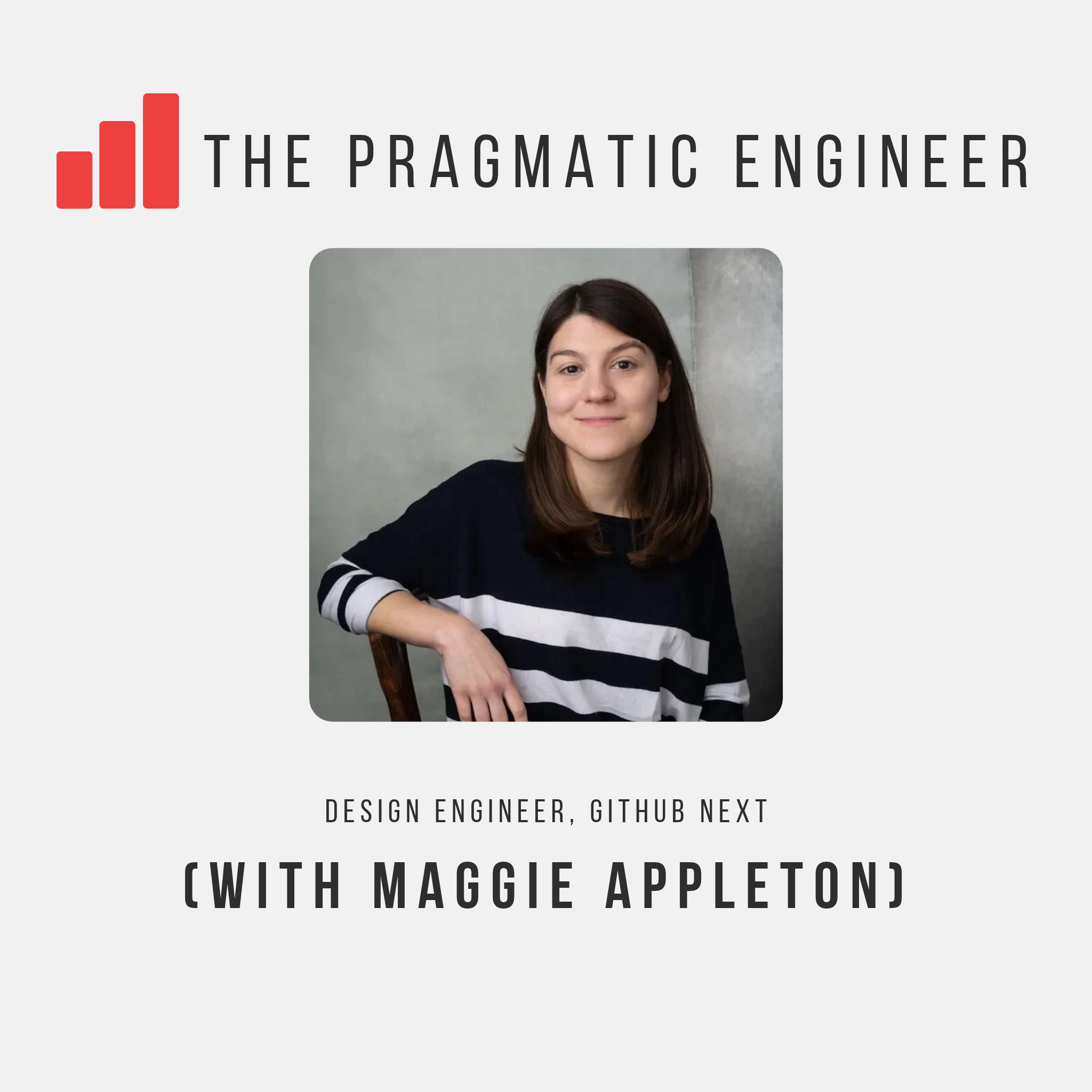
Building resilient systems with Sam Newman

Brought to You By: • turbopuffer – a vector and full-text search engine built on object storage. It’s fast, cheap, and extremely scalable. • Entire – Git hosting, rebuilt for the agentic era. Every agent session, prompt and tool calls: stored in your repo. • Antithesis – verify your system’s correctness without human review or traditional integration tests – and avoid bugs or outages. — Sam Newman wrote one of the most-read books about microservices (“Building Microservices”), but he calls them an architecture of “last resort.” In this episode of the Pragmatic Engineer podcast, Sam explains his thinking on this, and he’s certainly well placed to do so; he was in the room when the term “microservices” was coined. We discuss what teams get wrong when adopting microservices, why independent deployment matters, and how microservices can help teams work more autonomously. We also delve into his new book, ‘Building Resilient Distributed Systems’, and Sam explains his three rules for distributed systems, why observability is essential, and also why it’s vital to take business context into account when deciding whether to fail open or fail closed on errors. We also explore how AI is changing software development, from specs versus code as a source of truth to cognitive debt and cognitive surrender. Sam shares how modular architecture can help teams experiment with AI while maintaining understanding of the systems being built. Timestamps 00:00 Intro 03:16 Sam’s path into tech 09:32 Thoughtworks 20:55 The rise of microservices 33:37 Are specs becoming more important than code? 45:22 Building Resilient Distributed Systems (Sam’s new book) 52:35 Three rules of distributed systems 56:16 Observability 1:02:20 Resilience tradeoffs 1:07:54 Idempotency 1:15:58 Thundering herds 1:21:03 Business context and resilience decisions 1:25:51 Resilience engineering: four concepts 1:32:42 AI and resilience 1:36:26 AI’s limitations and where to use it 1:40:06 Cognitive debt and cognitive surrender 1:45:02 Modular architecture and AI software factories 1:51:53 Resources for learning software architecture 1:55:30 Where to find Sam — The Pragmatic Engineer deepdives relevant for this episode: • Scaling Uber with Thuan Pham (Uber’s first CTO) • What is good software architecture at Netflix? • The past and future of modern backend practices • What is reliability engineering, and the history of SRE • How to debug large, distributed systems: Antithesis • Designing Data-intensive Applications with Martin Kleppmann • Building Bluesky: a Distributed Social Network — Production and marketing by ⁠⁠⁠⁠⁠⁠⁠⁠https://penname.co/⁠⁠⁠⁠⁠⁠⁠⁠. For inquiries about sponsoring the podcast, email podcast@pragmaticengineer.com. Get full access to The Pragmatic Engineer at newsletter.pragmaticengineer.com/subscribe
1 h 58 minAbspielen in:

Mi30Sep
The Pragmatic Engineer

The Pragmatic EngineerHost

Distributed databases with Peter Mattis

Brought to You By: • turbopuffer – a vector and full-text search engine built on object storage. It’s fast, cheap, and extremely scalable • Linear – the product development system for teams and agents • WorkOS – everything you need to make your app enterprise ready. — How is it that a software veteran who regularly shipped ~100K of database-grade code to production each year, pre-AI, feels like he’s even more productive today, with no drop in quality? Peter Mattis is co-founder and CTO of Cockroach Labs, and an original creator of GIMP. He also worked on Gmail and distributed storage at Google. In this episode, Peter reflects on his journey from open source to Google to founding a database company, and we explore how to keep systems fast, reliable, and correct at scale, from Gmail’s early storage challenges to the tradeoffs in building distributed databases. Peter tells us how AI has brought him back to writing code after his work shifted toward management, and why he believes AI can improve quality and multiply the impact of domain experts. We also consider the future of code review, and Peter has some advice about how to level up our engineering skills. Timestamps 00:00 Intro 02:42 Peter’s path into tech 04:00 Building GIMP 09:30 Working on Gmail at Google 14:51 Google’s infra: google3, build files, Bazel, and Colossus 21:30 Distributed storage bottlenecks 23:59 Latency, throughput, and availability 30:04 Contributing to libraries 41:52 Google Spanner 46:10 CockroachDB 52:00 Manual vs. automatic sharding 55:28 Consistency models and strong consistency 1:00:03 Raft consensus 1:06:15 How AI brought Peter back to coding 1:19:12 Peter’s tools and agentic workflows 1:23:08 How AI can improve quality 1:26:39 Code reviews: are they done? 1:29:17 100x engineers 1:35:33 Peter’s advice for leveling up your engineering skills — The Pragmatic Engineer deepdives relevant for this episode: • Inside Google’s Engineering Culture • Resiliency in distributed systems • How to debug large, distributed systems: Antithesis • Pushing software engineering limits with “napkin math” • Designing Data-intensive Applications with Martin Kleppmann • Formal methods with Hillel Wayne — Production and marketing by ⁠⁠⁠⁠⁠⁠⁠⁠https://penname.co/⁠⁠⁠⁠⁠⁠⁠⁠. For inquiries about sponsoring the podcast, email podcast@pragmaticengineer.com. Get full access to The Pragmatic Engineer at newsletter.pragmaticengineer.com/subscribe
1 h 42 minAbspielen in:

Mi23Sep
The Pragmatic Engineer

The Pragmatic EngineerHost

Design Engineering with Maggie Appleton

Brought to You By: • turbopuffer – a vector and full-text search engine built on object storage. It’s fast, cheap, and extremely scalable. • O'Reilly Early Release: Scaling AI Adoption in Engineering – a free book on how to adopt and scale AI in a pragmatic way inside of engineering orgs. Complimentary, thanks to Antithesis. • Entire – every agent prompt, tool call, stored in your repo, and mirrored. — What can everyone else learn from designers and design engineers? As it turns out, there’s plenty, as I discovered when one of the best design engineers in the industry, Maggie Appleton, came onto the Pragmatic Engineer Podcast. She’s a staff research engineer at GitHub Next, where she builds prototypes to explore how software engineers might collaborate with AI in new ways. Maggie is at the intersection of design, anthropology, and web development, and was the first designer hired by AI startup Elicit, and Lead Design engineer at AI startup, Normally. Today’s episode is more visual than usual because Maggie brought her notebook along, so there are peeks inside its pages of prototypes and more: We got into designers’ work and how their design processes are adapting to and changing with AI. We explore why Maggie starts projects with pens and notebooks, what distinguishes design engineers from other designers, and why understanding engineering constraints leads to better collaboration with engineers.  We also discuss how Maggie uses jigs to gain more control over AI agents, why human judgment and style still matter when models can generate designs, and how inconsistent AI capabilities can mislead us. Timestamps 00:00 Intro 03:24 From anthropology to tech 10:18 What does a designer do? 18:23 How Maggie works 24:55 The case for planning with physical tools 31:53 Why Maggie is learning woodworking 33:13 Design engineers and engineering constraints 38:49 How Maggie uses Figma 40:30 Design at GitHub Next 45:12 How has AI changed design 50:37 When models design and why humans are still needed 53:30 UX and UI 58:29 Capability gaslighting 1:00:33 One Developer, Two Dozen Agents, Zero Alignment 1:07:21 Craft and AI tells 1:14:17 Visual gardens, home-cooked software, and barefoot developers 1:21:02 Advice for engineers and lessons from anthropology 1:25:34 Book recommendation — The Pragmatic Engineer deepdives relevant for this episode: • What is “loop engineering?” • Design-first software engineering: Craft, with Balint Orosz  • Are AI agents actually slowing us down? • Vibe Coding as a software engineer • How Codex is built • How Claude Code is built  • From Chrome DevTools to AI Engineering, with Addy Osmani — Production and marketing by ⁠⁠⁠⁠⁠⁠⁠⁠https://penname.co/⁠⁠⁠⁠⁠⁠⁠⁠. For inquiries about sponsoring the podcast, email podcast@pragmaticengineer.com. Get full access to The Pragmatic Engineer at newsletter.pragmaticengineer.com/subscribe

1 h 27 minAbspielen in:

Do17Sep
The Pragmatic Engineer

The Pragmatic EngineerHost

AI Skills with Matt Pocock

Brought to You By: • turbopuffer – a vector and full-text search engine built on object storage. It’s fast, cheap, and extremely scalable • Linear – the product development system for teams and agents • WorkOS – everything you need to make your app enterprise ready. — Why is the “grill-me” skill so popular, and why does its creator swear by the importance of software fundamentals? Matt Pocock created this widely-used skill – and many others – alongside being an educator, content creator, and engineer. His latest course is AI Hero, and he previously created the Total TypeScript course that generated more than $2.5 million in sales. In this episode, Matt and I discuss his unconventional path from working as a voice teacher to becoming a developer and going all-in on technical education. He reveals how communication skills helped him break into tech, why he took an unusual three-days-a-week contract at Vercel, and how he built Total TypeScript through workshops, courses, and a lot of free content. We also explore “strategic coding,” and how he uses skills like “grill me” and “wayfinder” to plan, delegate, and course-correct with AI agents. Matt explains his “day shift” and “night shift” approach, why splitting context up can keep agents in their “smart zone,” and how concepts from classic software engineering books can guide agents to do better. In this episode, there’s also local versus cloud workflows, whether agents need TDD, how AI is changing the ways that engineers learn the fundamentals, and why humans are still essential in teaching. Timestamps 00:00 Intro 05:48 How Matt got into tech 10:14 How Matt got into open source 12:58 Joining Vercel 18:39 Total TypeScript 23:21 AI’s impact on technical education 30:32 Building reusable skills for AI coding agents 40:46 The “smart zone” vs the “dumb zone” 45:02 The wayfinder skill 47:52 Why agents excel at software engineering 50:54 “Leading words” 1:01:10 Learning the fundamentals 1:09:17 Local vs. cloud agents 1:12:36 Planning vs. course-correcting 1:18:13 TDD and agents 1:23:06 Living in the UK 1:24:21 Teaching: the human part 1:28:36 Advice for junior engineers 1:31:07 Gardeners and great engineers 1:34:01 Book recommendation — The Pragmatic Engineer deepdives relevant for this episode: • What is "loop engineering?" • The Philosophy of Software Design – with John Ousterhout • Context engineering with Dex Horthy • Are AI agents actually slowing us down? • The AI Engineering Stack • How Codex is built • How Claude Code is built • How Uber uses AI for development: inside look — Production and marketing by ⁠⁠⁠⁠⁠⁠⁠⁠https://penname.co/⁠⁠⁠⁠⁠⁠⁠⁠. For inquiries about sponsoring the podcast, email podcast@pragmaticengineer.com. Get full access to The Pragmatic Engineer at newsletter.pragmaticengineer.com/subscribe
1 h 36 minAbspielen in:

Mi9Sep
The Pragmatic Engineer

The Pragmatic EngineerHost

Building Codex with Tibo Sottiaux

Brought to You By: • turbopuffer – a vector and full-text search engine built on object storage. It’s fast, cheap, and extremely scalable • Antithesis – verify your system’s correctness without human review or traditional integration tests – and avoid bugs or outages. • Entire – Git hosting, rebuilt for the agentic era. Every agent session, prompt  and tool calls: stored in your repo. — Tibo Sottiaux is one of the engineers who created Codex, and today, he heads up the Core Products & Platform org at OpenAI which also includes Codex. He’s also one of the most public faces of Codex due to his frequent – and generous – usage reset announcements, like this one yesterday. In this episode of the Pragmatic Engineer Podcast, Tibo and I discuss how Codex was built and continues to be iterated upon. We explore why the Codex CLI is written in Rust and was released as open source, how the harness and models have evolved, and why Codex supports models from multiple providers. Tibo also shares details about how the OpenAI team uses Codex throughout the software development lifecycle, including code reviews, maintenance, and system rearchitecture. We look into how AI is lowering the cost of changing code – and some interesting side effects of this – the merger of ChatGPT and Codex, and also how Tibo uses the tools in his own work. — Timestamps 00:00 Intro 07:21 Working at Google 12:41 What drew Tibo to OpenAI 15:19 The early days of Codex 18:20 Why Codex was built in Rust 21:15 Why Codex is open source 25:50 Codex plays nice with other models: why? 32:09 How the harness works 36:44 Harness and model improvements 41:19 The SDLC behind Codex 46:39 Code reviews at Codex 52:09 Maintenance and architecture 56:43 How AI tools expand what engineers can do 1:02:30 The Merge: ChatGPT + Codex 1:07:16 How Tibo uses Codex and ChatGPT 1:10:44 Advice for engineers who want to work in AI — The Pragmatic Engineer deepdives relevant for this episode: • How Codex is built • How Claude Code is built • How Cursor was built • What is "loop engineering?” • How Uber uses AI for development: inside look • Why Ramp built its own in-house coding agent, Inspect • “I ship code I don’t read”: with Peter Steinberger, the creator of OpenClaw — Production and marketing by ⁠⁠⁠⁠⁠⁠⁠⁠https://penname.co/⁠⁠⁠⁠⁠⁠⁠⁠. For inquiries about sponsoring the podcast, email podcast@pragmaticengineer.com. Get full access to The Pragmatic Engineer at newsletter.pragmaticengineer.com/subscribe

1 h 13 minAbspielen in:

Mi8Apr
The Pragmatic Engineer

The Pragmatic EngineerHost

DHH’s new way of writing code

Brought to You By: • Statsig — ⁠ The unified platform for flags, analytics, experiments, and more. • Sonar – The makers of SonarQube, the industry standard for automated code review • WorkOS – Everything you need to make your app enterprise ready. — David Heinemeier Hansson (DHH) is the creator of Ruby on Rails and Omarchy, co-founder and CTO of 37signals (maker of Basecamp and HEY), and the author of several books including the best-seller, Remote: Office Not Required, co-written with Jason Fried. Six months ago, in an episode of the Lex Fridman podcast, David shared how he doesn’t use AI tools to write code: he types out all his code. But things have changed a lot since then.  In this episode, we discuss his approach to building software, how it’s changed in the last six months, and why he now takes an agent-first approach, and how he barely writes any code by hand. We go into how he uses AI agents: which alter how he builds and explores ideas, but also how his standards of quality and craft remain the same. We also discuss how 37signals thinks about product development, from the role of designers to the importance of aesthetics and taste. David gets into how he sees beauty and functionality as closely linked, and why strong opinions about design lead to better software. Finally, we look into the uneven impact of AI which amplifies senior engineers while creating challenges for junior developers, and what this may mean for the role of the software engineer. — Timestamps (00:00) Intro (02:11) Omarchy and Ruby on Rails (08:25) 37signals overview (10:12) Launching HEY (18:38) Building HEY (22:47) Designers at 37signals (28:08) The craft of design (31:52) Why DHH now embraces AI workflows (39:45) The AI inflection point (44:23) DHH’s agent-first workflow (55:09) AI’s impact on junior developers (1:03:08) Developer experience with AI (1:16:43) What does AI mean for developers? (1:23:33) 37signals teams and hiring (1:38:20) Work-life balance with AI (1:41:41) Why DHH keeps building (1:45:24) Closing — The Pragmatic Engineer deepdives relevant for this episode: • Are AI agents actually slowing us down? • How Claude Code is built • The future of software engineering with AI: six predictions • The AI Engineering Stack • Mitchell Hashimoto’s new way of writing code • How Linux is built with Greg Kroah-Hartman — Production and marketing by ⁠⁠⁠⁠⁠⁠⁠⁠https://penname.co/⁠⁠⁠⁠⁠⁠⁠⁠. For inquiries about sponsoring the podcast, email podcast@pragmaticengineer.com. Get full access to The Pragmatic Engineer at newsletter.pragmaticengineer.com/subscribe

1 h 46 minAbspielen in: