Bekomm eine E-Mail, wenn Evan in einem Podcast zu Gast istPodAppear prüft neue Folgen, sobald sie erscheinen, und lässt die weg, in denen Evan nur erwähnt wird. Bis zu 15 Personen kostenlos, ohne Kreditkarte.Bis zu 15 Personen kostenlos, ohne Kreditkarte.
Evan kostenlos folgen
EE

Evan Epstein

Zwei Jahre auf Sendung

GastHostErwähnt

Selbst moderierte Folgen

Di24Nov
Boardroom Governance with Evan Epstein

Boardroom Governance with Evan EpsteinHost

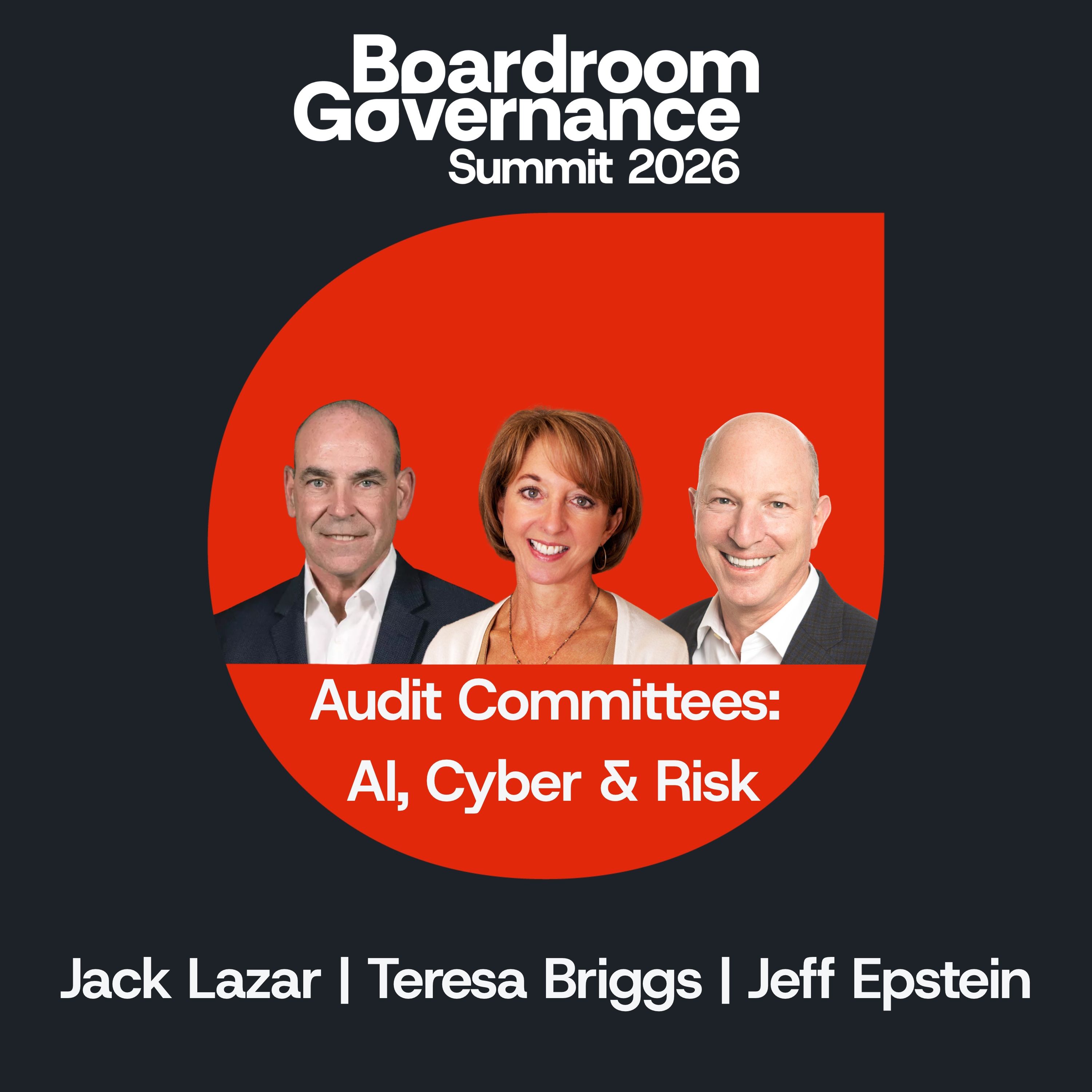
Audit Committees Under Pressure: AI, Cybersecurity & Risk

(00:00) Intro (02:30) Start of panel discussion (03:19) AI Spending and CFO Strategy: evaluating massive investments in AI infrastructure and the uncertainty surrounding returns (07:47) Investing in AI Startups: Jeff Epstein (Bessemer Venture Capital) on foundational AI models, specialized applications, and how established software companies are adapting (09:29) Who Oversees AI? Teresa Briggs on allocating AI oversight across audit committees, other board committees, and the full board (12:17) IPO Readiness and Going Public: Jack Lazar (he's been through 11 IPOs) on financial predictability, transparency, and the advantages of public markets (16:45) Private-Company Liquidity: secondary markets, employee tender offers, and the debate over staying private versus going public (18:24) CFO Council and Startup Support: how Bessemer Venture Partners helps portfolio companies navigate growth, profitability, and operational challenges (20:55) Are Audit Committees Overloaded? expanding responsibilities for cybersecurity, compliance, AI, and internal investigations (23:47) Independent Cybersecurity Audits: using third-party assessments to evaluate cybersecurity programs and challenge management (25:31) Compliance Investigations: identifying weaknesses in compliance programs and strengthening board oversight Panelists Jeff Epstein is an operating partner at Bessemer Venture Partners, former CFO of Oracle, and a board member at Twilio, Autodesk, AvePoint, and Zoom. Teresa Briggs is a former Vice Chair of Deloitte and serves on the boards of Snowflake, ServiceNow, DocuSign, and Warby Parker. Jack Lazar is the former CFO of GoPro and Atheros Communications and serves on the boards of Astera Labs, Box, GlobalFoundries, and Resideo Technologies. Recorded at the inaugural Boardroom Governance Summit at Limerick Lane Cellars in Healdsburg, California, on August 27, 2026. The next Boardroom Governance Summit will take place August 25–27, 2027, in Healdsburg, California. Register at https://luma.com/BGSummit27. --- Follow Boardroom Governance: Website: https://boardroom-governance.com/  Subscribe to the Newsletter YouTube channel: https://www.youtube.com/@BoardroomGovernance LinkedIn: https://www.linkedin.com/company/board-gov/ Follow Evan Epstein: Website: evanepstein.co X: https://x.com/evanepstein  LinkedIn: https://www.linkedin.com/in/epsteinevan/ --- Music: “Seeing The Future” by Dexter Britain, via Free Music Archive, licensed under the Creative Commons Attribution-NonCommercial-ShareAlike 3.0 United States License.
27 minAbspielen in:

Di17Nov
Boardroom Governance with Evan Epstein

Boardroom Governance with Evan EpsteinHost

Jensen Huang’s Resignation and NVIDIA’s Board Reckoning

(00:00) Intro (1:52) About the podcast sponsor: The American College of Governance Counsel (02:35) Start of interview (02:35) Jensen Huang’s Resignation and CEO Accountability: what Huang’s departure says about accountability when a founder-CEO has become nearly synonymous with the company. *Reference to our 2023 HBO Succession breakdown (audio and YouTube) (06:47) Can a CEO Become Too Important to Challenge? why powerful and highly successful CEOs can become difficult to govern, and why that makes meaningful board oversight even more important (08:52) The Timeline Behind NVIDIA’s Crisis: how the controversy escalated from reports about Huang’s conduct to an independent board investigation and ultimately his resignation (12:03) The Board’s Investigation and Early Missteps: why Kate believes NVIDIA’s board moved too quickly to express confidence in Huang before its independent investigation was complete (14:23) CEO Privacy, Personal Conduct, and National Security: where the line lies between a CEO’s private life and conduct that creates material corporate or national-security risk (16:50) Export Controls, Red Flags, Short Sellers, and China: what NVIDIA’s relationships in China raise about customer diligence, export controls, internal compliance, and board oversight (20:30) Board Independence and Director Tenure: whether unusually long director tenure can weaken independence and make directors less willing to challenge a powerful CEO (23:55) Succession Planning After Jensen Huang: why the apparent absence of a clear succession plan is one of the most important governance issues exposed by the crisis (25:50) The Investigation’s Legal Stakes: why the independent investigation must continue after Huang’s resignation and how it intersects with shareholder litigation and government investigations (29:53) Geopolitics and Government Scrutiny: how national-security considerations and NVIDIA’s relationships with governments complicate the board’s responsibilities (33:30) Congressional Scrutiny and the AI Economy: potential political fallout and what the crisis could mean for confidence in the broader AI ecosystem (38:13) Governance Lessons for Directors: enterprise risk management, succession planning, geopolitical risk, export controls, and why boards cannot lose sight of basic oversight responsibilities (40:38) Founder Power and the Board’s Priorities: 1) Conduct a thorough search for a permanent CEO; 2) Oversee the independent investigation and address compliance gaps; and 3) Manage litigation and government investigations. (43:00) Closing reflections Kate Oberlies O’Leary is Associate General Counsel for Litigation, Compliance & Risk at Stride, Inc. She previously spent many years at GE, where she developed deep experience in litigation, compliance, risk, and corporate governance. --- Follow Boardroom Governance: Website: https://boardroom-governance.com/  Subscribe to the Newsletter YouTube channel: https://www.youtube.com/@BoardroomGovernance LinkedIn: https://www.linkedin.com/company/board-gov/ Follow Evan Epstein: Website: evanepstein.co X: https://x.com/evanepstein  LinkedIn: https://www.linkedin.com/in/epsteinevan/ --- Music: “Seeing The Future” by Dexter Britain, via Free Music Archive, licensed under the Creative Commons Attribution-NonCommercial-ShareAlike 3.0 United States License.
44 minAbspielen in:

Di10Nov
Boardroom Governance with Evan Epstein

Boardroom Governance with Evan EpsteinHost

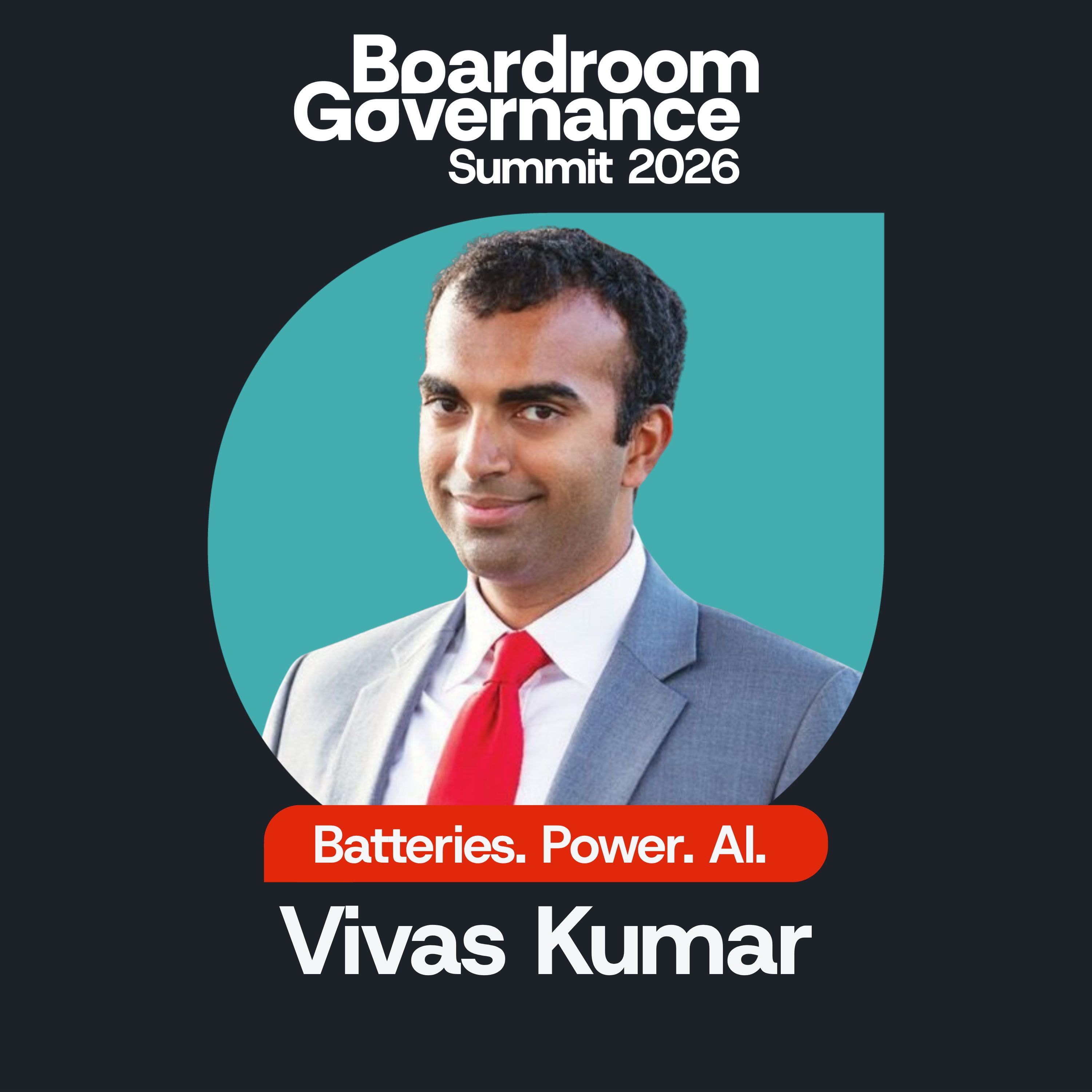
Vivas Kumar: Batteries, AI Data Centers, and America’s Industrial Race

(00:00) Intro (02:22) Start of interview (03:06) From Tesla to Mitra Chem: Vivas Kumar’s journey from sourcing battery materials at Tesla to Stanford GSB and founding Mitra Chem (07:35) Building a U.S. Battery Supply Chain: why Mitra Chem was founded to reduce dependence on China and participate in the reindustrialization of the United States (11:10) Funding Hardware and the Role of Government: why strategic investors and government capital are essential to building large-scale manufacturing capacity. Their $100M grant from DOE (2024) and $350M investment from Japan. (14:52) Competing With China: why Vivas believes China has established a major lead in batteries and electric vehicles (16:04) AI Data Centers and the Race for Power: the difference between training and inference and why electricity is becoming a critical constraint on AI infrastructure (19:57) Speed to Power: why data-center developers increasingly care about how quickly energy can be deployed, not just its cost (20:37) Batteries and the Changing Grid: how distributed AI infrastructure, behind-the-meter generation, and modular energy systems are changing the role of batteries Vivas Kumar is the founder and CEO of Mitra Chem, a U.S. battery materials company focused on strengthening domestic supply chains. Recorded at the inaugural Boardroom Governance Summit at Limerick Lane Cellars in Healdsburg, California, on August 26, 2026. The next Boardroom Governance Summit will take place August 25–27, 2027, in Healdsburg, California. Register at https://luma.com/BGSummit27. --- Follow Boardroom Governance: Website: https://boardroom-governance.com/  Subscribe to the Newsletter YouTube channel: https://www.youtube.com/@BoardroomGovernance LinkedIn: https://www.linkedin.com/company/board-gov/ Follow Evan Epstein: Website: evanepstein.co X: https://x.com/evanepstein  LinkedIn: https://www.linkedin.com/in/epsteinevan/ --- Music: “Seeing The Future” by Dexter Britain, via Free Music Archive, licensed under the Creative Commons Attribution-NonCommercial-ShareAlike 3.0 United States License.
23 minAbspielen in:

Di3Nov
Boardroom Governance with Evan Epstein

Boardroom Governance with Evan EpsteinHost

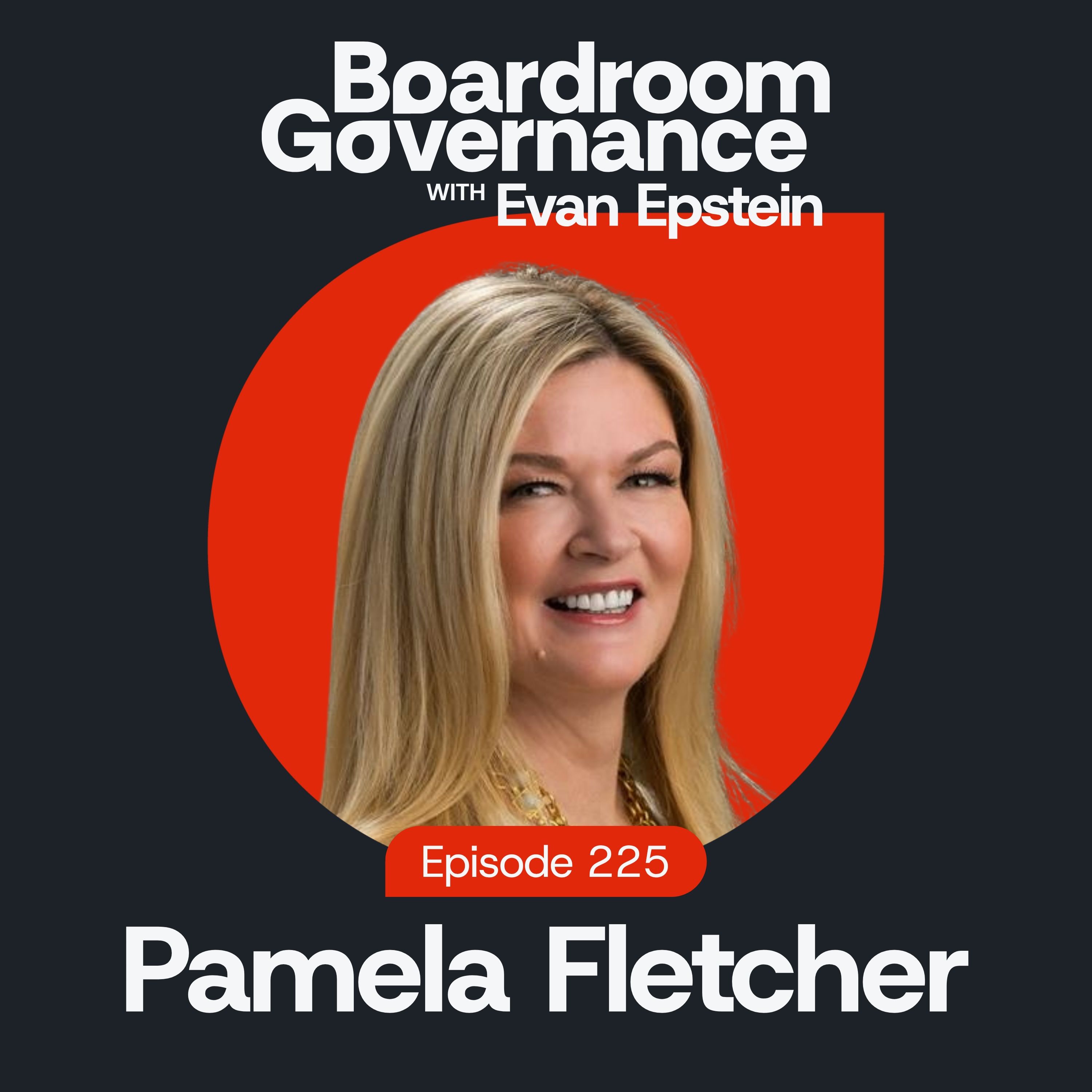
Pamela Fletcher: Electrification, AI, and the Boardroom

(00:00) Intro (01:43) About the podcast sponsor: The American College of Governance Counsel (02:26) Start of interview *reference to the Boardroom Governance Summit 2027 (03:49) Pam Fletcher’s Origin Story: growing up in the Midwest, and why she always wanted to work in the automotive industry (05:28) From GM to Electric Vehicles: Pam’s early career at GM, the evolution of electrification, the EV1, and working on the Chevrolet Volt (07:39) From Automotive to Aviation: moving from electric and autonomous vehicles to sustainability at Delta  (09:46) Leading Sion Power: battery technology as an enabler of electrification, robotics, wearables, and other emerging technologies, and pivoting the company from automotive to defense (12:15) Batteries, China, and National Strategy: China’s dominance across critical minerals, processing, batteries, and electric vehicles, and why Pam views battery supply chains as a strategic national issue (18:00) The Road to EV Adoption: why electric vehicle adoption varies across the U.S., the importance of charging infrastructure and faster charging times, and what consumers need before EVs reach broader adoption (20:56) Building a Board Career: how Pam moved from operating roles into board service. (23:36) Lumentum, AI, and Data Centers: how optical technology enables data centers to scale compute while reducing some of the limitations associated with copper and heat (27:24) Data Centers, Energy, and Water: why Pam believes innovation can address concerns around power consumption, cooling, and water use as AI infrastructure expands (30:04) Chemours and Critical Technologies: the company’s role in semiconductor manufacturing, data-center cooling, and critical materials that enable emerging technologies (32:32) Bringing Semiconductor Manufacturing Back to the U.S.: lessons from the pandemic chip shortage, the CHIPS Act, and why domestic manufacturing matters for supply-chain resilience and the middle class (34:58) What Boards Are Focused on Now: why strategy needs to be revisited more frequently, how technology is changing customers and operations, and why AI has become a standing boardroom issue (37:27) Helping Boards Put AI to Work: why Pam believes AI adoption is becoming non-negotiable and how boards can track small wins, usage, innovation, and operational impact (40:00) Advice for Effective Directors: what serving as a CEO taught Pam about board service and why directors should ask whether they are showing up in the way the company actually needs (41:01) Books, News: A Tale of Two Cities, business news consumption (42:52) Pam’s Mentors: Mary Barra, Doug Parks, and the impact of Elon Musk on technology and industry (44:12) Quotes and principles Pam Thinks About: taking risks, treating people as you would want to be treated, and surrounding yourself with people smarter than you are (44:51) An unusual passion (45:31) The living person she most admires: her husband, and the role he has played in her career and personal growth Pamela Fletcher is the former CEO of Sion Power, serves on the boards of Lumentum and Chemours, and previously held senior leadership roles at General Motors and Delta. --- Follow Boardroom Governance: Website: https://boardroom-governance.com/  Subscribe to the Newsletter YouTube channel: https://www.youtube.com/@BoardroomGovernance LinkedIn: https://www.linkedin.com/company/board-gov/ Follow Evan Epstein: Website: evanepstein.co X: https://x.com/evanepstein  LinkedIn: https://www.linkedin.com/in/epsteinevan/ --- Music: “Seeing The Future” by Dexter Britain, via Free Music Archive, licensed under the Creative Commons Attribution-NonCommercial-ShareAlike 3.0 United States License.
47 minAbspielen in:

Mo26Okt
Boardroom Governance with Evan Epstein

Boardroom Governance with Evan EpsteinHost

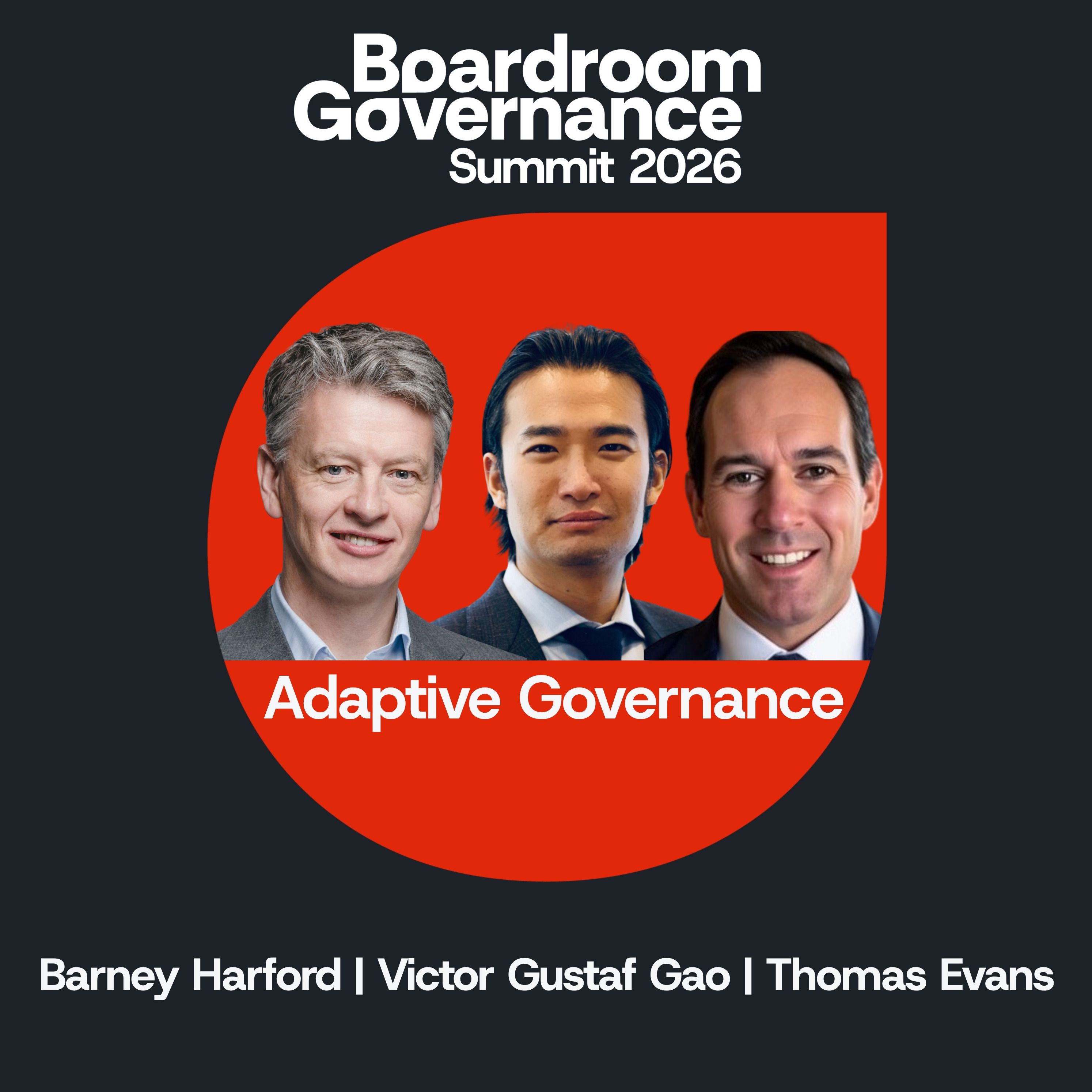
Adaptive Governance: AI, Private Equity, and Board Leadership

(00:00) Introduction and about the inaugural Boardroom Governance Summit (02:31) Adaptive Governance and AI Disruption: Barney Harford on what he is seeing across public, private equity, and venture-backed boards, and why directors need to think beyond first-order effects of AI  (05:35) Public, Private Equity, and Venture Boards: why serving across different ownership models gives directors a broader view of risk, opportunity, and disruption  (06:09) The Chief AI Officer’s Role: Thomas Evans on AI transformation, workforce reskilling, strategic partnerships, product development, and why a CAIO must understand the entire enterprise before building an AI strategy  (09:02) Private Equity Governance and Value Creation: Victor Gustaf Gao on faster information-to-decision cycles, full-potential analysis, value creation plans, and how PE boards structure discussions around a defined investment thesis  (10:57) What Public and Private Boards Can Learn From Each Other: combining investor, operator, and independent-director perspectives while being explicit about trade-offs, scenarios, and priorities  (13:04) AI’s Promise for Consumers and Founders: how AI agents may transform marketplaces, travel, recommendations, and consumer experiences, and why companies need a clear AI strategy to remain fundable and competitive. Example of cvent. (16:48) AI Strategy, Investment, and Cybersecurity: how AI priorities change depending on capital constraints, profitability, infrastructure needs, data protection, and cyber risk. (19:12) CEO Succession in a Changing Private Equity Landscape: why longer holding periods may force succession decisions Barney Harford, board director at United Airlines; Victor Gustaf Gao of The Carlyle Group; and Thomas Evans, former CAIO at Lucid Motors, bring perspectives across public company boards, private equity, venture-backed companies, and enterprise AI transformation. Recorded at the inaugural Boardroom Governance Summit in Healdsburg, California, on August 27, 2026. Special thanks to Keith Giarman of DHR Global for helping bring this panel together and for DHR Global’s support of the inaugural Summit. Join us for the next Boardroom Governance Summit, August 25–27, 2027, in Healdsburg, California. Register here. --- Follow Boardroom Governance: Website: https://boardroom-governance.com/  Subscribe to the Newsletter YouTube channel: https://www.youtube.com/@BoardroomGovernance LinkedIn: https://www.linkedin.com/company/board-gov/ Follow Evan Epstein: Website: evanepstein.co X: https://x.com/evanepstein  LinkedIn: https://www.linkedin.com/in/epsteinevan/ --- Music: “Seeing The Future” by Dexter Britain, via Free Music Archive, licensed under the Creative Commons Attribution-NonCommercial-ShareAlike 3.0 United States License.
22 minAbspielen in:

Warum PodAppear

Folge Menschen, nicht Podcasts.

Du hast Evan in einer Sendung gehört. PodAppear findet für dich die nächste, und genauso für alle anderen, die du hören willst.

  • Eine Meldung, wenn die Person zu Gast istPer E-Mail: sofort oder gebündelt als Tages- oder Wochenübersicht. Dann nur noch auf Play drücken.
  • Gäste statt bloßer ErwähnungenFolgen, in denen ein Name nur fällt, landen getrennt. Eine Meldung heißt: Die Person ist wirklich in der Sendung.
  • Alle in einem FeedGründerinnen, Autoren, Sportler, Forscherinnen. Folge allen mit Namen, quer durch jede Sendung, in der sie auftreten.

Bis zu 15 Personen kostenlos, ohne Kreditkarte.

Fr23Okt
Boardroom Governance with Evan Epstein

Boardroom Governance with Evan EpsteinHost

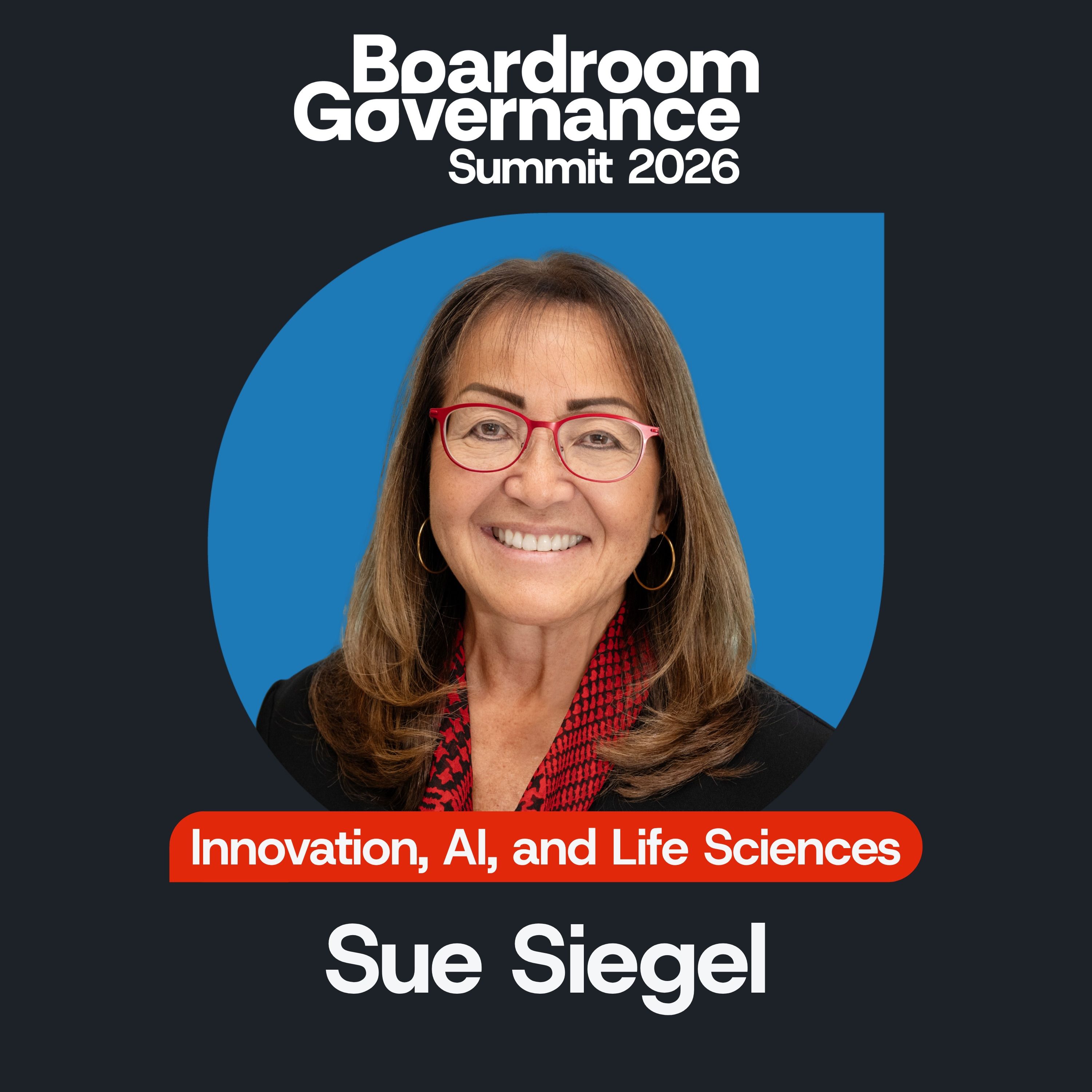
Sue Siegel: Innovation, AI, and the Future of Life Sciences

(00:00) Introduction and about the inaugural Boardroom Governance Summit (03:03) Sue Siegel’s Background: from molecular biology and operating roles to venture capital, GE Ventures, Chief Innovation Officer of GE, and board service  (04:14) Innovation as a System: why breakthrough technology alone is not enough, and why boards need to understand the systems required to move innovation from invention to value creation  (06:00) When Success Stifles Innovation: why successful core businesses can become one of the biggest obstacles to new ideas, and how boards can help companies challenge what already works (07:40) AI’s Impact on Life Sciences: combining imaging, clinical data, genomics, and other information to generate new insights, predictions, and digital twins (09:33) AI and the Future of Personal Health: how tools like ChatGPT and Claude are changing how patients prepare for medical visits and how AI may reshape disease management (11:33) Precision Medicine: how AI and genomic data are helping identify more personalized cancer therapies and monitor disease progression  (13:12) Regulating AI Across the Product Life Cycle: how continuously improving models create new questions about approval, liability, and board oversight in healthcare  (16:27) Biotech Funding and the IPO Drought: why capital has become harder to raise in life sciences and how regulation and reimbursement add friction for investors (18:37) Navigating Shareholder Activism: Sue’s experience at Illumina with Carl Icahn and her framework to “diagnose, disaggregate, and decide” (20:03) Red-Teaming the Company: why boards should proactively examine the thesis an activist might bring around capital allocation, governance, strategy, margins, M&A, and board composition (22:48) U.S.-China Tensions in Life Sciences: China’s evolution from a manufacturing base and market into a major source of pharmaceutical innovation, alongside growing tensions around data, talent, clinical trials, and supply chains  (25:48) Corporate Venture Capital’s Growing Role: how CVC has evolved into a strategic tool for identifying technologies, business models, and innovation outside the company Sue Siegel is the former Chief Innovation Officer of GE and an experienced public company director. She serves on the boards of Illumina, Align Technology, Stanford Health Care, KFF, and chairs The Engine, built by MIT. Recorded at the inaugural Boardroom Governance Summit in Healdsburg, California, on August 27, 2026. Join us for the next Boardroom Governance Summit, August 25–27, 2027, in Healdsburg, California. Register here. --- Follow Boardroom Governance: Website: https://boardroom-governance.com/  Subscribe to the Newsletter YouTube channel: https://www.youtube.com/@BoardroomGovernance LinkedIn: https://www.linkedin.com/company/board-gov/ Follow Evan Epstein: Website: evanepstein.co X: https://x.com/evanepstein  LinkedIn: https://www.linkedin.com/in/epsteinevan/ --- Music: “Seeing The Future” by Dexter Britain, via Free Music Archive, licensed under the Creative Commons Attribution-NonCommercial-ShareAlike 3.0 United States License.
29 minAbspielen in:

Di20Okt
Boardroom Governance with Evan Epstein

Boardroom Governance with Evan EpsteinHost

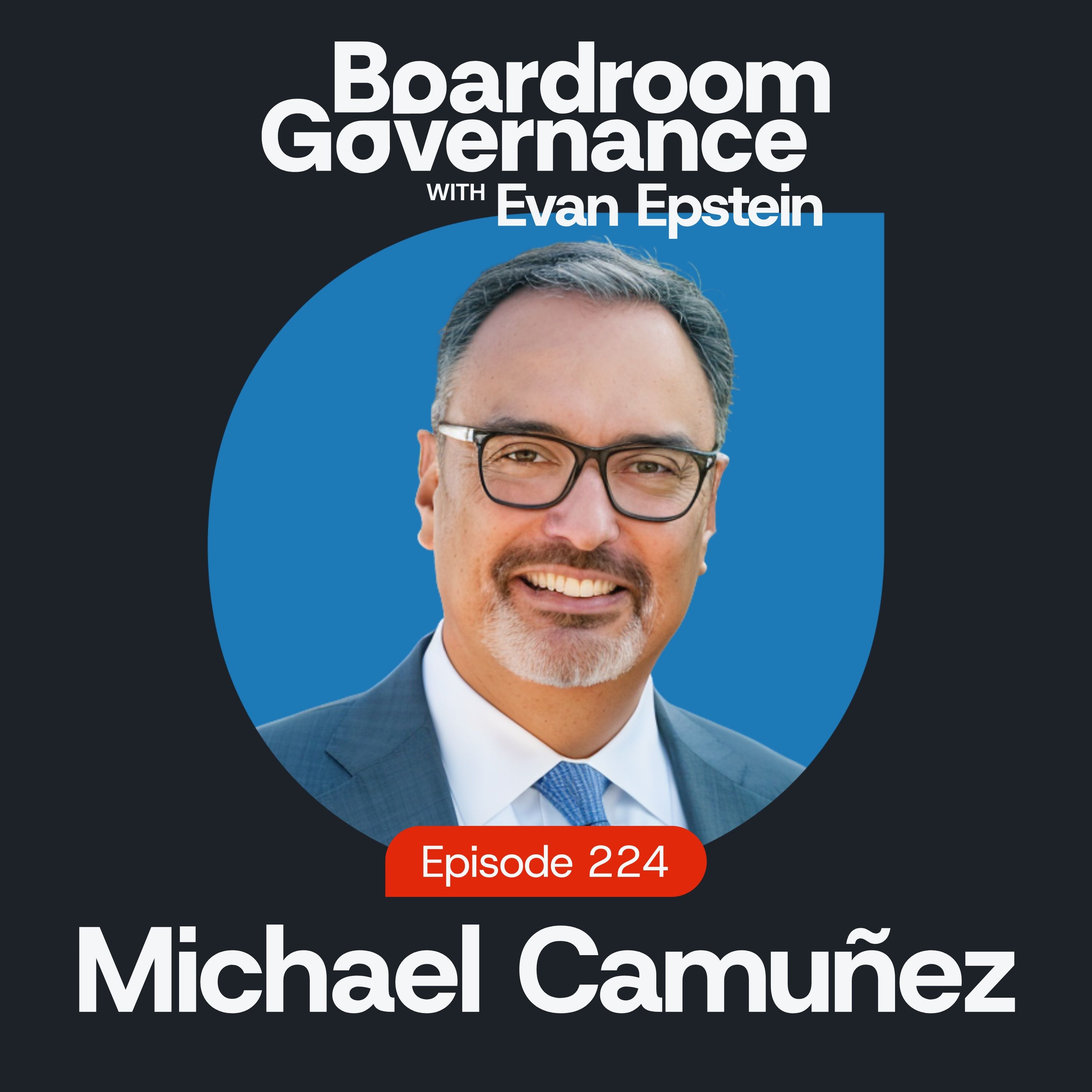
Michael Camuñez: Geopolitics, Board Independence, and the Courage to Dissent

(00:00) Intro (01:44) About the podcast sponsor: The American College of Governance Counsel (02:27) Start of interview (03:24) Michael Camuñez’s Origin Story: growing up in New Mexico and California, Harvard and Stanford Law School, public service, private practice, and moving between government, business, and corporate governance (06:21) About his firm Monarch Global Strategies (09:45) The U.S.-Mexico Relationship: why the relationship is "indispensable but under strain." (13:05) Geopolitics and the Modern Board: why geopolitical risk now affects nearly every company (15:04) Should Boards Add Geopolitical Experts? Why Michael believes directors need broad capabilities and boards should resist becoming overly specialized (17:08) Energy, Wildfires, and Grid Resilience: lessons from Michael’s service on the board of Edison International and balancing safety, affordability, electrification, climate risk, and grid modernization (22:34) Governing an Investment Fund: how serving as a director at Capital Group differs from a conventional corporate board (23:35) Independence as a Behavior: why independence requires asking hard questions, challenging assumptions, and exercising individual judgment (26:40) The Packard Foundation: institution-building, philanthropy, climate change, oceans, children and families, and long-term systemic change (31:54) Stanford and the Future of Higher Education: public trust, affordability, civic education, viewpoint diversity, AI, research security, and university governance (37:14) Immigration and America’s Talent Advantage: why attracting global talent has historically been central to U.S. innovation and entrepreneurship (40:30) Board Diversity and Groupthink: why demographic diversity and diversity of thought should reinforce one another (46:08) A “Courage Recession” in Governance: why directors need to challenge consensus, ask uncomfortable questions, and distinguish collegiality from conformity (48:47) Books That Have Influenced Michael: Bread and Wine by Ignazio Silone (1936) All the King’s Men by Robert Penn Warren (1946) (51:10) Michael’s Mentors: Eli Segal and Linda Griego, and the importance of allyship and opening doors for others (53:47) Quotes Michael Thinks About: “Comparison is the thief of joy” and the lessons of Ozymandias about ambition and legacy (56:02) An unusual passion: Johnny Cash karaoke (56:17) The living person Michael most admires: Hugo Morales, founder of Radio Bilingüe Michael Camuñez is CEO and co-founder of Monarch Global Strategies and serves on the boards of public, private and non-profit boards. --- Follow Boardroom Governance: Website: https://boardroom-governance.com/  Subscribe to the Newsletter YouTube channel: https://www.youtube.com/@BoardroomGovernance LinkedIn: https://www.linkedin.com/company/board-gov/ Follow Evan Epstein: Website: evanepstein.co X: https://x.com/evanepstein  LinkedIn: https://www.linkedin.com/in/epsteinevan/ --- Music: “Seeing The Future” by Dexter Britain, via Free Music Archive, licensed under the Creative Commons Attribution-NonCommercial-ShareAlike 3.0 United States License.
1 h 01 minAbspielen in:

Di13Okt
Boardroom Governance with Evan Epstein

Boardroom Governance with Evan EpsteinHost

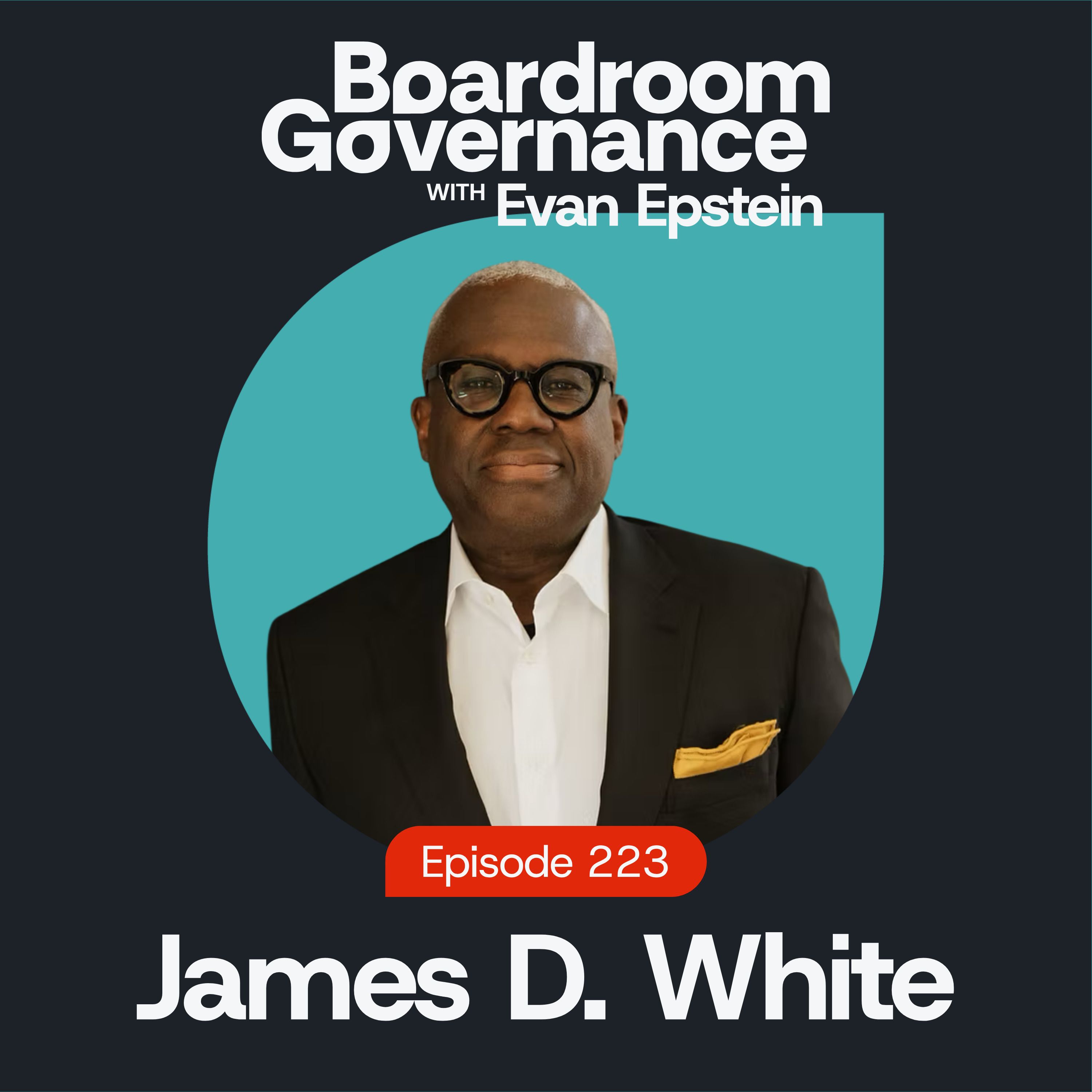
James D. White: What Makes Boards Work

(0:00) Intro (1:25) About the podcast sponsor: The American College of Governance Counsel (2:08) Start of interview (2:51) James D. White’s Origin Story. (3:57) James’s current work across public and private company boards.  (6:15) The Jamba Juice Turnaround: taking over as CEO during a crisis, reshaping the culture, and rebuilding the board (8:46) Combining the Chair and CEO Roles: when it can work, why leadership structure depends on context, and the importance of a strong lead independent director (10:20) The CEO–Board Chair Relationship: working with The Honest Company CEO Carla Vernón and why trust between the CEO and chair is central to board effectiveness (13:18) Working With Founders: lessons from Jessica Alba, Ron Shaich and Max Levchin, and navigating the founder–CEO–chair relationship (15:34) His experience with IPOs: lessons from The Honest Company, CAVA, and Affirm, and why an IPO is the beginning of the journey rather than the destination (18:04) Private vs. Public Markets: why companies are staying private longer and why James believes the public markets will remain an important source of capital (19:00) Pattern Recognition Across Boards: how his experience across consumer, retail, restaurant, and food companies informs his role as a director (21:10) Director Tenure and Overboarding: why James generally thinks about board service in a 7-9 year window and when independence or relevance can begin to fade (22:40) Board Culture: how meeting structure, communication, onboarding, offboarding, and the balance between strategy and compliance shape board effectiveness (25:41) Board Evaluations and Refreshment: why boards struggle to remove underperforming directors and how continuous feedback can make renewal easier (26:14) Are Some Board Skills Becoming Obsolete? How AI and rapid technological change are forcing boards to rethink whether they have the right capabilities around the table (27:28) Board Diversity: why James believes boards should draw from the broadest possible pool of talent and reflect the customers and markets they serve (30:10) Directors Academy and the Future of Governance: training the next generation of directors, the craft of governance, and preparing boards for AI and geopolitical change (32:08) Keeping Pace With Change: why every board should ask whether it has the right people to help management navigate the current moment (33:22) Books That Have Influenced James: The Leadership Engine by Noel Tichy (2007) Doing What Matters by Jim Kilts (2007) Know What Matters by Ron Shaich (2023) (34:35) His mentors (35:00) The quotes he thinks of often, or lives his life by (36:03) What Makes an Effective Director? Why the best directors understand context, stay in learning mode, ask how they can help, and contribute beyond formal board meetings (37:18) An unusual passion: jazz and music festivals (38:20) The living person he most admires: his 94-year-old father, and lessons about hard work and family James D. White is an experienced CEO, board chair, and director who has served on more than 20 public and private company boards.  --- Follow Boardroom Governance: Website: https://boardroom-governance.com/  Subscribe to the Newsletter YouTube channel: https://www.youtube.com/@BoardroomGovernance LinkedIn: https://www.linkedin.com/company/board-gov/ Follow Evan Epstein: Website: evanepstein.co X: https://x.com/evanepstein  LinkedIn: https://www.linkedin.com/in/epsteinevan/ --- Music: “Seeing The Future” by Dexter Britain, via Free Music Archive, licensed under the Creative Commons Attribution-NonCommercial-ShareAlike 3.0 United States License.
40 minAbspielen in:

Do8Okt
Boardroom Governance with Evan Epstein

Boardroom Governance with Evan EpsteinHost

Leo Strine: Before You Use Artificial Intelligence, Use Your Human Intelligence

(00:00) Introduction and about the inaugural Boardroom Governance Summit (1:50) AI and the enduring role of the board: why new technology does not change directors’ fundamental responsibilities, and why human judgment remains essential (3:32) Demystifying AI: understanding how the technology is actually used inside the business, asking clear questions, and testing AI through real-world applications (5:40) AI, Investment, and Talent: evaluating AI spending, automation, hiring decisions, and whether technology is actually improving the business (6:50) Delaware and the Competition for Corporate Domicile: why DE has historically balanced the interests of investors and management (9:33) Long-Term Leadership: why directors should consider more than the immediate political or market environment when making governance decisions. Impact of climate change. (12:57) AI, Energy, and Corporate Responsibility: data centers, energy and water consumption, environmental impact, and the broader costs of AI. "I think it's a very scary time." (23:25) Public Benefit Corporations: how the Delaware PBC structure works and why companies like OpenAI and Anthropic are experimenting with new governance models (24:20) Purpose vs. Branding: why benefit corporations can create useful governance flexibility, but only if companies are willing to stand behind measurable commitments (27:19) What Good Corporate Citizenship Looks Like: responsibilities to customers, employees, communities, the environment, and the broader workforce (29:19) Boards, Workers, and Economic Opportunity: why boards should understand the workforce beyond executive compensation and how business can help reduce economic anxiety (31:02) The Growth of Private Markets: venture capital, private equity, accredited-investor exemptions, and the accountability gap between public and private companies  (34:25) Disclosure and Market Trust: why SEC reporting, fiduciary enforcement, and access to reliable information remain strengths of U.S. capital markets. About quarterly reporting. (36:52) AI Inside the Boardroom: the risks of AI-generated minutes, recording board meetings, transcription, discovery, and two-party consent laws (37:33) Before Artificial Intelligence, Use Human Intelligence: AI agents, privilege, confidential information, hallucinations, and the importance of verifying AI-generated information  Leo E. Strine, Jr. is Of Counsel at Wachtell, Lipton, Rosen & Katz and previously served as Chief Justice of the Delaware Supreme Court and Chancellor of the Delaware Court of Chancery. Recorded at the inaugural Boardroom Governance Summit in Healdsburg, California, on August 27, 2026. Join us for the next Boardroom Governance Summit, August 25–27, 2027, in Healdsburg, California. Register here. --- Follow Boardroom Governance: Website: https://boardroom-governance.com/  Subscribe to the Newsletter YouTube channel: https://www.youtube.com/@BoardroomGovernance LinkedIn: https://www.linkedin.com/company/board-gov/ Follow Evan Epstein: Website: evanepstein.co X: https://x.com/evanepstein  LinkedIn: https://www.linkedin.com/in/epsteinevan/ --- Music: “Seeing The Future” by Dexter Britain, via Free Music Archive, licensed under the Creative Commons Attribution-NonCommercial-ShareAlike 3.0 United States License.
44 minAbspielen in:

Di29Sep
Boardroom Governance with Evan Epstein

Boardroom Governance with Evan EpsteinHost

Ryan Nowicki Stewart (CEO, Pennant AI): AI, Proxy Voting, and the Future of Governance

(0:00) Intro (1:28) About the podcast sponsor: The American College of Governance Counsel (2:12) Start of interview (3:25) Ryan Nowicki Stewart’s Origin Story (5:06) The origin of Pennant AI and Ryan’s goal of building a “world model for corporate governance” (5:21) Why institutional investors struggle to scale governance oversight across thousands of portfolio companies (7:48) How Proxy Voting Works: annual meetings, shareholder votes, engagement, and why governance decisions can have major financial consequences (10:28) Proxy Season: why voting is concentrated in the spring in the U.S., but governance engagement is increasingly a year-round and global process (11:28) Ryan’s decision to join Y Combinator and why a corporate governance startup fit into the YC ecosystem (15:00) His experience with technology founders and executives perception on current proxy voting system (15:54) Building a “living, breathing operating system” for governance rather than relying on static reports and PDFs (18:53) The continuing role of proxy advisors and why institutional investors are looking for alternatives to legacy providers (24:12) Who Pennant Serves: institutional investors, public companies, and corporate advisors (25:18) Why Pennant does not publish a house voting policy and instead helps investors implement their own governance frameworks (29:57) Founder Control, Dual-Class Shares, and Investor Power: the shifting balance among founders, boards, management, and institutional investors. Reference to Stripe's Investor Letter from August 2026 “the Singularity started on 1/1/26” (30:50) Public and Private Markets Converging: SpaceX, Anthropic, OpenAI, Stripe, and new approaches to ownership and governance. *Reference to E210 with Eric Ries. (35:20) Global Governance: Japan, the U.K., the U.S., and how shareholder engagement differs across markets. *Reference to E221 with Stavros Gadinis. (38:40) Y Combinator, OpenAI credits, and why Pennant remains model-agnostic (39:39) Choosing AI Models for Governance: why different models perform better at different governance tasks (41:47) Pennant’s Governance Arena: testing how frontier AI models respond to governance questions (43:33) Pennant after YC Demo Day: new investors, enterprise clients, and plans to grow the company (45:12) What Ryan wants directors to understand about AI, shareholder engagement, and why technology can create more time for meaningful investor conversations (46:37) Books that have influenced Ryan: Horrible Histories by Terry Deary (1993-2013) The Thinking Machine by Stephen Witt (2025) Mobilize by Palantir CTO Shyam Sankar and Madeline Hart (2026) (48:46) His mentors: Stephanie Creary and Abe Friedman (reference to E43 with Abe from 2021) (50:44) A quote Ryan thinks of often: “Success is not final, failure is not fatal: it is the courage to continue that counts”  (51:37) An unusual habit: Settlers of Catan. An unusual passion: the Australian Baseball League  (53:11) The living person he most admires: Angela Merkel, and lessons from her patient, evidence-driven approach to leadership (54:42) Where to find Pennant AI and follow Ryan’s work Ryan Nowicki Stewart is the co-founder and CEO of Pennant AI, a Y Combinator-backed governance technology company building AI-powered tools for institutional investors, public companies, and advisors.  --- Follow Boardroom Governance: Website: https://boardroom-governance.com/  Subscribe to the Newsletter YouTube channel: https://www.youtube.com/@BoardroomGovernance LinkedIn: https://www.linkedin.com/company/board-gov/ Follow Evan Epstein: Website: evanepstein.co X: https://x.com/evanepstein  LinkedIn: https://www.linkedin.com/in/epsteinevan/ --- Music: “Seeing The Future” by Dexter Britain, via Free Music Archive, licensed under the Creative Commons Attribution-NonCommercial-ShareAlike 3.0 United States License.
56 minAbspielen in:

Di22Sep
Boardroom Governance with Evan Epstein

Boardroom Governance with Evan EpsteinHost

Stavros Gadinis: Corporate Ordering | How Corporations Navigate Social Conflict

(0:00) Intro (1:23) About the podcast sponsor: The American College of Governance Counsel (2:07) Start of interview (2:58) Stavros Gadinis' Origin Story (4:27) The origin of his new book Corporate Ordering: How Corporations Navigate Social Conflict (5:30) Shareholders vs. Stakeholders: why the century-old debate over corporate purpose remains unresolved (7:37) Corporations as Rulemakers: how companies increasingly create rules that affect millions or even billions of people (11:07) Who Really Has Decision-Making Power? Boards, founders, dual-class shares, institutional investors, and corporate hierarchies (13:31) AI Governance Models: Microsoft, OpenAI, Anthropic, and different approaches to governing AI (14:43) Microsoft’s approach to Responsible AI and building internal systems for accountability, transparency, and oversight (18:00) Creating internal checks on product decisions and giving employees a process to challenge governance decisions (18:48) The OpenAI Governance Crisis: Altman’s 2023 firing, the power of employees and investors, and the limits of formal board authority (20:25) Why governance structures designed for startups may not survive when companies grow into massive global businesses (22:25) OpenAI vs. Anthropic: detailed rulebooks versus Constitutional AI and the tradeoffs between specific rules and broad principles (25:09) Meta’s Oversight Board: what worked, what did not, and why independent monitoring requires real authority (28:10) Stavros’s Three-Part Corporate Ordering Framework: 1) rule making, 2) implementation, and 3) monitoring. (32:20) Is corporate ordering just Compliance 2.0? Why Stavros sees an important difference between compliance and product design (34:55) Uber’s Safety Reckoning: how outside consultation changed the company’s approach to reporting sexual assault  (38:06) AI Regulation: the emerging patchwork across the United States, Europe, China, and other jurisdictions (40:04) How corporate AI governance practices can eventually become the foundation for government regulation (42:17) The increasingly important role of the General Counsel in governance, regulation, and helping shape emerging rules (43:21) A book that influenced Stavros: a biography of Louis XIV, and lessons about concentrated power and decision-making (44:19) His mentor, Howell Jackson of Harvard Law School, and the importance of embracing complexity (45:27) A lesson from his painting instructor: don’t be afraid to start with the wrong line (46:20) An unusual passion: French patisserie  (46:56) The living person he most admires: Icelandic pianist Víkingur Ólafsson (48:20) Where to find Corporate Ordering: How Corporations Navigate Social Conflict Stavros Gadinis is the George R. Johnson Professor of Law and Faculty Director of the Berkeley Center for Law and Business at UC Berkeley School of Law --- Follow Boardroom Governance: Website: https://boardroom-governance.com/  Subscribe to the Newsletter YouTube channel: https://www.youtube.com/@BoardroomGovernance LinkedIn: https://www.linkedin.com/company/board-gov/ Follow Evan Epstein: Website: evanepstein.co X: https://x.com/evanepstein  LinkedIn: https://www.linkedin.com/in/epsteinevan/ --- Music: “Seeing The Future” by Dexter Britain, via Free Music Archive, licensed under the Creative Commons Attribution-NonCommercial-ShareAlike 3.0 United States License.
50 minAbspielen in:

Fr11Sep
Boardroom Governance with Evan Epstein

Boardroom Governance with Evan EpsteinHost

CEO Succession: What Boards Need to Get Right | Karen Francis DeGolia & Penny Herscher

(0:00) Introduction to the inaugural Boardroom Governance Summit (02:18) The Board’s Role in CEO Succession: why succession is about more than hiring and firing the CEO, and why boards should think about the entire executive management team (04:57) Is the CEO You Have Today the CEO You Need Tomorrow? How rapid changes in markets, technology, and industry can change the leadership profile a company needs (06:31) Why Succession Plans Fail: boards know succession is important, so why are so many still unprepared? (07:54) Succession as an Ongoing Process: why the conversation should begin on the first day of a CEO’s tenure (09:23) The Emotion of CEO Succession: ego, fear, trust, and why succession can become one of the most difficult conversations between a board and a CEO (11:14) Who Owns CEO Succession? The role of the board chair, Nom/Gov Committee, Comp Committee, and other board leaders (13:24) Developing Internal Candidates: how directors can build relationships with senior executives and assess whether they could realistically become CEO (14:57) The P&L Test: if operating experience is essential for the next CEO, boards need to create those development opportunities years in advance (17:53) Private Equity and CEO Succession: the influence of investment horizons, exit expectations, and the private equity sponsor (19:24) Family-Owned Companies: long-term ownership, outside CEOs, independent boards, and succession across generations (20:41) Venture-Backed Companies: what happens when investors have backed the founder but the founder may no longer be the right CEO to scale the company (22:47) Founder Control and Dual-Class Shares: the limits of board influence when founders retain voting control (24:56) Shareholder Activism: why activists often target CEO performance through the board and how directors should assess their own vulnerabilities (28:00) AI and the Next Generation of CEOs: why intellectual curiosity, adaptability, and the willingness to learn may matter more than claiming to be an AI expert (30:06) How AI, geopolitics, and accelerating change are reshaping the qualities boards should look for in CEOs Karen Francis DeGolia is a board member at Vontier, CelLink, and NAUTO. Penny Herscher is a board member at Lumentum, Penguin Solutions, Forvia SA, and Modern Health. This conversation was recorded at the inaugural Boardroom Governance Summit in Healdsburg, California, on August 26–27, 2026. --- Follow Boardroom Governance: Website: https://boardroom-governance.com/  Subscribe to the Newsletter YouTube channel: https://www.youtube.com/@BoardroomGovernance LinkedIn: https://www.linkedin.com/company/board-gov/ Follow Evan Epstein: Website: evanepstein.co X: https://x.com/evanepstein  LinkedIn: https://www.linkedin.com/in/epsteinevan/ --- Music: “Seeing The Future” by Dexter Britain, via Free Music Archive, licensed under the Creative Commons Attribution-NonCommercial-ShareAlike 3.0 United States License.
31 minAbspielen in:

Di1Sep
Boardroom Governance with Evan Epstein

Boardroom Governance with Evan EpsteinHost

Raffaela Rein: How AI Is Changing the Way Boards Work

(0:00) Thank you to everyone who joined the inaugural Boardroom Governance Summit (0:30) Intro (1:51) About the podcast sponsor: The American College of Governance Counsel (2:38) Start of interview (3:21) Raffaela Rein’s Origin Story (4:44) Rocket Internet: the “copycat factory,” global expansion, execution, and leadership lessons (8:36) Founding and selling CareerFoundry (9:16) Raffaela’s Board Journey: Porsche and other boards: PE, tech unicorn, startups and non-profits. (11:04) Why she founded BoardLens (15:00) AI as a Strategic Sparring Partner for board members: better preparation, sharper questions, and challenging assumptions (16:14) How BoardLens is different from a traditional board portal and why individual directors are adopting it (18:37) Confidentiality, Privilege, and AI: the risks of using public AI tools for board work (21:03) The AI models behind BoardLens: Anthropic, Gemini, and OpenAI (23:25) Open vs. Closed AI Models and balancing performance, security, and confidentiality (25:01) BoardLens users and the growing demand for AI in regulated industries (26:37) The “private equitization” of the economy and the rise of private-company boards (31:38) OpenAI, Anthropic, and New Governance Models: PBCs, nonprofits, trusts, and mission-driven governance (35:15) The Sam Altman episode and the unusual balance of power among boards, employees, and investors (36:34) Mission vs. Financial Interests in AI governance (37:47) Founder Control and Dual-Class Shares: SpaceX, Elon Musk, and investor willingness to accept unconventional governance (39:17) The Porsche IPO and other unconventional governance structures (41:07) U.S. vs. German Boards: comparing the single-board and two-tier governance models (44:00) Why the board meeting should be one of the most valuable meetings in the company, not simply a reporting exercise (44:40) Why Raffaela believes the AI transformation may be bigger than the digital transformation (45:36) AI Strategy and Governance education for directors (46:00) Building a Directors Council to think about the future of board work in an AI-driven world (47:44) Autonomous vehicles, disruption of the German and European auto industries, and global competition (48:15) What happens if AI makes many goods and services dramatically cheaper, or even effectively free? (49:04) Books that have greatly influenced her life: Radical Candor, by Kim Scott Never Split the Difference, by Chris Voss The Hard Thing About Hard Things, by Ben Horowitz (51:13) Her mentors and the people she admires for perseverance (52:12) Quotes she thinks of often: Invictus and “I am the master of my fate, I am the captain of my soul.” (52:54) An unusual habit: going through different color phases (53:56) The living person she most admires: Tony Robbins, and his ability to sustain a sense of purpose over decades Raffaela Rein is the CEO and founder of BoardLens, an AI-powered intelligence platform built for board members. Her career spans BlackRock, Rocket Internet, entrepreneurship, and corporate boards.  --- Follow Boardroom Governance: Website: https://boardroom-governance.com/  Subscribe to the Newsletter YouTube channel: https://www.youtube.com/@BoardroomGovernance LinkedIn: https://www.linkedin.com/company/board-gov/ Follow Evan Epstein: Website: evanepstein.co X: https://x.com/evanepstein  LinkedIn: https://www.linkedin.com/in/epsteinevan/ --- Music: “Seeing The Future” by Dexter Britain, via Free Music Archive, licensed under the Creative Commons Attribution-NonCommercial-ShareAlike 3.0 United States License.
56 minAbspielen in:

Mo17Aug
Boardroom Governance with Evan Epstein

Boardroom Governance with Evan EpsteinHost

Shannon Nash: Boards, AI Agents, and Human Judgment

(0:00) About the Boardroom Governance Summit (Aug 26-27, 2026) (0:43) Intro (2:08) About the podcast sponsor: The American College of Governance Counsel. (2:54) Start of interview. (3:56) Origin Story of Shannon Nash (7:00) Her pivot from Law to Finance (9:15) Her operating and finance career (12:55) Her experience in tech (subscription businesses) and current COO and CFO role at Vibrant Planet (15:50) Her first board (UserTesting) and subsequent board career (Netscout, SoFi, Lazy Dog Restaurants, Silicon Valley Community Foundation) (22:04) Cybersecurity Meets AI (28:47) Where are the Humans? The next wave in the agentic era (31:44) Regulated Boards and Risk (36:25) Private Board Experience (VC and PE). (41:13) About Alpha AI, focusing on AI Governance (43:53) On her podcast No Boxes, Just Verses (46:45) Her obsession with the Acquired podcast (47:41) Her mentors (49:40) Quotes that she thinks of often or lives her life by. (51:06) An unusual habit or an absurd thing that she loves. Beat Shazam show (52:15) The living person she most admires. Shannon Nash is a qualified financial expert, attorney, and CPA with over 30 years at the intersection of technology, finance, and governance. She serves as a board member in both public and private companies. --- Follow Boardroom Governance: Website: https://boardroom-governance.com/  Subscribe to the Newsletter YouTube channel: https://www.youtube.com/@BoardroomGovernance LinkedIn: https://www.linkedin.com/company/board-gov/ Follow Evan Epstein: Website: evanepstein.co X: https://x.com/evanepstein  LinkedIn: https://www.linkedin.com/in/epsteinevan/ --- Music: “Seeing The Future” by Dexter Britain, via Free Music Archive, licensed under the Creative Commons Attribution-NonCommercial-ShareAlike 3.0 United States License.
55 minAbspielen in:

Mo3Aug
Boardroom Governance with Evan Epstein

Boardroom Governance with Evan EpsteinHost

Sandra Gobert: European Governance in a Changing World

(0:00) About the Boardroom Governance Summit (Aug 26-27, 2026) (1:20) Intro (2:45) About the podcast sponsor: The American College of Governance Counsel. (3:31) Start of interview. (4:55) Origin Story of Sandra Gobert (6:04) Sandra’s Career Path (8:56) Guberna and Board Education. Member of EcoDa. (12:00) Family Firms and Control in EU (13:53) Relationship Agreements Explained (examples, Bpost and Proximus) (19:05) State Owned Enterprises (SOEs), and Government involvement on Boards (19:58) The Board’s Emerging Fourth Role: advocacy and policymaking, alongside its traditional strategic, leadership, and oversight responsibilities. (22:52) AI and Alternative Structures. PBCs, Foundations, and other European multi-stakeholder models. (29:25) Employees on the Board ("unacceptable in Belgium"). (31:01) Toward European Harmonization ("We need more Europe, not less Europe") (31:50) The EU Inc. Idea (33:57) Principle-Based Governance ("Comply or Explain" framework) (36:19) The Value of Board Evaluations (41:05) Founder Control in Tech (dual class share structures) (44:05) Europe’s Power Shift (46:34) China and Global Competition (49:42) Europe’s Economic Pressures (reference to The Economist's interview with Elon Musk) (52:23) Board Dynamics Matter (53:19) Books that have greatly influenced her life: Catherine de Médicis, ou, La reine noire, by Jean Orieux (1986) Passion, by Jude Morgan (2005) The Journey of Leadership by Hans-Werner Kaas, Dana Maor, Kurt Strovink, Ramesh Srinivasan (2024) (54:59) Her mentors. (55:52) Quotes that she thinks of often or lives her life by. (57:09) An unusual habit or an absurd thing that she loves. (58:05) The living person she most admires in governance: Christine Lagarde. Sandra Gobert is the Executive Director of GUBERNA. Sandra also serves as an independent director of Fluxys Belgium, sits on the board of ecoDa, the European Confederation of Directors Associations, and is a member of the board of Belgium’s Corporate Governance Committee. --- Follow Boardroom Governance: Website: https://boardroom-governance.com/  Subscribe to the Newsletter YouTube channel: https://www.youtube.com/@BoardroomGovernance LinkedIn: https://www.linkedin.com/company/board-gov/ Follow Evan Epstein: Website: evanepstein.co X: https://x.com/evanepstein  LinkedIn: https://www.linkedin.com/in/epsteinevan/ --- Music: “Seeing The Future” by Dexter Britain, via Free Music Archive, licensed under the Creative Commons Attribution-NonCommercial-ShareAlike 3.0 United States License.
1 h 00 minAbspielen in:

Di14Jul
Boardroom Governance with Evan Epstein

Boardroom Governance with Evan EpsteinHost

Mayree Clark and Linda Riefler: Leading-Edge Stewardship in the Boardroom

(0:00) About the Boardroom Governance Summit (Aug 26-27, 2026) (0:55) Intro (2:37) About the podcast sponsor: The American College of Governance Counsel. (3:24) Start of interview. (4:23) Origin story Mayree Clark (6:08) Origin story Linda Riefler (8:23) About their Leading-Edge Stewardship framework and personal road-map. (11:38) Teamwork and Long-Term Value Creation (16:03) On board diversity and pace of change (19:02) Boards in distress: Mayree joining Ally Financial in financial crisis (2009) (21:39) MSCI Culture and CEO Relations (26:02) Tough calls on CEO transitions (example of CSX CEO transition) (32:39) Private Equity Board Lessons (flexibility on decision-making and talent pools) (36:22) Handling under-performing directors (43:11) German Governance Across Borders (Mayree's experience serving on Deutsche Bank's board) (48:06) Purpose, Adversity, and Stewardship (50:42) What are the 1-3 books that have greatly influenced your life: Mayree: Self Renewal : The Individual and the Innovative Society, by John Gardner (1963) Linda: A Brief History of Everything, by Ken Wilber (2017) How the Word is Passed, by Clint Smith (2021) The Spark Within, by Michael Neal (coach) (53:36) Who were their mentors, and what they learned from them. (56:37) An unusual habit or an absurd thing that they love. (1:00:16) The living person they most admire. Mayree Clark is a longtime corporate director, founder and Managing Partner of Eachwin Capital, and former senior executive at Morgan Stanley. She currently serves on the boards of Ally Financial and Deutsche Bank AG. Linda Riefler is an experienced corporate director and former senior executive at Morgan Stanley. She currently serves on the boards of CSX Corporation, MSCI Inc., and North American Partners in Anesthesia, and is chair of Pencils of Promise. --- Follow Boardroom Governance: Website: https://boardroom-governance.com/  Subscribe to the Newsletter YouTube channel: https://www.youtube.com/@BoardroomGovernance LinkedIn: https://www.linkedin.com/company/board-gov/ Follow Evan Epstein: Website: evanepstein.co X: https://x.com/evanepstein  LinkedIn: https://www.linkedin.com/in/epsteinevan/ --- Music: “Seeing The Future” by Dexter Britain, via Free Music Archive, licensed under the Creative Commons Attribution-NonCommercial-ShareAlike 3.0 United States License.
1 h 04 minAbspielen in:

Mo29Jun
Boardroom Governance with Evan Epstein

Boardroom Governance with Evan EpsteinHost

Terry Johnson: Sports, Gaming, and Family Business Governance

(0:00) About the Boardroom Governance Summit (Aug 26-27, 2026) (0:54) Intro (2:15) About the podcast sponsor: The American College of Governance Counsel. (3:01) Start of interview. *Reference to prior episode with Terry (E131) from 2024. (3:50) About Terry's role as Co-Chair of WilmerHale's Sports & Gaming Practice (4:52) Sports Investment Boom, now including institutional investors and private equity (8:40) League Ownership Models (ie. NFL, MLS, WPHL, etc) (14:24) Player Revenue Battles (example of WNBA) (16:34) Terry's sports governance practice (18:18) The Soccer World Cup, Global Expansion, and cross-border investments (20:35) U.S. Sporting Franchises (23:09) Betting platforms and Integrity. Growth of prediction markets like Polymarket and Kalshi. (26:58) Women’s Sports Surge (32:38) Family Business Governance (38:06) Family Office Structures (41:11) Wine Industry Pressure (44:27) Future of Sports Investing (47:03) College Sports Revenue Sharing. Reference to House case settlement (49:55) Promotion and Relegation Teresa (Terry) Johnson is co-chair of WilmerHale’s Sports & Gaming Practice, and a partner in the firm’s Transactional Department. Ms. Johnson is an experienced sports and corporate transactions lawyer with over three decades of experience advising clients on securities transactions, corporate governance and capital markets matters. --- Follow Boardroom Governance: Website: https://boardroom-governance.com/  Subscribe to the Newsletter YouTube channel: https://www.youtube.com/@BoardroomGovernance LinkedIn: https://www.linkedin.com/company/board-gov/ Follow Evan Epstein: Website: evanepstein.co X: https://x.com/evanepstein  LinkedIn: https://www.linkedin.com/in/epsteinevan/ --- Music: “Seeing The Future” by Dexter Britain, via Free Music Archive, licensed under the Creative Commons Attribution-NonCommercial-ShareAlike 3.0 United States License.
56 minAbspielen in:

Mo15Jun
Boardroom Governance with Evan Epstein

Boardroom Governance with Evan EpsteinHost

Emily Liggett: Informed Oversight Without Operational Interference

(0:00) Intro *Reference to the Boardroom Governance Summit at Limerick Lane Cellars, Healdsburg, California (Aug 26-27, 2026) (2:12) About the podcast sponsor: The American College of Governance Counsel. (2:59) Start of interview. (4:00) Origin Story of Emily, and Stewardship (6:15) From Engineer to CEO (7:14) Companies that she led: Elo Touch Systems (97-00), Capstone Turbine (02-03), Apexon (04-07) and NovaTorque (09-17). (9:50) Changing geopolitics of manufacturing (10:49) First Boards and Public Company Lessons (first board experience in Japan) "The soft skills are the hard part to do." (15:48) On serving in private VC-backed boards. "If you know one board, you know one board. I mean, they are all so different." (22:43) On serving in non-profit boards. "It's one of the best possible ways to get governance experience." (26:20) CEO Mistakes (32:03) Board Succession for leadership and skills. (35:33) Board Evaluations Done Right (37:41) What Makes Great Directors. *reference to Leading Edge Stewardship, by Linda Riefler and Mayree Clark (Stanford Women on Boards). "Asking the right question, at the right time, in the right way." (39:57) AI and the Boardroom. (46:16) Innovation Versus Oversight. "The goal is informed oversight without operational interference" (49:34) Teaching Governance to Stanford Students (52:17) Boards need to have a long-term orientation in this short-term world. (52:34) Books that have greatly influenced her life: The Bible Why Nations Fail: The Origins of Power, Prosperity, and Poverty, by Daron Acemoglu and James A. Robinson (2012) The Count of Monte Cristo by Alexandre Dumas (1846) (54:12) Her mentors. "[T]hey told me things I needed to hear in a way that I could hear them because it's easy to get defensive." (55:38) Quotes that she thinks of often or lives her life by. "Never doubt that a small group of thoughtful, committed, citizens can change the world. Indeed, it is the only thing that ever has.' by Margaret Mead. (56:43) An unusual habit or an absurd thing that she loves. (57:30) The living person she most admires in governance: Bob Joss. Emily Liggett serves on the boards of Ultra Clean Technology and Materion Corporation. She also serves as Lecturer at Stanford GSB, where she teaches corporate governance and board leadership. --- Follow Boardroom Governance: Website: https://boardroom-governance.com/  Subscribe to the Newsletter YouTube channel: https://www.youtube.com/@BoardroomGovernance LinkedIn: https://www.linkedin.com/company/board-gov/ Follow Evan Epstein: Website: evanepstein.co X: https://x.com/evanepstein  LinkedIn: https://www.linkedin.com/in/epsteinevan/ --- Music: “Seeing The Future” by Dexter Britain, via Free Music Archive, licensed under the Creative Commons Attribution-NonCommercial-ShareAlike 3.0 United States License.
59 minAbspielen in:

Do4Jun
Boardroom Governance with Evan Epstein

Boardroom Governance with Evan EpsteinHost

Greg Gretsch: Venture Capital in the AI Supercycle

(0:00) Intro, *Reference to the Boardroom Governance Summit (Aug 26-27, 2026) (2:42) About the podcast sponsor: The American College of Governance Counsel. (3:28) Start of interview. *Reference to prior episode with Greg (E136) from 2024. (5:14) Market Boom and AI Supercycle (6:14) AI Is Changing Everything (9:06) How does a VC use AI (venture business: sourcing, selection, and stewardship) (12:13) Cloud and Startup Costs, rise of seed rounds and institutional angel investors (15:13) JSV Launchpad, a 10-week, in-person summer program in SF from JSV for early-stage student AI founders (18:50) SaaSpocalypse Debate and AI Washing (reference to the Albert Saniger / Nate Inc case) (21:33) Growth Metrics Rewritten (when Anthropic has grown 80x year over year) "the best solution for high prices is high prices" (24:20) Sorting SaaS Risks (27:30) Defensibility in the AI Era: 1) Network effects, 2) Systems of record, and 3) Regulated workflow. (29:52) AI impact to companies: 1) Are the foundation models existential? 2) How much have you incorporated AI into your platform or your product? 3) How important is AI within your product? and 4) How much have you integrated AI into your operations? "In a world where building software is easy, one of the things that we're already seeing within our portfolio, and I think we'll see more of this, is... horizontal expansion (expanding to adjacent businesses)." (32:33) AI, Jobs, and Layoffs (*reference to this FT article: What if remote working, not AI, is to blame for weak junior hiring?) (38:28) Private Markets and IPOs. Liquidity in venture ecosystem (M&A and private equity). (42:02) SpaceX, Anthropic and OpenAI IPOs (45:18) Data Centers and Backlash "It's easy to demonize" (46:16) Regulation and Global Competition "AI right now has become a great bogeyman for both sides." (50:14) Board Strategy for AI (52:12) On Kirkland & Ellis' $500m bet to develop its own AI technology Greg Gretsch is a Founding Partner and Managing Director of Jackson Square Ventures, an early-stage VC firm based in San Francisco. Greg has more than two decades of experience in VC and five of his early-stage investments have gone on to exits or valuations above $1 billion. --- Follow Boardroom Governance: Website: https://boardroom-governance.com/  Subscribe to the Newsletter YouTube channel: https://www.youtube.com/@BoardroomGovernance LinkedIn: https://www.linkedin.com/company/board-gov/ Follow Evan Epstein: Website: evanepstein.co X: https://x.com/evanepstein  LinkedIn: https://www.linkedin.com/in/epsteinevan/ --- Music: “Seeing The Future” by Dexter Britain, via Free Music Archive, licensed under the Creative Commons Attribution-NonCommercial-ShareAlike 3.0 United States License.
55 minAbspielen in:

Mo18Mai
Boardroom Governance with Evan Epstein

Boardroom Governance with Evan EpsteinHost

Laurie Yoler: Boards at the Edge of Innovation

(0:00) Intro (1:47) About the podcast sponsor: The American College of Governance Counsel (2:34) Start of interview (4:12) Laurie's origin story (6:19) From Management Consulting (Accenture) to Product Innovation (Visa). "What they all had in common was that I got to start with a blank sheet of paper." (8:52) Toward Venture Capital and Board Governance. From Sun Microsystems to Packet Design to investing. (13:07) How she got interested in board governance. Her first board experience with Interactive Investor (cross-listed in US and UK) (14:27) Joining Playground Global in 2019 (16:16) Tesla’s Day-Zero Board (20:15) Zoox and Autonomous Ambition (24:11) Boards Across Company Types: VC-backed companies and family businesses. Example of her time as board member at Bose. (27:57) Lessons from Church and Dwight. The roles of M&A and marketing. (30:37) Her co-authored paper on The Artificially Intelligent Boardroom (Stanford GSB) (35:30) Private Markets and Trillion-Dollar Valuations (40:28) The role of private equity in this environment, and its distinctive board structure. (42:55) Geopolitics and Supply Chains (47:20) Cybersecurity Oversight in the AI Age (50:45) Courage in the Boardroom. “As board members, we have to be courageous enough to ask the right questions at the right time, rather than sit back and hope everything will be okay.” (52:22) Books that have greatly influenced her life: Night Train to Lisbon, by Pascal Mercier (2004) The Immortal Life of Henrietta Lacks, by Rebecca Skloot (2010) Sapiens: A Brief History of Mankind, by Yuval Noah Harari (2011) (54:14) Her mentors: Heidi Roizen Scott McNealy Peggy Johnson (56:49) Quotes that she thinks of often or lives her life by. "It is easy enough to be pleasant, when life flows by like a song, but the man worth while is one who will smile, when everything goes dead wrong." Ella Wheeler Wilcox (57:32) An unusual habit or an absurd thing that she loves. Dancing, after following research from Kelly McGonigal. Hummingbird feeders. (59:39) The living person she most admires: her husband, Ben Lenail. Laurie Yoler is a venture capital investor at Playground Global, former board member at Tesla and Zoox, and a director or advisor to more than 25 boards. She currently serves on the boards of Church & Dwight and the NACD Northern California Chapter. --- Follow Boardroom Governance: Website: https://boardroom-governance.com/  Subscribe to the Newsletter YouTube channel: https://www.youtube.com/@BoardroomGovernance LinkedIn: https://www.linkedin.com/company/board-gov/ Follow Evan Epstein: Website: evanepstein.co X: https://x.com/evanepstein  LinkedIn: https://www.linkedin.com/in/epsteinevan/ --- Music: “Seeing The Future” by Dexter Britain, via Free Music Archive, licensed under the Creative Commons Attribution-NonCommercial-ShareAlike 3.0 United States License.
1 h 02 minAbspielen in:

Mo11Mai
Boardroom Governance with Evan Epstein

Boardroom Governance with Evan EpsteinHost

Marie Oh Huber: Governing Through Disruption

(0:00) Intro (1:34) About the podcast sponsor: The American College of Governance Counsel (2:21) Start of interview (3:20) Marie's origin story (5:19) Career Path in Law and Governance. Her time at HP and Agilent Technologies. (7:50) Transition to eBay (9:57) Shareholder Activism and eBay's Story *CNBC clip with Ryan Cohen (14:42) Governance Roles and Board Memberships (16:50) Her teaching positions on the role of the General Counsel (18:57) Chair and Director Succession (23:37) On separating Chair and CEO roles (25:44) Governance in Private Companies (30:40) The Impact of AI on Governance. She thinks of it in three buckets: 1) Customer/revenue opportunity; 2) from an enterprise wide standpoint; and 3) AI risks (34:36) Questions board members should ask management regarding AI opportunities and challenges (38:09) Energy Sector and AI *Marie serves on the board of Portland General Electric (43:10) Geopolitical Challenges in Business *reference to Meta-Manus China breakup (45:24) Building Trust in the Boardroom (48:30) Books that have greatly influenced her life: The Book of Alchemy, by Suleika Jaouad (2025) Phoenix in a Jade Bowl, by Bonnie Bongwan Cho Oh (her mother) (2013) Atomic Habits, by James Clear (2018) (50:32) Her mentors (52:38) Quotes that she thinks of often or lives her life by. (54:00) An unusual habit or an absurd thing that she loves. (56:00) The living person she most admires: Lisa Su. Marie Oh Huber has over 30 years of experience of strategic business, legal, regulatory and public policy experience in large global public technology companies, including eBay, Agilent Technologies, and HP. She currently serves on the board of Portland General Electric --- Follow Boardroom Governance: Website: https://boardroom-governance.com/  Subscribe to the Newsletter YouTube channel: https://www.youtube.com/@BoardroomGovernance LinkedIn: https://www.linkedin.com/company/board-gov/ Follow Evan Epstein: Website: evanepstein.co X: https://x.com/evanepstein  LinkedIn: https://www.linkedin.com/in/epsteinevan/ --- Music: “Seeing The Future” by Dexter Britain, via Free Music Archive, licensed under the Creative Commons Attribution-NonCommercial-ShareAlike 3.0 United States License.

58 minAbspielen in:

Mo4Mai
Boardroom Governance with Evan Epstein

Boardroom Governance with Evan EpsteinHost

Eddie Ramos: How AI Is Reshaping Investing and Boardrooms

(0:00) Intro (1:24) About the podcast sponsor: The American College of Governance Counsel (2:11) Start of interview *reference to the BRI from LCDA (3:54) Eddie's origin story (6:27) Eddie's investment focus (7:44) The rise of AI and its impact on him (9:06) Eddie’s roles in investment over the past 35 years (as GP and LP). (8:32) His current endeavors: 1) Board member in mutual funds (Calvert Funds); 2) Independent director and Chair elect of Global X Venture Fund; 3) Chief Strategy Officer at Leadview Capital; and 4) Advisor at Bullpen.ai (19:38) Dealing with AI hallucinations (e.g. Sullivan & Cromwell example) (23:13) Convergence of AI, ESG, and Governance: "It's dramatic" (25:00) "Stocks will be tokenized, markets will be much more liquid." "Wall street is trying to put liquid claims on illiquid investments" *WSJ Nasdaq's Plan for 24/7 Tokenized Stock Trading (31:20) Geopolitical Challenges in Investing and for Boards. *Example of Meta-Manus breakup. "We live in a selectively connected world." (34:00) Politicization and social issues in corporations. Board Adaptation to Rapid Changes (38:19) AI and Audit Committee Responsibilities (40:30) Bridging the AI Knowledge Gap "Boards are under prepared." *References to Stanford GSB cases: Netflix Approach to Governance and the Artificially Intelligent Boardroom (46:10) Changing Dynamics in Board Practices. "It's a matter of time before companies like SAP or Microsoft move into corporate auditing, or Amazon starts offering mutual funds. The incumbents just don't see it coming." (47:10) Power Laws and Growth in Private Markets. (50:31) Books that have greatly influenced his life: The Power Broker, by Robert Caro (1974) The Tipping Point, by Malcolm Gladwell (2000) U2 by U2, by Bono, The Edge, Adam Clayton, Larry Mullen Jr. with Neil McCormick (2006) (52:56) His mentors. (53:56) Quotes that he thinks of often or lives her life by: "Prioritize by impact" "Recognize the good in everyone" (55:10) An unusual habit or an absurd thing that he loves: obsession with curating music playlists. (55:06) The living person he most admires: Bono and Bad Bunny. Eddie Ramos is the Chief Strategy Officer for Leadview Capital. He is also currently on the board of Morgan Stanley’s Calvert Mutual Funds and Global X Venture Fund, serving as the Chairman of the Audit Committee for both. --- Follow Boardroom Governance: Website: https://boardroom-governance.com/  Subscribe to the Newsletter YouTube channel: https://www.youtube.com/@BoardroomGovernance LinkedIn: https://www.linkedin.com/company/board-gov/ Follow Evan Epstein: Website: evanepstein.co X: https://x.com/evanepstein  LinkedIn: https://www.linkedin.com/in/epsteinevan/ --- Music: “Seeing The Future” by Dexter Britain, via Free Music Archive, licensed under the Creative Commons Attribution-NonCommercial-ShareAlike 3.0 United States License.

60 minAbspielen in:

Di21Apr
Boardroom Governance with Evan Epstein

Boardroom Governance with Evan EpsteinHost

Steven Lipin: Activism, M&A, and the Rising Stakes of Board Communication

(0:00) Intro (1:36) About the podcast sponsor: The American College of Governance Counsel (2:23) Start of interview (3:11) Steve's origin story (5:05) His Journey into Journalism (6:02) The Rise of Governance Movement (7:00) Transformation of Board Accountability. Reference to the 1992 Board coup at GM and other historical changes. (10:24) Communication in Governance (12:25) Establishing Gladstone Place Partners (15:00) Crisis Management and Board Roles (17:34) The Importance of Investor Relations (20:40) Current Landscape of Shareholder Activism. (25:14) The Snap activism case. The impact of activism on companies with dual-class share structures. (30:12) M&A Transactions, Delaware and DExit. The impact of Twitter's acquisition by Elon Musk. Reference to E201 with Leo Strine. (34:47) The Ongoing Cybersecurity Challenge. Reference to Anthropic's new Claude Mythos. (37:51) The Impact of AI on Governance. The case of Anthropic's dispute with the Pentagon. *Reference to evanepstein.substack.com and E204 with Eric Ries. (42:50) AI's PR problem. The challenge of building data centers. The geopolitics of AI. (46:30) Impact of job firings, due to AI? (49:53) The state of ESG and DEI in 2026. (52:05) Books that have greatly influenced his life: The Island at the Center of the World, by Russell Shorto (2004) The Power Broker, by Robert Caro (1974) Alexander Hamilton, by Ron Chernow (2004) (53:10) His mentors. (54:00) Quotes that he thinks of often or lives her life by (Grateful Dead lyrics) (54:24) An unusual habit or an absurd thing that he loves (55:06) The living person he most admires Steven Lipin is founder and CEO of communications advisory firm Gladstone Place Partners and a trusted advisor in the field of strategic, financial and corporate governance communications. --- Follow Boardroom Governance: Website: https://boardroom-governance.com/  Subscribe to the Newsletter YouTube channel: https://www.youtube.com/@BoardroomGovernance LinkedIn: https://www.linkedin.com/company/board-gov/ Follow Evan Epstein: Website: evanepstein.co X: https://x.com/evanepstein  LinkedIn: https://www.linkedin.com/in/epsteinevan/ --- Music: “Seeing The Future” by Dexter Britain, via Free Music Archive, licensed under the Creative Commons Attribution-NonCommercial-ShareAlike 3.0 United States License.

57 minAbspielen in:

Di7Apr
Boardroom Governance with Evan Epstein

Boardroom Governance with Evan EpsteinHost

Benjamin Means: The Principles of Family Business Law and Governance

(0:00) Intro, *Reference to prior episode with Ben Means (E105) (1:36) About the podcast sponsor: The American College of Governance Counsel. (2:23) Start of interview. (3:39) The Premise of his new book Family Business Law (6:48) Understanding Shareholder Oppression (10:17) The Three-Circle Model Explained (13:34) The Personal Impact of Family Business (16:24) Boards in Family Businesses (18:09) The Importance of Voice (20:47) Overlapping Family and Business Law *Reference to my episodes on HBO's Succession (24:36) The Succession Challenge (transference to next generation or sale of company) (28:18) Fiduciary Duties and Governance. *Reference to the Market Basket litigation (34:03) Family Protocols: A Solution? (35:13) Societal Impact of Family Businesses *Reference to E204 with Eric Ries (38:24) Innovations in Governance and Family Businesses. Pros and Cons of LLCs (42:56) Features of a New Family Structure (46:05) The Rise of Family Offices Benjamin Means is a Professor of Law, the John T. Campbell Chair in Business and Professional Ethics, and Director of the Family & Small Business Program at the University of South Carolina Joseph F. Rice School of Law. --- Follow Boardroom Governance: Website: https://boardroom-governance.com/  Subscribe to the Newsletter YouTube channel: https://www.youtube.com/@BoardroomGovernance LinkedIn: https://www.linkedin.com/company/board-gov/ Follow Evan Epstein: Website: evanepstein.co X: https://x.com/evanepstein  LinkedIn: https://www.linkedin.com/in/epsteinevan/ --- Music: “Seeing The Future” by Dexter Britain, via Free Music Archive, licensed under the Creative Commons Attribution-NonCommercial-ShareAlike 3.0 United States License.

49 minAbspielen in:

Di31Mär
Boardroom Governance with Evan Epstein

Boardroom Governance with Evan EpsteinHost

Eric Ries: Incorruptible, and the Case for Long-Term Governance Reform

(0:00) Intro (1:40) About the podcast sponsor: The American College of Governance Counsel (2:26) Start of interview (3:19) Eric's origin story (5:00) The Lean Startup Journey (10:23) About The Long-Term Stock Exchange (18:00) Governance and Eric's New Book Incorruptible (24:14) On Governance in Startups vs. Public Companies and so-called "best practices." "One of the key ideas in the book is that it's always too early until it's too late." (28:37) Why the title Incorruptible. How to become an incorruptible force for good in the world. (33:15) The board members' sacred obligation. The call for a director's oath. (34:40) The concepts of Financial Gravity and Career Equity. "The force that no one controls, but everyone obeys." "The number one thing CEOs notice before and after the IPO: every employee is looking at the stock ticker every day." (41:38) Innovations in AI Governance (OpenAI, Anthropic, etc) "A new old idea" (44:36) On the Public Benefit Corporation (PBC) structure. (46:25) The Case for New Governance Structures. "The shareholder primacy debate has become completely divorced from the actual material interests of shareholders." The example of Costco. (52:45) On Dual-Class Share Structures. "I don't think emperor for life is a great political system" "[The] standard governance [model] has to be really bad for dictator for life to be an improvement." "I'm interested in trying to create what I call the architecture of institutional longevity. What would it take to create organizations that can endure for decades or even centuries? In order to do that, by definition, we have to find ways to encode the ethos." (56:51) Mission-Locked Constellations. "Structures that involve many different entities that are locked together to act as a bit of an immune system against corruption." "The spiritual holding company: a constellation of multiple entities where some entity has the responsibility of being at the center to provide basically mission protection as a service to the for-profit entities under its purview." (1:01:07) The Novo Nordisk story. *reference to the Acquired podcast episode. (1:07:10) Books that have greatly influenced his life: The Machine that Changed the World, by James P. Womack, Daniel T. Jones, and Daniel Roos (1990) Toyota Production System, by Taiichi Ohno (2001) Toyota Way, by Jeffrey Liker (2003) Dune, by Frank Herbert (1965) The Dawn of Everything, by David Graeber and David Wengrow (2021) The Enlightened Capitalists, by James O'Toole (2019) (1:12:20) His mentors. Steve Blank, Ken Duda, Maliz Beams, Dario Amodei, Brian Chesky, Matthew Prince, Sid Sijbrandij, Dustin Moskovitz, James Reinhart, Todd Park. (1:14:00) Quotes that he thinks of often or lives her life by "Nothing real can be threatened, and nothing unreal exists" (from A Course in Miracles) (1:15:25) An unusual habit or an absurd thing that he loves (1:16:08) The living person he most admires Eric Ries is the Creator of the Lean Startup method and author of The Lean Startup, he has spent two decades reshaping how companies are built and managed. He is also the founder of the Long-Term Stock Exchange (LTSE) and host of The Eric Ries Show podcast. More info on his latest book Incorruptible here. --- Follow Boardroom Governance: Website: https://boardroom-governance.com/  Subscribe to the Newsletter YouTube channel: https://www.youtube.com/@BoardroomGovernance LinkedIn: https://www.linkedin.com/company/board-gov/ Follow Evan Epstein: Website: evanepstein.co X: https://x.com/evanepstein  LinkedIn: https://www.linkedin.com/in/epsteinevan/ --- Music: “Seeing The Future” by Dexter Britain, via Free Music Archive, licensed under the Creative Commons Attribution-NonCommercial-ShareAlike 3.0 United States License.

1 h 18 minAbspielen in:

Mo23Mär
Boardroom Governance with Evan Epstein

Boardroom Governance with Evan EpsteinHost

Benjamin Edwards: The Rise of Nevada in the Reincorporation Debate

(0:00) Intro (1:31) About the podcast sponsor: The American College of Governance Counsel (2:18) Start of interview (3:10) Ben's origin story (7:14) Embracing Nevada as Home. Joining University of Nevada Las Vegas (UNLV) in 2017. (10:14) Joining Wilson Sonsini as Senior of Counsel (2026) (13:00) The Reincorporation Movement. Competition between Delaware, Texas, Nevada and others. *Reference to E201 with Leo Strine (14:28) Tracking Company Reincorporation Movements (at Business Law Prof Blog) (16:02) The Texas vs. Nevada Landscape (17:50) Reasons Companies Move Jurisdictions *Reference to E194 with Richard Blake on SV150 companies (23:15) Delaware advantages (25:32) How Nevada is competing: "[W]e need to be able to do is reduce the friction and the barriers to picking Nevada as a jurisdiction." (26:09) Delaware's SB21 and Its Implications. *Reference to Cornerstone Research report on the increase of M&A settlements and paper Is Delaware Different? Stockholder Lawyering in the Court of Chancery by Jessica Erickson, Adam Pritchard, and Stephen Choi (31:54) The Race to the Bottom theory *Reference to E200 with Betsy Atkins (34:50) Nevada's Business Courts and Future Changes (constitutional amendment) (41:44) The IPO Landscape: Trends and Insights (Delaware fell from over 80% of IPO incorporations in 2022-2024 to just under 62% in 2025; Nevada reached ~17%, and Texas just under 4%). Bill Ackman picking Nevada for the IPO of Pershing Square. (44:45) Addressing Nevada's Reputation (the example of LQR House reincorporating from Nevada to Delaware) *Reference to the Startup Litigation Digest (49:06) Founder-Led Companies and Jurisdiction Choices. Example of Mark Pincus: Founders, Leave Delaware (While You Still Can) (53:46) Nevada’s Commission to Study the Adjudication of Business Law Cases (55:50) Books that have greatly influenced his life: Give and Take, by Adam Grant (2013) Drive, by Daniel Pink (2009) Chimpanzee Politics, by Frans de Waal (1982) (57:16) His mentors. (58:16) Quotes that he thinks of often or lives her life by "To have a friend, you got to be a friend." (58:39) An unusual habit or an absurd thing that he loves (58:57) The living person he most admires Benjamin Edwards is a Professor of Law at the William S. Boyd School of Law at the University of Nevada, Las Vegas (UNLV). Ben also recently joined Wilson Sonsini as Senior Of Counsel to provide guidance to Nevada-incorporated companies. --- Follow Boardroom Governance: Website: https://boardroom-governance.com/  Subscribe to the Newsletter YouTube channel: https://www.youtube.com/@BoardroomGovernance LinkedIn: https://www.linkedin.com/company/board-gov/ Follow Evan Epstein: Website: evanepstein.co X: https://x.com/evanepstein  LinkedIn: https://www.linkedin.com/in/epsteinevan/ --- Music: “Seeing The Future” by Dexter Britain, via Free Music Archive, licensed under the Creative Commons Attribution-NonCommercial-ShareAlike 3.0 United States License.
1 h 01 minAbspielen in:

Mo9Mär
Boardroom Governance with Evan Epstein

Boardroom Governance with Evan EpsteinHost

Joelle Emerson: Why Company Culture Is a Core Governance Issue

(0:00) Intro (1:35) About the podcast sponsor: The American College of Governance Counsel (2:22) Start of interview (3:01) Joelle's origin story (7:00) The Journey of Paradigm, the culture company she co-founded in 2014. "Our goal is to help organizations build healthy and high performing cultures where people from all backgrounds can come together, do their best work and thrive." (11:15) On the current backlash against DEI. (16:49) On Coinbase's "mission focused company" statement in 2020. (21:53) The Politics of Company Culture, and Silicon Valley's approach. (26:15) The Shift from Public to Private Companies (29:33) AI's Impact on the Workforce (35:18) The Role of the Board on Workplace Culture (37:23) Talent executives and CHROs on Boards (39:54) Rethinking Compliance in Organizations (42:43) Evaluating an organization's culture (45:22) Books that have greatly influenced her life: Growth Mindset, by Carol Dweck (2007) Abundance, by Ezra Klein and Derek Thompson (2025) Sea of Tranquility, by Emily St. John Mandel (2022) (47:04) Her mentors. (48:24) Quotes that she thinks of often or lives her life by "Do the best you can until you know better. And then when you know better, do better." (Maya Angelou) "Forward is a pace" (heard from a Peloton instructor, Robin Arzon) (49:08) An unusual habit or an absurd thing that she loves (49:44) The living person she most admires (inspiring now): Lindsey Vonn. (50:30) The Unique Perspective of a Lawyer-CEO Joelle Emerson is the CEO and co-founder of Paradigm, a company that empowers organizations to create innovative, high-performance workplaces where everyone can do their best work. --- Follow Boardroom Governance: Website: https://boardroom-governance.com/  Subscribe to the Newsletter YouTube channel: https://www.youtube.com/@BoardroomGovernance LinkedIn: https://www.linkedin.com/company/board-gov/ Follow Evan Epstein: Website: evanepstein.co X: https://x.com/evanepstein  LinkedIn: https://www.linkedin.com/in/epsteinevan/ --- Music: “Seeing The Future” by Dexter Britain, via Free Music Archive, licensed under the Creative Commons Attribution-NonCommercial-ShareAlike 3.0 United States License.

52 minAbspielen in:

Mo23Feb
Boardroom Governance with Evan Epstein

Boardroom Governance with Evan EpsteinHost

Leo Strine: Delaware’s Moment, AI Guardrails, and a Call of Conscience

(0:00) Intro (1:29) About the podcast sponsor: The American College of Governance Counsel. (2:15) Start of interview. *Reference to prior episode with Leo Strine (E100) (3:09) The Call of Conscience and The Current Moment (reference to his speech at the Weinberg Center in Oct of 2025) (5:18) Skepticism about Credibility of the Elite Among the Youth (7:02) The Ethical Muscle (8:20) Acknowledging Discrimination (8:56) The Climate Crisis (12:37) Shifts in Delaware Law (13:45) Return to Traditions. "What Delaware has done is return to its traditions that existed the entire time I was a judge." (14:28) The Controlled Company Debate and the MFW standard. (25:00) On the recent pushback against incorporating in Delaware: "I don't minimize the moment" (32:00) Section 220 Books and Records under SB21 (34:20) The statute was amended to provide more predictability. It actually looks like the Model Business Corporation Act. "I think both elements of this statute balance fairness and efficiency in a really good way." (39:54) Activist Judges and Delaware. "This was a nonpartisan initiative to restore confidence in Delaware's corporate law. I have the utmost respect for our judiciary, I'm proud to have been part of it, and I believe they will follow the law." (42:26) Delaware's Competitive Edge (48:25) The Rise of AI Companies (52:16) Energy Demand from AI. From guardrails to "trust us" (58:39) The Urgency of Leadership (1:01:59) Davos looks like a portrait of leadership failure "either eliminate it or make it real." Leo E. Strine, Jr., is Of Counsel at Wachtell, Lipton, Rosen & Katz. Prior to joining WLRK, he was the Chief Justice of the Delaware Supreme Court from early 2014 through late 2019. --- Follow Boardroom Governance: Website: https://boardroom-governance.com/  Subscribe to the Newsletter YouTube channel: https://www.youtube.com/@BoardroomGovernance LinkedIn: https://www.linkedin.com/company/board-gov/ Follow Evan Epstein: Website: evanepstein.co X: https://x.com/evanepstein  LinkedIn: https://www.linkedin.com/in/epsteinevan/ --- Music: “Seeing The Future” by Dexter Britain, via Free Music Archive, licensed under the Creative Commons Attribution-NonCommercial-ShareAlike 3.0 United States License.

1 h 07 minAbspielen in:

Mo9Feb
Boardroom Governance with Evan Epstein

Boardroom Governance with Evan EpsteinHost

Betsy Atkins: Why Directors Must Become More Entrepreneurial and Change-Adaptive

(0:00) Intro (2:04) About the podcast sponsor: The American College of Governance Counsel (2:50) Start of interview (3:51) Betsy's origin story (9:14) The HealthSouth Board Scandal (16:35) Her preference when picking what boards to serve on (17:30) Insights VC-backed Boards and role and profile of the independent director in this context (21:20) Insights on PE-backed Boards and role and profile of the independent director in this context (25:35) Navigating International Board Dynamics. Her experience on boards of Volvo and Schneider Electric. (30:57) The Rise of Private Markets. Example of Atlas Air (Apollo backed). IPOs in 2026. (35:07) AI's Impact on the Market and other macro trends (38:10) Founder-Led Companies and Governance (including dual-class share structures). (42:25) The Impact of Geopolitics on Governance (45:11) The Impact of Politicization on Governance. Examples of Budweiser, Google, Netflix, and the mission-driven approach by Coinbase. (50:09) Adapting to Accelerating Change as Directors. The problem with incrementalist "custodian" directors in times of disruption. "It's really about being change-adaptive and comfortable making decisions with incomplete information. You look at someone like Musk, he's making decisions when he has 60% of the information. Most boards want 95% before they'll move. That's the fundamental challenge." (55:58) Books that have greatly influenced her life ("the best business book"): Good to Great, by Jim Collins (2001) (56:16) Her mentors. Craig Billings (CEO Wynn Resorts), Michael Steen (CEO Atlas Air Cargo), Jean-Pascal Tricoire (Chairman, Schneider), her mom ("her biggest mentor"). (57:06) On the current state of shareholder activism (57:58) Quotes that she thinks of often or lives her life by "Perfect is the enemy of good enough." (58:19) An unusual habit or an absurd thing that she loves: she's a compulsive note-taker (plus, her recommended policy for directors) (1:00:12) The living person she most admires: Elon Musk Betsy Atkins has served on more than 38 public company boards and through 17 IPOs, in addition to scores of PE and VC-backed company boards. She brings a rare perspective shaped by crisis situations, international board service, and rapid technological change. She currently serves on the boards of Wynn Las Vegas, GoPuff, and the Google Cloud Advisory Board. --- Follow Boardroom Governance: Website: https://boardroom-governance.com/  Subscribe to the Newsletter YouTube channel: https://www.youtube.com/@BoardroomGovernance LinkedIn: https://www.linkedin.com/company/board-gov/ Follow Evan Epstein: Website: evanepstein.co X: https://x.com/evanepstein  LinkedIn: https://www.linkedin.com/in/epsteinevan/ --- Music: “Seeing The Future” by Dexter Britain, via Free Music Archive, licensed under the Creative Commons Attribution-NonCommercial-ShareAlike 3.0 United States License.

1 h 03 minAbspielen in:

Di3Feb
Boardroom Governance with Evan Epstein

Boardroom Governance with Evan EpsteinHost

Michael Ewens (Columbia Business School): What the Data Reveals About Startup Boards and Private Equity

(0:00) Intro (1:19) About the podcast sponsor: The American College of Governance Counsel (2:05) Start of interview (2:48) Michael's origin story. Academic Journey and Early Influences. *reference to Correlation Ventures (8:55) About his paper Board Dynamics over the Startup Life Cycle (2020) with Nadia Malenko. (11:30) Role of independent directors in VC-backed companies. (16:05) Control Dynamics in Startup Boards (17:21) The Evolution of Founder Control *Reference to E187 with Brad Feld (Oct 2025) (28:11) The Future of Private Markets (29:21) The Future of IPOs “What’s been missing from the IPO market since 1996 is the small- to mid-cap company. In my view, the solution for public markets is to restore their uniqueness by shutting down private secondary markets and making public-market liquidity distinctive again.” (33:40) The Role of Private Equity in Governance (39:47) Distinctions Between VC and PE Boards (42:24) Insights from Private Equity for Public Companies “A PE firm is really an investment bank with a consulting arm, where the partners sit on both sides and have equity in the whole game.” "What PE solves is expertise alignment, and a clear investment horizon for an exit." (47:36) The Impact of AI on Board Governance (50:20) Books that have greatly influenced his life: One Hundred Years of Solitude by Gabriel Garcia Marquez (1967) Culture Series by Ian Banks (1987-2012) A Brief History of Intelligence by Max Bennett (2023) (53:14) His mentors (54:24) Quotes that he thinks of often or lives his life by: "All models are wrong, but some are useful" by George Box (53:15) An unusual habit or an absurd thing that he loves. Watching the Big Lebowski. (55:53) The living person he most admires: Derek Thomson. (57:26) Moving from VC to PE Research in New York Michael Ewens is the David L. and Elsie M. Dodd Professor of Finance and co-director of the Private Equity Program at Columbia Business School. --- Follow Boardroom Governance: Website: https://boardroom-governance.com/  Subscribe to the Newsletter YouTube channel: https://www.youtube.com/@BoardroomGovernance LinkedIn: https://www.linkedin.com/company/board-gov/ Follow Evan Epstein: Website: evanepstein.co X: https://x.com/evanepstein  LinkedIn: https://www.linkedin.com/in/epsteinevan/ --- Music: “Seeing The Future” by Dexter Britain, via Free Music Archive, licensed under the Creative Commons Attribution-NonCommercial-ShareAlike 3.0 United States License.

60 minAbspielen in:

Di27Jan
Boardroom Governance with Evan Epstein

Boardroom Governance with Evan EpsteinHost

Jennifer Ceran: From Treasury to CFO to the Boardroom

(0:00) Intro (1:36) About the podcast sponsor: The American College of Governance Counsel (2:22) Start of interview (3:21) Jennifer's origin story (8:06) Journey to Treasury starting with Sara Lee Corporation, to Cisco and eBay (20-year career in Treasury) (15:05) From Box to CFO roles at Coupons.com and Smartsheet (took it public as CFO) (20:50) Building a Board Career: True Search, Auth0 (acq by Okta), Nerd Wallet, Wyze, Riskified and Klaviyo. (23:40) Private vs. Public Boards (27:47) On founder-led companies (30:01) The Role of Audit Committees (30:50) Navigating AI in the board (36:37) On increased politicization and geopolitics in the boardroom (38:44) CEO-CFO strategy and talking about the hard stuff (40:22) Qualities of a Great Board Member: "The best board members ask the right questions at the right time in the right tone" (from Anita Sands). "They're willing to help in however the company wants them to help." (44:05) Effective Board Meetings (45:59) Books that have greatly influenced her life: Gifts Differing by Isabel Briggs Myers (1980) Discover your Strengths by Donald O. Clifton and Marcus Buckingham (2001) Dare to Lead by Brené Brown (1980) (48:36) Her mentors (50:09) Quotes that she thinks of often or lives her life by "Don't take no for an answer and don't give up" (51:09) An unusual habit or an absurd thing that she loves: Family Search (53:40) The living person she most admires: Taylor Swift Jennifer Ceran is a seasoned finance executive and board member whose career spans treasury leadership, the CFO role, and public and private company board service. Jennifer currently serves on the boards of NerdWallet, Wyze, Riskified, Klaviyo, Flock Safety, and Mesh Payments. --- Follow Boardroom Governance: Website: https://boardroom-governance.com/  Subscribe to the Newsletter YouTube channel: https://www.youtube.com/@BoardroomGovernance LinkedIn: https://www.linkedin.com/company/board-gov/ Follow Evan Epstein: Website: evanepstein.co X: https://x.com/evanepstein  LinkedIn: https://www.linkedin.com/in/epsteinevan/ --- Music: “Seeing The Future” by Dexter Britain, via Free Music Archive, licensed under the Creative Commons Attribution-NonCommercial-ShareAlike 3.0 United States License.

55 minAbspielen in:

Di20Jan
Boardroom Governance with Evan Epstein

Boardroom Governance with Evan EpsteinHost

Jeff Epstein (Bessemer Venture Partners): Why Effective Boards Spend Time on Decisions Not Yet Made

(0:00) Intro (1:45) About the podcast sponsor: The American College of Governance Counsel (2:31) Start of interview (3:04) Jeff's origin story. Began career in investment banking at First Boston before transitioning to a 25-year run as CFO across media companies (King World, Nielsen) and tech (DoubleClick, Oracle). (7:16) Transitioning to Bessemer Venture Partners. (8:40) Focusing on his board career and audit committee member. ValueClick, Priceline (Booking Holdings). (11:06) Growth in Public vs. Private Markets (12:49) The State of European Entrepreneurial Ecosystem (13:41) The Role of BVP CFO Council (15:31) Understanding California and Silicon Valley's Unique Culture (18:44) AI's impact on the CFO role (20:54) Dynamics Between CEOs and CFOs (23:12) CFOs in Startups vs. Public Companies "We've observed that about 5% of the headcount of any co' at any size is in the finance dpt.") (25:25) CFOs as Board Members (27:35) Board decisions on CEO hiring and firing. "The CEO's role is to articulate an effective strategy, to hire a great team, and then to execute that strategy well using that great team." "If over five years the CEO has never changed their mind based on board input, you have the wrong board." (30:36) On effective Board Composition (32:41) Navigating Shareholder Activism, including his experience at Twilio (37:35) The Debate: Stay Private or Go Public. "There are three ownership structures: public companies, PE-owned companies (where PE controls CEO), and founder-controlled private companies" "I think you're going to see quite a few companies stay private forever or for decades." (39:30) Preparing for the Future of Venture Capital (41:13) Optimizing Board Meeting Content. "Effective boards: 2/3 of time on未made decisions. Ineffective boards: show and tell." "Best-run companies: CEO encourages board members to meet with executives outside board meetings." (45:50) Books that have greatly influenced his life: The Snowball: Warren Buffett and the Business of Life by Alice Shroeder (2008) My Early Life by Winston Churchill (1930) How to Talk So Kids Will Listen & Listen So Kids Will Talk by Adele Faber and Elaine Mazlish (1980) (47:07) His mentors (50:50) Quotes that he thinks of often or lives his life by "You want to live your life to have a seamless web of deserved trust" by Charlie Munger (53:15) An unusual habit or an absurd thing that he loves. Reading adventure stories from G.H. Henty (54:01) The living person he most admires: Warren Buffett Jeff Epstein is an operating partner of Bessemer Venture Partners where he leads BVP’s CFO Council. He is a former CFO of Oracle and currently serves on the boards of Autodesk, AvePoint, Okta, and Twilio (previously at Kaiser Permanente and Booking Holdings). --- Follow Boardroom Governance: Website: https://boardroom-governance.com/  Subscribe to the Newsletter YouTube channel: https://www.youtube.com/@BoardroomGovernance LinkedIn: https://www.linkedin.com/company/board-gov/ Follow Evan Epstein: Website: evanepstein.co X: https://x.com/evanepstein  LinkedIn: https://www.linkedin.com/in/epsteinevan/ --- Music: “Seeing The Future” by Dexter Britain, via Free Music Archive, licensed under the Creative Commons Attribution-NonCommercial-ShareAlike 3.0 United States License.

56 minAbspielen in:

Mo12Jan
Boardroom Governance with Evan Epstein

Boardroom Governance with Evan EpsteinHost

Joe Grundfest (Stanford): 2026 Predictions and 2025 Reflections

(0:00) Intro (2:00) About the podcast sponsor: The American College of Governance Counsel. (2:45) Start of interview. *Reference to prior episodes with Joe (E1 from '20, E35 from '21, E84 from '23, E123 from '24 and E161 from '25) (4:43) IPO Environment. Reference to paper by Mark Roe: Half the Firms, Double the Profits (11:58) Elon Musk's $1 Trillion Pay Plan "We will pay you an outrageous amount if you achieve preposterous results." (14:40) Delaware's Supreme Court Decision Reversing the Chancery's Rescission of Elon's $56B (now $139B) Tesla comp (20:08) The AI Bubble "We're either in a bubble or a bubble is inevitable." (25:24) OpenAI's Restructuring *more about the restructuring in this article (28:18) Predictions on Elon Musk vs OpenAI trial (32:47) Delaware Exodus "I describe Delaware now as the prostate of corporate law" "it's too soon to make a move from Delaware" (36:16) Evolution of the Caremark Doctrine "the big enchilada" (38:09) Delaware Attorney Fee Awards. *Reference to Joe Grundfest's paper on this topic. (40:34) SEC enforcement focus (41:20) Biggest winner in business in 2025 (42:42) Biggest loser in business in 2025 (44:11) Biggest business surprise in 2025 (44:46) Best corporate governance trend from 2025 (46:00) Worst corporate governance trend from 2025 (48:28) What’s the biggest corporate governance trend to watch out for in 2026 (50:00) Thoughts on SEC (and other agencies) having Commissioners from a single party (54:34) The Chicken! Joe Grundfest is W.A. Franke Professor of Law and Business Emeritus at Stanford Law School, and Senior Faculty of the Arthur and Toni Rembe Rock Center for Corporate Governance --- Follow Boardroom Governance: Website: https://boardroom-governance.com/  Subscribe to the Newsletter YouTube channel: https://www.youtube.com/@BoardroomGovernance LinkedIn: https://www.linkedin.com/company/board-gov/ Follow Evan Epstein: Website: evanepstein.co X: https://x.com/evanepstein  LinkedIn: https://www.linkedin.com/in/epsteinevan/ --- Music: “Seeing The Future” by Dexter Britain, via Free Music Archive, licensed under the Creative Commons Attribution-NonCommercial-ShareAlike 3.0 United States License.

56 minAbspielen in:

Di23Dez 25
Boardroom Governance with Evan Epstein

Boardroom Governance with Evan EpsteinHost

David Berger: Year-End Reflections on Corporate Governance and the Road Ahead

(0:00) Intro (1:31) About the podcast sponsor: The American College of Governance Counsel. (2:18) Start of interview. *Reference to prior episodes with David (E24 from Nov 2020 and E159 from Dec 2024) (3:22) 2025 highlights from the American College of Governance Counsel (4:55) The Rome Conference on AI, Ethics, and the Future of Corporate Governance (6:52) The Dual-Class Share Debate (reference to his paper Performance Leads Governance) (12:06) Emerging Governance Structures in AI companies, including Public Benefit Corporations (PBCs) "mission driven" (23:02) The AI Bubble Debate ("from a technology standpoint, I don't think we're in a bubble. From a valuation standpoint, we may be very well in a bubble.") Reference to my article on AI Washing Goes Criminal. (27:00) Big Tech vs. Little Tech Dynamics "We're going to have, at some point, a shakeout. It's impossible for all of these companies to be successful." (29:55) The Shift to Private Markets (34:15) Delaware's Governance Challenges (*reference to E194 on Silicon Valley 150 Report) "Since TripAdvisor, about 50 companies have left Delaware." (39:45) AI and Cybersecurity in the Boardroom (40:42) On Mandatory Arbitration (42:03) Biggest winner in business in 2025: Tech broadly, Silicon Valley particular. (43:40) Biggest loser in business in 2025: Delaware (45:15) Biggest business surprise in 2025 (47:19) Best corporate governance trend from 2025: Renewed and strong focus on ethics. (50:00) Worst corporate governance trend from 2025: Partisanship (50:58) What’s the biggest corporate governance trend to watch out for in 2026: the role of politics in the boardroom (51:35) One piece of advice for directors heading into 2026: the role of AI in the boardroom and in the company David Berger is a partner at Wilson Sonsini and the President of the American College of Governance Counsel. --- Follow Boardroom Governance: Website: https://boardroom-governance.com/  Subscribe to the Newsletter YouTube channel: https://www.youtube.com/@BoardroomGovernance LinkedIn: https://www.linkedin.com/company/board-gov/ Follow Evan Epstein: Website: evanepstein.co X: https://x.com/evanepstein  LinkedIn: https://www.linkedin.com/in/epsteinevan/ --- Music: “Seeing The Future” by Dexter Britain, via Free Music Archive, licensed under the Creative Commons Attribution-NonCommercial-ShareAlike 3.0 United States License.

53 minAbspielen in: