Bekomm eine E-Mail, wenn Elah in einem Podcast zu Gast istPodAppear prüft neue Folgen, sobald sie erscheinen, und lässt die weg, in denen Elah nur erwähnt wird. Bis zu 15 Personen kostenlos, ohne Kreditkarte.Bis zu 15 Personen kostenlos, ohne Kreditkarte.
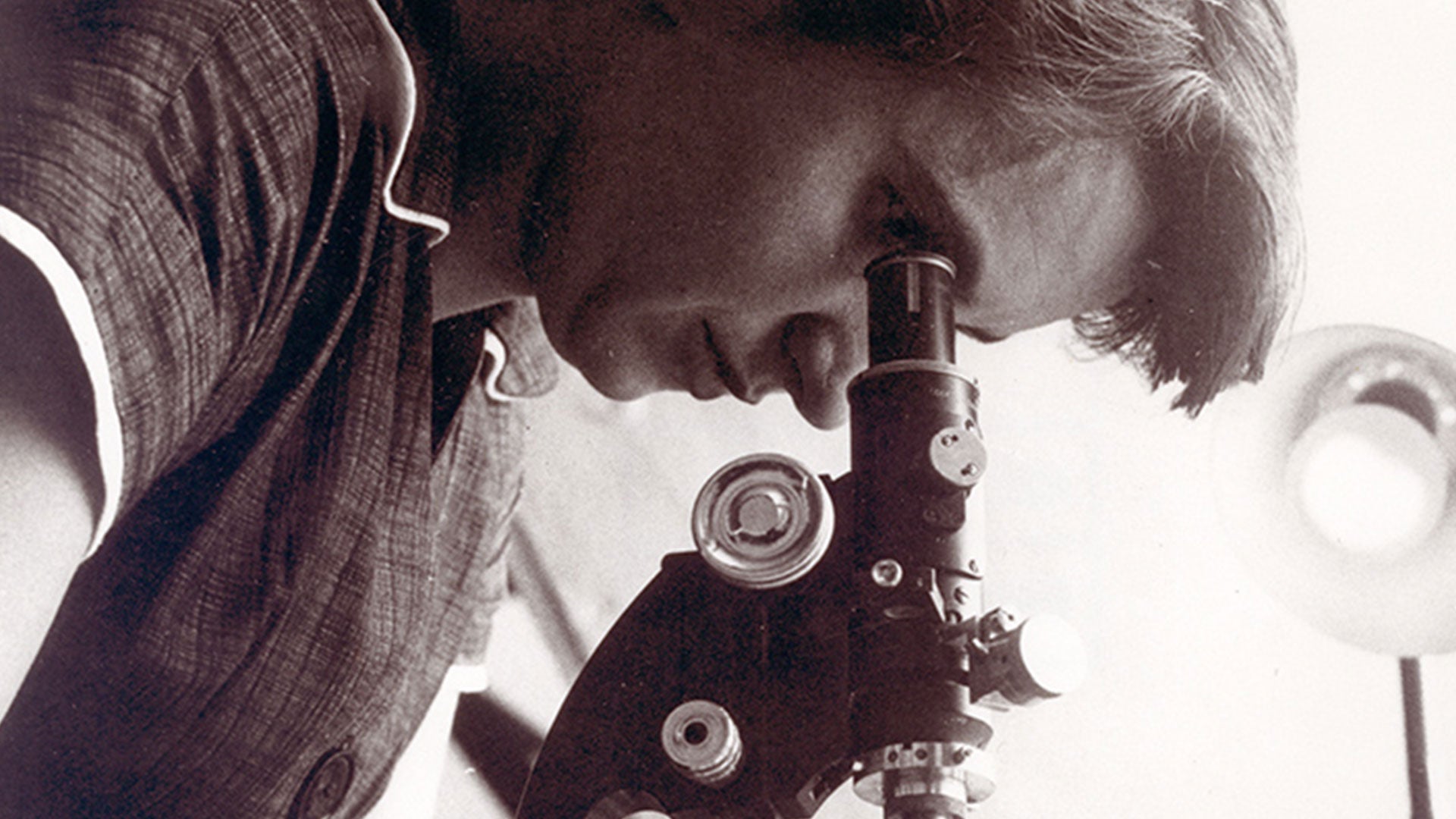
First up on the podcast, News Editor Tim Appenzeller joins host Sarah Crespi to talk about an x-ray image that is upsetting the narrative of DNA’s discovery as told by James Watson. A newly resurfaced photo taken by Rosalind Franklin—photo 49—shows she was aware of the helical structure of DNA and explains why her published image—photo 51—does not have indications of her understanding of its shape.
Next on the show, producer Elah Feder chats with Andreas Nieder, professor of animal physiology and director of the Institute for Neurobiology at the University of Tübingen, about the high speed of bird cognition. It turns out in experimental settings carrion crows make decisions twice as fast as primates. The conversation delves into what could make avian brains ultrafast and the evolutionary advantages of speedy thinking.
Last up this week, poets and scientists get together in books and in real life. Phil Levin and David Hassler discuss their collaboration on a joint effort to create a poetry anthology and a scientific report on the state of nature. They explain how they see science and poetry are connected, and how their ideas will be put into action at an upcoming conference on poetry and science in November.
Also in this segment, Lara Volski reads her poem “The Monarch Bear.”
People in this segment
Phil Levin, professor in sustainability science and director of the School of Marine and Environmental Affairs at the University of Washington (UW)
David Hassler, executive director of the Wick Poetry Center at Kent State University
Lara Volski, Ph.D. candidate in the People and Wildlife Lab at UW
Works mentioned
The Nature of Our Times: Poems on America’s Lands, Waters, Wildlife, and Other Natural Wonders
The Nature Record
Conference details
Poet and science gathering at Kent State
This week’s episode was produced with help from Podigy.
Image: Franklin: Universal History Archive/Universal Images Group via Getty Images
Learn more about your ad choices. Visit megaphone.fm/adchoices
First up on the podcast, Staff Reporter Tom Howarth joins host Sarah Crespi to talk about the language artificial intelligence agents evolve inside their swarms.
Next on the show, producer Elah Feder talks with Revathe Thillaikumar, a behavioral ecologist and postdoctoral fellow at the Max Planck Institute of Animal Behavior. The two discuss the value of social learning as baby orangutans learn to find their own food over the longest dependency period of any animal, except humans.
Finally, from our series on scientific autobiographies, books host Angela Saini talks with astrophysicist Sara Seager about the moving account of life after losing her husband in her book, The Smallest Lights in the Universe.
This week’s episode was produced with help from Podigy.
About the Science Podcast
Image: inkoly/istock
Learn more about your ad choices. Visit megaphone.fm/adchoices
First up on the podcast, a new path to calculating the Hubble constant. This value for the universe’s speed of expansion is typically determined in one of two ways, one favored by cosmologists, the other by astronomers. But the resulting values from these methods are consistently different. Staff Writer Daniel Clery joins host Sarah Crespi to discuss how reappearing bursts from deep space, lensed by gravity, could resolve the dispute over the speed of the expanding universe.
Next on the show, freelance producer Elah Feder talks with Mauro Costa-Mattioli, principal investigator at Altos Labs’ Institutes of Science, about tuning the “integrated stress response” (ISR) in mouse brains. The ISR pathway turns off much of protein synthesis in cells as a response to stressors such as viral infections or oxygen deprivation. The ISR is overactive in some models of cognitive dysfunction—suggesting the downregulated protein synthesis may hamper brain functions such as memory formation. In his paper, Costa-Mattioli and colleagues show turning on the ISR pathway causes memory problems in mice and turning off the ISR can restore function in mouse models of Alzheimer’s disease and Down syndrome. Although this research was in mice, it suggests cognitive dysfunction associated with many different disorders may involve the ISR—making it a good therapeutic target.
This week’s episode was produced with help from Podigy.
About the Science Podcast
Learn more about your ad choices. Visit megaphone.fm/adchoices
34 minAbspielen in:
Warum PodAppear
Folge Menschen, nicht Podcasts.
Du hast Elah in einer Sendung gehört. PodAppear findet für dich die nächste, und genauso für alle anderen, die du hören willst.
Eine Meldung, wenn die Person zu Gast istPer E-Mail: sofort oder gebündelt als Tages- oder Wochenübersicht. Dann nur noch auf Play drücken.
Gäste statt bloßer ErwähnungenFolgen, in denen ein Name nur fällt, landen getrennt. Eine Meldung heißt: Die Person ist wirklich in der Sendung.
Alle in einem FeedGründerinnen, Autoren, Sportler, Forscherinnen. Folge allen mit Namen, quer durch jede Sendung, in der sie auftreten.