Bekomm eine E-Mail, wenn Ed in einem Podcast zu Gast istPodAppear prüft neue Folgen, sobald sie erscheinen, und lässt die weg, in denen Ed nur erwähnt wird. Bis zu 15 Personen kostenlos, ohne Kreditkarte.Bis zu 15 Personen kostenlos, ohne Kreditkarte.
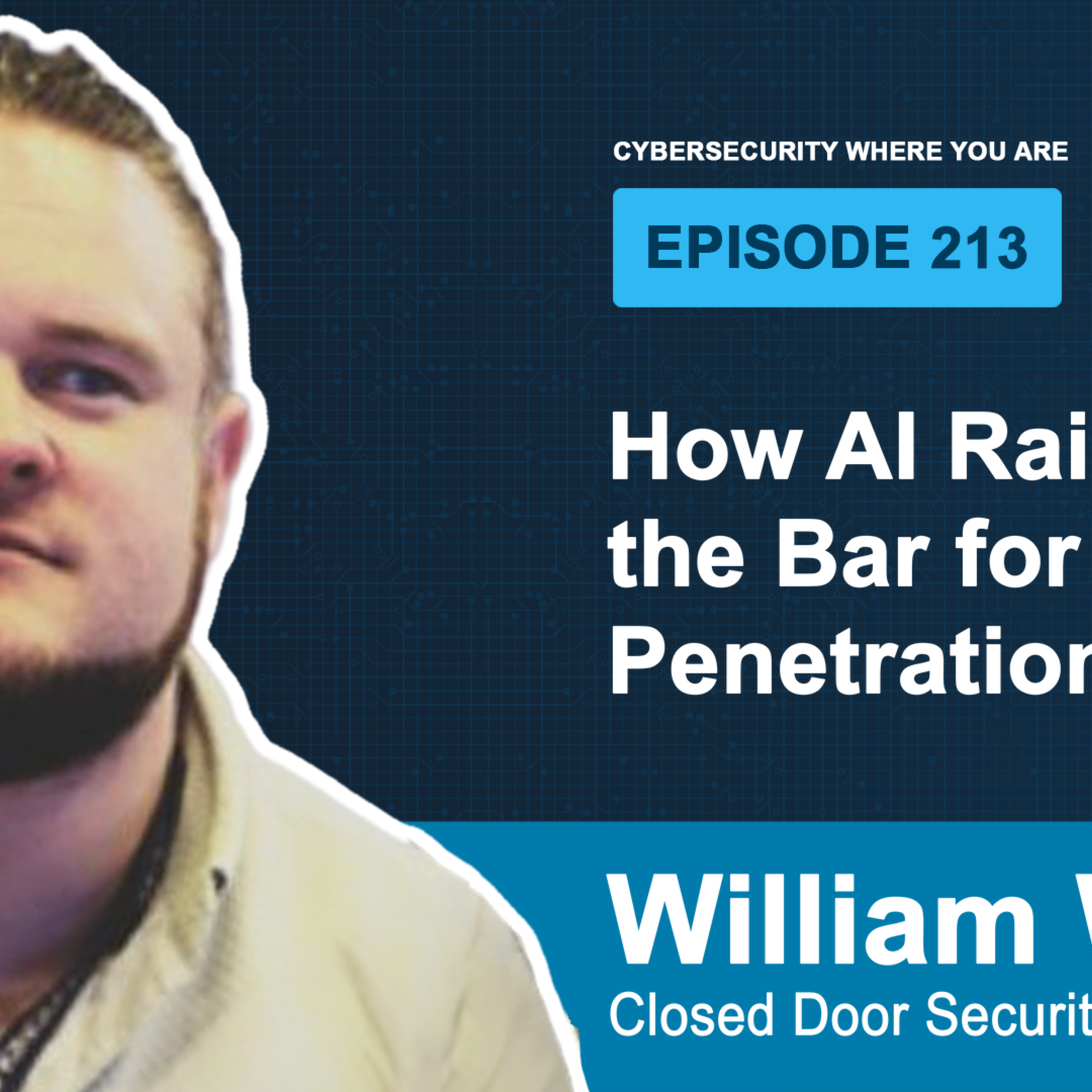
In episode 213 of Cybersecurity Where You Are, Sean Atkinson and Ed Skoudis sit down with William Wright, Chief Executive Officer of Closed Door Security. They continue their conversation about penetration testing (pentesting) and artificial intelligence (AI), covering how AI affects generalist and specialist pentesters, which real-world AI-enabled capabilities pentesters are using, the costs of supporting an increasingly high bar for pentest engagements, and why Ed says the return on investment of AI in pentesting is survival.
Here are some highlights from our episode:
01:54. Generalist pentesters: Why they're more powerful than specialists most of the time
03:42. AI as a tool that doesn't replace generalists and specialists but makes them better
07:04. A new way for pentesting and red teaming: AI vs. AI and human vs. human
09:14. AI's inevitable incorporation into pentesting domains like web apps and mobile apps
14:36. How a fully autonomous triage agent supports Closed Door Security's human pentesters
16:06. How hallucinations, context rot, and "bad days" complicate AI-enabled pentesting
17:21. Financial and ethical considerations of running local models for penetration testing
18:52. How AI makes penetration testing more expensive yet limits price increases
21:16. The ROI of AI in pentesting? Survival. If you don't do it, you won't make it.
22:25. Drawing a distinction between "AI in the box" and AI-enabled human pentesters
25:09. How continuous pentesting with AI could blur the line between pentesting and vulnerability scanning budgets
27:05. Transparency: A central tenet of penetration testing, especially in the age of AI
28:35. How clients differ in their interest whether AI or human pentesters unearth a finding
31:30. Pentest results: Longer reports, more vulnerabilities of increasing complexity
36:20. How AI functions as an important training tool that gives new pentesters confidence
Resources
Episode 201: The Evolution and AI Enablement of Pentesting
Episode 212: The CIS Red Team — Testing via Collaboration
CIS Red Team
Penetration Testing
Vulnerability Assessments
If you have some feedback or an idea for an upcoming episode of Cybersecurity Where You Are, let us know by emailing podcast@cisecurity.org.
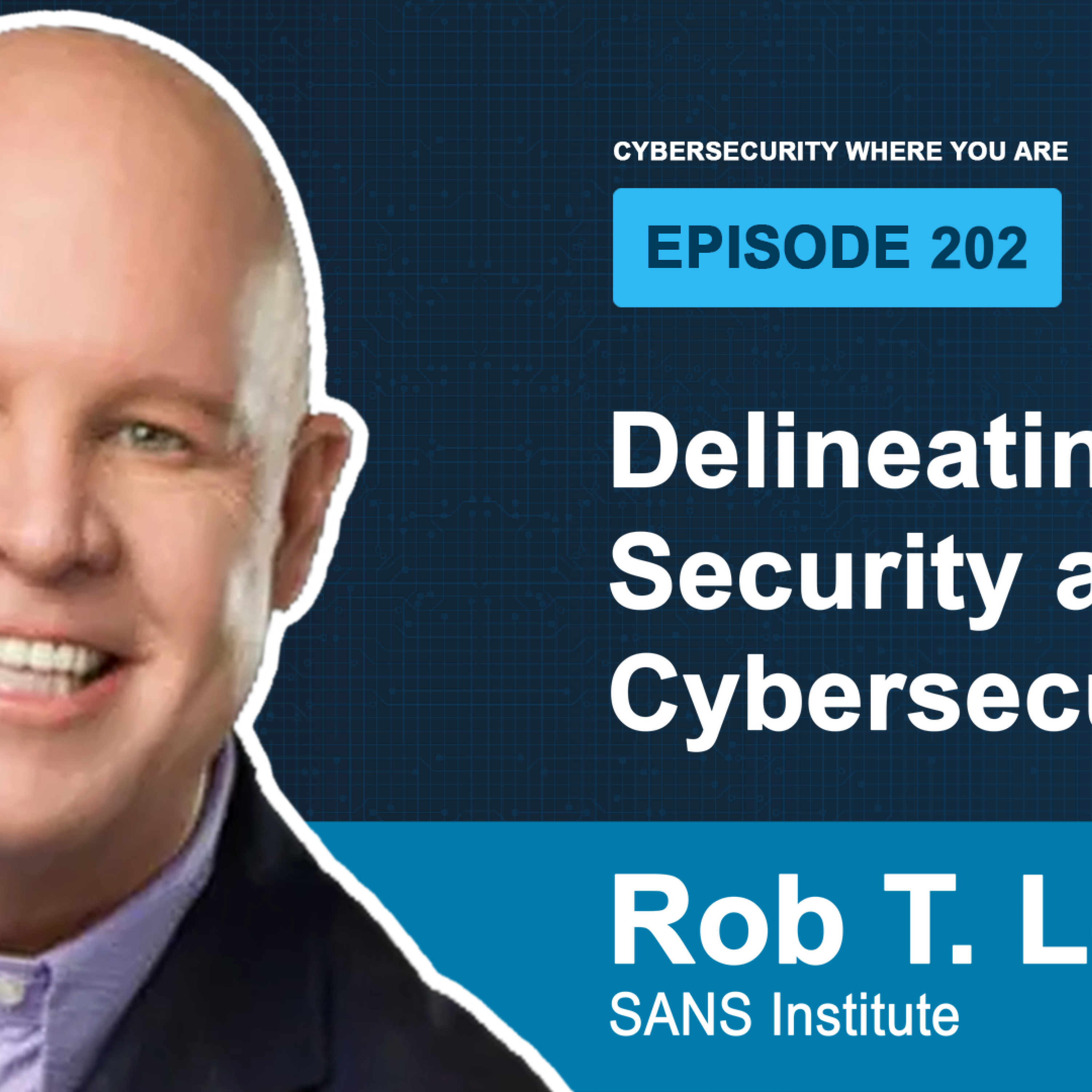
In episode 202 of Cybersecurity Where You Are, Sean Atkinson and Ed Skoudis sit down with Rob T. Lee, Chief of Research & Chief AI Officer at the SANS Institute. Together, they explore how the implications of multiple 2026 sandbox escapes of artificial intelligence (AI) models are starting to delineate AI security and cybersecurity.
Here are some highlights from our episode:
02:00. The historical context of one AI model's 2026 sandbox escape
03:26. The impact of ethics, guardrails, and misconfigurations in an AI containment breach
06:08. Why context matters when talk of AI models "going rogue" surfaces
11:49. How history helps us to delineate AI security and cybersecurity
13:47. A new skill and mindset to match our refined AI risk understanding
15:43. Rules and cybersecurity implementation as a possible way forward
19:04. The double-edged sword of restricting access to open-weight models
23:25. Recommendations for keeping up with what's changing in the AI security space
25:51. Rob's advice: To learn how to defend a thing, try learning how to build it first
28:23. AI governance and seeing through the "slop" to informed conversation
29:54. The use of AI to learn more about and discuss AI security for years to come
Resources
OpenAI says its AI technology acted on its own in an ‘unprecedented’ hack of another company
Pacing model development in an era of cyber-critical capabilities
Black Hat USA 2026 | The 'Breaking' News: The OpenAI–Hugging Face Incident
Episode 193: AI Security and Responsibility in EO 14409
The AI Daily Brief — Daily AI News & Analysis
AI Playbooks for SLTT Cybersecurity Leaders
SANS Cybersecurity Summits
SANS NewsBites
If you have some feedback or an idea for an upcoming episode of Cybersecurity Where You Are, let us know by emailing podcast@cisecurity.org.
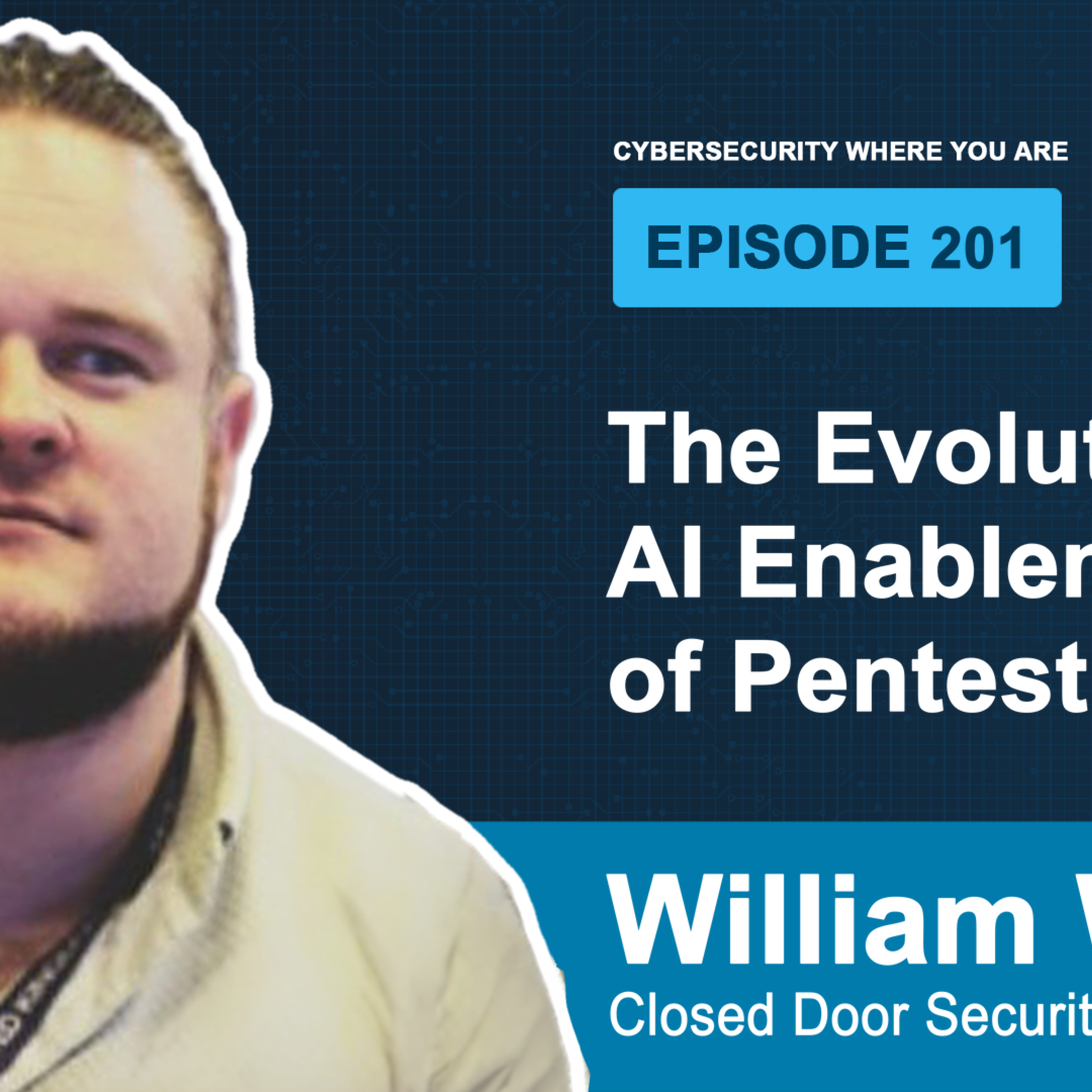
In episode 201 of Cybersecurity Where You Are, Sean Atkinson and Ed Skoudis sit down with William Wright, Chief Executive Officer of Closed Door Security. Together, they reflect on the evolution of penetration testing, including the impact on pentesting from artificial intelligence (AI).
Here are some highlights from our episode:
01:03. How things have changed since William's and Ed's first pentests
09:02. Community: A defining element of Capture The Flag (CTF) events
14:47. Industry concerns over the "death" of CTFs and "cheating" by artificial intelligence (AI)
17:00. Opportunities to take CTFs to the next level in the age of AI
20:18. Pentesting vs. vulnerability scanning: Why terminology matters
25:43. The advent of autonomous AI tools and what they could mean for vulnerability scanning
29:07. Why continuous improvement in cybersecurity doesn't always require AI
Resources
Closed Door Security
Episode 189: The Present and Future of AI-enabled Pentesting
SANS Cyber Ranges
Top External Network Risks And How to Fix Them
Penetration Testing
Vulnerability Assessments
If you have some feedback or an idea for an upcoming episode of Cybersecurity Where You Are, let us know by emailing podcast@cisecurity.org.
In episode 200 of Cybersecurity Where You Are, Sean Atkinson, Tony Sager, and Ed Skoudis sit down with Frank Reeder, Co-Founder and Founding Chair of the Center for Internet Security® (CIS®). Together, they reflect on how Alan Paller's vision continues to drive CIS forward. In the spirit of that vision, this milestone episode also marks a new chapter for the podcast: Ed Skoudis joins as co-host of Cybersecurity Where You Are.
Here are some highlights from our episode:
01:09. The two complementary missions of CIS
02:55. Three defining moments that have shaped CIS into the organization it is today
08:10. The story of naming CIS
10:31. How CIS and SANS advance Alan Paller's vision of bringing people together
13:50. Personal anecdotes of Alan Paller as a connector of people
15:45. "What would Alan do?" A question that continues to guide CIS and SANS
22:00. How CIS security best practices are emblematic of helping others
27:12. CIS's "secret sauce" as a trusted, neutral platform for cybersecurity collaboration
29:53. How CIS can continue to embody Alan Paller's philosophy into the future
37:47. A special announcement: Ed Skoudis as a new co-host on the podcast
Resources
CIS Benchmarks® List
CIS Critical Security Controls®
Multi-State Information Sharing and Analysis Center®
Episode 114: 3 Board Chairs Reflect on 25 Years of Community
Alan Paller Laureate Program
SANS Difference Makers Awards
If you have some feedback or an idea for an upcoming episode of Cybersecurity Where You Are, let us know by emailing podcast@cisecurity.org.
41 minAbspielen in:
Warum PodAppear
Folge Menschen, nicht Podcasts.
Du hast Ed in einer Sendung gehört. PodAppear findet für dich die nächste, und genauso für alle anderen, die du hören willst.
Eine Meldung, wenn die Person zu Gast istPer E-Mail: sofort oder gebündelt als Tages- oder Wochenübersicht. Dann nur noch auf Play drücken.
Gäste statt bloßer ErwähnungenFolgen, in denen ein Name nur fällt, landen getrennt. Eine Meldung heißt: Die Person ist wirklich in der Sendung.
Alle in einem FeedGründerinnen, Autoren, Sportler, Forscherinnen. Folge allen mit Namen, quer durch jede Sendung, in der sie auftreten.