Get an email when Derek is a guest on a podcastPodAppear checks new episodes as they come out and leaves out the ones that only mention Derek. Free for up to 15 people, no card needed.Free for up to 15 people, no card needed.
Scot and Jeff discuss the second part of The Cure’s career (1985 to the present) with Derek Wilczynski.
Introducing the Band:
Your hosts Scot Bertram (@ScotBertram) and Jeff Blehar (@EsotericCD) are joined by guest Derek Wilczynski. Derek is a Michigan attorney with a trial practice, as well as treasurer for the Macomb County Republican Party.
Derek’s Musical Pick: The Cure.
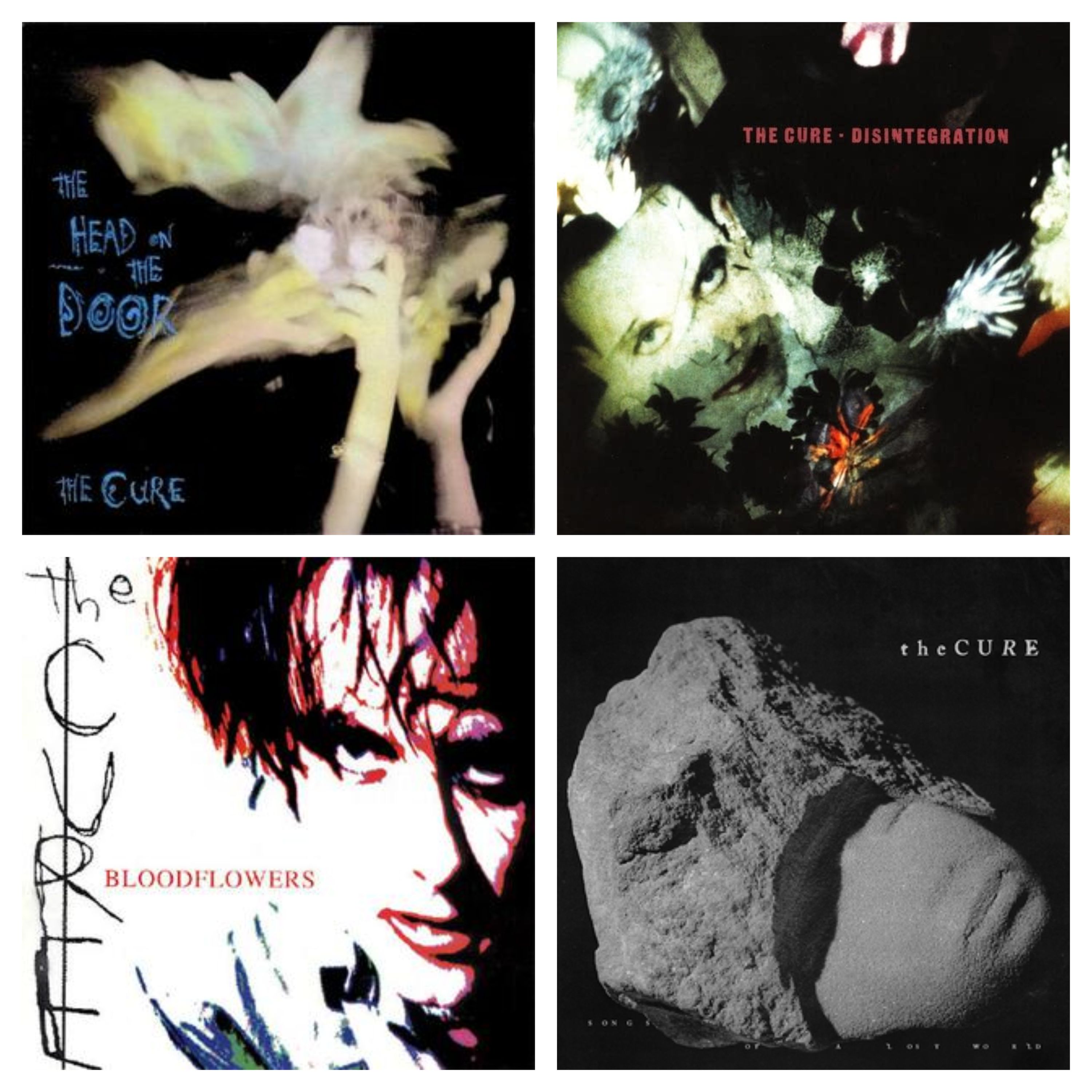
What are those unexpected rays of sunshine beaming down through the gray cloud cover? Yes, it’s the second part of The Cure’s career, one which continues onward to the present day! 1985 was a rebirth for The Cure in many ways, with the formation of a stable lineup in both the studio and in concert, and it was heralded by The Head on the Door, the album which first got The Cure radio attention in the United States. 1987’s tangled double album Kiss Me, Kiss Me, Kiss Me maintained Robert Smith’s desire to balance flashy, radio-ready pop hits with funereal dirges, but in many ways, The Cure really only fully came into their own in 1989, with the thickly layered, resplendently pretty sonic gloom of Disintegration.
At that point The Cure had made the full journey, from scrappy postpunk minimalism to selling out Wembley Stadium several nights in a row. And while Smith and his gang followed that success up with another record nearly as triumphant (1992’s Wish), he disliked the impersonal nature of playing concerts that large, and suspected the moment would pass. Once it did, Smith proved to age as gracefully as anyone in rock music as a songwriter: Bloodflowers was a minor triumph that set the tone for The Cure’s latter-day albums, which maintain the by-now classic musical density of The Cure’s normal approach while continuing to find new pop hooks. The Cure may be getting up there in years, but there’s still time to catch the fever yet.
Hosted by Simplecast, an AdsWizz company. See pcm.adswizz.com for information about our collection and use of personal data for advertising.
Scot and Jeff discuss the first part of The Cure’s career (1978-1984) with Derek Wilczynski.
Introducing the Band:
Your hosts Scot Bertram (@ScotBertram) and Jeff Blehar (@EsotericCD) are joined by guest Derek Wilczynski. Derek is a Michigan attorney with a trial practice, as well as treasurer for the Macomb County Republican Party.
Derek’s Musical Pick: The Cure
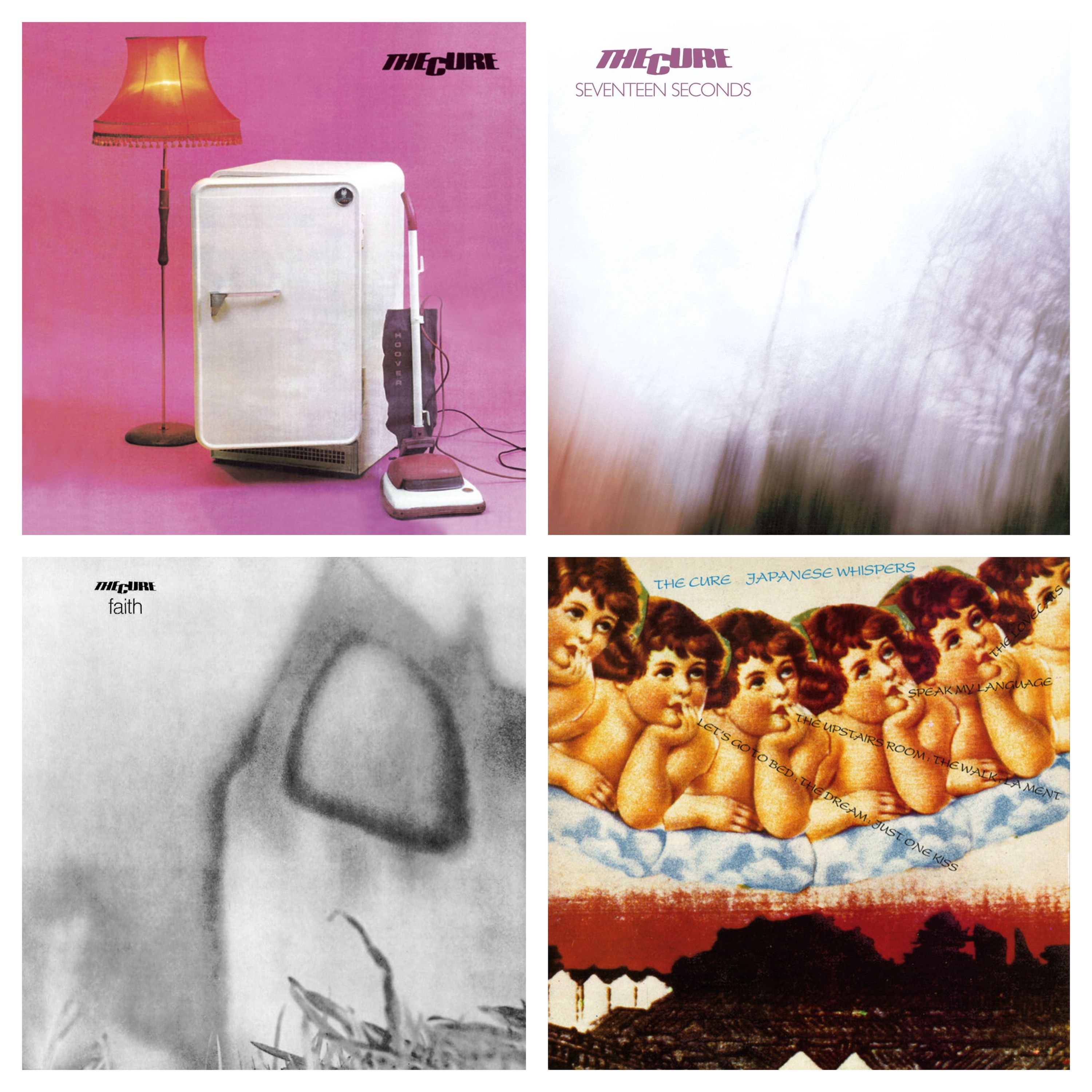
It’s time to paint your fingernails black and adopt your bleakest attitude as we dive into the first part of the story of post-punk’s longest-running and most influential band, The Cure. The Cure were never the loudest or most aggressively weird group of the British late ‘70s and early ‘80s – and they certainly weren’t the most musically adept. (Their original drummer was nicknamed “Lol,” almost as if they knew.) But they were always there, off in their own corner, sometimes held together as a musical proposition by little more than spit, chewing gum, and the songwriting talent and sheer force of will of Robert Smith, their lead singer and songwriter.
In their early post-punk years, The Cure – before they hit enduring stardom in America in the mid-1980s with the sheaf of poppy, upbeat gems they’re now synonymous with – were a magnificently surly, forbidding beast, a barebones sound created by three (occasionally four) musical primitives using their technical limitations to create the minimalist bluntness we forever associate with “goth” as a subgenre. But Smith was never a style poseur – he was an incredibly gifted songwriter and lyricist, mining this particular dark ore into the depths of the underground with albums like Seventeen Seconds, Faith, and the legendary (and, in our opinion, overwrought!) Pornography.
Then, he turned into a pop writer! For a band as famous and long-lasting as Robert Smith’s, is it strange to realize that The Cure were essentially two (and maybe three) separate groups, at least conceptually. Here we address the first group and embark upon a glorious, long day’s journey into night. Dawn is just around the corner by 1984.
Hosted by Simplecast, an AdsWizz company. See pcm.adswizz.com for information about our collection and use of personal data for advertising.
2 h 02 minPlay in:
Why PodAppear
Follow people, not podcasts.
You heard Derek on one show. PodAppear finds the next one for you, and every other person you want to hear.
An alert when they are a guestBy email as it happens, or as a daily or weekly digest. Then press play.
Guests, not name-dropsEpisodes that only mention a name are kept apart, so an alert means they are really on the show.
Everyone in one feedFounders, authors, athletes, scientists. Follow anyone by name, across every show they visit.