Bekomm eine E-Mail, wenn Deborah in einem Podcast zu Gast istPodAppear prüft neue Folgen, sobald sie erscheinen, und lässt die weg, in denen Deborah nur erwähnt wird. Bis zu 15 Personen kostenlos, ohne Kreditkarte.Bis zu 15 Personen kostenlos, ohne Kreditkarte.
Deborah kostenlos folgen
DS

Deborah Stewart

Zwei Jahre auf Sendung

GastHostErwähnt

Selbst moderierte Folgen

Do26Nov
This Jungian Life Podcast

This Jungian Life PodcastHost

Finding Your Way in Midlife with Allison Aubrey

A numinous dream helped inspire NPR reporter ALLISON AUBREY’s new book, Your Turn: How to Create A Midlife You Love. In the book, she explores stories of people making big midlife pivots: following their intuition, rediscovering their creativity, and staying open to adventure.  For Jungians, the first half of life is about ego development and building a life out in the world. In the second half, our orientation often shifts, and we become interested in the interior, spending time with questions of meaning, and searching for our inner compass. What is deep inside me that is trying to come forward? Many of the transitions Allison writes about began with a difficult experience: the death of someone close, a divorce, the loss of a job, or the last child leaving home. Painful life experiences can often mark our shift to a more interior focus.  In her book’s chapter on dreams, Allison draws on Jungian sources (including an interview with Lisa) to look at dreamwork as a tool for navigating such transitions. Our dreams are always available to us as we grapple with dilemmas that can feel insoluble.  Join Allison and hosts Lisa Marchiano and Deborah Stewart for an exploration of the inner and outer dimensions of an enriching midlife, and of the crucial role our dreams can play.  Allison Aubrey is the author of the national bestseller Your Turn: How to Create A Midlife You Love and host of the podcast Your Turn with Allison Aubrey She is an award-winning Health & Science Correspondent, a contributor to CBS Sunday Morning, and the creator of the How To Thrive As You Age project.  Visit our website to follow up on the resources we mention.  Follow Up the Episode Read Allison Aubrey’s book, Your Turn: How to Create A Midlife You Love Check out our This Jungian Life Dream School holiday offer Send a dream for us to analyze on the show Follow This Jungian Life on Instagram
1 h 06 minAbspielen in:

Do5Nov
This Jungian Life Podcast

This Jungian Life PodcastHost

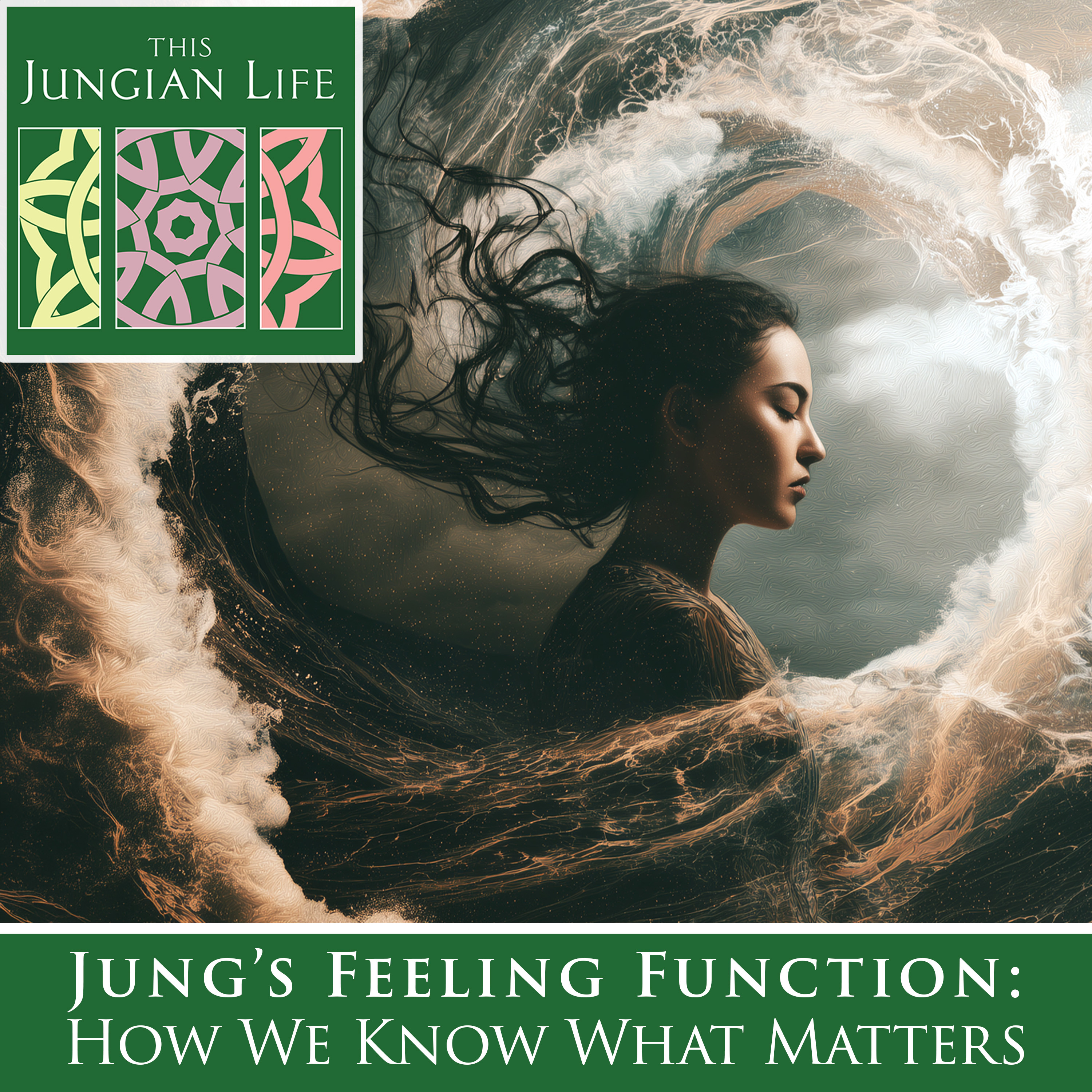
Jung’s Feeling Function: How We Know What Matters

Two people stand at the rim of the Grand Canyon. One is overcome with awe at nature’s grandeur, while the other sees an enormous rift in the landscape. What accounts for the difference? This week, Jungian analyst and scholar JOHN R. WHITE joins Lisa Marchiano and Deborah Stewart to explore Jung’s feeling function, our capacity to discern what matters. One of Jung’s best-known legacies is his categorization of ego functions: typology. Whether we are extraverted or introverted (terms Jung introduced), our four basic ego functions sort themselves into intuition, sensation, thinking, and feeling. We have all four functions but prefer some over others. Jung’s system led directly to the creation of the widely used Myers-Briggs Personality Type Indicator. The feeling and thinking functions are both ways of making judgments, but the feeling function is based on personal values: if you were a military commander, would you be like Napoleon, directing his troops from the hilltop -- or like Braveheart, leading his men on the field? When the feeling function is cultivated and differentiated, it illuminates much of how and why we do what we do. Do we tend to prefer a subjective stance based on personal values, or a more objective and strategic stance? Developing our feeling function may be challenging in the context of a culture that prioritizes thinking and sensate functions over feeling and intuition. It is a task worth taking on, however. Evaluating our experiences up close as well as from the greater distance the thinking function affords can be a profound step toward growth and individuation. Discerning whether the basis of a decision should be subjective or objective builds consciousness and expands choice. Since subjectivity is closely aligned with feelings, we can reflect on what a bruising encounter has made us feel—and choose our response rather than reacting. We discuss some of the strategies you might use to differentiate your feeling function, including embarking on analysis, writing in your journal, and Eugene Gendlin’s focusing technique, which asks us to tune into the body and carefully name what is felt. Visit our website to read today’s dream and follow up on the resources we mention. Connect With This Jungian Life Take a look at This Jungian Life Dream School, our online course in Jungian dream analysis.  Send a dream for us to analyze on the show Watch bonus mini-episodes on our Patreon channel Follow This Jungian Life on Instagram
1 h 26 minAbspielen in:

Do16Jul
This Jungian Life Podcast

This Jungian Life PodcastHost

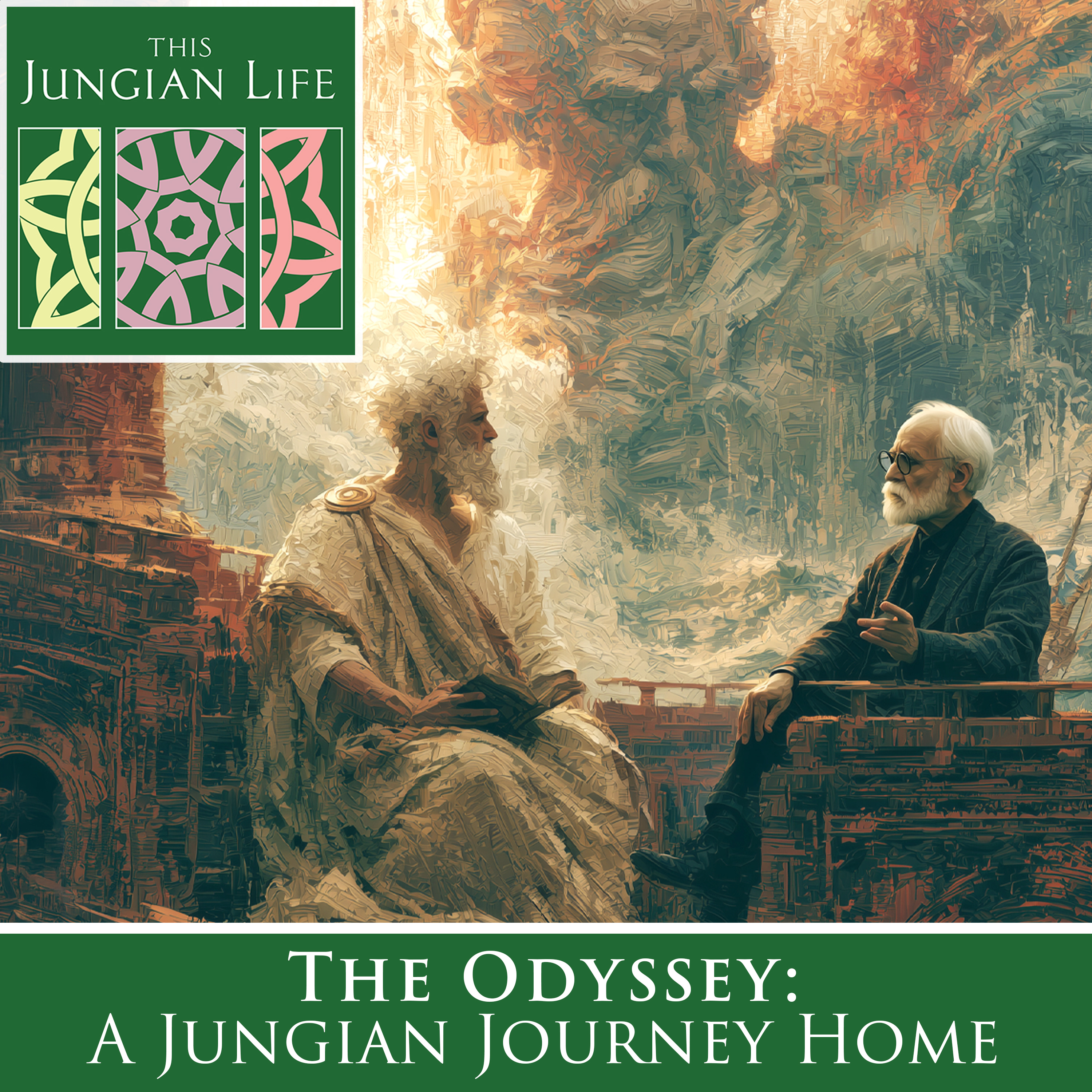
The Odyssey: A Jungian Journey Home

The Odyssey (the subject of a new Christopher Nolan film released on the same day as this episode), is the ancient Greek epic attributed to Homer and one of the foundational works of Western literature. This week, Jungian analyst ROBERT SHEAVLY joins Lisa Marchiano and Deborah Stewart for a Jungian exploration of The Odyssey. For Jungians, the Odyssey models a process of returning to the Self, offering a psychological map for the second half of life and the path to individuation. It asks us to engage with the profound question, what does it mean to come home to ourselves? Odysseus, our wily trickster hero, encounters gods, enchantresses and shadowy monsters with a relatable mix of hubris and cunning. We can view these figures as aspects of psyche, with the story showing us how we might create a relationship with something larger. As we grow and mature into midlife, we move away from an ego-centered existence, and begin a new confrontation with the Self. By the journey’s end, we may wind up dressed in rags and shorn of our heroic trappings, but what remains is something deeper: a more authentic relationship to the soul, and a growing readiness for life's final adventure, our encounter with mortality. Visit our website to read today’s dream, get more detail on our discussion of The Odyssey, and to follow up on the resources we mention in the episode:  https://thisjungianlife.com/odyssey/ Connect With This Jungian Life Download our free ⁠Dream Recall Meditation Guide⁠ ⁠Send a dream⁠ for us to analyze on the show  Take a look at ⁠This Jungian Life Dream School⁠, our online course in Jungian dream analysis. Follow This Jungian Life on ⁠Instagram

1 h 17 minAbspielen in:

Do9Jul
This Jungian Life Podcast

This Jungian Life PodcastHost

Prayer and the Psyche: A Jungian Exploration

Throughout human history, prayer has been a constant. Jung referred to it as “not only one of the most original but also the most frequent means to change the condition of mind”. This week Jungian analyst ROBERT SHEAVLY joins Lisa Marchiano and Deborah Stewart for a Jungian exploration of prayer.  Everyone at some point in their lives will pray (even if we do not call it that). When we reach out for help, or to express gratitude for life’s blessings, we are reaching for a connection with the eternal and the infinite.  Prayer can be examined from the lens of the ego-self axis. When we pray, it can be understood as ego asking the guiding self for wisdom, from a position of humility and supplication.  Prayer is also linked to our mortality. It is integral to grief rituals. In desperate times, it gives us an act to perform that acknowledges our helplessness but also offers comfort. When we say grace at the dinner table, we offer expiation and acknowledgement of the life we’ve taken from the world in order to sustain our own life.  Visit our website to read today’s dream and follow up on the resources we mention in the episode. Connect With This Jungian Life Download our free Dream Recall Meditation Guide Send a dream for us to analyze on the show  Take a look at This Jungian Life Dream School, our online course in Jungian dream analysis. Follow This Jungian Life on Instagram
1 h 02 minAbspielen in:

Do4Jun
This Jungian Life Podcast

This Jungian Life PodcastHost

Working with Short Dreams and Fragments

This week, to mark the publication in paperback of Dream Wise: Unlocking the Meaning of Your Dreams, Jungian analysts Lisa Marchiano and Deborah Stewart interpret a selection of short dreams sent in by listeners. Many of us dismiss short dreams or fragments of dreams as unworthy of our time. We await the arrival of epic, cinematic dreams, while perhaps overlooking the gold that can be found in more “ordinary” dreams. Honoring short dreams by writing them down and spending time with them can yield powerful insights. It can also work as an incentive to your unconscious, helping you remember more dreams, and more of your dreams. The time you spend on fragments and snippets strengthens connection with the unconscious. We hope you enjoy today’s discussion of dreams: an overfed fish raising big relationship questions, a meeting with Greek mythology’s star-crossed lover Thisbe, a harsh landscape of volcanic rocks and blood, a bleached Christ figure, and a biting spider at a crossroads in the dreamer’s life. Buy the paperback version of Dream Wise: Unlocking the Meaning of Your Dreams Read the dreams we analyze on our website. Connect With This Jungian Life Download our free ⁠Dream Recall Meditation Guide⁠. Check out our Dream School. Watch bonus mini-episodes on our Patreon channel. Follow This Jungian Life on ⁠⁠⁠⁠⁠⁠Instagram⁠⁠⁠⁠⁠⁠.

59 minAbspielen in:

Do30Apr
This Jungian Life Podcast

This Jungian Life PodcastHost

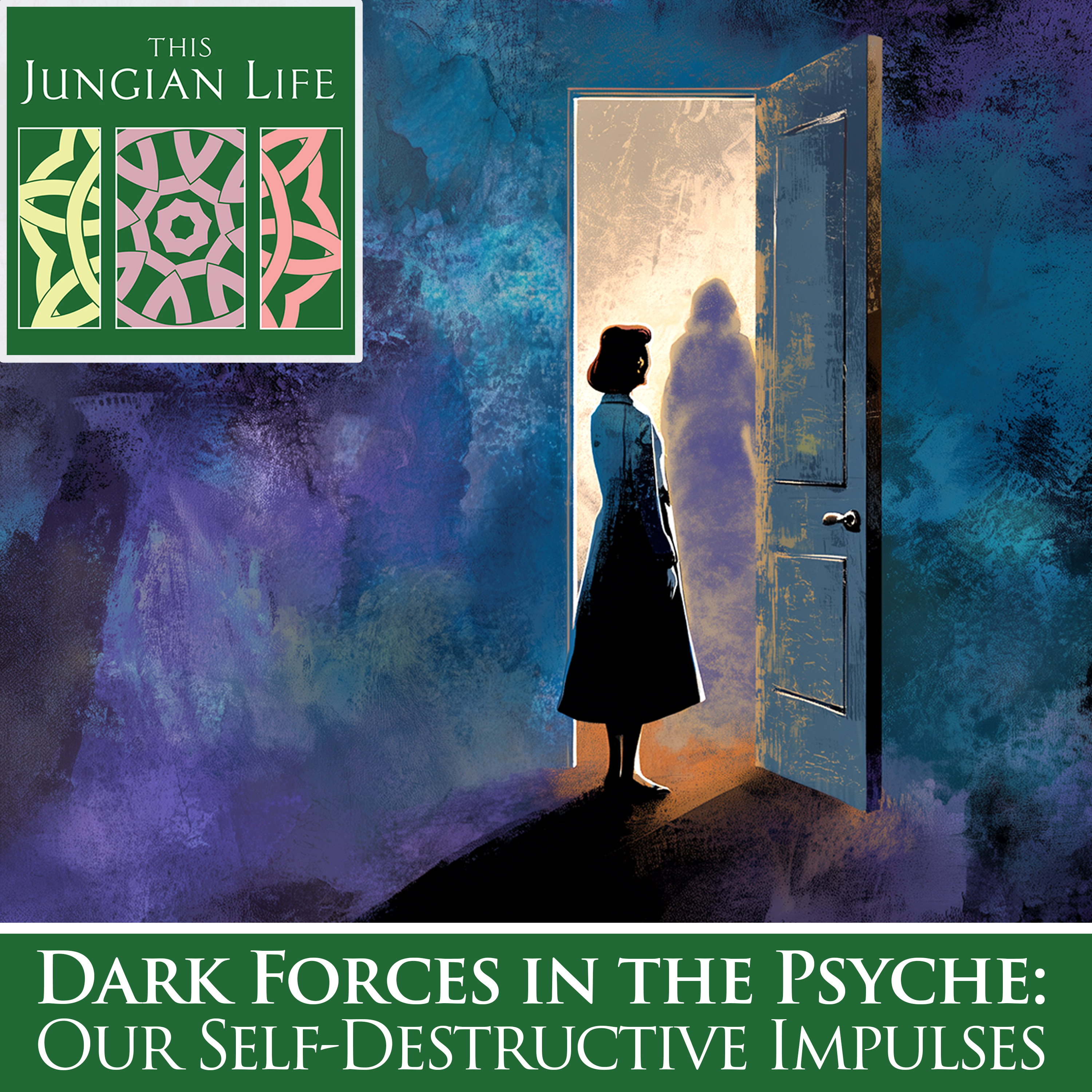
Dark Forces in the Psyche: Our Self-Destructive Impulses

Why is it that we sometimes fail to rise to life’s most important challenges? Why do we instead procrastinate, withdraw, self-sabotage, or feel unable to move toward the life we want? This week, at a listener’s suggestion, Jungian analysts Lisa Marchiano and Deborah Stewart explore the concept of anti-libidinal forces in the psyche: those self-destructive impulses that oppose growth, pleasure, and forward movement. We discuss the ways this phenomenon has been addressed within the profession, including Freud’s death drive, Melanie Klein’s concept of the bad breast, Clarissa Pinkola Estés’ predator in the psyche, and Donald Kalsched’s protector/persecutor. Libido was understood by Jung to mean life energy, rather than being purely sexual. We explore how blocked libido can become depression, paralyzing fear, hoarding behavior, vicious self-criticism, or simply an inability to begin or complete what matters most. Through stories such as Bluebeard, Jonah and the Whale, and Marduk and Tiamat, we consider inner monsters that threaten to devour vitality. Anti-libidinal forces, however, are not the end of the story. We also discuss the heroic task of meeting fear, reclaiming disowned energies, and choosing life one step at a time.Read the dream we analyze in full on our website. Connect With This Jungian Life Download our free Dream Recall Meditation Guide. Send a ⁠⁠⁠⁠⁠dream⁠⁠⁠⁠⁠ for us to analyze on the show. Check out our TJL ⁠⁠⁠⁠⁠podcast merch⁠⁠⁠⁠⁠. Follow This Jungian Life on ⁠⁠⁠⁠⁠Instagram⁠⁠⁠⁠⁠.

1 h 08 minAbspielen in:

Do12Mär
This Jungian Life Podcast

This Jungian Life PodcastHost

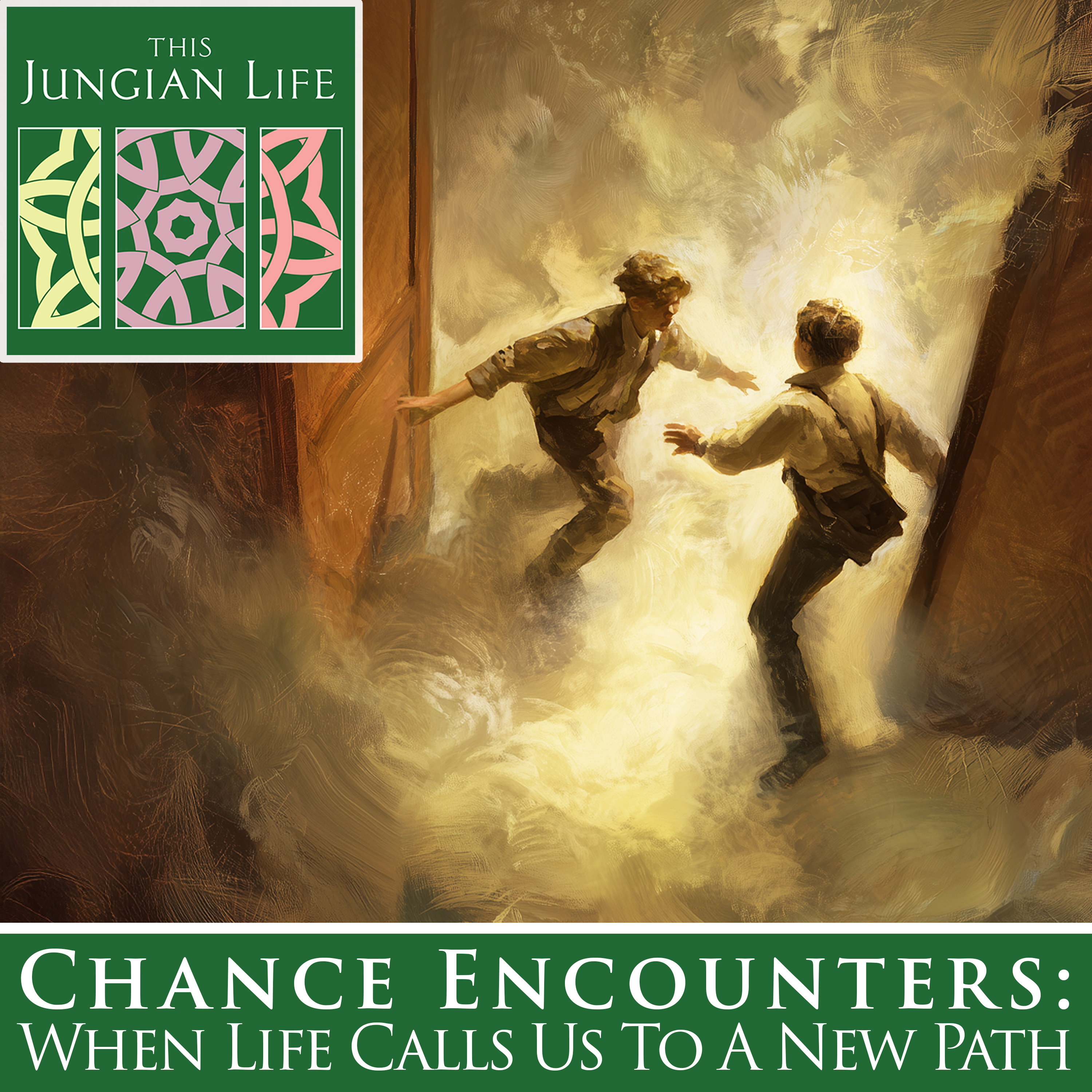
Chance Encounters: When Life Calls Us to a New Path

Chance encounters can change the whole direction of our lives. A casual chat with a stranger at the bank, a book that beckons to you from the shelf, or a last-minute lunch invitation might lead to transformative consequences. This week, join Jungian analysts Lisa Marchiano, Joseph Lee and Deborah Stewart as we circumambulate the phenomenon of the chance encounter. For Jungians, these moments are more than happy accidents. They may be understood as encounters with the deeper ordering principle Jung called the Self, which disrupts the ego’s plans and invites us toward something larger. Fairy tales often feature animal visitors offering the main character a surprising and unexpected choice. These stories can be powerful guides for recognizing the potential of chance encounters and making the most of them. We also discuss how, in an age of overstimulation, you can be receptive to the possibilities of the chance encounter. These moments usually speak softly and quietly rather than arriving with a trumpet sounding from the hills. They are visitations, not tools for self-improvement, and we must be open to allowing them in. Read the dream we analyze on our website. Connect With This Jungian Life Book your place at our free seminar on March 28, Your Personal Red Book: A Dream School Taster. Send a dream for us to analyze on the show. Check out our TJL podcast merch. Follow This Jungian Life on Instagram.

1 h 28 minAbspielen in:

Warum PodAppear

Folge Menschen, nicht Podcasts.

Du hast Deborah in einer Sendung gehört. PodAppear findet für dich die nächste, und genauso für alle anderen, die du hören willst.

  • Eine Meldung, wenn die Person zu Gast istPer E-Mail: sofort oder gebündelt als Tages- oder Wochenübersicht. Dann nur noch auf Play drücken.
  • Gäste statt bloßer ErwähnungenFolgen, in denen ein Name nur fällt, landen getrennt. Eine Meldung heißt: Die Person ist wirklich in der Sendung.
  • Alle in einem FeedGründerinnen, Autoren, Sportler, Forscherinnen. Folge allen mit Namen, quer durch jede Sendung, in der sie auftreten.

Bis zu 15 Personen kostenlos, ohne Kreditkarte.