Get an email when Bryony is a guest on a podcastPodAppear checks new episodes as they come out and leaves out the ones that only mention Bryony. Free for up to 15 people, no card needed.Free for up to 15 people, no card needed.
Follow Bryony free
BW

Bryony Worthington

Two years on the air

GuestHostMentioned

Episodes they host

Fri6Nov
Cleaning Up: Leadership in an Age of Climate Change

Cleaning Up: Leadership in an Age of Climate ChangeHost

How The Midterms Will Change US Energy & Climate | Ep282: David Victor

Despite the Trump administration's efforts to roll back clean energy subsidies and climate policies, America's energy transition is proving more resilient than many expected. Solar and battery deployment continues, nuclear power is attracting billions in private investment, and demand for electricity is surging. But after a historic set of midterms where does the US go from here? In this episode of Cleaning Up, host Bryony Worthington speaks to David Victor, Professor of Innovation and Public Policy at the University of California, San Diego, about the political and economic forces shaping America's energy future. They discuss what the US midterm elections mean for energy and climate policy, why renewable energy is continuing to grow in Republican states, and how the explosion in data centre demand is transforming the electricity industry. They also explore the backlash against AI infrastructure, the prospects for a new generation of nuclear reactors, the future of electric vehicles and America's increasingly complicated relationship with China. Victor argues that the fundamentals of the energy transition are stronger than the political headlines suggest. But with an unreliable federal government, and public resistance to new infrastructure, the challenge now is turning technological progress into something that works for everyone. Topics discussed in this episode:  The US Midterm Elections and the Energy Agenda The Future of Clean Energy Under Trump Data Centres, Electricity Demand and the Grid The Politics of Building New Infrastructure The Damage to American Government Institutions Nuclear Power and the Role of Private Investment Why Climate Change Is Struggling to Gain Political Attention The Future of Electric Vehicles Electric Aviation and New Technologies China, Trade Restrictions and the EV Industry Critical Minerals and Battery Recycling Leadership Circle: Cleaning Up is proud to be supported by its Leadership Circle. The members are Actis, Alcazar Energy, Arup, Climate Imperative Foundation, Copenhagen Infrastructure Partners, Cygnum Capital, Davidson Kempner, EcoPragma Capital, EDP, Eurelectric, KKR, Mitsubishi Heavy Industries, National Grid, Octopus Energy, Quadrature Climate Foundation, Schneider Electric, SDCL and Wärtsilä.  Links: David Victor's article for the World Economic Forum: Why Lithium Is Not Oil: https://www.weforum.org/stories/energy-transition/lithium-is-not-oil-heres-why-that-matters Heart Aerospace and its work on hybrid-electric aircraft: https://youtu.be/hW3uTBbAGHA  The Bipartisan American Affordability and Jobs Act of 2026: https://www.congress.gov/crs-product/IN12746 Chapters: 00:00 America's Energy Future 00:59 The Midterms and Energy 04:26 America's Electoral Puzzle 07:53 Did Energy Matter? 11:54 The Democrats' Next Move 14:21 Can Trump Stop Clean Energy? 19:36 The Data Centre Backlash 24:50 Powering the AI Boom 29:31 The Permitting Problem 32:21 Is Government Ready? 35:15 Nuclear's Private Investors 41:22 Nuclear's Bipartisan Appeal 44:30 The Future of EVs 48:12 The Next Aviation Breakthrough 51:13 Keeping Out Chinese EVs 53:33 The Critical Minerals Question 56:10 The Case for Battery Recycling


59 minPlay in:

Wed4Nov
Cleaning Up: Leadership in an Age of Climate Change

Cleaning Up: Leadership in an Age of Climate ChangeHost

Mexico Is On The Brink Of A Solar Boom | Ep281: Alberto Estefan

Mexico’s energy future is closely tied to its neighbour to the north. It imports much of its natural gas from the US, but could it soon be exporting clean electricity, or even data, in return? With electricity demand surging, Mexico is preparing for a major expansion of its power system, with 30GW of new generation planned by 2030 and more than $40bn in potential investment. This week on Cleaning Up, Bryony Worthington speaks to Alberto Estefan, Managing Director of Energy Infrastructure at Actis, about the scale of Mexico’s renewables opportunity. They discuss the country’s growing electricity needs, its dependence on US natural gas, and the investment needed to transform its power system. They also explore the challenges of grid expansion, the role of batteries and whether Mexico could become an energy and data exporter to the US. Topics covered in this episode: Mexico’s renewables boom Latin America’s investment opportunity The US-Mexico energy relationship The economics of solar and batteries Mexico’s new investment framework Does natural gas still have a role? Mexico as a potential data and energy exporter The risks of delivering the energy transition El Niño and Latin America’s energy security Leadership Circle: Cleaning Up is proud to be supported by its Leadership Circle. The members are Actis, Alcazar Energy, Arup, Climate Imperative Foundation, Copenhagen Infrastructure Partners, Cygnum Capital, Davidson Kempner, EcoPragma Capital, EDP, Eurelectric, KKR, Mitsubishi Heavy Industries, National Grid, Octopus Energy, Quadrature Climate Foundation, Schneider Electric, SDCL and Wärtsilä. Links: Alberto Estefan’s bio: https://www.linkedin.com/in/alberto-estefan-71812b63/ Actis: https://www.act.is/  Actis' Lucy Heintz on Cleaning Up: https://youtu.be/nhGDI_0QIHg  Robert Capuano on Cleaning Up: https://www.youtube.com/watch?v=DxbUkAY_jCs     Subscribe to the Cleaning Up Newsletter: https://cleaninguppod.substack.com/  Acronyms: CFE: Comisión Federal de Electricidad (Federal Electricity Commission)  PPA: Power Purchase Agreement  CAISO: California Independent System Operator EPC: Engineering, Procurement, and Construction Chapters: 00:00 Intro 02:22 Latin America 05:10 Mexico’s Growth 18:42 Solar Expansion 21:14 Investment Framework 27:58 Building Businesses 34:19 Gas and Renewables 37:25 Grid and Batteries 44:35 Data Exports 48:22 Delivery Risks 54:50 El Niño 58:18 Outro

60 minPlay in:

Wed30Sep
Cleaning Up: Leadership in an Age of Climate Change

Cleaning Up: Leadership in an Age of Climate ChangeHost

Is The Earth Warming Faster Than We Thought? | Ep276: Peter Cox

This week on Cleaning Up, Bryony Worthington is joined by Peter Cox, Professor of Climate System Dynamics at the University of Exeter and Director of the Global Systems Institute. A former lead author of the IPCC climate reports, Peter has spent decades studying the complex feedbacks between the climate, carbon cycle and natural world. They delve into some of the biggest questions in climate science today: Is the planet warming faster than we thought? What is the role of forcing versus feedback? How much of the recent change is being driven by external forces, including the decline of reflective sulphur pollution, and how much is the climate system responding in ways that amplify warming?  They explore why the Earth is reflecting less sunlight back into space, the growing Earth energy imbalance, climate sensitivity, tipping points in the Amazon and Arctic, and whether solar radiation modification should remain taboo. Topics discussed in this episode: Why the Earth is darkening Is global warming accelerating? The Earth’s energy imbalance Climate sensitivity and feedbacks Amazon and Arctic tipping points The hidden cooling from pollution Geoengineering the planet Positive clean energy tipping points Leadership Circle: Cleaning Up is proud to be supported by its Leadership Circle. The members are Actis, Alcazar Energy, Arup, Climate Imperative Foundation, Copenhagen Infrastructure Partners, Cygnum Capital, Davidson Kempner, EcoPragma Capital, EDP, Eurelectric, KKR, Mitsubishi Heavy Industries, National Grid, Octopus Energy, Quadrature Climate Foundation, Schneider Electric, SDCL and Wärtsilä. For more information on the Leadership Circle, please visit cleaningup.live. Links: Professor Peter Cox’s bio: https://experts.exeter.ac.uk/962-peter-cox/about Professor Cox’s publications: https://experts.exeter.ac.uk/962-peter-cox/publications Subscribe to our newsletter: https://cleaninguppod.substack.com Acronyms: IPCC: Intergovernmental Panel on Climate Change CMIP6: Coupled Model Intercomparison Project 6 CERES: Clouds and the Earth's Radiant Energy System ARIA: Advanced Research and Invention Agency SO2: Sulphur Dioxide RCP8.5: Representative Concentration Pathway 8.5 SSP5-85: Shared Socioeconomic Pathway 5 - Radiative Forcing 8.5 IAM: Integrated Assessment Model AMOC: Atlantic Meridional Overturning Circulation PV: Photovoltaics SRM: Solar Radiation Modification Chapters 00:00 Coming Up 01:08 Professor Peter Cox 03:40 Climate System Modelling 07:36 Climate Tipping Points 17:04 Accelerating Global Warming 18:57 Earth’s Energy Imbalance 22:13 The Darkening Planet 37:59 Rethinking Climate Scenarios 45:59 Positive Tipping Points 52:24 Geoengineering The Planet 01:05:14 Outro

1 h 07 minPlay in:

Wed9Sep
Cleaning Up: Leadership in an Age of Climate Change

Cleaning Up: Leadership in an Age of Climate ChangeHost

Mexico Wants To Build An $8,000 EV For Everyone | Ep273: Roberto Capuano

Can Mexico build an electric car for $8,000, and use it to create an entirely new domestic industry? This week on Cleaning Up, Bryony Worthington visits Mexico City to sit down with Roberto Capuano, director of the Olinia Project, and discuss the state-backed effort to develop a new generation of affordable electric mini-vehicles.  Roberto explains why Olinia is designing small EVs specifically around the needs of Mexican cities, how partnerships with Chinese suppliers could accelerate technology transfer, and why price rather than subsidies could ultimately drive EV adoption. They also discuss Mexico's ambitions beyond its domestic market, with potential demand across Latin America and even East Africa. Topics discussed in this episode: Why Mexico wants its own carmaker Electrifying Mexico City's public transport The rise of electric mini-cars Building an $8,000 Mexican EV Why Olinia is partnering with China The state's role in carmaking Building a Latin American EV market Can Olinia deliver by 2027?  Leadership Circle: Cleaning Up is proud to be supported by its Leadership Circle. The members are Actis, Alcazar Energy, Arup, Climate Imperative Foundation, Copenhagen Infrastructure Partners, Cygnum Capital, Davidson Kempner, EcoPragma Capital, EDP, Eurelectric, KKR, Mitsubishi Heavy Industries, National Grid, Octopus Energy, Quadrature Climate Foundation, Schneider Electric, SDCL and Wärtsilä. For more information on the Leadership Circle, please visit cleaningup.live. Links: Roberto Capuano’s bio: https://www.linkedin.com/in/roberto-capuano/  Olinia Project: https://www.olinia.auto/  Subscribe to our newsletter: https://cleaninguppod.substack.com/  OEM: Original Equipment Manufacturer BRT: Bus Rapid Transit  R&D: Research & Development ICE: Internal Combustion Engine  Chapters: 00:00 Intro  02:15 Electrifying Mexico City  10:33 Olinia's Origins  11:58 Mini Electric Cars  18:48 Made in Mexico  21:25 State-Led Industry  30:33 Chinese Supply Chains  36:31 The $8,000 EV  40:01 Charging Infrastructure  42:54 Global Ambitions  45:43 Scaling Olinia  48:40 Software and Autonomy  50:01 Political Longevity  55:31 Outro

57 minPlay in:

Wed19Aug
Cleaning Up: Leadership in an Age of Climate Change

Cleaning Up: Leadership in an Age of Climate ChangeHost

The Next Frontier of Electrification? Industrial Heat | Ep271: James Macnaghten

Around the world, factories making food, drink, pharmaceuticals and other everyday products rely on steam, often produced by fossil-fuel boilers. James Macnaghten, founder and CEO of Caldera, is betting that thermal batteries can provide a cheaper and more flexible alternative that stores electricity as heat, and delivers steam on demand. This week on Cleaning Up, Bryony Worthington visits Caldera's factory to see how it makes its heat batteries: combining recycled aluminium and iron ore pellets to create a long-lasting, efficient heat store. The technology is designed for industrial processes up to 200°C, which James sees as a major opportunity for electrification. They discuss how thermal storage can help factories manage peaks in demand, use electricity when it is cheap or abundant, and reduce pressure on congested grids. They also explore Caldera's plans to scale, its journey from domestic heating to industry, and why James believes a more pragmatic approach to electrification is needed. Topics discussed in this episode: The hidden opportunity in industrial heat How Caldera's heat batteries work Why steam still matters Heat pumps and thermal storage Managing industrial demand spikes Turning surplus power into heat Scaling a UK climate-tech company The case for pragmatic electrification Leadership Circle: Cleaning Up is proud to be supported by its Leadership Circle. The members are Actis, Alcazar Energy, Arup, Copenhagen Infrastructure Partners, Cygnum Capital, Davidson Kempner, EcoPragma Capital, EDP, Eurelectric, the Gilardini Foundation, KKR, Mitsubishi Heavy Industries, National Grid, Octopus Energy, Quadrature Climate Foundation, Schneider Electric, SDCL and Wärtsilä. For more information about the Leadership Circle, visit cleaningup.live Links: James Macnaghten’s bio: https://www.linkedin.com/in/james-macnaghten Caldera: https://www.caldera.co.uk/ Professor Ning Li on Cleaning Up: https://www.youtube.com/watch?v=xCUASv01bVY Subscribe to our newsletter: https://cleaninguppod.substack.com/ JVs - Joint Ventures IP - Intellectual Property Chapters: 00:00: Intro 01:53: About Caldera Batteries 03:42: Heat Storage 09:47: Caldera Factory Tour 14:40: Funding Caldera 17:44: Scaling Up 25:37: Thermal Storage 29:02: Energy Price Shocks 30:27: Flexible Demand 35:22: UK Success Story 37:32: Outro

40 minPlay in:

Wed5Aug
Cleaning Up: Leadership in an Age of Climate Change

Cleaning Up: Leadership in an Age of Climate ChangeHost

The Unseen Agents of Climate Change | Ep269: David Kirchman

Microbes rarely feature in discussions about climate change, yet they play a central role in regulating greenhouse gases through the Earth's carbon, methane and nitrogen cycles. As the climate changes, understanding these natural processes is becoming increasingly important to develop new approaches to clean energy, agriculture and emissions reduction. This week on Cleaning Up, Bryony Worthington speaks with Professor Emeritus David Kirchman of the University of Delaware, one of the world's leading microbial ecologists and author of 'Microbes: the Unseen Agents of Climate Change.' They explore how microbes drive the carbon, methane and nitrogen cycles, how climate change is reshaping ecosystems from permafrost to coral reefs, and how microbial science could help tackle the climate crisis, from microbial fuel cells and lower-emissions agriculture to biofuels, methane reduction and even emerging forms of carbon removal and geoengineering Topics covered in this episode: The microbes shaping Earth's climate Ocean carbon cycle Methane-eating microbes Arctic warming impacts Coral reefs and climate resilience Low-carbon agriculture Microbes powering climate solutions Climate interventions Leadership Circle: Cleaning Up is proud to be supported by its Leadership Circle. The members are Actis, Alcazar Energy, Arup, Copenhagen Infrastructure Partners, Cygnum Capital, Davidson Kempner, EcoPragma Capital, EDP, Eurelectric, the Gilardini Foundation, KKR, Mitsubishi Heavy Industries, National Grid, Octopus Energy, Quadrature Climate Foundation, Schneider Electric, SDCL and Wärtsilä. For more information about the Leadership Circle, visit cleaningup.live Links: David Kirchman’s bio: https://www.linkedin.com/in/david-kirchman-5925b331/ David’s book: Microbes, the Unseen Agents of Climate Change: https://www.amazon.co.uk/Microbes-Unseen-Agents-Climate-Change/dp/019768856X Merlin Sheldrake on Cleaning Up: https://www.youtube.com/watch?v=YC-9ulSTnB4 Sea ice melting effect on microbes article: https://www.nature.com/articles/s41598-024-77821-9 Background on James Lovelock's Gaia Hypothesis: https://courses.seas.harvard.edu/climate/eli/Courses/EPS281r/Sources/Gaia/Gaia-hypothesis-wikipedia.pdf DMS: Dimethyl Sulphide Subscribe to our newsletter: https://cleaninguppod.substack.com/ Chapters: 00:00 - Intro 00:45 - About David Kirchman 05:50 - What Are Microbes? 15:29 - Climate Cycles & Carbon 23:04 - Methane Microbes 29:01 - Climate Change 34:41 - Coral Reefs 41:02 - Microbe Climate Solutions 50:10 - Climate Engineering 01:00:28 - Outro

1 h 02 minPlay in:

Wed15Jul
Cleaning Up: Leadership in an Age of Climate Change

Cleaning Up: Leadership in an Age of Climate ChangeHost

Batteries Are The Killer Tech Of The Energy Transition | Ep267: Alex Shoer

China transformed solar from one of the world's most expensive energy technologies into the cheapest source of electricity in just a couple of decades. And now it’s doing the same with batteries, with prices plummeting around the world. This week on Cleaning Up, Bryony Worthington is joined by Alex Shoer, Managing Director of GridVest, who spent almost a decade building renewable energy businesses in China before bringing those lessons back to the United States. They discuss the lessons behind China's clean energy success, the evolution of solar subsidies, and why battery storage is becoming essential for everything from renewable energy to AI data centres. They explore whether collaboration rather than competition will shape the next phase of the global energy transition, and in which technologies the U.S. still holds a competitive advantage. Topics covered: China's blueprint for scaling clean energy The impact of ending solar subsidies Why batteries are becoming more valuable than solar alone Can AI and data centres accelerate the battery boom? Ford, CATL and the future of global partnerships Competing vs partnering with China Financing the next generation of energy infrastructure The future of battery tech and U.S. innovation Leadership Circle Cleaning Up is proud to be supported by its Leadership Circle. The members are Actis, Alcazar Energy, Arup, Copenhagen Infrastructure Partners, Cygnum Capital, Davidson Kempner, Ecopragma Capital, EDP, Eurelectric, the Gilardini Foundation, KKR, Mitsubishi Heavy Industries, National Grid, Octopus Energy, Quadrature Climate Foundation, Schneider Electric, SDCL and Wärtsilä. For more information about the Leadership Circle, visit cleaningup.live Links Alex Shoer’s bio: Alex Shoer Sign up to our newsletter: cleaninguppod.substack.com GridVest: https://gridvest.com/ Seeder Clean Energy: https://seederenergy.com/ Acronyms RE100: Renewable Energy 100% Commitment PPA: Power Purchase Agreement S-REC: Solar Renewable Energy Credits I-REC: International Renewable Energy Certificate IRR: Internal Rate of Return ITC: Investment Tax Credit FEOC: Foreign Entity Of Concern CPUC: California Public Utility Commission NMC: Nickel Manganese Cobalt LFP: Lithium Iron Phosphate AHJ: Authorities Having Jurisdiction

1 h 01 minPlay in:

Wed17Jun
Cleaning Up: Leadership in an Age of Climate Change

Cleaning Up: Leadership in an Age of Climate ChangeHost

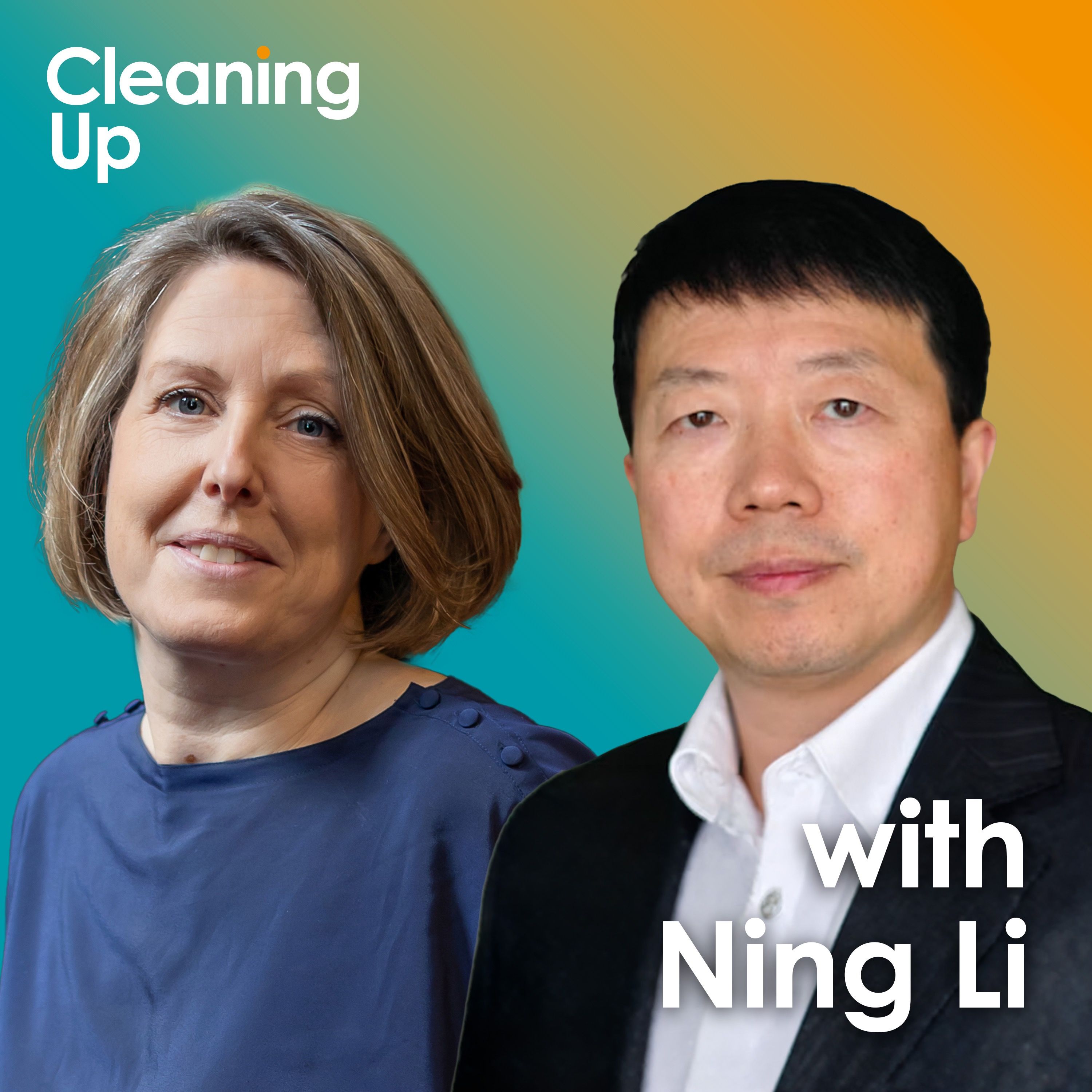
Build Fast, Build Now: How China Became an Energy Superpower | Ep262: Professor Ning Li

Professor Ning Li has spent decades at the intersection of energy, technology and industrial strategy. A nuclear engineer, complexity scientist and founding Dean of the School of Energy at Xiamen University, he is also credited with coining the term "Small Modular Reactor" nearly 20 years ago. In this wide-ranging conversation with Bryony Worthington, Ning Li explains why China has weathered recent global energy shocks better than many expected, how electrification is transforming economic resilience, and why solar panels, batteries and electric vehicles have become China's most important exports. They explore whether the world is really swapping dependence on fossil fuels for dependence on Chinese electrotech, why modularity has become the defining feature of successful modern technologies, and what lessons other countries can learn from China's rapid industrial scaling. The discussion also covers the future of nuclear power, the role of coal in supporting China's grid, the untapped potential of heat pumps, and why the energy transition should be framed not as a burden, but as an opportunity for growth. Topics include: Why China has been relatively resilient to oil and gas disruptions The rise of the "electrostate" China's new energy exports: EVs, batteries and solar Why modular technologies scale faster The origins of the Small Modular Reactor concept The changing role of coal in China's power system Heat pumps and industrial electrification Nuclear power's future in China Climate action as economic development Leadership Circle: Cleaning Up is proud to be supported by its Leadership Circle. The members are Actis, Alcazar Energy, Arup, Copenhagen Infrastructure Partners, Cygnum Capital, Davidson Kempner, Ecopragma Capital, EDP, Eurelectric, the Gilardini Foundation, KKR, Mitsubishi Heavy Industries, National Grid, Octopus Energy, Quadrature Climate Foundation, Schneider Electric, SDCL and Wärtsilä. For more information about the Leadership Circle, visit cleaningup.live Links: Ning Li bio: https://thebreakthrough.org/people/ning-li Octopus’ Fiona Howarth on the EV partnership with BYD: https://www.youtube.com/watch?v=YL64XW5ZRBA

1 h 07 minPlay in:

Why PodAppear

Follow people, not podcasts.

You heard Bryony on one show. PodAppear finds the next one for you, and every other person you want to hear.

  • An alert when they are a guestBy email as it happens, or as a daily or weekly digest. Then press play.
  • Guests, not name-dropsEpisodes that only mention a name are kept apart, so an alert means they are really on the show.
  • Everyone in one feedFounders, authors, athletes, scientists. Follow anyone by name, across every show they visit.

Free for up to 15 people, no card needed.