Get an email when Andrew is a guest on a podcastPodAppear checks new episodes as they come out and leaves out the ones that only mention Andrew. Free for up to 15 people, no card needed.Free for up to 15 people, no card needed.
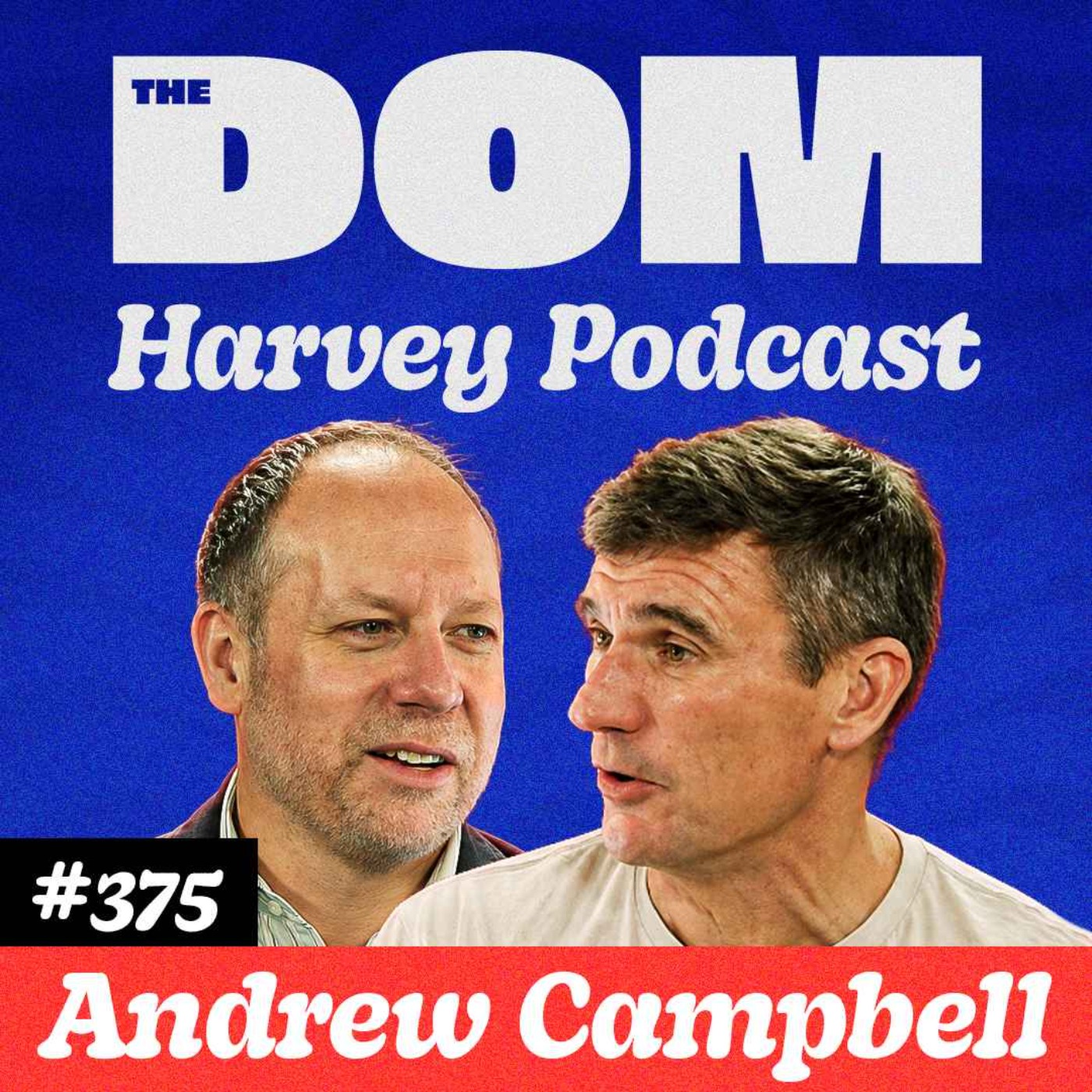
You might not recognise this guests name, but you’ll definitely know his boss and the events he was right in the middle of.
ANREW CAMPBELL was Jacinda Ardern’s chief press secretary.
His job was helping the Prime Minister figure out what to say, how to say it, and answer the questions that came afterwards.
But Andrew’s own story is pretty remarkable too. We talk about losing his mum when he was just seven, his time working for New Zealand Rugby, his battle with alcohol and how Hayley Holt got him sober.
There’s a lot in this one. Some fascinating stories about moments we all lived through, and some really honest stuff about what was happening in Andrew’s own life at the same time. He’s written a book called In the Room. If you like this podcast, you should check out the book.
***
This episode is proudly brought to you by the legends at Odoo.
https://www.odoo.com/r/V1x
If you run a business, here’s a question: How many different bits of software are you paying for right now?
One for accounting. One for sales. Another for projects. Another for inventory. Another for your website.
Odoo is designed to simplify all of that.
It’s a user-friendly, all-in-one business management solution, with a huge range of apps that are fully integrated and designed to work together.
So instead of building your business around a pile of disconnected tools, you can manage it from one platform.
Have a look for yourself! You can try Odoo free for 15 days, with no credit card required, at https://www.odoo.com/r/V1x
Hosted on Acast. See acast.com/privacy for more information.
Show notes
For part 2 of our mini-series in enforcement, we are joined by Michael Allum (International Family Law Group), Andrew Campbell (QEB) and Lisette Dupré (Stewarts) to tell us all about enforcement of international orders.
Lisette reminds us that ‘maintenance’ does not solely refer to periodical payments, and lump sums can also constitute maintenance: Van Den Boogaard v Laumen [1997] QB 759.
Michael tells us that when we are looking at outgoing orders, we need to start by asking:
- What ~ What order is it you are trying to enforce? If it is a periodical payments order, there is no question that is classed as maintenance. But a lump sum order to meet needs is also maintenance.
- Where ~ Where has the order been made? Because that will determine which convention you can use and the means of enforcement.
- When ~ When was the order made? Because that will determine which convention you can use.
- Why ~ Why are you taking steps to enforce in that country? Is the asset in the country and is it secure?
Andy tells us that we must think about enforcing the order all the way through the case, including during the drafting. Andy suggests that we should think about whether we need a declaration in the order that an award is maintenance more frequently:
Declaration under the EU Maintenance Regulation / The Hague Convention
(applies to cases covered by the EU Maintenance Regulation – e.g. where Form A was issued prior to 11pm on 31 December 2020)
The provisions under paragraphs [para numbers] of this order represent “maintenance” for the purposes of the Council Regulation (EC) No 4/2009 of 18 December 2008 on jurisdiction, applicable law, recognition and enforcement of decisions and cooperation in matters relating to maintenance obligations.
(or, applies (where relevant) to cases not covered by the EU Maintenance Regulation but covered by the 2007 Hague Convention). The provisions under paragraphs [para numbers] of this order represent “maintenance” for the purposes of the Hague Convention of 23 November 2007 on the International Recovery of Child Support and Other Forms of Family Maintenance.
Lisette tells us about EU Maintenance Regulation No 4/2009 https://eur-lex.europa.eu/eli/reg/2009/4(1)/oj/eng, which applies if the divorce application was issued in an EU member state before 1st January 2021.
If there is an order made in one of the other member states in that time, it is directly enforceable here. Note, you can, but do not have to, use a Central Authority certainly when enforcing child maintenance. You need to weigh up the advantage of having a government body incurring the cost, against the disadvantage of additional delay and loss of control.
Michael explains what to do when looking at whether an order can be enforced pursuant to the Hague Convention 2007. In particular:
1. There is a list of countries that have signed up on the website; https://www.hcch.net/en/states/hcch-members. But you must look at the specific Country, as each Country interprets maintenance differently.
2. The scope of the convention is in Article 2 – child maintenance and spousal maintenance. See https://assets.hcch.net/docs/14e71887-0090-47a3-9c49-d438eb601b47.pdf
3. The connection between the Countries. For example, the Countries are both signed up to the 2007 Hague Convention, although that does not mean that they will automatically enforce orders from another signatory and you have to check the specific provisions between those countries.
Andy tells us about enforcing incoming orders from countries that do not have a treaty with England. There is still a possibility that the order can be enforced as a civil claim, but it must be:
1. An order for a definite sum of money; and
2. The order must be final and conclusive ~ this can be a difficult hurdle with maintenance orders.
The key question, whenever you are thinking about your case, should always be is there a way to avoid relying on international enforcement? For example, are there assets in this jurisdiction that can be used instead? Or can it be agreed that the assets are transferred to this Country before the deal is signed. That way you avoid all of the issues discussed in the podcast.
43 minPlay in:
Why PodAppear
Follow people, not podcasts.
You heard Andrew on one show. PodAppear finds the next one for you, and every other person you want to hear.
An alert when they are a guestBy email as it happens, or as a daily or weekly digest. Then press play.
Guests, not name-dropsEpisodes that only mention a name are kept apart, so an alert means they are really on the show.
Everyone in one feedFounders, authors, athletes, scientists. Follow anyone by name, across every show they visit.