Bekomm eine E-Mail, wenn Amy in einem Podcast zu Gast istPodAppear prüft neue Folgen, sobald sie erscheinen, und lässt die weg, in denen Amy nur erwähnt wird. Bis zu 15 Personen kostenlos, ohne Kreditkarte.Bis zu 15 Personen kostenlos, ohne Kreditkarte.
Amy kostenlos folgen
AS

Amy Sandler

Zwei Jahre auf Sendung

GastHostErwähnt

Selbst moderierte Folgen

Mi11Mär
Radical Candor: Communication at Work

Radical Candor: Communication at WorkHost

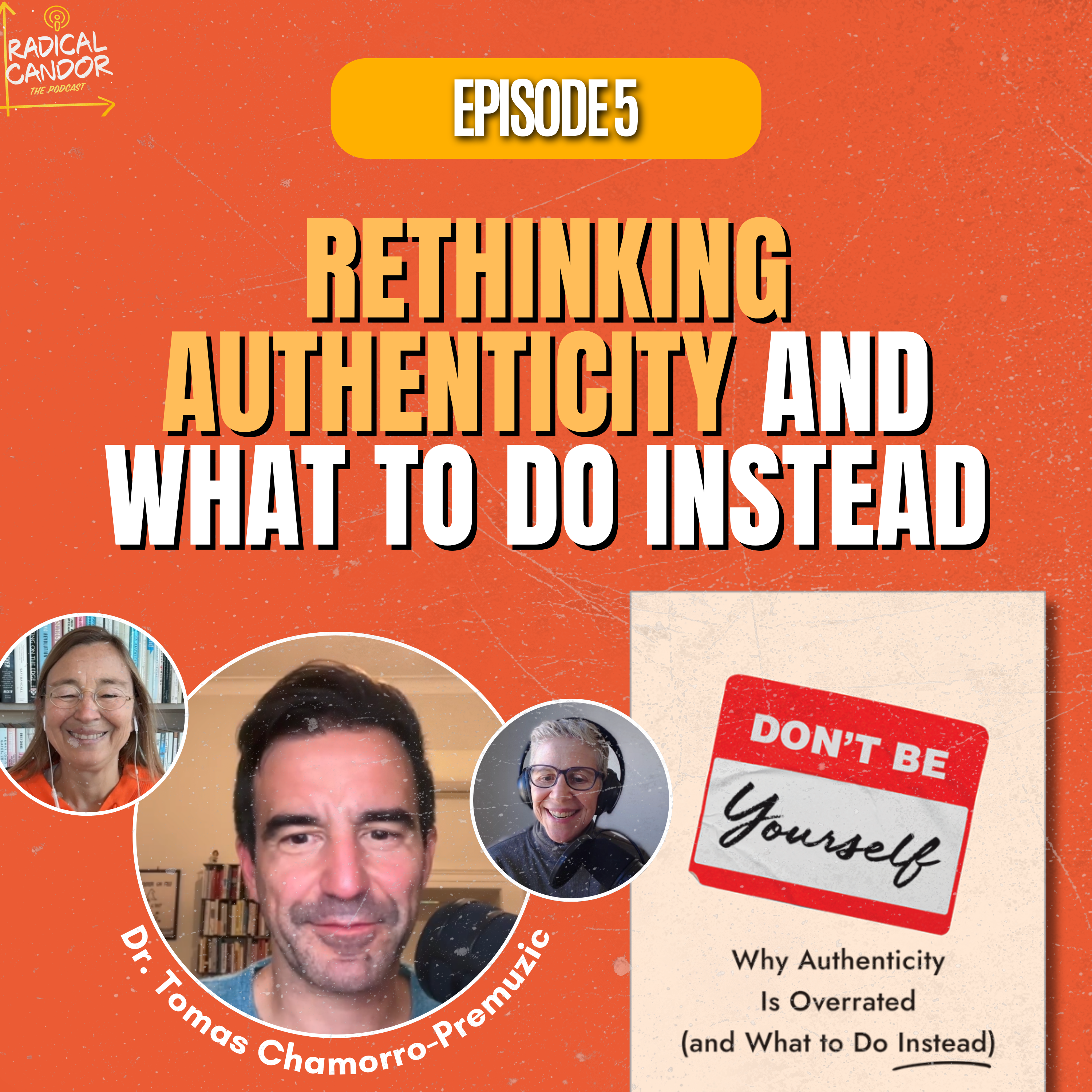
Rethinking Authenticity and What to Do Instead with Dr. Tomas Chamorro-Premuzic 8|5

“Be yourself.” “Bring your whole self to work.” “Don’t worry what people think.” These phrases sound empowering—but in real workplaces, they can create confusion, conflict, and even harm. In this episode of The Radical Candor Podcast, Kim Scott and Amy Sandler sit down with organizational psychologist Tomas Chamorro-Premuzic—Chief Science Officer at Russell Reynolds Associates, professor of business psychology at University College London and Columbia University, and author of Don’t Be Yourself: Why Authenticity Is Overrated and What to Do Instead. They start with a moment of actual Radical Candor: Kim reached out after Tomas and Amy Edmondson accidentally conflated Radical Candor with “brutal honesty.” Instead of stewing, she did the hard (and human) thing—she talked to him. That conversation sets the tone for a bigger question: What does it really mean to be “authentic” at work? Tomas breaks down four “authenticity traps” that sound like wisdom but often backfire: Always be honest with yourself and others Don’t worry what people think of you Always stay true to your values, no matter what Bring your whole self to work Together, they explore what replaces these traps: self-complexity, emotional intelligence, feedback you can absorb without defensiveness, and the discipline to regulate your impulses so you can build trust and safety—without turning the workplace into either chaos or conformity. If you’ve ever felt stuck between being “real” and being effective, this episode offers a more useful frame: your right to be you should never override your obligation to others. ⁠⁠⁠Website⁠⁠⁠ ⁠⁠⁠Instagram⁠⁠⁠ ⁠⁠⁠TikTok⁠⁠⁠ ⁠⁠⁠LinkedIn⁠⁠⁠ ⁠⁠⁠YouTube⁠⁠⁠ ⁠⁠Bluesky Resources: Fast Company: To create psychological safety, don't bring your whole self to work TEDx Talk: Why Do So Many Incompetent Men Become Leaders? Next Big Idea Club: The Surprising Science of Why Being Authentic Can Hold You Back HBR Podcast: Why Are We Still Promoting Incompetent Men? Why Do So Many Incompetent Men Become Leaders? (And How To Fix It) [book] Don't Be Yourself: Why Authenticity Is Overrated and What to Do Instead [book] I, Human: AI, Automation, and the Quest to Reclaim What Makes Us Unique [book] Dr. Tomas Chamorro-Premuzic [website] Mentioned on the podcast:  Infantilised: How Our Culture Killed Adulthood [book] Seinfeld episode: Life Hack “Do the opposite” [YouTube short] The Best Leaders are Great Followers HBR article by Tomas Chamorro-Premuzic and Amy C. Edmondson Chapters: (00:00) IntroductionKim and Amy welcome Tomas Chamorro-Premuzic and reflect on how this conversation began with Radical Candor. (03:10) Radical Candor vs. “Brutal Honesty”How a misinterpretation sparked a real conversation about kindness, nuance, and impact. (07:20) Why “Don’t Be Yourself”The meaning behind the provocative title and why authenticity advice often backfires at work. (14:10) The Four Authenticity TrapsAlways be honest, don’t care what people think, never compromise your values, and bring your whole self to work. (19:30) Confidence, Competence, and FeedbackWhy developing skill comes first—and how confidence is often about timing and delivery. (27:30) Staying True to Values Without Becoming DogmaticWhy uncompromising values can divide teams and what leadership actually requires. (30:10) Authenticity as PrivilegeWhy complete self-expression is often a luxury of the powerful, not a universal standard. (36:15) Psychological Safety Isn’t ComfortWhy safety should enable productive discomfort, not chaos or bullying. (41:55) Emotional Intelligence vs. Unfiltered AuthenticityWhy adapting to others is a strength, not a lack of integrity. (49:10) Regulating Impulses as a LeaderHow filtering behavior builds trust without sacrificing humanity. (01:03:50) Conclusion Connect:Resources for show notes:  Learn more about your ad choices. Visit megaphone.fm/adchoices
1 h 04 minAbspielen in:

Mi18Feb
Radical Candor: Communication at Work

Radical Candor: Communication at WorkHost

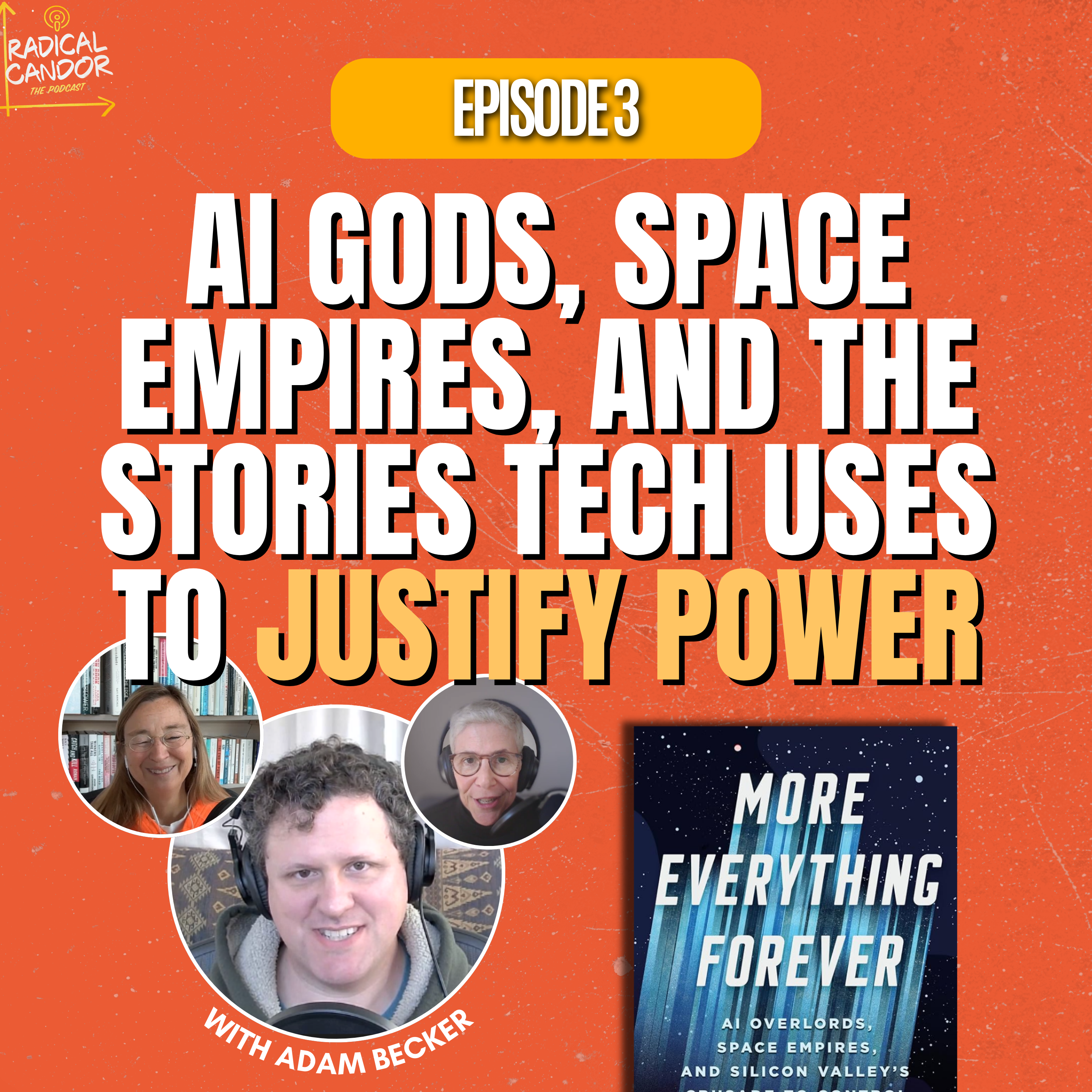
AI Gods, Space Empires, and the Stories Tech Uses to Justify Power with Adam Becker 8|3

What if the loudest stories about the future—AI gods, Mars colonies, digital immortality—aren’t science at all, but science fiction masquerading as inevitability? In this episode of The Radical Candor Podcast, Kim Scott and Amy Sandler are joined by science journalist and astrophysicist Adam Becker (PhD in computational cosmology), author of More Everything Forever. Adam breaks down the “big three” myths that dominate Silicon Valley’s imagination: space colonization, superintelligent god-like AI, and the singularity. He explains why both the utopian and apocalyptic versions of AI stories often share the same assumption—unimaginable AI power—and why that assumption doesn’t match reality. They also explore the deeper pattern underneath these myths: the belief that every problem can be solved with technology (usually computer technology), even when the barriers are political and social—collective action, persuasion, solidarity, and power. Along the way, Adam shares how he stayed sane while writing about “seriously disturbing ideas,” and why reconnecting with the natural world (and real human relationships) is a necessary antidote to screen-mediated life. If you’ve ever felt overwhelmed by the “AI will save us” vs. “AI will doom us” debate, this conversation offers a clearer, more grounded frame—and a reminder that being human matters. ⁠⁠⁠⁠Website⁠⁠⁠⁠ ⁠⁠⁠⁠Instagram⁠⁠⁠⁠ ⁠⁠⁠⁠TikTok⁠⁠⁠⁠ ⁠⁠⁠⁠LinkedIn⁠⁠⁠⁠ ⁠⁠⁠⁠YouTube⁠ ⁠⁠⁠⁠⁠⁠⁠⁠Bluesky⁠⁠⁠ Resources for show notes: ⁠Adam Becker’s website⁠ ⁠More, Everything, Forever book page⁠ ⁠Adam Becker on Star Talk podcast⁠ ⁠Dave Troy presents: Understanding TESCREAL with Dr. Timnit Gebru and Émile Torres⁠ ⁠Why Silicon Valley’s Most Powerful People Are So Obsessed With Hobbits⁠ Referenced in conversation: Blade Runner (as an example of dystopian sci-fi being misunderstood) Star Wars / Jabba the Hutt (as an example of misreading stories) Lord of the Rings / Palantír (as a cautionary reference) Jurassic Park (“they didn’t stop to consider whether they should”) Public libraries (as a civic good worth supporting) Chapters: (00:00) Introduction Kim and Amy welcome Adam Becker to unpack Silicon Valley’s stories about the future. (06:06) The Myths Driving Tech Ideology Space colonization, superintelligent AI, and the singularity—and why they don’t hold up. (11:52) When Sci-Fi Turns into Strategy How dystopian stories get misread as roadmaps (Palantir, “Torment Nexus,” and more). (15:06) More Everything Forever Why endless expansion feels inevitable in tech—and why Adam argues it’s flawed. (21:24) “Can” vs. “Should” Why tech leaders dodge both questions—and what that reveals about power. (23:19) You Can’t Escape Politics by Going to Space Why “Mars as a reset button” is a fantasy—and politics follows humans everywhere. (33:22) AI Doom vs. AI Utopia Why both narratives rely on the same shaky assumption about “AGI.” (37:21) Solidarity as a Counterbalance Why labor organizing matters when leadership values diverge from workers’ values. (41:02) “AGI Will Fix Climate” Why betting on future AI while burning more energy now is a dangerous logic trap. (01:03:50) Conclusion Learn more about your ad choices. Visit megaphone.fm/adchoices

1 h 05 minAbspielen in:

Mi11Feb
Radical Candor: Communication at Work

Radical Candor: Communication at WorkHost

The 7 Hidden Beliefs That Hold Leaders Back with Muriel Wilkins 8|2

Why do so many leaders work hard to change — only to end up in the same place months later? What if the problem isn’t effort, but the beliefs running in the background? In this episode of The Radical Candor Podcast, Kim Scott and Amy Sandler are joined by Muriel Wilkins — executive coach, C-suite advisor, host of Coaching Real Leaders, and author of Leadership Unblocked. Together, they unpack why high performers default to action, how action bias can backfire when internal beliefs stay the same, and what it takes to create sustainable leadership growth. Muriel introduces seven common “hidden blockers,” including I need it done now, I can’t say no, and I don’t belong here, and explains how these beliefs drive behavior that feels productive in the short term but creates dissonance over time. The conversation also explores how leaders can build the muscle of noticing what’s happening internally, ask better coaching questions without attachment, and reduce unnecessary suffering by changing how they respond to challenges. If you’ve ever wondered, “Why do I keep ending up here again?” this episode offers a grounded, practical way forward. Connect: ⁠⁠⁠Website⁠⁠⁠ ⁠⁠⁠Instagram⁠⁠⁠ ⁠⁠⁠TikTok⁠⁠⁠ ⁠⁠⁠LinkedIn⁠⁠⁠ ⁠⁠⁠YouTube⁠⁠⁠ ⁠⁠Bluesky⁠⁠ Resources for show notes:  Leadership Unblocked: Break Through the Beliefs That Limit Your Potential book  The Hidden Beliefs That Hold Leaders Back Harvard Business Review article Coaching Real Leaders podcast Own the Room: Discover Your Signature Voice to Master Your Leadership Presence book Muriel Wilkins website Muriel Wilkins on Radical Candor podcast Chapters: (00:00) Introduction + Muriel Returns (01:20) Why Muriel Wrote Leadership Unblocked (01:50) Action Bias: Why Change Doesn’t Stick (03:00) Actions vs. Your Internal Operating System (04:04) The Fix-It Reflex in Work and Life (06:01) Discomfort, Control, and the Urge to Solve (09:25) Hidden Blockers: What They Are and Why They’re Hidden (10:57) The 7 Hidden Blockers (Overview) (11:48) “I Need It Done Now” and Reframing Time (17:03) Building the Noticing Muscle (39:58) Coaching Yourself Before Coaching Others (53:33) Conclusion Learn more about your ad choices. Visit megaphone.fm/adchoices

55 minAbspielen in:

Warum PodAppear

Folge Menschen, nicht Podcasts.

Du hast Amy in einer Sendung gehört. PodAppear findet für dich die nächste, und genauso für alle anderen, die du hören willst.

  • Eine Meldung, wenn die Person zu Gast istPer E-Mail: sofort oder gebündelt als Tages- oder Wochenübersicht. Dann nur noch auf Play drücken.
  • Gäste statt bloßer ErwähnungenFolgen, in denen ein Name nur fällt, landen getrennt. Eine Meldung heißt: Die Person ist wirklich in der Sendung.
  • Alle in einem FeedGründerinnen, Autoren, Sportler, Forscherinnen. Folge allen mit Namen, quer durch jede Sendung, in der sie auftreten.

Bis zu 15 Personen kostenlos, ohne Kreditkarte.