Bekomm eine E-Mail, wenn Alec in einem Podcast zu Gast istPodAppear prüft neue Folgen, sobald sie erscheinen, und lässt die weg, in denen Alec nur erwähnt wird. Bis zu 15 Personen kostenlos, ohne Kreditkarte.Bis zu 15 Personen kostenlos, ohne Kreditkarte.
WeBuyCars sold a record 186,000 cars in its 2026 financial year, yet headline earnings fell 18.5% and the final dividend was cut from 30c to 17c. In what Alec Hogg called their last results interview as executives, co-founders Faan and Dirk van der Walt, with strategy chief Willem Klopper, explained how cheaper Chinese new cars had dragged down used-car prices, why a Tiguan the company would once have bought for R550,000 no longer sold for R600,000, and why Faan said they had probably bought too aggressively to fill two new supermarkets in January. They defended the dividend policy, said they had paid down more than R1bn of debt in what Faan likened to a farmer buying the farm next door during a drought, and set out the 49% GoBid deal now before the Competition Commission. With deputy CEO Wynand Beukes taking over in January, Alec pressed them on whether a data man could trade like the founders, and on a share price back near its listing level. Faan's reply: that was the one thing they couldn't control.
William Saunderson-Meyer tells Alec Hogg the Gauteng metro deals are a schlenter - legal, but a shady, fast move that buys unfair advantage. The DA topped the poll in Johannesburg, Tshwane and Ekurhuleni, yet an ANC-led pact looks set to take all three when mayors are elected on Friday, and he warns the parties will pay for ignoring voters. Solly Moeng says Witness T's halted Madlanga Commission testimony on drug syndicates inside the criminal justice system is only the tip of the iceberg. Plus a rural KZN drone startup, and JD Vance on Jensen Huang's return to Nvidia.
Donald MacKay explained why a Mercedes C-Class built in South Africa once sold for less in Manhattan than in Boksburg, and why he believes local buyers pay for the industry's support. William Saunderson-Meyer told Alec Hogg that whoever takes over Johannesburg inherits a city short of cash, and said the parties taking power seemed more interested in the finance portfolio than in stability. Solly Moeng argued that voters had been forgotten in the scramble for metros, and that "Keep Zille Out" was really about keeping the DA out. DA MP Nicholas Gotsell raised questions about a single supplier, a R450 price and expiry dates that vanished from police rape kits. And Reuters reported on a mixed session on Wall Street before Thanksgiving.
Every car, kettle and sheet of roofing steel South Africans buy carries a cost nobody voted for, according to trade adviser Donald MacKay. In studio with Alec Hogg, the XA Global Trade Advisors CEO explained how a Mercedes built in East London once sold for less in Manhattan than in Boksburg, and why shielding ArcelorMittal South Africa from imports had hurt the burglar-bar makers and engineering shops that employ 90% of the steel sector. He questioned why the IDC would pay around R10bn for a company the market valued at a fraction of that, with most of the money heading back to the Mittal group in Luxembourg. MacKay also traced how South Africa became a "lobby economy", from apartheid-era boardrooms to Ebrahim Patel's private deals, offered Enoch Godongwana one line for next year's Budget, and said the country was fixable, just not by the party running it.
Before a court set aside the Phala Phala panel report on Wednesday, William Saunderson-Meyer told Alec Hogg that Cyril Ramaphosa had already lost his grip on the ANC's coalition talks, and that flying to Silicon Valley while they played out was a failure of leadership. Donald MacKay asked why the state was preparing to spend about R10bn on a steelmaker the market valued at a fraction of that, and where most of the money would end up. DA MP Nicholas Gotsell described a Cape Flats police unit down to its last two rape kits after five rapes in a day, despite the minister's assurances. And Solly Moeng told Chris Steyn that voters should stop waiting for the next election to make themselves heard.
17 minAbspielen in:
Warum PodAppear
Folge Menschen, nicht Podcasts.
Du hast Alec in einer Sendung gehört. PodAppear findet für dich die nächste, und genauso für alle anderen, die du hören willst.
Eine Meldung, wenn die Person zu Gast istPer E-Mail: sofort oder gebündelt als Tages- oder Wochenübersicht. Dann nur noch auf Play drücken.
Gäste statt bloßer ErwähnungenFolgen, in denen ein Name nur fällt, landen getrennt. Eine Meldung heißt: Die Person ist wirklich in der Sendung.
Alle in einem FeedGründerinnen, Autoren, Sportler, Forscherinnen. Folge allen mit Namen, quer durch jede Sendung, in der sie auftreten.
The DA topped the vote in all three Gauteng metros, by margins of between nine and 15 points, yet as the coalition deals closed in, it looked set to govern none of them. William Saunderson-Meyer called it a schlenter: legal, but rotten. He told Alec Hogg that voters had been thwarted and cheated, that the ANC once again stood to keep executive control after a pummelling at the polls, and that Cyril Ramaphosa had let go of the reins and become a passenger in his own party. He warned of storms ahead for Johannesburg's finances, argued that politicians were reaching for race just as voters were moving past it, with the DA's wins in Emfuleni and Sharpeville as evidence, and weighed Herman Mashaba's chances as mayor. He also explained why he thought the rand's slide marked a return to slow erosion rather than a sudden break.
Intelwatch's Piers Pigou tells Chris Steyn the silence around the Frans Mathipa assassination worries him most, and warns the case could die if it moves to a military court - with Special Forces members pleading mental illness. FF Plus leader Corné Mulder tells Alec Hogg where his party stands in the GNU if a "coalition of the damned" takes shape, and why Ramaphosa would be its first victim. uMngeni mayor Chris Pappas explains why the DA's visible record makes coalition partners nervous. Plus Wall Street: Nvidia sheds 6% on Jensen Huang's return and Anthropic falls below its IPO price.
FF Plus leader Corné Mulder says the DA, ActionSA and FF Plus deal for Gauteng's metros is falling apart, with ActionSA leaning towards the ANC, MK and the EFF - an alliance he brands a "coalition of the damned", thrown together by circumstance rather than shared principle and the opposite of what voters asked for. Intelwatch's Piers Pigou tells Chris Steyn six Special Forces soldiers charged with assassinating Hawks investigator Frans Mathipa have defied a court order since January, sheltering at 1 Military Hospital. Plus Alec Hogg on the battered rand, the metros and why he still expects a pleasant surprise.
Two weeks ago, Corné Mulder believed a DA, ActionSA and FF Plus deal for Gauteng's metros could be done within a week. By the time he spoke to Alec Hogg again, it was falling apart. Mulder said his last attempt to get Helen Zille and Herman Mashaba around one table ended with Zille agreeing and Mashaba refusing. With ActionSA leaning towards the ANC, MK and the EFF, he came up with a name for what was taking shape: a "coalition of the damned". He argued that two DA court cases had handed the ANC's Lesufi camp its argument, said this was Cyril Ramaphosa's moment to show leadership, and asked where ActionSA's new voters thought their votes were going. He also discussed what a new Gauteng bloc could mean for the FF Plus's seat in the GNU.
Less than a fortnight after Jensen Huang left Nvidia, the board brought him back, and Wall Street rallied hard, with one notable exception: Anthropic, days after its listing. Closer to home, Sygnia shareholder André Crawford-Brunt told Alec Hogg that Sygnia bought Anthropic shares in January, that Magda Wierzycka later told him she held R213 million of Anthropic shares in her own name and her trust, and that Sygnia had since given three different explanations of what happened to the fund's holding. Wierzycka disputes his account. ActionSA's Michael Beaumont explained why his party would not install Helen Zille or Cilliers Brink as mayors, and uMngeni mayor Chris Pappas put specifics to his promise of new jobs, and said why he had no appetite for provincial leadership.
Five years ago, Chris Pappas won uMngeni by 42 votes. This month he was sworn in again after the DA took 61% and six of the municipality's nine township wards, in a province where MK was the big story. Pappas told Alec Hogg who talked him out of quitting, and why the DA set out to become a "leader of society" rather than just the party that fills potholes. He explained how the result spilt over into neighbouring municipalities, and why he believes the DA's record makes coalition partners nervous. He also said uMngeni was weighing whether to stop paying Eskom, lawfully, just to qualify for the help Treasury reserves for defaulters. And he said why he has no appetite for provincial leadership or Parliament.
Michele Dougherty went to a Durban high school that didn't teach physics or chemistry. Years later, jet-lagged and nervous, she persuaded a room of about a hundred Cassini mission scientists to send the spacecraft just 173km above a tiny moon of Saturn. They found water vapour pouring from its south pole, and the search for life in the solar system changed course. Now the first woman to be Astronomer Royal in the post's 350-year history, she told Alec Hogg why she'd be very surprised if life didn't exist elsewhere, what the Juice mission will look for when it reaches Jupiter's icy moons in 2031, and why more South Africans should know about the giant telescopes in the Karoo. She was also frank about the harder side of her day job: telling Britain's main physics and astronomy funder that it can't be world class at everything.
Former DA leader Tony Leon tells Alec Hogg that ActionSA risks the fate of the New National Party, which disappeared within years of walking its voters into the ANC's arms. ActionSA's Michael Beaumont counters that the DA had not sat down with his party once before Thursday afternoon's first negotiation, and that the obstacle is Helen Zille and Cilliers Brink rather than the DA itself. Political commentator Solly Moeng tells Chris Steyn voters want water, potholes and stable governance, not deals for politicians. Plus Hogg's five investor lessons from Elon Musk, and Wall Street.
Michael Beaumont has been called the power behind ActionSA's throne, and he's the man running its coalition talks across Gauteng. Speaking to Alec Hogg hours before ActionSA's first sit-down with the DA, he said the DA had never once come to the table until then, and that his party had no DA problem, only a Brink and a Zille problem. He explained why ActionSA found the ANC easier to deal with, why he believes investors' nerves over the metros will pass, and why the polling industry needs regulating. He also addressed the claim that his feud with the DA is personal, the jibe that he is Iago to Mashaba's Othello, and how a party can work with Julius Malema after his insults.
Forty-three years after The Star's editor famously told readers to abstain, Tony Leon saw the same habit in the ANC. Two weeks after the local elections, with seven of eight metros hung, the former DA leader told Alec Hogg that the ANC had simply blanked the DA, that its centre was too weak to command its own provinces, and that its president was 10 hours away in Silicon Valley. He explained why he believed the ANC's leadership feared a DA-run Joburg more than a failing one, and why the parties propping up the ANC could suffer the fate the New National Party met in 2004. He also set out the hard choice he believed the DA now faced, and made a prediction for Joburg that he said he hoped would prove wrong.
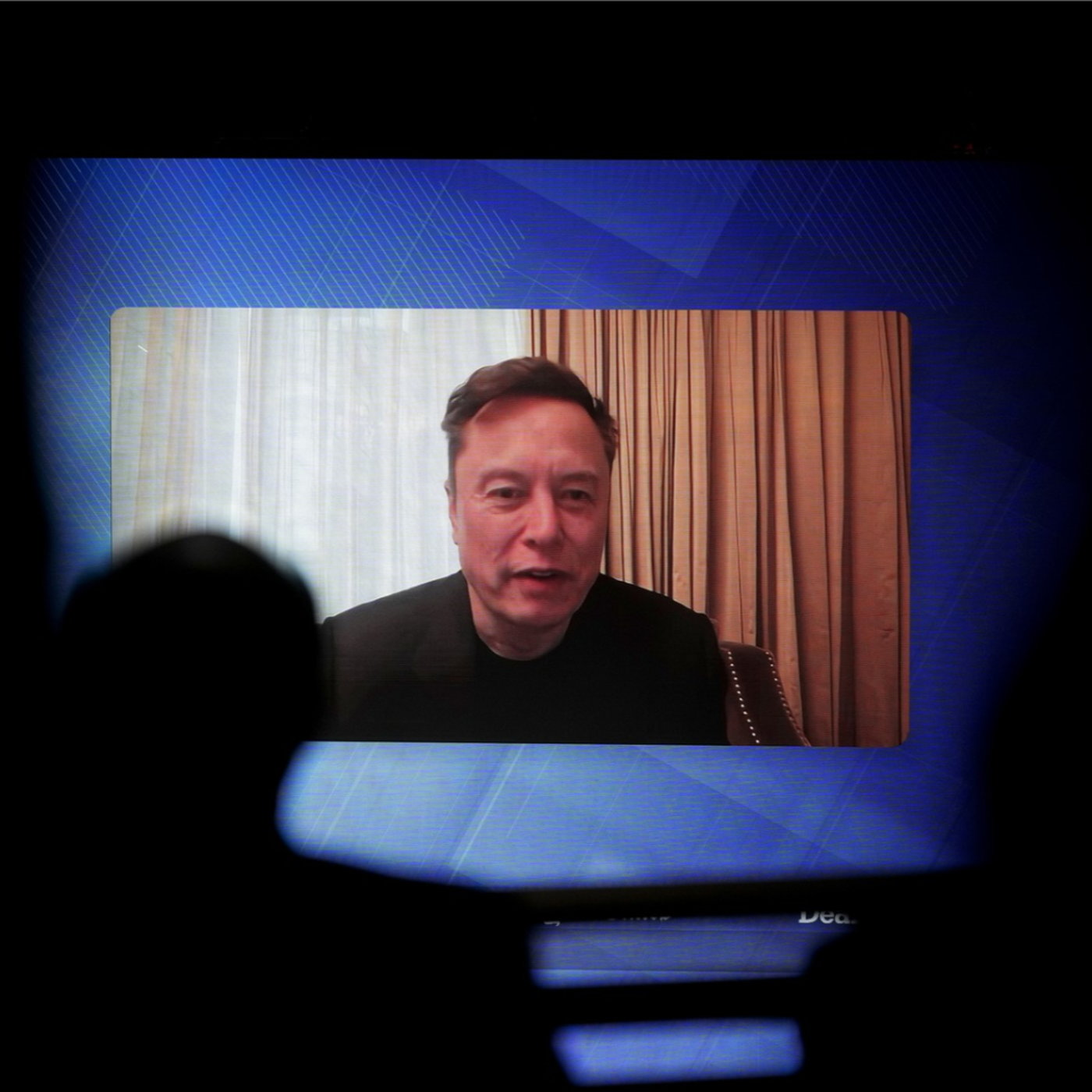
Elon Musk told the New York Times he felt "pretty foolish" about the near half a billion dollars he spent on America's midterms. Alec Hogg argued that was the least interesting thing he said. Speaking from China, Musk compared Nvidia's board parting ways with Jensen Huang to the Chicago Bulls dropping Michael Jordan mid-winning streak. He said Volodymyr Zelensky was "not always truthful" about Starlink, and said he should not get his Tesla pay awards simply for merging the carmaker with SpaceX. In this Rational Perspective, Alec tested the claims one by one: where Musk was right about boards and money in politics, where his own company's filings told a different story, and why a promise made on stage belonged in the deal documents. He ended with five lessons for South African investors, from key-man risk on the JSE to the danger of relying on one supplier, however brilliant.
Frans Cronje told Alec Hogg he believed parts of the ANC had joined the GNU to break the DA apart, not to reform the country, and that the plan had backfired: it was the ANC that splintered. William Saunderson-Meyer floated a devious reading of the rand's slide, a leak from the party's own reformists to frighten the radicals, then asked the harder question of where Cyril Ramaphosa really stood. And Sport Minister Gayton McKenzie stopped mid-briefing to apologise to Tatjana Smith, called Swimming South Africa a federation in ICU, and explained why he couldn't fire its leaders even though he wanted to. Plus Reuters on Wall Street, where Nvidia's results, Anthropic's IPO pricing and hawkish Fed minutes pulled the market in different directions.
Voters had sent a clear message, Frans Cronje told Alec Hogg, and the people who most needed to hear it were looking the other way. Two weeks after the ANC fell below 31%, the SRF chairman explained why he believed the party's executive had never truly backed the GNU, how a plan to splinter the DA from inside government had backfired on the ANC instead, and why a deal with ActionSA, the EFF and MK made sense to many in the ANC even if it hurt the country. He warned that investors had been complacent, gave his reasons why South Africa would absorb the shock better than it would have in 2024, and made an unexpected case for the DA's long-term interest in keeping the ANC alive. He also named the one partnership he believed could still hold the union together, and the price ANC leaders would have to pay to make it happen.
With Gauteng's coalition clock running down and the rand slipping towards R17, Cyril Ramaphosa was in California with a 300-strong delegation. William Saunderson-Meyer told Alec Hogg the clash of dates was avoidable, and said it fitted a president with an almost pathological need to dodge conflict in his own party. He argued that the ANC's flirtation with MK, the EFF and ActionSA made no electoral sense, and floated a more devious reading: that the leaks were a warning shot from the party's reformists. He questioned courting Silicon Valley while the Starlink dispute festered, put Ramaphosa's chances of lasting until 2029 at below even, and warned that if the DA let Herman Mashaba choose its mayors, the concessions would not stop there.
BizNews editor Alec Hogg says the most underappreciated part of the coalition talks is KwaZulu-Natal, and maps the arithmetic that could give the ANC a majority without the DA: Durban first, then Pietermaritzburg, then Pretoria, where ANC and MK seats add to 217 against the 201 needed. Ranmore founder Sean Peche tells Hogg why he sees a storm rather than a bargain in Nvidia after Jensen Huang's resignation. Security analyst Willem Els tells Chris Steyn the cartels' protection is drying up and the Hawks are moving past the foot soldiers. Plus Wall Street.
Plenty of investors looked at Nvidia's slump after Jensen Huang's resignation and saw a bargain. Ranmore founder Sean Peche told Alec Hogg he saw a storm. On the day the chipmaker was due to report, he explained why ten times earnings only looked cheap if Nvidia could more than double its profits next year, with new export curbs, an interim CEO and possible lawsuits in the way. He was just as sceptical about Anthropic's listing: an amazing product, he said, but not a business that generated free cash flow, and nowhere near worth the valuation bankers were floating. His alternative was the slow lane, with half his fund in Asia and money in food retailers nobody wanted, which he said had kept it rising in a falling market. Closer to home, he warned what the rand would face if coalition talks pushed South Africa's metros away from market-friendly policy, and he ended with a story from a Joburg steakhouse about why he believes South Africa will get through.
The DA won the most votes in all three Gauteng metros, yet the ANC's NEC put it last on its list of partners, and by Monday morning the ANC and MK had reportedly agreed in principle to work together in KwaZulu-Natal. In this Rational Alternative, Alec Hogg laid out the seat arithmetic both sides were avoiding and checked ActionSA's claims against Gareth van Onselen's voting-district analysis. He argued that a personal feud, not reason, was steering the Gauteng talks, and traced a path from a Durban council chamber to a possible ANC-MK majority in Parliament. Then he followed the thread into the bond market, where the post-election gains had already begun to reverse. He closed with his odds on who would run Gauteng, and a direct message to Helen Zille, Herman Mashaba, the ANC's NEC and Cyril Ramaphosa.
Intelligence analyst Jasmine Opperman tells Chris Steyn that a minister who recuses herself from briefing the President because cabinet colleagues may be implicated has put party above national security: stand up and do your job, or leave. Sakeliga CEO Piet le Roux tells Alec Hogg why he has taken ICASA to court over the 30% race-based ownership rule, what it means for Starlink and local ISPs, and why he sees chinks in BEE's armour. Plus Rachel Kolisi on building her own identity and refusing to be a two-for-one special, and Wall Street's AI jitters.