Bekomm eine E-Mail, wenn Alastair in einem Podcast zu Gast istPodAppear prüft neue Folgen, sobald sie erscheinen, und lässt die weg, in denen Alastair nur erwähnt wird. Bis zu 15 Personen kostenlos, ohne Kreditkarte.Bis zu 15 Personen kostenlos, ohne Kreditkarte.
Alastair kostenlos folgen
AM

Alastair Macaulay

Zwei Jahre auf Sendung

GastHostErwähnt

Selbst moderierte Folgen

Di17Feb
Voices of British Ballet

Voices of British BalletHost

Darcey Bussell

Darcey Bussell talks to the dance critic Alastair Macaulay about her graduation performance at The Royal Ballet School, her early career with both Sadler’s Wells Royal Ballet and The Royal Ballet, and the creation in 1989 of the role of Princess Rose in Kenneth MacMillan’s The Prince of the Pagodas, as well as her experience of being coached by Margot Fonteyn. The interview, which was recorded in 2017, is introduced by Alastair Macaulay. Darcey Bussell was born in London in 1969. After initial vocational training at the Arts Educational School, she joined The Royal Ballet Lower School at the age of 13. In 1987 she graduated from The Royal Ballet Upper School and joined the Sadler’s Wells Royal Ballet that same year, but it was whilst still at the school that her talent had been noticed by the choreographer Kenneth MacMillan, who decided to create on her the leading role of Princes Rose in his new version of The Prince of the Pagodas. Bussell joined The Royal Ballet in 1988 and was promoted to the rank of principal dancer in 1989 on the opening night of MacMillan’s new ballet. During her distinguished career with The Royal Ballet, Bussell became one of the most famous British dancers of her time, and indeed of any time. She was particularly noted for her combination of a tall, athletic physique with a lovely soft lyricism. During her dancing career she performed in as many as 80 different ballets, including the majority of the classical roles, and had 17 new roles created on her. She stayed with The Royal Ballet until her formal retirement from the stage in 2007 (in a performance of MacMillan’s Song of the Earth), but she had also appeared as a guest artist with many major companies abroad, including New York City Ballet, the Ballet of La Scala, Milan, the Kirov Ballet, the Hamburg Ballet and The Australian Ballet. Even while dancing professionally, Bussell had begun to work in television and other media, and this side of her career developed at a fast pace on her retirement from ballet. As well as writing, modelling and presenting – both for television and for the Royal Opera House relays – she became a household name as a judge on the BBC’s Strictly Come Dancing (2009 to 2019). Since 2012, Bussell has been the President of the Royal Academy of Dance. Also in 2012, she danced the Spirit of the Flame at the Closing Ceremony of the London Olympic Games, leading a troupe of 200 dancers. She supports many educational and charitable causes, both artistic and in other fields. She has received many honours, including a gold medal from the John F Kennedy Center for the Performing Arts, and an honorary doctorate from Oxford University in 2009. Darcey Bussell was appointed an OBE for her services to dance in 1995, a CBE in 2006 and was made a DBE in 2018. Hosted on Acast. See acast.com/privacy for more information.
32 minAbspielen in:

Di20Jan
Voices of British Ballet

Voices of British BalletHost

Richard Alston

The distinguished choreographer and director Richard Alston explains to Alastair Macaulay, how, as a teenager, he was entranced by watching ballet. After studying fine art, he began working on the Martha Graham technique with what became the London Contemporary Dance Theatre. He eventually found this too restricting and embraced the freer, less floor fixated approach of contemporary dance associated with Merce Cunningham. Alston goes on to discuss how his own choreography began, and how it developed in line with this expansion of his aesthetic. He speaks about his dealings with Cunningham and with the composer John Cage and also about his long and immensely fruitful creative partnership with Sue (Siobhan) Davies. The interview is also introduced by Alastair Macaulay. Richard Alston was born in October 1948 in Sussex. He is a British choreographer as well as having been artistic director for several dance companies. His education began at Eton College, followed by two years at Croydon School of Art. His passion for ballet was first sparked after attending performances by the Bolshoi Ballet and The Royal Ballet Touring Company, and also by Merce Cunningham and the Martha Graham Dance Company, which excited an interest in modern dance. As a result, he started attending classes with the Rambert School of Ballet, and in 1968 he became one of the London Contemporary Dance Theatre’s original students. After only three months there, he created his first work, Transit. In his third year at the School he organised a group of students to tour schools, colleges and universities demonstrating the Graham technique. After choreographing for London Contemporary Dance Theatre, he created an independent dance company, Strider, in 1972. In 1975, Alston travelled to New York to study primarily with Merce Cunningham at the Merce Cunningham Dance Studio. He returned to Europe two years later, working as an independent choreographer and teacher. In 1980, he was appointed resident choreographer for Ballet Rambert. He founded Second Stride with Siobhan Davies and Ian Spink in 1982, and in 1986 was appointed artistic director of Ballet Rambert, a post he held until 1992. To reflect the changing nature of the company and its work, in 1987 Ballet Rambert changed its name to become Rambert Dance Company. During his years with Rambert, Alston created 25 works for the company, as well as pieces for the Royal Danish Ballet and The Royal Ballet. After working in France and at the Aldeburgh Festival, in 1994 Alston became artistic director of The Place and he also formed Richard Alston Dance Company. A steady stream of over 50 dance works created by Alston over the next decades was interspersed with collaborations with the London Sinfonietta and Harrison Birtwistle in 1996, and several television productions, including The Rite of Spring, commissioned by the BBC for their Masterworks series in 2002. The Richard Alston Dance Company celebrated its tenth year with its first appearance in New York in 2004. In 2006 the company made its first full tour of North America, followed by further tours in 2009 and 2010. Alston created a new ballet, En Pointe, A Rugged Flourish, for New York Theatre Ballet in 2011. In March 2020, the Richard Alston Dance Company was wound up after a quarter of a century of critical acclaim., giving its last performance at Sadler’s Wells. Richard Alston received the De Valois Award for Outstanding Achievement in Dance at the Critics’ Circle National Dance Awards in 2009. He was appointed a CBE for services to dance in 2001, and was knighted in 2019. Hosted on Acast. See acast.com/privacy for more information.

26 minAbspielen in:

Di30Dez 25
Voices of British Ballet

Voices of British BalletHost

David Vaughan

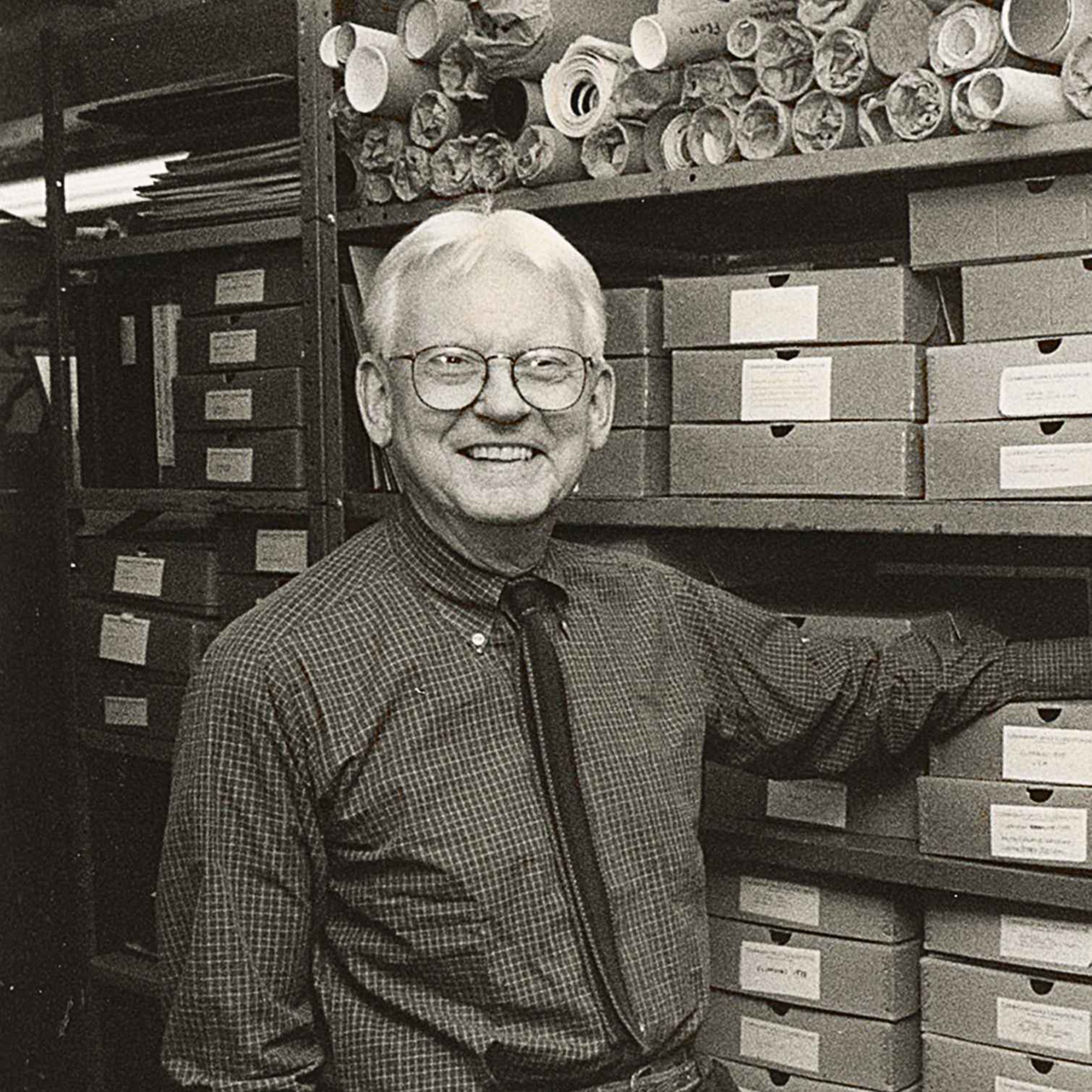
David Vaughan – unparalleled writer on the choreography of Frederick Ashton – catches moments and movements from The Royal Ballet’s history. In this interview for Voices of British Ballet, which was recorded in New York, he talks to his friend and fellow dance writer Alastair Macaulay. The episode is also introduced by Alastair Macaulay. The archivist, historian and critic David Vaughan was born in London in 1924. He studied at Oxford University and only began dance training after that, in 1947. In 1950 he won a scholarship to study at the School of American Ballet, where he met Merce Cunningham, who was teaching there. Vaughan began studying with Cunningham from the mid 1950s. Later, in 1959, when Cunningham opened his own studio, Vaughan began performing various tasks for Cunningham and the Merce Cunningham Dance Company, including co-ordinating the company’s six-month tour of Europe (with John Cage and Robert Rauschenberg) in 1964. Vaughan became the company’s official archivist in 1976, a post he held until 2012, when the company was disbanded following Cunningham’s death. In addition to writing and working for and with Cunningham, Vaughan was active in the theatre, film and dance worlds. He acted in off-Broadway productions, devised the choreography for Stanley Kubrick’s film Killer Kiss, and worked on the scripts for films about Cunningham and Cage, and about the choreographer Antony Tudor. Vaughan also appeared in several dance productions, including The Royal Ballet’s revival of Frederick Ashton’s A Wedding Bouquet. In 1988 he wrote an influential op-ed piece in The New York Times, criticising traditional ballet companies for not offering dancers of colour enough opportunities to perform. David Vaughan was a prolific and well-regarded writer on ballet and dance. His books included The Royal Ballet at Covent Garden (1976), Frederick Ashton and His Ballets (1977, revised edition 1999) and Merce Cunningham: Fifty Years (1996). He contributed frequently to the Dancing Times magazine, and with Mary Clarke he also edited and contributed to The Encyclopaedia of Ballet and Dance (1980). In 2015 David Vaughan received a Dance Magazine award. He died in New York City in 2017. Photograph courtesy of The Merce Cunningham Foundation Hosted on Acast. See acast.com/privacy for more information.

22 minAbspielen in:

Warum PodAppear

Folge Menschen, nicht Podcasts.

Du hast Alastair in einer Sendung gehört. PodAppear findet für dich die nächste, und genauso für alle anderen, die du hören willst.

  • Eine Meldung, wenn die Person zu Gast istPer E-Mail: sofort oder gebündelt als Tages- oder Wochenübersicht. Dann nur noch auf Play drücken.
  • Gäste statt bloßer ErwähnungenFolgen, in denen ein Name nur fällt, landen getrennt. Eine Meldung heißt: Die Person ist wirklich in der Sendung.
  • Alle in einem FeedGründerinnen, Autoren, Sportler, Forscherinnen. Folge allen mit Namen, quer durch jede Sendung, in der sie auftreten.

Bis zu 15 Personen kostenlos, ohne Kreditkarte.