3 Takeaways™ features insights from the world’s best thinkers, business leaders, writers, politicians, scientists and other newsmakers. Each episode ends with 3 key takeaways to help you understand the world in new ways that can benefit your life and career. Hosted by Lynn Thoman. A global top 1% podcast.
What if AI becomes easier to talk to than another person?
And what happens to us when it does?
MIT professor Sherry Turkle has spent decades studying what technology does to the way we think, work, and love. Now she says there are two parts of our lives we should never let AI into.
She discusses:
Why ordinary conversation has started to feel like work
The surprising reason people may prefer talking to chatbots
How AI will change what we expect from other people
Why “pretend empathy” may be more dangerous than it seems
What happens when relationships become frictionless
What it could mean for a child to have an AI friend
Whether AI could make us worse at being with each other
The question isn’t just what AI can do. It’s what AI may do to us.
Mark Cuban told people that television would eventually be delivered over the internet.
Everybody thought he was an idiot.
Now, Cuban is making another prediction that runs counter to what we all believe, but this time it's about A.I.
Few people have made as many big bets across as many industries as Mark Cuban. The billionaire entrepreneur and investor has built businesses in technology and media, transformed the NBA's Dallas Mavericks, and is now taking on prescription drug companies with Cost Plus Drugs.
He discusses:
● What everyone may be getting wrong about AI
● What he sees happening to jobs and where the real opportunity may be
● The one thing he believes AI will never replace
● How he decides whether a seemingly crazy idea is actually an opportunity
● The quality he looks for after seeing thousands of entrepreneurs
● The mistake incredibly smart people make again and again
● Why one of his biggest decisions required him to become “the younger Mark Cuban” again
● Why being wrong repeatedly may not matter nearly as much as we think
● What success means to him now that money is no longer the measure
● What he thinks most Americans still don’t understand about healthcare
Mark Cuban saw streaming coming and almost nobody believed him. What does he see now that the rest of us may be missing?
What if trying harder is sometimes exactly the wrong thing to do?
Angela Duckworth, University of Pennsylvania psychologist, MacArthur Fellow, and author of the #1 New York Times bestseller Grit, has spent years studying achievement. In her new book, Situated, she explores why perseverance alone isn't enough.
She discusses:
How Angela and her husband nearly “gritted” their way out of their marriage
How much your environment shapes who you become
The small change that can make good habits easier
Why parents may be asking the wrong question about their children
How peer pressure can become a force for good
Whether AI could make us worse at thinking
When changing your situation matters more than changing yourself
We spend enormous energy trying to improve ourselves. Angela Duckworth asks a different question: what if the more important thing is to change what’s around us?
Why do some people instantly draw us in?
Olivia Fox Cabane reveals that charisma is not a gift. It is a skill - and most of us misunderstand what creates it.
In this episode, you’ll learn:
The three qualities that make someone charismatic
Why introverts can be highly magnetic
How people judge you before you speak
Why presence matters more than performance
The surprising link between confidence and self-compassion
Simple ways to become more charismatic immediately
Charisma is not just how people feel about you.
It is how you make them feel about themselves.
Olivia Fox Cabane is the author of The Charisma Myth.
Everyone knows where the last generation of great technology companies came from.
The more interesting question is where the next generation will.
Mehran Gul spent years studying the world's most successful innovation hubs to understand why some places repeatedly create breakthrough companies while others never quite do.
He shares surprising insights about China's rise, Silicon Valley's future, and why artificial intelligence could reshape the global map of innovation in ways that few people expect.
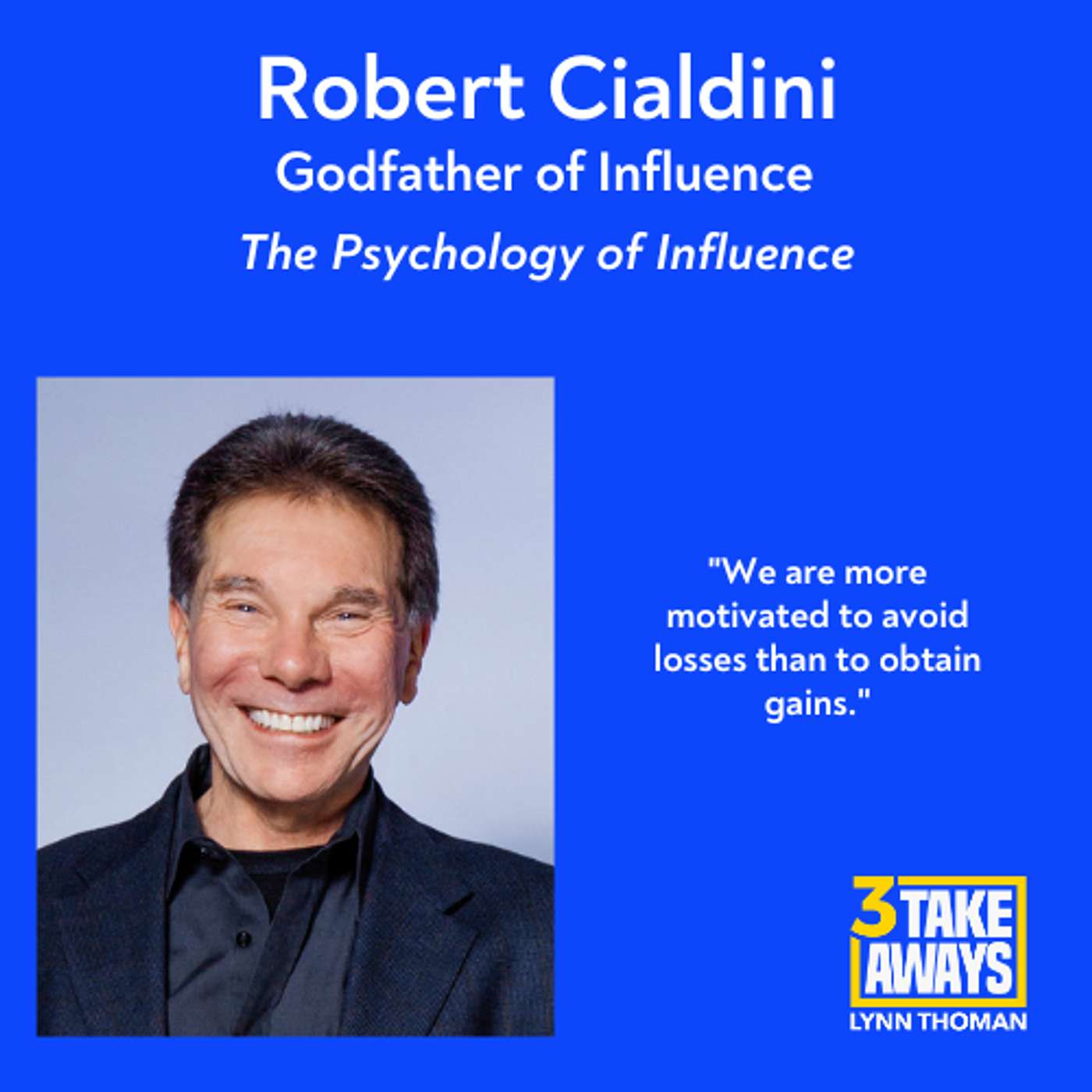
Dr. Robert Cialdini, author of Influence - 5 million copies sold, and one of the most important books Warren Buffett says he's ever read - has spent decades studying why people say yes.
He reveals the psychological forces shaping our decisions, why tiny changes can dramatically influence outcomes, and how the most effective communicators get people to yes without anyone feeling pushed.
Once you understand these principles and hidden triggers, you'll start seeing them everywhere.
Most people think healthcare is broken by accident.
Mark Cuban says it isn't.
In part two of our conversation, he explains the hidden companies who really control healthcare, where AI is headed, and the biggest opportunities most people are missing.
He also shares the advice he gives young people, the three “superpowers” he believes matter more than talent, network, or money, and the one question he thinks everyone should ask themselves.
The NBA thought it was selling basketball.
Mark Cuban thought it was selling something else.
That insight shaped how he has built companies, evaluated opportunities, and challenged entire industries.
The lesson starts with basketball. It ends somewhere much bigger.
He also shares the skill he values most in entrepreneurs, and how AI is changing the way ambitious people learn.
Dr. Tom Mihaljevic, CEO of Cleveland Clinic and a leading heart surgeon, explains how medicine is already changing in ways most people don’t see.
He has spent his career performing complex heart surgeries and now leads one of the world’s top hospitals.
A conversation about what’s changing in care and what it means for patients right now.
Is the war with Iran actually a turning point for the Middle East?
Dan Kurtzer - former U.S. Ambassador to Israel and Egypt, advisor to presidents, peace negotiator and Princeton professor - has seen these moments up close, when expectations surge - and the outcome looks nothing like the promise.
His unfiltered take on Iran - and what actually changes after a war like this.
--------------------------
Exciting news!
We’ve been nominated for a Webby Award—one of the top honors in podcasts.
If you enjoy the show, you can vote for 3 Takeaways here: (Just takes a minute - sign in with Apple, no need to provide your email) https://wbby.co/57427N
(Voting ends April 16)
Thank you!
Love him or hate him, Elon Musk has upended entire industries - from cars to rockets - by doing things differently.
Jon McNeill, former president of Tesla, reveals the thinking behind Tesla and SpaceX that drives radical innovation - and shows how anyone can apply it.
He also offers a rare glimpse into how Elon Musk operates close up.
--------------------------
Exciting news!
We’ve been nominated for a Webby Award—one of the top honors in podcasts.
If you enjoy the show, you can vote for 3 Takeaways: (Just takes a minute - sign in with Apple, no need to provide your email) 👉 https://wbby.co/57427N
(Voting ends April 16)
Thank you!
The rules of quantum physics aren’t just strange - they’re usable. Particles can exist in multiple states at once. Observation can reshape reality.
Now, scientists are turning those quirks into machines that could solve problems today’s computers simply can’t touch.
Princeton Engineering Dean Andrew Houck breaks down what quantum computing really is, what it can (and can’t yet) do, and why it could transform fields from drug discovery to energy.
A clear-eyed look at the weirdest laws of the universe and the revolutionary technology they may soon power.
18 minAbspielen in:
Gäste, die länger als 12 Monate zurückliegen, gibt es mit Pro. Pläne ansehen