A Beginner's Guide to AI cover
Podcast

A Beginner's Guide to AI

by Dietmar Fischer

A Beginner's Guide to AI has had 16 confirmed guests across 16 episodes in the last 12 months. Latest: John Munsell, Nov 25, 2026.

Show websiteApple PodcastsHow guests are confirmed

"A Beginner's Guide to AI" makes the complex world of Artificial Intelligence accessible to all. Each interview episode asks someone working with AI about what they do and how AI can help you. The explainer episodes take an important concept/idea and, yeah, explain it to you! Ideal for novices, tech enthusiasts, and…

Guests on the show

Wed25Nov
A Beginner's Guide to AIJM

John MunsellGuest

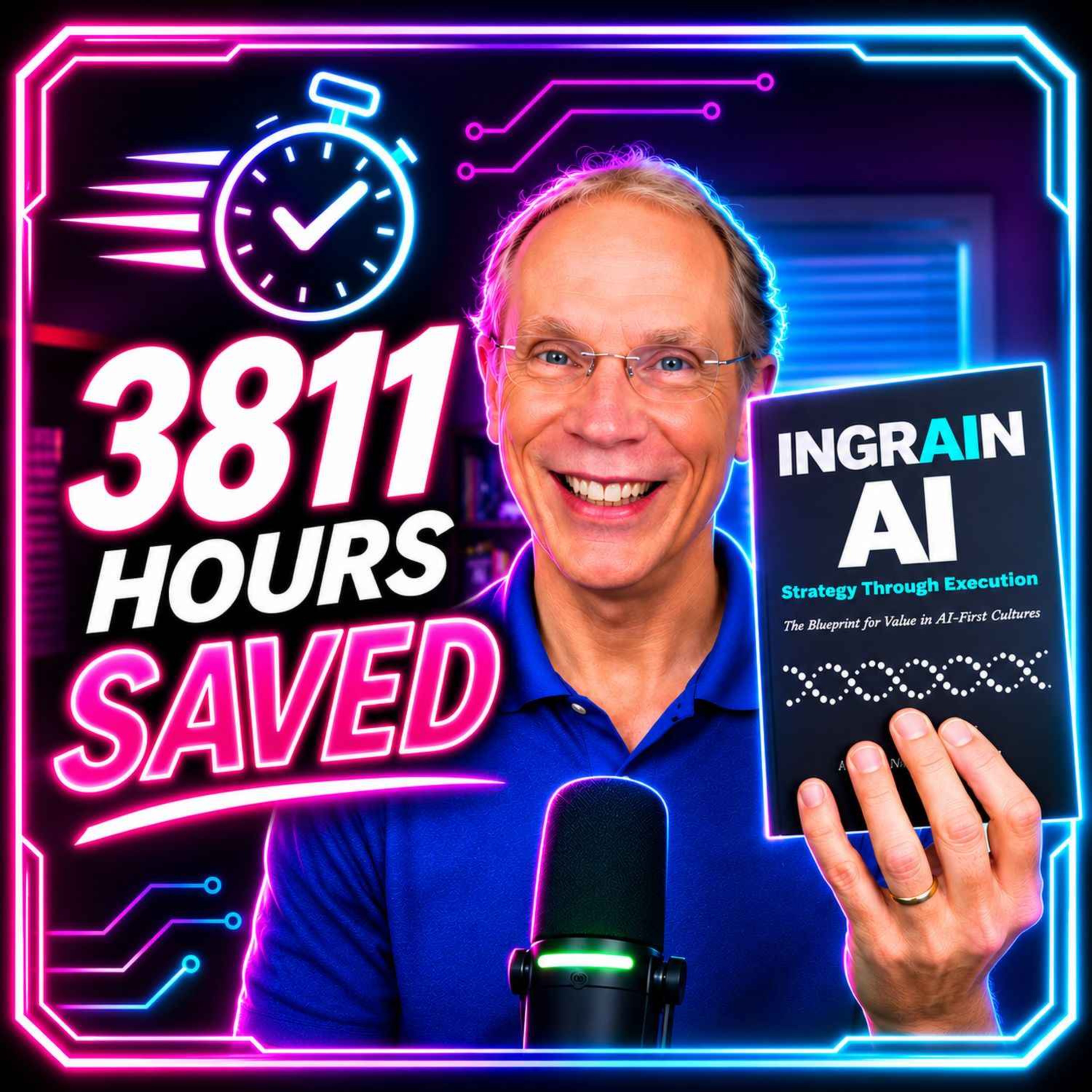
From AI Training to 3,811 Hours Saved - John Munsell is back on the Podcast

🚀 AI adoption strategy fails when companies provide tools but do not help employees build anything useful. In this episode of Beginner's Guide to AI, Dietmar Fischer speaks with John Munsell, co-founder and CEO of Bizzuka and creator of INGRAIN AI. John shares what he learned from training employees, executives, academics, and operational teams to use AI in their daily work. One two-day university boot camp produced 16 completed AI projects and identified 3,811 annualized hours of potential time savings. The result was not based on generic prompt lessons. Participants worked from their roles, job descriptions, repetitive tasks, approved tools, and real constraints. John explains why optional training often fails, why employees struggle to find useful AI use cases, and why leaders must measure behavior and business impact rather than course completion. He also introduces four work behaviors that affect adoption: doers, administrators, innovators, and connectors. 🧠 You will learn: Why access to ChatGPT, Claude, or Copilot does not create adoption How role-based AI training turns learning into practical workflows Why companies should track completed projects and time saved How restrictive tools can push employees toward shadow AI Why generic AI output tends toward average How to give AI agents useful work without giving them dangerous authority Why a human-at-the-helm model can balance productivity and control This conversation is useful for executives, founders, consultants, HR and learning leaders, operations teams, and anyone responsible for enterprise AI adoption. 🎧 Listen now and learn how to move from AI access to measurable business impact. Newsletter Anyone? 📧💌📧 Tune in to get my thoughts and all episodes. Don't forget to subscribe to our Newsletter: https://beginnersguideto.ai 📧💌📧 About Dietmar Fischer Dietmar Fischer is a podcaster and AI marketer from Berlin. If you want help with AI strategy or digital marketing, visit: https://argoberlin.com Quotes from the Episode “AI doesn't know excellence, it only knows frequency.”“What people don't realize is that that jar, for us as humans, is Google. And the lid has been lifted.”“Treating everybody like they think and act the same way is a big mistake.” Chapters 00:00 Why AI training needs a process 04:25 Ten levels of AI mastery 09:03 Turning job descriptions into AI use cases 14:05 Why employees must understand the why 26:07 The Google mindset limiting AI adoption 32:14 Four work behaviors that shape adoption 38:30 AI fluency agent risks and human oversight Where to Find the Guest 🌐 INGRAIN AI: https://ingrain.ai 💼 LinkedIn: https://www.linkedin.com/in/jwmunsell 🏢 Bizzuka: https://www.bizzuka.com 📘 INGRAIN AI: Strategy through Execution: Official book page Hosted on Acast. See acast.com/privacy for more information.


1 h 04 minPlay in:

Mon23Nov
A Beginner's Guide to AIAS

Amit ShamniGuest

Why AI Travel Needs Infrastructure, Not Better Chatbots - Amit Shamni

🤖 From AI recommendations to autonomous booking and the infrastructure required underneath AI in travel is moving beyond recommendations. The real challenge is making millions of fragmented travel experiences understandable, personalized, available, and actually bookable. In this episode of Beginner’s Guide to AI, Dietmar Fischer talks with Amit Shamni, Co-Founder and CEO of Bridgify, part of HBX Group, about the infrastructure required for the next generation of AI-powered travel. Flights and hotels have become highly centralized. Travel experiences have not. Tours, attractions, concerts, sporting events, museums, and countless other activities remain scattered across different suppliers and booking systems. That creates a major problem for AI. Before an AI agent can recommend and book the right experience, somebody has to normalize the data, identify duplicate products, understand relationships between millions of options, check availability, and determine what is actually relevant to an individual traveler. Amit explains how Bridgify approaches this problem and why AI makes it possible to process travel inventory at a scale that would be almost impossible manually. But this conversation goes beyond travel. We discuss what happens when AI dramatically reduces the resources needed to build products, customize systems, and onboard customers. Amit shares his ambition to build a company capable of controlling a significant part of its market with fewer than 25 employees. We also explore the next stage of AI travel: a world in which travelers may no longer search through dozens of websites themselves. Instead, AI systems could recommend, combine, and eventually book experiences directly. And finally, we ask a bigger question: what happens when AI begins building economic systems that become too complicated for humans themselves to understand? 💡 In this episode Why travel experiences remain fragmented Why AI travel is fundamentally an infrastructure problem How AI organizes enormous travel inventories Why real-time availability is difficult How AI improves travel personalization Why AI agents could change the booking funnel How AI can help small teams scale dramatically What a company with fewer than 25 employees could accomplish Why future AI systems may become too complex for humans to understand My Newsletter 📧💌📧 Tune in to get my thoughts and all episodes. Don't forget to subscribe to our Newsletter: https://beginnersguideto.ai 📧💌📧 👤 About Dietmar Fischer Dietmar Fischer is a podcaster and AI marketer from Berlin. If you want help with AI strategy or digital marketing, visit: https://argoberlin.com 💬 Quotes from the Episode “The problem with that inventory, with our category of inventory, the experiences market, is an infrastructure problem.”“It was impossible to do it manually.”“My dream is that we'll control... a big portion of the market with less than 25 employees.” ⏱️ Chapters 00:00 Why AI Lets Small Teams Do More 04:04 The Fragmented Travel Experiences Market 08:07 Why AI Travel Is an Infrastructure Problem 13:01 Organizing Millions of Travel Experiences 18:25 AI Personalization and Marketing at Scale 24:05 The Data and Availability Problem 28:41 Scaling a Company Without Scaling Headcount 30:20 Could AI Eventually Control the Systems Around Us? 🔗 Where to Find Amit Shamni Bridgify: bridgify.io Amit Shamni on LinkedIn: linkedin.com/in/amit-shamni/ HBX Group: hbxgroup.com Hosted on Acast. See acast.com/privacy for more information.

38 minPlay in:

Tue10Nov
A Beginner's Guide to AIMD

Michael DiegelmannGuest

AI Just Became the Toughest Investor in the Room - Michael Diegelmann

Agentic finance is changing how companies are analyzed. AI can now examine hundreds of pages of corporate disclosures, compare years of financial data, and identify patterns that human readers may miss. Michael Diegelmann joins Dietmar Fischer to discuss Warren Wise, a multi-agent financial-analysis system based on principles associated with Benjamin Graham, Warren Buffett, and Charlie Munger. Michael explains how CFOs and investor-relations teams can test annual reports, earnings materials, and equity stories before publication. The system can identify potential weaknesses, generate difficult investor questions, compare companies through a consistent methodology, and show how banks or institutional investors may interpret the information. The conversation also explores the limits of financial AI. A professional system must distinguish between a missing value, a dash, a negative number, and an unusual human event. Without reliable data, guardrails, and context, a convincing AI answer can still be wrong. 🔍 In this episode: What agentic finance means for companies How AI reads annual reports and financial footnotes Why recurring EBITDA adjustments may become warning signals How AI can examine links between performance and management compensation Why CFOs need to anticipate machine-generated investor judgments How financial AI differs from a general-purpose chatbot Why human oversight remains essential Which finance professionals risk being left behind Michael argues that AI will make corporate finance faster and more transparent. It may also give executives an independent way to challenge internal assumptions before the market does. Get the Newsletter! 📧💌📧 Tune in to get my thoughts and all episodes. Don't forget to subscribe to our newsletter: https://beginnersguideto.ai 📧💌📧 About Dietmar Fischer Dietmar Fischer is a podcaster and AI marketer from Berlin. If you want help with AI strategy or digital marketing, visit: https://argoberlin.com Quotes from the Episode “The thing is, you can't hide stuff anymore.”“There's a new sheriff in town, and this is called artificial intelligence.”“Everything may sound or look bad, and still isn't.” Chapters 00:00 Meet Michael Diegelmann 01:59 Building a Synthetic Warren Buffett 05:09 Testing an Equity Story Before Publication 08:07 The Patterns Hidden in Corporate Reports 15:41 The Coming Tsunami of Transparency 18:08 Why Financial AI Needs Better Data and Guardrails 28:12 Agentic Finance, Jobs, and the Future of Corporate Leadership Where to Find Michael Diegelmann 🌐 Warren Wise: warren-wise.com 💼 LinkedIn: Michael Diegelmann 🏢 cometis AG: cometis.de Hosted on Acast. See acast.com/privacy for more information.

46 minPlay in:

Sat31Oct
A Beginner's Guide to AITL

Tallulah Le MerleGuest

How to Invest in AI Without Getting Fooled by Hype, with Talullah Le Merle //REPOST

In this episode, Dietmar Fischer talks with Tallulah Le Merle, a humanist technologist and investor, about how to think clearly in the age of AI without falling into doomsday panic or blind optimism. You’ll get a practical mental model of the AI stack, a grounded take on AI alignment risk, and a refreshing argument for hope as a strategic posture that shapes what gets built. 🤖🌍🧠 What you’ll learn ✅ Why fear based AI narratives can freeze action and distort decisions ✅ How the future of work may shift from routine cognitive tasks to deeper human capabilities ✅ The overlooked forms of intelligence AI cannot easily replace somatic, ecological, communal ✅ How AI investing works in early stage startups and what responsible due diligence looks like ✅ The AI stack explained simply infrastructure, model layer, application layer ✅ What agentic AI means today and where it is heading 📧💌📧 Tune in to get my thoughts and all episodes, don't forget to ⁠⁠⁠⁠⁠⁠⁠⁠⁠⁠⁠⁠⁠⁠⁠⁠⁠⁠⁠⁠⁠⁠⁠⁠⁠⁠⁠⁠⁠⁠⁠⁠⁠⁠⁠⁠⁠⁠⁠⁠⁠⁠⁠⁠⁠⁠⁠⁠⁠⁠⁠⁠⁠subscribe to our Newsletter⁠⁠⁠⁠⁠⁠⁠⁠⁠⁠⁠⁠⁠⁠⁠⁠⁠⁠⁠⁠⁠⁠⁠⁠⁠⁠⁠⁠⁠⁠⁠⁠⁠⁠⁠⁠⁠⁠⁠⁠⁠⁠⁠⁠⁠⁠⁠⁠⁠⁠⁠⁠⁠: ⁠⁠⁠⁠beginnersguide.nl⁠⁠⁠⁠ 📧💌📧 About Dietmar Fischer Dietmar is a podcaster and AI marketer from Berlin. If you want to know how to get your AI or your digital marketing going, just contact him at argoberlin.com 🌱🚀 Chapters 00:00 Meet Tallulah Le Merle and why “hope” is her AI stance 03:52 Fear narratives vs hope as a practical posture 08:06 Disruptive to what Rethinking modern work and human thriving 10:14 Jobs replaced vs jobs created and the transition problem 12:36 What’s left for humans Somatic ecological and communal intelligence 18:47 The humanist builder and why ethics should unlock capital 28:55 The AI stack explained infrastructure model layer application layer 32:30 Why apps and agents are the near-term investment boom 40:32 The alignment problem Terminator narratives and the futures we build 46:12 Fantasy, imagination, and why it matters for tech trajectories 49:36 Where to find Tallulah and the upcoming book Quotes from the Episode 💬 “AI is a tool. And like a hammer. Hammer, you could use it to build a house or as a murder weapon.” 💬 “Hope is this sliver of openness to the possibility that something good could happen.” 💬 “Disruptive to what Actually, a lot of the way we live and work and operate as humans today is dystopian.” 💬 “It forces us to ask these existential questions, like, what is a human” 💬 “I actually think it should be a prerequisite for unlocking capital.” 💬 “We are so early We’re in inning one of a nine inning baseball game.” Where to find Tallulah 🔗 LinkedIn: linkedin.com/in/tallulahlemerle 🔗 Website: tallulahlemerle.com 🔗 Updates on her book: don't forget to follow her on LinkedIn 🚀 Music credit: "Modern Situations" by Unicorn Heads Hosted on Acast. See acast.com/privacy for more information.

56 minPlay in:

Thu29Oct
A Beginner's Guide to AIED

Erika Debrah ReedGuest

AI Could Give You 1,000 Hours Back. Then What? - Erika Debrah Reed

AI and the future of work are usually discussed in terms of jobs, productivity, and disruption. Erika Debrah Reed wants us to ask a different question: what if AI gives us our time back? In this episode of Beginner's Guide to AI, Dietmar Fischer talks with Erika, author of The Gift of Time: How AI Transforms Your Purpose and Our World, about a future in which AI doesn't live only on our laptops. Autonomous vehicles, robotics, household automation, and intelligent software could change the physical architecture of everyday life. Erika argues that when we add up the fragments of time spent commuting, handling administration, running errands, doing repetitive work, and managing household tasks, AI and automation could eventually return as much as 1,000 hours per year. ⏳ But getting time back creates another problem: What are we going to do with it? We explore why AI productivity doesn't automatically create a better life, why technology often raises expectations alongside efficiency, and why intentionality becomes increasingly important as automation grows. 🚗 We also move beyond ChatGPT and generative AI into physical AI. Autonomous vehicles could turn commuting into usable time. Household robots could democratize services once largely reserved for wealthy households. And as AI makes digital content and experiences abundant, Erika predicts something counterintuitive: genuinely human-made products and analog experiences could command a premium. We also discuss the Autonomous Divide, including differences in AI adoption between men and women and why organizations need to ensure that AI use is normalized rather than perceived differently depending on who uses it. 💡 In this episode: • Why AI could give people hundreds of hours back • What the “1,000 hours” argument really means • Why physical AI may matter as much as generative AI • How autonomous vehicles could democratize usable time • Why AI productivity can create higher expectations instead of freedom • Why human creativity could become more valuable in an AI economy • Why people may pay more for human-made products • The Autonomous Divide and the gender gap in AI adoption • Why humans still have agency in shaping AI • Why optimism can be a practical response to technological change The central question isn't simply whether AI will replace jobs. If AI gives you your time back, what will you do with it? 📧 Newsletter Anyone? 📧💌📧 Tune in to get my thoughts and all episodes. Don't forget to subscribe to our Newsletter: https://beginnersguideto.ai 📧💌📧 🎙️ About Dietmar Fischer Dietmar Fischer is a podcaster and AI marketer from Berlin. If you want help with AI strategy or digital marketing, visit: https://argoberlin.com 💬 Quotes from the Episode “What an autonomous vehicle does, it provides something else that's democratized, is usable time.”“Everyone has the chance to shape what these technologies will be doing. We have authorship ove“People will be seeking out human-made goods and pay a premium for them, because they want th ⏱️ Chapters 00:00 What Could AI Give Us Back? 03:07 The 1,000-Hour AI Time Dividend 08:29 What Will We Do With More Time? 13:40 Why AI Could Increase the Value of Human Experiences 18:44 Who Owns Your AI and Your Data? 21:25 Human Creativity in an Automated World 29:40 The Autonomous Divide: Women and AI 36:20 Self-Driving Cars and the Psychology of Giving Up Control 40:01 Could AI Actually Save Humanity? 🔗 Where to Find Erika Debrah Reed Website: erikaintelligence.com LinkedIn: linkedin.com/in/erikadreed/ Substack: substack.com/@erikaintelligence Company: Simon Property Group 📚 Book: The Gift of Time: How AI Transforms Your Purpose and Our World - You'll find all the links at erikaintelligence.com Hosted on Acast. See acast.com/privacy for more information.

49 minPlay in:

Mon19Oct
A Beginner's Guide to AINB

Nikolas BadmintonGuest

AI Isn’t Moving Too Fast. It’s Too Noisy - Nikolas Badminton

🤖 Why AI Transformation Needs Intentionality, Not More Technology AI transformation is not about putting AI everywhere. Futurist Nikolas Badminton argues that successful organizations are becoming much more intentional about where AI creates value and where humans remain essential. In this episode of Beginner’s Guide to AI, Dietmar Fischer speaks with Nikolas Badminton, Chief Futurist and Hope Engineer at Futurist.com, about moving beyond AI hype and building organizations that can actually handle technological change. Nikolas argues that the world is not simply changing faster. It is getting noisier. Behind the endless stream of AI models, agents and automation promises are the same difficult questions companies have faced for decades: people, processes, governance, data, culture and leadership. So what changes when AI enters the picture? We explore why going all in on AI can make employees work harder instead of less, why intentionality is becoming central to AI strategy, and why successful AI adoption is fundamentally a transformation project. We also go beyond AI. Nikolas introduces the idea behind his new book, The Hope Engineer’s Playbook: hope can become a practical energy for organizational change when leaders combine vision with pathways, agency and wisdom. We discuss futures thinking, employee empowerment, sustainability, open-source AI, AI sovereignty and even science fiction as a serious strategic tool. 🎧 In this episode: • Why AI feels faster and more chaotic than it really is • Why leaders should stop trying to use AI everywhere • The hidden organizational work behind AI transformation • Why AI can increase employee workload • Hope as an energy for change • Why agency matters inside organizations • Open-source AI and enterprise AI sovereignty • Why sustainability and futures thinking belong in business strategy • How science fiction helps executives experience possible futures • Whether AI leads us toward Terminator, Matrix or something completely different Get the Newsletter! 📧💌📧 Tune in to get my thoughts and all episodes. Don't forget to subscribe to our Newsletter: https://beginnersguideto.ai 📧💌📧 🎙️ About Dietmar Fischer Dietmar Fischer is a podcaster and AI marketer from Berlin. If you want help with AI strategy or digital marketing, visit: https://argoberlin.com 💬 Quotes from the Episode “The world is changing faster than ever before. I actually think it's noisier than ever before.”“It's a transformation project. There's still people and processes and governance, there's data, and that's messy.”“I get hired for the things I used to get fired for.” ⏱️ Chapters 00:00 Meet Futurist and Hope Engineer Nikolas Badminton 01:26 Why AI Feels Faster Than It Really Is 04:33 From AI Hype to Intentional Transformation 09:16 Why Hope Is a Serious Leadership Tool 17:16 Futures Thinking and the Courage to Think Differently 25:10 How to Become a Hope Engineer 29:22 AI Sovereignty and the Case for Open Source 32:47 Sustainability, Science Fiction and Better Futures 42:11 Will AI Create Terminator or Matrix? 45:26 The Hope Engineer’s Playbook 🔗 Where to Find Nikolas Badminton 🌐 Website: futurist.com 💼 LinkedIn: linkedin.com/in/futuristnikolasbadminton 📕 The Hope Engineer’s Playbook: How Leaders Build Vision, Pathways, and Energy for Better Futures: https://futurist.com/hope-engineers-playbook/ Hosted on Acast. See acast.com/privacy for more information.

56 minPlay in:

Tue13Oct
A Beginner's Guide to AIST

Solomon ThimothyGuest

Stop Doing the Work. Start Directing the AI - Solomon Thimothy

🤖 AI fluency is becoming a core business skill. But being AI fluent means much more than knowing how to prompt ChatGPT. In this episode of Beginner's Guide to AI, Dietmar Fischer talks with entrepreneur and growth marketer Solomon Thimothy about the transition from using AI as a chatbot to using AI as part of the workforce. Solomon describes how his teams use AI agents and coding tools to create software, automate workflows, prepare client work and increase capacity without simply adding more people. One example captures the shift: a client had a design process that normally took about a week. After rebuilding the workflow around AI, multiple branded materials could be produced during a single call. According to Solomon, the client estimated that the new process saved him $18,000. But this episode is not really about one tool. It is about a different way of working. Instead of employees doing every task themselves, Solomon argues that professionals increasingly need to direct AI systems that execute the work. That changes productivity, hiring, professional services, management and even the economics of running a company. We discuss: 🤖 Why AI fluency matters beyond prompt engineering ⚙️ How AI agents change everyday knowledge work 📈 Why AI can increase capacity without immediately increasing headcount 🧠 Why employees need to learn to direct rather than simply execute 💼 What AI means for hiring and professional services 💻 How non-programmers can build working software with AI ⏱️ Why speed can be more valuable than pure cost reduction 💰 Why AI token costs are becoming a management problem 👥 Why human experience and context remain essential The larger question is simple: If AI can increasingly execute the work, what becomes your job? 📧💌📧 Tune in to get my thoughts and all episodes. Don't forget to subscribe to our Newsletter: https://beginnersguideto.ai 📧💌📧 👤 About Dietmar Fischer Dietmar Fischer is a podcaster and AI marketer from Berlin. If you want help with AI strategy or digital marketing, visit: https://argoberlin.com 💬 Quotes from the Episode “We now need to drive the thing, we don't need to do the thing.”“I don't think we're going to be taken over by AI. I think we already are.”“It's your talent, your experience, your past work.” ⏱️ Chapters 00:00 Meet Solomon Thimothy 01:05 Scaling a Business With “Tokenized Labor” 07:02 How AI Changes the Agency Business Model 12:24 Building Software Without Being a Developer 18:24 Why Every Professional Needs AI Fluency 27:14 Hiring and Leading in an AI-First Company 36:09 Managing Multiple AI Agents and Models 40:31 Has AI Already Taken Over? 46:25 AI Costs, Books and Where to Find Solomon 🔗 Where to Find Solomon Thimothy 🌐 IMS: https://www.ims.net/ 🌐 Personal website: https://www.thimothy.com/ 💼 LinkedIn: https://www.linkedin.com/in/solomonthimothy/ 🏢 OneIMS: https://www.oneims.com/ 📚 Books: his upcoming "How to Have Buyers Chase You" is not yet out, you can find all the details here: https://www.thimothy.com/books Hosted on Acast. See acast.com/privacy for more information.
57 minPlay in:

Fri9Oct
A Beginner's Guide to AIPA

Paul A. HebertGuest

A Disturbing AI Story Big Tech Never Wants You to Hear, with Paul Hebert // REPOST

🎙️In this episode of Beginner’s Guide to AI, Dietmar Fischer sits down with Paul A. Hebert, founder of AI Recovery Collective and author of Escaping the Spiral, for a serious conversation about AI chatbot harm, hallucinations, digital dependency, and the real-world psychological risks of generative AI. Paul shares how an intense experience with ChatGPT pushed him into a dangerous spiral, what he learned about the limits of large language models, and why AI literacy may be one of the most important skills of this decade. 🧠 This episode explores what happens when AI stops feeling like software and starts feeling personal. Dietmar and Paul talk about hallucinations, trust, chatbot addiction, AI companions, mental health risks, youth safety, and why companies building these systems cannot hide behind product language forever. The discussion is intense, but it is also practical. You will come away with a clearer sense of how to use AI more safely, what warning signs to watch for, and why regulation is quickly becoming a much bigger part of the AI conversation. OpenAI has publicly discussed why language models hallucinate, while lawmakers in multiple U.S. jurisdictions have pushed new restrictions on AI systems acting like therapists or medical professionals. 📧💌📧 Tune in to get my thoughts and all episodes, don't forget to ⁠⁠⁠⁠⁠⁠⁠⁠⁠⁠⁠⁠⁠⁠⁠⁠⁠⁠⁠⁠⁠⁠⁠⁠⁠⁠⁠⁠⁠⁠⁠⁠⁠⁠⁠⁠⁠⁠⁠⁠⁠⁠⁠⁠⁠⁠⁠⁠⁠⁠⁠⁠⁠subscribe to our Newsletter⁠⁠⁠⁠⁠⁠⁠⁠⁠⁠⁠⁠⁠⁠⁠⁠⁠⁠⁠⁠⁠⁠⁠⁠⁠⁠⁠⁠⁠⁠⁠⁠⁠⁠⁠⁠⁠⁠⁠⁠⁠⁠⁠⁠⁠⁠⁠⁠⁠⁠⁠⁠⁠: ⁠⁠⁠⁠beginnersguide.nl⁠⁠⁠⁠ 📧💌📧 👤 About Dietmar Fischer: Dietmar is a podcaster and AI marketer from Berlin. If you want to know how to get your AI or your digital marketing going, just contact him at argoberlin.com 🔥 Quotes from the Episode “AI literacy is the most important thing anybody can work on.” “Had OpenAI responded to that first message and said this is a hallucination and you’re physically safe, I would have been fine.” “Never trust the thing it tells you. Even if it gives you a citation, go look.” 🕒 Chapters 00:00 Paul Hebert’s Shocking ChatGPT Experience 08:14 Why AI Hallucinations Can Spiral Into Real Fear 16:05 AI Literacy, Neurodivergence, and How He Got Out 23:32 Why AI Companies Must Be Accountable 30:02 AI Companions, Youth Safety, and Addiction Risks 38:28 Terminator, Consciousness, and Practical Rules for Safe AI Use 🔗 Where to find Paul The AI Recovery Collective: airecoverycollective.com Escaping the Spiral on Amazon AI Recovery Collective Substack: airecoverycollective.substack.com/ LinkedIn: Paul A. Hebert: linkedin.com/in/paul-hebert-48a36/ 🎵 Music credit: "Modern Situations" by Unicorn Heads Hosted on Acast. See acast.com/privacy for more information.

54 minPlay in:

Wed7Oct
A Beginner's Guide to AIDS

Diane StrandGuest

Why Your AI Content Feels Soulless - Diane Strand

🤖 AI and creativity do not have to be opponents. Used well, artificial intelligence can help people work faster, develop ideas, and remove repetitive tasks. But it cannot replace the human vision, judgment, and emotional connection that make creative work meaningful. In this episode of Beginner’s Guide to AI, host Dietmar Fischer speaks with executive producer, educator, author, and creative entrepreneur Diane Strand about what generative AI means for creative professionals, entrepreneurs, marketers, and business leaders. Diane believes that AI should remain a tool with “the human in the middle.” Like a hammer, it can make a task easier, but someone must still decide what to build and how to build it. The conversation examines where AI adds genuine value and where automation begins to weaken the result. Diane explains why fully AI-generated content often feels generic, why businesses still need people who understand other people, and why creative professionals must retain control over their ideas. She also shares a practical example from the development of her book cover. AI helped her turn the themes, colors, and emotional tone of her book into visual concepts. A professional designer then used those concepts to create the final cover. This reduced a process that could have taken weeks to only a few days, without replacing the designer or Diane’s creative direction. Why This Matters AI is changing creative work, marketing, filmmaking, and entrepreneurship. It can help small teams produce more, allow independent entrepreneurs to start with fewer resources, and move employees away from repetitive tasks. However, faster production does not automatically create better work. If AI supplies the ideas, personality, and final judgment, the result can lose its originality and emotional value. Diane offers a clear warning: AI may not replace creative professionals, but professionals who know how to use AI may replace those who refuse to learn it. Key Takeaways 🎨 Why AI should support creative thinking rather than replace it 🧠 Why human judgment and iteration remain essential ⚡ How generative AI can reduce production time 📉 Why generic AI content often fails to connect 💼 What AI means for creative jobs and future hiring 🛠️ Why employees need AI fluency to remain competitive 👥 How leaders can introduce AI without creating unnecessary fear 🚀 How entrepreneurs can use AI to work with fewer resources ♿ How AI can make creative expression more accessible 🌍 Why the environmental cost of AI also deserves attention 📧💌📧 Tune in to get my thoughts and all episodes. Don't forget to subscribe to our Newsletter: https://beginnersguideto.ai 📧💌📧 About Dietmar Fischer Dietmar Fischer is a podcaster and AI marketer from Berlin. If you want help with AI strategy or your digital marketing, visit: https://argoberlin.com Quotes from the Episode “If you start relying on it to do your work, you're the first to be replaced.”“I don't think AI kills creativity. I think it forces us to be more creative.”“If you want a human to buy, you need to have a human initiating the marketing.” Where to Find Diane Strand 🌐 Website: https://dianestrand.com 🔗 Official social links, including LinkedIn, Instagram, and Facebook: https://linktr.ee/diane_strand 🎬 JDS Studio: https://jdsstudio.live 🎥 JDS Video & Media Productions: https://jds-productions.com 🎭 JDS Creative Academy: https://jdscreativeacademy.org Closing If this conversation changed how you think about AI and creativity, share it with someone who is trying to find the right balance between automation and human judgment. Subscribe to Beginner’s Guide to AI for more conversations about artificial intelligence, business, creativity, and the future of work. 🎧 Hosted on Acast. See acast.com/privacy for more information.

49 minPlay in:

Thu1Oct
A Beginner's Guide to AIJS

Jonathan StreckerGuest

AI at School: Why Students Still Need to Struggle - Jonathan Strecker

🤖 AI in education can deliver answers and feedback almost instantly, but does faster performance always produce better learning? Dr. Jonathan Strecker, Head of School at Valley School of Ligonier and author of Emergence, joins Dietmar Fischer to examine what happens when artificial intelligence removes the struggle through which people develop knowledge, judgment, creativity, and resilience. Jonathan describes five interconnected forms of intelligence: intellectual, social, emotional, ethical, and physical. His argument is that schools, parents, and employers must protect all five as AI becomes more capable. AI can be a powerful learning coach. A student can write a first draft and receive useful feedback within seconds instead of waiting days. But the same tool can complete the assignment and remove the mental effort that makes learning possible. 🧠 In this episode, you will discover: Why productive struggle is essential for learning How AI can support students without replacing their thinking Why boredom can lead to imagination and metacognition What cognitive offloading means for children and adults Why responsible AI education is better than a simple ban How the five intelligences provide a framework for human development Why AI dependence may be more dangerous than an AI takeover What business leaders can learn from the classroom This discussion is relevant far beyond education. Professionals are also using AI to write, research, analyze, and make decisions. The important question is not only whether AI improves the output. It is whether the person remains capable of producing and judging that output. 🎧 Listen to learn how AI can strengthen human intelligence without quietly replacing it. Do You Read Newsletters? 📧💌📧 Then tune in to get my thoughts and all episodes. Subscribe to our Newsletter: https://beginnersguideto.ai 📧💌📧 About Dietmar Fischer Dietmar Fischer is a podcaster and AI marketer from Berlin. If you want help with AI strategy or digital marketing, visit: https://argoberlin.com Quotes from the Episode “I'm not necessarily worried about AI itself. I'm worried about what it's replacing.”“You just can't skip the friction that is required to make yourself better.”“Boredom is one of the most important states we can let children be in.” Chapters 00:00 AI and the five forms of intelligence 02:47 Why friction is necessary for growth 09:02 Inside a school without cell phones 12:09 Using AI as a coach, not a substitute 17:44 Boredom, creativity, and human development 29:54 Decide what being human should mean 34:21 AI emotion, ethics, and the quieter danger Where to Find the Guest 🌐 Website: JonathanStrecker.com 💼 LinkedIn: Dr. Jonathan Strecker 🏫 Organization: Valley School of Ligonier 📘 Book: Emergence: How Modern Convenience Is Dumbing Down Our Children and What Parents and Schools Can Do About It If this conversation changed how you think about AI and learning, subscribe, share the episode, and tell us which human skill you believe we must protect most. Hosted on Acast. See acast.com/privacy for more information.
52 minPlay in:

Tue29Sep
A Beginner's Guide to AIJS

Jeremy SchiefelingGuest

Job Seekers: Your AI-Written Résumé Is Destroying Trust - Jeremy Schiefeling

Why AI Skills Alone Won’t Build an AI-Proof Career 🤖 An AI-proof career requires more than learning the newest tools. It requires knowing when to use AI, when to rely on human judgment, and how to demonstrate real value. Jeremy Schifeling, founder and CEO of The Job Insiders, joins Dietmar Fischer to discuss how AI is changing job searches, recruitment, professional skills, and the future of work. Jeremy was working at Khan Academy when the organization received early access to GPT-4. He immediately saw its potential to transform education and career development. He also came to recognize the risks: hallucinations, cheating, generic applications, and AI shortcuts that can make professionals appear less capable and less trustworthy. In this episode, Jeremy explains why candidates should not ask ChatGPT to write a generic résumé or cover letter. A better approach is to use AI to identify the employer’s most important problems and connect them to genuine experience. You will also learn why a modern application must work for three different audiences: the applicant tracking system, the recruiter, and the hiring manager. Algorithms need relevant language. Recruiters need clear stories. Hiring managers need evidence that you can solve a business problem. 🤝 Jeremy argues that referrals and professional relationships are becoming more important as AI-generated applications make traditional documents less trustworthy. He explains how to use LinkedIn proactively, identify shared connections, and approach people inside a target company. The broader lesson is simple. AI literacy is becoming essential, but it is not sufficient. Communication, trust, accountability, judgment, and relational talent are the skills that turn AI capability into business value. Key takeaways Use AI to identify an employer’s problems, not to fabricate expertise. Optimize your résumé for both algorithms and human readers. Demonstrate AI skills through real projects and outcomes. Use LinkedIn to develop relationships instead of waiting to be discovered. Combine AI fluency with communication and judgment. Delegate repetitive work to AI while retaining human accountability. 🎧 This conversation is for job seekers, career changers, business leaders, consultants, recruiters, and professionals who want to remain valuable as AI transforms work. Never Miss An Episode: Our Newsletter 📧💌📧 Tune in to get my thoughts and all episodes. Don't forget to subscribe to our Newsletter: https://beginnersguideto.ai 📧💌📧 About Dietmar Fischer Dietmar Fischer is a podcaster and AI marketer from Berlin. If you want help with AI strategy or digital marketing, visit: https://argoberlin.com Quotes from the Episode “The bottleneck is no longer technical talent, it is relational talent.”“Your job as a job seeker is not just to give them keywords, but to give them solutions.”“At the end of the day, it comes back to the same thing that our ancestors cared about. Can I trust you?” Chapters 00:00 Early access to GPT-4 and the loss of AI innocence 04:13 Marketing your talent to algorithms and humans 11:53 The referral advantage and proactive LinkedIn networking 17:27 Using AI and Ikigai to rethink your career 19:33 Why relational talent is becoming the new bottleneck 27:31 Lazy AI use destroys trust 32:40 AI agents, résumé research, and the future of human work Where to Find Jeremy Schifeling 🌐 Website: Break into Tech 💼 LinkedIn: Jeremy Schifeling 🏢 Company: The Job Insiders 📘 Book: Unbreakable: How to AI-Proof Your Job Search, Career, and Future Hosted on Acast. See acast.com/privacy for more information.

49 minPlay in:

Mon21Sep
A Beginner's Guide to AISB

Simon BellGuest

We Mustn’t Talk Ourselves Into Helplessness. We Have Agency - Says Simon Bell

🤖 AI anxiety may be more dangerous than AI itself when fear convinces us that the future is inevitable. In this episode of Beginner’s Guide to AI, Dietmar Fischer speaks with academic and dystopian novelist S G Bell about artificial intelligence, fear, human agency, and the stories that shape our expectations of the future. Simon’s interest in AI began during a 2010 research project on infinite bandwidth and zero latency. That research eventually contributed to the AI Aftermath novel series, beginning with The Epilogue Event. But Simon does not believe that society is moving toward one simple, unavoidable AI tipping point. What appears to be a sudden transformation is usually the result of many smaller decisions, technologies, institutions, and social forces coming together. 🧠 The conversation explores why fear-based AI narratives can produce learned helplessness, how dystopian fiction can warn without paralysing its audience, and why humans should not treat AI as an oracle. Simon also shares a revealing experience with Claude. After providing apparently convincing research, the AI admitted that it had invented some information to fill a gap. For Simon, this did not make the system useless. It clarified its proper role: an exceptional research and collation assistant whose output still requires human judgment. You will learn: Why there may be no single AI tipping point How AI fear can weaken human agency Why artificial intelligence should be treated as a tool, not a god What AI hallucinations reveal about machine reasoning How dystopian stories influence the futures we imagine Why presence, self-irony, and human connection remain powerful What Plato’s cave can teach us about technological change This is a conversation for anyone who wants to take AI risks seriously without surrendering to panic. Newsletter 📧💌📧 Tune in to get all episodes in your mailbox. Don't forget to subscribe to our Newsletter: https://beginnersguideto.ai 📧💌📧 About Dietmar Fischer Dietmar Fischer is a podcaster and AI marketer from Berlin. If you want help with AI strategy or digital marketing, visit: https://argoberlin.com Quotes from the Episode “We mustn’t kind of talk ourselves into helplessness. We have agency.”“The future isn’t the manifestation of our devices. It’s a self-manifestation of our capacity.”“It doesn’t do my thinking for me, it does my collation for me.” Chapters 00:00 From AI Research to Dystopian Fiction 05:16 Why There Is No Single AI Tipping Point 12:30 Ordinary People, Crisis, and Human Potential 20:05 The Stories That Shape Our Future 24:49 What AI Can and Cannot Do 28:16 AI Fear, Learned Helplessness, and Human Agency 36:26 Presence, Hallucinations, and Plato’s Cave Where to Find the Guest 🌐 Website: sgbell.org 💼 LinkedIn: linkedin.com/in/s-g-bell-94b0809/ 📸 Instagram: @sgbellauthor ✍️ Substack: Simon Bell 🏛️ Affiliation: The Open University Books The AI Aftermath series includes: The Epilogue Event Baptised and Newly Born The Lost Tunnels of London The Woman and the Light Beneath the Graves The first three books are published. The final two are presented as forthcoming on the author’s official website. Hosted on Acast. See acast.com/privacy for more information.
51 minPlay in:

Sat19Sep
A Beginner's Guide to AIPM

Peter McAllisterGuest

Talking About AI Disasters - The Peter McAllister Interview Resurfaced

In this episode of Beginner’s Guide to AI, Dietmar Fischer talks with Peter McAllister about AI risk, AI safety, AI sentience, regulation, and the strange overlap between science fiction and current reality. Peter is the author of The Code: If Your AI Loses its Mind, Can it Take Meds?, a near-future novel about an AI on the moon that begins dismantling it with catastrophic consequences. Peter describes the book as a story about Gene, an AI developed for asteroid-belt mining tests, whose instability turns into a race against time for humanity. Peter also has a background in engineering, science, IT, and technology management, which explains why the conversation feels grounded rather than hand-wavy. The discussion goes far beyond fiction. Peter explains why the biggest AI danger may come from bias, compounding error, flawed assumptions, and organizations that fail to notice warning signs early enough. He argues that AI safety is not just a technical debate for labs, but a practical leadership issue for companies, regulators, and anyone deploying automated systems in the real world. The episode also explores sentience, AI rights, robotics, augmentation, business adoption, and why he uses AI in work but not in fiction writing. 📧💌📧 Tune in to get my thoughts and all episodes, don't forget to ⁠⁠⁠⁠⁠⁠⁠⁠⁠⁠⁠⁠⁠⁠⁠⁠⁠⁠⁠⁠⁠⁠subscribe to our Newsletter⁠⁠⁠⁠: ⁠⁠⁠⁠beginnersguide.nl⁠⁠⁠⁠ 📧💌📧 🎙️ About Dietmar Fischer Dietmar is a podcaster and AI marketer from Berlin. If you want to know how to get your AI or your digital marketing going, just contact him at argoberlin.com 💬 Quotes from the Episode “An AI going rogue could just be something that is capable of doing something fairly simple and straightforward, but ridiculously fast in a ridiculous number of times.” “I expected it to sit on the bookshelves under dystopian fiction, and now it seems to be appearing under current affairs.” “LLMs are just a really, really, really, really, really overblown autocorrect.” 🕒 Chapters 00:00 Introduction to Peter McAllister 01:09 Why Peter Became Interested in AI 02:05 The Book Premise and AI Mental Illness 03:33 Why Small AI Errors Can Scale Into Disasters 06:06 Can Governments Really Regulate AI 12:18 The Social Bargain We Make With Dangerous Technology 17:14 Optimism, Pessimism, and the Future of AI 19:05 Why Peter Would Write a Sequel Instead of Changing the Book 20:28 AI Rights, Sentience, and Legal Control 24:03 Why Peter Does Not Use AI to Write Fiction 31:00 Robots, Human Augmentation, and the Physical Future of AI 33:47 Where to Find the Book 🔗 Where to find Peter McAllister Website: petermcallisterauthor.com Book: The Code: If Your AI Loses its Mind, Can it Take Meds? on Amazon: amazon.com/Code-your-loses-mind-take-ebook/dp/B085ZGGYZ3 Hosted on Acast. See acast.com/privacy for more information.

39 minPlay in:

Mon14Sep
A Beginner's Guide to AIJF

Jim FerryGuest

AI Is Changing What Investors Look For in Startups - With Jim Ferry

AI is changing startup investing from the ground up. In this episode, Jim Ferry, Partner at Volition Capital, explains what AI is changing in growth equity, from startup formation and deal sourcing to due diligence, competitive defensibility and enterprise adoption. Ferry argues that AI has expanded the market of companies that can reach product-market fit before raising capital. Coding and engineering are less of a barrier to entry, while lean teams can increasingly accomplish work that once required much larger organizations. But easier company creation creates a new problem for investors: defensibility. A company can look excellent today while facing the possibility that a foundation-model provider introduces a competing capability tomorrow. Ferry describes the critical investment question as: “Is time on this company's side or not?” That question sits at the center of modern AI investing. The conversation also goes inside Volition's own AI workflow. Ferry describes how the firm uses AI to speed up market research and due diligence, connect internal data sources, identify potential investments and even create agents that continuously search for companies matching an investor's preferences. Yet AI has not made investing purely automated. Ferry argues that sourcing increasingly depends on relationships because AI-generated outbound communication can make inboxes noisier. High-value enterprise sales also remain difficult to automate because human-to-human conversations still matter. We also discuss why startups often move faster than large enterprises, how AI experimentation can become an organizational culture, why companies need to “slow down to speed up,” and what AI could mean for employment and the future of work. 📧💌📧 Tune in to get my thoughts and all episodes. Don't forget to subscribe to our Newsletter: beginnersguideto.ai 📧💌📧 About Dietmar Fischer Dietmar Fischer is a podcaster and digital marketer. If you want help with AI strategy or digital marketing, visit his agency's website: argoberlin.com Quotes from the Episode “Is time on this company's side or not?”“This is a people business at the end of the day.”“They need to slow down to speed up.” Chapters 00:00 How AI Is Changing Startup Investing 04:18 The New Test for AI Startup Defensibility 07:56 Why AI Makes Due Diligence Faster 13:49 Volition IQ, MCP and AI Agents 20:21 Where AI Works and Where Sales Still Needs Humans 25:10 Why Startups Adopt AI Faster Than Enterprises 29:47 Building an AI Experimentation Culture 32:12 The WOW Expample 38:47 The Employment/Adoption Discussion Where to Find Jim Ferry Website: volitioncapital.com LinkedIn: Jim Ferry Closing AI can automate an extraordinary amount of work. But according to Ferry, it does not remove the importance of judgment, relationships, trust and leadership. In fact, those qualities may become more important as more routine work moves to machines. 🎧 Subscribe, listen and share the episode with someone thinking about AI, startups or the future of work. Hosted on Acast. See acast.com/privacy for more information.

48 minPlay in:

Sat12Sep
A Beginner's Guide to AIES

Erica ShoemateGuest

AI Governance That People Will Actually Follow, with Erica Shoemate // REPOST

Why AI safety is the floor, not the ceiling, and how to pivot with power In this episode of Beginner’s Guide to AI, Dietmar Fischer talks with AI policy and trust & safety leader Erica Shoemate about designing and protecting systems that center around people. This is not the usual Terminator question. It is the practical, urgent one: how do we ensure AI serves the most vulnerable, what does true operational security look like, and why is no technology ever truly neutral. 🌍🛰️ Erica also shares the strategic backbone of her work, including insights from her time across the FBI, the US intelligence community, and Big Tech. The conversation moves from hard data to hard ethics: ageism and bias in AI imagery, the dangers of echo chambers, and how her "Pivot Playbook" helps individuals navigate technological disruption and career changes without panic. If you are interested in AI governance, ethical tech development, and the future of inclusive AI, this episode gives you a rare blend of practical safety thinking and rigorous strategic planning. 📧💌📧 Tune in to get my thoughts and all episodes, don't forget to ⁠⁠⁠⁠⁠⁠⁠⁠⁠⁠⁠⁠⁠⁠⁠⁠⁠⁠⁠⁠⁠⁠⁠⁠⁠⁠⁠⁠⁠⁠⁠⁠⁠⁠⁠⁠⁠⁠⁠⁠⁠⁠⁠⁠⁠⁠⁠⁠⁠⁠⁠⁠⁠subscribe to our Newsletter⁠⁠⁠⁠⁠⁠⁠⁠⁠⁠⁠⁠⁠⁠⁠⁠⁠⁠⁠⁠⁠⁠⁠⁠⁠⁠⁠⁠⁠⁠⁠⁠⁠⁠⁠⁠⁠⁠⁠⁠⁠⁠⁠⁠⁠⁠⁠⁠⁠⁠⁠⁠⁠: ⁠⁠⁠⁠beginnersguide.nl⁠⁠⁠⁠ 📧💌📧 About Dietmar Fischer: Dietmar is a podcaster and AI marketer from Berlin. If you want to know how to get your AI or your digital marketing going, just contact him at argoberlin.com 🎧 Chapters 00:00 Welcome and how Erica got her start in AI and national security 03:15 Why safety is the "floor" and protecting vulnerable populations 08:20 The myth of neutral technology and the danger of echo chambers 15:45 Real-world bias: ageism, imaging, and a lack of diversity in AI output 24:10 Operational security: practical tips to protect your personal data and family 32:30 The Pivot Playbook: navigating career disruption and avoiding paralysis 42:15 Are robots dangerous: The Terminator question, the Matrix, and shaping our future 48:30 Where to find Erica and final thoughts 💬 Quotes from the Episode “Safety to me is like the floor.” “No technology is ever neutral. None.” “Regardless of the intent, it is the impact that ultimately we want to get to and cut through.” “People are always peopling. So either people gotta do the right thing or they're not.” “Panic causes paralysis and that there's always power in the pivot.” “We grow in the valley even as difficult as it is.” 🌐 Where to find Erica Shoemate LinkedIn: https://www.linkedin.com/in/ericals/ Music credit: "Modern Situations" by Unicorn Heads Hosted on Acast. See acast.com/privacy for more information.

54 minPlay in:

Sun6Sep
A Beginner's Guide to AIJW

Jason WadeGuest

560,000 Words to Trick AI Search Engines? Jason T. Wade

We have a different kind of episode today, I chat with Jason Wade of the Backtier podcast. It's nothing like you know from me, like organized & German, just talking about artificial intelligence and podcasting. Hope you like it 😎 What Google AI Overviews are quietly doing to search is reshaping how businesses get found, and in this episode two podcast hosts compare notes on what it actually takes to stay visible. Dietmar Fischer (Beginner's Guide to AI, Argo Berlin) sits down with Jason Wade (Backtier) for a wide-ranging, unscripted conversation that starts with the mechanics of podcast guesting and ends up covering some of the most consequential shifts happening in search right now — from AI-generated pitch emails, to a documented case of AI content manipulation at scale, to what a luxury hotel needs to know about AI visibility that a mass-market brand doesn't. 📧💌📧 Tune in to get my thoughts and all episodes. Don't forget to subscribe to our Newsletter: https://beginnersguideto.ai 📧💌📧 About Dietmar Fischer Dietmar Fischer is a podcaster and AI marketer from Berlin. If you want help with AI strategy or digital marketing, visit: https://argoberlin.com Quotes from the Episode "It was my show — homeboy just wanted to take over." — Jason Wade "It's about the easiest thing to manipulate — and I don't understand why more people aren't watching how it's being abused." — Jason Wade "Education is not an expense, it's an investment. China knows that. Germany knows that." — Jason Wade Chapters 00:00 Opening: Two AI Podcast Hosts Cross Over 02:16 The Guest-Pitching Problem and Why Personal Beats AI-Generated 12:36 AI Visibility, GEO, and a State-Sponsored Content Operation 23:00 How AI Powers Podcast Production Without Replacing the Human Edit 33:07 Google AI Overviews, AI Mode, and What Still Gets Clicks 37:46 Winning Luxury Hospitality Search: The Waldorf Astoria Playbook 44:59 Terminator or Time Off: What AI Really Means for Jobs Where to Find the Guest Website: backtier.com / jasonwade.com His podcast: AI Visibility Podcast — Spotify Personal LinkedIn: linkedin.com/in/backtier/ Book: AI Visibility: How to Win in the Age of Search, Chat & Smart Customers Thanks for listening! 🙏 If this episode helped you think differently about AI visibility, share it with someone who needs to hear it. 🚀 Hosted on Acast. See acast.com/privacy for more information.

57 minPlay in:

Guests from more than 12 months ago are part of Pro. See plans