Instant Classics cover
Podcast

Instant Classics

von Vespucci

Instant Classics hatte in den letzten 12 Monaten 10 bestätigte Gäste in 10 Folgen. Zuletzt: Edith Hall, 12. Nov. 2026.

Website der SendungApple PodcastsSo werden Gäste bestätigt

Join world-renowned classicist Mary Beard and Guardian chief culture writer Charlotte Higgins for Instant Classics — the weekly podcast that proves ancient history is still relevant. Ancient stories, modern twists… and no degree in Classics required. Discover The Odyssey and join the book club at: h…

Gäste der Sendung

Do12Nov
Instant Classics

Edith HallGast

Medea 3: The Immortal (with Edith Hall)

Mary and Charlotte explore Medea’s afterlife, from Ancient Athens into the 21st Century - the way her story continues to beguile and challenge us. To do this, they are joined by Edith Hall, Professor of Classics at Durham University and renowned author of many books including the recent Medea: A Life (Yale University Press, 2026) Edith describes her life-long relationship with Medea - from watching the same 1970s production that changed Mary’s life - to this year’s book. Having two children along the way certainly changed her perspective. Ultimately, she understands Medea as a narcissist, unable to connect with anybody’s needs but her own. Edith also talks about the challenge Medea has always presented to theatre-goers. She believes the reason why Euripides’ play ‘lost’ the Athens theatre competition in 431BC is because Medea knows she is about to do wrong, but does it anyway (tragic heroes are normally convinced of their righteousness until the last moment). With the rise of European nationalism in the 19th Century, directors became interested in the outsider-exile quality of Medea’s story, casting her as a Jewish woman then, in the 20th Century, as a black woman. Feminist (and anti-feminist) readings of Medea date back to the 1850s when changes to the divorce laws in the UK gave women greater rights. Today, actors and directors have to answer big questions about whether she is experiencing psychosis or a cold schemer. Or both. Edith describes her experience working with the legendary Helen McCrory on her National Theatre Production in 2016. Further reading: In addition to the bibliography we gave for our first two episodes on Medea . . . For Robert Brough’s burlesque on Medea, see E. Richardson’s article, “‘A conjugal lesson’” in the journal Ramus 2003. The text of the burlesque itself is available online: https://babel.hathitrust.org/cgi/pt?id=iau.31858023958535&seq=3 The career of Amy Levy is discussed by Linda Hunt Beckman, Amy Levy (Ohio UP, 2000) The Cambridge Greek Play has a really good website, with plenty of detail on its history: https://www.cambridgegreekplay.classics.cam.ac.uk/ For the production of Medea we mentioned, see https://www.cambridgegreekplay.classics.cam.ac.uk/past-plays-0/medea-1974 @instaclassicpod for Insta, TikTok and YouTube @insta_classics for X email: instantclassicspod@gmail.com Instant Classics handmade by Vespucci Producer: Jonty Claypole Video Editor: Jak Ford Theme music: Casey Gibson Learn more about your ad choices. Visit podcastchoices.com/adchoices
50 minAbspielen in:

Do24Sep
Instant Classics

Daniel MendelsohnGast

Classic Chats: Daniel Mendelsohn on translating the Odyssey

Mary and Charlotte talk to Daniel Mendelsohn, one of America’s most revered classicists, whose new translation of the Odyssey was published last year. Daniel’s decision to translate the Odyssey occurred rather unusually. In 2011, his 82-year-old father decided to attend his weekly Odyssey seminar at Bard College. In his memoir An Odyssey: A Father, A Son, and an Epic (2017), Daniel recounts how through his father’s eyes he came to see the Odyssey differently - as well as their own relationship. In the book, he translated short passages which led to a commission from University of Chicago Press to translate the entire poem. Daniel talks about the decisions he made in his translation - and, of course, how he tackled the word polytropos. He also talks about the response to his less than enthusiastic review of Nolan’s adaptation, why it’s nevertheless been a great moment for the Odyssey, and why literature is sometimes best when it’s NOT relatable. Further reading: Slightly confusingly, Mendelsohn’s Odyssey is published by University of Chicago Press in the USA and by Penguin Classics in the UK (adding to Penguin’s array of Odyssey translations). Daniel has his own website: https://www.danielmendelsohn.com/ with links to many of his great classical (and other) essays. Emily Wilson reviewed An Odyssey: A Father, A Son and and Epic in the Guardian: https://www.theguardian.com/books/2017/sep/13/an-odyssey-a-father-a-son-and-an-epic-by-daniel-mendelsohn-review @instaclassicpod for Insta, TikTok and YouTube @insta_classics for X email: instantclassicspod@gmail.com Instant Classics handmade by Vespucci Producer: Jonty Claypole Video Editor: Jak Ford Theme music: Casey Gibson Learn more about your ad choices. Visit podcastchoices.com/adchoices
60 minAbspielen in:

Do17Sep
Instant Classics

Jonty ClaypoleGast

How Homer’s Odyssey Conquered the English-speaking World

Last episode, Mary and Charlotte looked at how Homer’s Odyssey was reinterpreted in the Ancient World by writers like Euripides, Virgil and Ovid. In this episode, they show how it shaped English fiction - from Shakespeare through to Madeline Miller. They are joined by Jonty Claypole - Instant Classics producer and co-host of the Secret Life of Books podcast. One of the great turning points of English literature was George Chapman’s translations of Homer in the 1590s and 1600s which introduced a new generation to Homer’s writing - including Shakespeare who seems to respond to Chapman (and Homer) in plays like Troilus and Cressida and The Tempest. A hundred years later, the novel emerges with a series of books - Daniel Defoe’s Robinson Crusoe, Jonathan Swift’s Gulliver’s Travels and Henry Fielding’s Joseph Andrews - which are implicitly, and sometimes explicitly, responses to The Odyssey. Homer also inspired some of the greatest poems in the English language, including John Keats’ On First Looking Into Chapman’s Homer and Tennyson’s Ulysses. Finally, Mary, Charlotte and Jonty look at how The Odyssey continues to inspire revision and reinterpretation - whether Toni Morrison’s Song of Solomon, Derek Walcott’s Omeros, Margaret Atwood’s Penelopiad or Madeline Miller’s Circe. Further reading: Richard Holmes’ recent book The Boundless Deep: Young Tennyson, Science and the Crisis of Belief (Harper Collins, 2025) contains a brilliant description of Tennyson’s Ulysses and the circumstances behind its competition. Several modern versions of Homer are discussed by Henry Power in his Homer-Haunted: the many after-lives of an ancient poet (Bloomsbury, 2026) Edith Hall explores how the various themes of the Odyssey have been adapted by many modern authors in The Return of Ulysses: A cultural history of Homer’s Odyssey (free online). Jonty’s podcast is Secret Life of Books, which he co-hosts with Sophie Gee. Recent episodes go into more depth on some of the topics above - including whole episodes on Tennyson’s Ulysses and James Joyce’s Ulysses. There is a free online text of Chapman’s Homer here @instaclassicpod for Insta, TikTok and YouTube @insta_classics for X email: instantclassicspod@gmail.com Instant Classics handmade by Vespucci Producer: Jonty Claypole Video Editor: Jak Ford Theme music: Casey Gibson Learn more about your ad choices. Visit podcastchoices.com/adchoices

60 minAbspielen in:

Do27Aug
Instant Classics

Robert HarrisGast

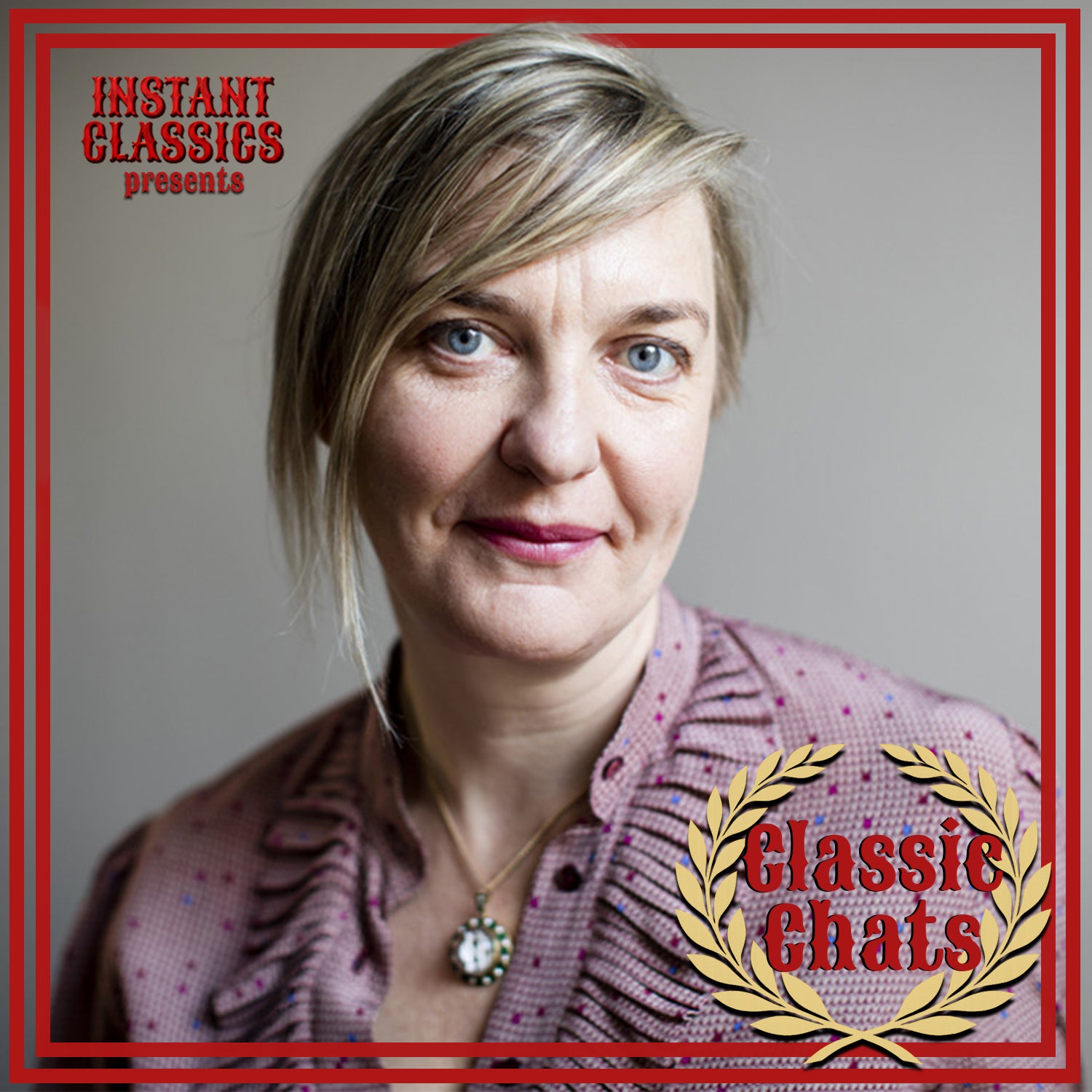
Classic Chats: Robert Harris on ‘Agrippa’

Mary and Charlotte talk to best-selling author Robert Harris about his new novel ‘Agrippa’. Robert Harris has published 16 novels, of which nine have been made into films, including The Ghost Writer, Enigma and the Oscar-winning papal thriller Conclave. Five of Robert’s novels are set in Ancient Rome: the Cicero Trilogy, Pompeii and Agrippa. Robert discovered Agrippa while researching the Cicero Trilogy and became increasingly interested in this decisive, but largely forgotten figure, whose legacy is everywhere in Ancient Rome. He describes what interested him in the story: the friendship between the aristocratic Augustus and his plebeian sidekick, and the tension that inevitably developed between the two. He compares Augustus and Agrippa to Tony Blair and Gordon Brown, only with higher stakes. Further reading: We covered the history of this period in the last episode, with further reading in the shownotes. If you haven’t read Robert’s other Roman novels, they are all available in paperback: Pompeii (Arrow pb, 2009) (A younger Mary Beard “fact-checked for the hard-back version of this – though didn’t find many mistakes!) The Cicero Trilogy, Imperium, Lustrum and Dictator (Arrow pb, 2009, 2010, 2016) Aprippa is published in hardback by Hutchinson Heinemann, 27 August, 2026 @instaclassicpod for Insta, TikTok and YouTube@insta_classics for Xemail: instantclassicspod@gmail.com Instant Classics handmade by Vespucci Producer: Jonty Claypole Video Editor: Jak Ford Theme music: Casey Gibson Learn more about your ad choices. Visit podcastchoices.com/adchoices
54 minAbspielen in:

Do13Aug
Instant Classics

Charlotte HigginsGast

Classic Chats: Charlotte Higgins on Ukrainian Lessons

Mary talks to Charlotte about her book Ukrainian Lessons: Art in a Time of War. For the last four years, Charlotte has returned repeatedly to Ukraine to report on the cultural life of the nation as it defends itself against Russia. Part of Putin’s attempts to legitimise the war lies in an age-old argument that Ukraine is simply an extension, or part of, Russia itself. Art and culture have always played a critical role in Ukraine’s identity and self-determinism –and never more so than now. Charlotte talks about what first took her to Ukraine in 2022, some of what she has learned over the last four years, and how reading the classics, especially Homer and Greek tragedy, have helped her make sense of the current situation. And Mary and Charlotte discuss Ukraine’s classical past: histories of Ukraine often start with Herodotus and his account of the Scythians of the steppe; and the Black Sea coast, and Crimea, are dotted with some of the earliest Greek “colonies” or trading emporia. Further reading Charlotte’s book Ukrainian Lessons: Art in a Time of War (Cape) is published on 20 August. Charlotte and Mary also mentioned Oleksandr Mykhed’s book The Language of War (Penguin, paperback, 2026), and Cassandra by Lesia Ukrainka (HURI, 2023) On the classical connections of Ukraine, there is a good introduction to the ruins of Olbia. Euripides’ fifth-century play, Iphigeneia in Tauris (Iphigeneia among the Taurians) is set in the Crimean peninsula (English translations widely available in Oxford World’s Classics, Penguin Classics etc). A BBC news article about the return of Scythian artefacts to Kyiv after a decade of court hearings. @instaclassicpod for Insta, TikTok and YouTube @insta_classics for X email: instantclassicspod@gmail.com Instant Classics handmade by Vespucci Producer: Jonty Claypole Video Editor: Jak Ford Theme music: Casey Gibson Learn more about your ad choices. Visit podcastchoices.com/adchoices

1 h 08 minAbspielen in:

Mo3Aug
Instant Classics

Count BinfaceGast

Classic Chats: Count Binface (Bonus episode)

In this Clacton byelection special, Count Binface takes a break from the campaign trail and zooms in from his spaceship to chat with Mary and Charlotte about his deep interest in Ancient Greece and Rome. While denying all connection with an earthling called Jon Harvey who studied Classics at Oxford, Binface reveals the lessons he has learned by studying classical writers, like the Greek satirist Lucian, the failings of Athenian democracy and Roman republicanism, and his views on Christopher Nolan’s The Odyssey. All of which begs the question: will Count Binface make compulsory Latin in state primary schools a central pledge in his manifesto? Listen to find out! Further reading: If you are confused about who Count Binface is, there’s a piece in the Guardian that explains it all… Binface’s review of the Odyssey (paywalled) And a link to Jon Harvey’s broadcasting including his BBC Radio 4 series, Could an Ancient Athenian Fix Britain? For all the candidates in this byelection: https://www.bbc.co.uk/news/articles/ckge923jk3vo @instaclassicpod for Insta, TikTok and YouTube @insta_classics for X email: instantclassicspod@gmail.com Instant Classics handmade by Vespucci Producer: Jonty Claypole Video Editor: Jak Ford Theme music: Casey Gibson Learn more about your ad choices. Visit podcastchoices.com/adchoices
35 minAbspielen in:

Do30Jul
Instant Classics

Tom HiddlestonGast

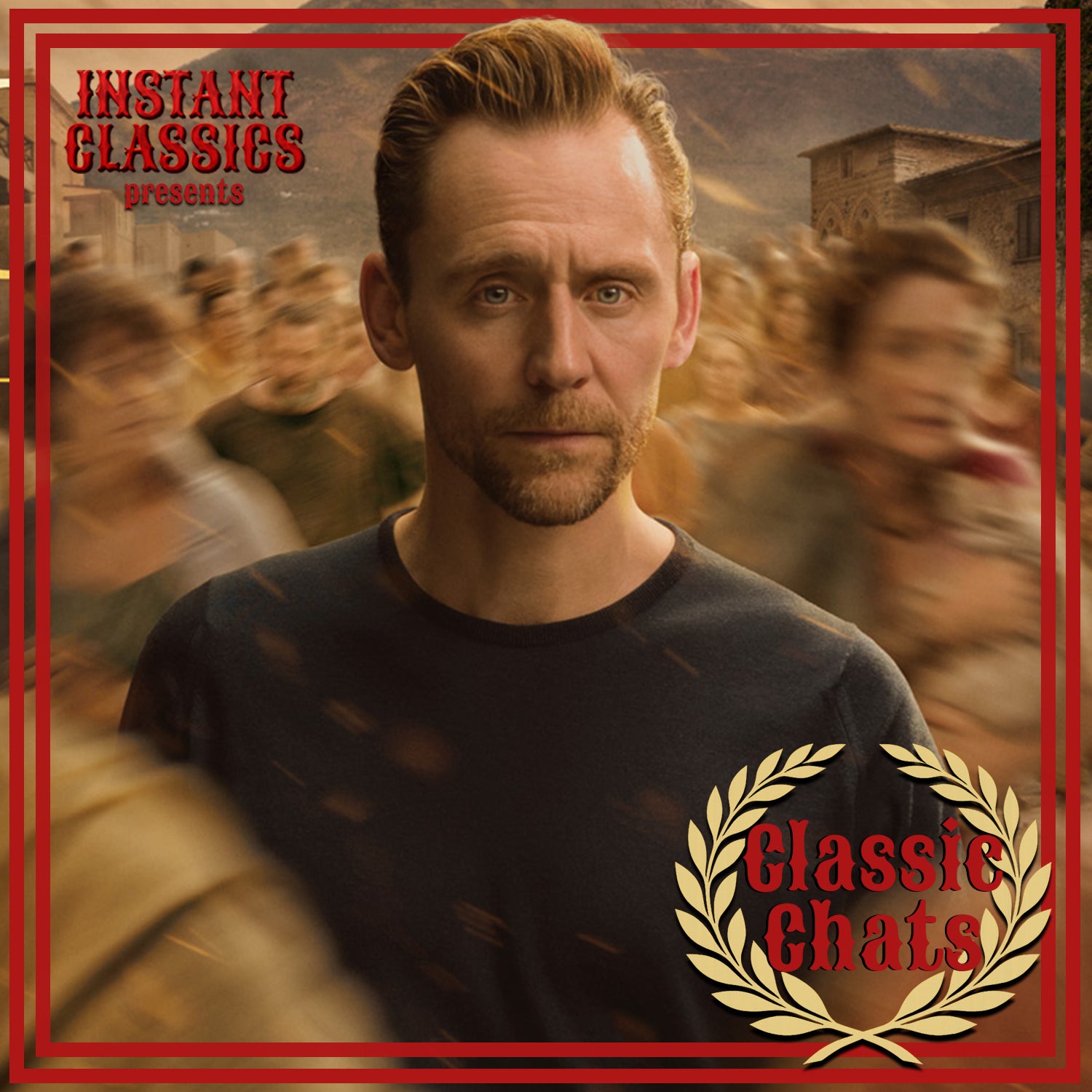
Classic Chats: Tom Hiddleston on Pompeii

Last week, actor Tom Hiddleston launched his new series - not the further adventures of Loki (at least, not yet), but Pompeii: Out of Time with Tom Hiddleston. Mary and Charlotte talk to Tom who reveals his life-long fascination with the ancient world, including a degree in Classics at Cambridge where he attended the lectures of one Professor Mary Beard. Tom talks about the impact Mary’s teaching had on him and how that fascination for the Classics has never gone away. His new series, available to watch on Disney+ and National Geographic, focuses on several real people and the decisions they made in the hours before the eruption of Vesuvius in AD 79. It draws on new research and technology to uncover the hidden lives of some of those who survived - and some who didn’t. Further reading Mary Beard’s book Pompeii is strongly recommended by Charlotte! And there is a recent book by Jess Venner, The Lost Voices of Pompeii (Harper Collins, 2026), which picks up and develops some of the same themes. In one of his first roles, Tom appeared in the Cambridge Greek play. You can find out more about this marvellous institution here: https://www.classics.cam.ac.uk/prospective/undergraduate/greek-play and here: https://www.cambridgegreekplay.classics.cam.ac.uk/ @instaclassicpod for Insta, TikTok and YouTube @insta_classics for X email: instantclassicspod@gmail.com Instant Classics handmade by Vespucci Producer: Jonty Claypole Video Editor: Jak Ford Theme music: Casey Gibson Learn more about your ad choices. Visit podcastchoices.com/adchoices

55 minAbspielen in:

Do2Jul
Instant Classics

Maria WykeGast

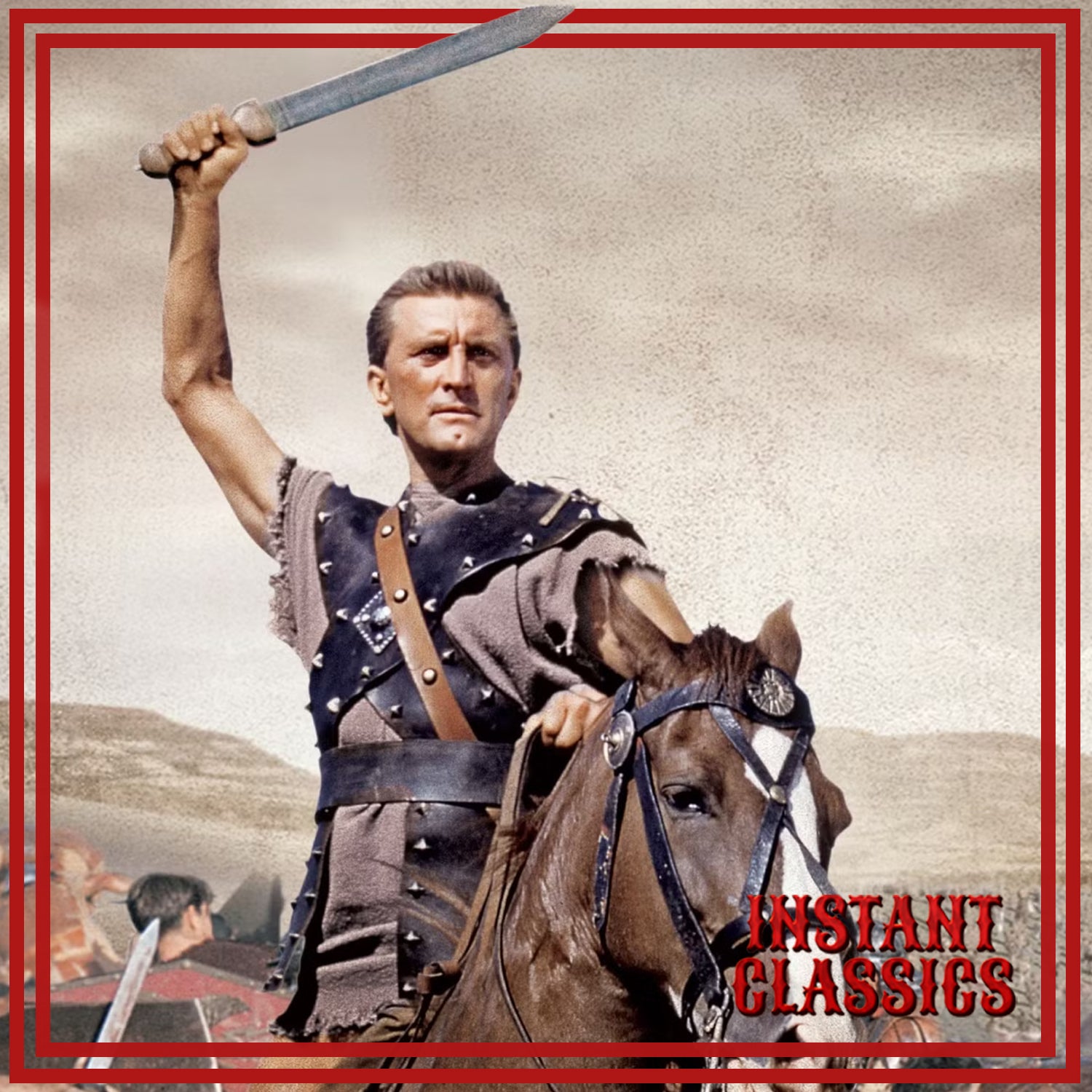
USA 250: “I’m Spartacus!”

Mary and Charlotte welcome Professor Maria Wyke back on the show to talk about two of the most famous words in cinema: “I’m Spartacus!” Hollywood has always had an obsession with Ancient Rome. So much so, the Roman Epic - or sword-and-sandal - is a cinematic genre in its own right. Stanley Kubrick’s Spartacus, starring Kirk Douglas, Laurence Olivier and a host of other stars, is perhaps the towering achievement. But what is Spartacus really about?  It was adapted by Dalton Trumbo from Howard Fast’s 1951 novel. Both men had fallen foul of the House Un-American Activities Committee and were blacklisted from Hollywood. Their names were proudly displayed at the start of the film, marking the decline of the Committee’s influence on American culture. In some ways, the refusal by Spartacus’ slave army to betray their leader to the Roman authorities is a message about free speech and solidarity. The character of black slave Draba who defies white supremacist authority is also a statement on the Civil Rights movement. But the brilliance of Spartacus is that it defies easy interpretation and deliberately plays with themes and symbols - not least in the crucifixion scene at the end of the film.  Mary, Charlotte and Maria move forwards a few decades to Gladiator - and argue the power of that film is the way it similarly seems to, but doesn’t quite, push a moral message. Gladiator 2 on the other hand…  Further reading Our wonderful guest Maria Wyke’s book Projecting the Past (Routlege, 1997) has a fascinating chapter on Spartacus Howard Fast’s novel Spartacus, on which Kubrick’s film was based, is on the Internet Archive. See also:  A. Futtrell, “Seeing Red”, in Sandra Joshel et al. (eds), Imperial Projections (Johns Hopkins UP, 2001) Martin Winkler, Spartacus: Film and History (Wiley-Blackwell, 2007) Martin Winkler, Gladiator: Film and History (Wiley-Blackwell, 2004) @instaclassicpod for Insta, TikTok and YouTube @insta_classics for X email: instantclassicspod@gmail.com Instant Classics handmade by Vespucci Producer: Jonty Claypole  Video Editor: Jak Ford Theme music: Casey Gibson Learn more about your ad choices. Visit podcastchoices.com/adchoices
48 minAbspielen in:

Do23Apr
Instant Classics

Grayson PerryGast

Classic Chats: Grayson Perry on why he hates classical civilisation

Mary and Charlotte talk to artist Grayson Perry about why he hates classical civilisation. Grayson is one of Britain’s most famous artists - he won the Turner Prize in 2003, has been exhibited in major exhibitions across the globe, published books and presented television programmes.  Earlier this year, Grayson delivered the Rumble Fund Lecture 2026 at King’s College London, entitled ‘Why I hate classical civilisation’. Needless to say, Mary and Charlotte want to know why - and also see if they can encourage him to think more positively about his relationship with the ancient world.  Grayson talks about the tedium of learning Latin at school, his irritation at the endless classical imitations in British architecture and asks why bad people - names are mentioned - hold up the classics as the peak of civilisation.  Mary and Charlotte hit back. Just as many radicals and revolutionaries have been inspired by the classics as dictators or would-be dictators. Mary wishes she’d had the chance to teach Latin to Grayson. There’s a thought…  Content warning: This episode features bad words beginning with the letter ‘f’.  Mary and Charlotte recommend some further reading: The Tomb of the Unknown Craftsman, a book accompanying Perry’s British Museum exhibition, was published by the British Museum Press, 2011. An image from Perry’s The Rap of the Sabine Women (1981) can be seen on the Stedelijk Museum website. @instaclassicpod for Insta, TikTok and YouTube @insta_classics for X email: instantclassicspod@gmail.com Instant Classics handmade by Vespucci Producer: Jonty Claypole  Video Editor: Jak Ford Theme music: Casey Gibson Learn more about your ad choices. Visit podcastchoices.com/adchoices

50 minAbspielen in:

Do16Apr
Instant Classics

Mary BeardGast

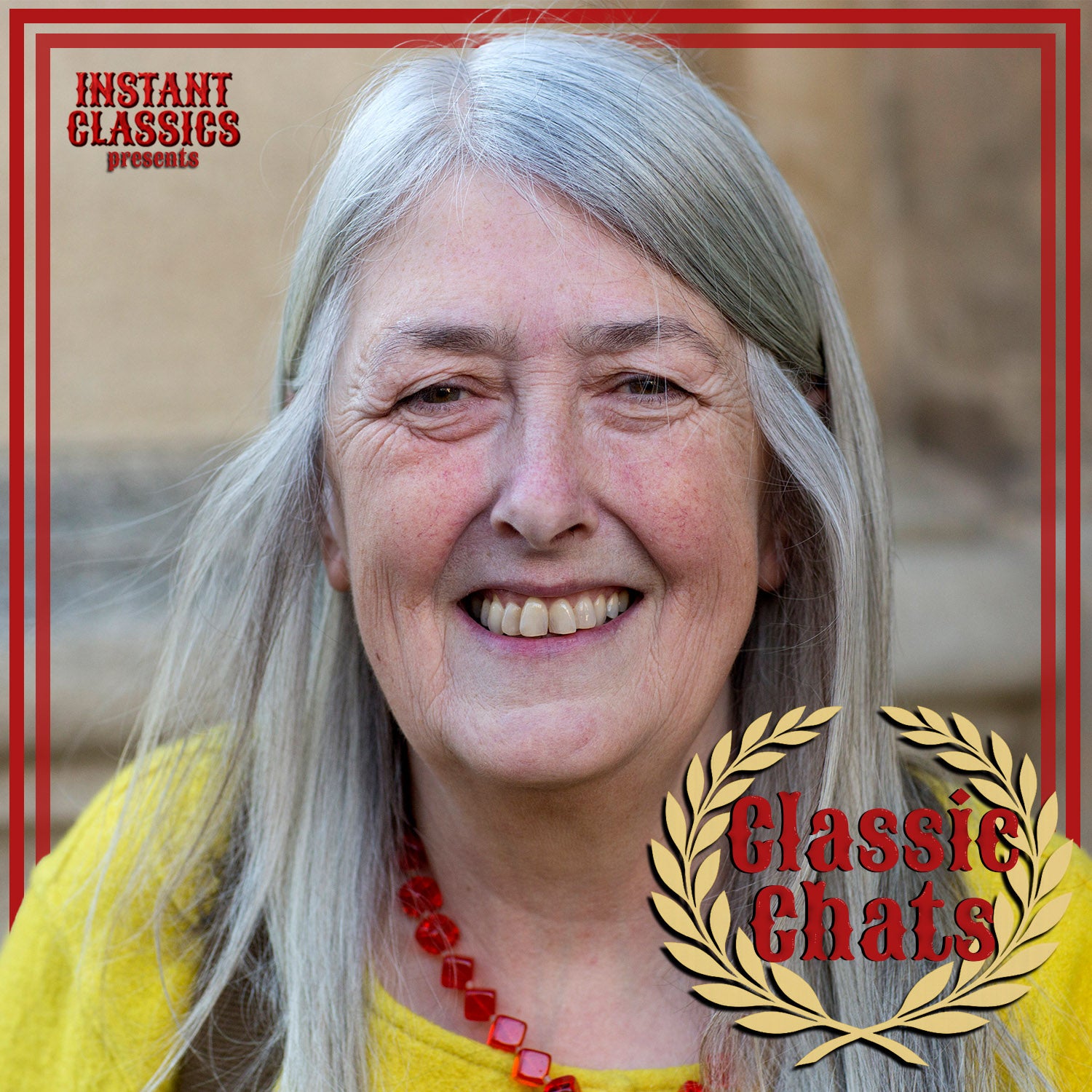
Talking Classics with Mary Beard

In this episode, Mary and Charlotte’s special guest is… Mary Beard! On the day of publication of her new book, Talking Classics, Mary does just that - talks classics with Charlotte.  Talking Classics is a summation of Mary’s 50 years study of the ancient world. In this intimate conversation, Mary talks about discovering a fascination with history as a child and her teenage delight in joining the local dig (and, more importantly, apres-dig) in Shropshire. She also discusses the value she finds in studying the classical world - the way we’re forced to acknowledge kinship and difference with other cultures, develop empathy, tolerate difference and reflect upon our own values.  In the second half, Mary and Charlotte look at how the classical world has been adopted by different causes throughout history. Some we might approve of - like resistance to tyranny and gay rights - others which are more uncomfortable, like fascism and imperialism. And we hear the fascinating story of Ranuccio Bianchi Bandinelli, a left-wing classicist in Italy, who had to show Hitler and Mussolini around the sites of Ancient Rome.  Mary and Charlotte recommend some further reading: This isn’t meant to be an advert (!), but the new book is Talking Classics (Profilebooks). By the way, this is Charlotte writing, I highly recommend it! The story of Hitler’s visit to Rome is told by Bianchi Bandinelli, not available in English, sadly. The Italian version is Hitler e Mussolini, 1938 (E/O pb, 1995) but it has been translated into French and German. There is a collection of photos of the visit here: https://www.europeana.eu/en/collections/person/165124-ranuccio-bianchi-bandinelli A documentary film has also been made of which there is a short trailer online, with 1930s footage (https://www.youtube.com/watch?v=d3WdVcSybG4)  On Classics and the proto-gay movement of the the 19th century, there is a chapter by Philip E Smith in Powell and Raby (eds), Oscar Wilde in Context (Cambridge UP, 2013) and a book by Linda Dowling, Hellenism and Homosexuality in Victorian Oxford (Cornell UP, 1994) The appropriation of classics by far right and misogynist “causes” is the theme of Donna Zuckerberg, Not All Dead White Men (Harvard UP, 2018), and Curtis Dozier, The White Pedestal (Yale UP, 2026) Mary writes of the ambiguities of Roman Britain in the story of the British Empire, in “Officers and Gentlemen?”, in A Swenson and P Mandler (eds), From Plunder to Preservation (British Academy, 2013) @instaclassicpod for Insta, TikTok and YouTube @insta_classics for X email: instantclassicspod@gmail.com Instant Classics handmade by Vespucci Producer: Jonty Claypole  Video Editor: Jak Ford Theme music: Casey Gibson Learn more about your ad choices. Visit podcastchoices.com/adchoices
57 minAbspielen in:

Gäste, die länger als 12 Monate zurückliegen, gibt es mit Pro. Pläne ansehen