Walk the battlefields of the First World War with Military Historian, Paul Reed. In these podcasts, Paul brings together over 40 years of studying the Great War, from the stories of veterans he interviewed, to when he spent more than a decade living on the Old Front Line in the heart of the Somme battlefields.
In this special podcast we are joined by Dr Wendy Maddocks to discuss Casualty Care off Gallipoli, looking at this from a New Zealand perspective and especially from the point of view of New Zealand Expeditionary Force nurses. Wendy has undertaken extensive research on this subject especially via the story of Nurse Mabel Crook who Wendy discusses in this talk.
Links:
Dr Wendy Maddocks on Twitter/X.
Dr Wendy Maddocks website.
The audio is taken from a talk Wendy did for our Podcast Supporters and you can watch the talk on YouTube below or via this link.
Main Image: New Zealand medical personnel aboard HMHS Nevassa on its way to serve off Gallipoli. (Accession number 1992.1149 Album of Mabel Crook National Army Museum)
Sign up for the free podcast newsletter via our Substack here: Old Front Line on Substack.
You can order Old Front Line Merch via The Old Front Line Shop.
Got a question about this episode or any others? Drop your question into the Old Front Line Discord Serveror email the podcast.
Send us Fan Mail
Support the show
Join us on the Somme battlefields as we explore the remarkable story of Hawthorn Ridge Crater, one of the most iconic and historically significant sites of the First World War. In this episode of The Old Front Line, we are joined by Terry Berry and Rick Smith of the Hawthorn Ridge Crater Association, the dedicated team working to preserve, research and interpret this extraordinary piece of the battlefield.
The conversation looks back at the dramatic events of 1 July 1916, when the massive mine beneath the German positions at Hawthorn Ridge was detonated in the opening moments of the Battle of the Somme. The resulting crater remains one of the most recognisable features of the battlefield, but its history extends far beyond that single moment.
Terry and Rick explain how they became custodians of the site, the work involved in protecting it for future generations and the importance of building relationships with the local French population. We discuss what archaeological investigation and historical research have revealed about the crater and the surrounding battlefield, including fascinating new discoveries emerging from research into German military archives. These findings are helping to shed fresh light on the German experience of the battle and the events surrounding the mine explosion.
We also look ahead to the future of the project, including ambitious plans for a new Study Centre in Beaumont-Hamel, which will provide an important resource for researchers, battlefield visitors and anyone interested in understanding the history of the Somme.
You can join the Association here: Hawthorn Ridge Crater Association.
Main Image: Hawthorn Crater taken in 2016 (Old Front Line archives)
Sign up for the free podcast newsletter via our Substack here: Old Front Line on Substack.
You can order Old Front Line Merch via The Old Front Line Shop.
Got a question about this episode or any others? Drop your question into the Old Front Line Discord Serveror email the podcast.
Send us Fan Mail
Support the show
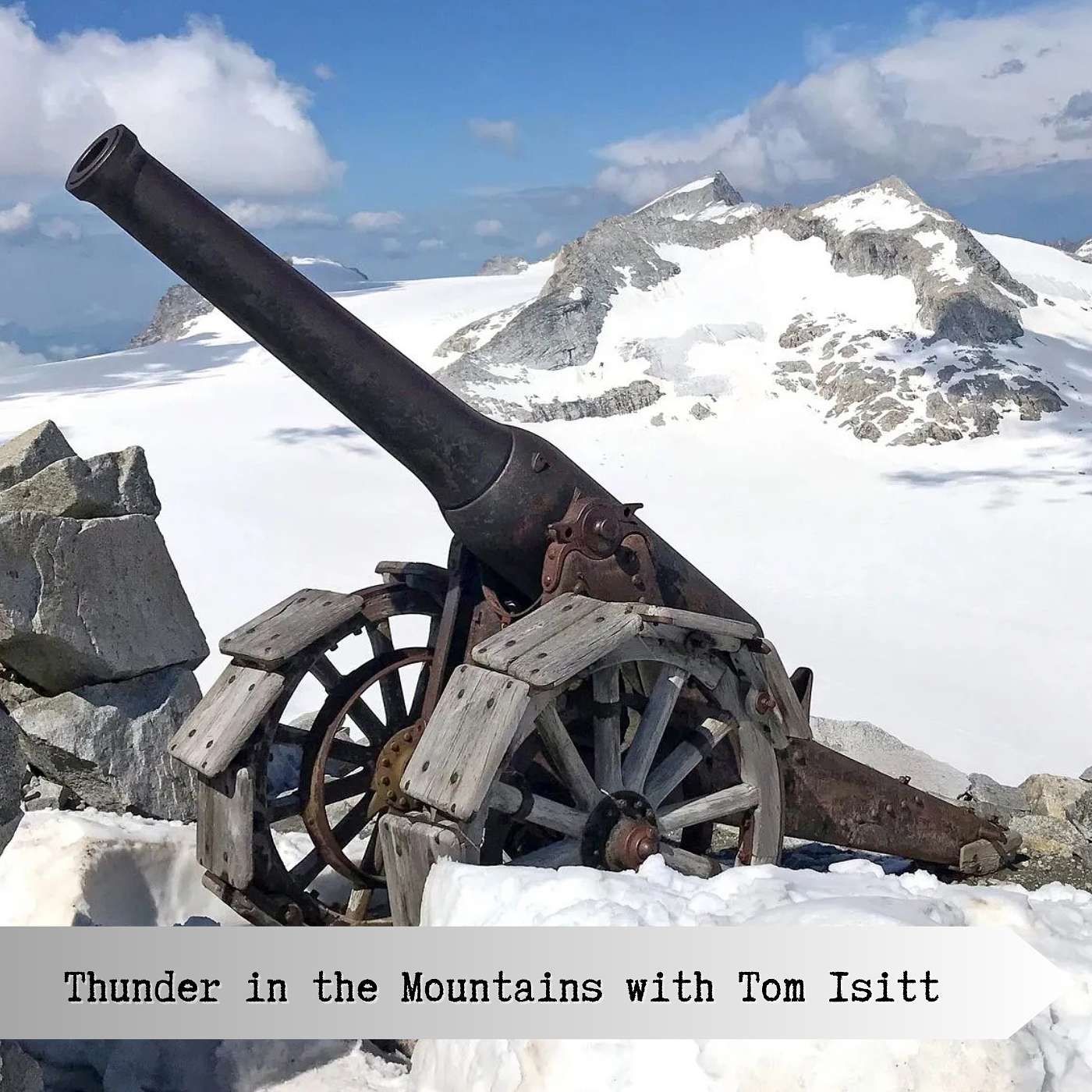
In this special edition of the podcast we explore a lesser-known theatre of conflict from the First World War in Northern Italy with historian Tom Isitt. Tom's new book - Thunder in the Mountains - follows a journey he made across those battlefields and with him we discover the unique challenges of mountain warfare, the diverse nations involved, and personal stories from the battlefield.
We examine the Battlefields on the Izonzo, discuss some of the highest points of the Great War in the Dolomites and move to the involvement of German troops in Italy, including Erwin Rommel at Caporetto in 1917, and the arrival of British forces who fought here until the end of the war.
You visit Tom Isitt's website and order the book here: Thunder in the Mountains.
Sign up for the free podcast newsletter here: Old Front Line Bulletin.
You can order Old Front Line Merch via The Old Front Line Shop.
Got a question about this episode or any others? Drop your question into the Old Front Line Discord Server or email the podcast.
Send us Fan Mail
Support the show
In this special episode with Professor Mark Connelly we explore the profound connection between landscape, memory, and national identity during the Great War, focusing on the significance of chalk landscapes in Britain and their influence on cultural memory and battlefield symbolism.
We dive into how the beautiful, chalky terrains of England shaped the identity of soldiers during the Great War. Many of them carried an intimate knowledge of these landscapes, a connection forged through literature and culture. When they found themselves on the battlefields of France, the familiar terrain sparked powerful memories and emotions, making the destruction all the more poignant.
This narrative goes beyond military history; it’s about identity, memory, and how we connect with the land we call home. The chalk downlands were not just a backdrop but a symbol of what they were fighting for, and losing.
And we ask, what does this mean for how we remember the war today?
Professor Mark Connelly's Tours: Mark Connelly - Connelly Contours
The book mentioned was 'England in France' by Charles Vince, illustrations by Sydney R. Jones (London 1919)
Main Image: A Grave and a Mine Crater at La Boisselle, August 1917 by William Orpen (IWMART2378)
Sign up for the free podcast newsletter here: Old Front Line Bulletin.
You can order Old Front Line Merch via The Old Front Line Shop.
Got a question about this episode or any others? Drop your question into the Old Front Line Discord Server or email the podcast.
Send us Fan Mail
Support the show
In this special episode of the Podcast, Paul Reed speaks with archaeologist and wargamer Alex Sotheran about his journey in battlefield archaeology and the evolution of wargaming. They discuss the significance of battlefield archaeology in understanding the human experience of war, the challenges faced in recovering human remains, and the impact of television on the field. Transitioning to wargaming, they explore its historical roots, modern developments in rules, and its potential as a therapeutic tool for veterans. The discussion highlights the social aspects of wargaming and the importance of community in this hobby.
You can follow Alex on Storm of Steel YouTube Channel and Bluesky.
Sign up for the free podcast newsletter here: Old Front Line Bulletin.
You can order Old Front Line Merch via The Old Front Line Shop.
Got a question about this episode or any others? Drop your question into the Old Front Line Discord Server or email the podcast.
Send us Fan Mail
Support the show
In this episode of the Old Front Line podcast, host Paul Reed is joined by military historians Charles Fair, Richard Hendry, and Dr. Tom Thorpe to delve into the often-overlooked history of the London Territorial Force during the Great War. The discussion begins with an exploration of the origins and purpose of the Territorial Force, established in 1908, which served primarily for home defense before the war. The historians highlight the unique characteristics of the London Regiment, which comprised numerous battalions, each with distinct identities tied to local communities, and how this diversity contributed to its prominence in the war effort.
As the conversation progresses, the historians discuss the evolution of the London Territorials throughout the war, noting how the composition of the units changed as conscription began and how the original local identities were diluted. They also touch on the social dynamics within the battalions, the challenges of equipment shortages, and the significant contributions of the London Territorials in various theatres of war, including the Western Front and Palestine. The episode concludes with insights into their upcoming book, "London Pride," which aims to provide a comprehensive study of the London Territorial Force's history and its impact on the Great War.
You can order the book here via the Publisher: London Pride The London Territorials in WW1
Main Image: Men of the 19th Battalion London Regiment digging trenches in England c.1915 (Old Front Line archives)
Sign up for the free podcast newsletter here: Old Front Line Bulletin.
You can order Old Front Line Merch via The Old Front Line Shop.
Got a question about this episode or any others? Drop your question into the Old Front Line Discord Server or email the podcast.
Send us Fan Mail
Support the show
50 minAbspielen in:
Gäste, die länger als 12 Monate zurückliegen, gibt es mit Pro. Pläne ansehen

 WM