The Charge Point Podcast cover
Podcast

The Charge Point Podcast

von Christophe Lephilibert

The Charge Point Podcast hatte in den letzten 12 Monaten 16 bestätigte Gäste in 15 Folgen. Zuletzt: Steffen Ackmann, 19. Nov. 2026.

Website der SendungApple PodcastsSo werden Gäste bestätigt

The Charge Point Podcast is your gateway to the future of EV charging. In each episode, we dive deep into the world of EV infrastructure, offering insights and perspectives from industry leaders, innovators, and the people at the forefront of deploying charging networks. Join us to explore the exciting developments…

Gäste der Sendung

Do19Nov
The Charge Point PodcastSA

Steffen AckmannGast

Episode 63 - How to Size Battery Storage for EV Charging Sites - with Pixii

SUMMARY Across Europe, grid capacity has become one of the biggest limits on EV charging growth. CPOs in markets like the Netherlands and Germany often wait for new connections while demand for high-power charging keeps rising. Battery storage for EV charging sites has moved into the spotlight as a way to deliver more power than the grid connection alone allows. Falling battery cell prices and new grid tariff rules have made the business case much stronger over the past two years. Christophe Lephilibert speaks with Steffen Ackmann, Key Account Manager for EV Charging at Pixii. Pixii is a Norwegian battery storage company founded in 2018, with roots in power systems for telecom and data centres. It focuses on the power conversion system at the heart of every battery storage system and works with several battery pack suppliers. Steffen has worked in EV charging since 2017, when the need for high-power charging was still debated. Today, he works with CPOs, depot operators and fleet owners across Europe on battery storage for their charging sites. The conversation explains how to size battery storage for EV charging sites, from highway locations to urban hubs and bus depots, and why there is no standard answer. Steffen shows how the business case for batteries has shifted from savings to earnings, why many larger CPOs prefer standalone batteries over battery-integrated chargers, and how the energy management system orchestrates complex sites. He also looks ahead at megawatt charging for trucks and DC-coupled architectures, which Pixii is already piloting with a customer. TIMESTAMPS 00:00 Intro: battery storage for EV charging sites 02:18 Steffen Ackmann’s origin story and Pixii in a nutshell 09:11 From power buffer to strategic asset: grid, cell prices and tariffs 13:52 Ad break: BESS arbitrage webinar 14:30 How to size battery storage: highway, urban and depot sites 19:39 The business case: savings vs earnings 22:04 Energy management and integrated vs standalone batteries 28:23 What’s next: MCS, multi-purpose sites and DC-coupled sites 31:21 Wrap-up and key takeaways WHAT YOU'LL LEARN - Why grid constraints, falling battery cell prices and new grid tariff rules have turned battery storage from a simple power buffer into a strategic asset for CPOs. - Which site factors decide the right battery size: available grid capacity, the number of charge points, the power you want to deliver at the same time, and on-site solar production. - Why a C-rate of around 0.5 is often the most attractive choice, and why highway sites, urban hubs and depots can call for anything from one-hour to ten-hour storage. - How a bus depot can combine 300 kW of power with 2 MWh of storage and surplus solar to charge its buses overnight. - How the business case has moved from peak shaving savings alone to earnings from frequency markets, local flexibility and energy arbitrage. - Why many larger CPOs prefer standalone batteries over battery-integrated chargers, for safety and because energy is easier to share across a site, and how Pixii's Powerbase EV puts a charger and battery cabinets on one base plate. - Why the energy management system becomes the conductor on complex sites, for example deciding whether MCS truck chargers get power before CCS car chargers. - What megawatt charging, multi-purpose sites and DC-coupled architectures mean for the next generation of charging sites. NOTABLE QUOTE "It depends on the capacity they have from the grid and the number of chargers they want to deploy. In urban sites, higher C-rates are quite often required by customers. And in depots, that can be between 0.x and 1." - Steffen Ackmann, Pixii RESOURCES MENTIONED Learn how battery storage can earn money through energy arbitrage on EV charging sites in FLEXECHARGE's webinar on BESS arbitrage: https://www.flexecharge.com/resources/webinars/bess-arbitrage-ev-charging-sites Watch Steffen's keynote from INTERFACE Nordics in Copenhagen, May 2026. Request the session keynotes on the event page: https://www.flexecharge.com/event-interface-ev-charging-meet-the-grid-in-person/interface-nordics ABOUT THE GUEST Steffen Ackmann is Key Account Manager for EV Charging at Pixii, based in the company's Darmstadt office in Germany. He joined Pixii in 2023 after several years in EV charging infrastructure, which he entered in 2017 during the early days of high-power charging. At Pixii, Steffen helps CPOs, depot operators and fleet owners design and size battery storage systems for their charging sites, balancing grid capacity, charging power, solar production and revenue from flexibility markets. He works with customers across Europe on projects ranging from highway charging hubs to electric bus depots. Steffen on LinkedIn: https://www.linkedin.com/in/steffen-ackmann-095325206/ RELATED LISTENING For more on how storage is reshaping charging sites, listen to Episode 61 with Sungrow on why solar, storage and EV charging are becoming one system, and Episode 54 with BloombergNEF on how cheap batteries are changing EV charging infrastructure: https://www.flexecharge.com/resources/the-charge-point-podcast/episode-61---why-solar-storage-and-ev-charging-are-becoming-one-system-with-sungrow Got some feedback or questions? Text us! You can get more information on our website. Give us some stars please 🌟 If you enjoyed the episode, please give it a 5-stars note and leave us a review. Get in Touch: Do you have suggestions for future guests or topics? Reach out to us at hello@flexecharge.com.  Subscribe & Stay Updated: 🔔 Make sure to subscribe to the Charge Point Podcast to stay updated on the latest trends and developments in the world of EV charging and energy. 📩 You can subscribe to our Newsletter, The Charge Point Journal, by clicking here. 🫱🏻‍🫲🏼 And you can follow us on Linkedin by clicking here and connect with Christophe here. ⚡ Let’s keep the conversation—and the electrons—flowing.

34 minAbspielen in:

Do22Okt
The Charge Point PodcastCT

Christos TsegkisGast

Episode 61 – Why Solar, Storage and EV Charging Are Becoming One System – with Sungrow

Summary Solar, battery storage and EV charging used to be planned as three separate projects, each with its own business case. That is changing quickly. Rising energy prices and slow grid connections are pushing charge point operators across Europe to design PV, BESS and chargers together as one integrated system. For CPOs planning high-power sites, the question is shifting from how many chargers to buy towards how to design the whole site around the grid, the energy and the vehicles to come. In Episode 61 of the Charge Point Podcast, Christophe Lephilibert speaks with Christos Tsegkis, Regional Manager EV Charging for DACH, the Nordics and Southeastern Europe at Sungrow. Sungrow started in PV inverters, then expanded into battery storage and now builds EV chargers from AC up to megawatt class. Christos works with CPOs, logistics companies and investors who are combining solar, storage and charging, and he sees first-hand how large operators like E.ON Drive Infrastructure now buy BESS and charging as one solution. The conversation covers why the combination of PV, storage and charging has become so attractive, how on-site batteries reduce dependence on DSO approvals, and who should orchestrate energy flows on a complex site. Christos explains how a field-level EMS and an intelligent external EMS work together, what changes for storage once electric trucks charge at megawatt level, and the one piece of advice he gives every CPO before investing in BESS. What you’ll learn Why large CPOs now ask for combined PV, BESS and EV charging solutions from the start of a project. How grid connection approvals have become the common bottleneck for charging projects across Europe, and why mature markets like Germany and the Nordics feel it first. How a battery on site lets CPOs keep building and serve peak demand while waiting for grid expansion. What Sungrow’s BESS deployments with E.ON Drive Infrastructure signal about the direction of the European charging market. How Sungrow’s internal EMS orchestrates its own products in the field, and where an external EMS adds intelligence on dynamic tariffs, markets and the grid. Why Norway’s early move to dynamic tariffs shows how energy management lifts the return on a charging site. How the role of storage moves from peak shaving to dynamic power allocation once many trucks charge at megawatt level at the same time. Why Christos advises CPOs to plan for the next two to three years and design each site around its specific location. Chapters 00:00 Welcome to the Charge Point Podcast 00:38 Intro: a little sunshine for the rainy season 02:20 Christos’s journey from solar and wind to e-mobility 04:14 From PV inverters to megawatt chargers: Sungrow’s evolution 06:15 Why PV, storage and charging is a winning combination 08:07 Grid bottlenecks: how storage reduces dependence on DSOs 12:06 Sungrow PowerStack: the typical BESS setup for charging sites 13:31 Orchestration: who decides where every kilowatt hour goes? 15:24 E.ON Drive Infrastructure and the end of standalone projects 17:52 Megawatt charging for trucks: from peak shaving to dynamic power allocation 20:39 Christos’s advice for CPOs planning their next high-power sites 22:21 Key takeaways and wrap-up Notable quotes “It comes down always on the DSOs. Some of the DSOs might provide more capacity on a higher pace. Some others, they are a bit slowing down the process. So this is a bottleneck for everyone.” - Christos Tsegkis, Sungrow “If you have megawatt chargers with also 10 or 20 power stacks in one location, then we are talking about dynamic tariffs. We are talking about how we can optimise the whole ecosystem by having also an intelligent EMS in between.” - Christos Tsegkis, Sungrow “It’s not about if I’m going to buy five chargers and five BESS, but how I will optimise the design based on a specific location.” - Christos Tsegkis, Sungrow About the guest Christos Tsegkis is Regional Manager EV Charging for DACH, the Nordics and Southeastern Europe at Sungrow, based at the company’s European headquarters in Munich. He began his career in solar and wind energy almost 14 years ago and has focused on electric mobility since 2019. Christos joined Sungrow three years ago as Business Development Manager for EV charging in DACH and Southeastern Europe, and now leads the company’s EV charging business across three regions, helping CPOs and fleet operators combine solar, battery storage and charging into integrated, scalable solutions. Christos Tsegkis on LinkedIn: https://www.linkedin.com/in/christos-tsegkis-1696aa3a/ Sungrow: https://en.sungrowpower.com/ Electrive interview with Christos Free on-demand masterclass: co-located BESS for CPOs Co-located batteries are now part of almost every CPO conversation, but connecting and controlling them is still the first big hurdle. In our on-demand masterclass, FLEXECHARGE shows how to solve the connect challenge and unlock value stacking with peak shaving, arbitrage, flexibility revenues and DNO curtailment, with real examples from Recharge, Q8 and other CPOs. Watch it here: https://www.flexecharge.com/resources/webinars/the-power-of-co-located-batteries-unlocking-the-full-revenue-potential Related listening For more on battery economics at fast-charging sites, listen to Episode 54 with Ryan Fisher of BloombergNEF, and to Episode 56 with Michel Verschuere of Yuso on why grid congestion makes co-located BESS essential for CPOs. Got some feedback or questions? Text us! You can get more information on our website. Give us some stars please 🌟 If you enjoyed the episode, please give it a 5-stars note and leave us a review. Get in Touch: Do you have suggestions for future guests or topics? Reach out to us at hello@flexecharge.com.  Subscribe & Stay Updated: 🔔 Make sure to subscribe to the Charge Point Podcast to stay updated on the latest trends and developments in the world of EV charging and energy. 📩 You can subscribe to our Newsletter, The Charge Point Journal, by clicking here. 🫱🏻‍🫲🏼 And you can follow us on Linkedin by clicking here and connect with Christophe here. ⚡ Let’s keep the conversation—and the electrons—flowing.

24 minAbspielen in:

Do13Aug
The Charge Point PodcastRF

Ryan FisherGast

Episode 54 – How Cheap Batteries Are Changing EV Charging Infrastructure - with Ryan Fisher, BloombergNEF

Cheap batteries are starting to reshape the economics of EV charging infrastructure. In this episode of the Charge Point Podcast, Christophe Lephilibert speaks with Ryan Fisher, Head of Charging Infrastructure at BloombergNEF, about why co-located Battery Energy Storage Systems — or BESS — are becoming increasingly relevant for fast-charging sites, truck charging, megawatt charging and grid-constrained locations. The conversation builds on BloombergNEF’s report, How Cheap Batteries Are Helping EV Charging Scale, to which FLEXECHARGE contributed data. Ryan explains why battery storage is moving from a niche pilot topic to a serious infrastructure tool for Charge Point Operators, especially as battery costs fall, grid fees rise, and charging sites need to deliver more power. Together, Christophe and Ryan discuss peak-demand charges, grid connection constraints, energy arbitrage, subsidies, truck charging, BYD’s battery-backed megawatt charging rollout, and the implications of BloombergNEF’s 2026 Electric Vehicle Outlook. The key message: co-located BESS will not make sense for every charging site tomorrow — but every serious CPO should now understand where batteries fit into their rollout strategy. Guest Ryan Fisher Head of Charging Infrastructure, BloombergNEF Ryan Fisher leads BloombergNEF’s charging infrastructure research. His work connects the electrification of transport with the wider energy system, covering charging infrastructure, battery storage, power markets, grid constraints and the future of EV adoption. In this episode, Ryan brings a global BloombergNEF perspective on how cheap batteries, grid fees and higher charging powers are changing the fast-charging business case. What you will learn In this episode, you will learn: Why battery storage is becoming more relevant for EV fast-charging infrastructure How cheaper batteries can help CPOs deal with grid connection constraints Why peak-demand charges and grid fees are becoming critical to the charging business case How co-located BESS can help unlock sites that were previously too expensive or too difficult to build Why truck charging and megawatt charging may accelerate battery deployment How China, Europe and the US differ in battery costs, subsidies and tariff structures Why ancillary services and flexibility markets are promising, but still early for most CPOs What BloombergNEF’s 2026 EV Outlook says about EV growth, electricity demand and future charging needs Why future charging networks may need to think more like distributed energy asset operators Key topics covered Why this report, and why now? Ryan explains why BloombergNEF decided to investigate the role of batteries in EV charging infrastructure. Overcapacity in the battery market has pushed storage costs down, while CPOs are facing more questions around grid access, grid fees and whether charging infrastructure can scale fast enough. BloombergNEF tracked around 800 projects where batteries are already being used with EV charging infrastructure — a striking sign that co-located BESS is no longer only an experimental topic. The bottleneck is shifting from chargers to energy For years, fast charging was mainly discussed in terms of charger deployment, location, utilization and uptime. Today, the bottleneck is increasingly about energy: available grid capacity, power availability, grid fees and the ability to deliver higher charging speeds. This becomes even more important as EVs become capable of higher charging power and as commercial vehicles bring much larger loads to charging sites. The business case for co-located BESS Ryan breaks down where the value of BESS can come from: avoiding or delaying grid upgrades reducing peak-demand charges enabling higher charging power on constrained grid connections shifting electricity consumption to cheaper hours supporting truck charging and large fleet operations preparing for future flexibility and ancillary service revenues But the business case is highly market-specific. Tariff structures, electricity prices, utilization, subsidies and grid constraints all determine whether BESS makes financial sense. Peak-demand charges and grid fees One of the most important insights from the episode is that grid fees vary significantly by country, region and tariff structure. Some markets have peak-demand charges, some have time-of-use grid fees, and some have both. Ryan explains that in certain markets, peak-demand charges are being reduced or temporarily removed to support charging infrastructure rollout. But the long-term challenge remains: how do you scale charging infrastructure without creating unsustainable grid costs? Truck charging and megawatt charging Truck charging is one of the strongest use cases for co-located BESS because the energy demand is much larger than passenger-car charging. A single truck can have a battery of several hundred kilowatt-hours, and high-power charging for fleets can quickly create major grid requirements. The discussion also touches on BYD’s battery-backed megawatt charging rollout in China, which could significantly influence the global average size and architecture of battery-supported charging sites. Can cheap batteries change where charging sites are built? Ryan’s answer is clear: yes. If battery costs continue to fall — or if operators can access grants and subsidies — BESS can make new types of charging locations viable. This is particularly relevant for existing fuel retail sites, depots, and high-traffic locations where the commercial case is strong but the grid connection is weak. With batteries, a site that previously lacked sufficient grid power may still be able to offer high-power charging. BloombergNEF’s 2026 EV Outlook The conversation also connects BESS with the broader findings from BloombergNEF’s 2026 Electric Vehicle Outlook. Ryan highlights growth in Europe, developments in Southeast Asia, progress in heavy-duty trucking, and emerging questions around robotaxis. The outlook also looks at electricity demand from EVs and the grid investment needed to support transport electrification. One important point: EVs will become a meaningful driver of grid investment, but they are only one part of a wider picture that also includes aging grids, data centers, general electricity demand growth and electrification in other sectors. The future charging business case Ryan explains that the future competitive landscape for CPOs will not only be about who has the best location or the most chargers. It will also be about: who can deliver higher charging powers who can manage electricity costs who can optimize grid capacity who can integrate batteries effectively who can combine charging with retail, amenities or other site-level business models A good charging site today could be overtaken tomorrow by a better-located, better-optimized, higher-power and more energy-efficient competitor. Key takeaway Co-located BESS is not a universal solution for every charging site. But cheap batteries, grid constraints, higher charging power and the rise of truck charging are changing the EV charging business case. For many CPOs, batteries will become a strategic tool to reduce costs, unlock constrained sites, improve charging performance and prepare for future flexibility markets. The smartest operators will not wait until every business case is obvious. They will start understanding where BESS fits, which sites are suitable, and how to build the technical stack needed to scale when the economics become attractive. Listen to the full episode Listen to the full conversation with Ryan Fisher from BloombergNEF to understand how cheap batteries are changing EV charging infrastructure — and what this means for CPOs, fleet operators, truck charging, grid constraints and the future of fast charging. If you enjoyed this episode, please share it with a colleague working in EV charging, batteries, fleet electrification or energy infrastructure. You can also support the Charge Point Podcast by leaving a review and giving us a five-star rating on your preferred podcast platform. Resources mentioned BloombergNEF report: How Cheap Batteries Are Helping EV Charging Scale BloombergNEF Electric Vehicle Outlook 2026: Got some feedback or questions? Text us! You can get more information on our website. Give us some stars please 🌟 If you enjoyed the episode, please give it a 5-stars note and leave us a review. Get in Touch: Do you have suggestions for future guests or topics? Reach out to us at hello@flexecharge.com.  Subscribe & Stay Updated: 🔔 Make sure to subscribe to the Charge Point Podcast to stay updated on the latest trends and developments in the world of EV charging and energy. 📩 You can subscribe to our Newsletter, The Charge Point Journal, by clicking here. 🫱🏻‍🫲🏼 And you can follow us on Linkedin by clicking here and connect with Christophe here. ⚡ Let’s keep the conversation—and the electrons—flowing.

28 minAbspielen in:

Do18Jun
The Charge Point PodcastLH

Lars HerreGast

Episode 52 - Beyond Kilowatt-Hours: Flexibility as the Next Value Pool for CPOs

EV charging is no longer only about selling kilowatt-hours. As grid capacity becomes tighter, electricity prices more volatile, and flexibility markets more mature, Charge Point Operators have a new strategic question to answer: can charging infrastructure become a flexible energy asset?  In this episode of the Charge Point Podcast, Christophe speaks with Lars Herre, Flexibility Portfolio Lead at Fortum, about demand response, flexibility, V2G, batteries, and the role CPOs can play in the future energy system.  Lars brings a rare combination of technical depth and market perspective. His background spans electrical engineering, power systems research, energy market modelling, and venture-building around aggregation and EV flexibility. In the conversation, he explains how demand response can help customers electrify while preventing the grid from running into limits — and why CPOs should start preparing now, even if the business case does not always feel urgent today.  Together, we explore what it means to move beyond kilowatt-hours. For CPOs, flexibility can become a way to reduce energy costs, manage peak loads, delay or avoid grid upgrades, integrate batteries and local renewables, and eventually participate in flexibility markets or Virtual Power Plants. But this is not just a technology story. It is also about regulation, forecasting, standardisation, customer experience, and knowing how much flexibility can be activated without disappointing drivers.  Lars also shares his view on what has changed in recent years: greater awareness of electricity price volatility, the rise of flexibility players, the growing relevance of dynamic tariffs, regulation that is ambitious but often slow in implementation, and the fact that V2G is increasingly moving from vision to real-world partnerships.  What you will learn  In this episode, you will learn:  Why demand response is becoming increasingly relevant for CPOs   How a charging site can become a flexible energy asset   Why selling kilowatt-hours may not be enough as the market matures   How flexibility can help manage grid constraints and peak demand   Why driver experience must remain the first priority   What role batteries, V2G and Virtual Power Plants could play in CPO profitability   Why pilots should be designed with scale, standardisation and automation in mind   How CPOs can prepare today for a more grid-interactive future   Key topics discussed  Demand response and EV charging   Flexibility as a new value pool for CPOs   Grid constraints and electrification   Dynamic tariffs and energy price volatility   Battery Energy Storage Systems at charging sites   Vehicle-to-Grid and bidirectional charging   Virtual Power Plants and aggregation   Flexibility markets and reserve markets   The balance between monetisation and driver experience   Regulation, market access and implementation barriers   What CPOs need to future-proof their charging portfolios   Guest  Lars Herre, Flexibility Portfolio Lead at Fortum, formerly part of the Hiven.energy team, a Fortum venture.  Lars works at the intersection of electrification, power systems and flexibility. His mission is to help customers electrify while avoiding unnecessary pressure on the grid - turning uncontrollable loads into flexible assets that can create value for customers and support the wider energy system. Connect with him now: linkedin.com/in/larsherre/ Why this episode matters for CPOs  For many CPOs, profitability is still closely tied to utilisation, location, pricing and operational efficiency. But the next layer of value may come from how intelligently charging assets interact with the grid.  Flexibility will not replace the core business of charging drivers, but it can strengthen it. It can help CPOs reduce costs, improve site resilience, make better use of limited grid capacity, and open new revenue opportunities. The key message from this episode is clear: CPOs do not need to capture every flexibility revenue stream tomorrow — but they do need to build the capability today.  The future CPO will not only operate chargers. It will operate intelligent, flexible, grid-interactive assets.  Listen now  Tune in to Episode 52 of the Charge Point Podcast to understand why flexibility could become one of the most important value pools for the next generation of CPOs.  Got some feedback or questions? Text us! You can get more information on our website. Give us some stars please 🌟 If you enjoyed the episode, please give it a 5-stars note and leave us a review. Get in Touch: Do you have suggestions for future guests or topics? Reach out to us at hello@flexecharge.com.  Subscribe & Stay Updated: 🔔 Make sure to subscribe to the Charge Point Podcast to stay updated on the latest trends and developments in the world of EV charging and energy. 📩 You can subscribe to our Newsletter, The Charge Point Journal, by clicking here. 🫱🏻‍🫲🏼 And you can follow us on Linkedin by clicking here and connect with Christophe here. ⚡ Let’s keep the conversation—and the electrons—flowing.

31 minAbspielen in:

Di19Mai
The Charge Point PodcastGD

Geert de MilJoost de MeesterGast

Episode 50 - Battery-Backed Charging: How Q8 Electric Is Scaling Beyond Grid Limits

Episode summary  Fast charging is entering a new phase. For many CPOs, the challenge is no longer simply installing chargers — it is securing enough grid capacity, keeping rollout speed high, and delivering a reliable charging experience even when the grid is constrained.  In this episode of the Charge Point Podcast, Christophe speaks with Geert de Mil from Q8 Electric and Joost de Meester from Intercel about why co-located battery energy storage systems are becoming a structural part of fast-charging infrastructure.  Q8 Electric is scaling towards 500 high-power charging locations across the Benelux, and as Geert explains, the traditional model of “connect chargers to the grid and go” no longer works at scale. Grid connection lead times, limited capacity, and commercially attractive locations without sufficient power are forcing CPOs to rethink site architecture.  Together with Joost, we explore why batteries are no longer just a nice-to-have, but a critical enabler for fast charging: helping sites reduce dependence on large grid connections, buffer peak demand, improve reliability, and prepare for future use cases such as arbitrage and flexibility markets.  The conversation also goes beyond the business case. We discuss the technical complexity of integrating chargers, batteries, smart meters, grid constraints, and an energy management system in real time — and why the real value of BESS comes from making the whole system work together without compromising the driver experience.  What you will learn  In this episode, you will learn:  Why grid constraints are becoming one of the biggest barriers to fast-charging rollout.  How Q8 Electric is using co-located batteries to support its expansion across the Benelux.  Why batteries are shifting from “nice-to-have” to structural infrastructure for CPOs.  How BESS can help reduce the size of required grid connections while maintaining charging performance.  Why power boosting is often the first and most important use case for battery-backed charging.  How peak shaving, dynamic load management, arbitrage, and future ancillary services fit into the value stack.  Why the integration challenge is not the battery itself, but the orchestration between the car, charger, battery, grid, and energy management system.  What can go wrong if response times, restart logic, and control signals are not properly managed.  How Q8 Electric thinks about customer experience, uptime, predictability, and ROI.  Why truck charging and megawatt charging will make batteries even more relevant in the coming years.  How future fast-charging sites may evolve into intelligent energy hubs.  Key topics discussed  From fuel sites to energy hubs  Geert explains how Q8 Electric emerged as part of Q8’s broader mobility transition, and why fast charging now requires a much more sophisticated site architecture than simply installing chargers.  The grid as the breaking point  As Q8 Electric scales towards hundreds of HPC locations, grid availability has become a key constraint. The best commercial locations are not always the locations with enough power, which makes batteries essential to unlock rollout opportunities.  Why BESS is becoming structural  For Q8 Electric, batteries are no longer optional. They help deliver predictable, reliable, fast charging while reducing stress on the grid and making the operator a more responsible grid user.  The Intercel perspective  Joost shares how Intercel sees the market evolving, why battery demand around EV charging is accelerating, and how European assembly, service, and integration capabilities matter in complex infrastructure projects.  The real integration challenge  The episode highlights why EV charging is more demanding than many other BESS use cases. A charging session can stop suddenly, power flows change instantly, and the system must react in milliseconds to keep the site stable.  Sizing and business case  Geert explains how Q8 Electric learned to size batteries together with Intercel, using simulations to balance battery capacity, charger demand, grid limits, and future expansion needs.  Value stacking - but with priorities  The discussion covers power boosting, peak shaving, dynamic load management, arbitrage, and future flexibility markets. But the priority is clear: customer experience comes first. The battery must support fast charging, not interfere with it.  The future of battery-backed charging  The guests look ahead to more battery-backed HPC sites, truck charging, megawatt charging, and public energy hubs where grid investment, charging infrastructure, and storage are planned more strategically.  Featured guests  Geert de Mil, Q8 Electric  Geert leads charging technology, systems, and insights at Q8 Electric, focusing on everything behind the charger: site architecture, hardware, digital systems, monitoring, energy management, and the infrastructure needed to make fast charging reliable at scale.  Joost de Meester, Intercel  Joost is commercially responsible for part of Intercel’s business. With a background in sales, business development, and previous experience at Tesla working on charging infrastructure, he now focuses on helping customers deploy battery systems for the energy transition.  Memorable insight  “The future of fast charging will not only be about adding more chargers. It will be about building smarter sites — where chargers, batteries, grid connections, and energy management systems work together as one integrated energy system.”  Recommended resources  Watch the webinar: “The Power of Co-Located Batteries — Unlocking the Full Revenue Potential” - link here  Interested in the solution side of the story? Listen to Episode 43 of the podcast where Christophe discusses with Topias Koskela from Enico, a leading BESS OEM from Finland - link here  Keywords  EV charging, fast charging, high-power charging, HPC, BESS, battery energy storage, co-located batteries, Q8 Electric, Intercel, energy management system, grid constraints, peak shaving, power boosting, EV charging infrastructure, charge point operators, CPO, truck charging, megawatt charging, flexibility markets, energy hubs.  Got some feedback or questions? Text us! You can get more information on our website. Give us some stars please 🌟 If you enjoyed the episode, please give it a 5-stars note and leave us a review. Get in Touch: Do you have suggestions for future guests or topics? Reach out to us at hello@flexecharge.com.  Subscribe & Stay Updated: 🔔 Make sure to subscribe to the Charge Point Podcast to stay updated on the latest trends and developments in the world of EV charging and energy. 📩 You can subscribe to our Newsletter, The Charge Point Journal, by clicking here. 🫱🏻‍🫲🏼 And you can follow us on Linkedin by clicking here and connect with Christophe here. ⚡ Let’s keep the conversation—and the electrons—flowing.

43 minAbspielen in:

Do7Mai
The Charge Point PodcastMS

Maarten StaatsGast

Episode 49 – Grid Congestion Decoded: What Every CPO Needs to Understand Now

Summary In this episode of the Charge Point Podcast, Christophe sits down with Maarten Staats from Enexis and GridCapacityMaps.eu to unpack one of the most pressing challenges facing EV charging infrastructure today: grid congestion. As EV adoption accelerates across Europe, more Charge Point Operators are encountering limited grid capacity, delayed connection approvals, and uncertainty around available power for new charging sites. Maarten explains how congestion actually works in practice, why the Netherlands is experiencing these issues so early, and what this means for the future deployment of EV charging infrastructure. Which topics do we explore? 🔌 What grid congestion actually means ⚡ The difference between grid congestion and transport scarcity 🗺️ How DSOs calculate and allocate grid capacity 🇳🇱 Why the Netherlands has become an early stress test for electrification 🚧 Why grid reinforcement projects take so much time 📈 How increasing electrification impacts grid planning 🔋 The role of flexible capacity agreements and smarter grid usage 🏗️ What CPOs should understand before planning new charging sites About the guest Maarten Staats works at Enexis, one of the leading Dutch Distribution System Operators (DSOs), and is also the creator of GridCapacityMaps, a platform helping visualize grid capacity constraints across regions. Resources & Links 🌍 Grid Capacity Maps https://www.gridcapacitymaps.eu 🔗 Maarten Staats on LinkedIn https://www.linkedin.com/in/maartenstaats/ Continue Listening 👉 Interested in the solution side of the story? Listen to Episode 47, where we explore batteries, smart energy management, and flexibility solutions for grid-constrained charging sites in the Benelux. Got some feedback or questions? Text us! You can get more information on our website. Give us some stars please 🌟 If you enjoyed the episode, please give it a 5-stars note and leave us a review. Get in Touch: Do you have suggestions for future guests or topics? Reach out to us at hello@flexecharge.com.  Subscribe & Stay Updated: 🔔 Make sure to subscribe to the Charge Point Podcast to stay updated on the latest trends and developments in the world of EV charging and energy. 📩 You can subscribe to our Newsletter, The Charge Point Journal, by clicking here. 🫱🏻‍🫲🏼 And you can follow us on Linkedin by clicking here and connect with Christophe here. ⚡ Let’s keep the conversation—and the electrons—flowing.

30 minAbspielen in:

Do23Apr
The Charge Point PodcastJK

Jeff KnoepfliGast

Episode 48 – Inside Survoltage: A French BSP on Flexibility Markets & EV Charging

🎙️ Episode Overview  In this episode, we dive into one of the most strategic topics for the future of EV charging: flexibility - and the role of BSPs (Balancing Service Providers).  As renewable energy penetration increases, the grid is becoming more volatile - and the ability to adapt consumption in real time is turning into a critical asset.  Together with Jeff Knoepfli, CEO & Founder of Survoltage, we explore how flexibility markets work, how energy assets can be orchestrated, and what it means concretely for charge point operators - across both commercial and residential contexts.  ⚡ What You’ll Learn  What a Balancing Service Provider actually does  How flexibility markets work - from a practical, operator perspective  Why EV charging infrastructure is becoming a key flexibility asset  The role of aggregation, smart control, and real-time optimisation  How CPOs can start unlocking new revenue streams from their assets  How flexibility also applies to B2C use cases, including smart homes and residential energy management  The growing convergence between B2C, B2B, and EV charging flexibility  🔍 Key Takeaways for CPOs  Flexibility is moving from “nice-to-have” to a core component of the EV charging business model  Your charging infrastructure can become a revenue-generating asset, not just a cost center  You don’t need to go all-in immediately — start with pilots and scale  Batteries + smart energy management + BSP integration = value stacking opportunity  The market is evolving fast — early movers will capture the most value  🔗 Related Episode  If you want to go deeper into how flexibility is already deployed at scale in the Nordics, listen to:  👉 Episode 37 – with My Näslund (Flower)  👤 About the Guest  Jeff Knoepfli is the CEO & Founder of Survoltage, a French company building digital infrastructure to connect, control, and optimise distributed energy assets across residential (B2C) and commercial (B2B) environments.  Their mission: turn energy consumption into a flexible, controllable resource that supports the grid and unlocks new value streams.  🌐 Learn More  Survoltage: https://www.survoltage.fr/  FLEXECHARGE's collaboration with BSPs: https://www.flexecharge.com/partnerships/software Got some feedback or questions? Text us! You can get more information on our website. Give us some stars please 🌟 If you enjoyed the episode, please give it a 5-stars note and leave us a review. Get in Touch: Do you have suggestions for future guests or topics? Reach out to us at hello@flexecharge.com.  Subscribe & Stay Updated: 🔔 Make sure to subscribe to the Charge Point Podcast to stay updated on the latest trends and developments in the world of EV charging and energy. 📩 You can subscribe to our Newsletter, The Charge Point Journal, by clicking here. 🫱🏻‍🫲🏼 And you can follow us on Linkedin by clicking here and connect with Christophe here. ⚡ Let’s keep the conversation—and the electrons—flowing.

36 minAbspielen in:

Di17Mär
The Charge Point PodcastSB

Samuel BarendregtGast

Episode 45 – How Smart Freight Centre Is Accelerating the Shift to Zero-Emission Trucking

In this episode, we sit down with Samuel Barendregt from the Smart Freight Centre, a global nonprofit working at the forefront of zero-emission freight.  Freight is one of the hardest sectors to decarbonize — but things are starting to move. Battery-electric trucks are entering the market, charging infrastructure is evolving, and new collaborative models are emerging to bridge the gap between ambition and execution.  So what will it actually take to scale zero-emission freight?  🚀 What we cover  Why battery-electric trucks are emerging as the leading solution for zero-emission road freight  The critical role of charging infrastructure — and why depot charging dominates today  The rise of shared charging hubs and semi-public depot infrastructure  The importance of megawatt charging systems (MCS) for long-haul trucking  Why collaboration across the ecosystem is essential to unlock scale  The current state of pilot projects vs. real deployment  Why the biggest gap today is not technology — but knowledge and coordination  🔑 Key insights  Depot charging is king: the majority of truck charging happens at depots due to cost and operational control  Shared infrastructure is emerging: fleets are beginning to collaborate on semi-public charging to improve utilization  Battery-electric trucks are leading the transition, with other technologies playing more limited roles  The industry is still in an early stage, especially when it comes to advanced solutions like MCS and V2G  Learning and collaboration today = competitive advantage tomorrow  🌍 About Smart Freight Centre  A global nonprofit focused on reducing emissions in the freight sector.  They work with major companies like Amazon, IKEA, DHL, and LEGO to:  Track and report emissions  Enable collaborative decarbonization projects  Accelerate the adoption of zero-emission technologies  Their mission: align the freight sector with 1.5°C climate targets.  🔗 Links & resources  Smart Freight Centre Connect with Samuel Barendregt On-Demand Webinar: Solving the Grid Control Bottleneck in Germany Got some feedback or questions? Text us! You can get more information on our website. Give us some stars please 🌟 If you enjoyed the episode, please give it a 5-stars note and leave us a review. Get in Touch: Do you have suggestions for future guests or topics? Reach out to us at hello@flexecharge.com.  Subscribe & Stay Updated: 🔔 Make sure to subscribe to the Charge Point Podcast to stay updated on the latest trends and developments in the world of EV charging and energy. 📩 You can subscribe to our Newsletter, The Charge Point Journal, by clicking here. 🫱🏻‍🫲🏼 And you can follow us on Linkedin by clicking here and connect with Christophe here. ⚡ Let’s keep the conversation—and the electrons—flowing.

28 minAbspielen in:

Do5Mär
The Charge Point PodcastPT

Paul ToniniGast

Episode 44 - Speed vs. Grid Reality: Inside ELECTRA’s German Expansion

Germany is Europe’s largest automotive market - and one of the most challenging environments to scale EV charging infrastructure.  In this episode of the Charge Point Podcast, host Christophe Lephilibert speaks with Paul Tonini, General Manager of ELECTRA Germany, about the realities of rolling out high-power EV charging (HPC) networks in one of Europe’s most complex regulatory and grid landscapes.  From navigating 800+ Distribution Network Operators (DNOs) to managing grid capacity constraints, permitting challenges, and fragmented technical requirements, Paul shares practical insights into what it really takes to scale EV charging infrastructure in Germany.  The conversation also explores why standardization, grid integration, and scalable technology architecture are becoming essential for Charge Point Operators (CPOs) that want to expand across Europe.  If you're interested in EV charging infrastructure, grid integration, high-power charging networks, or the future of electric mobility, this episode provides a real-world perspective from the front lines of the industry.  Key Topics Covered  • Why Germany is one of the most important EV charging markets in Europe  • The operational challenges of dealing with 800+ distribution system operators (DSOs)  • How grid capacity and connection delays impact EV charging rollout timelines  • Why standardization and repeatable infrastructure designs are critical for scaling charging networks  • How ELECTRA differentiates through customer experience, charging site design, and technology  • The growing importance of grid control, load management, and smart energy infrastructure  • Future trends in high-power charging architecture, including centralized power cabinets and dispenser charging systems  ⚡ Resources  On-Demand Webinar: Solving the Grid Control Bottleneck  As discussed in this episode, one of the biggest challenges for Charge Point Operators expanding EV charging networks in Germany and Austria is managing grid compliance and Distribution Network Operator (DNO) requirements.  Fragmented grid rules, complex technical interfaces, and unpredictable approval timelines can significantly slow down EV charging infrastructure deployment.  In this on-demand webinar, we explain how operators can simplify grid integration and accelerate rollout using standardized grid-control infrastructure.  👉 Watch the webinar In this session, you’ll learn how the FLEXBOX helps CPOs:  • Simplify grid operator control integration  • Standardize deployments across fragmented DNO environments  • Accelerate HPC site commissioning and rollout  • Future-proof charging hubs for energy flexibility, load management, and grid services  About Our Guest : Paul Tonini  General Manager Germany – ELECTRA  Paul has nearly a decade of experience in the electric mobility and EV charging industry. Before joining ELECTRA, he worked across several companies in the energy and charging ecosystem, helping develop charging networks and mobility solutions across Europe.  Today, he leads ELECTRA’s expansion in Germany, one of the most competitive and strategically important EV charging markets in Europe.  Under his leadership, ELECTRA is building a fast-growing high-power charging network focused on urban c Got some feedback or questions? Text us! You can get more information on our website. Give us some stars please 🌟 If you enjoyed the episode, please give it a 5-stars note and leave us a review. Get in Touch: Do you have suggestions for future guests or topics? Reach out to us at hello@flexecharge.com.  Subscribe & Stay Updated: 🔔 Make sure to subscribe to the Charge Point Podcast to stay updated on the latest trends and developments in the world of EV charging and energy. 📩 You can subscribe to our Newsletter, The Charge Point Journal, by clicking here. 🫱🏻‍🫲🏼 And you can follow us on Linkedin by clicking here and connect with Christophe here. ⚡ Let’s keep the conversation—and the electrons—flowing.

21 minAbspielen in:

Do19Feb
The Charge Point PodcastTK

Topias KoskelaGast

Episode 43 – Scaling Fast Charging with Batteries: Enico’s Take on Co-Located BESS

Episode Overview  Grid constraints are no longer an exception - they are becoming the norm.  Across Europe, Charge Point Operators are facing limited grid capacity, long connection lead times, and rising energy costs.  In this episode, Christophe speaks with Topias Koskela, Sales & Development Director at Enico, about how co-located Battery Energy Storage Systems (BESS) are helping CPOs scale fast-charging infrastructure in real grid conditions.  Using Recharge’s pilot site in Vesterås, Sweden, as a case study, they explore how batteries can move from pilot deployments to scalable roll-out blueprints.  Topics Covered  Why BESS adoption has accelerated over the past two years  The impact of grid constraints on fast-charging expansion  How co-located batteries enable power boosting and site growth  Why peak shaving alone is rarely enough to justify the investment  What “value stacking” means in practice  Combining peak shaving, arbitrage, and frequency markets  Operational realities: integration, availability, and DNO requirements  Battery sizing considerations for high-power charging sites  What CPOs should evaluate before launching their first BESS project  Key Insights  BESS is becoming a strategic enabler, not just a technical workaround.  Profitability depends on stacking multiple value streams - not relying on a single use case.  Seamless integration between chargers, batteries, and EMS platforms is critical.  High availability and long-term serviceability are key KPIs for CPOs.  Co-located BESS is evolving from pilot phase to standard infrastructure design.  Resources & Links  “Optimisation of co-located BESS”, an on-demand webinar with Dr. Robert Brehm, CTO at FLEXECHARGE – sign up here  Got some feedback or questions? Text us! You can get more information on our website. Give us some stars please 🌟 If you enjoyed the episode, please give it a 5-stars note and leave us a review. Get in Touch: Do you have suggestions for future guests or topics? Reach out to us at hello@flexecharge.com.  Subscribe & Stay Updated: 🔔 Make sure to subscribe to the Charge Point Podcast to stay updated on the latest trends and developments in the world of EV charging and energy. 📩 You can subscribe to our Newsletter, The Charge Point Journal, by clicking here. 🫱🏻‍🫲🏼 And you can follow us on Linkedin by clicking here and connect with Christophe here. ⚡ Let’s keep the conversation—and the electrons—flowing.

28 minAbspielen in:

Do5Feb
The Charge Point PodcastOG

Otto GussenhovenGast

Episode 42 – From Diesel to Electric: Who Wins When Freight Electrifies

Episode Description  Road freight is entering a structural shift as electric trucks move from pilots to real operations. In this episode of The Charge Point Podcast, Christophe Lephilibert speaks with Otto Gussenhoven from sennder about what it actually takes to make electric freight work at scale.  The conversation goes beyond vehicle technology and into the real drivers of success: access to electric trucks, charging and energy strategy, utilization, and risk management. Drawing on firsthand operational experience and insights from sennder’s recent EV White Paper, this episode explores why some fleets are already approaching cost parity with diesel—and why the next few years will be decisive for the industry.  What You’ll Learn in This Episode  Why electrification of road freight is a structural, once-in-a-generation transition  Why electric trucks are no longer the main bottleneck—and what has replaced them  How access models and risk-sharing approaches are accelerating adoption  Why charging and energy strategy can make or break the TCO of electric freight  How utilization, route selection, and operational learning drive competitiveness  Why the freight market may split between EV leaders and diesel laggards over the next decade  Resources & Links  sennder's White Paper: https://www.sennder.com/reports/how-electric-heavy-duty-trucks-will-outperform-diesel-by-2030 “Optimisation of co-located BESS”, an on-demand webinar with Dr. Robert Brehm from FLEXECHARGE – sign up here  Got some feedback or questions? Text us! You can get more information on our website. Give us some stars please 🌟 If you enjoyed the episode, please give it a 5-stars note and leave us a review. Get in Touch: Do you have suggestions for future guests or topics? Reach out to us at hello@flexecharge.com.  Subscribe & Stay Updated: 🔔 Make sure to subscribe to the Charge Point Podcast to stay updated on the latest trends and developments in the world of EV charging and energy. 📩 You can subscribe to our Newsletter, The Charge Point Journal, by clicking here. 🫱🏻‍🫲🏼 And you can follow us on Linkedin by clicking here and connect with Christophe here. ⚡ Let’s keep the conversation—and the electrons—flowing.

34 minAbspielen in:

Do22Jan
The Charge Point PodcastGS

Giuseppe SerioGast

Episode 41 – EV Charging Under Attack? A Cybersecurity Wake-Up Call

About this episode In this second episode dedicated to the crucial (but often underestimated) topic of cybersecurity in EV charging, we sit down with Giuseppe Serio from Upstream Security - one of the most respected voices in automotive and mobility cybersecurity.  Giuseppe shares a realistic and urgent view of the risks CPOs face today, from firmware vulnerabilities to large-scale data breaches, and outlines what operators can do to stay ahead. As EV infrastructure becomes more connected and essential, cybersecurity must become part of the operational core - not just a compliance checkbox.  What we cover in this episode  Why cybersecurity is now mission-critical for CPOs  Real-world examples of cyber incidents in the EV charging space  What makes chargers an attractive target for threat actors  Common vulnerabilities in charge points and backend systems  The cost of downtime: brand reputation, lost revenue, and trust  Why compliance is only the baseline, not the finish line  Giuseppe’s recommendations for proactive risk mitigation  Resources & Links  2025 Upstream Security Annual Automotive Cybersecurity Report (latest)  Sign up to Upstream’s webinar where they present their 2026 Report: https://mobex.io/webinars/the-ai-awakening-findings-from-upstreams-2026-automotive-cyber-report/  Connect with Giuseppe on LinkedIn  Want to learn more about the power of co-located batteries?  Join our free masterclass on co-located stationary batteries. In this masterclass, FLEXECHARGE’s CTO, Robert Brehm, reveals how intelligent orchestration of co-located batteries and chargers unlocks multiple revenue streams through value stacking. Discover how to move beyond simple grid stability and transform your site into a profit-generating energy hub.  Access the on-demand webinar here  Got some feedback or questions? Text us! You can get more information on our website. Give us some stars please 🌟 If you enjoyed the episode, please give it a 5-stars note and leave us a review. Get in Touch: Do you have suggestions for future guests or topics? Reach out to us at hello@flexecharge.com.  Subscribe & Stay Updated: 🔔 Make sure to subscribe to the Charge Point Podcast to stay updated on the latest trends and developments in the world of EV charging and energy. 📩 You can subscribe to our Newsletter, The Charge Point Journal, by clicking here. 🫱🏻‍🫲🏼 And you can follow us on Linkedin by clicking here and connect with Christophe here. ⚡ Let’s keep the conversation—and the electrons—flowing.
40 minAbspielen in:

Do8Jan
The Charge Point PodcastDG

Didac González MàsichGast

Episode 40 – Sunshine, Setbacks & a Surge: A Deep Dive into Spain’s EV Charging Market

Episode Summary  In this market deep dive, we zoom in on Spain’s evolving EV charging landscape with Didac González Màsich, Business Development Manager for E-Mobility at Ingeteam. While Spain has faced its fair share of permitting delays and bureaucratic challenges, momentum is finally building. Didac shares insights on what’s changing, what CPOs need to watch out for, and why Spain is shaping up to be one of the more exciting markets in Southern Europe.  Whether you’re operating in Spain already or eyeing it as a future opportunity, this episode offers a grounded and optimistic look at a market on the rise.  🔗 Connect with Didac on LinkedIn   ️ Key Topics Discussed  Why Spain’s EV charging rollout has been slower — and what’s finally unlocking growth  The biggest barriers CPOs face: grid capacity, permitting delays, and red tape  The increasing electrification of heavy vehicles and its impact on infrastructure  How regional policy fragmentation creates uncertainty for investors and operators  Ingeteam’s role as a Spanish manufacturer and solution provider in a growing market  Want to learn more about the power of co-located batteries?  Join our free Masterclass on co-located stationary batteries. In this masterclass, FLEXECHARGE’s CTO, Robert Brehm, reveals how intelligent orchestration of co-located batteries and chargers unlocks multiple revenue streams through value stacking. Discover how to move beyond simple grid stability and transform your site into a profit-generating energy hub. Access the on-demand webinar here. More info on Ingeteam’s first fast-charging station deployed in 2018  400kW, installed in 2018 for Repsol, at the Ugaldebieta service station. At the time, it had the most powerful chargers in Europe during a few months. More information here.  Got some feedback or questions? Text us! You can get more information on our website. Give us some stars please 🌟 If you enjoyed the episode, please give it a 5-stars note and leave us a review. Get in Touch: Do you have suggestions for future guests or topics? Reach out to us at hello@flexecharge.com.  Subscribe & Stay Updated: 🔔 Make sure to subscribe to the Charge Point Podcast to stay updated on the latest trends and developments in the world of EV charging and energy. 📩 You can subscribe to our Newsletter, The Charge Point Journal, by clicking here. 🫱🏻‍🫲🏼 And you can follow us on Linkedin by clicking here and connect with Christophe here. ⚡ Let’s keep the conversation—and the electrons—flowing.

27 minAbspielen in:

Do11Dez 25
The Charge Point PodcastTR

Theo ReichgeltGast

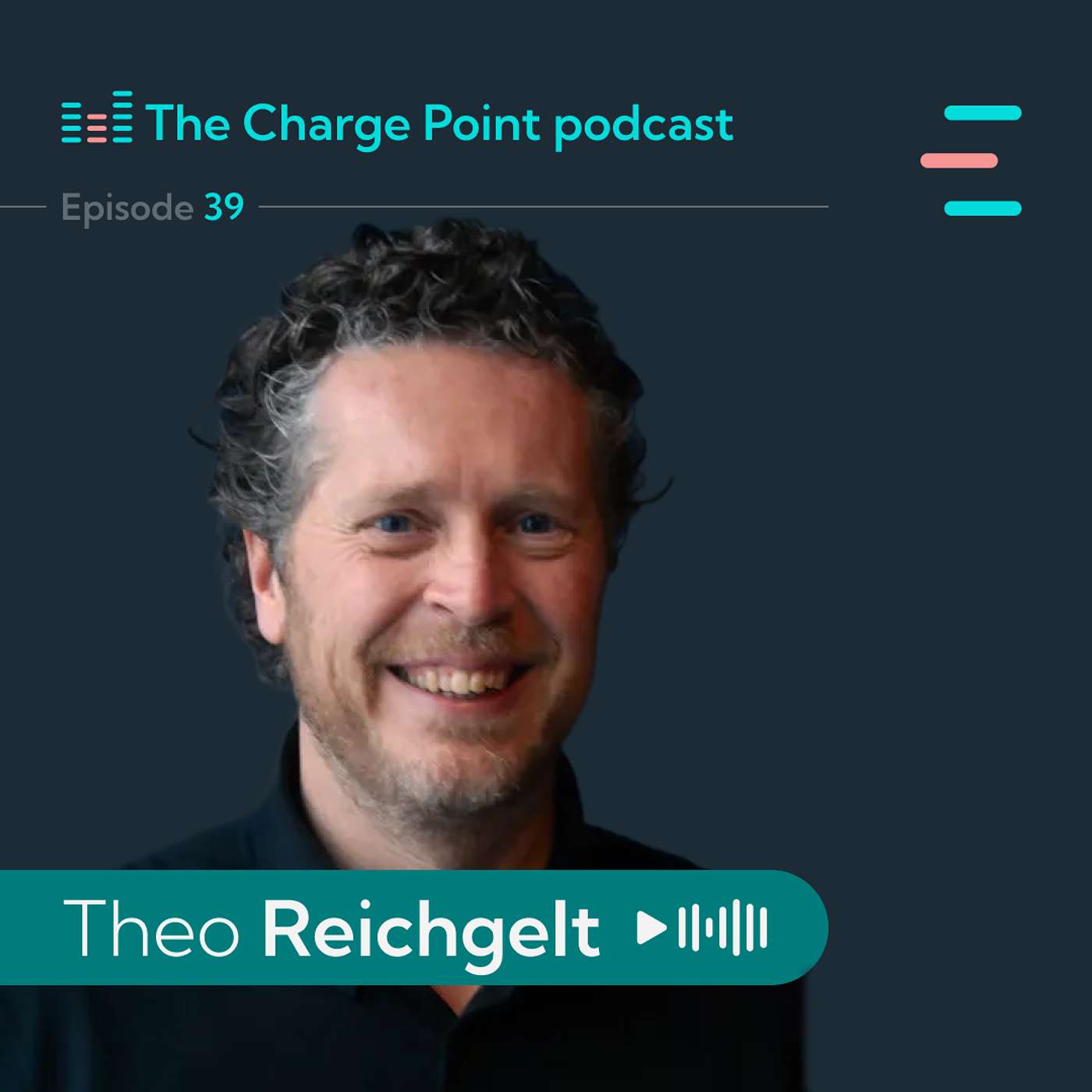
Episode 39 – From Specs to Stories: How CPOs Can Win with Better Marketing

Episode Summary:  In this episode, host Christophe Lephilibert speaks with Theo Reichgelt, founder of the e-mobility-focused marketing agency Next Industry. They dive into the unique challenges and opportunities CPOs face when it comes to marketing and branding — from making technical products relatable, to educating new EV drivers, to convincing site owners of the value of hosting chargers.  Whether you're leading a network, scaling a brand, or just trying to simplify your message in a complex space, this conversation is packed with practical advice and fresh perspective.  About the Guest:  Theo Reichgelt is the founder of Nexxt Industry, a marketing agency specialized in the EV and e-mobility space. With a background that includes working at Allego and supporting dozens of companies across Europe, Theo brings deep experience in turning technical offerings into clear, compelling brands.  🔗 Connect with Theo on LinkedIn  Topics Covered:  Why branding in e-mobility starts at the charge point  The common marketing pitfalls CPOs fall into — and how to avoid them  Educating vs. selling: what new EV drivers really need  The importance of B2B and B2C messaging for CPOs  How to simplify complex technical propositions  Why storytelling is the new differentiator in a specs-driven industry  The growing role of marketing in the commercial success of CPOs  Related Episode - Episode 18: "Marketing Leaders at CPOs - Building Brands from the Inside"  A great companion to this episode, focused on in-house marketing strategies at CPOs. 🔗 Listen now  Want to learn more about the power of co-located batteries?  Join our free Masterclass on co-located stationary batteries.  In this masterclass, our CTO, Robert Brehm, reveals how intelligent orchestration of co-located batteries and chargers unlocks multiple revenue streams through value stacking. Discover how to move beyond simple grid stability and transform your site into a profit-generating energy hub.  Access the on-demand webinar here: https://www.flexecharge.com/resources/webinars/the-power-of-co-located-batteries-unlocking-the-full-revenue-potential  Got some feedback or questions? Text us! You can get more information on our website. Give us some stars please 🌟 If you enjoyed the episode, please give it a 5-stars note and leave us a review. Get in Touch: Do you have suggestions for future guests or topics? Reach out to us at hello@flexecharge.com.  Subscribe & Stay Updated: 🔔 Make sure to subscribe to the Charge Point Podcast to stay updated on the latest trends and developments in the world of EV charging and energy. 📩 You can subscribe to our Newsletter, The Charge Point Journal, by clicking here. 🫱🏻‍🫲🏼 And you can follow us on Linkedin by clicking here and connect with Christophe here. ⚡ Let’s keep the conversation—and the electrons—flowing.

45 minAbspielen in:

Do4Dez 25
The Charge Point PodcastPV

Philippe VassilopoulosGast

Episode 38 – From Spot Pricing to Flex Markets: Essential Insights for CPOs from EPEX SPOT

Episode Overview  In this episode, we explore, with our guest Philippe Vassilopoulos from EPEX SPOT, how Europe’s electricity markets - from day-ahead pricing to local flexibility platforms - are reshaping the economics of EV charging. With EPEX SPOT’s perspective on market design and flexibility, we connect these insights to the opportunities emerging for Charge Point Operators (CPOs), especially as VPP participation and on-site battery storage become mainstream.  Topics We Cover  How spot and intraday electricity prices are formed  Why local flexibility markets are accelerating in Europe and the UK  The UK Power Networks project: 250,000+ flexible assets supporting grid congestion management  The growing role of EVs, heat pumps, and batteries as flexibility resources  What dynamic pricing means for depot charging and CPO profitability  How CPOs can respond to volatility with energy-aware load management  The link between wholesale markets and emerging VPP models  How BESS + EV charging unlock new revenue streams and grid services  Why This Matters for CPOs & infrastructure owners  Wholesale price signals now directly influence charging profitability  Flexibility markets are becoming accessible for distributed assets — including EV chargers  Local grid constraints are shaping where and how fast CPOs can grow  Smart energy management, VPP participation, and co-located storage will define the next wave of competitiveness  CPOs can future-proof sites by integrating dynamic load management, BESS, and flexibility-ready infrastructure   Key Takeaways  Electricity markets are not abstract — they shape real operational and financial decisions for CPOs  Price-responsive charging and storage will determine future profitability  Local flexibility markets offer a major new revenue opportunity  CPOs who build “energy-market-ready” infrastructure will outperform those who don’t  Want to learn more about the power of co-located batteries?  Join our free Masterclass on co-located stationary batteries.  In this masterclass, our CTO, Robert Brehm, reveals how intelligent orchestration of co-located batteries and chargers unlocks multiple revenue streams through value stacking. Discover how to move beyond simple grid stability and transform your site into a profit-generating energy hub.  Access the on-demand webinar here >> https://www.flexecharge.com/resources/webinars/the-power-of-co-located-batteries-unlocking-the-full-revenue-potential  Got some feedback or questions? Text us! You can get more information on our website. Give us some stars please 🌟 If you enjoyed the episode, please give it a 5-stars note and leave us a review. Get in Touch: Do you have suggestions for future guests or topics? Reach out to us at hello@flexecharge.com.  Subscribe & Stay Updated: 🔔 Make sure to subscribe to the Charge Point Podcast to stay updated on the latest trends and developments in the world of EV charging and energy. 📩 You can subscribe to our Newsletter, The Charge Point Journal, by clicking here. 🫱🏻‍🫲🏼 And you can follow us on Linkedin by clicking here and connect with Christophe here. ⚡ Let’s keep the conversation—and the electrons—flowing.

41 minAbspielen in:

Gäste, die länger als 12 Monate zurückliegen, gibt es mit Pro. Pläne ansehen