Host Rachel Feltman, alongside leading science and tech journalists, dives into the rich world of scientific discovery in this bite-size science variety show.
Guests on the show
Tue17Nov
 JH
Joseph HowlettGuest
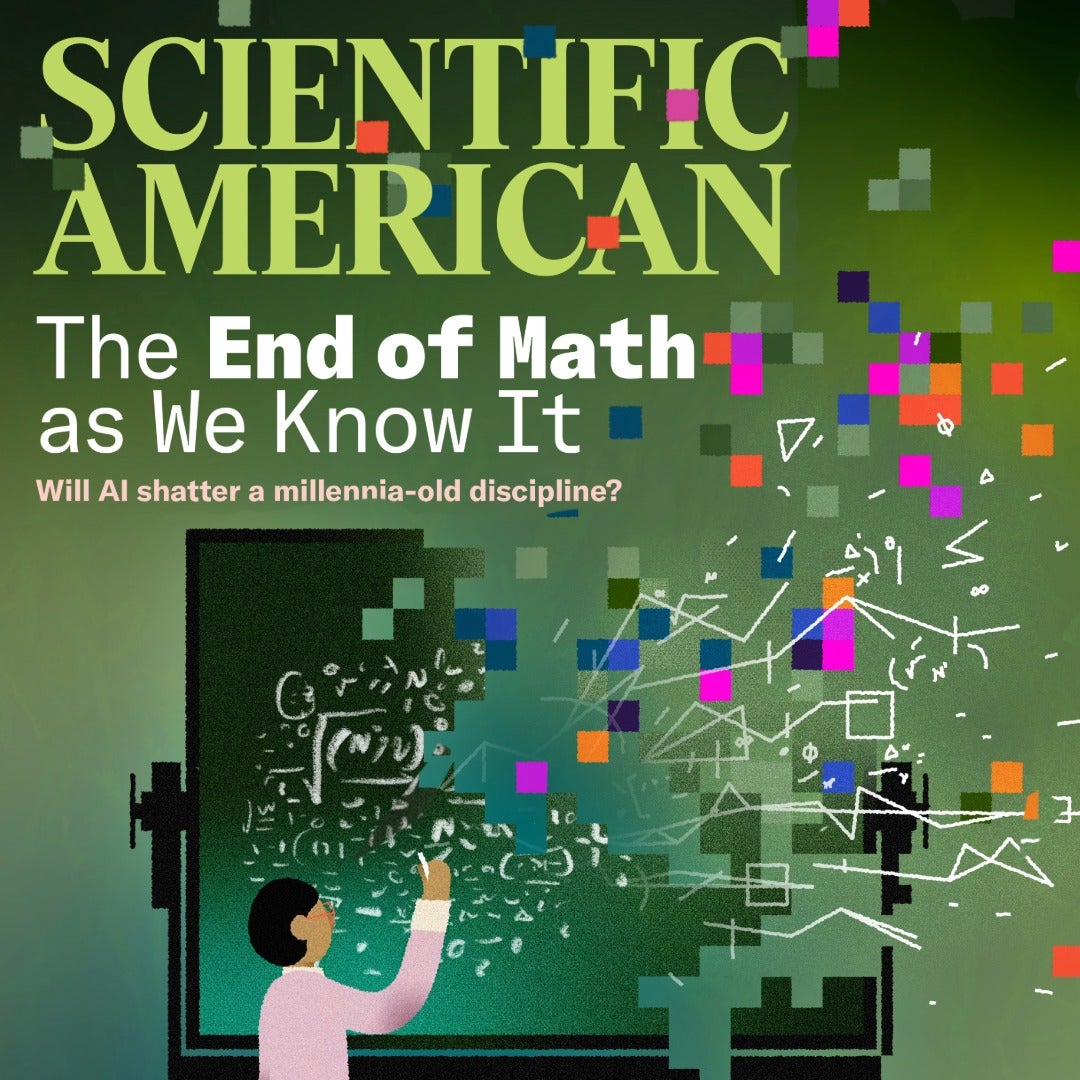
What does it mean to do math in a world where artificial intelligence might do it better? That’s the question mathematicians are grappling with as AI systems advance. Could this technology be a boon to the field, or should mathematicians unite to fight against it? On this episode of Science Quickly, Scientific American senior reporter Joseph Howlett reads his December/January cover story, “The End of Math as We Know It.” In his piece, he speaks with leaders in the field who are embracing AI as an opportunity to solve age-old problems and others who see it as a hindrance to the true art of mathematics.
E-mail us at sciencequickly@sciam.com if you have any questions, comments or ideas for stories we should cover!
Discover something new every day: subscribe to Scientific American and sign up for Today in Science, our daily newsletter.
Science Quickly is produced by Rachel Feltman, Fonda Mwangi, Allison Rodgers and Jeff DelViscio. This episode was edited by Allison Rodgers. The original article was fact-checked by Jennifer Hackett and copyedited by Angelique Rondeau and Aaron Shattuck.’
Learn more about your ad choices. Visit megaphone.fm/adchoices
25 min
Wed4Nov
 EM
Edward MelilloGuest
In this episode of Science Quickly, Rachel Feltman speaks with environmental historian Edward Melillo about the tiny soybean, which has come to dominate America’s diet. When you think of soy, you may only picture a block of yummy tofu or soy milk, but this crop has quietly made its way into 60 percent of processed foods. In fact, 2026 is on track to become a record soybean harvest for the U.S. And soy doesn’t just show up on our plates: as an oil, it can power trucks, buses and even planes. Tune in to hear how this plant took over the American food system.
Recommended Reading:
How Seed Oils Became Controversial—And What the Science Really Says
Why corn isn’t entirely to blame for ‘corn sweat’
E-mail us at sciencequickly@sciam.com if you have any questions, comments or ideas for stories we should cover!
Discover something new everyday: subscribe to Scientific American and sign up for Today in Science, our daily newsletter.
Science Quickly is produced by Rachel Feltman, Fonda Mwangi, Sushmita Pathak, Allison Rodgers and Jeff DelViscio. This episode was edited by Alex Sugiura, with fact-checking by Marielle Issa and Aaron Shattuck. Our theme music was composed by Dominic Smith.
Learn more about your ad choices. Visit megaphone.fm/adchoices
16 min
Mon2Nov
 PH
Peter HallGuest
In this week’s news roundup, we take a look at what’s happening with the Ebola outbreak in parts of Africa. Later SciAm editorial fellow Peter Hall joins host Rachel Feltman to discuss recent claims by OpenAI and Anthropic that their models have solved some of the world’s toughest math and physics problems. Plus, we dive into new research that suggests making daylight saving time permanent could put schoolchildren at risk.
Recommended Reading:
Dueling proofs from OpenAI and Anthropic astound scientists
OpenAI just scooped mathematicians’ work on another million-dollar problem
E-mail us at sciencequickly@sciam.com if you have any questions, comments or ideas for stories we should cover!
Discover something new every day: subscribe to Scientific American and sign up for Today in Science, our daily newsletter.
Science Quickly is produced by Rachel Feltman, Fonda Mwangi, Sushmita Pathak, Allison Rodgers and Jeff DelViscio. This episode was edited by Alex Sugiura, with fact-checking by Marielle Issa and Aaron Shattuck. Our theme music was composed by Dominic Smith.
Learn more about your ad choices. Visit megaphone.fm/adchoices
13 min
Wed21Oct
 AN
Annalee NewitzGuest
In this episode of Science Quickly, science journalist and science-fiction author Annalee Newitz discusses their novel A Wall Is Also a Road, a story about a graduate student who also happens to be a conscious slime mold alien. The slime mold, named Gardenpath, has decided to study an alien civilization, and her fieldwork has taken her to Pompeii, where she befriends a local sex worker named Murtis. Newitz and Science Quickly host Rachel Feltman talk about the compelling nature of slime molds, the value of looking at human civilization from the outside and the ordinary people of Pompeii.
Recommended Reading:
Ancient Roman scrolls destroyed by Mount Vesuvius digitally unrolled in full for first time
Tom Hiddleston on Pompeii, Mount Vesuvius and the human stories frozen in time
Slime Mold Helps to Map the Universe’s Tendrils of Dark Matter
How Slime Molds Remember Where They Ate
E-mail us at sciencequickly@sciam.com if you have any questions, comments or ideas for stories we should cover!
Discover something new every day: subscribe to Scientific American and sign up for Today in Science, our daily newsletter.
Science Quickly is produced by Rachel Feltman, Fonda Mwangi, Sushmita Pathak, Allison Rodgers and Jeff DelViscio. This episode was edited by Alex Sugiura, with fact-checking by Marielle Issa and Aaron Shattuck. Our theme music was composed by Dominic Smith.
Learn more about your ad choices. Visit megaphone.fm/adchoices
20 min
Tue20Oct
 AP
Allison ParshallGuest
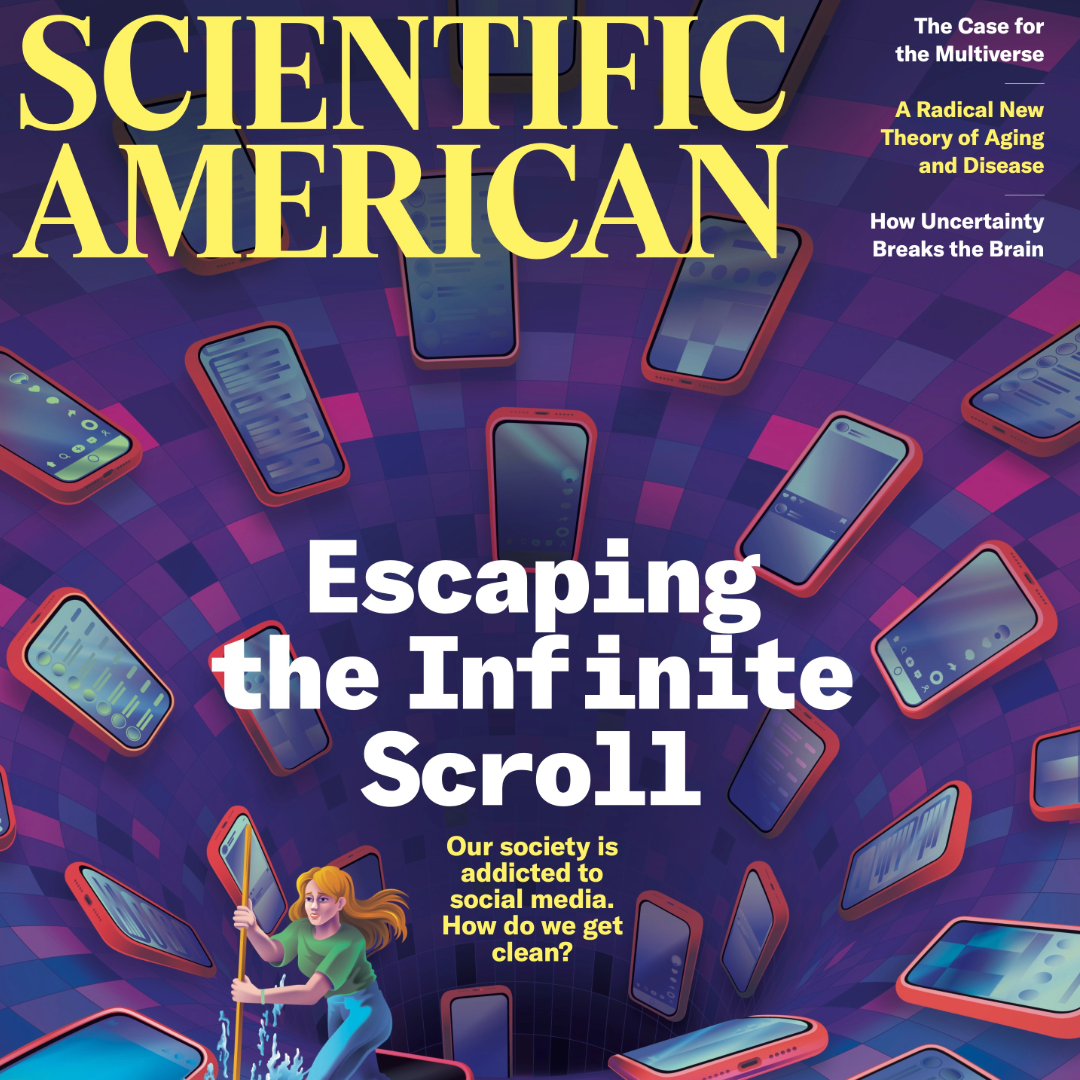
How much screen time is too much? In this episode of Science Quickly, Scientific American associate editor Allison Parshall reads her November cover story, “Escaping the Infinite Scroll.” In the story, she explores the growing debate over screen addiction and problematic social media use. From landmark lawsuits against tech companies to the psychology behind endless scrolling, she explains what researchers know about digital dependence, why social platforms are designed to keep us engaged and how some people are turning to addiction-style recovery programs for help.
Recommended Reading:
Meta to pay $18 billion and make sweeping app changes to settle social media harms lawsuit
E-mail us at sciencequickly@sciam.com if you have any questions, comments or ideas for stories we should cover!
Discover something new every day: subscribe to Scientific American and sign up for Today in Science, our daily newsletter.
Science Quickly is produced by Rachel Feltman, Fonda Mwangi, Allison Rodgers and Jeff DelViscio. This episode was edited by Allison Rodgers. The article was fact-checked by Wudan Yan.
Learn more about your ad choices. Visit megaphone.fm/adchoices
30 min
Fri9Oct
 HK
Helena Kopp KallnerGuest
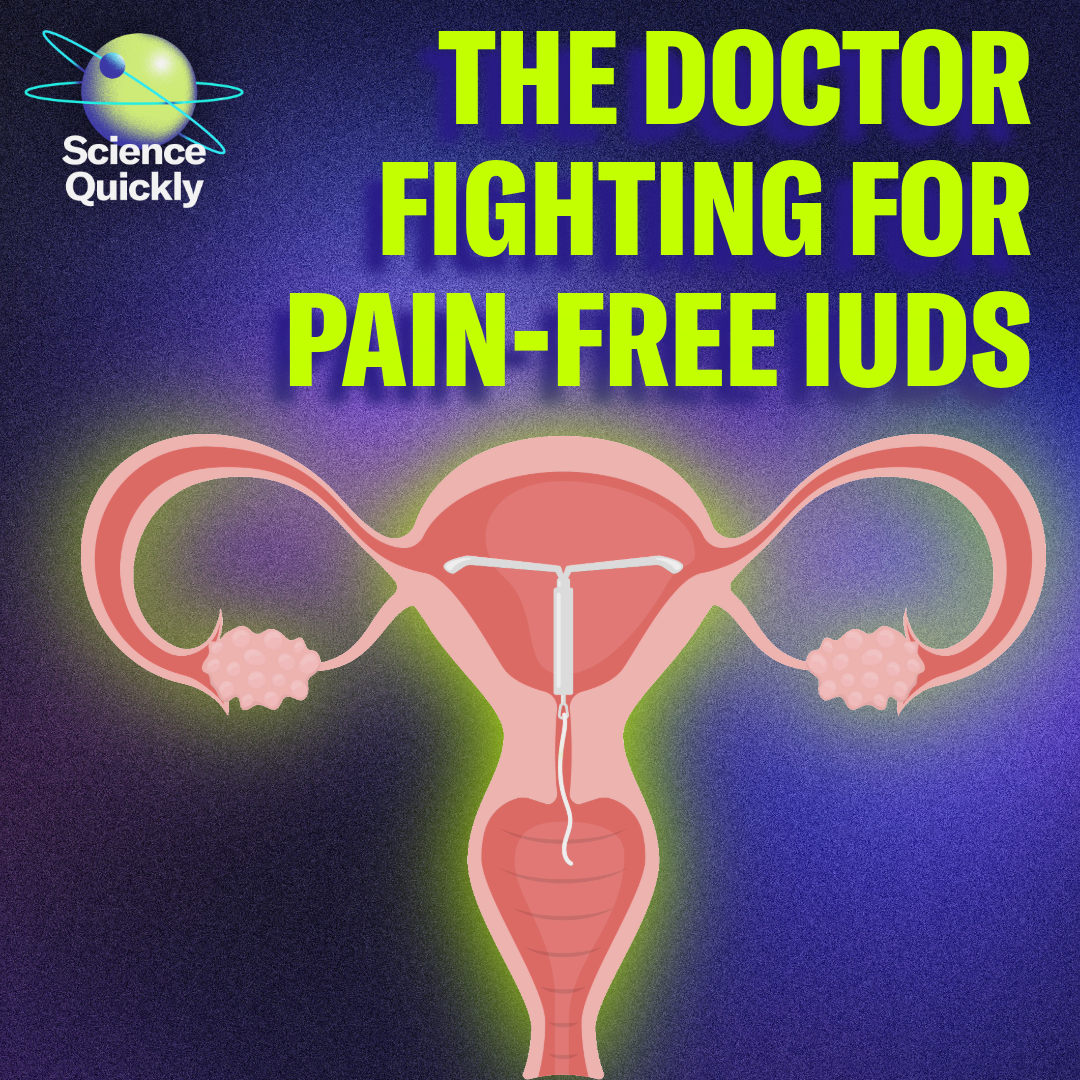
In this episode of Science Quickly, Rachel Feltman speaks with Helena Kopp Kallner, an ob-gyn and a professor, about her promising new study that shows local anesthetic can reduce pain during placements of intrauterine devices (IUDs). These devices are one of the most effective and convenient forms of birth control, but the pain of insertion keeps many patients away. Kopp Kallner explains why IUD insertion pain has long been ignored, how existing pain-relief options fall short and why patients themselves may be the key to driving adoption of this evidence-based approach.
Recommended Reading:
What Is Long-Acting Reversible Birth Control?
Misinformation around Birth Control Online Is a Form of Contraception Coercion
E-mail us at sciencequickly@sciam.com if you have any questions, comments or ideas for stories we should cover!
Discover something new everyday: subscribe to Scientific American and sign up for Today in Science, our daily newsletter.
Science Quickly is produced by Rachel Feltman, Fonda Mwangi, Allison Rodgers and Jeff DelViscio. This episode was edited by Alex Sugiura, with fact-checking by Marielle Issa and Aaron Shattuck. Our theme music was composed by Dominic Smith.
Learn more about your ad choices. Visit megaphone.fm/adchoices
19 min
Fri2Oct

Alexis Nikole NelsonGuest
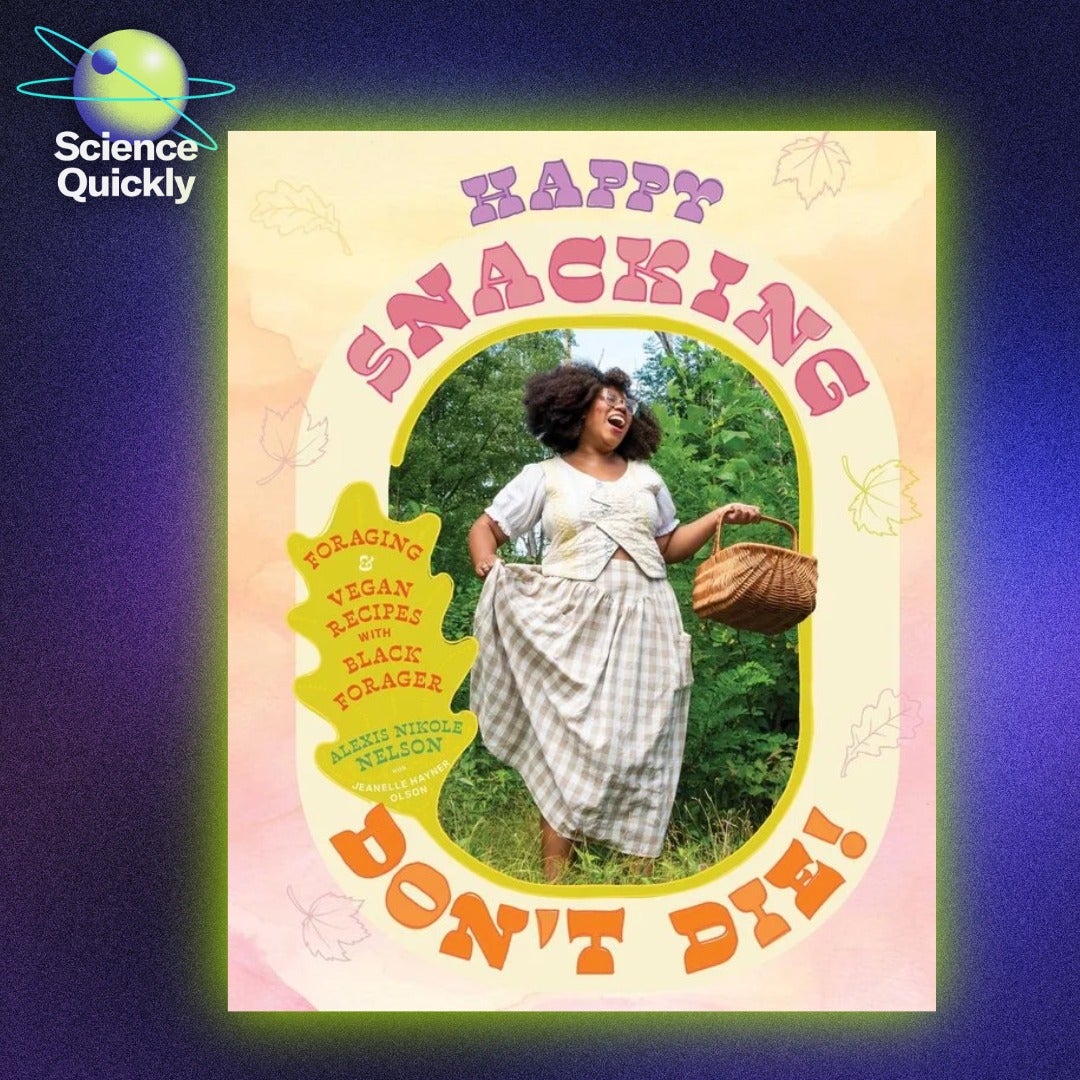
In this episode of Science Quickly, Rachel Feltman speaks with Alexis Nikole Nelson, better known as Black Forager, about her new book Happy Snacking, Don’t Die! Nelson shares how a childhood fascination with edible plants grew into a passion for foraging, conservation and science communication. From city sidewalk snacks and serviceberries to ocean-water pickles, she explains how foraging can deepen our connection to nature while encouraging responsible stewardship of the ecosystems that sustain us.
Recommended Reading:
Happy Snacking, Don’t Die! Alexis Nikole Nelson. S&S/Simon Element, 2026
E-mail us at sciencequickly@sciam.com if you have any questions, comments or ideas for stories we should cover!
Discover something new everyday: subscribe to Scientific American and sign up for Today in Science, our daily newsletter.
Science Quickly is produced by Rachel Feltman, Fonda Mwangi, Allison Rodgers and Jeff DelViscio. This episode was edited by Alex Sugiura, with fact-checking by Marielle Issa and Aaron Shattuck. Our theme music was composed by Dominic Smith.
Learn more about your ad choices. Visit megaphone.fm/adchoices
19 min
Wed30Sep
 FW
Fangzhou WangGuest
In this episode of Science Quickly, Rachel Feltman speaks with criminologist Fangzhou Wang about how romance scams have evolved from simple online deception into sophisticated, artificial-intelligence-powered fraud operations. They discuss how scammers use dating apps, fake identities, deepfakes and cryptocurrency schemes to build trust and steal money and what researchers are learning about helping people recognize and resist manipulation before they become victims.
Recommended Reading:
“Daejon Love Case Highlights Online Romance Scams: Research Reveals Scammers’ Tactics—And How to Defend against Them,” by Fangzhou Wang, in the Conversation. Published online September 2, 2026
Fangzhou Wang’s profile at the University of Texas at Arlington
“A Crime Script Analysis of Pao Fen Operations and the Construction of Prevention Strategies,” by Fangzhou Wang, in Crime & Delinquency. Published online August 14, 2025
“The Prevention of Online Romance Scams Using a Crime Script Analysis from the Victim’s Perspective,” by Fangzhou Wang and James D. Kelsay, in International Review of Victimology, Vol. 32, No. 2; May 2026
E-mail us at sciencequickly@sciam.com if you have any questions, comments or ideas for stories we should cover!
Discover something new everyday: subscribe to Scientific American and sign up for Today in Science, our daily newsletter.
Science Quickly is produced by Rachel Feltman, Fonda Mwangi, Allison Rodgers and Jeff DelViscio. This episode was edited by Alex Sugiura, with fact-checking by Marielle Issa and Aaron Shattuck. Our theme music was composed by Dominic Smith.
Learn more about your ad choices. Visit megaphone.fm/adchoices
18 min
Wed23Sep
 WL
Wendi LeBrettGuest
As colon cancer rates rise in younger adults, more and more people are paying attention to their poop and talking about it on social media, where such “poop maxxing” has become a hashtag. But what’s considered normal, and how can we measure our number twos? Board-certified gastroenterologist Wendi LeBrett joins Rachel Feltman to talk about what’s going on with the poop maxxing trend on social media, what a healthy stool should look and feel like, what common misconceptions around gut health people have, when to see a doctor, and more.
Recommended Reading:
Colon cancer is killing more young people in the U.S. than any other cancer
Scientists gave the same sample to seven at-home microbiome tests. The results were dramatically different
A pair of gut bacteria may cause constipation
E-mail us at sciencequickly@sciam.com if you have any questions, comments or ideas for stories we should cover!
Discover something new everyday: subscribe to Scientific American and sign up for Today in Science, our daily newsletter.
Science Quickly is produced by Rachel Feltman, Fonda Mwangi, Allison Rodgers and Jeff DelViscio. This episode was edited by Alex Sugiura. Marielle Issa and Aaron Shattuck fact-check our show. Our theme music was composed by Dominic Smith.
Learn more about your ad choices. Visit megaphone.fm/adchoices
16 min
Wed16Sep
 RF
Rachel FeltmanGuest
In this special crossover episode, Science Quickly shares an appearance by host Rachel Feltman on Vox’s Unexplainable. Together with host Noam Hassenfeld, she explores Scientific American’s special issue on impossible questions, diving into some of science’s biggest mysteries, from how common medications can work without scientists fully understanding them to whether there’s a limit to what humans can ever know. The conversation also ventures to the edge of cosmology, examining competing theories about what may have come before the big bang and why some questions might remain forever unanswered.
Recommended Reading:
Finding meaning in the impossible
The questions science may never answer
Listen to Unexplainable
Unexplainable on Spotify
E-mail us at sciencequickly@sciam.com if you have any questions, comments or ideas for stories we should cover!
Discover something new every day: subscribe to Scientific American and sign up for Today in Science, our daily newsletter.
Science Quickly is produced by Rachel Feltman, Fonda Mwangi, Allison Rodgers and Jeff DelViscio. This episode was edited by Alex Sugiura, with fact-checking by Marielle Issa and Aaron Shattuck. Our theme music was composed by Dominic Smith.
Learn more about your ad choices. Visit megaphone.fm/adchoices
26 min
Guests from more than 12 months ago are part of Pro. See plans
