
Shape the System cover
Podcast

Shape the System

by Vincent Turner

Shape the System has had 4 confirmed guests across 4 episodes in the last 12 months. Latest: Anya Cheng, Oct 26, 2026.

Apple PodcastsHow guests are confirmed

Find and tell the stories that inspire more people to rethink the way the world works. We interview people from all over the world who are changing our systems.. this might be food, energy, finance, education, health, environment, charitable.. anything really. They may be involved as founders or CEOs or providers to…

Guests on the show

Mon26Oct
Shape the System

Anya ChengGuest

Anya Cheng - Taelor

About the Guest Anya Cheng is the founder and CEO of Taelor, a Silicon Valley–based men’s clothing rental service that pairs professional stylists with AI and turns customer feedback into insight for fashion brands. Before co-founding Taelor with Phoebe Tan, Anya spent around 15 years building digital products for some of the world’s largest consumer companies. At Meta she helped build Facebook and Instagram Shopping. At eBay she was head of product, launching new businesses across the US, Latin America, Africa and Asia. As head of product at Target she helped open its Silicon Valley tech office, and as a senior director at McDonald’s she was in charge of everything digital, from in-store ordering kiosks and digital menu boards to the drive-thru, the mobile app and food delivery. Originally from Taiwan, Anya has grown Taelor to more than 100 brand partners, partnerships with the New York Yankees and Coffee Meets Bagel, and recognition in Inc.’s 2025 Best in Business awards. Episode Summary What if the most valuable thing a clothing company could collect wasn’t the sale at the till, but what happens after you get dressed? That question sits at the centre of Taelor. In this episode of Shape the System, host Vincent Turner talks with founder and CEO Anya Cheng about a men’s clothing rental service that doubles as a data engine for the fashion industry, and why the two halves of the business make each other stronger. Anya’s starting point was personal. Leading large teams at Meta, and feeling like an imposter, she wanted to dress in a way that projected confidence. She had no interest in fashion itself. Subscription boxes required her to buy from every shipment, and rental sites asked her to scroll through tens of thousands of garments. That led to her realisation: most fashion companies are designed for people who love fashion, not for people who simply want to be ready for their day. The consumer offer is simple. For around US$100 a month, members receive six garments chosen by AI and professional stylists. They wear them, send them back without washing them, and receive the next lot, so there’s no shopping and no laundry. What members give back is feedback, and because Taelor knows who they are and where they wore each outfit, that feedback comes with context. It might be a founder heading to a conference, a Boston lawyer on a date night, or a man whose size medium now sits an inch short at the belly. That context is the gap Anya sees in today’s AI. Models know what people review, click and buy online, but almost nothing about what happens in the physical world once the parcel arrives. The fashion industry badly needs that knowledge. By Anya’s figures, around 40% of most brands’ inventory goes unsold. That’s roughly US$300 billion of stock in a US$1.8 trillion market, in an industry she says accounts for around 10% of global carbon emissions. The main cause is that brands forecast next year’s demand from last year’s sales. Taelor’s feedback is specific enough to act on: the second button falls off after five washes, or the fabric doesn’t stretch enough for bigger, active American customers. Anya contrasts that with the one-star “too big” reviews she saw as head of product at Target, which never said which size, which body shape or after how many washes. She says brands using Taelor’s data have seen sell-through improve by around 20%. The brand stories show how this works in practice. A Los Angeles label that had only ever sold through wholesale found out which hoodie fabric was its real hit, and began using it across its range. FINE, a Taiwanese manufacturer that produces for global athletic brands, launched its own label in the US. It learned that its single-material, easily recyclable fabric wasn’t stretchy enough for the market, and it changed course. Dutch brand R2 Amsterdam faced new European rules against destroying unsold stock, so it used Taelor to rent that inventory to American customers and test a new market at the same time. Many of these suppliers have since become customers of Taelor’s AI agent, which lets them query benchmark data across brands without needing an engineer. Vincent draws out a theme that runs through the whole conversation: the gap between what the customer is buying and what the system achieves. Taelor’s members aren’t paying for sustainability. They want to close the deal, win the job or land the second date. One member wore a dolphin-print shirt to a conference and found it opened conversations. Another reluctantly wore a blazer to dinner, and it ended up around his date’s shoulders on a chilly walk home. Anya describes Taelor as the gadget guy behind the superhero. Yet the model quietly delivers environmental outcomes. Like an airport rental car fleet, garments are sold before they wear out, on average after about three rentals and at around 50% off, through dynamic pricing. Inc. highlighted exactly this when recognising Taelor: it had brought secondhand clothing to busy men who would never set foot in a thrift store. Brands are paid through revenue share, so a durable garment keeps earning. At the end of its life, a piece goes to resale, repurposing and recycling partners. Looking ahead, Anya sees Taelor as a one-stop shop on both sides. For members, that means proactive AI that connects to a calendar and prepares the week ahead, plus expansion into shoes, accessories and gifting. For brands, it means a full product journey. AI helps decide what to make, small sample runs are rented to real customers for feedback within two weeks before mass production, and the platform provides a home for whatever doesn’t sell. She’s also in talks with AI labs that need proprietary real-world data, and believes the data business could one day match the consumer business at much higher margins. She points to Nuuly, Urban Outfitters’ women’s rental service, as proof the consumer model can scale profitably. The episode closes on the human side of the work. Anya describes a US government official posted in Southeast Asia who always rents for the opposite season, a father dressing to win custody of his two children, and a customer with cancer who says a new outfit makes him feel alive. Against those stories sits the relentless pace of Silicon Valley, and Anya’s way of coping with it: swapping “I should” for “I would like to.” That small shift, she says, is how she ended up partnering with the New York Yankees and Coffee Meets Bagel. Key Takeaways Forecasting from last year’s sales is a structural flaw. Most fashion brands predict demand from historical sales. Anya says that leaves around 40% of inventory unsold, roughly US$300 billion worth, because last year’s bestseller tends to become next year’s markdown. Rental captures data that retail never sees. Taelor knows each member’s body shape, occupation and occasion, and how many times each garment has been washed. That makes its feedback precise enough for brands to act on, and Anya says it has lifted brands’ sell-through by around 20%. Lead with the outcome the customer actually wants. Members are paying to close deals, land jobs and get second dates, not to reduce waste. The environmental benefits are real, but they ride on a proposition built around confidence and convenience. Rental can be a gateway to secondhand. Like a rental car fleet, garments are typically sold before they show wear, on average after about three rentals and at around 50% off. That gives busy men a route into pre-owned clothing without visiting a thrift store. Unsold stock becomes an asset, and so does the data. Through revenue share, brands earn back their wholesale price, and often more from durable pieces, while gaining exposure and feedback. They can also test small sample runs with real customers before committing to mass production. AI labs are now interested in the same physical-world data. Notable Quotes “Last year’s bestseller is pretty much next year’s markdowns. So using historical sales numbers is a horrible idea, but that’s what the $1.8 trillion market is still doing today.” — Anya Cheng “AI knows what people review, click and buy on the internet, but it knows nothing about the physical world.” — Anya Cheng “We can tell the manufacturers and the brands: after your clothes are washed five times, the second button falls off. That’s very actionable insight.” — Anya Cheng “We are not really selling clothes. We are selling the chance to succeed. We are selling peace of mind.” — Anya Cheng “The more you say ‘I should’, the more you are blaming yourself. Now I say, ‘I would like to.’” — Anya Cheng Resources Experience effortless style with rental and personal styling services: Taelor: Get 10 DAYS FREE TRIAL your first month of men's clothing subscription. Use code: ANYAFREE10 Sign up at: https://taelor.style/pages/membership - pick monthly plan Give the gift of time, convenience, and effortless style: Taelor Gift Cards: Get 15% OFF Use code: PODCASTGIFT Purchase at: https://taelor.style/products/menswear-rental-gift-card Shape the System is  an independent podcast with support from KPMG High Growth Ventures More about KPMG High Growth Ventures Scale up for success. We’re here for that. We navigate founders and their teams to the services they need to reach their next milestone.  From startup to scale and beyond. No matter where you are right now, we’ll get you the help you need to drive your business forward. We help founders fully realise their potential, as well as the potential of their team and their business, by connecting them to the expertise, skills and resources they need at every stage of their growth journey. Our extensive experience in partnering with evolving businesses means that we can provide you with tailored support as well as independent and practical insights.  Whether you are looking to refine your strategy, establish your operations, prepare for a capital raise, expand abroad or simply comply with regulatory requirements, we are here to help. Links: Website: About (highgrowthventures.com.au) LinkedIn: https://www.linkedin.com/showcase/kpmg-enterprise-high-growth-ventures/ Contacts: highgrowthventures@kpmg.com.au

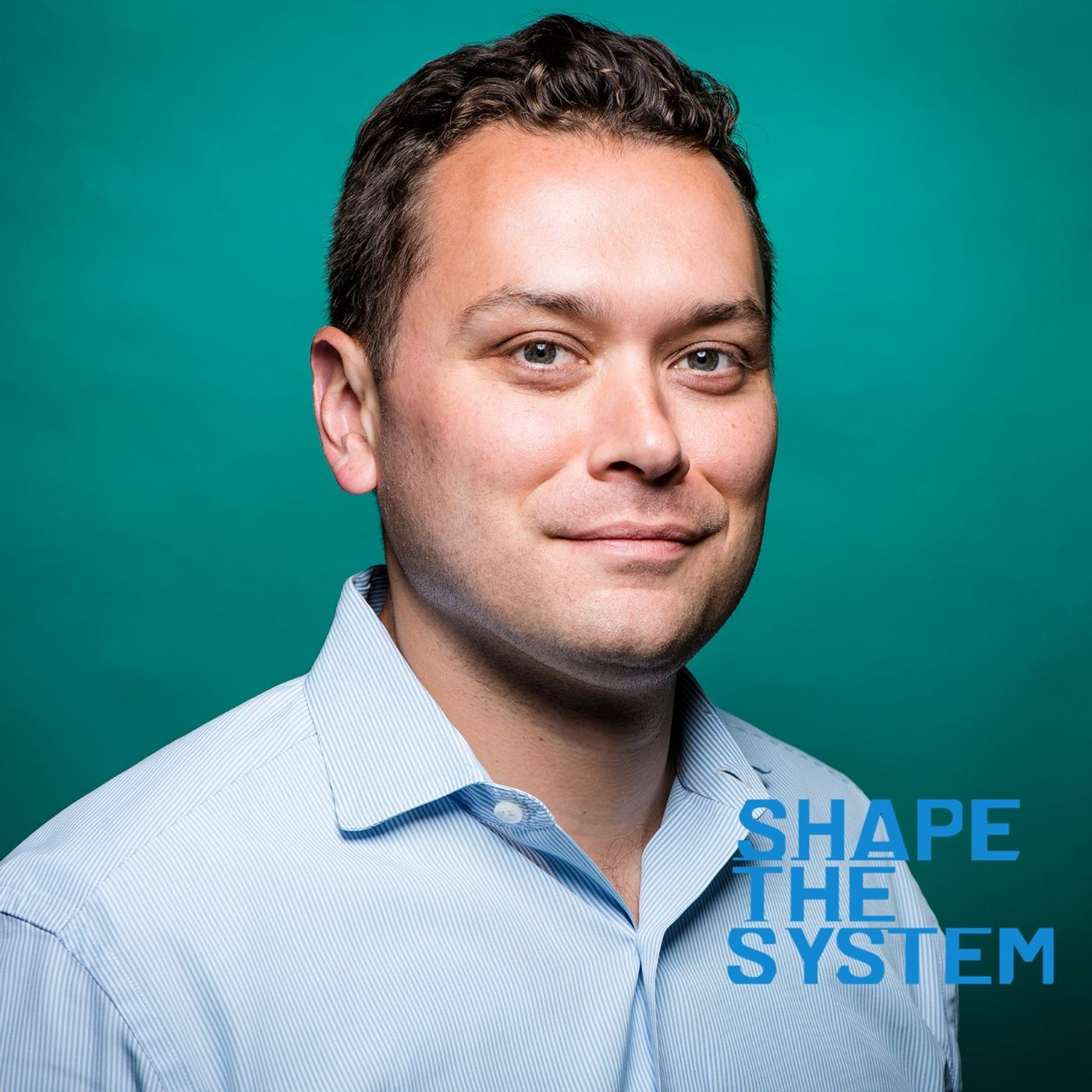
43 min

Sat18Jul
Shape the System

Chris DeArmittGuest

Chris DeArmitt - Plastics Research Council

About the Guest Dr. Chris DeArmitt FIMMM FRSC CChem is an independent polymer scientist, author, and founder of the Plastics Research Council — a nonprofit where he and professors from around the world work entirely unpaid to review and share peer-reviewed science on plastics. A specialist in polymer additives and fillers whose clients have included Apple and companies across multiple continents, Chris has spent over seven years and roughly a thousand hours annually reading thousands of studies on plastics, the environment, and human health. His findings are published in two freely available books and endorsed by toxicologists, medical doctors, and professors who have checked the science and found no errors. Episode Summary What do you actually know about plastics — and where did that knowledge come from? That's the question Dr. Chris DeArmitt puts to every audience he speaks to, and the answer is almost always the same: the media. In this episode of Shape the System, host Vincent Turner sits down with Chris for a wide-ranging, evidence-first conversation about one of the most misunderstood materials on the planet. The result is an episode that will challenge most of what you think you know — not through opinion, but through peer-reviewed science. Chris opens by reframing the scale of the problem. Plastics represent just half a percent of all materials and waste we produce. Replacing them with paper, metal, or glass would require roughly double the fossil fuel — not less — because those alternatives demand far more energy to manufacture. And despite the ubiquitous image of a turtle tangled in a plastic bag, Chris recounts successfully pushing the BBC to retract a photoshopped image of exactly that scenario, which he argues has never occurred in nature. The famous "floating island of plastic the size of Texas"? Undetectable by satellite, and contradicted by decades of ocean monitoring data showing a vessel must sail 100,000 miles — four times around the planet — to find a single piece of plastic bag. On microplastics, Chris is equally direct. Our lifetime ingestion of plastic particles amounts to roughly 0.015 grams over 70 years — a hundred million times below the no-observable-adverse-effect level established in over 2,000 studies spanning 60 years. The WWF's claim that we eat a credit card's worth of plastic each week, he notes, has been refuted by multiple independent studies — and remains on their website regardless. Meanwhile, the most common end-of-life options for plastic — landfill, incineration for energy recovery, or mechanical recycling — are all scientifically defensible, with recycling reducing environmental impact by a further 70% on top of plastic's already lowest-in-class baseline across 93% of applications studied. Looking forward, Chris draws a clear line between innovations with evidence and those without. Plant-based versions of existing polymers like polyethylene and polypropylene — chemically identical to their fossil fuel counterparts, recyclable in the same streams, with decades of safety data — represent a credible path. Novel biopolymers like PLA, PHA, and seaweed-derived plastics, by contrast, lack life cycle evidence that they reduce environmental impact, regardless of how appealing they sound. The most unsexy innovation he highlights may also be the most significant: down-gauging, the continuous industry-wide effort to use less material to do the same job. A PET bottle that weighed 25 grams a generation ago now weighs around 8 grams — a 60% reduction in material, achieved quietly, without a press release. Key Takeaways Plastics account for just 0.5% of materials and waste, and replacing them with paper, metal, or glass would roughly double fossil fuel usage — making plastic bans scientifically counterproductive by every life cycle study ever conducted. Our lifetime ingestion of microplastic particles is approximately 0.015 grams — a hundred million times below the established safe threshold — and no study in 60 years of research has documented a health effect from plastic particles at real-world doses. Plastic has the lowest environmental impact in 93% of applications studied, even without recycling; adding recycling reduces that impact by a further 70%, but the material is already net-positive before any recycling takes place. Litter is caused by litterers, not manufacturers — scientific studies comparing tourist beaches to remote beaches confirm litter originates from people on the beach, and post-bag-ban studies in Maine, Washington State, and New Jersey all found increased environmental impact and increased plastic sales following the bans. Plant-based polyethylene and polypropylene exist today and are identical in performance and recyclability to fossil fuel-derived versions — a more credible near-term innovation than novel biopolymers, which currently lack life cycle evidence of reduced environmental impact. Notable Quotes "Everything you know about plastics comes from a source that you don't trust. Maybe it's time to put that aside for 10 minutes and just consider what scientists say about it." — Dr. Chris DeArmitt "Plastic is actually net fossil fuel and carbon dioxide negative because they make cars lighter, they make airplanes lighter, they reduce food waste, and they insulate your homes." — Dr. Chris DeArmitt "The World Wildlife Fund tells us that we eat a credit card a week of microplastic. Science says that would take 20,000 years to do." — Dr. Chris DeArmitt "People think that because it's synthetic, it's like completely alien and different, and it really isn't. There's no property of polymers which is really different to anything natural." — Dr. Chris DeArmitt "The people with the most passion are doing the most harm because they didn't check the facts before they went off. They're like an unguided missile — they've got a big warhead but no guidance system." — Dr. Chris DeArmitt Resources Plastics Research Council Shape the System is an independent podcast with support from KPMG High Growth Ventures More about KPMG High Growth Ventures Scale up for success. We’re here for that. We navigate founders and their teams to the services they need to reach their next milestone. From startup to scale and beyond. No matter where you are right now, we’ll get you the help you need to drive your business forward. We help founders fully realise their potential, as well as the potential of their team and their business, by connecting them to the expertise, skills and resources they need at every stage of their growth journey. Our extensive experience in partnering with evolving businesses means that we can provide you with tailored support as well as independent and practical insights. Whether you are looking to refine your strategy, establish your operations, prepare for a capital raise, expand abroad or simply comply with regulatory requirements, we are here to help. Links: Website: About (highgrowthventures.com.au) LinkedIn: https://www.linkedin.com/showcase/kpmg-enterprise-high-growth-ventures/ Contacts: highgrowthventures@kpmg.com.au Shape the System is  an independent podcast with support from KPMG High Growth Ventures More about KPMG High Growth Ventures Scale up for success. We’re here for that. We navigate founders and their teams to the services they need to reach their next milestone.  From startup to scale and beyond. No matter where you are right now, we’ll get you the help you need to drive your business forward. We help founders fully realise their potential, as well as the potential of their team and their business, by connecting them to the expertise, skills and resources they need at every stage of their growth journey. Our extensive experience in partnering with evolving businesses means that we can provide you with tailored support as well as independent and practical insights.  Whether you are looking to refine your strategy, establish your operations, prepare for a capital raise, expand abroad or simply comply with regulatory requirements, we are here to help. Links: Website: About (highgrowthventures.com.au) LinkedIn: https://www.linkedin.com/showcase/kpmg-enterprise-high-growth-ventures/ Contacts: highgrowthventures@kpmg.com.au
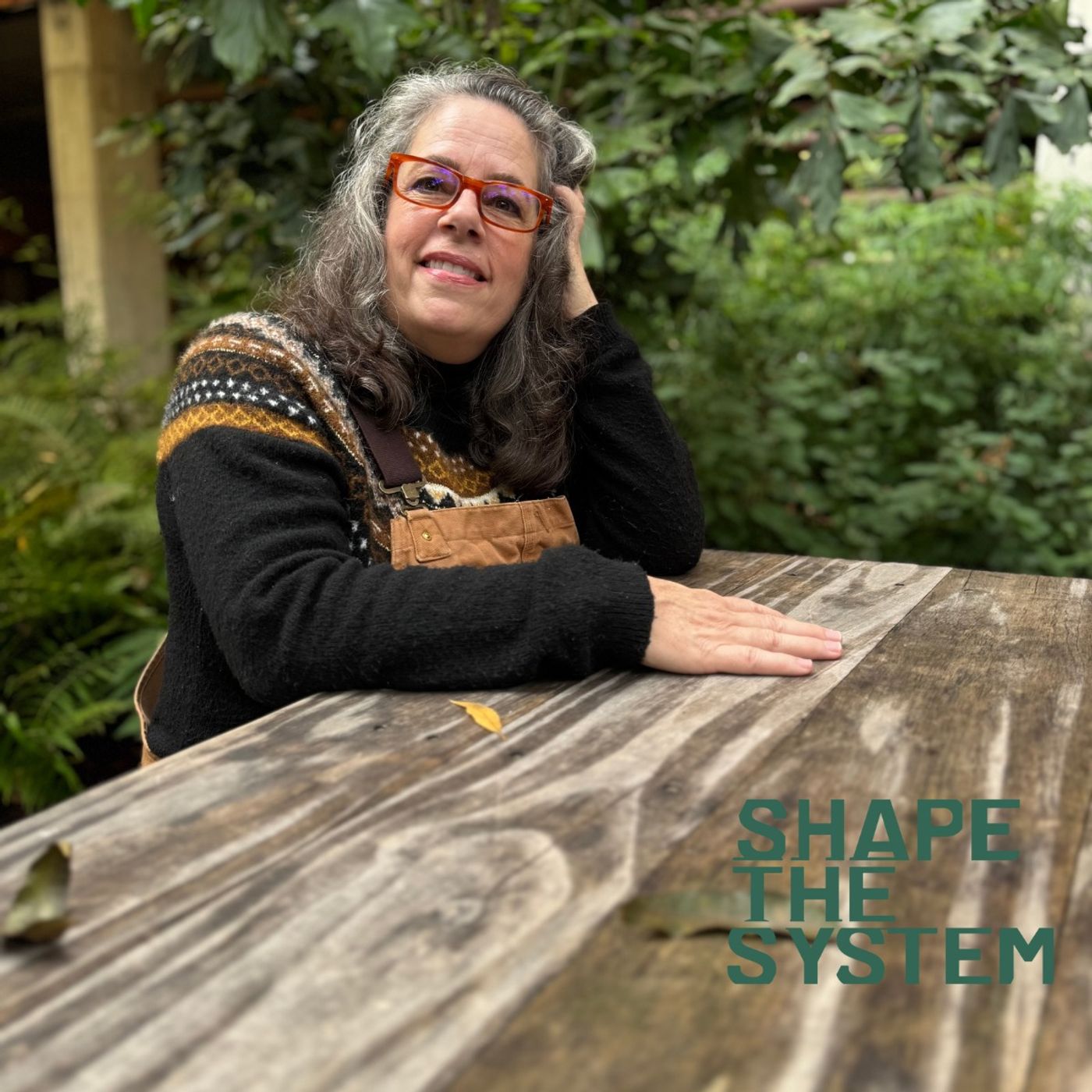
1 h 09 min

Mon2Mar
Shape the System

Jason RollandGuest

Jason Rolland - Carbon Inc

About the Guest Jason Rolland is the CEO of Carbon Inc, a leading additive manufacturing company focused on production-grade 3D printing. Trained as a polymer chemist, Jason completed his PhD at the University of North Carolina at Chapel Hill under Carbon co-founder Joe DeSimone, where he developed a deep interest in translating materials science into real-world impact. His career sits at the intersection of chemistry, entrepreneurship, and advanced manufacturing, with a particular focus on making 3D printing viable for end-use products at scale. At Carbon, he has helped shift the industry from “rapid prototyping” to true digital manufacturing. Episode Summary In this episode of Shape the System, host Vincent Turner sits down with Jason Rolland to unpack how additive manufacturing—specifically polymer-based 3D printing—is reshaping the way physical products are designed, made, and distributed. Rather than framing 3D printing as a novelty or prototyping tool, the conversation explores its emergence as a genuine manufacturing alternative to injection moulding and foams. Jason walks through the limitations of traditional manufacturing, particularly where cost efficiency comes at the expense of performance, customisation, and waste. Using examples from footwear, helmets, bike saddles, wheelchair cushions, and dental products, he explains how lattice geometries and advanced elastomers unlock new performance characteristics—such as targeted cushioning, breathability, and durability—that simply aren’t possible with conventional methods. The discussion also touches on broader system-level implications: on-demand production, reduced tooling, faster iteration cycles, and more localised manufacturing. From Adidas’ fully 3D-printed Climacool shoe to millions of custom dental parts produced each month, the episode highlights where the economics already work—and where they’re heading next. Key Takeaways 3D printing is moving from prototyping into true manufacturing, producing end-use parts that match or outperform traditional materials. Lattice structures enable performance gains—variable stiffness, breathability, and impact protection—that foams and injection-moulded parts can’t achieve. Customisation at scale is already real in sectors like dentistry, with millions of unique parts produced every month. Digital manufacturing reduces reliance on tooling, enabling faster design iteration and lower inventory risk. The biggest barriers to adoption today are awareness and application development speed, not material performance. Notable Quotes “It’s no longer okay for something to be cool just because it’s 3D printed. It actually has to serve function and do something better.” — Jason Rolland “Nobody actually cares about all the cool tech that’s behind it. They care about the part that comes out of the printer.” — Jason Rolland “You can intrinsically have stiffer regions and softer regions within the same part just by changing the geometry.” — Jason Rolland “The success of the year isn’t how many shoes you sell—it’s how much inventory you have left over.” — Jason Rolland “There’s almost no industry that can’t benefit from what we’re doing.” — Jason Rolland Resources Carbon Inc — https://carbon3d.com/?utm_source=shapethesystem.org Shape the System is  an independent podcast with support from KPMG High Growth Ventures More about KPMG High Growth Ventures Scale up for success. We’re here for that. We navigate founders and their teams to the services they need to reach their next milestone.  From startup to scale and beyond. No matter where you are right now, we’ll get you the help you need to drive your business forward. We help founders fully realise their potential, as well as the potential of their team and their business, by connecting them to the expertise, skills and resources they need at every stage of their growth journey. Our extensive experience in partnering with evolving businesses means that we can provide you with tailored support as well as independent and practical insights.  Whether you are looking to refine your strategy, establish your operations, prepare for a capital raise, expand abroad or simply comply with regulatory requirements, we are here to help. Links: Website: About (highgrowthventures.com.au) LinkedIn: https://www.linkedin.com/showcase/kpmg-enterprise-high-growth-ventures/ Contacts: highgrowthventures@kpmg.com.au

1 h 03 min

Mon22Dec 25
Shape the System

Maude ManoukianGuest

Maude Manoukian - Forager Project

About the Guest Maude Manoukian is the Chief Community Officer at Forager Project, a US-based company redefining dairy through plant-based innovation. With a background spanning Odwalla and Whole Foods Market, Maude brings deep experience in natural foods, supply chains, and conscious consumerism. Her long-standing collaboration with Forager Project founder Stephen Williamson has shaped a shared philosophy grounded in sustainability, community engagement, and continuous improvement. At Forager Project, she leads both community programs and the human-centric culture that drives the company’s mission. Episode Summary In this episode of Shape the System, host Vincent Turner sits down with Maude Manoukian to explore how Forager Project is reimagining dairy through cashew-based alternatives. Maude outlines the fundamental resource problem in traditional animal-based dairy — an industry now 8–10 times more resource-intensive than plant-based options — and why scaling that model for a planet of eight billion people is no longer sustainable. Their conversation traces the historical reasons dairy became dominant, what’s changed, and why a rethink is overdue. The discussion then turns to cashews — Forager Project’s “star ingredient” — and why they are uniquely suited as a dairy alternative due to their creamy texture, neutral flavour and minimal ecological footprint. Maude explains how cashews grown in places like Côte d’Ivoire are naturally rain-fed, resilient to poorer soils, and part of reforestation efforts rather than deforestation risk. She walks through the surprisingly complex journey from cashew apple to packaged yoghurt, highlighting the critical roles of farming practice, processing, fermentation, and product consistency. Beyond the product itself, the episode delves into Forager Project’s broader philosophy: a commitment to community-centred supply chains, regenerative thinking, and multi-year programs training 10,000 cashew growers. Maude also reflects on packaging challenges, their shift to recycled plastics, and the belief that improving systems requires both experimentation and humility. Ultimately, the ambition is to “flip the script” — shifting dairy consumption from 80% animal-based to 80% plant-based — a move driven by taste, accessibility, and cultural change as much as sustainability. Key Takeaways Traditional animal-based dairy now requires 8–10 times the resources of plant-based alternatives, particularly land and water. Cashews offer a uniquely low-impact, creamy, neutral-flavoured base for dairy alternatives and can thrive with no irrigation in suitable climates. Forager Project is investing in a multi-year training program for 10,000 cashew growers in Côte d’Ivoire to improve yields, livelihoods and regenerative practices. Taste and price remain the two biggest levers for shifting consumers towards plant-based dairy; flavour consistency is critical to behaviour change. The company is transitioning its packaging to rPET and continues to explore next-generation sustainable formats as technology matures. Notable Quotes “Conventional animal-based dairy requires a lot more resources… between eight and ten times more demanding than plant-based options.” — Maude Manoukian “Our star ingredient is the cashew… we think they’re the best comparison to what people currently know as a dairy product.” — Maude Manoukian “You can’t just say, ‘Great, these can grow here — let’s cut down stuff and plant cashew trees.’ Nature doesn’t like that.” — Maude Manoukian “It’s all connected… the way you do stuff is as important, if not more important, than what you’re doing.” — Maude Manoukian “We’re trying to flip the script — from 80% animal-based dairy to 80% plant-based.” — Maude Manoukian Resources Forager Project — https://foragerproject.com/?utm_source=shapethesystem.org Shape the System is an independent podcast with support from KPMG High Growth Ventures More about KPMG High Growth Ventures Scale up for success. We’re here for that.We navigate founders and their teams to the services they need to reach their next milestone. From startup to scale and beyond. No matter where you are right now, we’ll get you the help you need to drive your business forward. We help founders fully realise their potential, as well as the potential of their team and their business, by connecting them to the expertise, skills and resources they need at every stage of their growth journey. Our extensive experience in partnering with evolving businesses means that we can provide you with tailored support as well as independent and practical insights. Whether you are looking to refine your strategy, establish your operations, prepare for a capital raise, expand abroad or simply comply with regulatory requirements, we are here to help. Links: Website: About (highgrowthventures.com.au) LinkedIn: https://www.linkedin.com/showcase/kpmg-enterprise-high-growth-ventures/ Contacts: highgrowthventures@kpmg.com.au Shape the System is an independent podcast with support from KPMG High Growth Ventures More about KPMG High Growth VenturesScale up for success. We’re here for that. We navigate founders and their teams to the services they need to reach their next milestone. From startup to scale and beyond. No matter where you are right now, we’ll get you the help you need to drive your business forward. We help founders fully realise their potential, as well as the potential of their team and their business, by connecting them to the expertise, skills and resources they need at every stage of their growth journey.Our extensive experience in partnering with evolving businesses means that we can provide you with tailored support as well as independent and practical insights. Whether you are looking to refine your strategy, establish your operations, prepare for a capital raise, expand abroad or simply comply with regulatory requirements, we are here to help.Links:Website: About (highgrowthventures.com.au)LinkedIn: https://www.linkedin.com/showcase/kpmg-enterprise-high-growth-ventures/Contacts: highgrowthventures@kpmg.com.au

1 h 01 min

Guests from more than 12 months ago are part of Pro. See plans