For Thanksgiving President Trump pardoned two turkeys and, seemingly, one tech boss: Jensen Huang. Will Bain and the Taking Stock panel asks what the consequences are when tech bosses are "too big to fail". And the Nvidia boss isn't this week's only comeback - trade tariffs are back in the news after the White House announced huge import taxes on several countries including China, India and the EU.
The Taking Stock panel this week are Dr Stephanie Hare, host of AI Decoded, in Riga, Latvia and Trevor Simumba, trade consultant in Lilongwe, Malawi.
Presented by Will Bain
Produced by Josh Martin
(Image credit:Nvidia President and CEO Jensen Huang shakes hands with US President Donald Trump after a lunch with tech leaders at the White House in Washington, DC, US, September 29, 2026. REUTERS/Jonathan Ernst)
President Trump says America needs to "protect our geniuses" and claims he helped bring Nvidia CEO Jensen Huang back, highlighting Nvidia's growing importance to US technology and economic policy. Nvidia regained around $1 trillion in market value after news of Huang's return. But Huang is also facing scrutiny over his relationship with a woman alleged to have links to Chinese intelligence. Will Bain is joined by Michelle Fleury and Rahul Tandon to examine the business and political stakes of Huang's return, what it means for Nvidia's ties to Washington and what comes next for one of the world's most valuable companies.
Producer: Matt Lines
You can email the team: businessdaily@bbc.co.uk
(Picture: President Donald Trump and Nvidia CEO Jensen Huang, 8 October 2026. Credit: REUTERS/Evan Vucci)
Grant LaFontaine is the co-founder and CEO of Whatnot, the live shopping platform where independent sellers generated more than $8 billion in sales last year. He explains how selling Pokémon cards as a child led to him co-founding the largest independent livestream shopping platform in North America, the UK and Europe, and why he backed livestream shopping long before most investors saw its potential.
Presenter: Leanna Byrne
Producer: Barbara George
You can email the team: businessdaily@bbc.co.uk
(Picture: Grant LaFontaine, CEO of Whatnot)
Rahul Tandon and Will Bain are joined by Matt Belloni, host of 'The Town' podcast to discuss whether Robert Pattinson can bring success to the role of James Bond.
It's one of the biggest film franchises of all time and now owned by Amazon. With the new film on the way and it's new star announced, how will they balance the need to make money with the tradition of the character and scarcity of releases.
They also get to the biggest question - just what is the best Bond theme song?
Trump talks about Nvidia and its former CEO Jensen Huang during a summit with Chinese leader Xi Jinping. We also look at Anthropic’s stock market debut and the launch of the long-awaited update to Grand Theft Auto.
Will Bain is joined by Singapore-based journalist Rebecca Choong Wilkins and, from Frankfurt, German economist Carsten Brzeski.
(Photo: A staff member at Bamboo Gaming Center in Bangkok, Thailand, prepares Grand Theft Auto VI (GTA VI) for a gamer on the game's release day, November 19, 2026. Credit: Athit Perawongmetha/Reuters)
You can email the team: businessdaily@bbc.co.uk
Producer: Gideon Long
Dario Amodei runs Anthropic, the company behind the Claude chatbot. He says artificial intelligence could help cure cancer, while warning it could also threaten humanity. As Anthropic starts selling shares through an initial public offering in New York, how do you put a value on a business making such extraordinary promises? Rahul Tandon and Will Bain are joined by the BBC's North America technology correspondent Lily Jamali to examine one of the most influential power players in artificial intelligence.
(Photo: CEO of Anthropic Dario Amodei, addresses the gathering at the AI Impact Summit, in New Delhi, India, 19 February, 2026. He has short dark hair, black rimmed glasses and is wearing a black jacket, white shirt and tie. He gestures with his hand as he speaks. Credit: Bhawika Chhabra/Reuters)
Producer: Barbara George and Matt Lines
Editor: Stephen Ryan
Jarek Kutylowski is the founder and chief executive of DeepL, the AI translation company taking on tech giants including Google. He explains how moving from Poland to Germany as a child inspired him to break down language barriers, how he built one of Europe's leading AI businesses, and why he believes translation remains one of artificial intelligence's most valuable commercial applications.
Presenter: Hannah Mullane
Producer: Barbara George & Neggen Sadid
You can email the team: businessdaily@bbc.co.uk
(Picture: DeepL founder Jarek Kutylowski)
US Treasury Secretary Scott Bessent accuses Commerce Secretary Howard Lutnick of not acting fast enough over potential leaks of US chip technology getting to China.
It comes after Nvidia's CEO resigned over alleged affairs including with one woman thought to be a spy for China.
Will Bain is joined by Michelle Fleury and Rahul Tandon to discuss the latest and what the fallout of the Nvidia crisis means for the President and the world of AI.
(Picture credit: US House Speaker Mike Johnson, US Secretary of Commerce Howard Lutnick, Meta CEO Mark Zuckerberg, OpenAI President Greg Brockman, SpacexAI Founder and CEO Elon Musk, Nvidia President and CEO Jensen Huang, and CEO of AMD Lisa Su attend a luncheon for tech leaders hosted by US President Donald Trump in the East Room of the White House in Washington, DC, US, September 29, 2026. Credit: Reuters/Jonathan Ernst)
AI chip giant Nvidia CEO Jensen Huang stepped down after reports of two extramarital affairs were published. The first involved someone suspected to be a Chinese spy, while the second involved an executive at his own company. Nvidia's chief financial officer, Colette Kress, has been appointed interim boss. Joining Rahul Tandon for this special edition of Taking Stock are Russ Mould, Investment Director at AJ Bell in London, and Takara Small, technology journalist and columnist for CBC, in Toronto, Canada.
Producer: Matt Lines
You can email the team: businessdaily@bbc.co.uk
(Picture: Nvidia founder Jensen Huang ahead of a meeting with the Senate Banking Committee on Capitol Hill in Washington, D.C., U.S., in December 2025. Credit: REUTERS/Evelyn Hockstein)
AI chip boss Jensen Huang is under pressure to quit Nvidia after reports alleging he had an affair with a suspected Chinese spy. Huang has acknowledged an extra-marital relationship, while Nvidia and the FBI are investigating the claims. The scandal has wiped billions of dollars off the value of the chipmaker at the centre of the AI boom. President Donald Trump, who has a close relationship with Huang and recently allowed Nvidia to resume some high-end chip sales to China, is also facing questions about what he knew and when. The BBC's North America Technology Correspondent, Lily Jamali, has been to Nvidia's headquarters this week and shares her insights with Will Bain and Rahul Tandon.
Producer: Gideon Long
**This episode was recorded at 1600 GMT on Wednesday 11 November 2026**
(Picture: Nvidia CEO Jensen Huang speaks on stage during the Invest in Germany Summit in Berlin, Germany, October 19, 2026. Credit: REUTERS/Lisi Niesner)
Joanna Maiden was 26 years old when she arrived in Kenya and decided to open her business. Starting in a tiny outhouse with just four machinists, over the next few decades she built Soko Kenya, a clothing manufacturing company. She discusses the challenges of building a business in rural Kenya, the setbacks she faced along the way, and how she brought in work from international brands.
Producers: Victoriya Holland and Neggeen Sadid
You can email the team: businessdaily@bbc.co.uk
(Picture: Joanna Maiden)
The Democrats won big in the US midterm elections and have control of both houses of Congress. But Donald Trump still holds a presidential veto and is threatening to use it. Can the Democrats use their new congressional majority to tackle America's affordability crisis? What does their victory mean for Big Tech and the construction of data centres? And will they scrutinise companies that benefited from close ties to the Trump White House over the past two years? The BBC's North America business correspondent Michelle Fleury joins Rahul Tandon and Will Bain to discuss what the election result could mean for the US economy, businesses and households.
Producer: Gideon Long
You can email the team: businessdaily@bbc.co.uk
(Picture: US House Democratic Leader Hakeem Jeffries, House Minority Whip Katherine Clark (D-MA), and Democratic candidate for House of Representatives Suzan DelBene celebrate at an election night watch party in Washington, DC, US, November 3, 2026. Credit: REUTERS/Jonathan Ernst)
Andy Uhler who's Energy Reporter in Residence at The University of Texas in Austin and Rema Rahman who is White House and Politics Editor at Bloomberg in Washington DC join Rahul Tandon to look at the fall out from this week's mid-term elections.
The look at the role the economy played in how people voted. The impact the result could have on Elon Musk and what it means for the future of data centres.
As other tech giants spent 2026 pouring billions into AI, Apple seems to have taken a more cautious approach. Its new CEO, John Ternus, insists that "we don't want to ship AI for AI's sake" and says the company remains focused on developing products such as the iPhone, including the foldable Duo model, and other devices that made Apple a household name. But with the AI revolution in full swing, is that the right strategy? Or is Apple, which changed the world when it gave us the iPhone, in danger of falling behind? Hosts Michelle Fleury and Rahul Tandon are joined by Ron Johnson, who worked at Apple for years and was instrumental in developing the Apple Store.
Producer: Gideon Long
You can email the team: businessdaily@bbc.co.uk
(Picture: John Ternus, Apple CEO greets and takes photos with customers who came to purchase the new foldable iPhone Duo on the launch day at the Apple store in Austin, Texas, US, October 23, 2026. Credit: REUTERS/Jan Sonnenmair)
Jerry Yue is the entrepreneur behind Brain Technologies. He believes artificial intelligence could replace many of the apps we use every day, changing how we interact with our phones and computers. Leanna Byrne talks to him about building technology businesses in China, his journey to Silicon Valley and why he thinks AI could reshape the future of computing.
Producer: Huma Shah
You can email the team: businessdaily@bbc.co.uk
(Picture: Brain Technologies founder Jerry Yue)
Rahul Tandon and Will Bain are joined by the BBC's Silicon Valley correspondent Lily Jamali to look at issues being faced by Google and if it's a sign of wider tech sector problems. Google and You Tube's parent company, Alphabet, saw its value fall by half a trillion dollars on Thursday after warning about spending on AI as its advertising revenue growth also cooled off. It's not the only tech company to warn of problems in the latest round of results. In this special edition of Business Daily, we ask is Google a victim of wider worries about AI spending, or is AI coming for the crown of the unquestioned king of search?
This week on Taking Stock, Rahul Tandon is joined by Katrine Kielos, journalist for Swedish financial broadcaster EFN based in London and Dan Ives, tech analyst based in New York. We look at Anthropic’s reported plans for a mega-IPO that could value the AI company at close to two trillion dollars, what the US midterm elections could mean for the consumers in America and across the globe and if the seasonal favourite Pumpkin Spice has gone too far.
What impact have the protests in France had on businesses and the wider economy? What does Netflix's latest data and job-cut plans signal about the streaming giant's future? And what does a referendum in Alberta, Canada, highlight about the province's future? Will Bain is joined by Toronto-based tech journalist Takara Small and Zambia-based consultant Trevor Simumba to discuss.
(Photo: A protester throws a projectile through tear gas amid clashes with the French riot police at the Place de la Republique during a demonstration against the cost of living and rising fuel prices in Paris as part of nationwide protests in France, 17 October, 2026. Credit: Stephanie Lecocq/Reuters)
You can email the team: businessdaily@bbc.co.uk
Producer: Rebecca Smyllie
Netflix transformed the entertainment industry, changing how audiences around the world discover and consume media. But after announcing plans to cut 1,000 jobs and losing its content and film chiefs, questions are growing about the streaming giant's future. Has Netflix reached a turning point, or does it still have room to grow? Will Bain and Rahul Tandon are joined by Simon Gallagher, a former Netflix head of content and acquisition who worked with co-founder Reed Hastings and later at Hulu.
Producer: Matt Lines
You can email the team: businessdaily@bbc.co.uk
Tessa Clarke is the co-founder and CEO of Olio, the food-sharing app helping millions of people reduce waste by sharing food and household items with their neighbours. She explains how a simple idea grew into a global movement, the challenges of convincing investors to back it, and why changing human behaviour may be key to tackling climate change.
Presenter: Leanna Byrne
Producer: Barbara George
You can email the team: businessdaily@bbc.co.uk
(Picture: Tessa Clarke. Credit:Annabel Staff)
China's latest trade data show another huge surplus, putting the country on course for what could be a record $1.5 trillion trade surplus this year. In the first of two episodes examining China's export machine, we look at the country's massive solar panel industry. We hear from the so-called Sun King, Dr Jerry Shi, China's first solar billionaire, about the rise of solar power in China. Ed Butler also examines how solar power and other green technologies have helped drive the global response to climate change, while critics raise concerns about oversupply and its impact on industries and economies around the world.
Presenter/producer: Ed Butler
You can email the team: businessdaily@bbc.co.uk
(Picture: Workers are seen at a production line manufacturing solar photovoltaic components at a factory in Huzhou, Zhejiang province, China. Credit: Lin Yunlong/Zhejiang Daily via Reuters)
From Elon Musk and Jeff Bezos, to China and India, companies and countries are pouring billions of dollars to get ahead in the space industry.
It's not just about interplanetary exploration, huge investment is going into satellites, defense systems and location technology.
Rahul Tandon speaks to Carissa Bryce Christensen, Founder and CEO of BryceTech and Professor of Space Security, Dr Namrata Goswami to discuss who winning the race and who might be coming up from behind.
Producers: Amber Mehmood and Matt Lines
Editor: Stephen Ryan
PHOTO: The planet Mars is shown in this NASA Hubble Space Telescope view taken May 12, 2016. NASA/Handout via Reuters
A chance to listen again as Will Bain and Rahul Tandon are joined by the BBC's India Business Correspondent Arunoday Mukherjee to look at the rise of the 'Cockroach movement'. They discuss the economic concerns of young people and the difficulties getting well paid jobs
Producer: Rebecca Smyllie
Editor: Stephen Ryan
Image description:
Supporters of the Cockroach Janta Party (CJP) take part in a protest demanding the resignation of Chief Election Commissioner Gyanesh Kumar in New Delhi, India, 10 October 2026. Thousands of security personnel were deployed across the Indian capital as demonstrators gathered to demand electoral reforms and the resignation of the chief election commissioner following allegations surrounding the Special Intensive Revision (SIR) of voter lists.
CJP protest demanding resignation of Chief Election Commissioner Gyanesh Kumar, New Delhi, India - 10 Oct 2026
Young people in France are protesting over schooling conditions, whilst in Spain they have taken to the streets over housing. We ask if there is hope them, and how we can make a better future.
Also, we unpack the deal for Paramount Skydance to officially take over Warner Bros Discovery in a $110bn merger.
Connecting the time zones this week are Rahul Tandon in Salford, David Kuo in Malaysia and Emily Peck in New York to unpack the week's biggest business stories.
(Photo: Student protests over school conditions spread across France, Montpellier - 08 Oct 2026 Credit: EPA/Shutterstock)
Presenter: Rahul Tandon
Producer: Matt Lines
With less than a month to go until the US mid-term elections, voters are preparing to head to the polls with the economy high on the agenda.
From the cost of living, interest rates and tariffs, how much will economic concerns shape the result?
Rahul Tandon, Michelle Fleury and Will Bain look at whether the economy could prove to be the defining issue of these mid-terms.
We meet Janice Bryant Howroyd, founder of ActOne Group. She arrived in Los Angeles with just $900 borrowed from her mother and went on to build a multi-billion-dollar business, becoming the first Black woman to own and run a billion-dollar company.
But Janice says the foundations of her success were laid much earlier, growing up as one of 11 children in the segregated American South.
So, how did those early experiences shape the entrepreneur she would become?
Presented by Leanna Byrne
Produced by Bisi Adebayo and Barbara George
(Picture: Janice Bryant Howroyd)
Protests in Spain about 87-year-old Mariacarmen Abascal's eviction from social housing reignited the housing affordability debate globally, as inflation ticks up and career prospects for the young have been impacted by the rise in AI. We head to Nigeria, India and the UK to take stock on the issue.
Elsewhere, what can sliding sales at the world's largest automaker tell us about how drivers feel about big purchases?
We get the view from Jennifer Pak China and Professor Justin Wolfers in the US, where former MAGA fans are up in arms about the rising cost of diesel amid the war in Iran.
(Photo: Demonstrators protest demanding political action to stop evictions and address the housing crisis, following the eviction of an 87-year-old woman from her home, in Madrid, Spain, 30 September, 2026. Credit: Violeta Santos Moura/Reuters)
Presenter: Rahul Tandon
Producer: Josh Martin
Who studies law but then forgets to apply for any graduate jobs because they've started blogging about web design and JavaScript? Cameron Adams, the billionaire co-founder of design app Canva. He did eventually land a coveted job at Google (thanks to that blogging), but failure on its Google Wave project ’ led to an introduction to Melanie Perkins and Cliff Obrecht, whose vision for making design accessible to everyone became Canva. In this interview, Cameron Adams reflects on the twists, setbacks and connections that shaped his entrepreneurial journey, and why he doesn't fear AI in the design process.
Presented by Leanna Byrne.
Produced by Victoriya Holland and Huma Shah.
What is next for trade, tariffs and AI after Presidents Trump and Xi met at the White House? We examine what was agreed, whether tensions between the world's two biggest economies are easing, and what it could mean for technology, business and global trade. Vishala Sri-Pathma is joined by Henry Wang from the Center for China and Globalization and the AI researcher and author Stephanie Hare.
You can email the team: businessdaily@bbc.co.uk
Producer: Josh Martin
(Picture: US President Donald Trump and Chinese President Xi Jinping before a state dinner at the White House in Washington, D.C., US, September 24, 2026. Credit: REUTERS/Evelyn Hockstein TPX)
The presidents of the world's two biggest economies are meeting in Washington. Donald Trump and Xi Jinping meet at the White House amid tensions over Iran, Taiwan, artificial intelligence and international trade. Our North American business correspondent Samira Hussain and senior China correspondent Laura Bicker assess what both sides want from the visit and how the relationship between the two leaders could shape the outcome.
Presenter: Vishala Sri-Pathma
Producer: Gideon Long
You can email the team: businessdaily@bbc.co.uk
(Picture: U.S. President Donald Trump with Chinese President Xi Jinping in Beijing, May 2026. Credit: Kenny Holston/Pool via REUTERS)
Jacob Rothman moved from California to China and helped build a manufacturing business supplying some of the world's biggest retailers. We meet the co-founder of Velong Enterprises to hear how he built the company across Asia and how an unlikely career path took him to the heart of global manufacturing. He also reflects on entrepreneurship, manufacturing in China and how global trade is changing.
Producer: Bisi Adebayo
You can email the team: businessdaily@bbc.co.uk
(Picture: Jacob Rothman)
AI: Existential threat or billion-dollar opportunity? The increasingly loud and often stark warnings from inside the tech industry - about the dangers AI might already be posing.
Plus we dig into the interest rate rises facing US and European consumers. And ask whether an ABBA singalong of Mamma Mia was enough to swing the Swedish election.
Taking Stock looks back at the week in business, economic and geopolitical news with a panel that stretches across timezones. This week Rema Rahman the White House and Politics Editor from Bloomberg Government joins us from Washington DC and Katrine Kielos, author and columnist for Swedish financial broadcaster EFN, is with us in London.
Presenter: Will Bain
Producer: Josh Martin
Xbox is 25 years old and faces some of its biggest challenges yet. As cloud gaming grows and the AI boom reshapes the technology industry, even Xbox CEO Asha Sharma has acknowledged that the business "hasn't been healthy" in recent years. So does Xbox have a future? Will Bain speaks to former Xbox executive Peter Moore and BBC technology reporter Laura Cress about whether Microsoft's gaming brand can reinvent itself.
Producer: Gideon Long
You can email the team: businessdaily@bbc.co.uk
(Picture: Visitors play Stalker 2 in front of monitors at the Microsoft Xbox boot during the Gamescom gaming convention in Cologne, Germany, 23 August 2023. Credit: FRIEDEMANN VOGEL/EPA-EFE/REX/Shutterstock)
Mark Carney and Donald Trump go tit-for-tat as the list of goods subject to tariffs between the US and Canada continues to grow. But will higher import taxes on products crossing the border make cost-of-living pressures even worse for Canadians and Americans? Takara Small in Toronto and Andy Uhler in Austin join Will Bain to discuss the highlights and lowlights of the week's business news, including the much-hyped launch of Apple's first foldable smartphone and the return, at least in cinemas, of convicted fraudster Elizabeth Holmes.
Presenter: Will Bain
Producer: Josh Martin
(Photo: US President Donald Trump speaks with Canadian Prime Minister Mark Carney at a working lunch with leaders of G7 and the Middle East, in Evian-les-Bains, France, 16 June, 2026. Credit: Evelyn Hockstein/Reuters)
This week on Power Players, Will Bain is joined by BBC Business Editor Simon Jack to explore the future of energy giant BP. The past six years have seen significant boardroom churn, while the company has sent mixed messages to investors after scaling back plans to become a greener energy business. We examine whether the company's new leaders can restore confidence and set a clearer strategy.
Producer: Rebecca Smyllie
You can email the team: businessdaily@bbc.co.uk
(Picture: A British Petroleum gas station with the BP oil refinery in background in Whiting, Indiana, U.S., July 23, 2026. Credit: REUTERS/Nicole Jao)
There has been a lot of talk about rising bond yields, from Japan to the UK and the US, and alongside this government debt is growing all around the world. That all plays into a feeling that many people have that life is about to get more expensive and that in many places interest rates are set to rise.
Rahul Tandon is joined by David Kuo, co-founder of The Smart Investor in Singapore and German business journalist Ellen Frauenknecht.
(Photo: Passersby stand before a stock market indicator board in Tokyo, Japan, 2 September, 2026. Tokyo stocks plunged as Japanese government bond yields rose to its highest level in 30 years and escalating attacks between the United States and Iran. Credit: Franck Robichon/EPA/Shutterstock)
Presenter: Rahul Tandon
Producer: Matt Lines
Allison Ellsworth, founder of Poppi soft drinks, started the beverage business as a kitchen experiment, with a Soda Stream and apple cider vinegar. She speaks to Leanna Byrne about pitching for funding on TV programme Shark Tank while nine months pregnant, relaunching during Covid lockdowns and becoming the number one soda on Amazon in the US and her $1.95 billion exit with PepsiCo.
Presenter: Leanna Byrne
Producer: Niamh McDermott and Victoriya Holland
You can email the team: businessdaily@bbc.co.uk
(Photo credit: Allison Ellsworth)
This week on Taking Stock, Rahul Tandon is joined by journalist Nga Pham in Hanoi, Vietnam, and economist Justin Wolfers in Michigan, USA, to unpack Nvidia’s soaring quarterly results and what they signal about the global race in artificial intelligence.
They also discuss Meta’s settlement agreement and the wider regulatory pressures facing tech giants, as well as fresh sanctions imposed on Iran by the United States.
Presenter: Rahul Tandon
Producer: Rebecca Smyllie
(Photo credit: Nvidia CEO Jensen Huang speaks during a doorstep after attending the AI Ecosystem Reception in Tokyo, Japan, July 16, 2026. REUTERS/Manami Yamada/File Photo)
Sophia Amoruso, founded clothing company Nasty Gal after a successful stint of eBay upselling. It grew into a company worth hundreds of millions and allowed its founder to claim the title of original "girl boss" but eventually filed for bankruptcy.
In the space of a few years, she had swapped shoplifting items to sell on Amazon and eBay for clinking champagne flutes in the South of France, schmoozing investors and having her book turned into a Netflix series and dealing with unhappy employees. Did swift success stifle what Nasty Gal could have become?
Presenter: Leanna Byrne
Producer: Niamh McDermott, Barbara George, Aleeza Siddiq and Victoriya Holland
(Photo credit: Sophie Amoruso)
You can email the team: businessdaily@bbc.co.uk
What does the future hold for social media? Will Bain is joined by Takara Small in Toronto and Han Lin in Shanghai to discuss growing legal challenges facing Meta over how its platforms target and affect young users, and what the latest case could mean for the company and the wider industry. They also look at the extraordinary stock market debut of Chinese robotics company Unitree, whose shares jumped by 500%, and ask what could happen next as the US considers new tariffs on Canada.
You can email the team: businessdaily@bbc.co.uk
Presenter: Will Bain
Producer: Rebecca Smyllie
Harry Sanders is the founder of StudioHawk, an SEO agency that helps businesses around the world get found online. He talks about going from sleeping under a bridge at 17 to building a company that works with major brands including Fujifilm and New Balance and discusses how AI is reshaping his industry and the future of search.
Presenter: Leanna Byrne
Producer: Niamh McDermott
You can email the team: businessdaily@bbc.co.uk
(Picture: Harry Sanders)
How is climate change reshaping the global economy? Rahul Tandon is joined by Carsten Brzeski in Germany and Jyoti Malhotra in India to discuss the growing economic impact of heatwaves, including the threat to trade as water levels on Germany's River Rhine fall. They also examine how China is becoming less reliant on European industry, and the latest leadership tensions at India's Tata Group. Plus, the story behind eclipse sunglasses becoming an unlikely sell-out success.
Presenter: Rahul Tandon
Producer: David Cann
You can email the team: businessdaily@bbc.co.uk
(Picture: A view of low water levels at Rheinau Harbour near the Rhine River in Cologne, Germany, 13 August 2026. Credit: EPA)
Mike Repole is the entrepreneur behind drinks brands including Vitaminwater and BodyArmor. He tells Hannah Mullane how he went from stocking supermarket shelves in Queens, New York, to building billion-dollar businesses with investors including Kobe Bryant and Tom Brady.
Presenter: Hannah Mullane
Producers: Niamh McDermott and Amber Mehmood
You can email the team: businessdaily@bbc.co.uk
(Picture: Mike Repole)
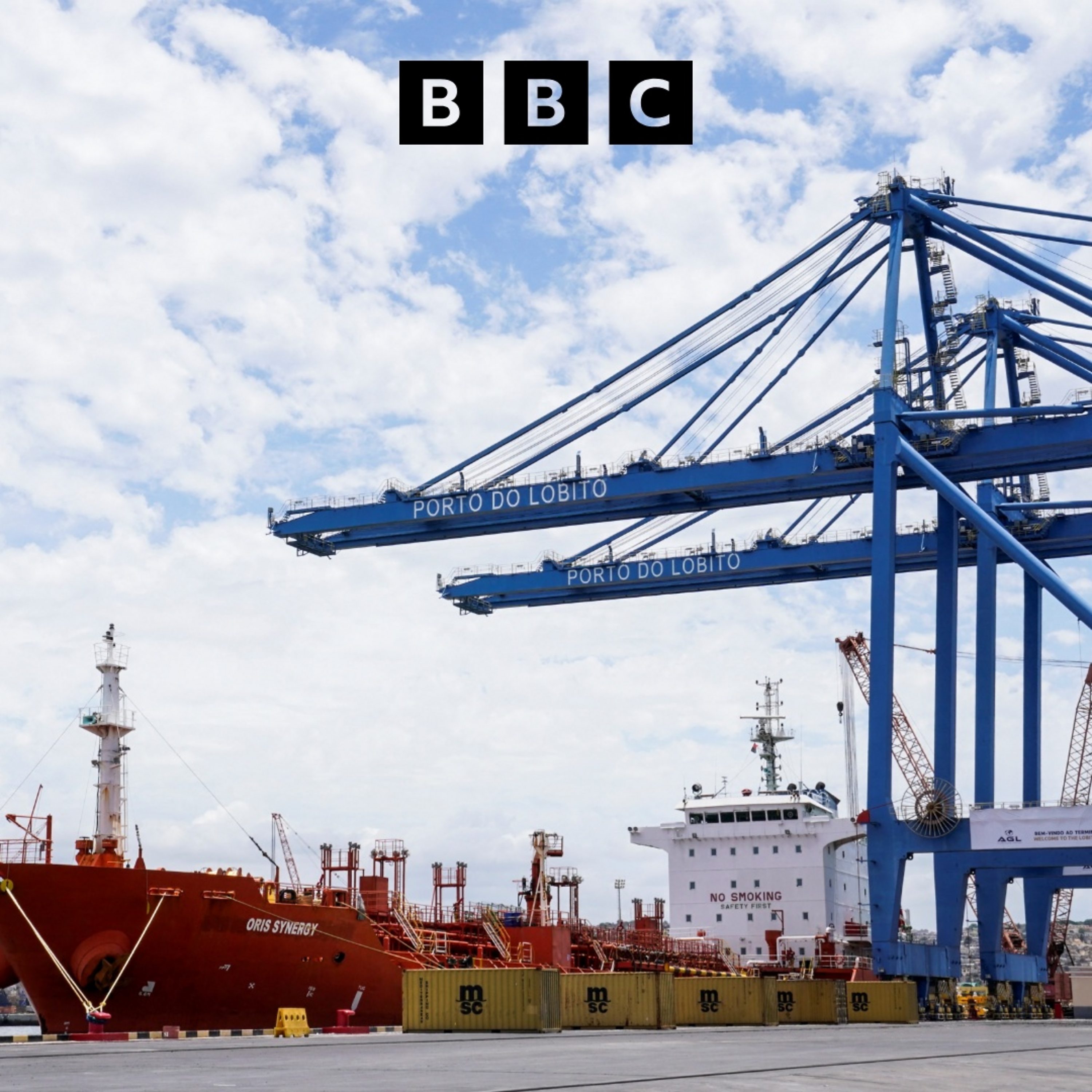
What is driving the global shift towards economic protectionism? Will Bain is joined by Jennifer Pak, NPR's China correspondent, and Trevor Simumba, an international business consultant in Zambia, to discuss why the trend has accelerated since Donald Trump's tariffs and why global trade remains resilient despite growing barriers. Plus, why Africa's Lobito Corridor matters for trade, what AI means for jobs in China and beyond, and why drinks giant Diageo is cutting costs. And, two food heroes: China's baozi and Uganda's matoke.
(Photo: A ship docks at Lobito Port in Angola, 4 December, 2024. Credit: Elizabeth Frantz/Reuters)
You can email the team: businessdaily@bbc.co.uk
Presenter: Will Bain
Producer: David Cann
Is China rapidly catching up with the United States in the race to dominate artificial intelligence? Rahul Tandon is joined by Walter Todd in the US and Rebecca Choong Wilkins in Singapore to discuss, following a week of sharp moves in AI-related markets and growing questions over where the next wave of innovation will come from.
They also explore what India's "cockroach protest" says about the growing challenge of youth unemployment around the world.
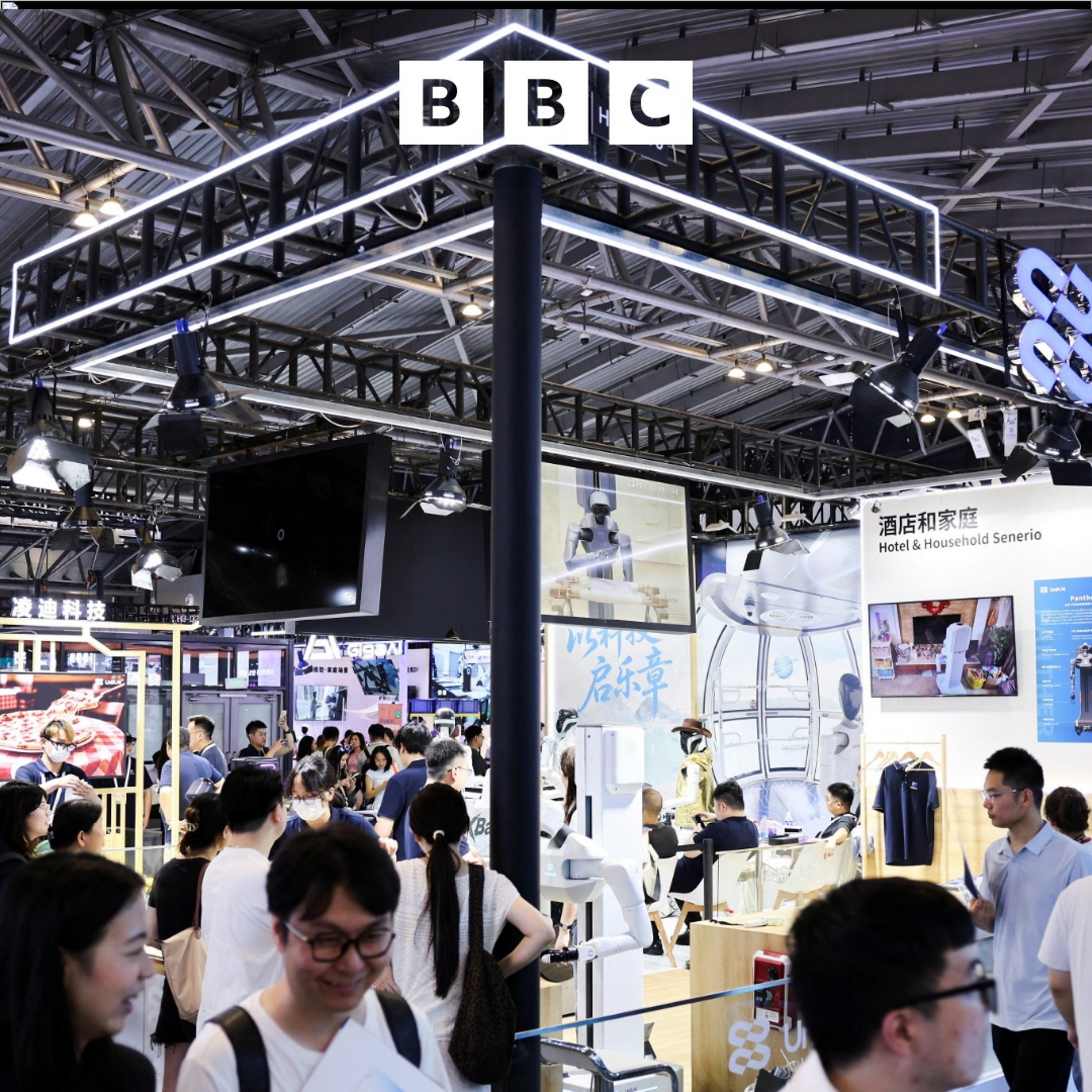
(Photo: People walk past the Unix AI booth during the World Artificial Intelligence Conference (WAIC) in Shanghai, China, 17 July, 2026. Credit: Go Nakamura/Reuters)
You can email the team: businessdaily@bbc.co.uk
Presenter: Rahul Tandon
Producer: David Cann
This week, Will and Rahul speak to business correspondent Arunoday Mukharji in Delhi about how India's youth unemployment crisis helped force the resignation of the country's Education Minister and why it could mark a turning point for India's Gen‑Z. Exam leaks and a shortage of opportunities have sparked some of the biggest youth protests in years, raising difficult questions for the government. Nearly two-thirds of Indians are under 35, and more young people are graduating than ever before. But many can't find jobs. Can India create enough jobs for a generation with rising expectations? And what happens if it can't?
Presenters: Will Bain, Rahul Tandon and Arunoday Mukharji
Producer: Rebecca Smyllie
You can email the team: businessdaily@bbc.co.uk
Leah Solivan, founder and former CEO of TaskRabbit, reflects on building one of the world’s most successful gig-economy platforms. She discusses the pressures of scaling a multi-million-dollar business, the stress-related illness that left her in hospital, and the decision to eventually sell TaskRabbit to IKEA.
Presenter: Sarah Rogers
Producer: Niamh McDermott
You can email the team: businessdaily@bbc.co.uk
(Picture: Leah Solivan. Credit: Audrey Anne Photography)
Will Bain is joined by Nga Pham in Hanoi and Takara Small in Toronto. Following the latest results from Alphabet and Tesla, both companies are under pressure to sustain spending as competition in artificial intelligence intensifies. Is Wall Street beginning to question the cost of the AI race?
Plus, the mounting economic impact of Canada's wildfires, why ketchup-flavoured crisps have become such a uniquely Canadian phenomenon, and what Donald Trump's renewed tariff negotiations could mean for global trade.
(Photo: The Google logo, made up of different coloured letters - blue, red, yellow, blue, green, orange - on the Google house at the CES consumer electronics trade show, in Las Vegas, Nevada, US, 10 January, 2024. Credit: Steve Marcus/Reuters)
You can email the team: businessdaily@bbc.co.uk
Presenter: Will Bain
Producer: David Cann
Tessa Clarke is the co-founder and CEO of Olio, the food-sharing app helping millions of people reduce waste by sharing food and household items with their neighbours. She explains how a simple idea grew into a global movement, the challenges of convincing investors to back it, and why changing human behaviour may be key to tackling climate change.
Presenter: Leanna Byrne
Producer: Barbara George
You can email the team: businessdaily@bbc.co.uk
(Picture: Tessa Clarke. Credit:Annabel Staff)
17 minAbspielen in:
Gäste, die länger als 12 Monate zurückliegen, gibt es mit Pro. Pläne ansehen

 SH