

Core Memory cover
Podcast

Core Memory

by Ashlee Vance

Core Memory has had 13 confirmed guests across 10 episodes in the last 12 months. Latest: Kevin Macdonald, Nov 25, 2026.

Apple PodcastsHow guests are confirmed

Core Memory is a podcast about science and technology hosted by best-selling author and filmmaker Ashlee Vance. Vance has spent the past two decades chronicling advances in science and tech for publications like The Economist, The New York Times and Bloomberg Businessweek. Along with the stories, he's written…

Guests on the show

Wed25Nov
Core Memory

Kevin MacdonaldGuest

What Tech Money Did To Movies And The Truth - EP 98 Kevin Macdonald

This week’s guest is Oscar-winning director Kevin Macdonald. He’s fresh off directing The Runner with Gal Gadot (available on Amazon) and is now working on a project with, well, us. Macdonald has been one of the great filmmakers of the last three decades, working in both scripted and documentary films. He’s made documentaries on Whitney Houston, Bob Marley, John Lennon and Yoko Ono - and on Mick Jagger and Oprah Winfrey, although neither of those last two projects made it out into the world for reasons we get to in the episode. He helped Forest Whitaker snag a Best Actor Oscar for The Last King Of Scotland and has directed the likes of Russell Crowe, Ben Affleck, and Rachel McAdams in other films. Macdonald is a true gent and, as I’ve learned over the last year, has the absolute best stories. We cover a lot of ground in this episode and spend a lot of time talking about what tech money has done to filmmaking. In particular, we get into how journalistic standards have eroded in documentary filmmaking in recent years with studios now more willing than ever to have subjects fund their own films. Naturally, we went deep on You Can See Everything as well. It was an absolute treat to have Kevin on the show. SPONSORS This pod is brought to you by the finance wizards at Brex. Your company should switch to Brex to make life better for everyone. Find out more here. It’s also made by possible by GiveDirectly. They’re a non-profit that makes sure your donations go straight to people in need. Tis the season. Give directly right here. TIMESTAMPS 0:00 Intro4:17 Touching the Void7:50 Choosing Stories Worth Telling14:59 A Family in Film25:45 Streaming Changes the Rules29:23 Mick Jagger Takes Control31:55 Who Controls Oprah's Story?38:26 The Elizabeth Holmes Problem42:15 Elon Musk and Access47:25 Pep Guardiola Under Pressure57:45 Returning to the Mountain1:01:15 When Your Subjects Hate You This is a public episode. If you'd like to discuss this with other subscribers or get access to bonus episodes, visit www.corememory.com/subscribe


1 h 09 min

Wed18Nov
Core Memory

Naga Bharath DakaPawan Kumar ChandanaGuest

Inside India’s Space Boom - EP 97 Skyroot Aerospace

This week’s podcast takes place in India with the founders of Skyroot Aerospace, Pawan Kumar Chandana (CEO) and Naga Bharath Daka (CTO). Earlier this year, Skyroot pulled off a remarkable feat. It flew its first rocket – the Vikram-1 – to orbit. In so doing, Skyroot helped India join the U.S., China and New Zealand as the only countries to have a commercial rocket successfully reach space and complete a mission. First rockets almost always blow up, and so Skyroot’s first-flight success makes it a historic rarity. It also built the Vikram-1 very fast and very much on the cheap. Skyroot’s backstory is borderline thrilling. Commercial space was illegal in India when Skyroot was founded in 2018. The government wanted total control of the heavens. Skyroot’s founders kept designing their rocket anyway, betting that the government would change its stance. Over the past few years, India did end up putting laws into place that allowed for commercial rocket and satellite companies. And Skyroot is now the shining example of what the country can do. It has inspired youngsters across India and triggered a commercial space boom with more than 400 start-ups arriving on the scene. Skyroot already has plans for bigger rockets and hopes to one day fly humans to space. As we discuss in the episode, India is in a prime position to become a major commercial space power. The country has a long history of doing big things in space through ISRO, its version of NASA. It is full of brilliant engineers and can build rockets and satellites much more cheaply than most countries. India is behind, but it has a chance to join the U.S. and China as the leading commercial space nations. In this episode, we get into Skyroot’s backstory, its rockets and India’s potential as a tech power in the years ahead. SPONSOR The wonderful people at Brex helped make these stories from India possible. You can catch a taste of the adventures here. I’ve worked at large companies like The New York Times and Bloomberg, and their expense systems were terrible. Brex’s expense management systems, by contrast, are fantastic. AI agents run around taking care of tons of stuff for you and give you back your time. Your company should switch to Brex to make life better for everyone. Find out more here. Timestamps 00:00 — Intro03:37 — Orbit on the First Try10:48 — Starting Before the Rules14:44 — What Does Orbit Cost?20:48 — Solid Fuel and Carbon Fiber27:22 — Competing With SpaceX Rideshare35:15 — ISRO and Private Space36:43 — Where Is India’s Risk Capital?41:23 — Why Did China Move Faster?46:14 — The Final Launch Countdown50:54 — India’s Hard Tech Moment This is a public episode. If you'd like to discuss this with other subscribers or get access to bonus episodes, visit www.corememory.com/subscribe

56 min

Thu12Nov
Core Memory

Mikkel Vestergaard FrandsenGuest

He Spent $100 Million On A Sky Computer - EP 96 Mikkel Vestergaard Frandsen

This week’s guest is Mikkel Vestergaard Frandsen, the founder and CEO of Sceye. (It’s pronounced like “Sky.”) Mikkel is a fascinating dude. His family started a sewing business in Denmark back in 1957. Over the years, Mikkel helped transform the company and parlayed its materials expertise into some very well-known humanitarian efforts, including the PermaNet for fighting mosquitoes and malaria and LifeStraw for potable water. We talk about all this on the podcast, but, if you’re watching the episode, you’ll see that the focus is on the giant airship-looking thing in the background, which belongs to Sceye. Sceye has created what it calls a High-Altitude Platform System. (It’s a mouthful, and we won’t fault you for calling it a blimp or an airship, although people in these fields will fault you.) This inflatable craft can travel for thousands of miles and then keep its position over a particular location for very long periods of time. It’s meant to beam down telecommunications and internet services to people who can’t be reached by other means, and/or to take photographs and video, and/or do whatever a machine dangling underneath it can do. The aircraft can get closer to its targets than, say, a satellite and can also be present for much longer periods of time than, say, a drone. The airship behind us in this episode ended up flying to Japan for a test run. SoftBank liked the results enough to order a fleet of HAPS for nationwide mobile broadband across Japan. I’m into airships. Like, really into airships. As proof, I will link to this mini-documentary we made on them for Bloomberg instead of linking to something else on the Core Memory YouTube channel, which is really where you should go for all your science and technology video needs. I’m also skeptical that these things can have a big enough market to justify all the cost and effort that go into making and flying them. Mikkel takes offense at my position and sees a future full of thousands upon thousands of HAPS in the sky. We’re into what Sceye is doing and hope Mikkel proves us wrong. SPONSOR This podcast is sponsored by Brex, the intelligent finance platform built to help companies spend smarter and move faster. Learn more here. Timestamps 0:00 Intro4:38 From Denmark to Lagos11:06 LifeStraw and Mosquito Nets19:54 The Leap Into Aerospace24:57 Airships, Balloons, and Staying Put32:12 What About Starlink?39:06 Watching Wildfires From Above42:51 A $100 Million Bet49:26 The Fabric That Holds Helium55:27 Broadband Straight to Your Phone59:18 Flying First, Talking Later This is a public episode. If you'd like to discuss this with other subscribers or get access to bonus episodes, visit www.corememory.com/subscribe

1 h 05 min

Wed4Nov
Core Memory

Naman PushpGuest

The Boy Wonder Of India’s New Tech Scene - EP 95 Naman Pushp

This week’s guest is Naman Pushp, the founder and CEO of Airbound. Pushp is all of 21 years old and trying to build an aerospace giant in India. His company, Airbound, produces carbon fiber to create very lightweight, very efficient aircraft used for the moment to deliver small packages of cargo around the country. Pushp’s core thesis is that the aviation industry has not been aggressive enough with its use of carbon fiber and that he can uses materials advances to outflank drone delivery companies first and then perhaps create a new class of planes for humans too. These are big hopes and dreams and very big claims! And the company has a long, long way to go. But this is all to be expected. I recently visited Airbound’s headquarters and test sites in Bangalore and came away rather impressed with Pushp and his team. They’ve built two versions of their aircraft, and we watched dozens of them fill the skies. The machines take off vertically and then zoom off like airplanes. They’re quiet, and they can hover. Pushp is a self-taught engineer who learned how to build things with carbon fiber by watching YouTube videos and then began constructing aircraft in his teenage bedroom. He got into Carnegie Mellon but skipped university to build Airbound instead. He’s bright and (very) confident. He’s also representative of a new era in Indian technology. Some of the country’s brightest, most ambitious youngsters are opting to stay at home and to try and build hard tech companies that do real innovation, as opposed to mimicking what has happened elsewhere. We get into ALL of this on the podcast. And this marks the start of a series of videos, podcasts, and stories we have coming on the rise of the Indian tech scene. I’ve already managed to anger a large swath of the Indian venture capital industry with this story and am sure to anger others as we go on this journey. SPONSOR The wonderful people at Brex helped make these stories from India possible. You can catch a taste of the adventures here. I’ve worked at large companies like The New York Times and Bloomberg, and their expense systems were terrible. Brex’s expense management systems, by contrast, are fantastic. AI agents run around taking care of tons of stuff for you and give you back your time. Your company should switch to Brex to make life better for everyone. Find out more here. TIMESTAMPS CHAPTERS0:00 Intro6:01 Replacing Roads With Aircraft7:37 Designing Around Carbon Fiber14:23 Taking On Drone Delivery21:29 From Deliveries to Passengers23:09 Aircraft From a Bedroom32:38 From Project to Company37:53 Choosing Aircraft Over College41:11 Why Build in India?48:13 Life With Instant Delivery52:28 India's New Hardware Generation1:01:48 Why Skip Defense Contracts?1:04:35 Democracy and Getting Things Built1:07:40 India Between America and China1:13:18 Can Carbon Fiber Get Cheaper?1:21:44 The Trouble With Scaling This is a public episode. If you'd like to discuss this with other subscribers or get access to bonus episodes, visit www.corememory.com/subscribe

1 h 28 min

Wed21Oct
Core Memory

A.J. PiplicaZach ShoreGuest

The Future Of Fighter Jets - EP 93 Hermeus With Zach Shore And A.J. Piplica

We’re heading into fighter jet territory this week with Zach Shore (CEO) and A.J. Piplica (Co-Founder and Executive Chairman) of Hermeus. Founded in 2018, Hermeus has set out to make supersonic and even hypersonic jets that can fly themselves. They’re part of this new wave of defense startups trying to prove that the U.S. can still produce technological marvels in a timely and not criminally expensive fashion. Hermeus’s planes would be a new breed of fighter jets that can use their speed and autonomy to carry out missions without putting pilots at risk. We conducted this interview with Shore and Piplica a couple of months back at Spaceport America just ahead of a test flight of Hermeus’s Quarterhorse Mk 2.1 plane. I’m pleased to tell you that the plane did indeed go supersonic, and it was awesome to behold. We’ll have a video on the experience soon on our YouTube channel. This interview covers Hermeus’s journey, the state of the U.S. defense industry, plane design and how the U.S. hopes to keep pace with China in areas like hypersonic flight. Hermeus’s planes are remotely piloted for now, but it has partnered with Anduril to give its aircraft autonomous mission capabilities. For hypersonic flight, it’s developing a fascinating hybrid engine design intended to switch from a turbine to a ramjet midair. Hermeus achieved supersonic flight on Mk 2.1’s third test flight and is betting it can keep building and testing new prototypes much faster than traditional defense contractors. You can see its planes and timelines here. SPONSOR Some of you will be wondering, “Is this episode sponsored?”. Yeah, it is. By the wonderful people at Brex. I’ve worked at large companies like The New York Times and Bloomberg, and their expense systems were terrible. Brex’s expense management systems, by contrast, are fantastic. AI agents run around taking care of tons of stuff for you and give you back your time. Your company should switch to Brex to make life better for everyone. Find out more here. TIMESTAMPS 0:00 Intro3:39 Supersonic With Nobody Aboard6:21 Building an Aircraft Company17:02 From Turbines to Ramjets22:18 The Unmanned Bomb Truck30:25 Will Passengers Fly Hypersonic?31:56 America's Flight Testing Bottleneck40:08 Who Actually Flies It?45:12 Rebuilding the Skunk Works47:06 China and America's Aerospace Bet This is a public episode. If you'd like to discuss this with other subscribers or get access to bonus episodes, visit www.corememory.com/subscribe

54 min

Wed14Oct
Core Memory

Andrew KiguelMatt McMullenGuest

Robots Like Us - EP 92 Andrew Kiguel and Matt McMullen From Realbotix

Our guests this week are Andrew Kiguel and Matt McMullen from Realbotix. Realbotix makes humanoid robots that actually look like humans. McMullen, who founded the company, has spent years refining the animatronics and materials needed to create lifelike machines. His past creations have received tons of media attention both because they’re striking and because they veer into companionship and sex territory. Lars and the Real Girl? Yep, that’s Matt’s work. Realbotix, though, is an attempt to take the technology in a different direction. The company has made AI-infused bots that it wants to put to work out in the world. The bots could greet guests at hotels, provide information at hospitals or perhaps tutor students at schools. The Realbotix bots can carry on conversations and use vision systems to recognize people and take in their surroundings. We conducted this interview in Las Vegas where Realbotix has its headquarters. In a future video on our YouTube channel, which is awesome and you should subscribe to, I head out into Vegas with a bot named Aria, and we have a delightful afternoon together. Some of you will think these robots are weird. And I get this. I will, however, add that most of the humanoids out there are very boring. Companies have focused on what the robots can do rather than what they look like. The folks at Realbotix, by contrast, have put a lot of time and energy into trying to figure out how humans and robots will interact and progress together. We get into all of this on the show. SPONSOR Some of you will be wondering, “Is this episode sponsored?”. Yeah, it is. By the wonderful people at Brex. I’ve worked at large companies like The New York Times and Bloomberg, and their expense systems were terrible. Brex’s expense management systems, by contrast, are fantastic. AI agents run around taking care of tons of stuff for you and give you back your time. Your company should switch to Brex to make life better for everyone. Find out more here. TIMESTAMPS 0:00 Intro3:31 Robots Built for Conversation5:58 An Artist Builds a Robot15:31 Faces You Can Swap23:40 What Does a Robot Cost?26:17 Giving the Robot a Personality28:32 The RealDoll Question33:32 Can Robots Ease Loneliness?43:52 Hotel Clerks and Robot Tutors46:41 Hands, Eyes, and Memory56:31 Escaping the Uncanny Valley1:04:41 China and the Robot Bubble1:09:24 How Unfiltered Should AI Be? This is a public episode. If you'd like to discuss this with other subscribers or get access to bonus episodes, visit www.corememory.com/subscribe

1 h 13 min

Wed7Oct
Core Memory

Brent UnderwoodGuest

He Bought A Ghost Town And Became A YouTube Star - EP 91 Brent Underwood

This week’s guest is Brent Underwood, the proud owner of Cerro Gordo Mines. That’s right. In 2018, Underwood bought the ghost town of Cerro Gordo, located near Death Valley in California, and its old mining operations for $1.4 million. This was a legit crazy thing to do. But, here we are eight years later, and Underwood has turned his sidequest into his mainquest, and he now has a booming YouTube channel in which he documents life at Cerro Gordo. This includes exploration of the mines and Underwood’s attempt to restore the ghost town into a habitable site that people can visit. You will notice (if you’re viewing instead of just listening) that the set for this podcast is awesome. That’s because we went to visit Underwood a couple of months back for this podcast and for a video that will be coming out on our own booming YouTube channel. We spent a couple of nights at Cerro Gordo, living in an old miner’s house, and we explored the grounds with Underwood. As you’ll hear in this episode, Cerro Gordo was a long-running silver mine and, at its peak, had 4,000 people living in the mountains and working the many miles of mines. It’s quite well preserved. You can see the old brothel, theater, and store. And Underwood has been rebuilding the American Hotel that once served as the centerpiece of the town. Underwood does crazy things at Cerro Gordo. He’ll lower himself down the main mine shaft and then spend days underground. He’s used his exploring to help build out the history of Cerro Gordo and wrote an amazing book about Cerro Gordo and his adventures. You should probably buy it and read it. We obviously get into all of the above with Underwood, who is a wonderful storyteller and a good dude. SPONSOR Some of you will be wondering, “Is this episode sponsored?”. Yeah, it is. By the wonderful people at Brex. I’ve worked at large companies like The New York Times and Bloomberg, and their expense systems were terrible. Brex’s expense management systems, by contrast, are fantastic. AI agents run around taking care of tons of stuff for you and give you back your time. Your company should switch to Brex to make life better for everyone. Find out more here. Timestamps 0:00 Intro4:53 How to Buy a Town11:29 The American Hotel Burns17:36 History Meets the YouTube Algorithm22:46 Five Days Below Ground28:29 The West Was Brutal33:33 Who Actually Got Rich?40:37 Where the Water Went44:31 California Versus the Hotel49:14 Can a Ghost Town Live? This is a public episode. If you'd like to discuss this with other subscribers or get access to bonus episodes, visit www.corememory.com/subscribe

56 min

Wed23Sep
Core Memory

Anna GátGuest

The Wordcel Queen Of Silicon Valley — EP 89 Anna Gát

We’ve heard a lot of moonshot ideas on this podcast, but this week’s guest may have the most impossible one yet: making tech more cultured. In this episode, Ashlee sat down with Anna Gát, a Hungarian philosopher, playwright, and founder of Interintellect, a platform for hosting intellectual conversations online. She calls herself “the bridge” between the humanities, academia, and the tech world, which in practice means getting engineers to read Goethe. Gát grew up on a TV set in communist Hungary. Her parents made the country’s biggest shows in an era when there was one channel available on Saturdays. In 2015, a family crisis left her starting over in London with two suitcases, one of them for books. She rebuilt her life on Twitter, DM’d Sam Altman, and got him as her first meeting on her first trip to America. Before Interintellect, Gát did just about every wordcel job you can do: playwright, screenwriter, script doctor. She holds graduate degrees in philosophical aesthetics and linguistics, currently splits her time between SF and NYC. The company that would become Interintellect began in London in 2016 as an AI tool for helping “humans have categorically better conversations.” On the side, she angel invests in aerospace. The two get into why X was once the French café that could publish you and is now a place you can’t get discovered from, why the East Coast’s healthiest, wealthiest people are so convinced the future is doomed, and the duty AI builders have to explain themselves. Gát also admits, on the record, that she’s a sucker for Elon Musk’s syntax. Ashlee tries to convince her that kids don’t read books anymore. She tries to convince him Silicon Valley should fund symphonies. IN THIS EPISODE Interintellect — https://www.interintellect.com The Hope Axis — https://twitter.com/TheHopeAxis Anna on X — https://x.com/TheAnnaGat OUR SPONSORS BREX The Core Memory podcast is sponsored by Brex, the intelligent finance platform built to help companies spend smarter and move faster. We run on Brex and so should you. Learn more about Brex right here. SENDCUTSEND You know who else makes stuff for America? That would be SendCutSend. If you want to celebrate our great nation by building a metal part, then head on over to SendCutSend where you’ll get a 15 percent discount thanks to Core Memory on whatever you’re trying to build. We believe in you. TIMESTAMPS 0:00 — Intro 2:56 — The science of dialogue 6:34 — Growing up famous in communist Hungary 13:06 — Nobody saw 1989 coming 16:43 — Losing everything in 2015 20:57 — Silicon Valley as the new Ellis Island 28:38 — Balaji's DAO campaign33:42 — Elon's syntax 39:18 — Why does America hate tech? 46:25 — Engineers took over the world 53:20 — Have LLMs solved language? 1:01:29 — Are books dying? 1:06:51 — No Pop-Tarts 1:10:46 — Who funds culture? This is a public episode. If you'd like to discuss this with other subscribers or get access to bonus episodes, visit www.corememory.com/subscribe
1 h 29 min

Wed16Sep
Core Memory

Joel JeanGuest

Solar Energy's Second Act — EP 88 Joel Jean

In this episode, Ashlee sits down with Joel Jean, CEO of Swift Solar, a San Carlos-based startup trying to create new solar technology using perovskite. We previously published a story about Swift, if you’re wondering what the f*ck perovskite is! In short, it’s a synthetic crystal that turns sunlight into electricity better and cheaper than the silicon currently used in solar panels. This stuff is finicky though, and experts have doubts, as they always do — but Jean explains how Swift is closing in on a solution. “Everyone and their mom can make a perovskite that’s decently efficient,” Jean says, but no one seems capable of making it as durable as silicon. The material degrades under heat, light and its own moving ions. This is obviously not the ideal situation for an energy grid. So why not stick with silicon? Well, the laws of physics haven’t quite blessed it. A silicon panel can turn, at most, about 30 percent of the sunlight it gets into electricity, and today’s panels usually churn out about 25 percent. If they’re able to successfully layer perovskite on top, that pushes the ceiling to 45 percent. These are fabulous gains in the solar nerd world, and we could really use some innovation here because we are one very, very energy-hungry species. And of course, this is Core Memory, so you know where this is headed: China and AI. China makes 90 percent of the world’s solar cells and wafers, installs more panels than the rest of the planet combined, and builds the machines that nearly every U.S. solar factory runs on. (Except for Swift, apparently!). That dependency is, as always, a risk. Meanwhile, AI data centers need more power than God, and the folks making models are happy to welcome any new gains in that department. Some are even putting their money on it; renowned AI researcher Jeff Dean has invested Swift. Charge your crystals, folks. We’re perovskite-maxxing. IN THIS EPISODE This Is The U.S.’s Last Chance At Solar — Core Memory Swift Solar Meyer Burger acquisition Joel's "solar for AGI" piece OUR SPONSORS BREX The Core Memory podcast is sponsored by Brex, the intelligent finance platform built to help companies spend smarter and move faster. We run on Brex and so should you. Learn more about Brex right here. SENDCUTSEND You know who else makes stuff for America? That would be SendCutSend. If you want to celebrate our great nation by building a metal part, then head on over to SendCutSend where you’ll get a 15 percent discount thanks to Core Memory on whatever you’re trying to build. We believe in you. TIMESTAMPS 00:00 — Intro 04:56 — How The U.S. Lost Solar1 2:36 — Maxed-Out Physics 20:03 — How China Won 27:53 — What Is Perovskite? 36:52 — The 30-Year Problem 45:41 — China's Scale-First Bet 51:00 — The Meyer Burger Deal 58:50 — Can Solar Power AI? 1:09:43 — Patents, China And The Machines 1:22:15 — Solar For AGI This is a public episode. If you'd like to discuss this with other subscribers or get access to bonus episodes, visit www.corememory.com/subscribe

1 h 30 min

Wed9Sep
Core Memory

Seamus BlackleyGuest

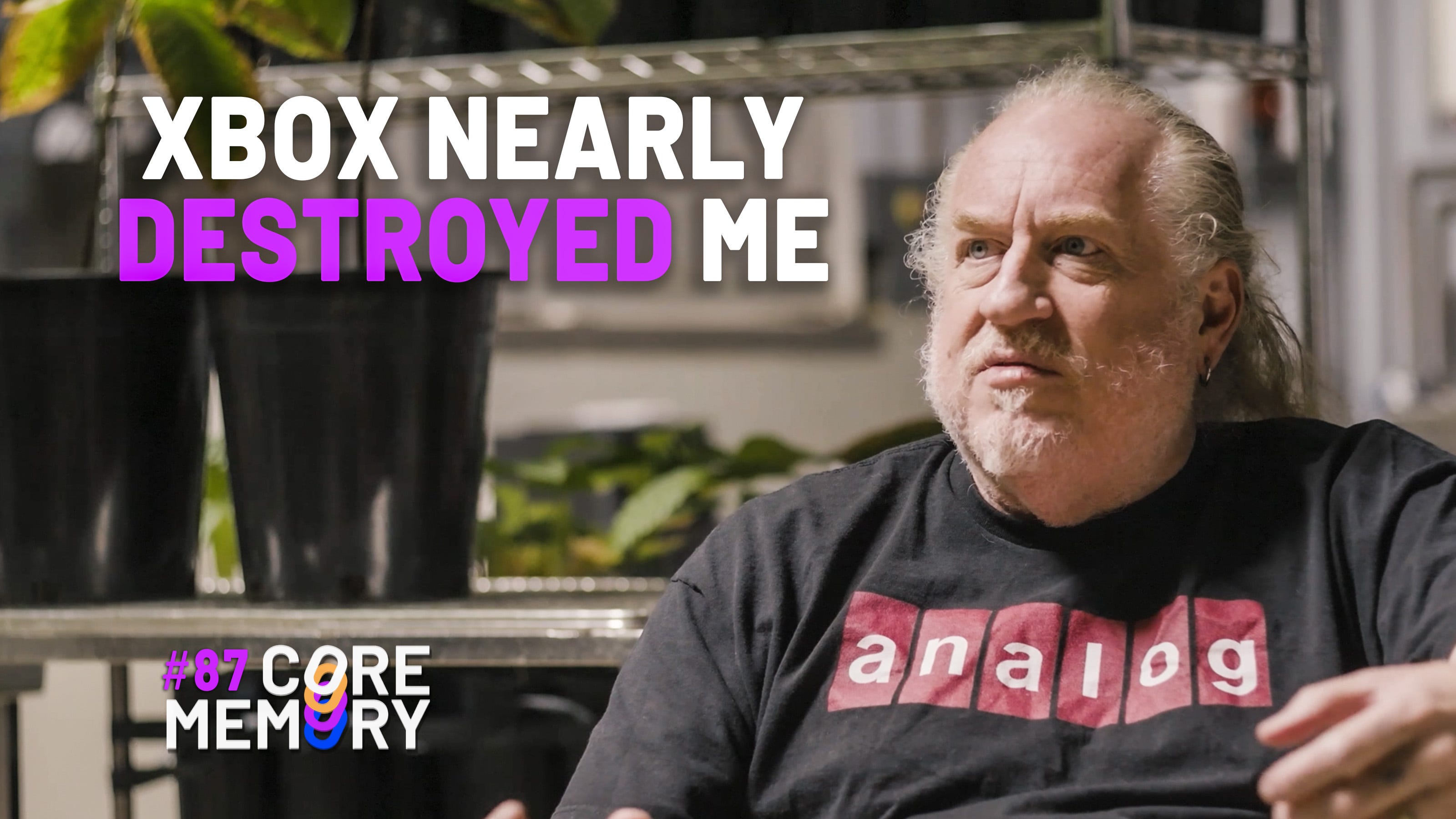
The Xbox Nearly Destroyed Him - EP 87 Seamus Blackley

This episode is nerd catnip unlike anything I’ve ever seen before. Ashlee sat down with Seamus Blackley, who you might know as the man who talked Microsoft into building the Xbox. Nowadays, you can find Blackley in a Pasadena laboratory making the world’s best chocolate. If you’re just here for the cacao, well, we did a video on it. Blackley grew up in rural New Mexico and studied electrical engineering, then physics, at Tufts University. He spent years working on titles you know and love, like Madden, and ones perhaps you don’t, like Jurassic Park: Trespasser, a flop notorious enough to earn him his first death threats. Also, Ashlee is away for a few weeks on a big video shoot in India, which means I, Kylie, will be filling in on all the writing stuff. Now that you know who the voice of God is here, let’s get into the most important thing — what I think about this episode! Blackley is totally captivating and eccentric, exactly the way you’d expect a physicist who builds holograms and runs a chocolate farm to be. He got deep in ways I didn’t expect, about his abusive childhood and what it was like working at Microsoft. I particularly loved this line from him: “The khaki pants wearing guys, the lifers, they show up and we had fought them to keep them away from [the Xbox]. The more we kept them away from it, the more consumers got excited because we were talking about things with the power of Microsoft and not the b******t of Microsoft. That was incredibly effective. But it was exhausting and it was a conscious effort of will to fight it. At some point it was going to destroy me and I had to stop.” Blackley seems to talk at 2x speed naturally, and I’m grateful for it, because he has no shortage of brain-exploding lore to fit into these 80 minutes. He describes his whole career as “one long tale of woe and rapid dancing in the face of failure,” which is a very modest way to describe inventing the Xbox, shepherding Guitar Hero into existence, and abducting Jimmy Fallon. You’ll have to listen for that last one. IN THIS EPISODE Core Memory on Seamus Blackley's chocolate experimentSmithsonian Magazine on Blackley's ancient Egyptian bread projectPacific Light & Hologram OUR SPONSORS BREX The Core Memory podcast is sponsored by Brex, the intelligent finance platform built to help companies spend smarter and move faster. We run on Brex and so should you. Learn more about Brex right here. SENDCUTSEND You know who else makes stuff for America? That would be SendCutSend. If you want to celebrate our great nation by building a metal part, then head on over to SendCutSend where you’ll get a 15 percent discount thanks to Core Memory on whatever you’re trying to build. We believe in you. TIMESTAMPS * 00:00:00 — Intro * 00:02:38 — Why Tech Hype Sucks * 00:07:37 — Why Talking About Your Work Kills It * 00:10:42 — Early Life, Physics, and Jazz * 00:21:57 — Fermilab & Academic Politics * 00:30:47 — Building the First 3D Video Game Engines * 00:34:18 — Early Game Development Culture * 00:38:37 — DreamWorks & Working for Steven Spielberg * 00:44:32 — Joining Microsoft & Pitching the Original Xbox * 00:54:04 — Fighting Corporate Bureaucracy to Save Xbox * 01:03:42 — Abducting Jimmy Fallon * 01:07:20 — Baking Bread with 4,500-Year-Old Egyptian Yeast * 01:10:40 — Growing Cacao Trees in a Lab * 01:17:09 — Accidentally Launching a Chocolate Empire This is a public episode. If you'd like to discuss this with other subscribers or get access to bonus episodes, visit www.corememory.com/subscribe

1 h 24 min

Guests from more than 12 months ago are part of Pro. See plans