Soils For Life cover
Podcast

Soils For Life

Soils For Life hatte in den letzten 12 Monaten 16 bestätigte Gäste in 15 Folgen. Zuletzt: Arian Wallach, 10. Nov. 2026.

Website der SendungApple PodcastsSo werden Gäste bestätigt

The Soils for Life podcast brings you the voices of farmers around Australia who are regenerating our precious soils and landscapes. In each episode we share the stories of farmers who are discovering ways to farm with nature, and explore how we can all help more farmers to head in this direction, for healthier food…

Gäste der Sendung

Di10Nov
Soils For LifeAW

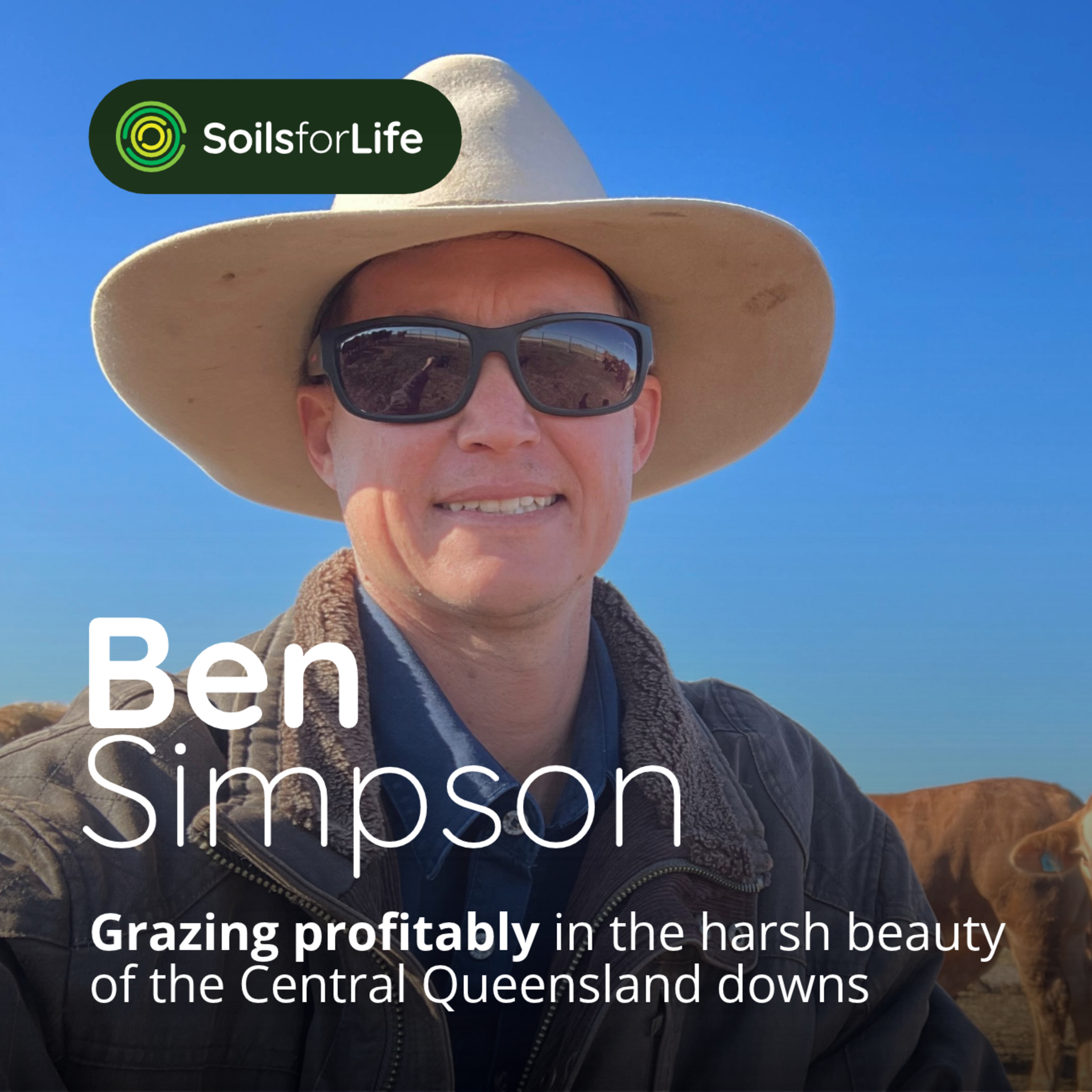
Arian WallachGast

Ecological function and introduced species, with Dr Arian Wallach

Dr Arian Wallach is an ecologist and Australian Research Council Future Fellow at Queensland University of Technology. Her work looks at how introduced species and apex predators like dingoes shape ecosystems, and how our values shape the way we study and manage wildlife. For several years she has been researching the wild donkeys at Kachana Station in the Kimberley, where Chris Henggeler and family have been restoring degraded country for more than 35 years. The episode covers: The role donkeys and cattle have played in soil, water, plant and fire cycles at Kachana Station The a-ha moment that drew Arian to consider donkeys’ role in reducing the impact of fire at Kachana Why donkeys might be fitting into an ecological niche that’s been empty since the extinction of giant wombats How we can think about the choices that land managers are making across farming and conservation. It’s a thought-provoking conversation, and Arian enjoys challenging some long-held scientific beliefs in her field.  Links and resources: Arian’s review of evidence that foxes and cats cause extinctions of Australia's endemic mammals Kachana Station’s Wild Donkey project Eli’s reflections from a recent visit to Kachana Station More about desert donkey wells (or ‘ass holes’ as Arian calls them!) We hope you enjoy this conversation as much as we did. If you have feedback, questions, or suggestions for future episodes or guests, we'd love to hear from you - reach out on social media or at info@soilsforlife.org.au.
49 minAbspielen in:

Di20Okt
Soils For LifeBS

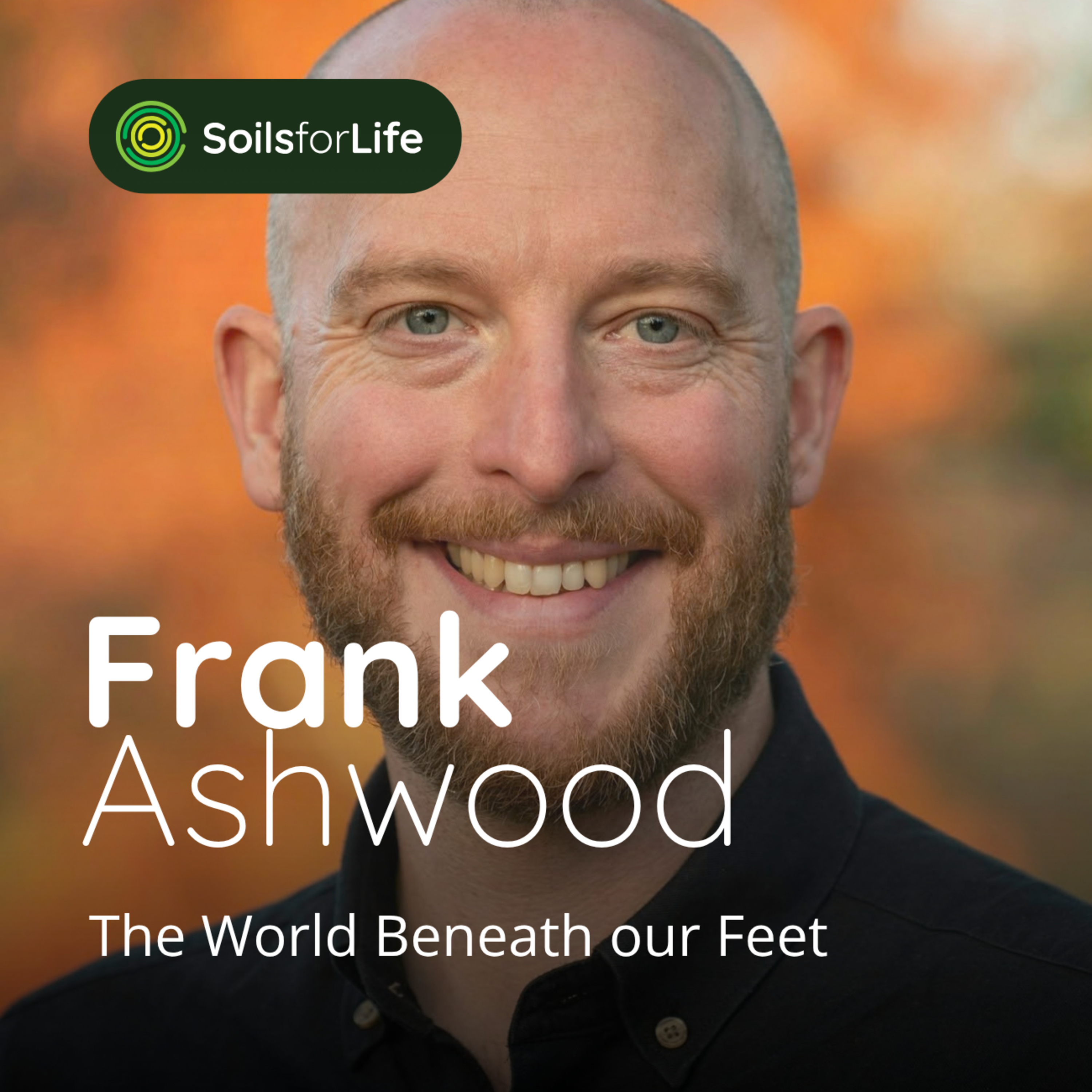
Ben SimpsonGast

Grazing profitably in the harsh beauty of the Central Queensland downs, with Ben Simpson

Ben Simpson runs Thistlebank, a 22,800 hectare cattle property near Aramac in Central Queensland that has been in his family for five generations. He came to the property from a very different life as a fitter and turner on the Gold Coast and has run it since 2010, joined by his wife Kim in 2014. A hard drought in the late 2010s meant more money was going out the door than coming in, so Ben went looking for a different approach. In 2022 he did the KLR Marketing and RCS Grazing for Profit courses, followed by RCS’s Next Steps coaching and Executive Link programs. Since then, Ben and Kim have moved from set stocking to cell and rotational grazing. Their minimum ground cover has gone from around 40% to 60% or more, and their benchmark carrying capacity has risen from around 6 to 15–20 stock days per hectare per 100 mm of rain. They now rank in the top 20% of RCS’s profitability benchmarks. Ben has also started working with RCS as a coach and adviser. In this episode, we talk about: How Ben went from the Gold Coast to running Thistlebank, and what made him stay Why financial pressure during drought led him to seek out training, starting with marketing and business skills Starting small and scaling up, from 16 or 17 mobs down to four mobs of 700 to 1,200 head Running intensive cell grazing on 6,000 hectares and a slower rotation across the rest of the property, working with flooding, access and labour constraints Planning grazing 12 to 18 months ahead with feed budgets, so that small adjustments made early avoid forced sales later Shifting from breeders to trading cattle to match stocking rate to carrying capacity, and to suit the people running the place day to day How goats fit into the system, and the paradigm shift of seeing grass grow back under timber Why coaching, peer support and a written vision have been central to the change Ben features as a case study farmer in our Practice Guide: Grazing for Soil and Landscape Regeneration. He was due to host a field day at Thistlebank with Soils for Life and RCS, but recent flooding has put that on hold. Instead, we’ll be running a webinar with Ben and RCS Managing Director Dave McLean. Details on our website. Links and resources Soils for Life Practice Guide: Grazing for Soil and Landscape Regeneration: https://soilsforlife.org.au/practice-guide-grazing-soil-landscape-regeneration/ Webinar with Ben Simpson and Dave McLean: https://events.humanitix.com/grazing-for-soil-and-landscape-health-field-day-thistlebank  RCS: https://www.rcsaustralia.com.au/ RCS Grazing for Profit: https://www.rcsaustralia.com.au/farming-grazing-for-profit-programs/ RCS tools, including FarmEye: https://www.rcsaustralia.com.au/tools/ KLR Marketing: https://klrmarketing.com.au/ The Long Paddock (Queensland Government ground cover and climate data): https://www.longpaddock.qld.gov.au/ CarbonLink: https://www.carbonlink.com.au/ More from our grazing series From feeding animals to feeding biology, with David and Ruth Read: https://open.spotify.com/episode/21dVEksiDbbDDQTWLrZxGT Regenerative grazing and the key insights of Holistic Management, with Brian Wehlburg: https://open.spotify.com/episode/7bWGHbRB332rYcw9bLwt90 This episode was hosted by Eli Court, produced by Jen Sheridan and edited by Chris Wieffering. We’d love to hear your feedback, questions or ideas for future guests. Get in touch on social media or at info@soilsforlife.org.au.

52 minAbspielen in:

Di6Okt
Soils For LifeDF

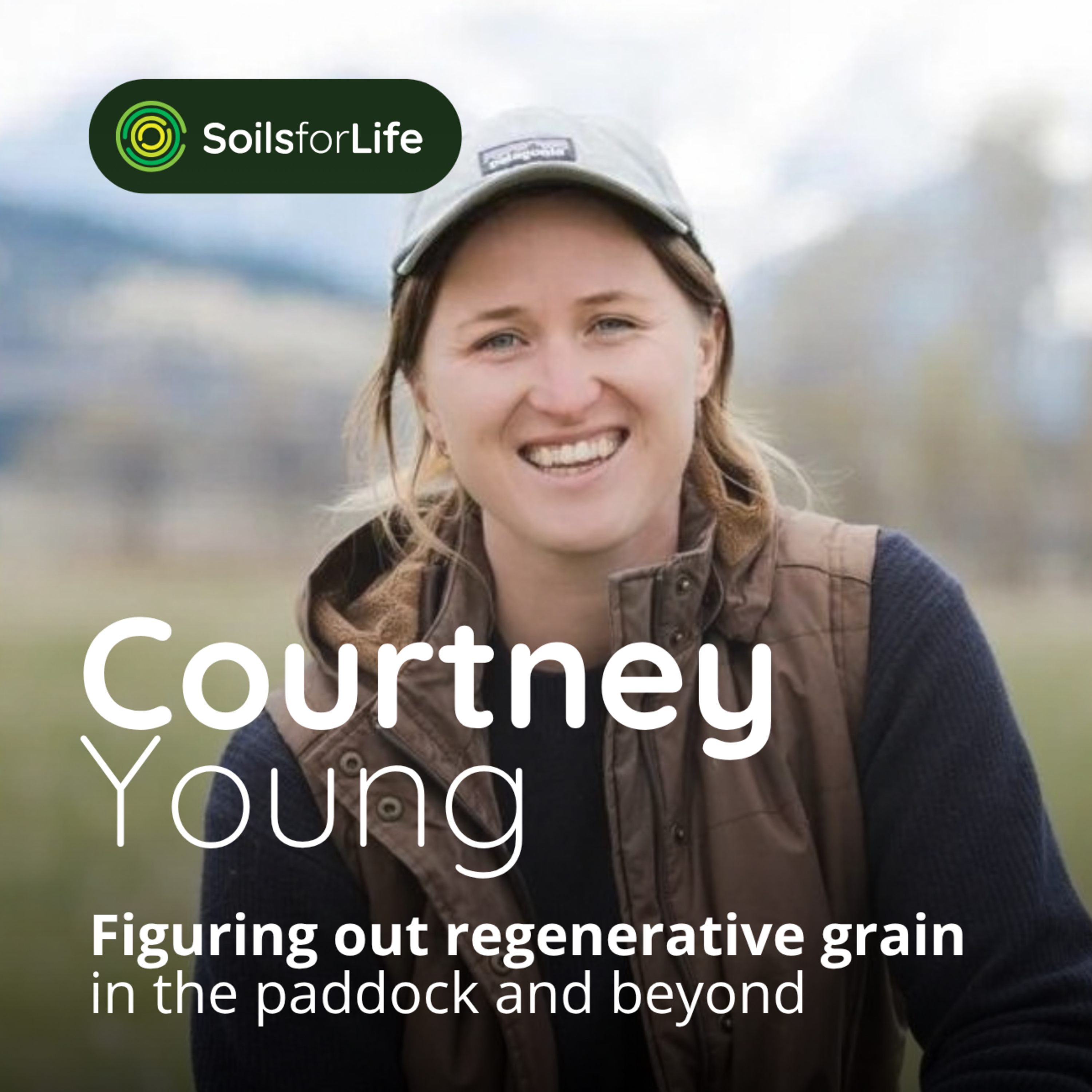
Dr Frank AshwoodGast

The World Beneath our Feet, with macrophotographer and soil ecologist Frank Ashwood

Today’s guest Frank Ashwood is a soil ecologist with a side passion for macrophotography - photographing the incredible creatures and organisms living in the soil. He has an academic background in biology and land restoration to woodland. He mostly studies the biological diversity and associated functions of forest soils, but three years ago Soils for Life brought Frank Ashwood to Australia to turn his camera to the life in the soil on farms across six regions. The photographs were astounding, and a number of them have now been included in his new book: The World Beneath our Feet: The Hidden Life of Soil and Why It Matters to Us All.  In today’s chat, we discuss some of the incredible creatures that live in the soil, diving into how each layer of soil differs, and some of the experiences and observations on farms around Australia.  Links and resources: The World Beneath our Feet: The Hidden Life of Soil and Why It Matters to Us All, by Frank Ashwood https://www.frankashwood.com/twbof  Frank Ashwood book launch at Fat Pig Farm on 10 October: https://zfszi4-wi.myshopify.com/products/frank-ashwood-book-launch?variant=50520122654964  A recap of Frank’s work with Soils for Life, visiting and photographing Australian farms: https://soilsforlife.org.au/frank-ashwood-soil-life-up-close/  We hope you enjoy this conversation as much as we did. If you have feedback, questions, or suggestions for future episodes or guests, we'd love to hear from you - reach out on social media or at info@soilsforlife.org.au.
50 minAbspielen in:

Di22Sep
Soils For LifeCY

Courtney YoungGast

Figuring out regenerative grain in the paddock and beyond, with Courtney Young

Courtney Young farms organic grain with her husband Ian in Rutherglen, Victoria, and is also Soils for Life's Farmer Learning Manager. In this episode, she talks with Eli about building a farming life from scratch, growing healthy soil and grain, and turning wheat into a value-added business. In this episode How Courtney's path into farming began, from her dad's oyster farming on the NSW South Coast, through a disillusioning stint in conservation, to discovering regenerative agriculture The economics of getting into farming today, and how Courtney and Ian navigated the challenge of accessing land Building soil and crop health on their 100-acre property and the family's 2,000-acre organic farm at Berrigan, including intercropping wheat with clover and improving grazing management The decision to start milling their own flour, turning a commodity crop into a paddock-to-plate product with a loyal following among Melbourne bakers How Courtney and Ian test new ideas cheaply and quickly, and "fail fast" rather than risk the whole business Soils for Life's new Cropping Communities program, an eight-location, on-farm and online initiative helping grain growers and mixed farmers interpret soil and plant health data and turn it into action plans Find out more If you're interested in the upcoming Cropping Communities training program for growers and cropping advisors, head to soilsforlife.org.au/cropping-communities/ Get in touch If you have any feedback or questions about this podcast, or suggestions of topics or people you’d like us to include in future episodes, please reach out on social media or via info@soilsforlife.org.au.

38 minAbspielen in:

Di8Sep
Soils For LifeJF

Julie FielderSapphire McMullan-FisherGast

The network underpinning it all: Fungi with Dr Sapphire McMullan-Fisher and Julie Fielder

World Fungus Day is in October and to mark the occasion we spoke with two mycologists - fungi experts - Dr Sapphire McMullan-Fisher and Julie Fielder about this amazing and mostly hidden lifeform. Sapphire is a lecturer in plant and fungal Ecology at the University of New England and Julie runs consultancy Phytos Environmental in WA, and both are involved with Fungimap, one of Australia’s longest running citizen science organisations. They’ve both also been involved in the recently published book Fungi for Land: A practical guide for land managers, which draws on the work of more than 25 Australian scientists to explain what fungi do in the landscape and how to manage land in ways that support them. In this conversation we delve into the weird and wonderful world of fungi, from their ancient beginnings almost 400 million years ago as partners to plants, to their incredible and bizarre present day forms. And we discuss how healthy and diverse fungal ecosystems are so deeply interconnected with, and essential for, healthy and resilient soils, plants and people. Correction: In the intro we say World Fungus Day is on October 2nd. The date actually varies by country, it's marked across the first week or so of October rather than on one fixed day.Mentioned in this episode: ​Fungi for Land: A practical guide for land managers - https://fungi4land.com/   ​Fun Fungi Ecology - https://www.funfungiecology.com/  ​Fungimap - https://fungimap.org.au/  ​iNaturalist - https://www.inaturalist.org/ PhD on metarhizium - https://eprints.qut.edu.au/117674/

39 minAbspielen in:

Di7Jul
Soils For LifeEH

Emily HouseGast

The power of pasture analysis, with Emily House

Emily House began her career as a geologist before an unlikely path led her into ruminant nutrition. After moving to New Zealand, she started working with two vets who wanted to shift from treating livestock disease reactively to preventing it, which meant looking closely at pasture as the major component of the diet.  Emily brings a background in earth science to her work interpreting pasture and soil analysis for animal health and performance. She was part of the team that developed the DietDecoder™, an online tool that assesses the mineral profile of pasture and flags risks to animal health before they show up as clinical problems. In this episode, she explains why testing the mineral content of pasture goes further than the more familiar measures of dry matter, crude protein and energy that many farmers already use. She talks through real examples, from calcium and milk fever at calving, to copper deficiencies caused by excess sulphur and molybdenum in the soil, and how these mineral gaps can affect everything from hoof health to wool quality. We also discuss the range of responses available once a problem is identified, from targeted supplementation through to adjusting fertiliser regimes and building more mineral-dense pasture through species diversity, along with some striking parallels between what we're learning about animal nutrition and human health. In this episode Emily's path from government geologist to ruminant nutrition consultant Why pasture mineral testing reveals more than standard dry matter and protein analysis How mineral deficiencies and excesses show up in animal health, from milk fever to coat and wool quality The DietDecoder™ tool, and how it's used seasonally around key events like calving and mating Addressing mineral imbalances through supplementation, fertiliser decisions and pasture diversity Parallels between livestock nutrition and the gaps in our understanding of human nutrition Links and resources DietDecoder™ – dietdecoder.nz, including the quote from Dr Pat Poletti referenced in this episode in the FAQ Register to join our upcoing Dairy Convo where Emily will talk about Pasture Nutrition. Mon 13th July, 12pm AEST, details at the link: https://events.humanitix.com/dairy-convos-ask-me-anything-series If you have feedback, questions, or suggestions for future episodes or guests, get in touch on social media or at info@soilsforlife.org.au

27 minAbspielen in:

Di23Jun
Soils For LifeBW

Brian WehlburgGast

Regenerative grazing and the key insights of Holistic Management, with Brian Wehlburg

Brian Wehlburg is one of Australia’s most highly regarded Holistic Management educators and a board member of Holistic Management International and the Australian Holistic Management Cooperative. He has delivered training and consulting to businesses, land managers, families, environmental groups and pastoralists all over Australia, as well as in New Zealand, USA and Zimbabwe. He is also a farmer himself, having experience growing crops in Southern Africa, working  as a pasture and cattle manager in South West Queensland and managing a mixed-species property in New South Wales. This is one of the longer conversations we’ve featured on the podcast, but it easily could have been twice this length given the depth of Brian ’s well of knowledge and experience. We talk about his perspective on regenerative grazing, about the key insights of Holistic Management, the deeply held paradigms that often prevent people from seeing these insights, the practical steps that he has seen work to help people get started, and the positive life changes that can result when people succeed. This episode is one of a series of interviews we’re doing with graziers and educators involved in the development of our recently released guide to grazing for soil and landscape regeneration. Details and registrations for our upcoming grazing field day on 15 July 2026 with Dr Judi Earl at the Curtis family farm in Milmerran Queensland - soilsforlife.org.au/grazing-for-soil-health-field-day-curtis. Links and resources: Brian’s consultancy Inside Outside Management - insideoutsidemgt.com.au  Soils for Life’s Guide to Grazing for Soil and Landscape Regeneration - soilsforlife.org.au/practice-guide-grazing-soil-landscape-regeneration  More about Holistic Management from the Savory Institute - savory.global Andre Voisin - en.wikipedia.org/wiki/Andr%C3%A9_Voisin  Jan Smuts, Holism and Evolution - en.wikipedia.org/wiki/Holism_and_Evolution  If you have feedback, questions, or suggestions for future episodes or guests, we'd love to hear from you - reach out on social media or at info@soilsforlife.org.au.
58 minAbspielen in:

Di9Jun
Soils For LifeGW

Grant WilliamsGast

Building confidence in multispecies pastures, with Grant Williams

Grant Williams is a dairy farmer at Hallora in West Gippsland, Victoria, where he and his wife Leesa run Willora Farms - an almost 600-cow operation across 430 hectares. He has been a generous and engaged contributor to the dairy community for many years, and previously served on the Board and as Chair of GippsDairy. Despite having been an early adopter of robotic milking, Grant describes himself as cautious about making changes on the farm. Over the past decade, however, he has made a change that many dairy farmers wouldn’t dream of, transitioning the whole farm to multispecies pastures, and in the last four years, cutting out all synthetic fertilisers. In this episode, Grant describes how he ‘fell into’ multispecies pastures, how his early trials didn’t work out the way he hoped, and how he eventually became confident that he could profitably roll out multispecies across the whole farm. Links and resources: Soikee machine - soilkee.com.au  Soils for Life’s dairy resources and activities - soilsforlife.org.au/dairy-resilience-project If you have feedback, questions, or suggestions for future episodes or guests, we'd love to hear from you - reach out on social media or at info@soilsforlife.org.au.
46 minAbspielen in:

Di26Mai
Soils For LifePH

Paul HorneGast

Working with biological control agents in perennial horticulture, with Dr Paul Horne

Dr Paul Horne is an award winning entomologist and founder of integrated pest management consultancy IPM Technologies. He began his career at the Victorian Department of Agriculture in the mid-1980s, his work has been published across scientific journals and industry platforms, and he has written several books on insects and pest management. Paul’s work focuses on supporting adoption of IPM strategies to manage invertebrate pests in a wide range of crops including cut-flowers, berries, vegetables, tree and vine crops, nurseries, broad-acre crops and pastures. As our new initiative to support fruit and nut growers kicks off, I wanted to talk with Paul about the state of play with integrated pest management, and what he has found works well to support adoption of IPM in perennial horticulture. If you’re involved in perennial horticulture, check out our new Orchard Resilience Project. With funding from the Australian Government’s Climate-smart Agriculture Program, we’re working over the next three years with perennial horticulture growers across Australia to strengthen soil health and landscape function in tree and vine crops. This episode was recorded live from the Grounded festival in Victoria. Enjoy! Links and resources: IPM technologies Soils for Life Orchard Resilience Project If you have feedback, questions, or suggestions for future episodes or guests, we'd love to hear from you - reach out on social media or at info@soilsforlife.org.au.
34 minAbspielen in:

Di12Mai
Soils For LifeGH

Graeme HandGast

Managing risk in grazing through safe-to-fail farm trials, with Graeme Hand

Graeme Hand is a holistic land management and grazing educator based near Bairnsdale, Victoria, where he has farmed for more than 35 years. He came to the land via an unlikely route, a decade as an industrial chemist, before applying that scientific background to regenerative agriculture. A Certified Holistic Management educator and Board member of Regenerative Agriculture Network Tasmania, Graeme has been supporting farmers in adopting regenerative grazing techniques since 1996, and has spent the better part of three decades helping farming businesses rebuild topsoil, restore pasture, improve the water cycle and strengthen their resilience to a changing climate. At the heart of Graeme's work is a conviction that lasting change on the land starts with the decisions made each day in the paddock, with ‘safe to fail’ trials at the heart of his approach. As Graeme explains in this episode, trials are the key strategy that enables farmers to manage the complexity of biological approaches to grazing. It was a pleasure to record this episode with Graeme, live from the Grounded festival in Victoria, and I hope you enjoy our conversation. ** Keep an eye out for our new grazing practice guide, which will be launched on the 20th of May at a special field day and launch event in Mundarlo NSW. Details and registrations via soilsforlife.org.au/events/ ** Links and resources: Hand for the Land: Heaps of resources and advice from Graeme Hand’s holistic land management and training consultancy Monitoring ecological indicators of rangeland functional integrity and their relation to biodiversity at local to regional scales: Study mentioned in this episode, authored by David Tongway and others If you have feedback, questions, or suggestions for future episodes or guests, we'd love to hear from you - reach out on social media or at info@soilsforlife.org.au.
28 minAbspielen in:

Di28Apr
Soils For LifeGF

Gavin FisherGast

‘Intensification’ through biology, synergy and farming deeper and higher, with Gavin Fisher

Find out more and register for the special event to launch our Introductory Guide to Grazing for Soil and Landscape Health, on 20 May at Nick Austin’s farm in Mundarlo, NSW (near Wagga) - events.humanitix.com/grazinglaunchfieldday This episode was recorded live at the third Grounded Festival at Yan Yan Gurt West farm in Victoria’s Otways. One of my highlights of the festival was hearing from third-generation New Zealand dairy farmer Gavin Fisher. Although, dairy is only the tip of the iceberg of Gavin’s farm. He also raises deer, chickens and ducks, and bees. The pastures are multi-species, but every paddock is also surrounded by diverse plantings of trees and shrubs, including fruit and nut trees, and medicinal plants for the cows. This is the product of a decades-long process through which Gavin has steadily transformed his family’s farm from a flat, treeless series of paddocks, into a diverse and multi-layered production system. With the principle of biological diversity and synergy at the centre of his vision, and farming deeper and higher rather than expanding his land area, Gavin has created a low cost, minimal input, highly resilient and profitable enterprise that is filled with life: Links and resources: Gavin’s Instagram - www.instagram.com/off_the_planet_organics Gavin’s LinkedIn - www.linkedin.com/in/gavin-fisher-a28b8280 If you have feedback, questions, or suggestions for future episodes or guests, we'd love to hear from you - reach out on social media or at info@soilsforlife.org.au.
38 minAbspielen in:

Di7Apr
Soils For LifeJW

Joel WilliamsGast

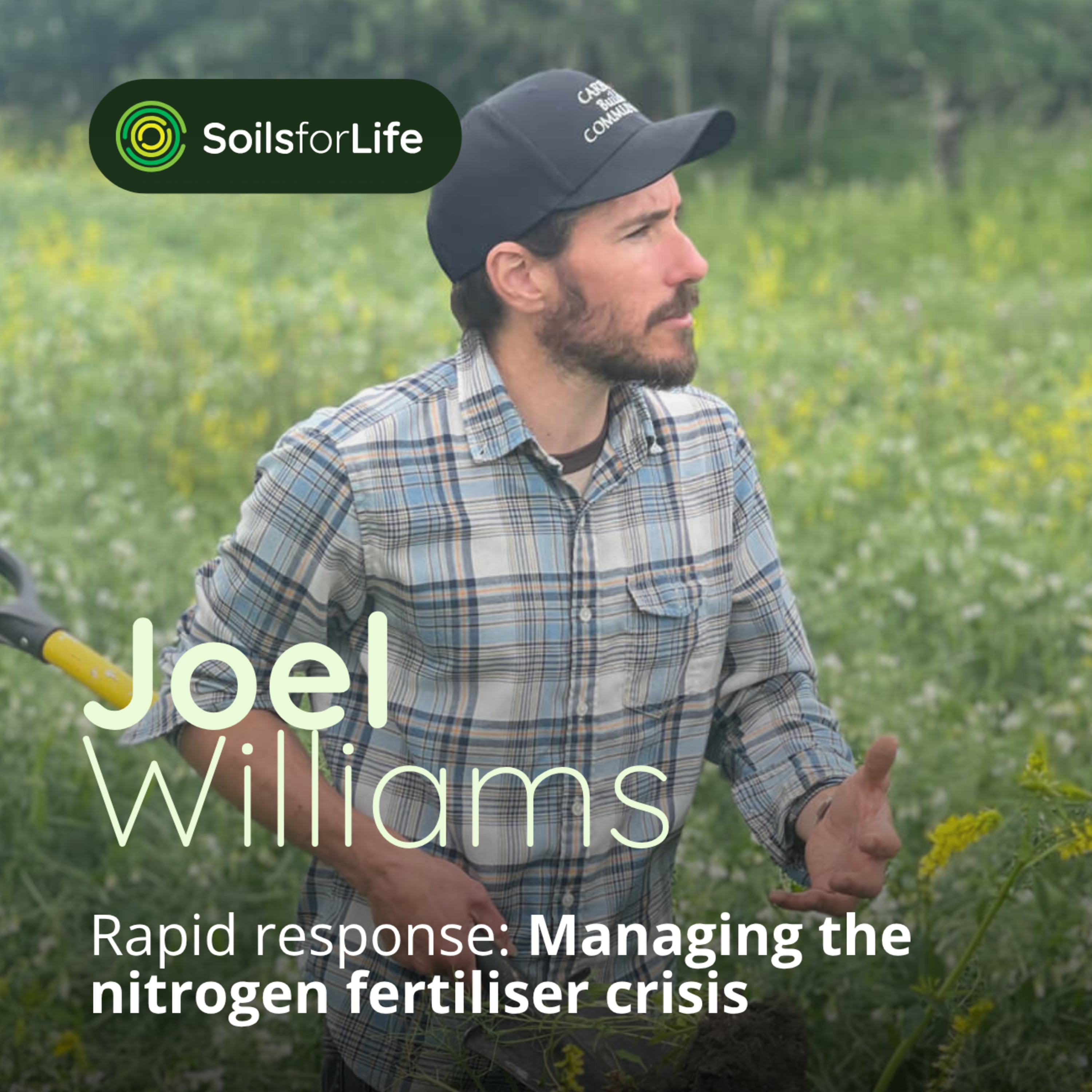
RAPID RESPONSE: Managing the nitrogen fertiliser crisis, with Joel Williams

Australia's fertiliser crisis has been building for weeks as a result of the conflict in the Middle East. Around 60 per cent of Australia's urea imports travel through the Strait of Hormuz, which has been severely disrupted, leaving shipments stranded and future orders cancelled. Some reports suggest urea prices have already more than doubled since December 2025, from around US$350 per tonne to US$750, and there are serious doubts about whether any supplies will be available beyond the next few months if the conflict continues. Even if stock becomes available, the prices are eating into margins, with reports that many growers are choosing to cut production because the economics simply don’t stack up. The federal government has formed a Fertiliser Supply Working group and responded with a package of measures including new legislation to underwrite the import of emergency fertiliser supplies. But what can producers themselves do? Today we're talking to soil and plant health educator Joel Williams about what farmers can do right now to manage this situation on the ground. Links and resources: ​Soils for Life Cropping Practice Guides ​Joel Williams’ Foliar Nitrogen Course ​GRDC Resources page If you have feedback, questions, or suggestions for future episodes or guests, we'd love to hear from you - reach out on social media or at info@soilsforlife.org.au.
41 minAbspielen in:

Di31Mär
Soils For LifeJL

Jonathan LundgrenGast

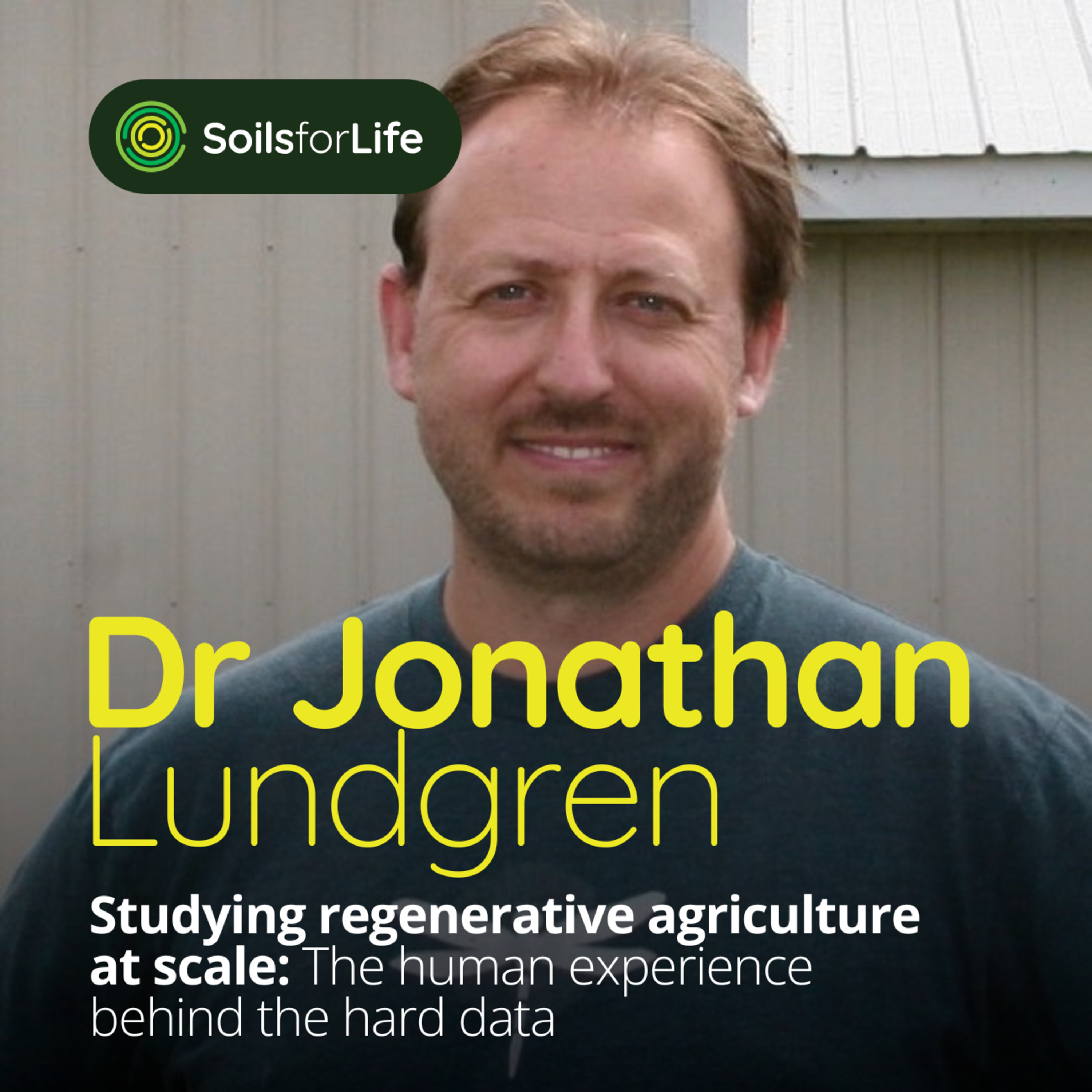
Studying regenerative agriculture at scale: The human experience behind the hard data, with Dr Jonathan Lundgren

Dr Jonathan Lundgren runs 1,000 Farms, the largest and most comprehensive study of regenerative agriculture anywhere in the world. Despite the name, the program now includes more than 2,000 farms across all eco-regions in North America, with a minimum of 500 data types for each farm, including data on production, economics, soil, water, biodiversity, carbon, nutrition and more. The results - according to Jon - are illustrating what farmers themselves have been reporting, that working with natural systems on farms can be as profitable, with greater stability and resilience, improved environmental outcomes and much improved mental and physical health and wellbeing for the farmers. But that incredible research is just the tip of the iceberg of this conversation. After a highly distinguished scientific career, including a PhD in entomology, more than a decade with the USDA, receiving the Presidential Early Career Award for Science and Engineering, and writing more than 100 peer-reviewed journal articles, Jon pivoted. He established Ecdysis Foundation, a nonprofit organization based in Estelline, South Dakota, dedicated to advancing regenerative agriculture through relationship-based, independent research, and bought and now runs a farm - Blue Dasher Farm. He has become a passionate advocate for reorienting food and agriculture systems away from centralised corporate commodity chains and back to the farmers on the land, their health and wellbeing, and that of the communities in which they operate. This, he argues, is the pathway to more secure and resilient agriculture, and to realising the true potential of regenerative agriculture to deliver on our most pressing social, economic and environmental issues. Further reading: ​Ecydsis Foundation ​1,000 Farms Initiative ​Periodic Table of Food Initiative ​Project Avalanche ​Wilmot Field Day

44 minAbspielen in:

Di17Mär
Soils For LifeMR

Mary RetallackGast

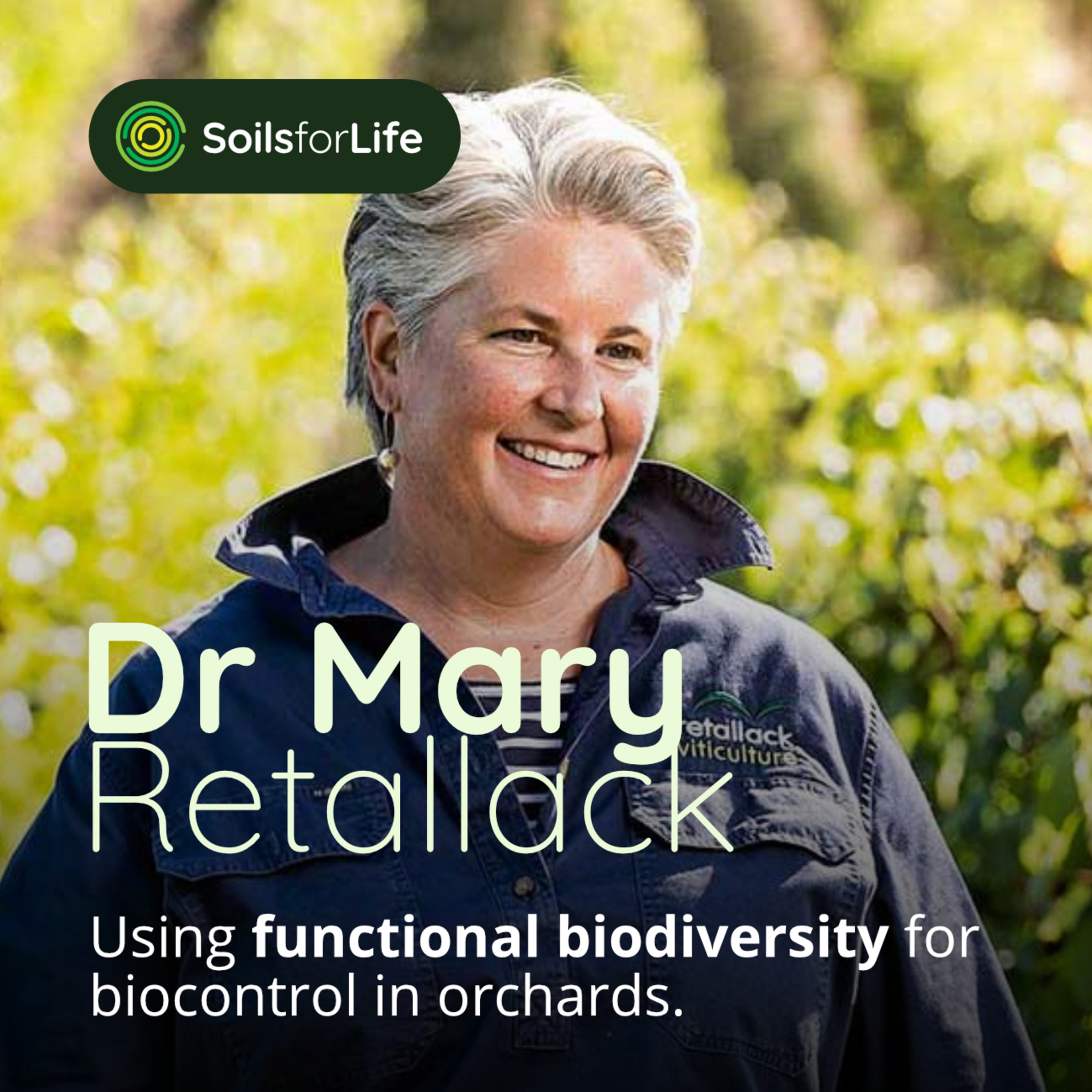
Nature’s army: Using functional biodiversity for biocontrol in orchards, with Dr Mary Retallack

Dr Mary Retallack is an agricultural scientist, third-generation viticulturist and agroecologist who has spent more than three decades advancing environmental stewardship within agricultural landscapes. She grew up on a fruit block in SA's Riverland growing grapes, apricots and pears, and now lives on a small vineyard and apple orchard surrounded by native insectary plants in the Adelaide Hills. Mary is the founder and custodian of the award-winning National EcoVineyards Program, working in collaboration with more than 175 program partners and wine growers across fifteen regions in four states to build functional biodiversity, restore soil health, and reduce reliance on synthetic inputs. Mary’s PhD research in viticulture and plant protection focused on native insectary ground cover plants and the role they play in supporting natural predators of vineyard pests. Her findings show how functional diversity not only builds ecological health, but delivers economic benefits to growers, and there are heaps of detailed case studies from growers around the country on the EcoVineyards website. If you’re involved in perennial horticulture, check out our new Orchard Resilience Project. With funding from the Australian Government’s Climate-smart Agriculture Program, we’re working over the next three years with perennial horticulture growers across Australia to strengthen soil health and landscape function in tree and vine crops. Links and resources: EcoVineyards Program Retallack Ecology Soils for Life Orchard Resilience Project John Kempf’s Plant Health Pyramid If you have feedback, questions, or suggestions for future episodes or guests, we'd love to hear from you - reach out on social media or at info@soilsforlife.org.au.
31 minAbspielen in:

Di24Feb
Soils For LifeME

Matthew EvansGast

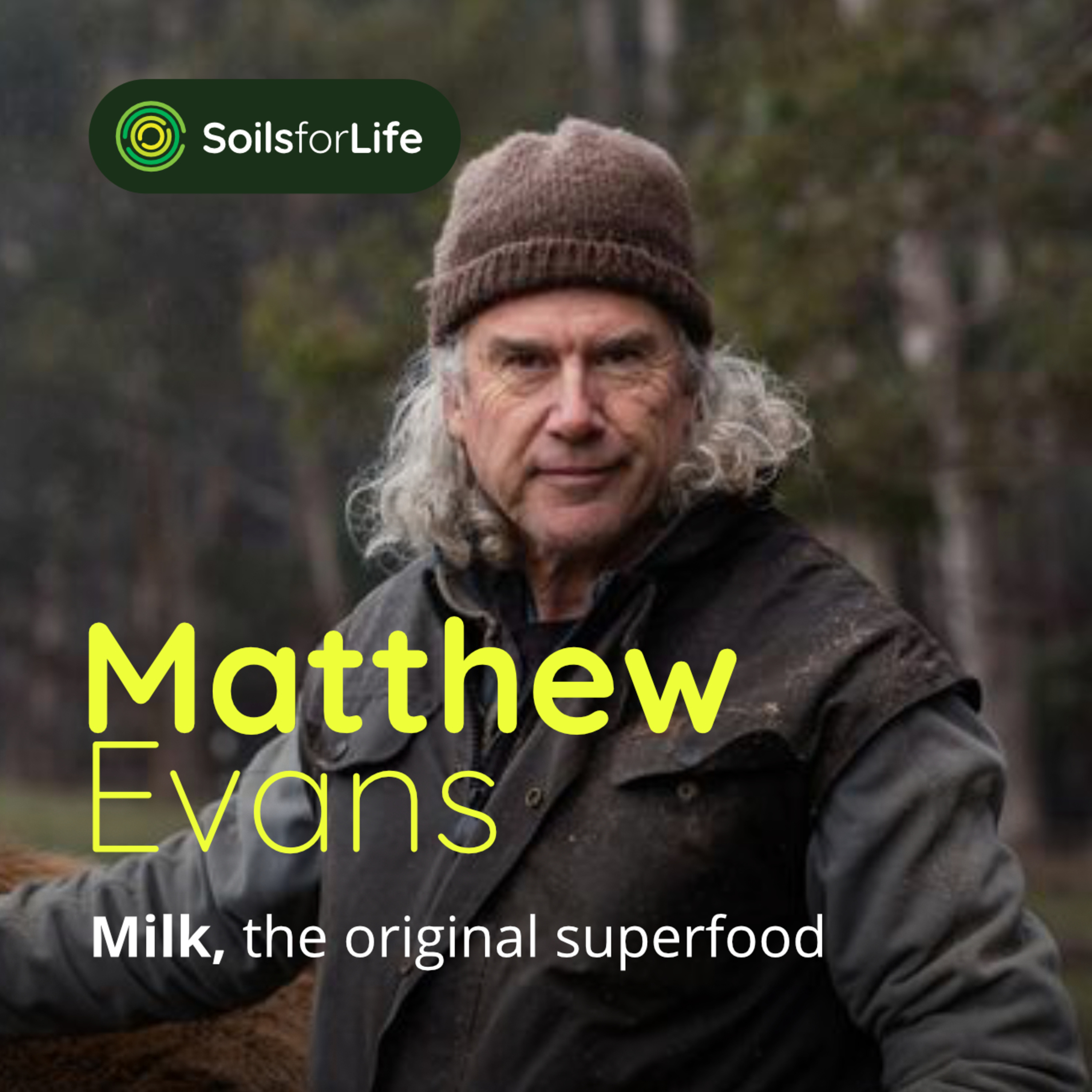
Milk, the original superfood, with Matthew Evans

Matthew Evans is a chef, farmer, author, food advocate and founder of Australia's Grounded Festival (coming up in April - tickets available at groundedaustralia.com.au). Soils for Life is kicking off a new national program working with dairy farmers around the country (join our launch event in March, details via https://events.humanitix.com/dairy-profitability-and-resilience-through-diversity-and-soil-health), and we thought it was the perfect time to talk to Matthew about his most recent book, ‘Milk: The truth, the lies and the unbelievable story of the original superfood’. We discuss some of the debates around dairy, including lactose intolerance, nutrition, and sustainability and how regenerative practices on farms can improve both soil and milk quality. You’ll hear about: The biology of milk, and how evolution has designed milk to be the perfect food source for nourishing and protecting the young The history of humans drinking milk from other animals, and why it became so central to many cultures Health benefits of milk, from complex proteins to compounds that support immunity and brain health How plant diversity and soil health influence milk quality, including omega-3 / omega-6 ratios Comparing dairy versus milk alternatives Links and resources: Grounded Festival 2026 described by Matthew Matthew’s book 'Milk The truth, the lies and the unbelievable story of the original superfood' The study on Regenerative farming enhances human health benefits of milk and yoghurt in New Zealand dairy systems, mentioned by Matthew Find our more about the Soils for Life Dairy Resilience Project

35 minAbspielen in:

Gäste, die länger als 12 Monate zurückliegen, gibt es mit Pro. Pläne ansehen