Guests from across the EV industry will join the crew for The EV Café Takeaway, having candid conversations to highlight the work of the Electric Vehicle and Sustainability industry, to uncover stories that we all need to learn from and importantly, to understand something of the people behind the work. The EV Café…
Judy O'Keefe never planned a career in fleet. She started at wine merchants Berry Bros. & Rudd, then worked in fashion and in finance at BT. At Openreach she helped grow the complex engineering team from 750 to 15,000 people during the fibre rollout. Now she runs one of the UK's biggest van fleets.
Paul and Judy talk about how she uses data, monthly governance calls and quarterly Fleet Live sessions to win over engineers. They also cover:
Charging deals: agreements with charge point operators that come with perks for engineers, and access to depot chargers at Arnold Clark and First Bus
Telematics: a Geotab rollout designed with the unions. It's forward-facing only and focused on engineer safety and predictive maintenance
Futures for All: a work-experience programme that introduces young people to fleet
Her magic-wand wish is a cross-party government strategy on net zero that doesn't change every time the government does.
Connect with Judy: https://www.linkedin.com/in/judy-o-keefe-96a4a7208/
Openreach: https://www.openreach.com
Robert Evans has led Cenex, the UK's not-for-profit centre of excellence for low carbon and zero-emission transport, since joining as employee number one 21 years ago. Paul and John (who has known Robert for 16 years) ask how a chemistry graduate from Redcar got there, by way of platinum market research and clean diesel work at Johnson Matthey.
Robert describes Cenex as a catalyst: it speeds the reaction up without being used up itself. He explains why he runs the organisation on a balance of customer, team and money, and why he puts staff job security ahead of growth. He also recalls keeping Cenex alive once its start-up funding ended, and getting 970 charge points installed across the Midlands after the regional development agencies were scrapped.
The conversation also covers the harder sectors still to decarbonise (HGVs, construction, farming and maritime), how fuel price shocks have sold EVs, the UK's place in a market now led by Chinese manufacturers, and a very diplomatic verdict on Jaguar's new direction.
His career advice: go where people are passionate about making progress.
Cenex: https://www.cenex.co.uk
Robert on LinkedIn: https://www.linkedin.com/in/robert-evans-5635431a/
In 2004, Andrew Lawson and host Paul Kirby drove a fully electric Mercedes-Benz Sprinter around the MIRA test track. It topped out at 40mph, had about 40 miles of range and could carry roughly a bag of crisps. Twenty years on, Andrew has been head of fleet for Mercedes-Benz UK and US director of fleet, where he helped launch Amazon's home delivery programme. He now advises Connect Vehicle Solutions, PVS, Volo and Chery Commercial Vehicles.
Andrew and Paul cover:
Why discounting EVs to hit ZEV mandate targets lets customers down, and why the total cost of ownership often works anyway
Vehicle, charger, power, grid connection: why the whole chain has to be planned together
Swapping diesel engines for batteries in working port and airport equipment instead of replacing it
What dealers do when oil changes and brake pads stop paying the bills
Why trust and honesty matter more as the number of suppliers chasing fleets grows
Andrew's magic-wand wish: clearer messages from government, and more chances for fleets to test EVs before they commit.
Connect with Andrew
LinkedIn
https://www.linkedin.com/in/andrew-lawson-97570a10/
Connect Vehicle Solutions
https://pvsgroupuk.com/
Bailee Harrison buys everything from pallet trucks to cranes for The Bristol Port Company, where most of the heavy equipment still runs on diesel and the target is net zero by 2040. In Bailee's first podcast, Sarah and John Curtis ask how you decarbonise a working port.
What we cover:
The port's long history, from trade on the River Avon before the Romans to a 2,600-acre estate spanning three counties.
The fleet: about 40 of roughly 100 vehicles are now electric or hybrid, diesel forklifts are being phased out, and electric reach stackers are on the horizon.
The cost of idling: Webfleet data showed one reach stacker idling for five hours can cancel out the gains from electrifying the vehicles. The port set a 10% reduction target for idling and has reached about 35%.
Data on the CEO's agenda: a monthly review of Webfleet reports that feeds down to department managers.
Bailee's own story: youngest of five, nicknamed "Trouble", living with ADHD, plus advice for teenagers who want to work on the environment.
Produced in partnership with Webfleet.
Connect with Bailee: LinkedIn
The Bristol Port Company: https://www.bristolport.co.uk
Every charging session involves a handshake drivers never see: identifying the vehicle, working out who pays and at what price, and settling the bill across roaming partners whose figures don't always agree. Björn Albertsson co-founded Metergram, a 50-person services company that works only on EV charging software for operators, eMSPs and utilities worldwide.
Recorded live at Fleet & Mobility Live 2026 at the NEC in Birmingham, this conversation explains what "software-defined charging" means once a depot adds battery storage, solar, V2G and demand charges. It also looks at what happens when a fleet's charging, fleet management, transport management and monitoring systems don't work together.
In this episode
AutoCharge vs Plug & Charge, and what semi-public depots need
Roaming reconciliation and the gaps in how OCPI gets interpreted
Why V2G still lacks a mature market
The risk of bolting ever more features onto one platform
Björn's advice for fleet managers: plan more, and keep systems modular
Björn's magic wand wish: braver policymakers.
Links
Björn Albertsson on LinkedIn: https://www.linkedin.com/in/bjornalbertsson/
Metergram: https://metergram.com
When Gurjeet Grewal stepped up as CEO of Octopus EV, there was a three-month window to prove the point. Gurjeet set a deliberately ambitious target for March plate-change, and the business posted the biggest month in its history.
Paul and JC hear how Gurjeet got there, from investment banking and leveraged finance to lean startups and then Octopus. Gurjeet credits curiosity to childhood summers with family on other continents, and grit to a mother who worked multiple jobs.
They also get into the business. Octopus EV has built the UK's largest EV-only fleet, consumer leasing now makes up a quarter of monthly orders, and it's launching in Germany. Gurjeet explains why only 14% of people believe home charging beats petrol on cost, and what the industry needs to do differently.
In this episode:
Treating the first three months as CEO as an audition
Why networking should never be transactional
Consumer leasing, used EVs and getting cars to everyday drivers
Helping more people of colour into senior roles
A magic wand wish the show hasn't heard before
Connect with Gurjeet: https://www.linkedin.com/in/gurjeetgrewallon/
Octopus Electric Vehicles: https://octopusev.com
Peter Jones built an events business twice. Two years after launching his first show, his bank manager told him he'd built a skyscraper on a sandy beach and gave him 24 hours to liquidate. He lost the house, the car, everything - then scraped together £16,000, bought the IP back at auction, and started again.
Nineteen Group is now heading for 400 people and owns the Commercial Vehicle Show, Installer and International Security Expo. And last July, in front of 120 of his own staff, Peter couldn't force a smile. He told them he was done and sat down.
At Nineteen's Wimbledon HQ, Paul gets the unedited version: the hamster wheel, the storm Peter took a 45-foot boat into and had to be pulled out of by the RNLI, and the leadership rebuild that followed.
Plus the EV bit - where commercial vehicle electrification is heading, why charging still has "a lot of road to go," and what it takes to bring the big truck manufacturers back to the NEC.
Peter Jones (the real one, not the Dragon:)
https://www.linkedin.com/in/peter-jones-0b501010/
Nineteen Group:
https://www.nineteengroup.com
Bob Murphy was working on electric vehicles before most of the UK had anywhere to plug one in. Back in 2011, having retrained as a mechanic at Edinburgh College, he fell into a small research project that put four EVs to work as staff pool cars. Nobody knew whether they could make it from Dalkeith to Dunbar and back. There was no public charging network to fall back on. The college ended up installing its own chargers and running a five-acre solar field on site, and some of those early Mitsubishi i-MiEVs and Citroën C-Zeros are still being stripped and rebuilt by trainee technicians today.
From there, Bob spent years selling and siting charge points across Scotland, which he counts as one of his proudest bits of work, and it took him to almost every corner of the country. He now works as a technical executive at Scottish Power, advising on charging networks and infrastructure, and he is a familiar face at industry events and in the WhatsApp groups where he answers questions from anyone, silly or not.
Paul and John talk with Bob about:
Why a lifelong petrolhead who once owned a four-litre Jaguar XJ6 and a pair of modified Ford Kas became a convert, and what a Hyundai Ioniq 5 N ring taxi lap of the Nürburgring taught him about EVs and fun
The wider home energy picture: home chargers, solar, batteries and heat pumps, and why an energy company is encouraging customers to use less
Hyperfocus, problem solving and the undiagnosed ADHD Bob credits for the way he goes deep on everything from i-MiEV battery cells to Star Trek lore
Pressing the reset button after a career or relationship change, leaning on friends, and a 2024 spent travelling solo to a different country every month
Pushing for the Scottish Power job when he felt he wasn't good enough, summed up by a Scottish phrase you'll want to remember: shy weans get nae sweeties
Plockton, the west coast, and where to point the car when you need to get away
Bob's wish with the EV Café magic wand: less ignorance, more empathy
Along the way there is a kilt, two West Highland terriers, a shortbread tin, a tour bus full of cameras at Fort Augustus, and the podcast's most contested answer yet to Star Wars or Star Trek.
Connect with Bob on LinkedIn:
https://www.linkedin.com/in/bob-murphy-300031b0/
Find out more about Scottish Power:
https://www.scottishpower.co.uk
Counting charge points tells you almost nothing. That frustration led Chris Rimmer and his colleagues at CENEX to build Are We Nearly There Yet? - reports that express public charging progress not in kilowatts or headline totals, but in years ahead or behind demand, local authority by local authority. (At recording: near-home charging sits about a year and a bit ahead. A little ahead. Not loads.)
Chris has spent nearly eight years at CENEX, the not-for-profit consultancy set up in 2005 to drag zero emission vehicles out of the lab and onto the road. His particular skill is compression - turning meter points, grid flexibility and battery degradation into one sentence a politician can act on.
He talks to Paul and John about the route in: physical geography and oxbow lakes, a graduate scheme at E.ON, a call centre at 24, a living lab of 75 Milton Keynes homes. A year in Mexico working for a Christian charity reset his sense of who bears the cost when the climate shifts.
Connect with Chris: https://www.linkedin.com/in/chris-rimmer-58468233/
CENEX website: https://www.cenex.co.uk
What happens when you take an electric van that can wheelspin off the line and make it drive like the diesel it replaced? According to Kevin Hennelly, commercial director at The Vehicle Group (TVG), you get calmer drivers, fewer accidents, longer tyre life - and up to 30% more range from the same battery.
Kevin lifts the lid on TVG, a "very well hidden" UK engineering company whose Aladdin's cave of products includes the Oculus camera (the only vehicle camera made in the UK) and EcoLimit, a power control system that tames EV acceleration, limits reverse speed, and can even put an overloaded van into limp mode until it's back at the depot. He talks through the real-world numbers: a refrigerated home-delivery fleet in London seeing 120–130 miles where unmodified vans manage 90, a water company getting over 200 miles per charge instead of the expected 150–160, and the knock-on savings in charging time, infrastructure, tyres, downtime, and insurance claims.
Connect with Kevin: LinkedIn
The Vehicle Group: thevehiclegroup.com
Chris Chandler is Principal Consultant at Lex Autolease and the electrification SME across all three Lloyds Banking Group motor brands: Lex Autolease on the B2B side, Tusker in salary sacrifice (22,000 vehicles at acquisition, 100,000 the week we recorded), and Black Horse in retail finance. Between leasing and salary sacrifice, that's a serious chunk of the EVs on British roads.
Paul and JC get into:
Why cars sprinted and vans crawled - benefit-in-kind versus a purely transactional purchase, and why commercial vehicles are far less price elastic than company cars
The moment the tax went up and "the tap just turned off" - then came back down and switched on again
Why converted diesel platforms were never going to cut it, and what changes when a van is engineered electric from the ground up
Charging that should just work: plug in, it charges, no apps, no cards, no accounts
V2G, home solar and batteries, and why a leasing company is now asking customers what's behind the wall socket
Designing CO2-based company car tax in 1999, and why CO2 beat the other 18 candidates on the list
Biodiesel, waxing fuel, bacterial growth, and the argument for a 5% blend across everything rather than 67% in a handful of refuse trucks
Chris Chandler on LinkedIn:
https://www.linkedin.com/in/chris-chandler-756b9813/
Lex Autolease:
https://www.lexautolease.co.uk
Lex are principal sponsors of the Greenfleet EV Rally.
Angela Muresan arrived in the UK in 2015 with broken English and a job picking and packing in a warehouse. Ten years later she's a presenter, content creator, and the face of Be.EV — and the story of how she got there involves a notebook full of borrowed email templates, a self-funded industry event that left her with £20 in the bank, and a one-way ticket taken purely because an ex once said the UK was the one place he'd never go.
Angela talks about ADHD — what it cost her before she understood it, why she now calls it a superpower, and how an unlikely combination of therapy and ChatGPT helped her make sense of her own brain. She explains the gamble behind Race to Zero, the event she organised alone with no marketing experience specifically so the industry would come to her (it worked), and why her proudest achievement has nothing to do with work.
Along the way: why she refuses to be boxed in as "an EV person" or "a petrol person", the sameness problem with modern car design, her plan to convert a classic — ideally a '69 Shelby Mustang — to electric, and what she'd do with a EuroMillions win.
And when handed the EV Café magic wand, her one wish isn't about chargers or range. It's about ending the tribalism — petrol versus electric, us versus them — and just getting on with building a cleaner future together.
Connect with Angela:
LinkedIn: https://www.linkedin.com/in/marketingwithangela/
Website: https://www.angelamuresan.com
Be.EV: https://www.be-ev.co.uk
A co-founder of EVA England, incoming chair of the Recharge APPG in Parliament, and one of the earliest UK adopters of home solar, battery storage and electric driving — Warren Phlips received one of the very first consumer Tesla Powerwall 2 units in the country (number three, he's told, just behind a certain Robert Llewellyn) — he has spent the best part of a decade quietly pulling the EV transition in the right direction, almost entirely as a volunteer.
But this conversation goes far beyond charge points and policy. Warren talks candidly about the moment that changed everything: sitting alone in a hospital room, holding his newborn daughter while doctors fought to save his wife, and deciding then and there that his job was to make the world better rather than build a fortress around his family. Everything since — the advocacy, the lobbying, the 20-plus hours a week given freely to EVA England — flows from that decision, and from a promise to his daughter.
Along the way:
From avionics engineering and FTSE 100 software to government security work — and how none of it explains the hats
How showing off a Renault Zoe and some solar panels at an eco open home quietly converted a neighbourhood
The five principles Warren tests every policy against: fair, accessible, equitable, safe, accurate
A live debate on the newly announced VAT cut on domestic electricity — good news, but is it fair to the millions who can't charge at home?
Recognising privilege, and choosing to spend it on other people
Lucid Destiny, his new consultancy helping companies navigate the EV transition without losing sight of the consumer at the end of it
Why his daughter is named after Ayrton Senna
And a Magic Wand wish that might be the best one yet: removing fear itself
Connect with Warren:LinkedIn
EVA England:evaengland.org.uk
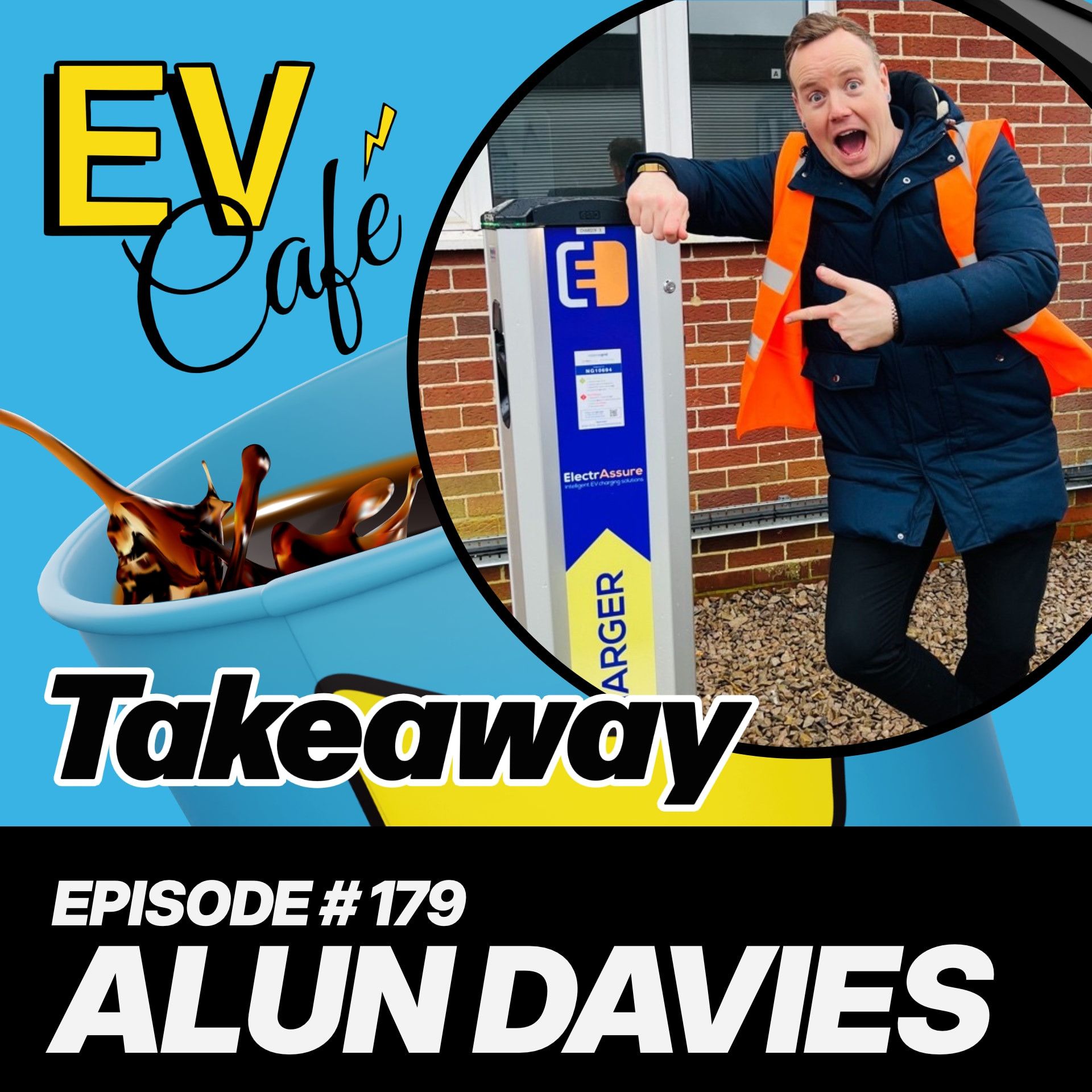
Alun Davies once told his team that electric vehicle charging "would never catch on" — and sent someone else to do the first installation jobs. Today he leads ElectrAssure, the electrical contractor behind nearly 2,000 charging sockets for National Grid, the chargers that greet every electric Volkswagen arriving on UK shores, and some of the first DC rapid chargers for Western Power Distribution.
This week, Alun sits down with Paul and John to trace the line from qualified electrician to business leader — and it's anything but a straight one. Along the way: a theatre degree, a stint as sound engineer for the England football team's press conferences (and Girls Aloud), a summer spent on commercial roofs, and a cherry picker licence that landed him an apprenticeship in the family firm.
Alun talks candidly about the roundtable moment six years ago when nerves nearly got the better of him — and how a "nuts and bolts" perspective turned out to be exactly what a room full of fleet managers needed to hear. He opens up about running a business with his wife (a former deputy head teacher, now Ops Director), why they've agreed never to switch off from work, giving up alcohol in 2022 to think more clearly, and measuring success by the energy in a room rather than the numbers on a spreadsheet.
There's also a school report that shattered a 20-year self-image, a son whose GCSE English presentation was titled "Why Electric Vehicles Are Rubbish", and the revelation that this softly-spoken sparky is the lead singer of a heavy metal band, Before the Sirens.
Whether you're wiring up a depot, scaling a family business, or just wondering how a self-confessed class clown ends up advising National Grid, this one's worth your fifty minutes.
Connect with Alun and ElectrAssure
Alun on LinkedIn
linkedin.com/in/alun-davies-electrassure
ElectrAssure
electrassure.co.uk
Before the Sirens
YouTube
Spotify
Apple Music
What does it take to steer a £50 million business towards its founder's vision of lasting 100 years? Andrew Clint, CEO of myenergi, joins us fresh from the company's 10th anniversary celebrations to talk about the next 90.
Eighteen months into the role, Andrew explains why myenergi — best known for zappi, the first solar-aware EV charger — is refocusing on Lee Sutton's original ambition: a complete home energy management system. That means vehicle-to-grid on the horizon, the libbi home battery, Grid Pay rewarding customers for grid flexibility, and software that quietly optimises solar, battery and EV charging without the homeowner lifting a finger. His maths is compelling: a full ecosystem could save households around £1,500 a year — close to a zero-bills home.
Andrew is candid about why so many charging companies have come and gone while myenergi endures: knowing exactly what you are, and what you aren't. He also digs into how AI is accelerating the business, from a new data lake on AWS to machine learning that learns a household's habits.
Andrew also discusses walking away from British Airways after missing out on a job, growing a De La Rue division from £30m to £90m, and the mother whose question — "is that really the best you can do?" — still drives him today.
Connect with Andrew:
LinkedIn
Find out more about myenergi:
myenergi.com
Dan McLaren left school with no qualifications, spent his early years as a greenkeeper at a private members' golf club, and now looks after half of the BP Pulse network as Network Optimisation Lead.
Dan talks about growing up dyslexic in a school system that dealt with it by "putting you in a class with less people", and about the father-in-law who took him on as a project — daily five o'clock phone calls, hard questions, and a £600-a-month leg-up that let him start again from the bottom in the motor trade. It's a powerful case for why everyone should find themselves a mentor, and why Dan now makes time to be one for the younger generation coming up behind him.
We also cover:
Falling into EV by accident — how a fixed-term contract at the Electric Vehicle Experience Centre in Milton Keynes (taken mainly because it came with a car) turned into a career, once Dan swapped a cautious rental policy for a simple philosophy: bums on seats sells EVs.
Life as "Dan Dan the EV Man" — taking on the myths and misinformation head-on via TikTok, why he actually quite enjoyed the naysayers, and why he stepped back from it to make a bigger difference from a commercial seat.
Where BP Pulse goes next — the shift to purely rapid and ultra-fast charging, why it's about the right charger in the right place rather than the most chargers in the ground, partnerships with M&S, Q-Park and Transport for London, and an honest reflection on the reputational baggage that comes with being one of the industry's earliest movers.
Playing to your strengths — how Dan turned dyslexia into an engine for ideas, relationships and front-of-room energy, and learned to let the analytical people do the analytical bits.
Plus, Dan receives the legendary EV Café magic wand and uses his wishes on happy kids, a healthier heart, and making BP Pulse the biggest and best charge point operator in the UK.
Connect with Dan
LinkedIn: Dan McLaren
BP Pulse: bppulse.com
TikTok: Dan Dan the EV Man
What do you get when you cross the world's most innovative energy company with the world's largest battery maker? Swaptopus — a joint venture between Octopus Energy and CATL that's bringing HGV battery swapping to the UK and Europe. And the man growing it is Will Rowe, Entrepreneur in Residence at Octopus Energy, who joins us this week from a tennis club, the day after selling his house. Commitment.
Will explains why battery swapping cracks the three problems that have stalled electric trucking: grid connections, charging downtime, and the mismatch between when trucks need power and when power is cheap. Swap a battery in minutes, keep the truck earning, and let the swapped-out batteries do a second job — because a network of stations full of batteries is also a virtual power plant, storing cheap renewable energy and feeding it back when the grid needs it. This isn't just a transport play; it's an energy infrastructure play.
He's refreshingly blunt about the road that led here, too. Will previously founded a hydrogen business for exactly this market — and he tells us candidly why it didn't work, why losing two-thirds of your energy is no route to energy security, and what China's thousand-to-one preference for batteries over hydrogen tells us about where this is all heading. His verdict on hydrogen for transport is one you'll want to hear in full.
Along the way we get into:
Why trucks are the easy win — 32 TWh of new annual electricity demand if the UK's trucks go electric, lowering bills for everyone, while governments obsess over data centres instead
Autonomy changing everything — a customer planning to go from 60 to 160 hours of weekly truck utilisation, and what cab-free, 24/7 freight means for an industry whose two biggest costs are labour and fuel
Bringing Chinese OEMs to Europe — and conversations underway with four of the five biggest European truck makers
Geography-specific energy strategies — why a swap station in solar-rich Spain looks nothing like one in windy Britain
Growing up dyslexic with a reading age of six, passing A-levels anyway, and why resilience — and a mum who insisted he could do anything — mattered more than school ever did
Honest talk about failure — why it hurts, what it teaches, and why loving the problem matters more than loving your first solution
And when handed the EV Café Magic Wand, Will's wish is deliberately unglamorous and absolutely fundamental: just make electricity cheaper. Get that right, he argues, and the business case for electrifying everything falls into place on its own.
Connect with Will: LinkedIn
Octopus Energy: octopus.energy
Most households and small businesses don't have an automotive expert on hand, just a relative who gets cornered at barbecues or "someone who used to be a mechanic" now responsible for a multi-million-pound fleet. That gap is the problem Paul Jewell built CarCloud to fix.
Paul joins Paul Kirby and Sara Sloman to explain how CarCloud surfaces the MOT deadlines, lease endings and maintenance costs that usually blindside drivers, pairing each one with a solution rather than just a warning. He makes the case for the SME sector, not the big fleets, as the real engine of electric van and car growth.
He also covers his work in last-mile transport: 10,000 pedal-assisted, motorcycle-grade electric bikes already on UK roads, care workers using them to fit more home visits into a day, and a new grocery sidecar that carries 40 kilos for around 14p per 50 miles.
Along the way Paul traces his approach back to selling used cars in Birmingham's subprime credit era, tells the story of a remarkable homeless man who taught him chess and life lessons as a kid, wishes for baseline foods to be sold "net free" with no VAT or profit attached, and sets out CarCloud's next phase: automotive and mobility banking that returns real value to the driver.
Connect with Paul Jewell:
LinkedIn: https://www.linkedin.com/in/paul-jewell-55476122/
CarCloud: https://carcloudsolutions.com
Guest: Jamie Sands — Operator-led zero-emission freight and innovation | TwentyForty | Welch Group
Company: Welch Group (welchgroup.co.uk · twentyforty.uk)
LinkedIn: linkedin.com/in/j-sands
What does a 92-year-old, family-owned haulier with 70 trucks know about the future of freight that the multinationals don't? Quite a lot, it turns out. Jamie Sands is Head of Solutions at Welch Group — a role that, as he points out, doesn't exist in most operators — and he joins us to explain why a regional independent from the east of England is winning tenders against the big 3PLs on something other than price.
We get into the commercial logic underneath the green badge: how Welch turns its fleet into a test bed for startups in exchange for preferential terms, why the "green premium" basically doesn't exist, and how being two steps ahead on scope three reporting now wins business outright. Jamie makes the case that decarbonisation is really an energy and infrastructure problem, not a vehicle one — and that the smart play for an operator is treating charging, energy arbitrage and demand response as new revenue, not just a cost to swallow.
There's plenty for the technically curious too: system-level thinking across siloed networks, what L4 and L5 autonomy actually mean for hub-to-hub night runs, why he's done arguing about hydrogen, and why "technology neutrality" can quietly become an excuse to do nothing until the 2035 cliff edge arrives. Jamie also walks us through TwentyForty, the not-for-profit he's built to pull other independent operators into the research, the media and the policy conversation — including the 12 Pillars framework for getting the whole industry talking to itself.
Away from the trucks, Jamie talks music, comic books, a Project Hail Mary obsession, staying genuinely calm in an industry that runs on chaos, and the loss of a close friend that pushed him to do work that actually matters. He closes with one wish that doubles as his whole mission: that operators — the people this transition is being done to — get a seat in the rooms where it's being decided.
Plenty of marginal gains, one or two God complexes, and a reminder that the future we're all hoping for is mostly available right now, if we work together.
Connect with Jamie: LinkedIn
Welch Group: welchgroup.co.uk
TwentyForty: twentyforty.uk
Days before stepping in as Managing Director of Holman UK, Nick Hay sits down with Paul and Sara for a conversation that ranges far wider than fleet leasing. It's a candid look at what three decades in cold chain logistics teaches you about cutting environmental impact without losing sight of commercial reality — and what it costs the person doing the leading.
Nick traces a career built on incremental gains: fitting telematics across an entire 100-unit fleet back in 2005, dragging a 400-truck operation's fuel efficiency from 8.1 to over 10 MPG when people thought he was mad to try, and running Euro 5 trial vehicles from every major manufacturer side by side rather than waiting to see what everyone else did. The throughline is a willingness to test, measure, and stop what isn't working — and to do it in partnership rather than at a supplier's expense, from one of the UK's first 100% lithium-ion materials-handling fleets to joint ventures packing 40 million cases of produce a year.
We get into why private ownership changes what's possible in the energy transition, how Holman's shared-risk model differs from a standard lease, and why "horses for courses" matters more than ever when logistics spans a tradesperson's van and a long-haul HGV. Nick is clear-eyed on the obstacles too: grid access, the risk of being an early adopter, reactive government policy, and the speed at which Chinese manufacturers are now moving.
Then the conversation turns. Nick talks openly about growing up the self-described black sheep of an academic family, an athletics career that taught him resilience precisely because he didn't make it, and a lifelong wrestle with depression that he learned to mask at work — sometimes, he admits, at a cost to the people closest to him. It's an unusually honest exchange about what compassionate leadership actually demands: the willingness to say you don't know, to apologise when you got it wrong, and to keep believing you can be better tomorrow.
His one wish? Government legislation that's properly thought through, with a long-term view instead of constant chopping and changing — the certainty the whole industry is asking for.
Guest: Nick Hay, Managing Director, Holman UK
LinkedIn: https://www.linkedin.com/in/nick-hay-4b1a52137/
Company: https://www.holman.com/uk/
Calum James, General Manager of Farizon UK, joins Paul and Sara to talk about what it actually takes to land a brand new electric van marque in one of the world's most demanding fleet markets.
Calum walks through Farizon's lineage inside the Geely group - the same family tree as Volvo, Polestar, Lotus, LEVC and the Mercedes-Benz Smart joint venture - and the role of Jameel Motors, the 80-year-old distributor putting the brand on UK roads. He explains why the SV (Super Van) and the newly launched V7e are built ground-up as EVs rather than adapted from combustion platforms, and why details like a standard ventilated seat, three-pin sockets in the load bay and a payload monitoring system are aimed squarely at fleet managers worried about driver welfare, compliance and downtime.
The conversation digs into:
Farizon's "fast follower” playbook and why the SV picked up MCFT's fleet after a TCO comparison that delivered £1,500–£2,000 per van per year in savings
The AA partnership that puts mobile service, maintenance and repair on a 72-hour SLA - built around owner-operators who can't afford a day off the road
What Calum and Paul Kirby saw at the Beijing Motor Show: driverless Farizon vans on public roads, robotic 500kW chargers, and the gap between legacy OEMs that dream the future and Chinese manufacturers shipping it
The V7e's sub-£200-mile range, 1.3-tonne payload and 18-minute 80% rapid charge — and why charging speed has overtaken range anxiety as the fleet conversation
ZEV mandate pressure (10% market share against a 24% target), the shifting TCO maths as Middle East fuel volatility bites, and why 95% of electric van buyers are still fleets
Calum's path from part-time chef and Swindon banking grad to 11 years at Mercedes-Benz vans, and the leaders who shaped how he runs the team now
Regenerative leadership, the anonymous fortnightly mood meter Farizon publishes uncensored to its leadership team, and why Calum walks his dog around the same lake twice a day to stay grounded
LinkedIn: https://www.linkedin.com/in/calum-j-b4328059/
Website: https://farizonauto.co.uk
Stephen Clegg founded Topspeed Couriers in 1985 and has spent the last four years (and roughly £4.2 million) ripping diesel out of a logistics business that moves dangerous goods, radioactive material, and time-critical government samples around the UK. He sits down with Paul and John — joined briefly by Webfleet's Richard Parker before technology has other ideas — to talk about what actually happens when you stop talking about sustainability and start spending money on it.
The conversation gets into the specifics most operators avoid: why carbon emissions go up before they come down, why a Carbon Reduction Plan is essentially accountancy with different units, and why the much-repeated line "you'll save money by going green" is closer to "we're going to the moon in ten years" than a business case.
Also covered:
Winning a King's Award for Sustainability — and the team back at base who actually did the work
Why maintenance costs dropped to roughly a quarter once the diesel vans left the workshop
The shift to overnight, event-critical work and what that does to fleet utilisation
Driving 15mph slower, the bonus scheme that makes it stick, and a 75% reduction in claims after rolling out AI-based driver and forward-facing cameras
Public charging discounts that kick in when you're plugging in three or four times a day
The smash advert theory of refined fuels (you'll need to hear it)
One missing Volvo EX90, one nine-year-old Land Rover Discovery pressed back into service, and a verdict on 15-year-old in-cab tech
A useful listen for anyone running a van fleet who's been told the transition is too hard, too expensive, or too early — and for anyone who's been told it'll be easy.
LinkedIn: https://www.linkedin.com/in/stephen-clegg-b0179242/
Website: https://www.topspeedcouriers.co.uk
Dev Chana started his career as an oil broker in Kensington. Three decades later he's running E.ON Drive Infrastructure in the UK, and his ambition for public charging is unexpectedly modest: he wants it to be boring. Reliable, standardised, unremarkable — the kind of refuel you don't post about because there's nothing to post.
Paul and Sas catch up with Dev after first meeting his team in a rain-lashed Welsh car park during the EV Rally, where the curb-free bays, weighted cables and a small dog set the tone for what EDRI is quietly building.
What's on the table:
How a 10-person team has put 300+ bays in the ground in three years, when the industry average to install a *single* charger is 18 months
The 39p–44p/kWh opening price, why there's no app or membership, and what "no faff, no fuss" actually costs to deliver
Accessibility decisions baked in from day one: no bump stops, five-metre cables, CCTV on every HPC site, drainage that doesn't dump a puddle at the driver's feet
Why EDRI tiers its food and beverage partners instead of building its own forecourts — and why two early petrol-station sites won't be repeated
Vans now make up 25% of utilisation. Nobody invited them. What that's telling EDRI about the next phase of the network
The Shanghai motor show, BYD's jumping supercar, and what the XPeng/VW partnership signals for European OEMs
Dev's car-club mates who told him EVs would never take off — and have now switched their dailies
The mentors who shaped him: Ann Buckingham, who pulled him into the sector, and his father's moral compass
Where consolidation in the CPO market needs to land for the consumer experience to finally standardise
Dev is a self-confessed petrolhead with a V8 from the early '90s and a 1981 classic with fewer than 15 survivors. He's also the leader most likely to tell you the industry isn't done learning — and to ask what *you'd* change.
Guest: Dev Chana, Managing Director UK, E.ON Drive Infrastructure
LinkedIn: https://www.linkedin.com/in/dev-chana-1228b94/
Website: https://www.edri.com
Paul and John take listeners deep into the heart of China’s electric vehicle revolution with Elliot Richards, long-time Shanghai resident and driving force behind of Everything Electric APAC.
Fresh from Auto China, the conversation covers:
How Elliot went from a three‑month visit to China to 20 years immersed in its EV industry.
The rapid transformation of cities like Shenzhen to all‑electric taxis and buses in under two months.
The rise of BYD, Geely, and other manufacturers, and how vertical integration is giving Chinese brands a massive global advantage.
Game‑changing innovations in batteries, from sodium‑ion grid storage to five‑minute flash charging and upcoming solid‑state technology.
Autonomous driving, LiDAR‑equipped vehicles, robo‑taxis, and cargo bots that already operate in Chinese cities.
The commercial vehicle sector, battery swapping, and why Europe’s legacy manufacturers are now partnering—or being outpaced—by Chinese firms.
Elliot Richards (LinkedIn)
https://www.linkedin.com/in/elliot-richards/
Everything Electric APAC
https://www.youtube.com/channel/UCVtrDZAqOFM8_wIZHHzsqvg
This week: Tanya Sinclair, Chief Executive of Electric Vehicles UK (EVUK). Tanya shares how EVUK is tackling misinformation about electric vehicles, supporting both current and future drivers, and working with the wider e-mobility sector to build collaboration rather than competition.
She discusses the organisation’s approach to public engagement, from hosting hands-on events like Everything Electric to street-level outreach in city centres and even driving Members of Parliament around Westminster in EVs. Tanya explains how EVUK balances the need to educate hesitant drivers with the fast-paced innovation happening in the industry, all while building a sustainable organisation from the ground up.
There’s insights on:
Combating EV myths and online “guff”
Engaging millions of future EV drivers beyond the enthusiast bubble
The role of vans, taxis, and fleets in accelerating adoption
Collaborating across the entire e-mobility ecosystem
Bringing joy and positivity to serious industry work
Events mentioned include Everything Electric West (12–13 June in Cheltenham) and upcoming city-centre activations in Manchester, plus EVUK’s continued presence at political and industry showcases.
Tanya Sinclair (LinkedIn)
https://www.linkedin.com/in/tanyasinclair/
Electric Vehicles UK
https://electricvehicles.uk
Everything Electric
https://uk.everythingelectric.show
This week, Paul and Sara sit down with Becky Lalanne, Managing Director of Voqa, a new entrant in the UK EV charging market. Becky shares how Voqa is tackling the challenge of destination charging, introducing a 7–22kW AC charger with built-in contactless payments, designed to make charging effortless for drivers and more commercially viable for venues.
The conversation covers:
The frustrations of current destination charging and how Voqa addresses them
Why tethered AC chargers and tap-to-pay improve the driver experience
Voqa's approach to designing its own hardware for reliability and ease of maintenance
The revenue-share model and business case for hotels, co-working spaces, and leisure venues
Insights into Becky's career journey from Red Bull cliff diving events to EV innovation
They also discuss future-proofing the UK charging network, the role of installers, and why putting the driver at the heart of design is key to accelerating electrification.
Becky Lalanne (LinkedIn)
https://www.linkedin.com/in/becky-lalanne/
Voqa
https://www.voqa.com
This week we sit down with Mike Seymour, the driving force behind TrueCharge, part of the TrueForm Group. With 50 years of experience in street furniture—think bus shelters, tram stops, and digital displays—TrueForm is now turning its expertise to the EV world, focusing on the often-overlooked infrastructure that protects and enhances charging sites.
Mike dives into:
Why many UK charging sites are underused, exposed, or already looking tired.
How protecting EV chargers with shelters, canopies, and smart street furniture improves driver experience, utilisation, and long-term ROI.
Lessons from his background in the military, sales, and early EV adoption—and how those experiences shaped his approach to business and problem-solving.
The importance of moving the industry from talking and over-promising to actually delivering sustainable infrastructure.
If you’ve ever arrived at a windswept charger in the rain and thought, “There must be a better way,” this conversation shows why the solution is already here—and why it matters for the future of EV adoption.
Mike Seymour (LinkedIn)
https://www.linkedin.com/in/mikeseymour1/
TrueCharge
https://www.truecharge.co.uk
Paul and John sit down with Peter Heath of PLP—the “biggest company you’ve never heard of,” supplying critical infrastructure for energy networks, EV charging, and solar carports. From recycled-plastic EV foundations that remove the need for concrete to helical-screw solar carports that can be installed in a single day, Peter explains how PLP is cutting carbon while enabling the transition to net zero.
The conversation moves beyond technology into Peter’s personal world—his love of the countryside, commitment to environmental action, late ADHD diagnosis, and the experience of adopting his daughter. He reflects on risk-taking, resilience, and the importance of leaving the planet in better shape for the next generation.
Peter Heath
https://www.linkedin.com/in/peterheath1/
PLP EV
https://www.ev.plp.com
This episode dives into the world of electric adventure travel with Tom Weiser and Kevin Murphy, co-founders of Nerpa Travel. Their company crafts low-impact, high-adventure trips that swap petrol-powered bangers for electric motorbikes and e‑bikes, combining sustainable transport with genuine cultural immersion.
Tom and Kev share:
How COVID and COP26 inspired them to launch Nerpa Travel
The reality of running EV adventures in places like Vietnam, Thailand, and Wales
Charging challenges, public transport hacks, and “squeaky bum” moments on the road
Why small group travel and community connections are at the heart of their model
Plans for upcoming adventures, including potential West Africa expeditions
From mountain passes in rural Vietnam to the slow travel benefits of local buses, this conversation explores how EV travel can be both practical and transformative.
Find out more at https://www.nerpatravel.com and discover their upcoming Lost in Vietnam trip, 3–13 December 2026.
Paul Kirby and John Curtis are joined by Mike Costain and Nick Davison from Nineteen Group, the organisers of the Commercial Vehicle Show (CV Show). Recorded in the run-up to the 2026 event (21–23 April at Birmingham NEC), the conversation dives into:
The growth of the CV Show, with over 330 exhibitors and a 30–35% increase from last year.
The EV Café Village and its 26 exhibitors, highlighting innovation in decarbonisation and electric vehicles.
New entrants to the UK market including Cherry, BYD, and returning brands like Stellantis, Renault, Ford, Maxus, and IVECO.
The launch of Bus & Coach Expo and the Ride & Drive experience, letting visitors test vehicles directly.
Why creating a buzzing, community-driven event matters for trade shows and how Nineteen Group builds that atmosphere.
The future of fleet electrification, the importance of infrastructure, and the role of the CV Show in supporting UK logistics and decarbonisation.
From magicians and networking to new product launches and industry insight, this episode captures the energy behind the UK’s leading commercial vehicle event.
CV Show
https://www.cvshow.com
Nineteen Group
https://www.nineteengroup.com
Nick Davison
https://www.linkedin.com/in/nick-davison-94796614/
Mike Costain
https://www.linkedin.com/in/michael-costain-794b8412/
Buying a used electric car or van can feel like a leap of faith—how do you really know if the battery is healthy, how far it will go, or whether it will hold its charge? In this episode, we get to the heart of the current EV landscape with Alex Millinger of AVILOO, who specialise in plug‑and‑play battery diagnostics for EVs and PHEVs.
From the surge in UK demand for battery health certificates, to the role of auctions and dealers in building buyer confidence, Alex explains how AVILOO’s technology delivers a full state‑of‑health report in just three minutes. We explore:
Why used EV buyers are now demanding battery certification
How AVILOO’s diagnostics and “battery cloud” turn data into actionable insight
Lessons from supporting fleets, dealers, and even private EV owners
The global challenge of keeping up with new models, including the flood of Chinese EVs
How better battery transparency is unlocking the second‑hand EV market
If you’ve ever hesitated to buy a pre‑owned electric car or wondered how to protect the value of a fleet, this conversation offers a clear view of what’s possible—and how the right data can remove the fear factor from going electric.
AVILOO Battery Diagnotics
https://aviloo.com
This week, we dive into the reality of energy as a strategic asset for businesses making the shift to electric vehicles. JC is joined by Michael Kent, Managing Director of Palmer Energy, a company designing and manufacturing battery energy storage systems in partnership with Oxford spin-out Brill Power.
Michael unpacks:
How businesses can move from reacting to volatile energy markets to actively mastering them
The role of battery storage in overcoming grid constraints and unlocking EV fleet potential
Integrating solar, wind, and grid power into optimised energy strategies
The commercial realities of cost reduction, energy trading, and long-term resilience for fleets
From small cabinet batteries to full 20-foot containerised systems, learn how Palmer Energy is helping companies future-proof their operations, reduce costs, and accelerate the transition to electrification—without waiting for perfect grid conditions.
Michael Kent (LinkedIn)
https://www.linkedin.com/in/michael-kent-15b75746/
Palmer Energy
https://www.palmerenergytechnology.com
Paul and John sit down with Fiona Howarth, founder of Octopus Electric Vehicles and part of the Octopus Energy Group, for a wide-ranging conversation that spans electric mobility, leadership, and the importance of living in the present.
Fiona reflects on:
- Building and scaling Octopus EV from concept to leasing hundreds of millions of pounds in vehicles.
- Taking a transformative sabbatical to reconnect with her children, explore philosophy, and embrace “treasure time.”
- How thinking differently—questioning societal “rules” and activating her creative side shapes innovation in EVs and beyond.
- Leading with human connection, cultivating teams like a “dry stone wall,” and helping people discover their superpowers.
- Earthset and Stellar Set, her initiatives fostering collaboration and leadership for a sustainable future.
- Insights from Davos, battery circularity, and why the UK underestimates the personal benefits of green tech.
Fiona Howarth (LinkedIn)
https://www.linkedin.com/in/fiona-howarth/
Fiona’s Previous episode
https://www.evcafe.org/podcast-episodes/fiona-howarth-how-she-survives-her-toughest-moments
Octopus EV
https://octopusev.com
This week we dive into the practical world of electric vehicle innovation with Ben Whittaker, Chief Technology Officer at Kerbo Charge. Ben explains how a simple pavement channel could solve one of the biggest barriers to EV adoption—charging for the majority of drivers without off-street parking—and why making technology “boring” is often the ultimate goal.
From his early days salvaging components from skips to powering up a self-built computer, Ben shares how curiosity and hands-on problem-solving shaped his career. He talks about:
How Kerbo Charge enables safe, cost-effective home EV charging without a driveway
Navigating legislation and council approvals to make cross-pavement charging a reality
The importance of timing, failure, and resilience in building successful startups
Taking lessons from drama and storytelling to communicate complex ideas clearly
Why the goal is to make game-changing technology feel effortless and everyday
Along the way, Ben reflects on his first business failures, the lessons in persistence and humility, and how to create solutions that become invisible parts of daily life.
Ben Whittaker (LinkedIn)
https://www.linkedin.com/in/bjdw/
Kerbo Charge
https://www.kerbocharge.com
In this episode, hosts Paul and John welcome Neil Hughes, Head of Business Development at Utility Line, to explore the complex but critical world of powering the UK’s transition to electric vehicles.
Neil shares insights from over 25 years in the electrical industry, including his work behind the scenes on the “grey boxes” and infrastructure that make EV charging possible. He discusses how Utility Line, an independent connection provider, is helping businesses simplify grid connections, overcome red tape, and prepare for the electrification of fleets, trucks, buses, and industrial sites.
The conversation ranges from:
- Real-world challenges of connecting EV infrastructure to the grid
- Using battery storage to bridge power gaps and future-proof sites
- Balancing sustainability with wildlife and land protection during development
- The importance of trust, relationships, and determination in driving change
And yes, there’s also talk of Wrexham’s Hollywood moment, Neil’s personal goal to complete a 10k, and a wish to cut through the red tape holding back the UK’s net zero ambitions.
If you’re curious about how EV charging infrastructure really gets powered—and the people working to make it happen—this episode is packed with practical insight and candid conversation.
Utility Line | Specialist Independent Connection Provider
https://www.utilityline.co.uk/
Adler & Allan | Environmental Risk Reduction
https://www.adlerandallan.co.uk/
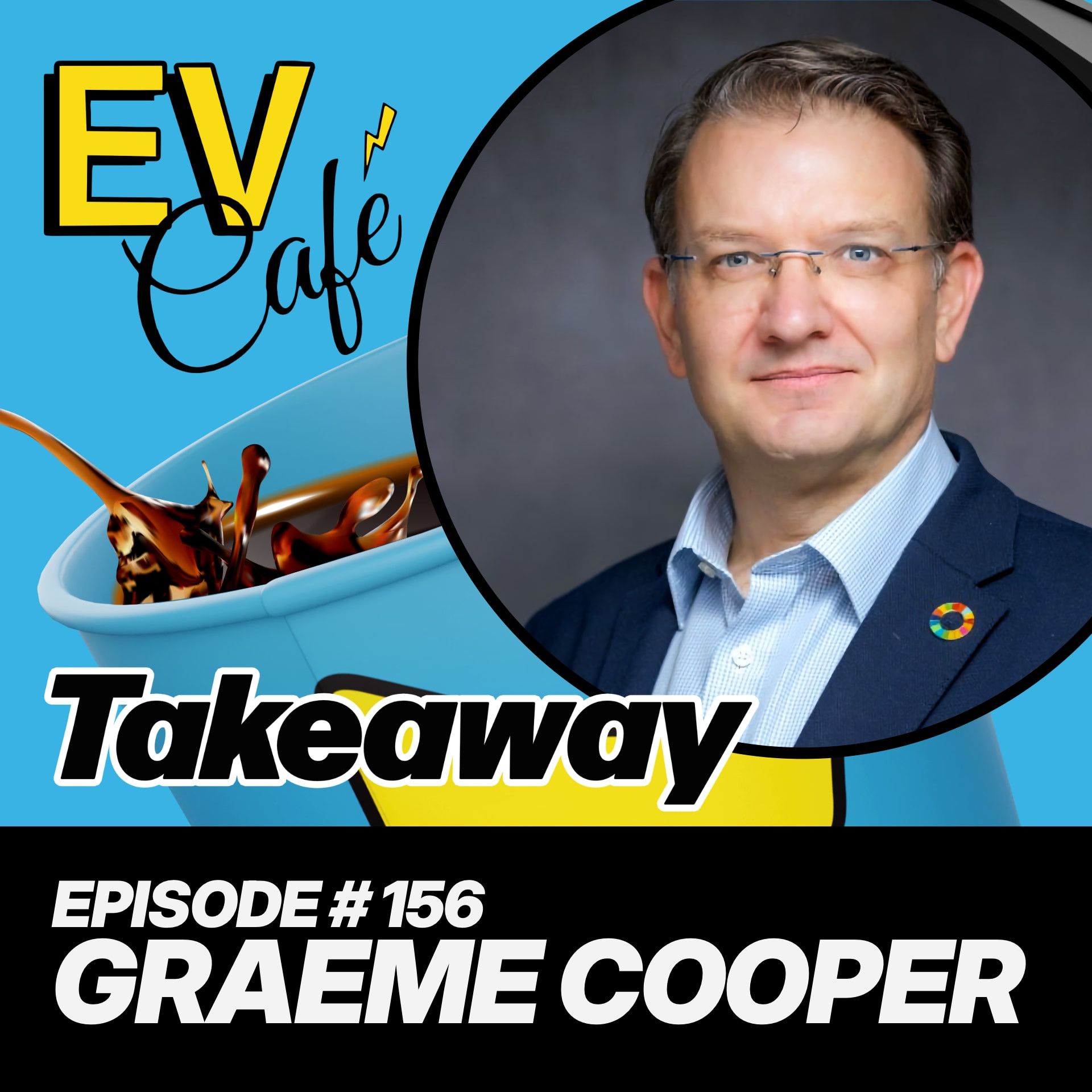
Graeme Cooper returns to The EV Café Takeaway for a conversation that spans life, energy, and the future of zero-emission transport—this time from his new home in snowy Massachusetts. Once the very first guest on the podcast, Graeme reflects on leaving National Grid, navigating a transatlantic relocation, and adapting to the realities of the US energy and EV market.
From the rise of “greenhushing” to the challenges of electrifying vast American fleets, Graeme pulls apart the complex relationship between federal and state policies, the unintended consequences of political decisions, and why pragmatism and emotional resilience matter in the energy transition. Along the way, he shares candid insights about personal change, building a sustainable home, and why the human side of the net-zero story can’t be ignored.
Topics include:
Living and working in the US under shifting political winds
How state vs. federal rules drive (or hinder) EV adoption
The concept of **greenhushing** and why clean energy is happening quietly
Pragmatism in large-scale energy projects, from data centres to EV fleets
Personal lessons in resilience, adaptability, and finding “home” abroad
A thoughtful look at the zero-emission journey from both sides of the Atlantic—delivered in true Graeme Cooper style.
Graeme Cooper (LinkedIn)
https://www.linkedin.com/in/graemecooper/
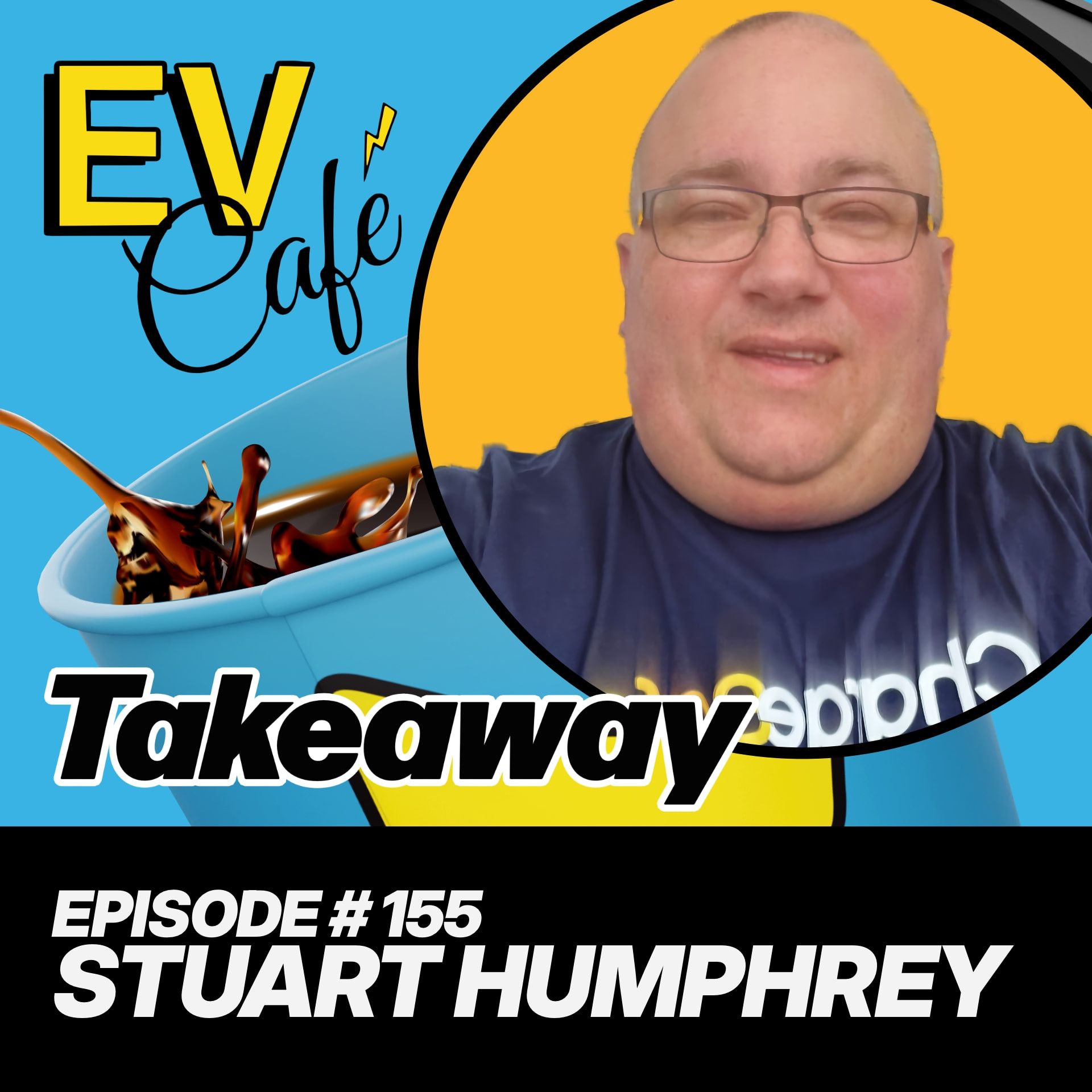
This week on The EV Café Takeaway, we welcome Stuart Humphrey – a passionate electric vehicle advocate, wellbeing champion, and winner of the EV Café Christmas Cracker Wellbeing Award.
Stuart shares how a simple financial decision to lease a Nissan Leaf in 2014 sparked 12 years of EV driving and inspired him to become a vocal supporter of accessibility and inclusion in the EV community. In this episode, he talks about:
- Making EVs fun, simple, and affordable for everyone
- Tackling misinformation and building confidence for new drivers
- The link between mental health, neurodiversity, and community advocacy
- Why inclusivity – from women in EVs to young drivers – is key to mass adoption
- Practical insights on home solar, battery storage, and living with EVs day-to-day
From sharing strategies for managing difficult days to highlighting gaps in public charging, Stuart brings a refreshingly honest and practical perspective on driving change in the zero-emission space.
Connect with Stuart on LinkedIn, and explore more conversations at evcafe.org or on Apple and Spotify.
Stuart Humphrey (LinkedIn)
https://www.linkedin.com/in/stuart-humphrey-974205166/
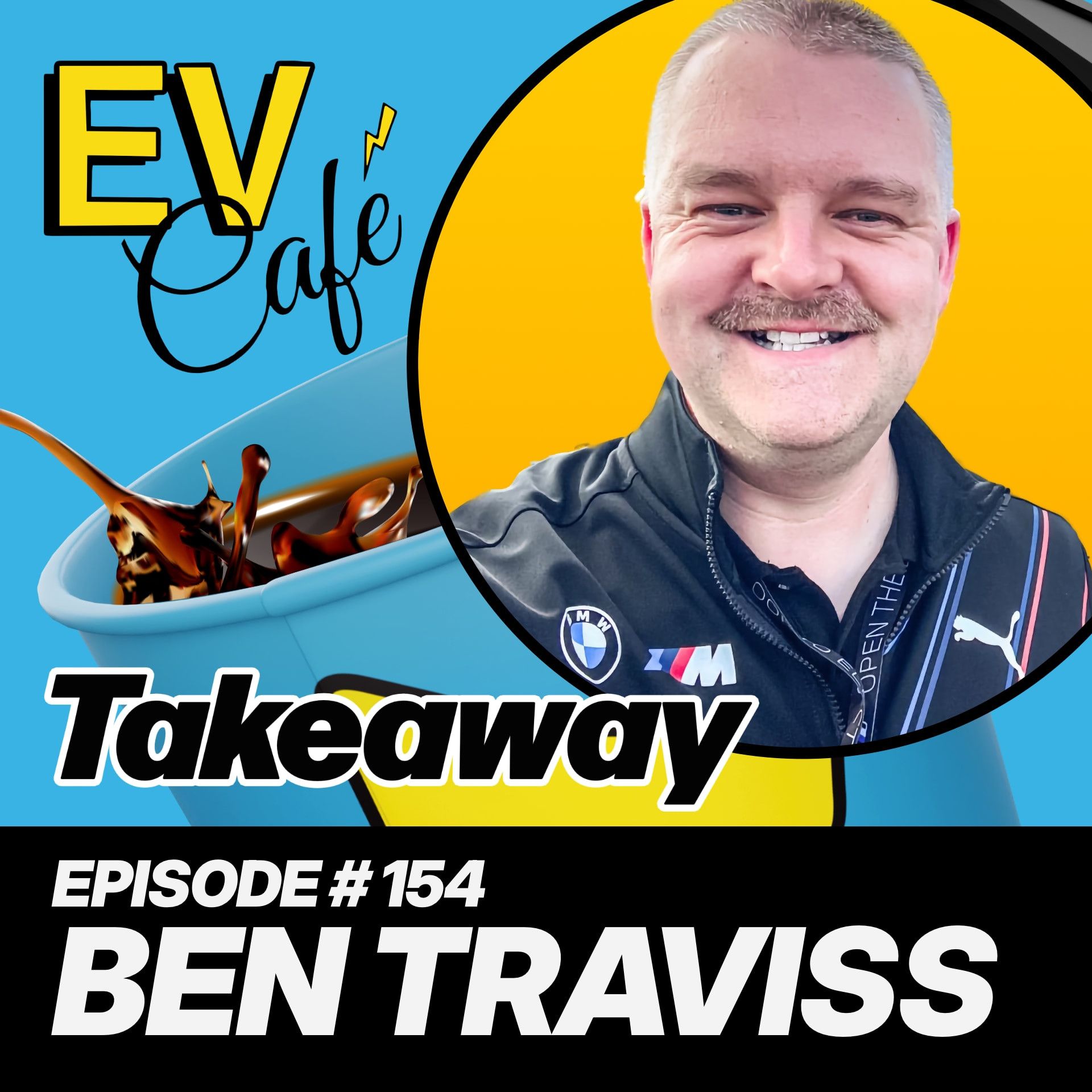
It’s the award‑winning Ben Travis! A true champion of customer experience and electric vehicle education.
Ben joined the automotive industry in 2019 and became a trusted EV specialist, guiding customers through the transition from internal combustion to electric.
During the first lockdown, while many settled into furlough, Ben immersed himself in EV knowledge—devouring YouTube videos, manuals, and guides—to ensure he could deliver confident, first‑hand advice to customers.
Ben opens up about:
His passion for customer‑first service and why empathy is at the heart of electrification.
Building confidence in EV adoption through real‑world experience and storytelling.
How LinkedIn and YouTube gave him a platform to educate and inspire.
Staying grounded in the face of recognition, negativity, and life’s challenges.
His personal “magic wand” wish for a better world.
Ben Traviss (LinkedIn)
https://www.linkedin.com/in/bentraviss/
LLoyd Motor Group
https://www.lloydmotorgroup.com
Ben’s YouTube Channel (Electric Ben)
https://www.youtube.com/@ElectricBenYT
50 minAbspielen in:
Gäste, die länger als 12 Monate zurückliegen, gibt es mit Pro. Pläne ansehen

 JO