The art podcast sharing the beautiful and brutal truths about building a creative life. International artist Kate Florence hosts honest chats with inspiring and successful artists all around the world, answering the questions no one else talks about: money, creative burnout, galleries, and actionable strategies to…
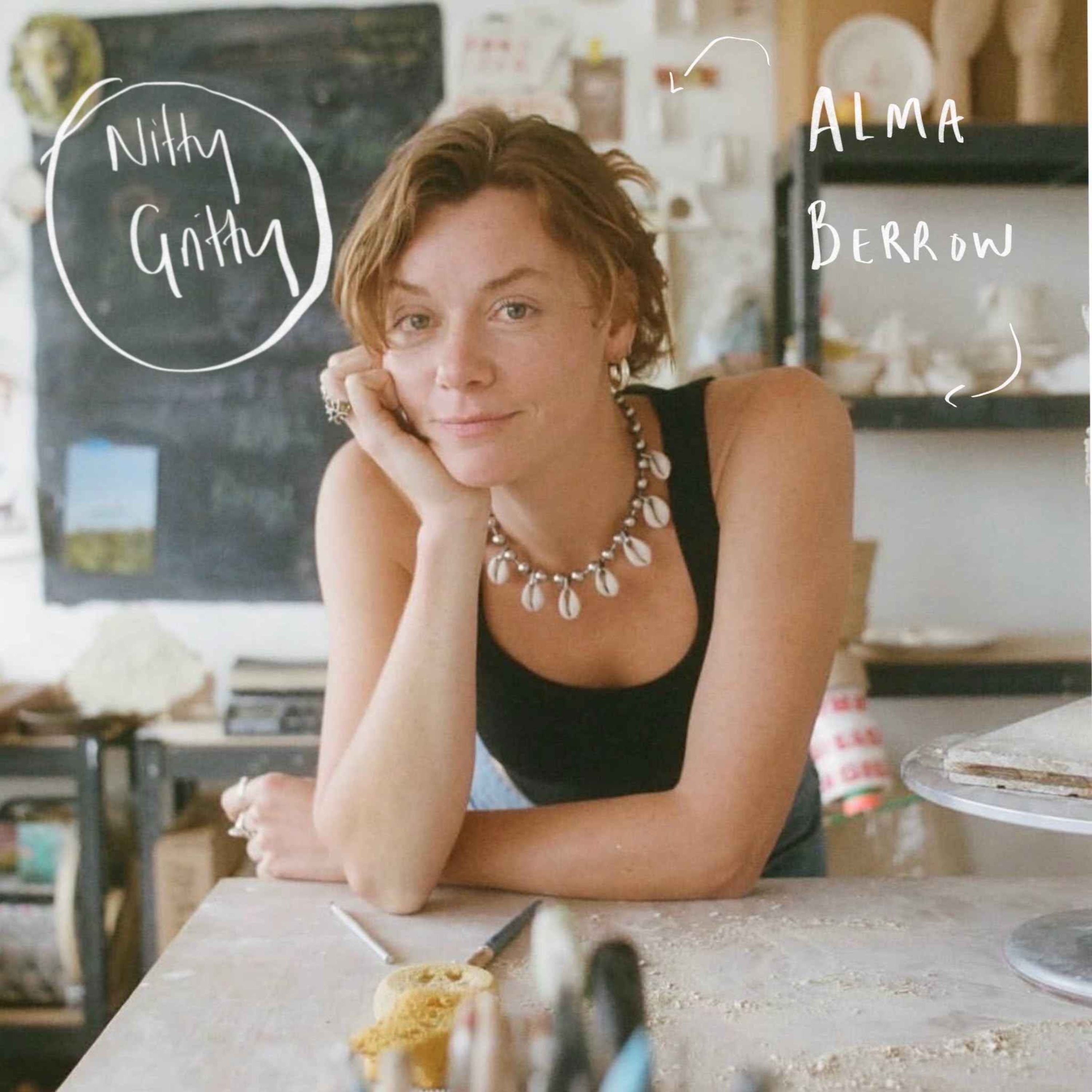
This week Flick and I are back in London with artist Alma Berrow. Self-taught, Alma calls herself an artist who works with clay rather than a ceramicist. Her sculptural installations turn everyday objects into something humorous, surreal and quietly loaded: ashtrays, oysters, Ritz crackers, pomegranates, a lone gherkin placed beside a bowl of them.
We talk about how having no formal training became an advantage, why she still can’t make a vessel, and what she took from a three-month residency in Montana. We get into the point where her art career stopped feeling like play, her fear of becoming “Ashtray Girl,” and the stranger at a show who wondered aloud whether she’d turn out to be a one-trick pony.
Alma also shares how she found her way back to joy in the studio and the gallery owner who brought gender into a negotiation. She explains how months of research into myth and folklore become a full tablescape, including the one she’s building for her first solo booth in Miami this December.
It’s a conversation about making without an audience in mind, and about protecting the playful part of a creative practice once it becomes your job.
See Alma's work here, and her Instagram here.
Hosted on Acast. See acast.com/privacy for more information.
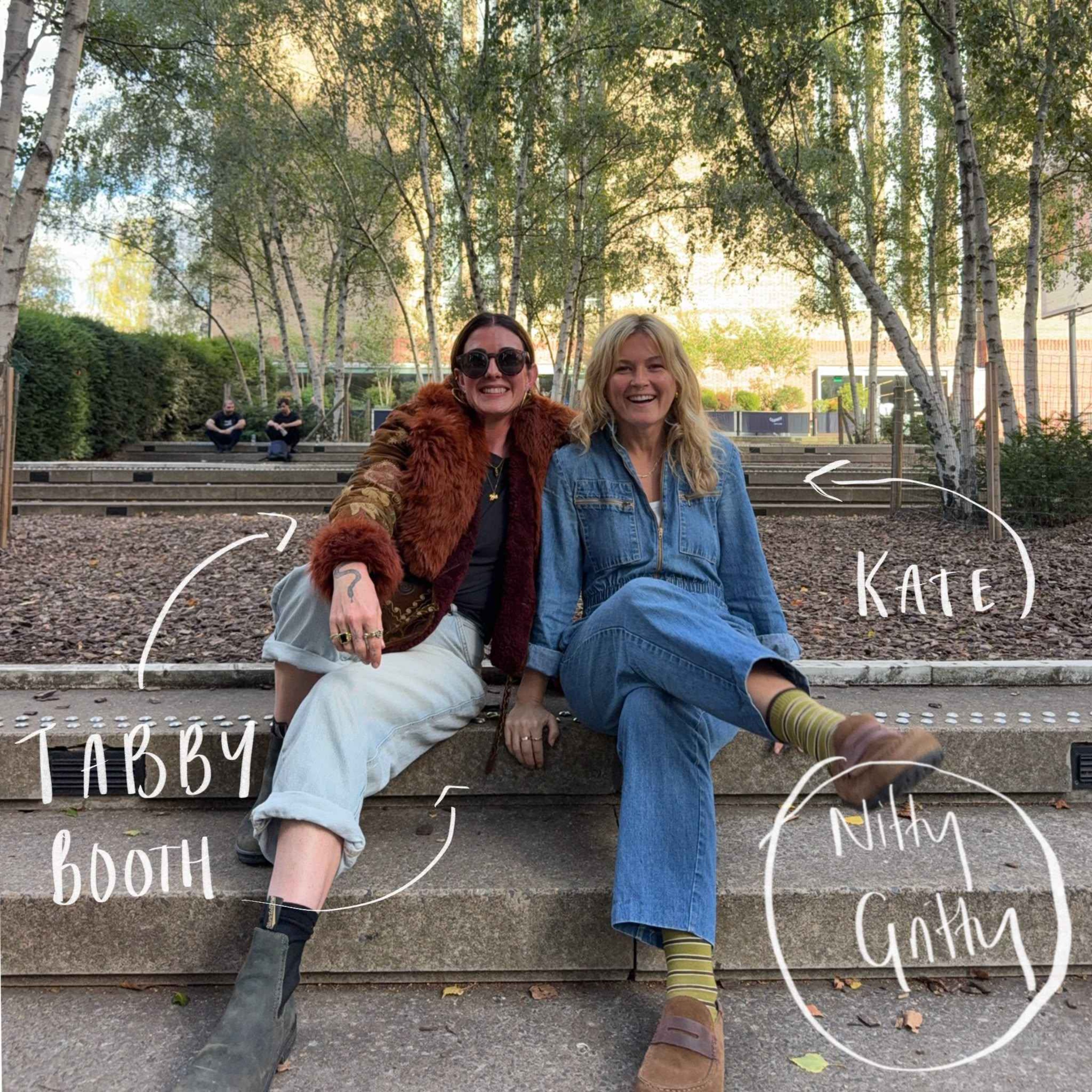
I’m back with illustrator, artist and curator Tabby Booth for round two! A year after her first Nitty Gritty episode, we caught up outside the Tate Modern for a chat I'm very excited to share.
Since we last caught up, Tabby has launched her Substack, Cult of Create, where she shares more of the inner workings of her practice — money, motherhood and the truths of being a working artist. We talk about why she’s building more of her creative world away from the Instagram algorithm, why buyers can make the best sellers, and how to know when it’s time to stop saying yes.
And yes, we get into the £83K month. Tabby breaks down her biggest month to date and the mix of paintings, art fairs, print-on-demand, licensing and other income streams behind it.
If you haven’t listened to Tabby’s episode from last season, it's just as insightful as this one.
Find Tabby's:
~ Instagram here
~ Substack here
~ Website here
~ Gallery here
Hosted on Acast. See acast.com/privacy for more information.
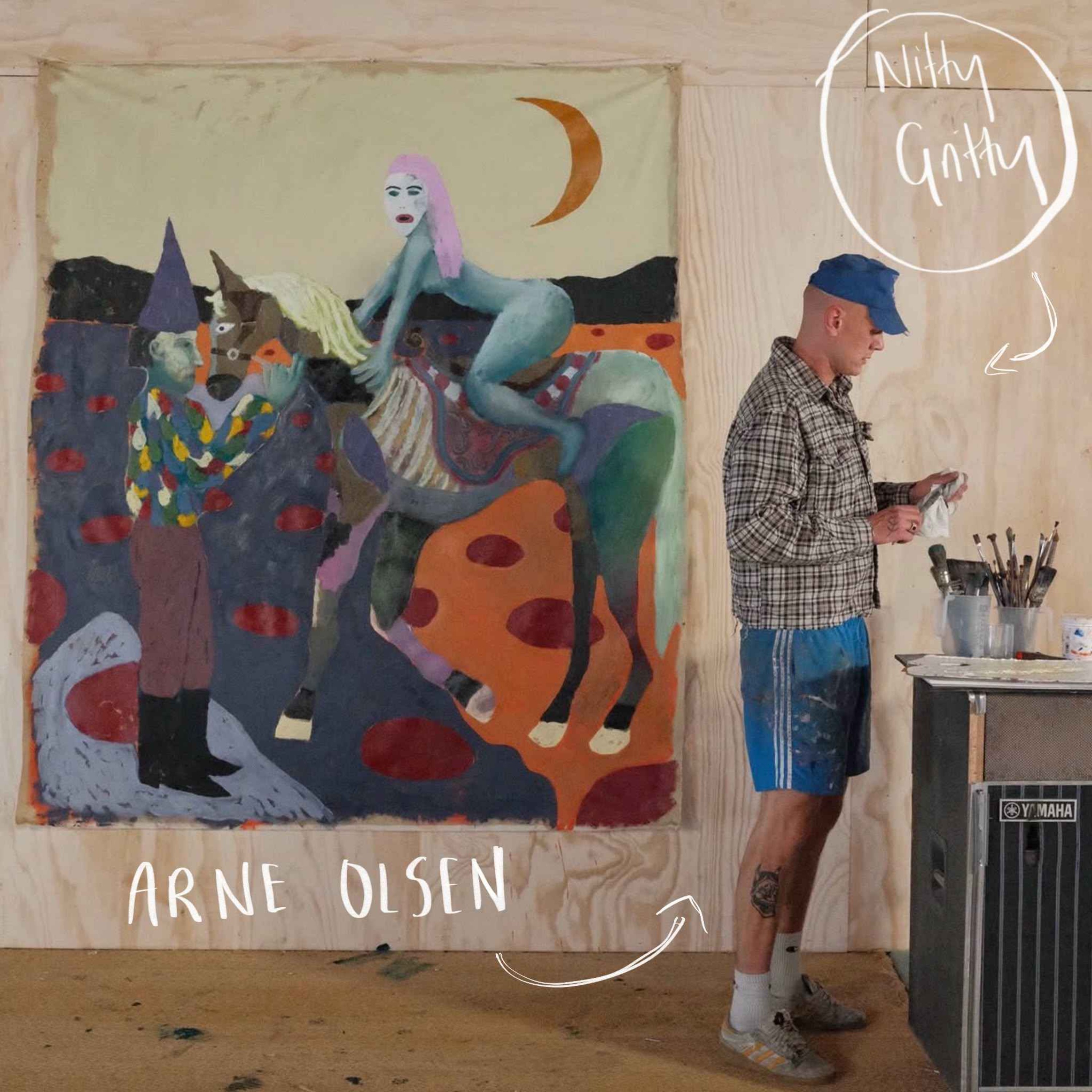
This week Flick joins me in Copenhagen for a chat with artist Arne Ohlsen.
Arne started his art practice in Australia while working as a carpenter, painting on wooden offcuts because canvas was out of reach. He gained momentum quickly, exhibited at several shows, and moved into a full-time creative practice before returning to Europe, where the work turned darker, leaning into identity, isolation, power and struggle.
We talk about the real differences between making art in Australia and Europe, whether struggle actually produces more emotionally powerful work, and what happens to a practice when the desire to sell starts shaping what gets made. We get into his decision to keep carpentry alongside his art career, the pull between experimentation and building a recognisable style, and why his version of success isn't commercial art stardom but a nice studio in a warm climate.
Arne also opens up about his discomfort with being seen, how comparison in the art world knocked his confidence, and the challenge every working artist faces: promoting your work without becoming a version of yourself that doesn't feel real.
Find Arne on Instagram here!
Hosted on Acast. See acast.com/privacy for more information.
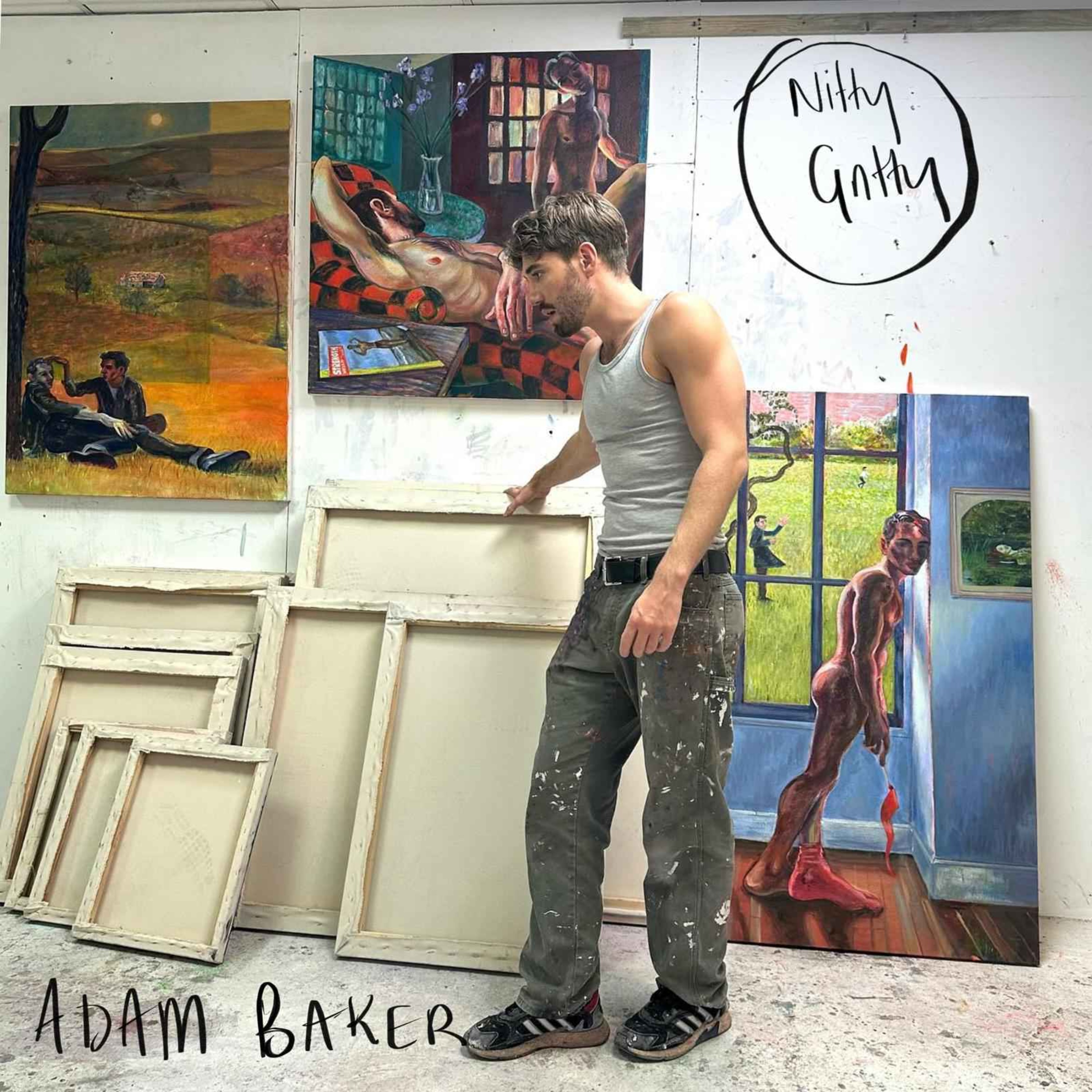
Nitty Gritty is on tour with me while I move around Europe and this week I'm in London with oil painter Adam Baker.
In his practice, Adam focuses on intimate, imagined snapshots of queer life and love, drawing on personal experience to build fictionalised narratives that speak to the emotional complexity of contemporary queer identity.
Baker often investigates the contradictions of connection — how queer spaces can feel electric with possibility yet, simultaneously, deeply isolating. Through merging figures, geometric structures and atmospheric environments, he subverts traditional depictions of masculinity, revealing the vulnerability, strength and fluidity inherent within queer relationships.
Both being emotional lil human beans, we talked about the woes and throws of allowing feeling to drive your creative practice. When art from the heart becomes something slowly killing you — substance abuse and pain as a necessary medium — what happens to you as a person? Do we need all of this suffering to make good work, or is just being human enough?
Find Adam on Instagram here and on his website here!
Hosted on Acast. See acast.com/privacy for more information.
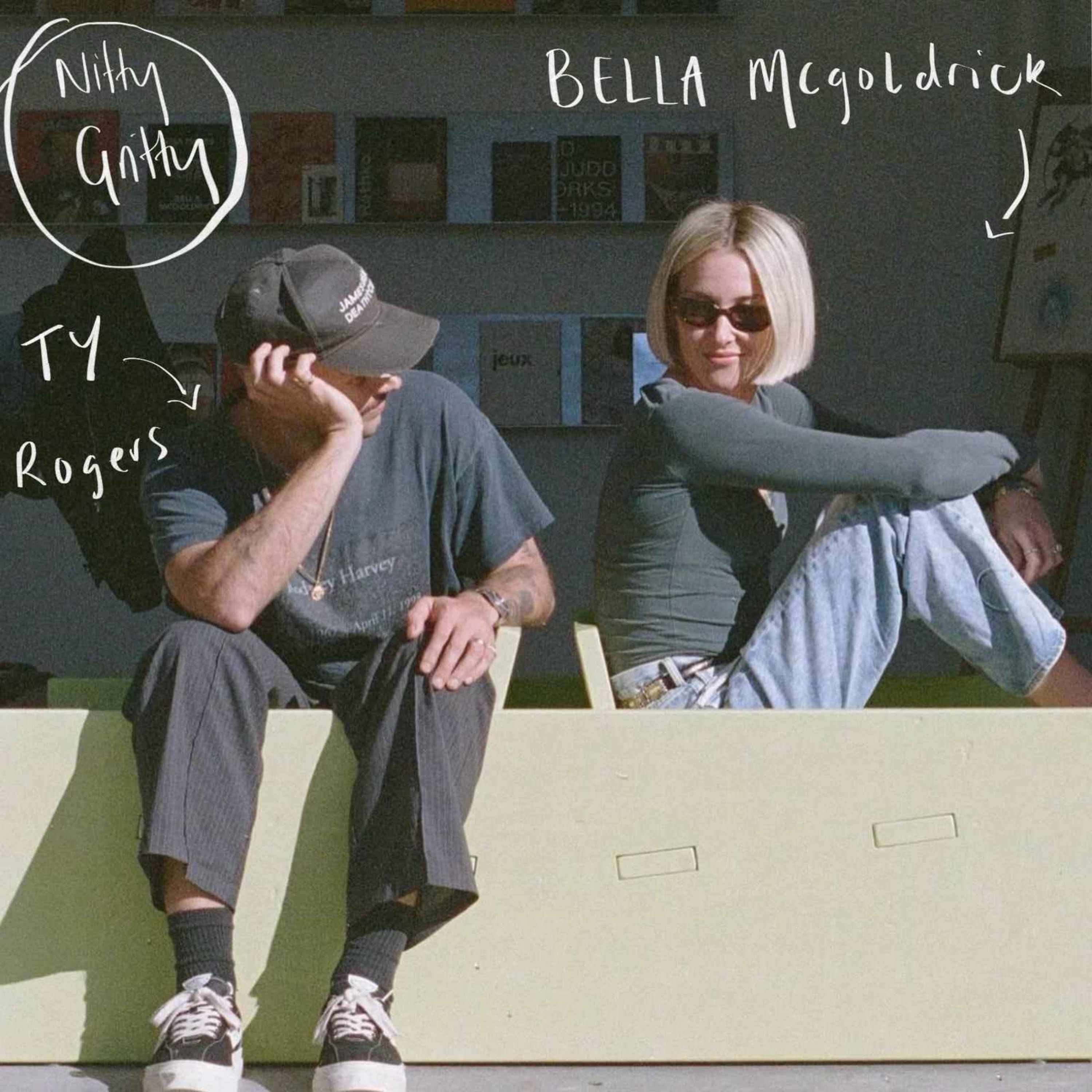
Bella McGoldrick and Tyler Rogers built a thriving art business by breaking every rule the traditional art world swears by.
As the duo behind Looks Pretty Good, Bella is a coloured pencil artist producing hyperrealistic works inspired by mementos from the places she's lived, and Ty, with a background in design and tech, keeps the wheels of their art business turning behind the scenes.
Ty's decision to join full-time only came about a few years ago, and since then the pair have doubled down harder than ever, stepping away from gallery representation to do it all themselves. Fiercely independent and headstrong, Bella and Ty are building a new way of working that challenges the traditional landscape of the art world.
In one of the most honest conversations we've had on Nitty Gritty, they laid it all on the table. From content strategy experiments and hard-won hypotheses about actually selling art, to the power imbalances and flat-out incompetence they encountered with galleries, and how that gave them the confidence that they could do a better job themselves.
Dollar signs, hot takes, and niche references. This one's for every working artist trying to figure out if the traditional path is really the only one.
Find Bella on instagram here and the Looks Pretty Good studio here
Hosted on Acast. See acast.com/privacy for more information.
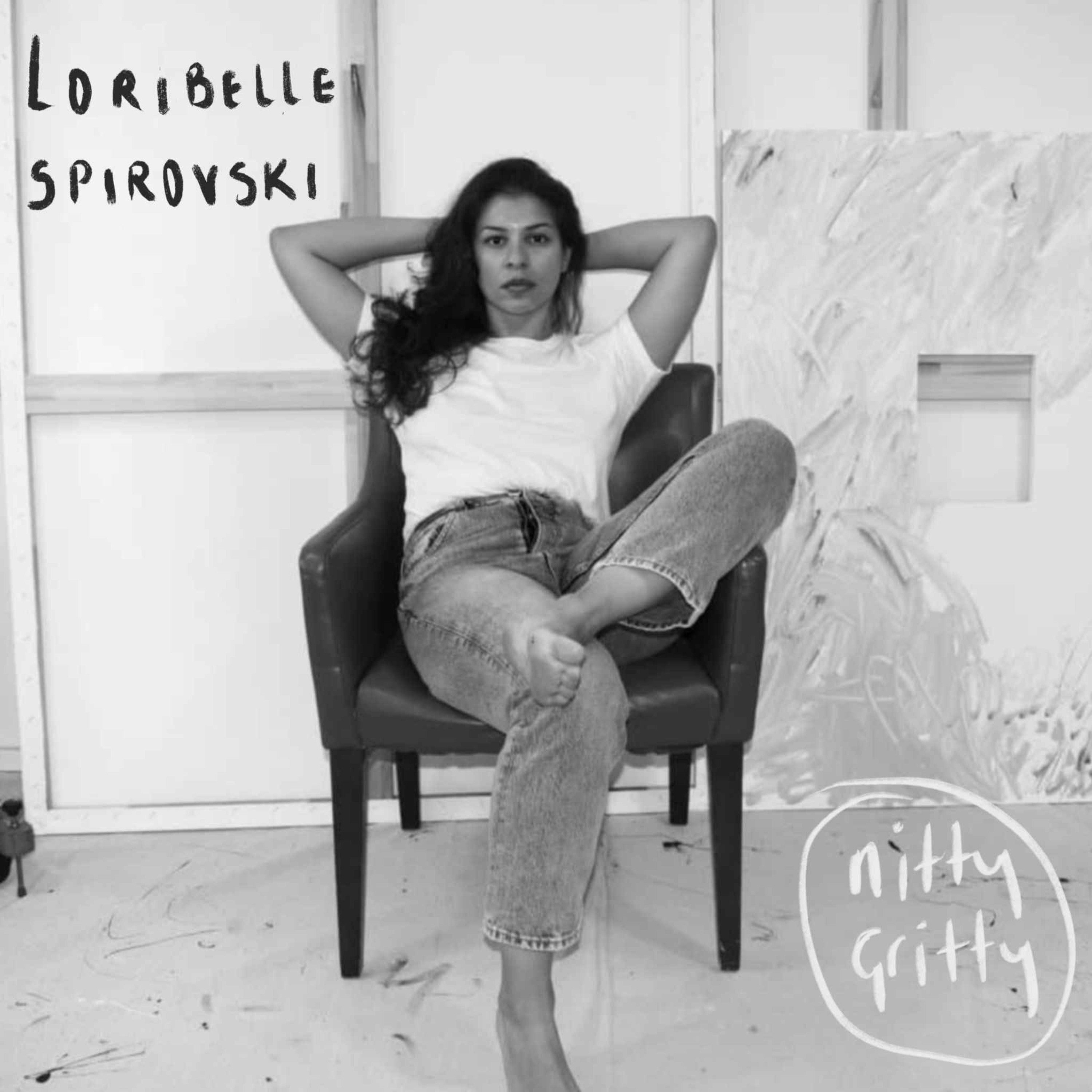
We’re back for our 5th season, and starting us off is an incredible conversation with Loribelle Spirovski.
Loribelle is a Filipina-Australian artist who, after almost giving up her art career due to a persistent nerve injury, intuitively taught herself to finger paint. What began as an act of perseverance became a technique that liberated her as an artist, ultimately leading to her winning the 2025 Archibald People’s Choice Award.
In this episode, we unpack the romanticism of the ‘damaged artist’ archetype and why safety, not struggle, is where the best work comes from. Plus, we wrestle with the questions artists quietly carry: Does the best work come from suffering? What actually makes art good or bad? Can you fake authenticity? And do creative ideas ever really run out?
For anyone trying to build a sustainable creative practice without burning themselves out along the way, this episode is a reminder that safety might be the key to your best work.
You can find Loribelle’s website here and her Instagram here.
Hosted on Acast. See acast.com/privacy for more information.
56 minAbspielen in:
Gäste, die länger als 12 Monate zurückliegen, gibt es mit Pro. Pläne ansehen

 AB