As fascinating as physics can be, it can also seem very abstract, but behind each experiment and discovery stands a real person trying to understand the universe. Join us at the Cavendish Laboratory on the first Thursday of every month as we get up close and personal with the researchers, technicians, students…
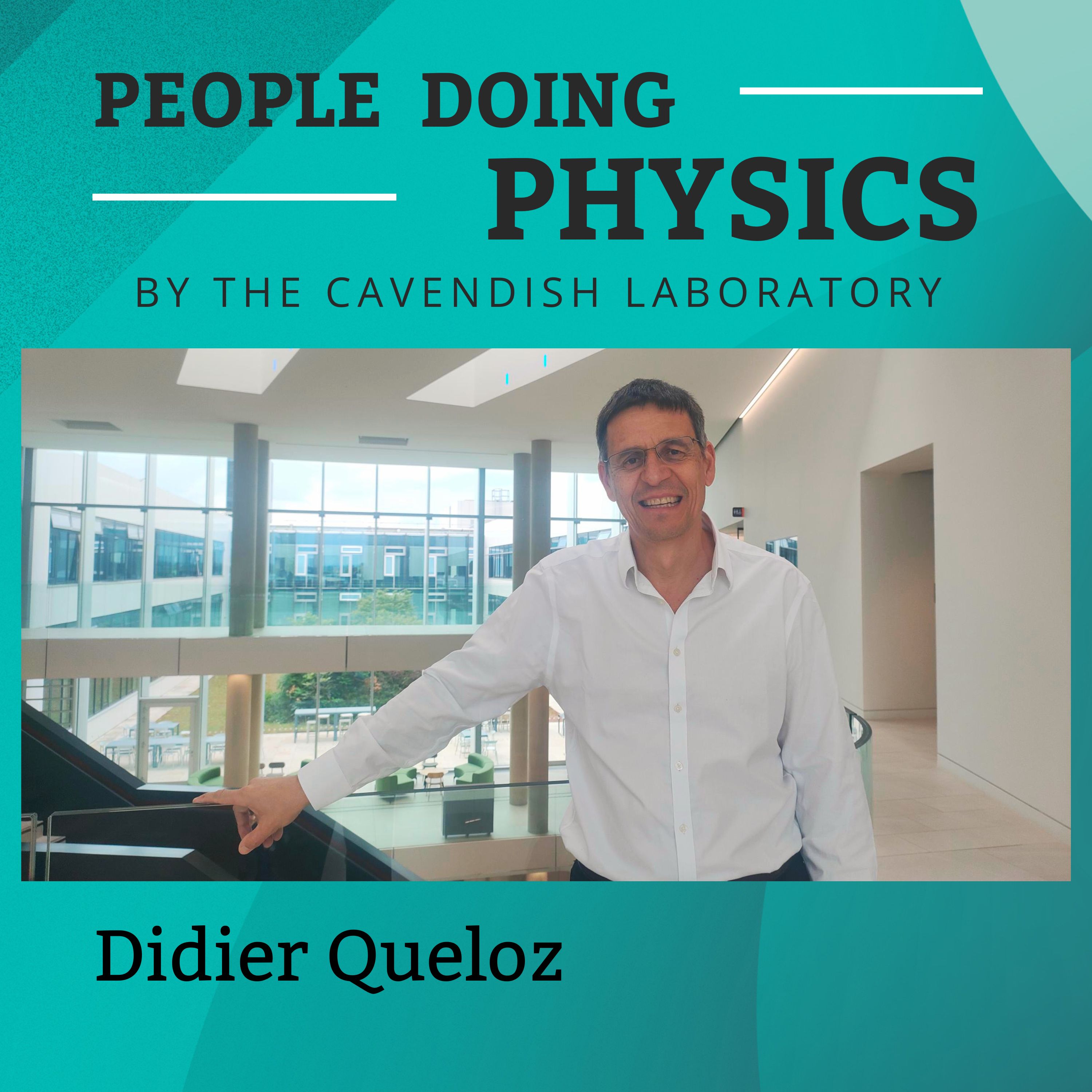
Today, we have the privilege of being joined by one half of the team behind what is arguably one of humankinds’ epochal breakthroughs – the first observation of a planet outside our solar system. Both a professor at the University of Zurich and Jacksonian Professor of Natural Philosophy here at Cambridge, Didier Queloz began his research career by achieving the great aim of all PhD students; a publication in Nature. Since then, the techniques and instruments he pioneered have led to the identification of over 4,000 other exoplanets and revolutionised our understanding of planetary formation.
His more recent work looks into the detection of earth-like planets, understanding their habitability, and the search for universal life more widely. He is now Director of the Leverhulme Centre for Life in the Universe here at Cambridge – an interdisciplinary hub looking at how life emerges, evolves, and persists in the cosmos.
In the course of his career, he has published hundreds of papers and been recipient of numerous prestigious awards, including the unarguably most famous of all scientific awards – the Nobel Prize, which he shared with Michel Mayor and James Peebles in 2019 "for contributions to our understanding of the evolution of the universe and Earth’s place in the cosmos".
Together we talk about Didier's route into physics, his work looking at one of the profound questions of whether humankind is alone in the universe, and whether he replaced the bike that made him miss the call from the Nobel Prize committee.
Useful links:
To learn more about Didier's current research, visit Home | Leverhulme Centre for Life in the Universe
Watch Didier's interviews for The Nobel Prize: Didier Queloz – Interview - NobelPrize.org
Share and join the conversation
Help us get better by taking our quick survey. Your feedback will help us understand how we can improve in the future. Thank you!
If you like this episode don’t forget to rate it and leave a review on your favourite podcast app. It really helps others to find us.
Any comment about the podcast or question you would like to ask our physicists, email us at podcast@phy.cam.ac.uk or join the conversation on Twitter using the hashtag #PeopleDoingPhysics.
Episode credits
Host: Jacob Butler
Recording and editing: Chris Brock
This podcast uses the following third-party services for analysis:
OP3 - https://op3.dev/privacy
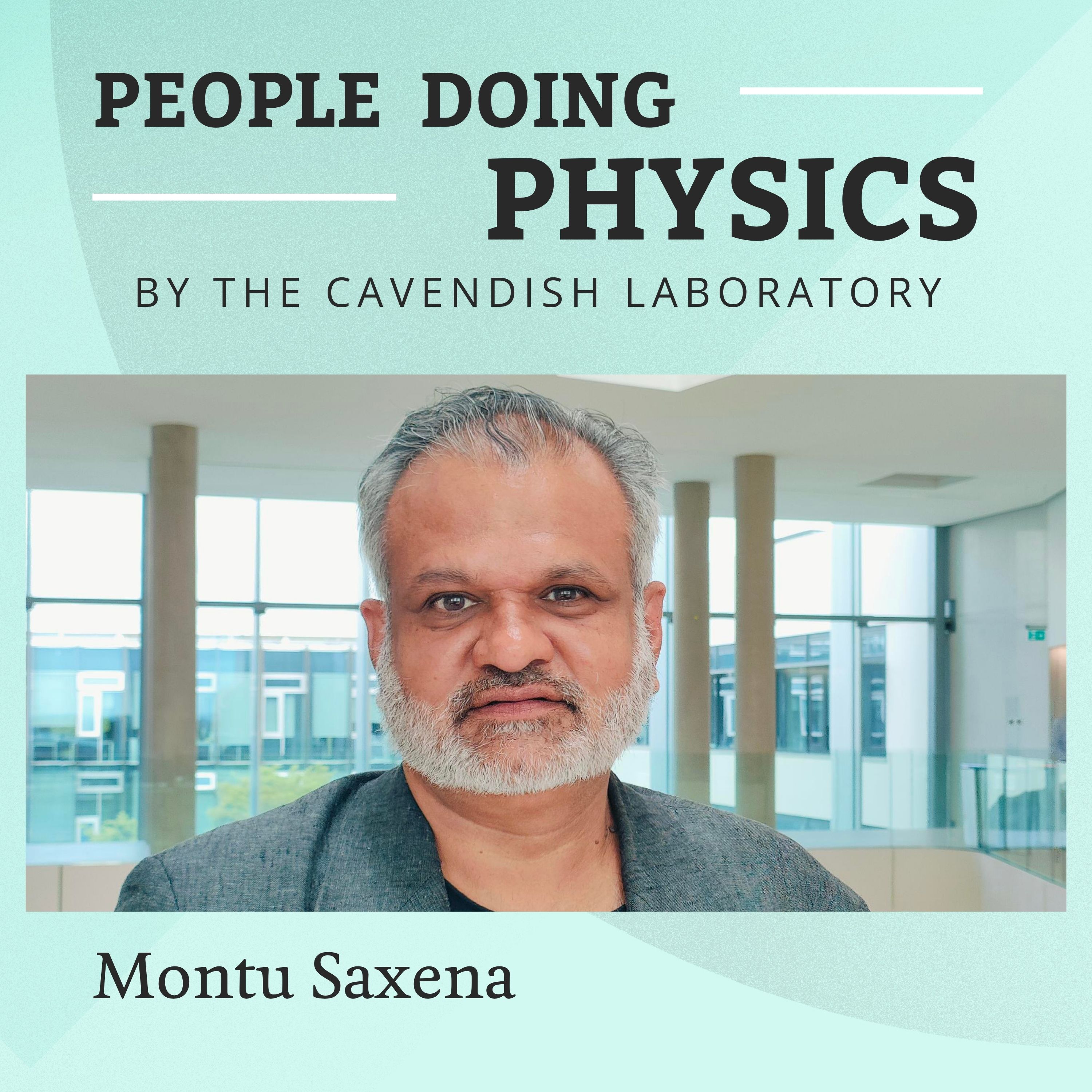
Today we are delighted to be joined by Siddharth Shanker Saxena, known to friends and colleagues as Montu, a condensed-matter physicist at the Cavendish Laboratory and head of the Cambridge Central Asia Forum. By Montu’s own admission, he was never able to pick a side, and so has spent his whole life exploring the world of superconductivity, all the while advocating for international relations and anthropology.
Together we talk about the moments that shape a scientific life: learning to believe you belong, the role of mentoring, and what “failure" can teach you. We also dig into the enduring puzzle of superconductivity: how to explain it simply, why it continues to captivate physicists, and how to stay comfortable saying “we don’t know.”
Useful Links:
Montu talked in depth about superconductivity in this podcast for Quanta Magazine: Will Better Superconductors Transform the World? | Quanta Magazine
He was also recently featured in this Varsity article: Meet the Cambridge physicist who advocates for the humanities | Varsity
To explore Montu's work : Siddharth Saxena | Jesus College in the University of Cambridge
And finally, to learn more about the Cambridge Central Asia Forum, visit Cambridge Central Asia Forum |
Share and join the conversation
Help us get better by taking our quick survey. Your feedback will help us understand how we can improve in the future. Thank you!
If you like this episode don’t forget to rate it and leave a review on your favourite podcast app. It really helps others to find us.
Any comment about the podcast or question you would like to ask our physicists, email us at podcast@phy.cam.ac.uk or join the conversation on Twitter using the hashtag #PeopleDoingPhysics.
Episode credits
Hosts: Charlotte Lane and Vanessa Bismuth
Recording and editing: Chris Brock
This podcast uses the following third-party services for analysis:
OP3 - https://op3.dev/privacy
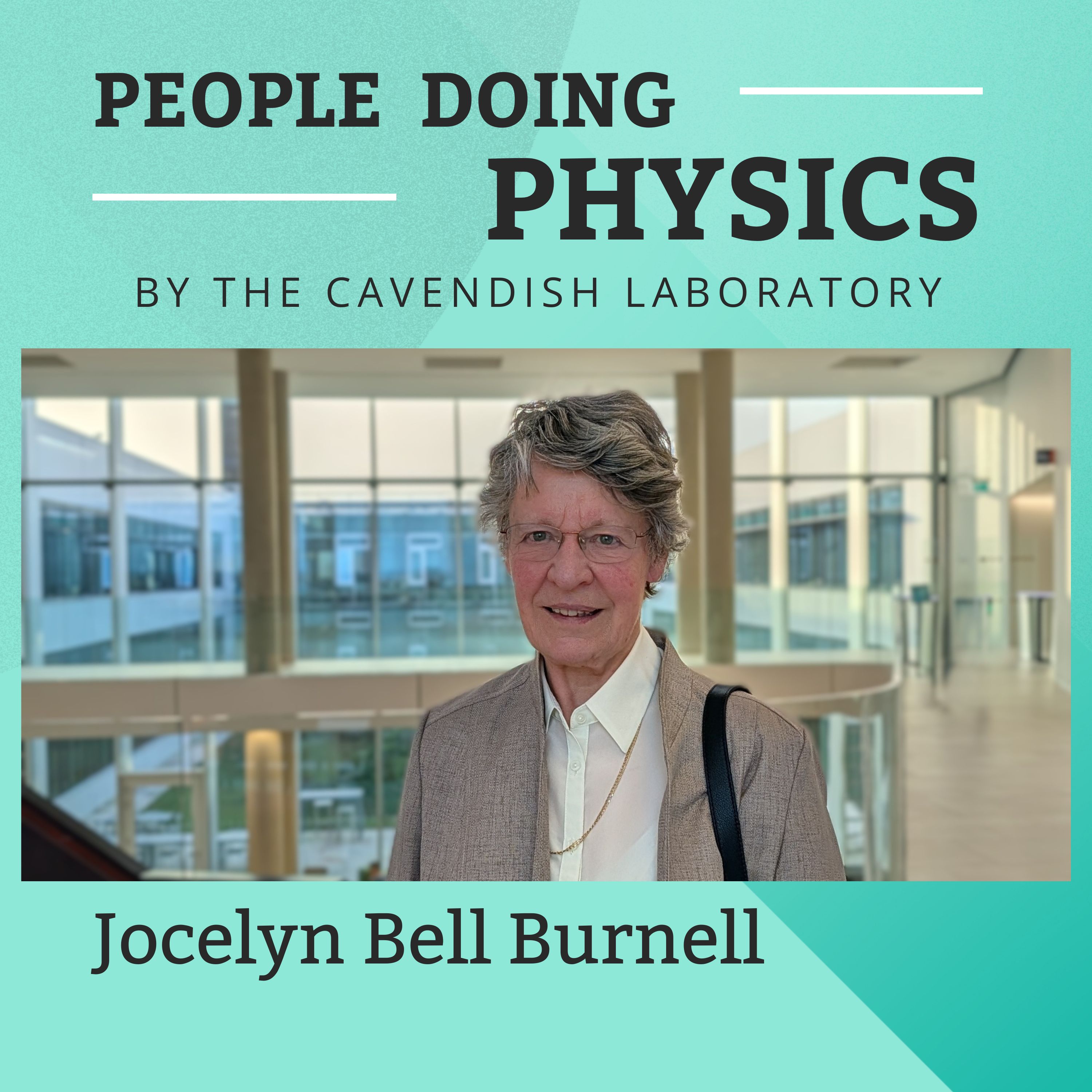
We are so happy to be joined by Professor Dame Jocelyn Bell Burnell, legendary astrophysicist who made the first observations of pulsars during her PhD at the Cavendish, and went on to become a fierce advocate of diversity in science. Dame Jocelyn is visiting Cambridge to give a special talk organised by the Cambridge University Women in Physics Society for International Women’s Day and we’re really excited to be able to spend time with her and ask her about her journey.
--
A brief note for our listeners: this episode includes personal reflections on life in academia and physics in past decades, and it may refer to attitudes, behaviours, and workplace cultures that many will find outdated, uncomfortable, or shocking. These accounts are shared to document lived experience and help us understand how the culture has changed; they do not represent current values and operations.
Useful Links:
Learn more about the Bell Burnell Graduate Scholarship Fund | Institute of Physics
Journeys of discovery: Jocelyn Bell Burnell and pulsars - This article published on the University of Camrbidge website includes the photo of Jocelyn mentioned in our conversation.
To explore Charlotte's student society's activities, visit Cambridge University Women in Physics Society | CUWPS
Share and join the conversation
Help us get better by taking our quick survey. Your feedback will help us understand how we can improve in the future. Thank you!
If you like this episode don’t forget to rate it and leave a review on your favourite podcast app. It really helps others to find us.
Any comment about the podcast or question you would like to ask our physicists, email us at podcast@phy.cam.ac.uk or join the conversation on Twitter using the hashtag #PeopleDoingPhysics.
Episode credits
Hosts: Charlotte Lane and Vanessa Bismuth
Recording and editing: Chris Brock
This podcast uses the following third-party services for analysis:
OP3 - https://op3.dev/privacy
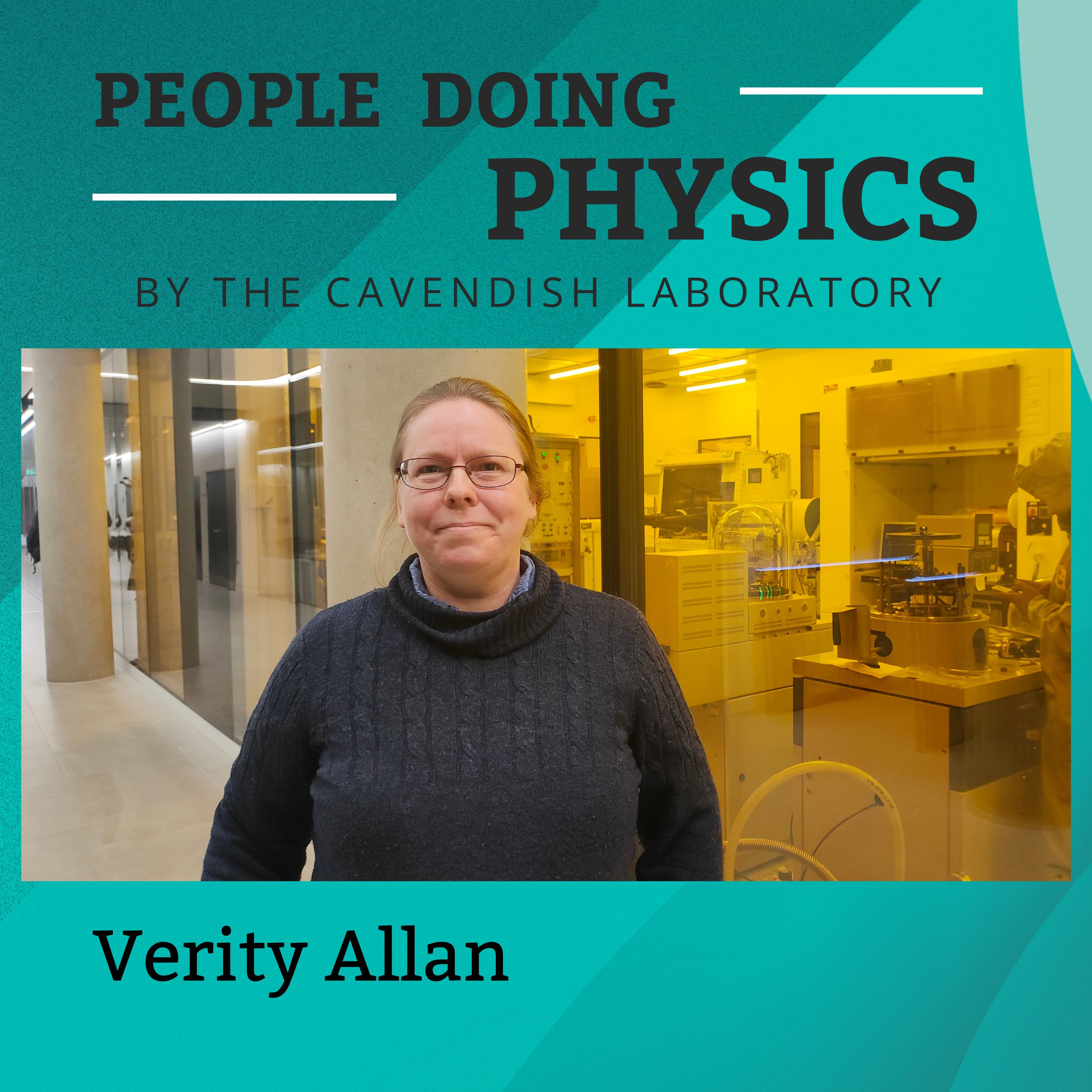
Today we’re joined by Verity Allan, who works as a project manager, developer, and programmer of architecture and software for the Square Kilometre Array, which will be the world's largest radio telescope. A graduate of Cambridge, Oxford, and The Open University, Verity came to Cambridge from a town in the Midlands to study Anglo-Saxon, Norse and Celtic.
How did she go from studying ancient languages, to coding, designing security for telescope software systems, and pursuing a PhD in high performance computing for astrophysics? These are just some of the twists and turns we hope to explore in our chat with Verity.
Stay with us.
Useful Links:
Explore | SKAO - Learn more about the two largest telescope arrays in the world
Ross Anderson's book on Security Engineering, mentioned by Verity, is available at https://www.cl.cam.ac.uk/archive/rja14/book.html (all three editions plus some videos)
Verity wrote two papers on the history of scientific computing: The Cavendish Computors: The women working in scientific computing for Radio Astronomy and Scientific Computing in the Cavendish Laboratory and the pioneering women Computors
Learn more about Jodrell Bank Centre for Astrophysics - The University of Manchester and about our Astrophysics work in Cambridge.
Share and join the conversation
Help us get better by taking our quick survey. Your feedback will help us understand how we can improve in the future. Thank you!
If you like this episode don’t forget to rate it and leave a review on your favourite podcast app. It really helps others to find us.
Any comment about the podcast or question you would like to ask our physicists, email us at podcast@phy.cam.ac.uk or join the conversation on Twitter using the hashtag #PeopleDoingPhysics.
Episode credits
Hosts: Vanessa Bismuth and Charlie Walker
Recording and editing: Chris Brock
This podcast uses the following third-party services for analysis:
OP3 - https://op3.dev/privacy
34 minAbspielen in:
Gäste, die länger als 12 Monate zurückliegen, gibt es mit Pro. Pläne ansehen

 DQ