Simon Dixon Hard Talk is a weekly deep-dive into Bitcoin, macroeconomics, and global geopolitics. Hosted by Bitcoin OG, investor, and BnkToTheFuture co-founder Simon Dixon, the show applies a “follow the money” approach to understand the forces shaping the global economy. Each episode explores the transition to a new…
Recording Date: 30 September 2026
Host: Mark Gagnon (Camp Gagnon)
Guest: Simon Dixon (Former Investment Banker, Author, and Investor)
Location / Setting: Face-to-Face Interview in New York City (NYC)
Duration: 2 hours 44 minutes
A conversation between Mark from the YouTube channel "Camp Gagnon" and former investment banker Simon Dixon, who dissects the hidden machinery of the global economy by tracing the flow of money. Dixon asserts that contemporary society is dominated by an interconnected financial-industrial, military-industrial, and technical-industrial complex that deliberately engineers crises, devalues currencies, and burdens sovereign governments with debt to centralise wealth and power. Throughout history, major geopolitical conflicts and central banking systems—originating with the Dutch, shifting to the British, and culminating in the American Federal Reserve and the petrodollar—have functioned as mechanisms to socialise losses while privatising massive economic gains. Furthermore, Dixon explains how global entities and intelligence networks utilise debt leverage, algorithmic control grids, and digital surveillance to manufacture compliance and manipulate public perception. Ultimately, Dixon advises individuals to reject consumerist indebtedness and ideological polarisation, recommending instead that people cultivate personal sovereignty through disciplined asset accumulation, spiritual grounding, and local community resilience.
Watch on YouTube here.
Date of interview: 17 November 2026
Host: Robert Wallace
YouTube channel: BitcoinNewCom
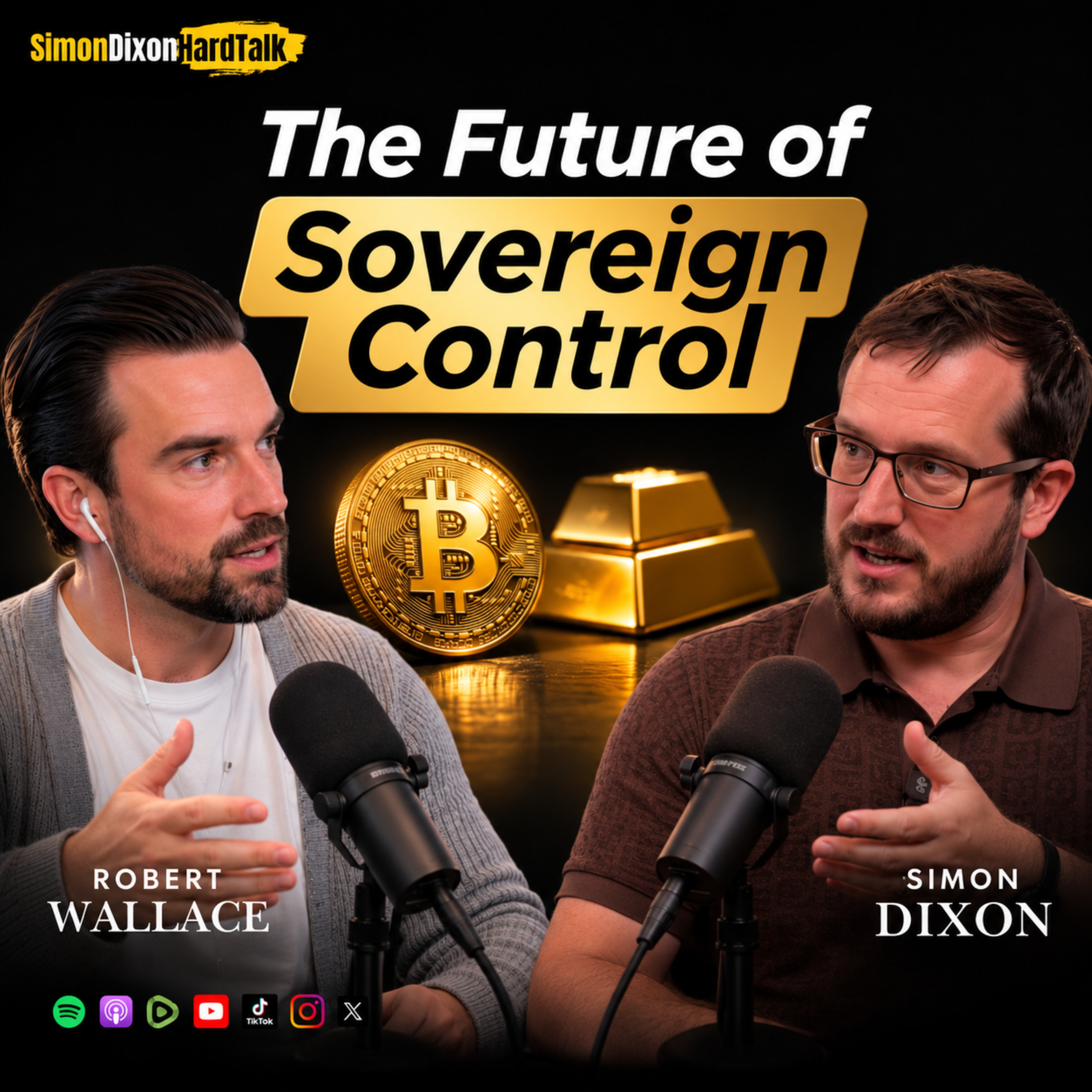
Full Title: AI Cyberattacks, Geopolitical Power Factions, and the Future of Sovereign Control | Simon Dixon & Robert Wallace
Duration: 1 hour 7 mins
In this episode of Bitcoin News, host Robert Wallace sits down with investor and author Simon Dixon to break down the escalating global power struggle between the Military-Industrial Complex (MIC), the Financial-Industrial Complex (FIC), and the Technical-Industrial Complex (TIC). Simon examines how modern cyberattacks, artificial intelligence, and corporate regime changes—such as recent developments surrounding Binance and Nvidia—are leveraged by competing factions to consolidate technocratic control, compromise major entities, and shape geopolitical agendas. The discussion also explores the shifting landscape of digital assets, contrasting the institutionalisation of Bitcoin and stablecoins with the vital importance of self-custody, individual sovereignty, and cultivating a sovereign mindset against algorithmic narrative control.
Disclaimer: The content provided in this video is for informational, educational, and discussion purposes only and does not constitute financial, investment, legal, or tax advice. Viewers should conduct their own independent research or consult a qualified professional before making any financial decisions.
0:00 The power factions framework
1:28 Complexes and power dynamics
5:47 Corporate regime changes
10:11 Trump and political influence
18:21 The role of elections
22:04 Crypto markets and hacking
31:22 The Binance case study
38:40 Nvidia, AI, and global power
45:59 The technocratic control grid
53:20 Finding personal sovereignty
59:14 Reflections on Bitcoin's mission
Video Description In this sit-down on the BTC Sessions channel recorded on 12 October 2026, host Nathan is joined by financial author Jim Rickards and monetary analyst Simon Dixon for an in-depth discussion spanning over an hour and a half on global power structures and the shifting architecture of money. Key Topics Covered: Geopolitics and Global Power Shifts: The underlying drivers and major beneficiaries of prolonged military conflicts in Ukraine and the Middle East, the mechanics of sanctions and energy diplomacy, and the three-way geopolitical dynamic between the United States, Russia, and China. The State of the US Dollar and Petrodollar: The resilience of the dollar and US Treasury markets, global liquidity demands, and structural changes to the petrodollar framework as major energy consumers and sovereign wealth funds alter their purchasing habits. The AI Infrastructure Bubble and "Ice-Nine" Scenarios: A critical look at the sustainability of multitrillion-dollar AI data-centre investments, token economics, and the potential risk of regulatory asset freezes or trading halts during financial panics. Stablecoins versus Fractional-Reserve Banking: The systemic vulnerabilities of digital dollar tokens, the threat of bank runs spilling into short-term debt markets, and the transition towards programmable monetary networks. Sound Money and Self-Custody: The complementary and conflicting roles of physical gold and Bitcoin in personal wealth preservation, set against growing cyber risks, hardware-wallet vulnerabilities, and the push towards centralised digital control grids. Disclaimer: This content is for educational and informational purposes only and does not constitute financial, investment, legal, or professional advice. Always conduct your own research before making any financial decisions.
Watch on youtube here.
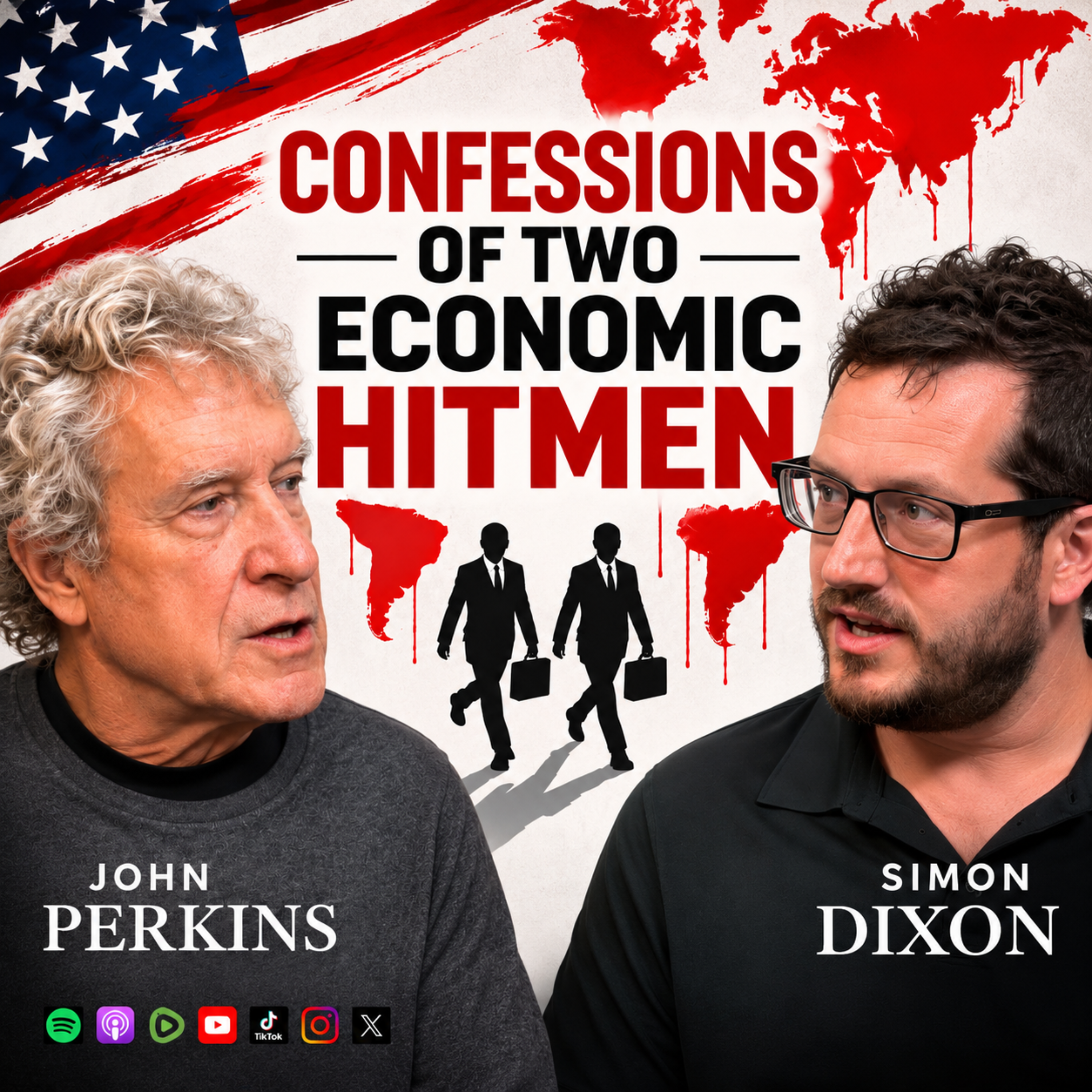
A conversation on the BTC Sessions YouTube channel, where host Nathan Fitzsimmons welcomes guests John Perkins, author of Confessions of an Economic Hitman, and Simon Dixon, an investor and author. The discussion centers on the evolution of global financial manipulation, detailing how traditional debt-trap diplomacy has expanded into corporate and technological domains. The speakers examine the financial industrial complex, the role of transnational capital in shifting geopolitical power, and how major entities leverage debt and resources to maintain control. Furthermore, the dialogue explores the intersection of geopolitics and modern conflicts, noting parallels between past interventions and recent events in regions like the Middle East and Latin America. Finally, the conversation highlights the rise of digital sovereignty, emphasizing the importance of personal autonomy, decentralized technologies like Bitcoin, and grassroots awareness as tools to resist an increasingly technocratic and centralized global order.
Full title: NVIDIA: 48 Hours That Changed the Story | Jensen Huang & What Comes Next
Simon Dixon, Mario Nawfal and Brendon Weichert analyzes the recent resignation of Nvidia CEO Jensen Huang on Mario Nawfal's YouTube channel, framing it as a calculated corporate regime change orchestrated by the military-industrial complex and intelligence agencies.
Dixon argues that Huang's departure was precipitated by weaponised scandals regarding alleged affairs with a suspected Chinese intelligence operative and a company executive, providing the board with the necessary governance leverage to oust him. T
his power struggle allegedly pits institutional financial shareholders and technology sectors—who favour lucrative chip sales to China through intermediaries like Singapore and Malaysia—against military factions seeking to maintain a strategic artificial intelligence advantage for the United States.
Dixon further suggests that while major tech leaders like Elon Musk and Mark Zuckerberg possess sufficient voting shares to resist such takeovers, Huang's minimal equity left him vulnerable.
Ultimately, the discussion highlights a broader global conflict between multipolarity, financial globalisation, and national security interests dominating the tech industry.
2 interviews.
Part 1: Mario Nawfal interviews Simon Dixon (recorded on 12 November 2026)
Part 2: Brandon J. Weichert interviews Simon Dixon (recorded on 14 November 2026)
Full Title: The Petrodollar, Tech Giants & Debt: Who Really Benefits from the Iran War? | Simon Dixon & Mario Nawfal
Original title: THE IRAN WAR WAS PLANNED BY TRUMP TO BENEFIT HIS DONORS – w/ Simon Dixon
Host: Mario Nawfal Channel: @MarioNawfal
Date of recording: 9 November 2026
Watch on YouTube: https://www.youtube.com/watch?v=mg6LuX0D3XA
During a podcast interview, host Mario Nawfal and guest Simon Dixon examine the underlying geopolitical and financial forces driving global conflicts, specifically arguing that the recent Iran war was strategically orchestrated to serve the interests of corporate elites, technology conglomerates, and financial backers rather than the American public. The discussion highlights how the traditional petrodollar system is collapsing as the United States transitions from a global hegemony into a multipolar world order characterized by regional trade networks and alternative payment systems. Furthermore, the speakers analyze how Gulf nations like Saudi Arabia and the United Arab Emirates are facing severe economic pressures and changing their international alignments toward China while simultaneously investing heavily in American private equity. Finally, Dixon contends that political figures like Donald Trump function primarily as public relations mouthpieces for powerful corporate lobbies, utilizing manufactured instability to enrich their primary donors and restructure global energy markets.
Date of recording: 2 November 2026
Host: Jesse Day
Channel: Commodity Culture
Guest: Simon Dixon
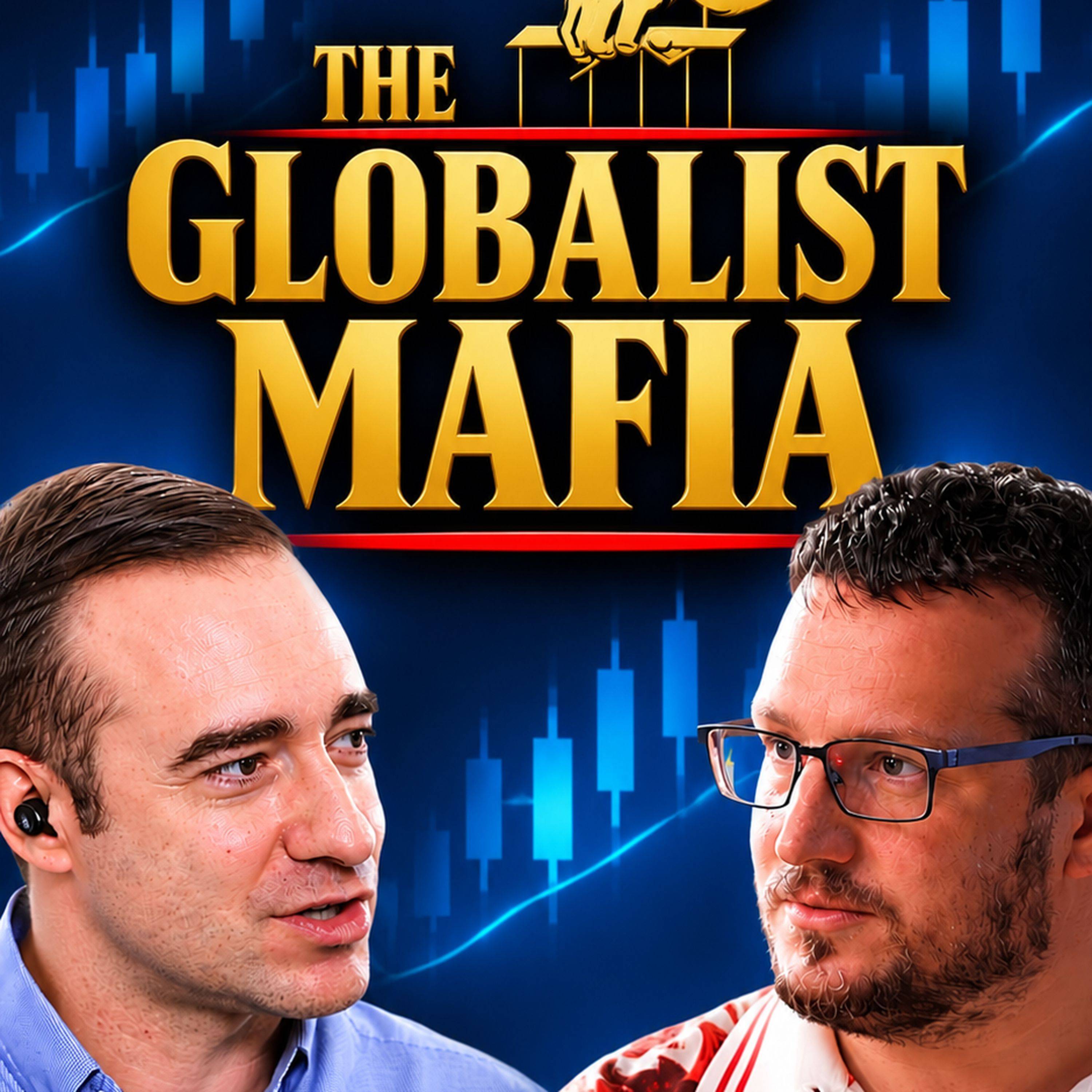
Title: "The Global Mafia Running the World and Why They Need Forever Wars" | Simon Dixon on Commodity Culture w/ Jesse Day
I recently sat down with Jesse Day on Commodity Culture for an in-depth conversation titled “The Global Mafia Running the World and Why They Need Forever Wars.”
In this 47-minute interview, we step past mainstream narratives to examine how global power actually operates. In my view, geopolitical events are not dictated by politicians, but by a complex structure made up of three interlocking forces: the Financial Industrial Complex (FIC), the Military Industrial Complex (MIC), and the Technical Industrial Complex (TIC).
Here is a preview of what we discussed:
The Business Model of Forever Wars: How conflicts are managed to optimize revenue through defense contracts, government debt, and post-war reconstruction.
Manufactured Crises & Control: Why I believe civil unrest, energy crises, and de-industrialization are weaponized to concentrate wealth upward and expand a surveillance state.
The Multipolar Shift & Sovereign Strategy: Why central bank debt structures are reaching their limit, and why my analysis suggests self-custodial hard assets are critical for navigating the shift to multipolarity.
Watch on YouTube
Read the blog
In this 1-hour and 30-minute in-person interview with Natalie Brunell, recorded on 25 September 2026 and titled "If this happens, I will sell all my Bitcoin and buy Gold", I join Natalie on her channel to examine the structural transformation of the global financial architecture, the burden of unpayable sovereign debt, and the evolving role of Bitcoin as a mechanism for individual sovereignty.
In my view, the global financial order is undergoing a structural shift away from unipolar hegemony toward a multi-node regional system managed by three primary power structures: the Financial Industrial Complex (FIC), the Military Industrial Complex (MIC), and the Technical Industrial Complex (TIC).
During this interview, Natalie and I analyze how a $40 trillion US national debt—which I believe cannot be repaid without collapsing the dollar system—forces central planners toward fiscal dominance, growth through artificial intelligence infrastructure, and engineered digital control grids such as Central Bank Digital Currencies (CBDCs) and programmable stablecoins.
We explore the generational breakdown of traditional paths to wealth, why conventional boomer investment strategies no longer function for younger generations facing AI-driven job market disruptions, and why central banks are steadily accumulating physical gold while reducing their holdings of US Treasuries. For investors, savers, and Bitcoin holders, I outline the specific structural conditions—namely severe centralisation across mining pools, developer teams, and institutional custody by the FIC—under which I believe holding physical gold would become a preferable reserve asset to Bitcoin.
However, as long as Bitcoin preserves its open-source codebase, peer-to-peer spendability, and unalterable monetary supply, I believe it remains an essential tool for digital resistance against technocratic control grids and asset-stripping debt systems. Ultimately, this discussion provides a calm, macro-focused analysis of how to navigate the global financial transition, spend less than you earn, and accumulate hard assets to achieve true individual financial sovereignty.
Premiere starts today (8 October 2026) at 6pm BST / 1pm EDT.
Watch on YouTube
Listen to other related podcast:
Bitcoin Is the Exit—Simon Dixon on Natalie Brunell (14 April 2026)
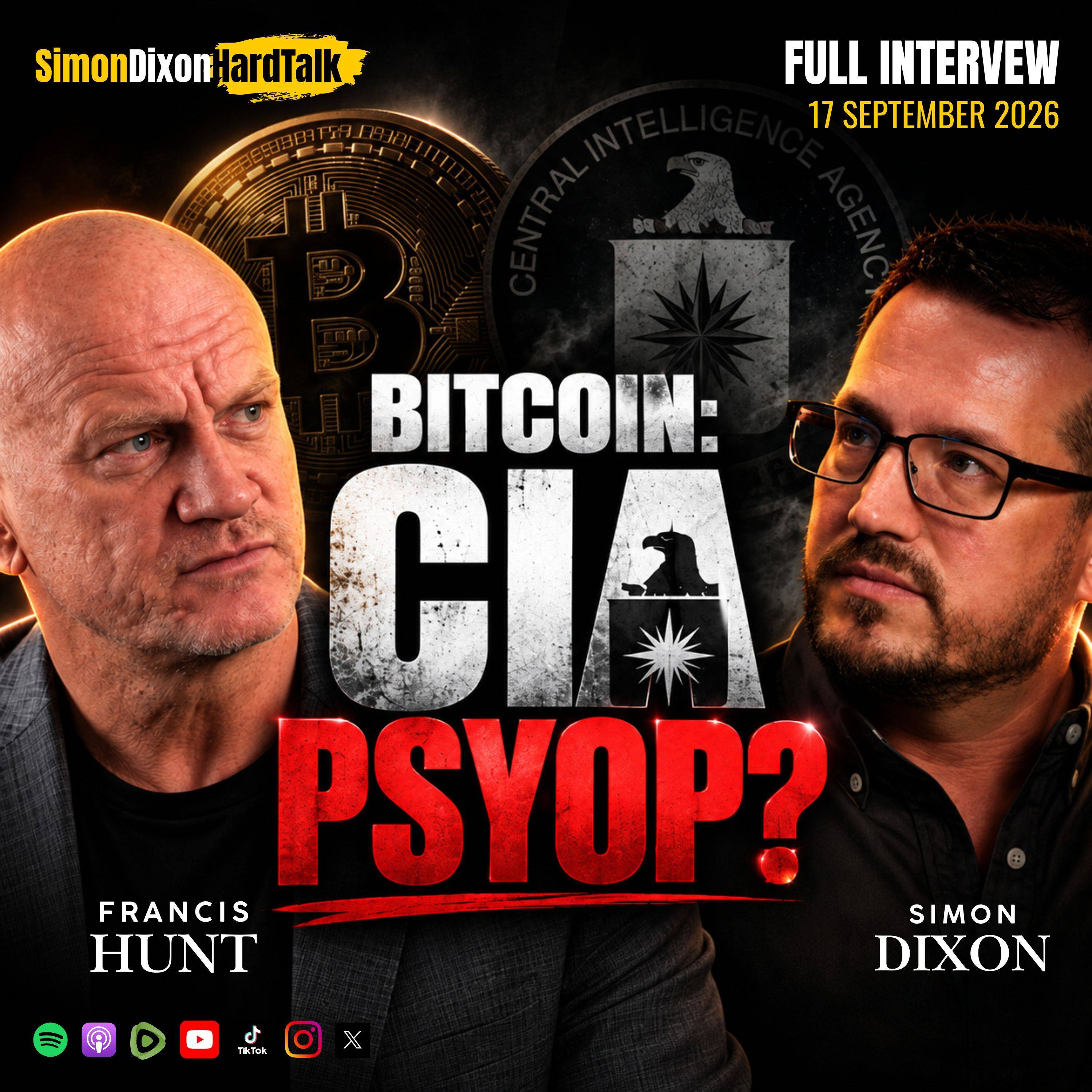
In Part 2, Was Bitcoin A CIA Psyop?, we premiered a pre-recorded debate from 17 September 2026 hosted by Danny on the CapitalCosm YouTube channel, where I went head-to-head with Francis Hunt (aka The Market Sniper). Francis delivered a compelling critique of total digitization, framing it as an encroaching surveillance power grab that destroys our sovereign right to financial privacy, while arguing that physical cash must be preserved as our first line of defense. In his view, Bitcoin serves as a "trainer bicycle" on-ramp into a grand digital control grid, operating as a high-beta speculative asset co-opted by Wall Street ETFs, corporate treasury vehicles like Michael Saylor's Strategy, and intelligence-linked actors.
In response, while I broadly agree with Francis on the dangers of CBDCs, financial surveillance, and blatant infiltration attempts by intelligence agencies and Wall Street—such as Blockstream, Michael Saylor's Strategy, and corporate capture—I maintain that Bitcoin remains fundamentally different. In my opinion, as long as open-source developers, miners, and decentralized node operators successfully resist protocol changes, Bitcoin provides individuals with an irreplaceable mechanism to hold their own keys, transact peer-to-peer, and retain monetary sovereignty outside issuer-controlled rails.
Whether you lean toward Francis’s skepticism about the digital trap or my thesis on digital self-sovereignty, understanding how physical and digital rails are being rewired is essential to staying on the right side of this historic transition.
Watch Full Episode on YouTube
Watch Part One on YouTube
Watch Part Two on YouTube
A pre-recorded interview I did with Wally Rashid on his channel, recorded on 3 September 2026.
In this interview, we dive deep into the geo-financial reality of the Middle East, focusing on a major theme: the privatization of Israel. Israel’s economy is decoupling from its stock market, which remains at all-time highs due to military, tech, and banking stocks.
However, the state is being laden with corporate debt, and state defense companies are preparing for public listings (IPOs) to sell off state assets. In my view, Netanyahu is acting as a puppet to power, serving the interests of major military contractors, global financial investors, and technology companies. At the highest levels of capital, ideology does not drive decision-making—rational self-interest and capital preservation do.
As the Military-Industrial Complex (MIC) begins to retreat from the Middle East to find other war zones, Israel is being transitioned from being funded by the Pentagon to being funded by private corporate debt. If power no longer needs Israel as a destabilizing node, the financial markets will force a regime change.
I encourage you to watch both parts of today's broadcast to see how these two pieces fit together.
0:00 Intro
5:40 How long will the collapse of the U.S. Empire take?
8:48 Israel vs. the Financial Industrial Complex in the Iran war
17:12 Will Iran be able to maintain a long-term toll on the Strait of Hormuz
19:26 What is the point of the latest Iran war escalations?
22:10 How long will the Iran war continue for?
25:45 What role does the Turkey, Saudi Arabia, Pakistan defense Mecca agreement play?
30:16 How the Israel/Palestine conflict will be solved via pressure from global financial markets
34:14 When will Israel be controlled by global financial markets?
37:49 How will settler violence will be contained by global financial markets
41:22 How will the Military Industrial Complex shift focus to the United States and Europe?
44:54 How the Military Industrial Complex is implementing the AI Surveillance State in the West
46:20 How the Military Industrial Complex will destabilize the West
49:48 How can young adults financially prepare for a multi-polar world?
53:18 What role will gold play in the future as the dollar declines?
57:38 How betting markets like Polymarkets and Kalshi represent a sign of a declining empire
1:02:28 How declining empires push degeneracy on their poorest citizens
1:05:18 Why it’s important young adults take control of Artificial Intelligence (AI)
1:07:55 Why everyone needs to have their own decentralized AI model
1:11:24 What open source AI model does Simon run?
Read the blog
Watch on YouTube
Is Bitcoin Compatible with Islam? | Simon Dixon on Bitcoin Majlis with Michael Howe
In this comprehensive interview recorded on 13 August 2026, host Michael Howe (The Bitcoin Guide) sits down with investor, author, and financial analyst Simon Dixon on the Bitcoin Majlis YouTube channel for a 2-hour and 13-minute deep dive into the intersection of Islamic finance principles, global monetary architecture, and Bitcoin’s role as a tool for financial sovereignty.
Drawing from his 26-year journey in traditional finance and investment banking, Simon Dixon breaks down how the current fiat monetary system is structurally dependent on riba (interest) and debt creation. He explains how this debt-based paradigm drives wealth extraction, centralisation, and global conflicts, contrasting secular economic theory—such as Adam Smith’s "Invisible Hand"—with the moral accountability and ethical trade traditions of the "Open Hand" found in Islamic economics.
Throughout the discussion, Dixon frames Bitcoin as a technological realization of sound money principles that aligned with the Golden Age of Islam. However, he issues a stark warning regarding ongoing efforts by the Financial Industrial Complex (FIC) and Technical Industrial Complex (TIC) to co-opt Bitcoin through centralized custodians, ETFs, and paper derivatives.
The key message of the interview emphasizes the necessity of a "Digital Hijra" and strict self-custody ("holding your own keys") as an essential act of digital resistance and sovereignty.
KEY TOPICS COVERED IN THIS INTERVIEW
Simon Dixon’s Origin Story: 26 years in finance, investment banking, and discovering systemic flaws in money creation.
The Problem with Riba (Interest): How debt-based money creation incentivizes inflation, debt slavery, and war economies.
Economics of the "Open Hand": Comparing secular market mechanics with Islamic economic accountability and ethical trade.
Lessons from the Golden Age of Islam: Hard money standards, Gresham’s Law, and historical monetary preservation.
Centralization Risks in Bitcoin: How Wall Street, ETFs, and institutional custodians attempt to co-opt decentralized protocols.
The "Digital Hijra" & Self-Custody: Why holding your own private keys is necessary to preserve individual and community sovereignty.
UPCOMING EVENT: MUSLIM BITCOIN SUMMIT 2026
Simon Dixon will be a keynote speaker at the upcoming Muslim Bitcoin Summit in London on 10 October 2026.
To find out more and register, visit: https://mslmbtcsummit.com/
CONNECT & FOLLOW Official Website: https://simondixon.com/
YouTube Channel: Simon Dixon (@SimonDixon21)
X (Twitter): @SimonDixonTwitt
#islam #bitcoin #muslim #IslamicFinance #BitcoinMajlis #SelfCustody #SimonDixon #HardMoney #FinancialSovereignty #Riba #Crypto
Watch on YouTube
Read the blog
Host: Anthony Fatseas (WTFinance Podcast)
Guest: Simon Dixon (Investor, Financial & Geopolitical Analyst, Author, Entrepreneur, and Bitcoin OG)
A Note From Simon Dixon
"Immediately following the live show, we are broadcasting my recent 44-minute interview with Anthony Fatseas on WTFinance, recorded on 13 August 2026. This discussion took place just one week before this week's global bond market blowout, demonstrating our long-term thesis playing out in real time.
In this segment, we go deep into how the decline of the US world reserve system historically mirrors the structural collapses of the Dutch and British empires. I believe the Strait of Hormuz will be to the American Empire what the Suez Canal was to the British Empire—a defining point of geopolitical reset. We will also expose the reality of the digital control grid, explore the 'real war' of centralization versus decentralization, and discuss the launch of my new book, The Game of Money."
Episode Description
In this second highly-anticipated interview on the WTFinance podcast, host Anthony Fatseas sits down with Simon Dixon—Investor, Financial & Geopolitical Analyst, Author, Entrepreneur, and Bitcoin OG—for an in-depth conversation on the accelerating cracks in the global financial system. Following wild yield breakouts in the bond market, Simon explains how central banks are choosing to "run the economy hot" and strategically sacrifice the US dollar's status as the global reserve currency to inflate assets and roll over unsustainable sovereign debt.
From shifting power dynamics in the Middle East and China's role as the central broker in West Asia, to the rise of programmable money, CBDCs, and an AI-driven "control grid," this episode maps out the sobering realities of the multipolar reset. Most importantly, Simon shares his personal playbook for maintaining individual sovereignty, building local resilience, and escaping centralization through physical gold, self-custodied Bitcoin, and localized food and community networks.
Key Topics Covered
The Bond Market Distress & Central Bank Policy
Why bond yields are structurally exceeding previous stress-test levels, and the frantic interventions designed to prevent foreign central banks from selling US treasuries [2].
The "K-shaped" economic strategy: Running the economy hot, rolling over massive debt, and dumping it on citizens while asset holders benefit from asset/equity inflation (e.g., the AI stock market bid).
The Multipolar Reset & The Post-Dollar Middle East
How the US is transitioning into a regional power while China emerges as the lynchpin broker negotiating normalization between historic rivals like Saudi Arabia and Iran.
Trade route security and why the Strait of Hormuz is becoming the modern-day equivalent of the Suez Canal moment for the American Empire.
Geopolitical narratives (Ukraine-Russia, Middle East, Taiwan tensions) as wealth extraction mechanisms for transnational capital and the military-industrial complex rather than triggers for World War III.
The AI Control Grid, Programmability, and UBI
The rise of the police-and-surveillance state to manage growing civil unrest caused by extreme wealth polarization.
How digital currency (CBDCs and private stablecoins) will make money programmable, integrating social credit parameters under the guise of security and convenience.
Sovereignty vs. Centralization: The Individual Playbook
Why the real battle is not left vs. right, but centralization vs. decentralization.
Practical steps to reclaim personal sovereignty: storing physical gold, self-custody of Bitcoin, running local LLMs, and investing in local food supply chains and community relationships.
Overcoming mental submission by lengthening your time horizon to build out of debt and acquire real assets.
Quotes from Simon Dixon
"The strategy is sacrifice the dollar as world reserve currency, or you allow for a depression which breaks everything." "The real battle is between centralization and decentralization. That's the battle." ["They want you to believe there is no hope... you need to increase your time frame because that's how you escape."
Resources Mentioned
Simon’s Open-Source Book Project: The Game of Money: From Subordinate to Sovereign
Connect with Simon:
Website: simondixon.com
X (Twitter): https://x.com/SimonDixonTwitt
YouTube: https://www.youtube.com/@SimonDixon21
WTFinance Podcast: Hosted by Anthony Fatseas
Watch on YouTube
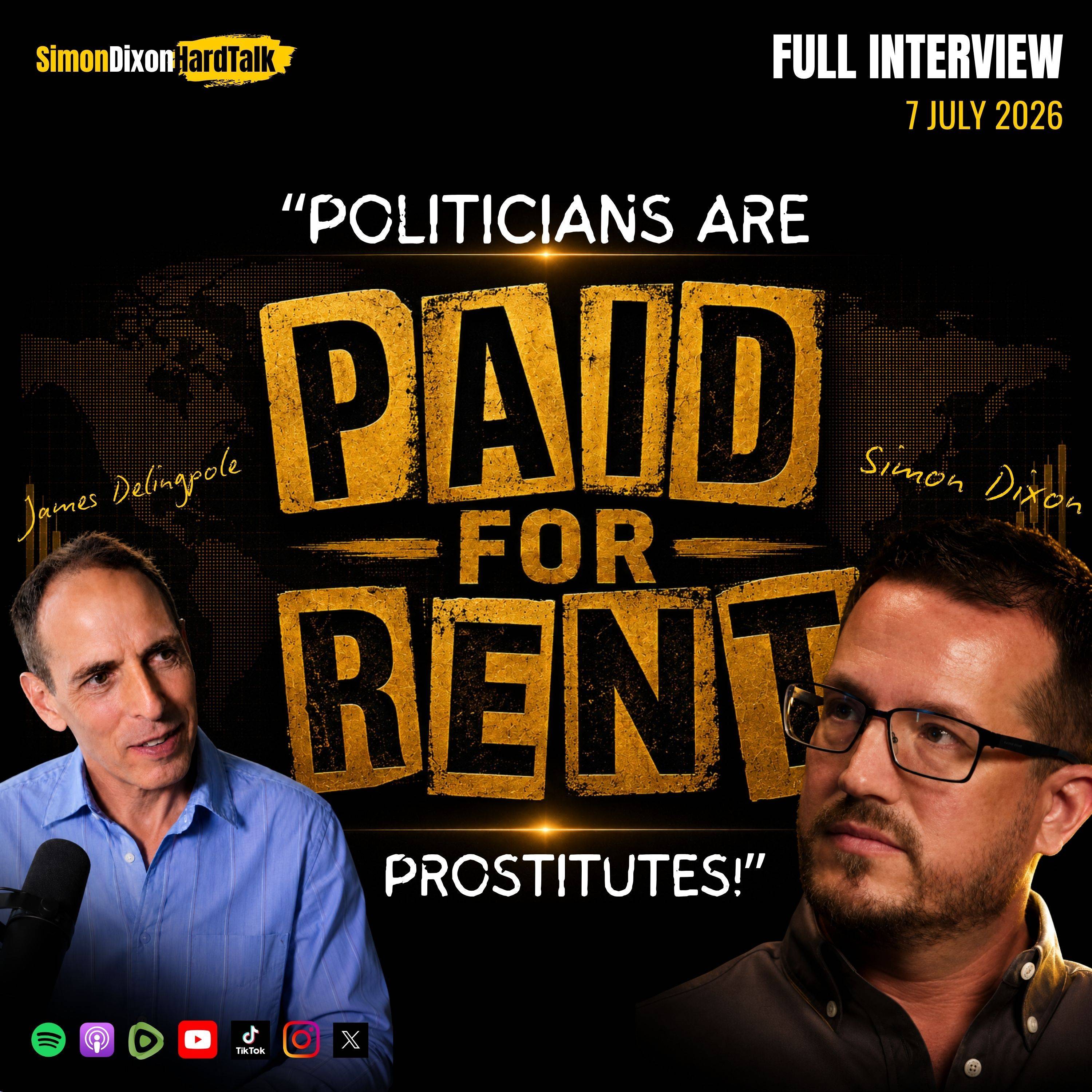
Politicians Are "Paid-for-Rent Prostitutes": The True Mechanics of Power | Simon Dixon on The James Delingpole Channel w/ James Delingpole
On 7 July 2026, I sat down for a 2-hour interview with James Delingpole on The James Delingpole Channel for an episode titled "Politicians Are 'Paid-for-Rent Prostitutes': The True Mechanics of Power". In this discussion, I outline my belief that modern nation-states are allegedly subordinate to the Financial Industrial Complex (FIC), the Military Industrial Complex (MIC), and the rapidly emerging Technical Industrial Complex (TIC). I share my macro-analysis on how this network of institutions allegedly controls governments by socializing economic losses while privatizing the gains through central banks and fiat debt markets. We explore the broader implications of global financial restructuring, including the shifting geopolitical landscape, the engineering of strategic tensions to fund highly profitable "forever wars," and the potential transition toward a technocratic surveillance grid powered by artificial intelligence. James and I also reflect on our shared skepticism of official histories; he discusses his personal epiphany regarding mainstream media corruption, detailing how psychological operations and algorithmic divide-and-conquer tactics are allegedly used to marginalize dissenters and manufacture civil unrest.
For investors, savers, entrepreneurs, and Bitcoin holders, understanding these hidden structures of power is critical to securing the future of your money. In my opinion, the ultimate defense against a corrupt, surveilled banking system is achieving true financial sovereignty. I detail why I believe Bitcoin was originally designed as a necessary breakaway project to circumvent institutional control, and why Wall Street's push for ETFs is allegedly a deliberate attempt to centralize and paperize the cryptocurrency just as they did with gold. By boycotting mainstream institutional investment vehicles and embracing the self-custody of hard assets outside of the legacy financial system, I believe you can successfully transition from a state of debt-ridden subordination to individual autonomy. This episode provides an authoritative, insight-driven framework for navigating the current economic reset and building generational wealth outside of the complexes' reach.
https://www.youtube.com/watch?v=Xqp5VKhzgrY
About James Delingpole
James Delingpole is an independent podcaster, author, and former mainstream media journalist. During his career in traditional media, he wrote comment pieces for publications such as the Mail on Sunday and the Telegraph, and held a regular column in The Spectator. He is also the author of the 2012 book Watermelons, which details his skeptical views on man-made climate change and the "climategate" controversy.
Delingpole later transitioned away from mainstream journalism to establish his own independent media platform. He currently hosts The Delingpod on The James Delingpole Channel, a podcast where he interviews guests on various topics including alternative history, finance, and global power structures. Additionally, he has publicly shared that he was an early adopter of cryptocurrency, having first purchased Bitcoin when it was trading at approximately $300.
Disclaimer: The content provided is based on an interview between Simon Dixon and James Delingpole and is intended for informational and educational purposes only. The views, theories, and opinions expressed—including claims about the Financial Industrial Complex (FIC), global power structures, and the identity of Satoshi Nakamoto—belong strictly to the speakers and often represent their own unproven "interpretive" analysis. This does not constitute financial, investment, or legal advice. Any discussions regarding wealth management or assets like Bitcoin and gold are for illustrative purposes; you should always consult a certified professional and independently verify all claims before making any financial decisions
1 h 56 minAbspielen in:
Gäste, die länger als 12 Monate zurückliegen, gibt es mit Pro. Pläne ansehen

 SD