Kate Hills is on a one-woman mission to save UK manufacturing. In this podcast she shines the light on British brands and manufacturers, and goes behind the scenes of their businesses. With tips, hints and tricks to help you manufacture in the UK and buy British. Never has there been a more critical time to get…
In this episode I'm visiting the Lanx footwear factory in Whalley, in the Ribble Valley, with founder Marco Vaghetti.
The Rossendale Valley in Lancashire was once home to around 200 shoe factories. Marco fell in love with that history while working for a Rossendale shoe company that, by then, made everything overseas. That experience gave him the idea for Lanx. Eight years on, the business has grown from four staff to 70 and Lanx now has it's own factory in Whalley.
Marco takes me round the factory floor, where I meet shoemakers who have spent their whole working lives in the Lancashire shoe trade.
In this episode you'll discover:
How a job at a Rossendale shoe company sparked the idea for Lanx
Why doing market stalls taught Marco who his customer really was
How the boots are made in the Lanx factory
How Relanx rebuilds the footwear that most cobblers would turn away
The skilled shoemakers working at Lanx.
About Lanx
Lanx is a Lancashire footwear brand based in Whalley in the Ribble Valley, Lancashire. Their factory shop is open seven days a week, and from Monday to Friday visitors can walk round the factory and watch shoes being made.
You can find Marco and Lanx at:
Website: lanxshoes.com
Instagram: @lanx
Factory shop: Unit 29, Mitton Road Business Park, Whalley, Lancashire BB7 9YE
Shoemaker by Joe Foster
🚀 Ready to scale your UK-made brand? Apply for the British Brand Accelerator and join us at the next Q&A: makeitbritish.co.uk/qa
Follow Kate @makeitbritish on Instagram
This week I’m taking you on another of my factory tours - this time to the revolutionary women-owned denim LaundRe in East London run by Salli Deighton. Having worked in denim for 35 years, there’s nothing Salli doesn’t know about denim. Then a few years ago she spotted a gap in the market for an ecological denim washing facility in the UK to service both large and small brands with denim washing and finishing, and that’s exactly what she’s built.
In this episode we cover:
How Salli went from consulting for brands like M&S, Wrangler and Mothercare to setting up the UK’s only women-owned denim laundry
Why so much unsold denim stock ends up written off, and how LaundRe is helping brands refinish and resell it instead
The technology behind ecological denim finishing - from laser machines and ozone fading to nebulising systems that use a fraction of the water of traditional washing
Why UK brands have never been able to wash their denim here before, and how LaundRe is changing that for small brands with minimum orders starting from one
The four-year fundraising journey to raise £1.16 million, and what it’s really like trying to get investment as a woman in manufacturing
If you care about British manufacturing, reducing fashion waste and keeping production closer to home, this episode will give you a fascinating look at what’s possible when you refuse to give up on an idea.
About LaundRe
LaundRe is a denim washing and finishing facility based in East London, founded by Salli Deighton. It is the only women-owned denim laundry of its kind and uses low-impact technology including laser machines and ozone fading to refinish, upcycle and process denim for brands ranging from small independents to major retailers.
LaundRe also runs Denim School sessions for brands and designers wanting to understand the finishing process.
You can find Sally and LaundRe at:
Website: www.laundre.co.uk
Instagram: @laundre_uk
Ready to scale your UK-made brand? Work with Kate 1-2-1 in the British Brand Accelerator makeitbritish.co.uk/bba
Follow Kate @makeitbritish on Instagram
In this episode I take a trip to rural Nottinghamshire to the micro knitwear factory owned by Samantha Thomas, founder of knitwear brand Waring Brooke.
Sam was originally a designer for other brands like Alberta Feretti in Italy, but then 10 years ago she started her own knitwear label and took the brave decision to invest in her own knitting machine to create it.
When I had Sam on the podcast 5 years ago she was a one man band - she now has a team and big plans for the future.
In this episode we cover:
How having her own machine allows her to offer personalisation to her customers, which gives the brand it’s USP
What her customers really think about Made in UK
The challenges Sam faced getting to grips with production and keeping the machine busy
Why she's now opening up her factory to other brands for sampling and small production runs
About Waring Brooke
Waring Brooke is a knitwear and accessories brand made entirely in its own micro factory in rural Nottinghamshire. Founder Samantha Thomas designs, programmes and knits everything in-house on a single industrial knitting machine, which allows her to make to order and offer personalised monogram patterns knitted into scarves, snoods, hats, headbands and socks.
You can find Samantha and Waring Brooke at:
Website: waringbrooke.com
Instagram: @waringbrooke
Ready to scale your UK-made brand? Apply for the British Brand Accelerator at makeitbritish.co.uk/apply
Follow Kate @makeitbritish on Instagram
Ready to scale your UK-made brand? Apply for the British Brand Accelerator at makeitbritish.co.uk/apply
In this episode I'm joined by Emily Millichip, a fashion designer based in Edinburgh who is relaunching her eponymous brand of 15 years after deciding it no longer aligned with where she is now.
In this episode we cover:
Why Emily decided to pivot after 15 years
How she took her existing customers and Instagram followers with her through the rebrand
Collaborating with local craftspeople on small limited edition batches
How every piece in the collection is made within an hour of her studio
About Emily Millichip
Emily Millichip is a fashion designer based in Edinburgh who also has a parallel career in farming. Her new collection, Pagan, is made from natural materials and everything in the collection is manufactured within an hour of her studio.
You can find Emily and Emily Millichip at:
Website: www.emilymillichip.com
Instagram: @emilymillichip
Follow Kate @makeitbritish on Instagram
Hello and welcome to episode 323 of the Make it British Podcast. I'm back with another episode in my Women in Wool series, this time chatting to knitwear designer Frankie Davies from Charl Knitwear.
Frankie spent years designing knitwear for Burberry and Benetton and has spent much of her career inside knitwear factories, so it was only ever a matter of time before she founded her own brand. In this episode, Frankie talks about her use of British wool, the benefits of working with UK factories and how that differs from working with manufacturers in Italy, as well as the challenges of running your own business when you have small children, which I'm sure many of you listening can relate to.
In this episode we cover:
About Charl Knitwear
Charl Knitwear is a British knitwear brand founded by Frankie Davies, a designer with over 20 years of experience working for luxury fashion houses including Burberry and Benetton. Inspired by the Norfolk fisherman's Gansey, the brand combines heritage stitch traditions with a contemporary approach to British fibre and manufacturing.
You can find Frankie and Charl Knitwear at:
Website: charlknitwear.co.uk
Instagram: @charlknitwear
🚀 Ready to scale your UK-made brand? Apply for the British Brand Accelerator at makeitbritish.co.uk/apply
Follow Kate @makeitbritish on Instagram
In this episode of the Women in Wool series, I'm joined by Laura Watts, managing director of Marton Mills, 3rd generation family weaving business based in Otley, Yorkshire.
Marton Mills was founded in 1931 and has built its reputation on uniform fabric - supplying school wear, military contracts for the Navy and the RAF, and fabric for the King's Coronation.
Now, alongside its core uniform work, Marton Mills is launching its first fully traceable British wool collection in autumn 2026, with yarn sourced just down the road from Laxton's and fabric finished at Roberts Dyers in Keighley.
In this episode we cover:
How Laura went from advising heart surgeons at Johnson & Johnson to running a nearly 100-year-old weaving mill.
Why uniform fabric is the backbone of the business and how the mill weaves 18 to 20,000 metres of fabric a week.
Why so much British-woven fabric still goes offshore for garment production.
What a genuine British procurement policy for military uniforms could look like.
The challenge of recruiting the next generation into textiles.
About Marton Mills
Marton Mills Co Ltd is a family-owned textile mill established in 1931, nestled in the Wharfedale valley in West Yorkshire. The mill produces premium fabrics across a range of end uses, from school and military uniforms to film and television, with a reputation built on consistent quality and traditional Yorkshire values.
Website: martonmills.com
Instagram: @martonmills
🚀 Ready to create a British-made product business that's built to last? Without faffing about, wasting wads of cash, or struggling with unreliable factories. Apply for the British Brand Accelerator: makeitbritish.co.uk/apply
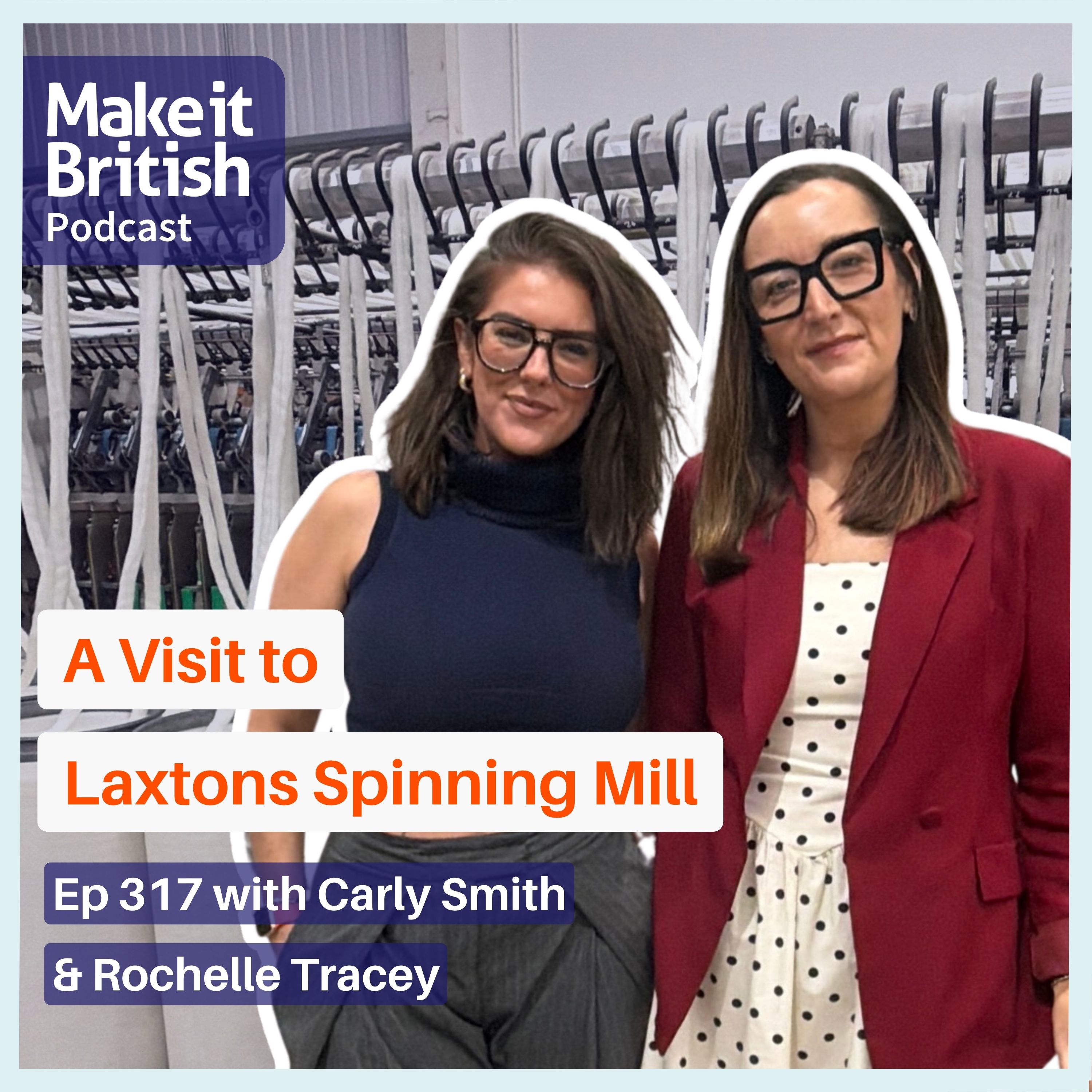
In this episode of the Women in Wool series, I visited Laxtons Yarns in Baildon, Yorkshire, a fourth generation family spinning mill that is now employee-owned.
I was given a full tour of the mill floor by commercial director Carly Smith and national accounts manager Rochelle Tracey, before sitting down with them to talk about British wool, the future of the business and the exciting relaunch of their hand knitting range.
Laxtons spin worsted and fancy yarns for hand knitting, machine knitting and weaving. Their Sheepsoft yarn is a blend of Blue Faced Leicester and Masham British wool and travels less than 50 miles from fleece to finished yarn.
Almost the entire workforce is women.
In this episode we cover:
Behind the scenes of how the fibre is spun into yarn.
How Laxtons became employee owned in 2024 and what that means for the future of the business in Yorkshire.
Why 52% of everything Laxtons spins is now British wool, and how that has grown.
The relaunch of their hand knitting range as Bramble & Fleece.
The shift happening across Yorkshire mills, with more women now leading businesses in what has traditionally been a male dominated industry.
About Laxtons
Laxtons Yarns is a fourth generation family spinning mill based in Baildon, Yorkshire. They spin worsted and fancy yarns for hand knitting, machine knitting and weaving, with over 52% of their yarn made from British wool. In July 2024 the business became employee owned, securing its future in Yorkshire. Their hand knitting range is relaunching as Bramble & Fleece in 2026.
Website: laxtons.com | bylaxtons.com
Instagram: @laxtonsyarns
🚀 Ready to create a British-made product business that's built to last? Without faffing about, wasting wads of cash, or struggling with unreliable factories. Apply for the British Brand Accelerator: makeitbritish.co.uk/apply
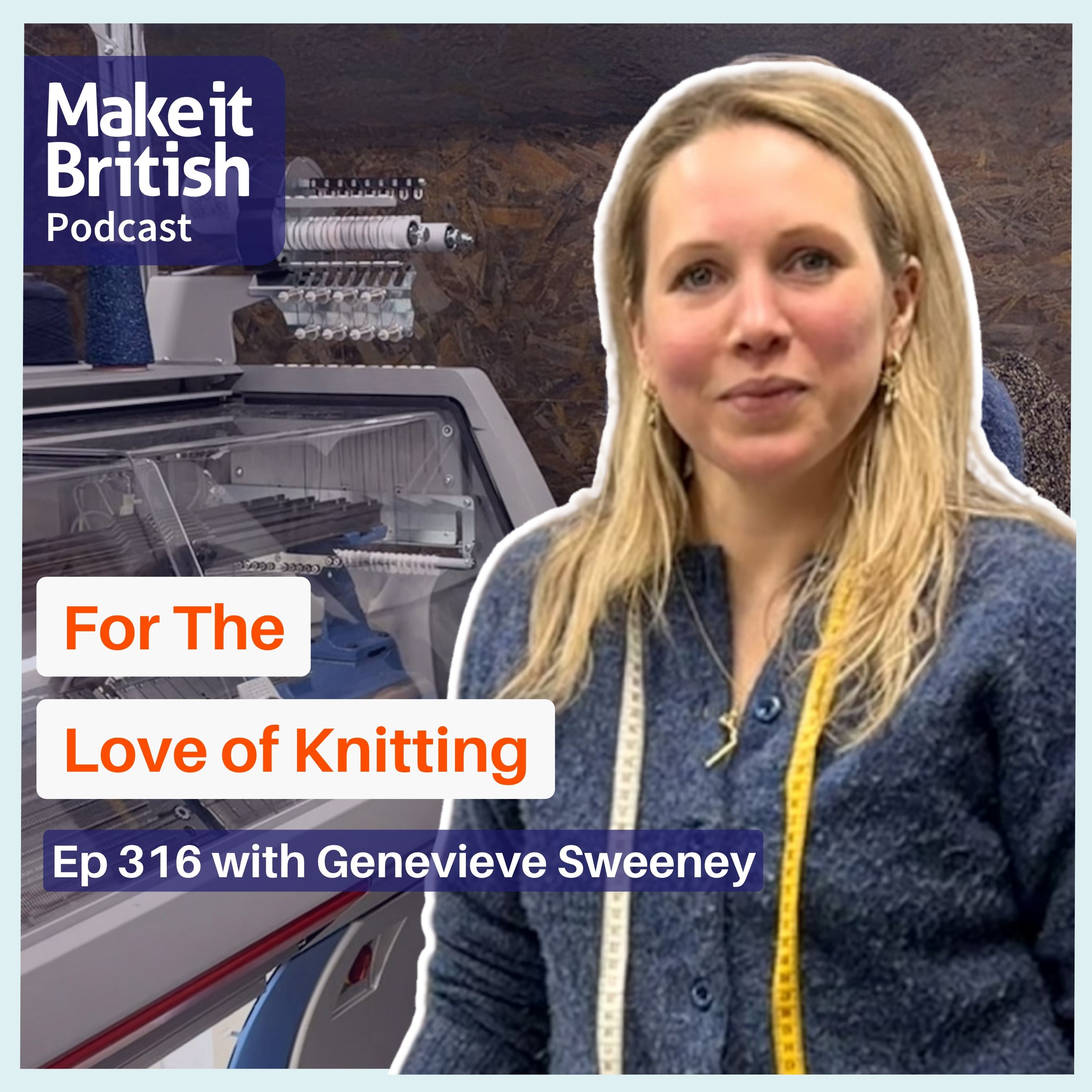
In this episode of the Women in Wool series, I take a trip to the beautiful Essex countryside to visit knitwear designer Genevieve Sweeney in her micro factory, where she designs, programmes, knits, and finishes her collection in house.
We talk about the realities of owning your own industrial knitting machine - from learning to keep the yarn and machine happy, to breaking needles in tears and coming out the other side.
We also hear about Genevieve's mission to revive the almost forgotten art of hand Intarsia, a knitting technique synonymous with Scottish knitwear.
About Genevieve Sweeney
Genevieve Sweeney is a knitwear designer and maker based in Essex. Known for her distinctive use of colour, texture and geometric patterning, Genevieve works with natural fibres including Lambswool and naturally-dyed Merino.
You can find Genevieve and Genevieve Sweeney at:
Website: genevievesweeney.com
Instagram: @genevievesweeney
Genevieve forst appeared on the Make it British Podcast in Episode 39 in March 2019.
You can listen to that episode here
🚀 Ready to create a British-made product business that's built to last? Without faffing about, wasting wads of cash, or struggling with unreliable factories. Apply for the British Brand Accelerator: makeitbritish.co.uk/apply
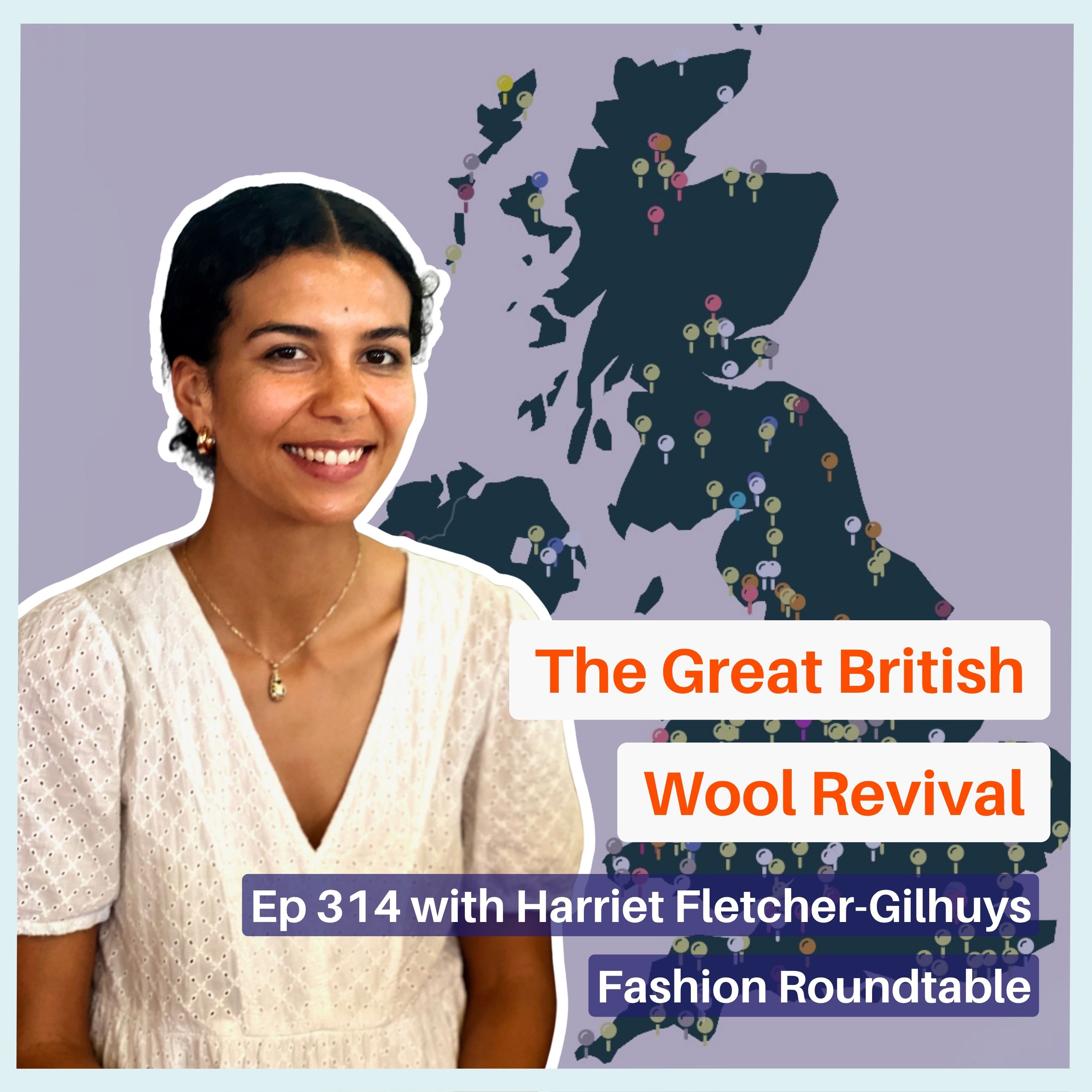
In this episode of the Women in Wool series, I'm joined by Harriet Fletcher-Gilhuys from Fashion Roundtable.
Harriet is the project lead for The Great British Wool Revival and is also working with the King's Foundation on an event in May 2026 to promote the use of British wool.
If you're a designer, maker or brand wanting to work with British wool but not sure where to start, the Great British Wool Revival is the resource you need to know about. It maps the entire wool supply chain from sheep to spinning, dyeing, knitting and weaving and Harriet is here to walk us through exactly how to use it.
In this episode we cover:
What The Great British Wool Revival is and how to use it to find farms, spinners, dyers and manufacturers near you
How to plan a traceable British wool supply chain from scratch, and why you should allow a full year from first conversation to finished product
How to get around minimum order quantities by pairing up with other small designers
Why the website is already being used in 80 countries and what that tells us about the global shift towards homegrown fibres
The two-day wool summit at Dumfries House in Scotland bringing together farmers, designers, makers and policymakers, and how to get involved
If you care about British farming, UK manufacturing and using fibres that actually grow on our hillsides, this episode will give you a practical look at how it can be done.
About the Great British Wool Revival
The Great British Wool Revival is a free online platform built to make British wool more accessible, from farmer through to finished product. Launched in September 2024 in collaboration with the King's Foundation and funded by Yoox Net-a-Porter, it maps the entire wool supply chain and includes a terminology guide, a directory of mills, spinners and dye houses, and step-by-step guidance for designers wanting to work with British wool.
The Great British Wool Revival Website
Fashion Roundtable website
Instagram: @greatbritishwoolrevival
🚀 Ready to scale your UK-made brand? Apply for the British Brand Accelerator at makeitbritish.co.uk/apply
Follow Kate @makeitbritish on Instagram
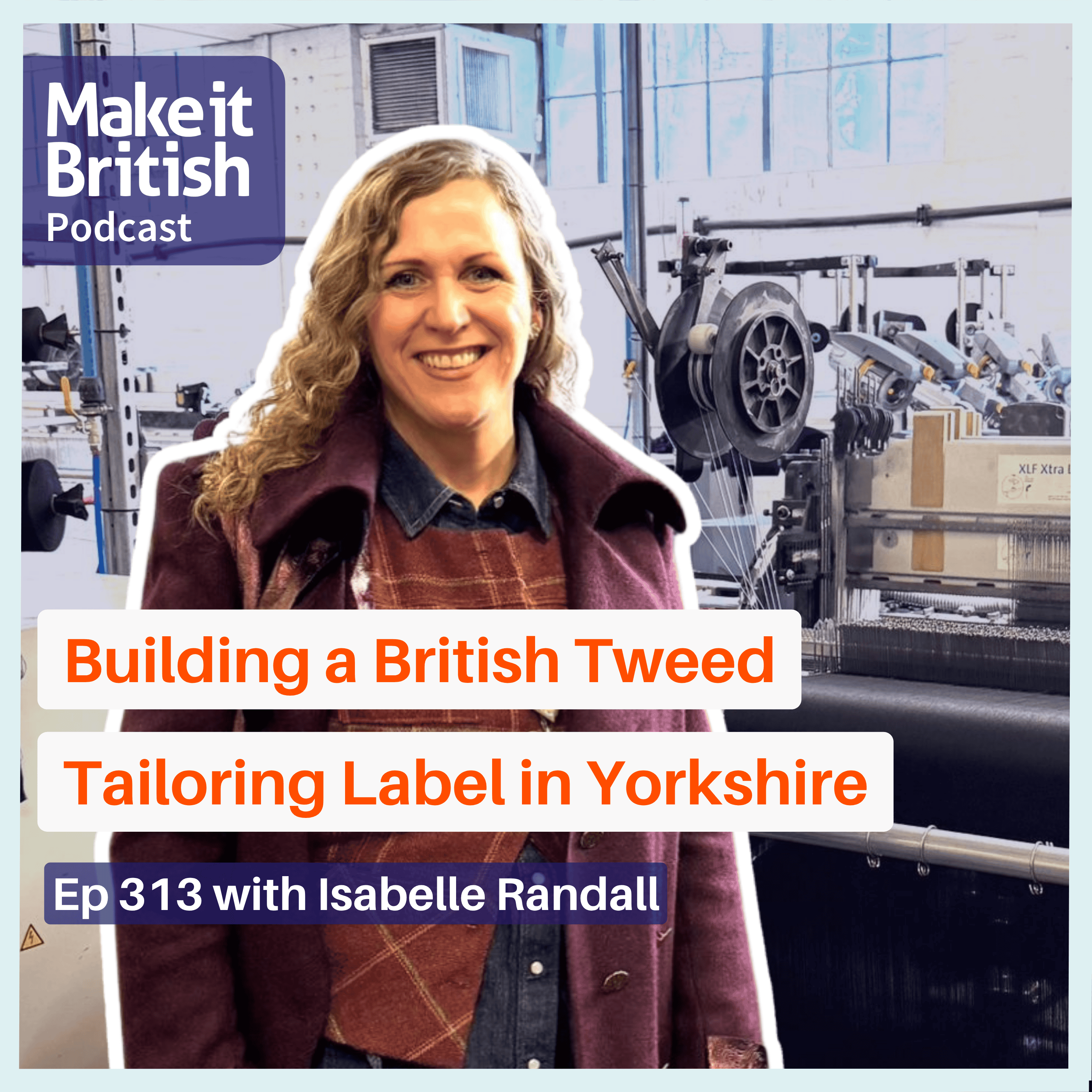
In this episode of the Women in Wool series, I'm joined by Isabelle Randall, a fashion designer and tailor based in Scarborough, Yorkshire, who has been running her own label for over 21 years.
Isabelle works in British tweeds and wool fabrics, making everything bespoke in her atelier. We talk about the Yorkshire mills she loves working with, her tailoring process, and why her bespoke approach keeps customers coming back again and again.
We also get into what it feels like, as a designer who makes everything herself, to hand over the responsibility of production to a manufacturer for the first time.
In this episode we cover:
Which Yorkshire mills Isabelle works with and why she chooses British tweeds and wool fabrics
How her bespoke tailoring process works from initial consultation to finished garment
Why her made-to-order approach builds long-term customer loyalty
What it's really like to hand over production to a manufacturer when you've always made everything yourself
Why holding out for customers who understand and value the work is better than chasing every sale
If you care about British farming, UK manufacturing and using fibres that actually grow on our hillsides, this episode will give you a practical look at how it can be done.
About Isabelle Randall
Isabelle Randall is a fashion designer and tailor based in Scarborough, Yorkshire, with over 21 years of experience running her own label. She works exclusively in British tweeds and wool fabrics, creating bespoke garments from her atelier.
You can find Isabelle and her label at:
Website: isabellerandall.com
Instagram: @isabellerandall
🚀 Ready to scale your UK-made brand? Apply for the British Brand Accelerator at makeitbritish.co.uk/apply
Follow Kate @makeitbritish on Instagram
In this episode of the Women in Wool series, I’m joined by Louisa Knapp, Marketing Executive at British Wool.
Based in Bradford, British Wool operates as a farmers' cooperative that collects, grades, and auctions fleece for around 35,000 sheep farmers across the UK.
Whether you’re a designer wondering how to source British wool or you’re just curious about what happens to a fleece after it’s sheared, you’re going to love this episode.
In this episode we cover:
How the British Wool cooperative operates and makes it easy for brands to use traceable wool.
The British wool supply chain and how new digital systems making it easier to track wool back to the farm.
Why wool is a wonderful fibre and how British Wool are pushing up the price the farmer's receive for their fleece.
Launching new regional labels to guarantee Scottish and Welsh wool traceability.
About British Wool
British Wool is a member-led organisation that handles the collection, grading, and marketing of UK fleece to support 35,000 farmers. They work with brands and manufacturers to provide traceable supply chains and increase the global demand for British wool.
You can find out more about British Wool at
Website: www.britishwool.org.uk
Instagram: @britishwool
🚀 Ready to scale your UK-made brand? Apply for the British Brand Accelerator at makeitbritish.co.uk/apply
Follow Kate @makeitbritish on Instagram
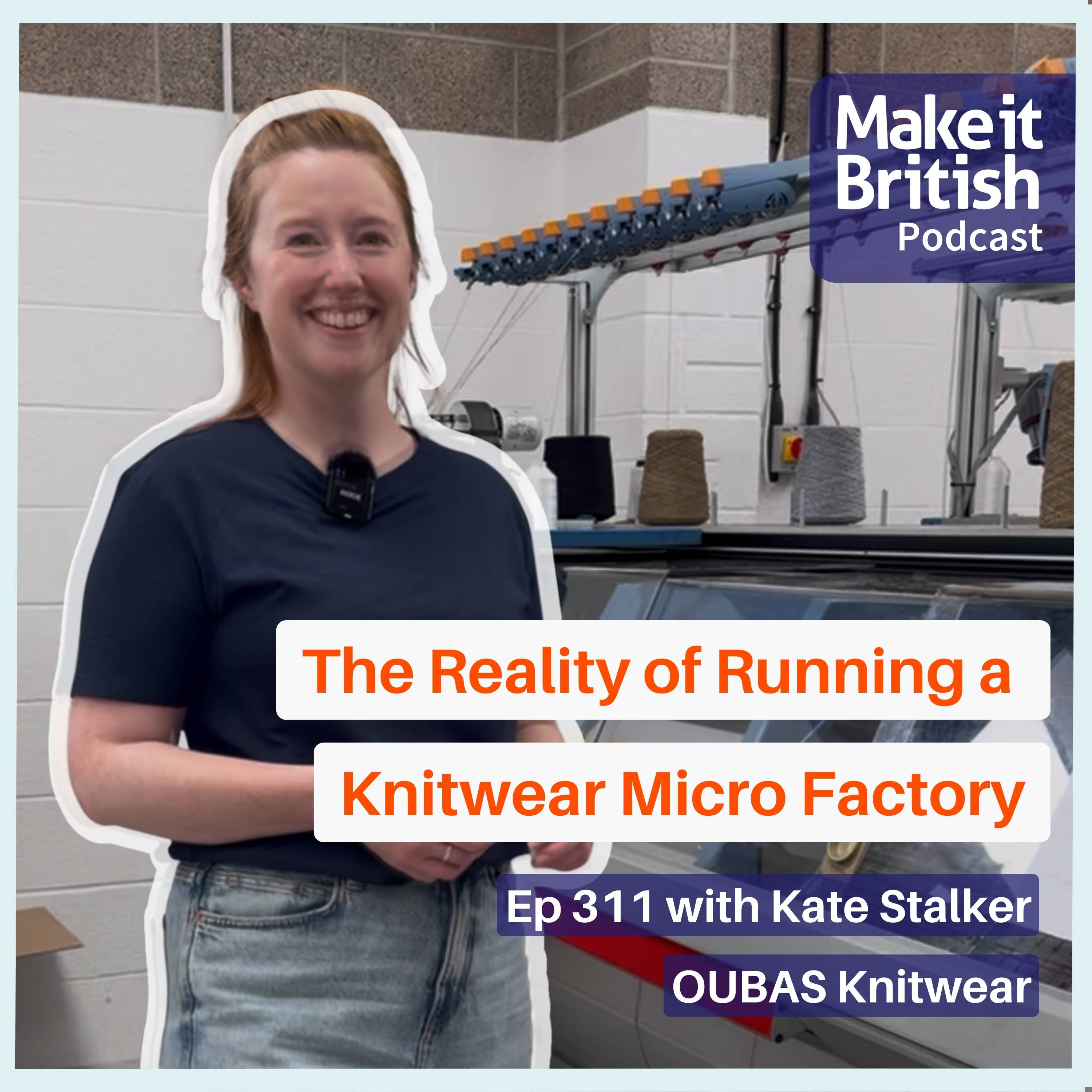
In this episode of the Women in Wool series, I’m joined by Kate Stalker, founder of OUBAS Knitwear.
Kate runs a knitwear micro factory in the Lake District, where she designs and manufactures fully fashioned knitwear using natural fibres, including British wool. After studying knitwear at Winchester School of Art, she returned to Cumbria and started the business with a single hand flat knitting machine in her parents’ utility room.
Today OUBAS produces knitwear on industrial knitting machines, with everything knitted, linked and finished in house by a small team. The business combines design, manufacturing and small batch production all under one roof.
If you’re interested in British wool, knitwear manufacturing or what it takes to run a small clothing factory in the UK, this episode gives a real behind the scenes look at how it works.
In this episode we cover:
How Kate started OUBAS with one knitting machine and began selling at local markets and craft fairs
Why she chose to base the business in the Lake District rather than moving to London
What it takes to run a knitwear micro factory with industrial knitting machines
What “linking” is and why fully fashioned knitwear is so labour intensive
How knitwear is finished after it comes off the knitting machine
The reality of pricing knitwear when every garment takes hours to produce
How made to order production helps reduce waste and allows a wider size range
Why small batch knitwear manufacturing is becoming increasingly important for emerging brands
If you care about British farming, UK manufacturing and using fibres that actually grow on our hillsides, this episode will give you a practical look at how it can be done.
About OUBAS Knitwear
OUBAS Knitwear is a British knitwear brand and micro factory based in the Lake District. The business produces fully fashioned knitwear using natural fibres including British wool, with garments knitted and finished in house.
Alongside its own collection, OUBAS also works with other brands and designers, offering knitwear sampling, development and small batch production.
You can find Kate and Oubas Knitwear at:
Website: www.oubasknitwear.co.uk
Instagram: @oubasknitwear
🚀 Ready to scale your UK-made brand? Apply for the British Brand Accelerator at makeitbritish.co.uk/apply
Follow Kate @makeitbritish on Instagram
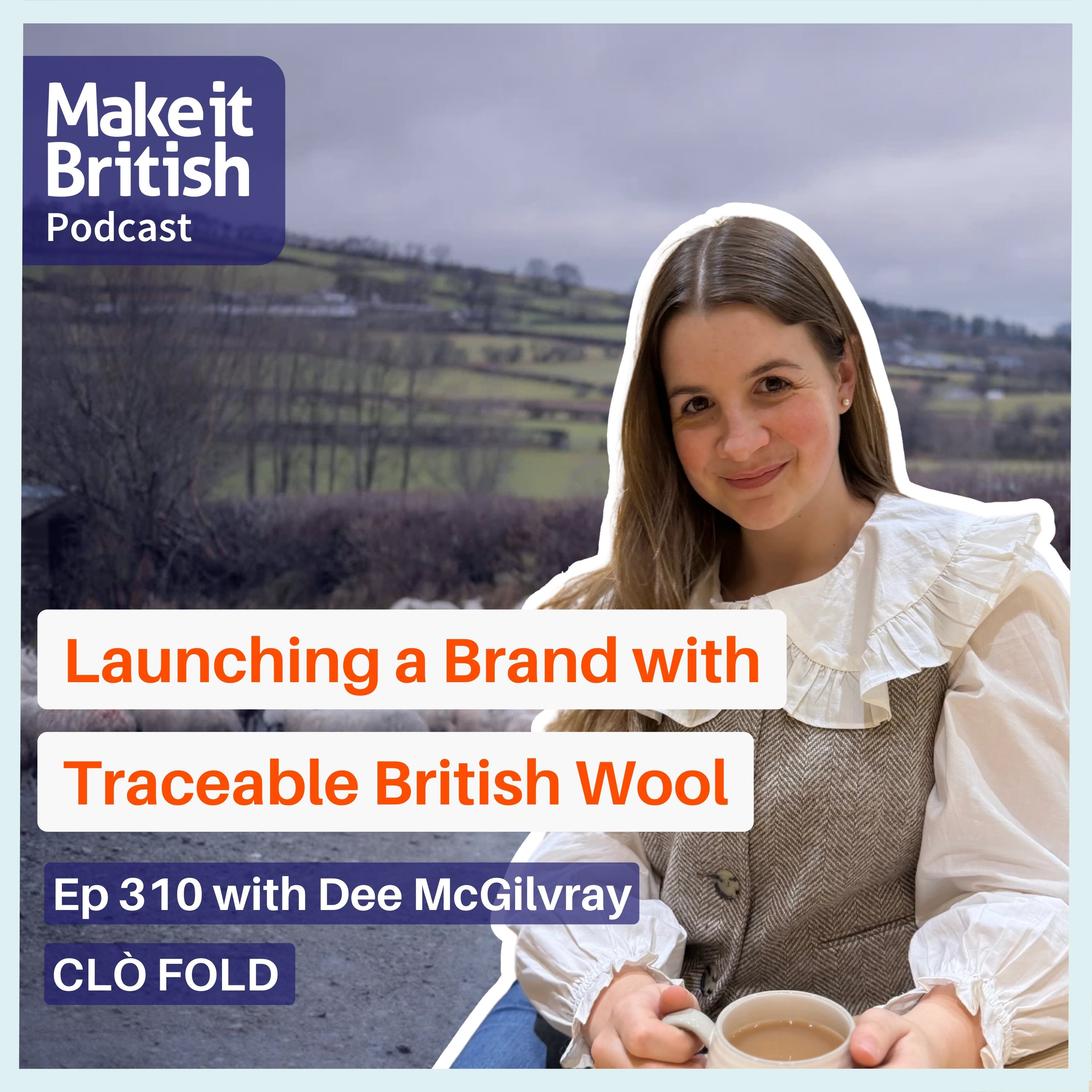
In this first episode of the Women in Wool series, I’m joined by Dee McGilvray, founder of CLÒ FOLD.
Dee has launched a womenswear brand built entirely around 100 percent British traceable wool. In just five months, alongside a full time job, she has taken an idea rooted in farming and the British countryside and turned it into a finished product made entirely in the UK.
Her first piece is a wool gilet woven in Yorkshire using traceable wool sourced through British Wool. Every part of the supply chain, from farm to finished garment, has been kept in Britain.
This isn’t just a story about launching a fashion brand. It’s about supporting farmers, restoring value to British wool and building a genuinely local supply chain.
In this episode we cover:
Why so much British wool goes to waste and why farmers are often paid very little for it
How Dee built a fully traceable supply chain starting with British Wool
What traceable wool actually means and how customers can scan a QR code to see which farms their garment came from
Working with UK mills, manufacturers and suppliers
Why launching with one product was a smart move
The reality of starting a brand quickly and testing demand in small batches
Why wool is one of the most underrated fibres in British fashion
If you care about British farming, UK manufacturing and using fibres that actually grow on our hillsides, this episode will give you a practical look at how it can be done.
About CLÒ FOLD
CLÒ FOLD is a British womenswear brand built on the principle of land led living. Every garment is made using traceable British wool, with full transparency from farm to finished product.
You can find Dee and CLÒ FOLD at:
Website: www.clofold.com
Instagram: @clofold
Make sure you join her mailing list to hear about upcoming launches including traceable British wool welly socks and future outerwear pieces.
🚀 Ready to scale your UK-made brand? Apply for the British Brand Accelerator at makeitbritish.co.uk/apply
Follow Kate @makeitbritish on Instagram
27 minAbspielen in:
Gäste, die länger als 12 Monate zurückliegen, gibt es mit Pro. Pläne ansehen

 MV