The biggest biology podcast for the biggest science and biology fans. Featuring in-depth discussions with scientists tackling the biggest questions in evolution, genetics, ecology, climate, neuroscience, diseases, the origins of life, psychology and more. If it's biological, groundbreaking, philosophical or…
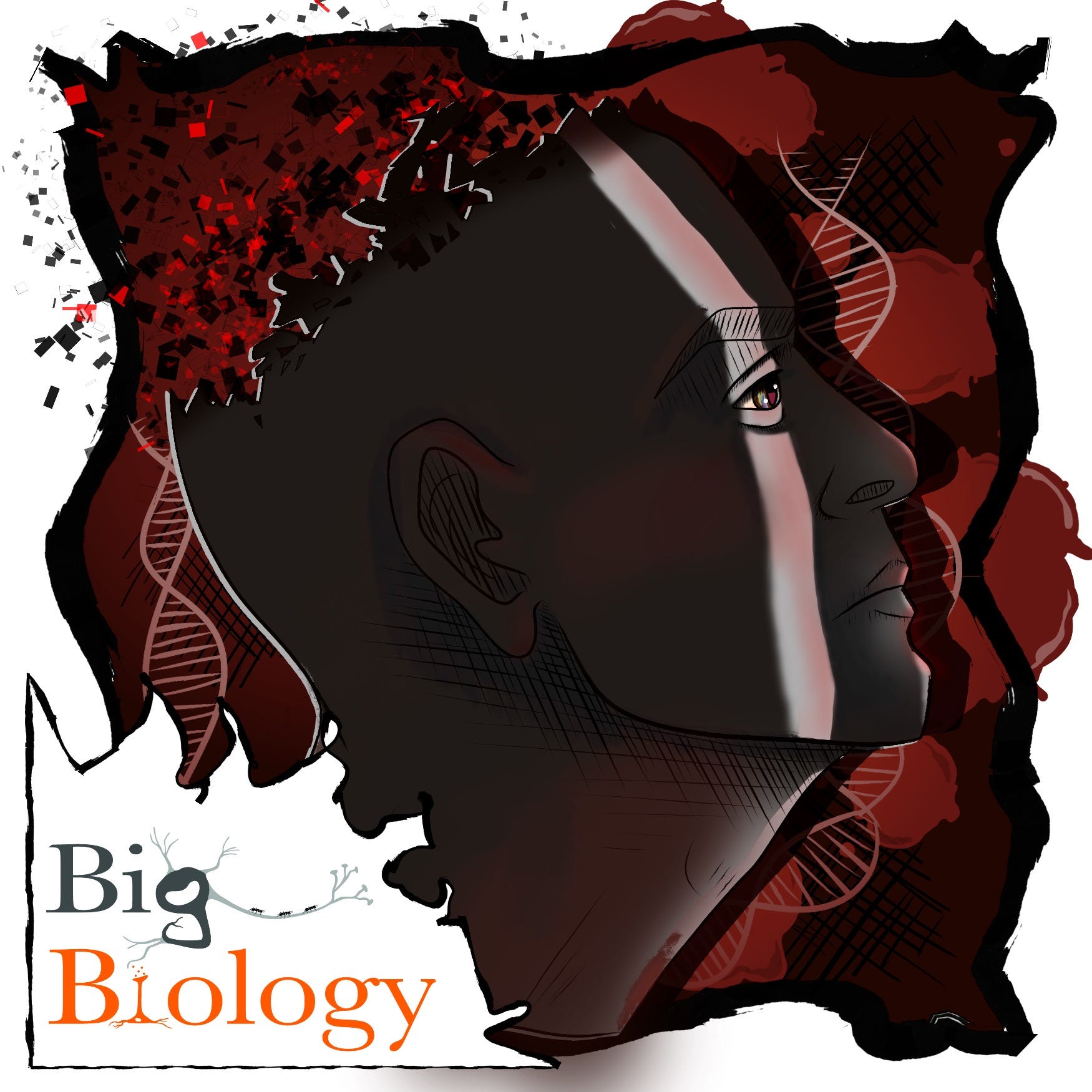
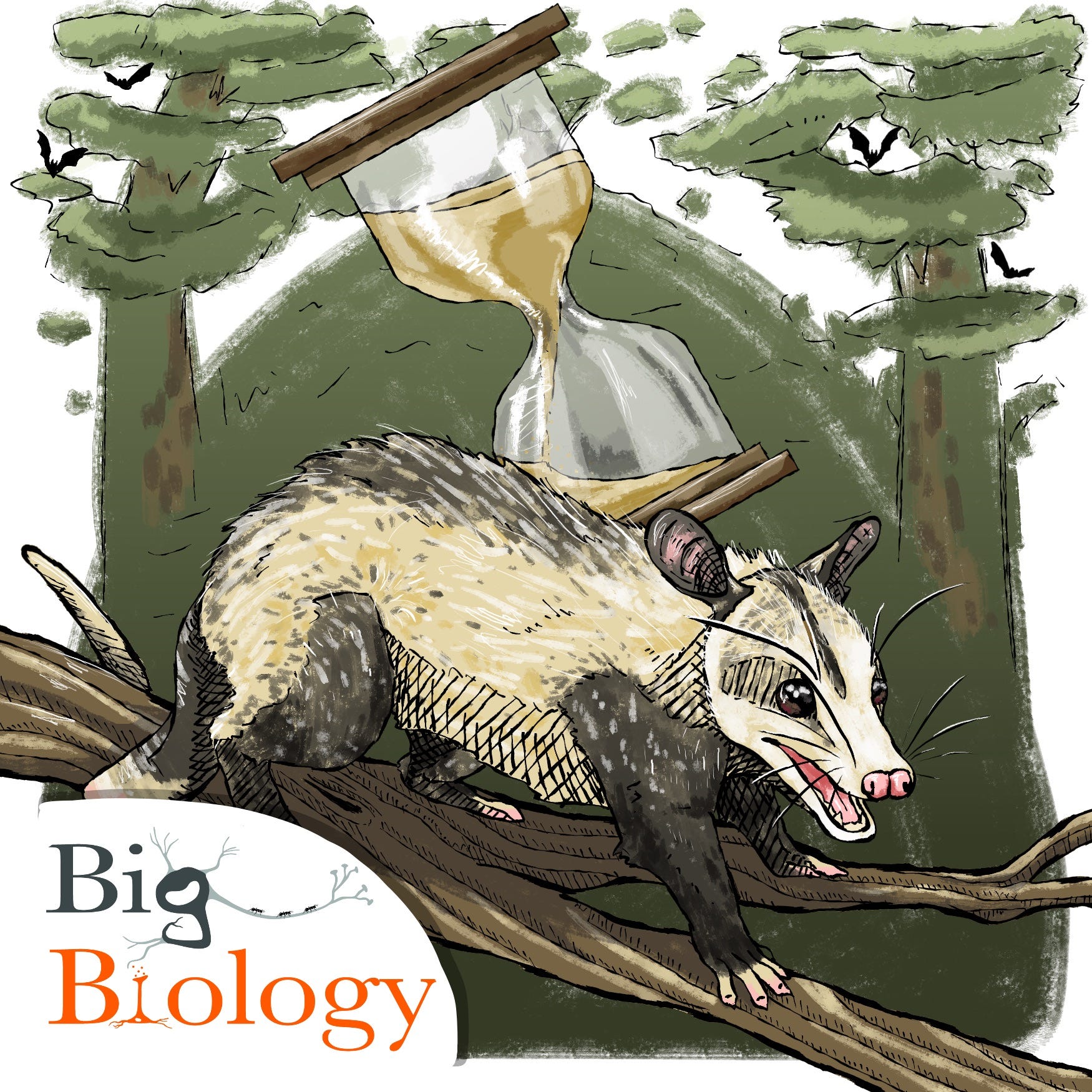
Why do we age? What can long-lived animals teach us about healthy aging? Can treatments extend life without costly trade-offs?
In this episode, we talk with Steve Austad, a distinguished professor and chair in the Department of Biology at the University of Alabama at Birmingham. After a winding career path that included lion training, Steve found his way to biology research and the study of aging. We talk with Steve about his early work in opossums, adaptations that allow species to be long-lived, and which treatments humans might use to extend our lifespan.
Cover art by Brianna Longo.
This is a public episode. If you'd like to discuss this with other subscribers or get access to bonus episodes, visit bigbiology.substack.com/subscribe
How can organismal choices drive adaptive evolution? Can plasticity act as a kind of selection?
In this episode, we talk with Pim Edelaar, a professor in the Department of Molecular Biology and Biochemical Engineering at the University Pablo de Olavide, Spain. He’s also the author of the new book The Selective Organism: An Expanded Theory of Adaptive Evolution. In the book, Pim proposes that in addition to natural selection there might be a “second driver” of adaptive evolution. We discuss the book with Pim, explore how non-genetic inheritance and plasticity underpin the theory, and talk about what implications this expanded perspective has for research. If after listening to the episode you’re interested in reading The Selective Organism, the digital version is free to download.
Cover art by Brianna Longo.
This is a public episode. If you'd like to discuss this with other subscribers or get access to bonus episodes, visit bigbiology.substack.com/subscribe
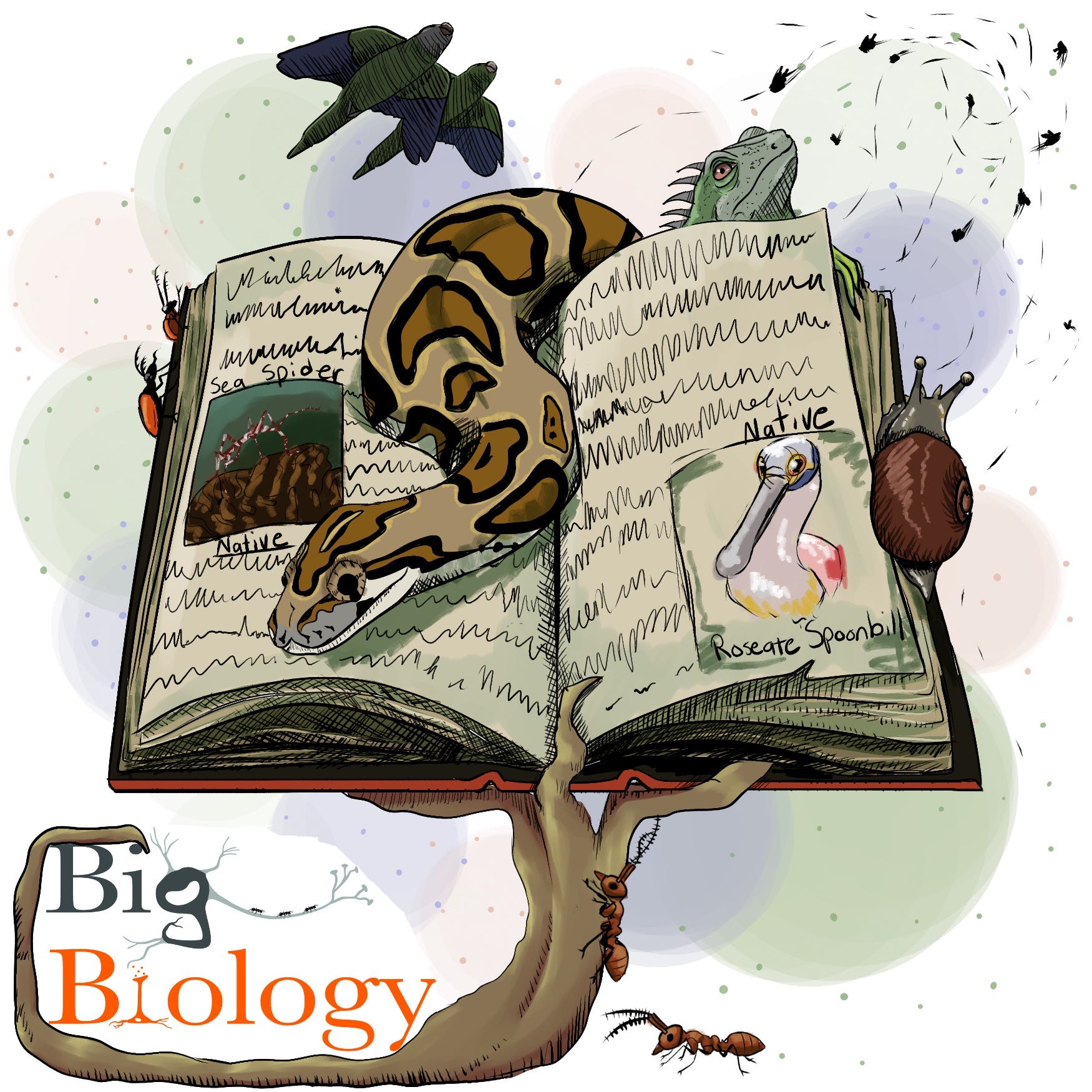
How do you find an invasive species that no net can catch? What happens to the scientist whose research samples end up in federal court?
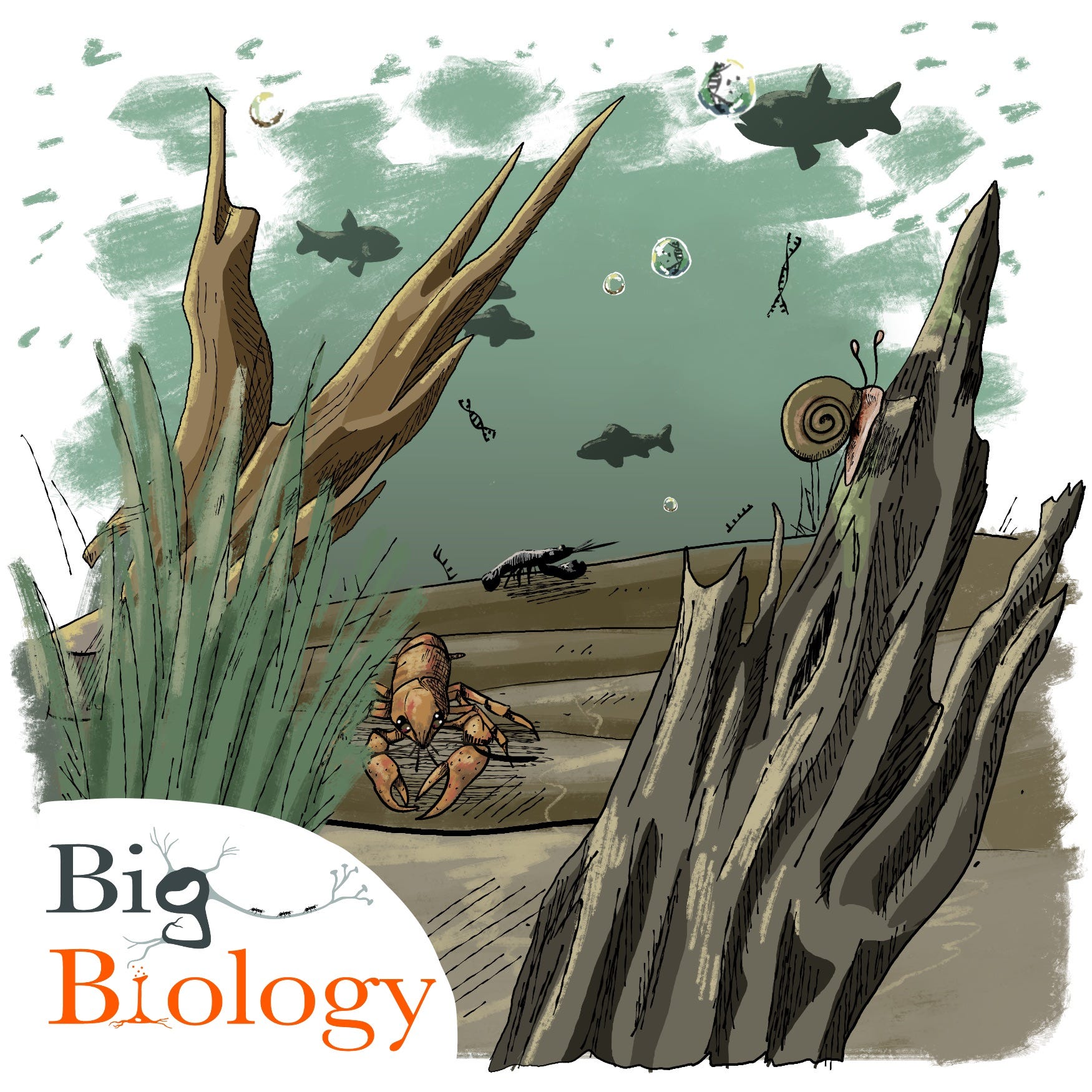
In this episode, we talk with David Lodge, a freshwater ecologist at Cornell University and past president of the Ecological Society of America. In 2009, David’s lab detected invasive carp from DNA in bottles of Illinois River water, including above the electric barrier meant to keep the carp out of the Great Lakes. That result helped found the field of environmental DNA, and it brought congressional testimony, a Supreme Court filing, and five hours of unfriendly questioning on the witness stand. Drawing on David’s recent retrospective in the journal Environmental DNA, we follow the science from a cup of water to the courtroom, visit the Wisconsin lakes where the invasive crayfish he has watched for more than forty years are now collapsing on their own, perhaps driven by a parasite new to science, and ask what it takes for science to inform policy without pretending to drive it.
Cover art by Brianna Longo.
This is a public episode. If you'd like to discuss this with other subscribers or get access to bonus episodes, visit bigbiology.substack.com/subscribe
How have flowers shaped the modern world? Why do we and many other species have such intimate and long-term relationships with them?
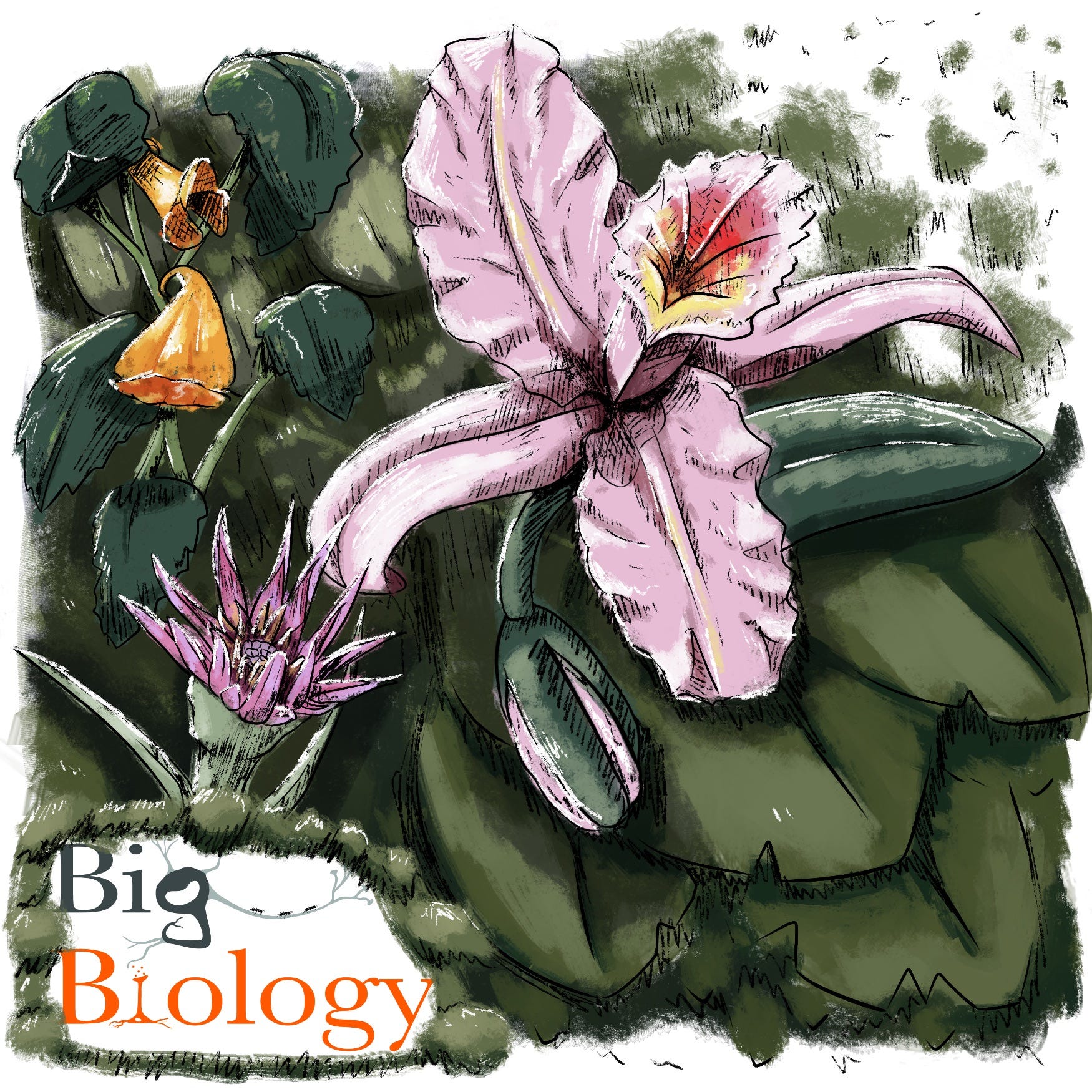
On this special episode, we talk with David George Haskell, a writer and biologist. We discuss his most recent book, How Flowers Made our World, which explores the creative powers of flowering plants. Big Biology blogger and Biology PhD student, Clayton Glasgow, interviews David as an outreach project for the Young Voices of Science program. They discuss how flowers have played key roles in many ecosystems, the genomic innovations that underpinned the success of flowering plants, and the significant relationship between humans and flowers.
Cover art by Brianna Longo.
This is a public episode. If you'd like to discuss this with other subscribers or get access to bonus episodes, visit bigbiology.substack.com/subscribe
When a bee visits a flower, what decides the match? How can a neutral model explain community assemblages? Why are long-term ecological studies so important?
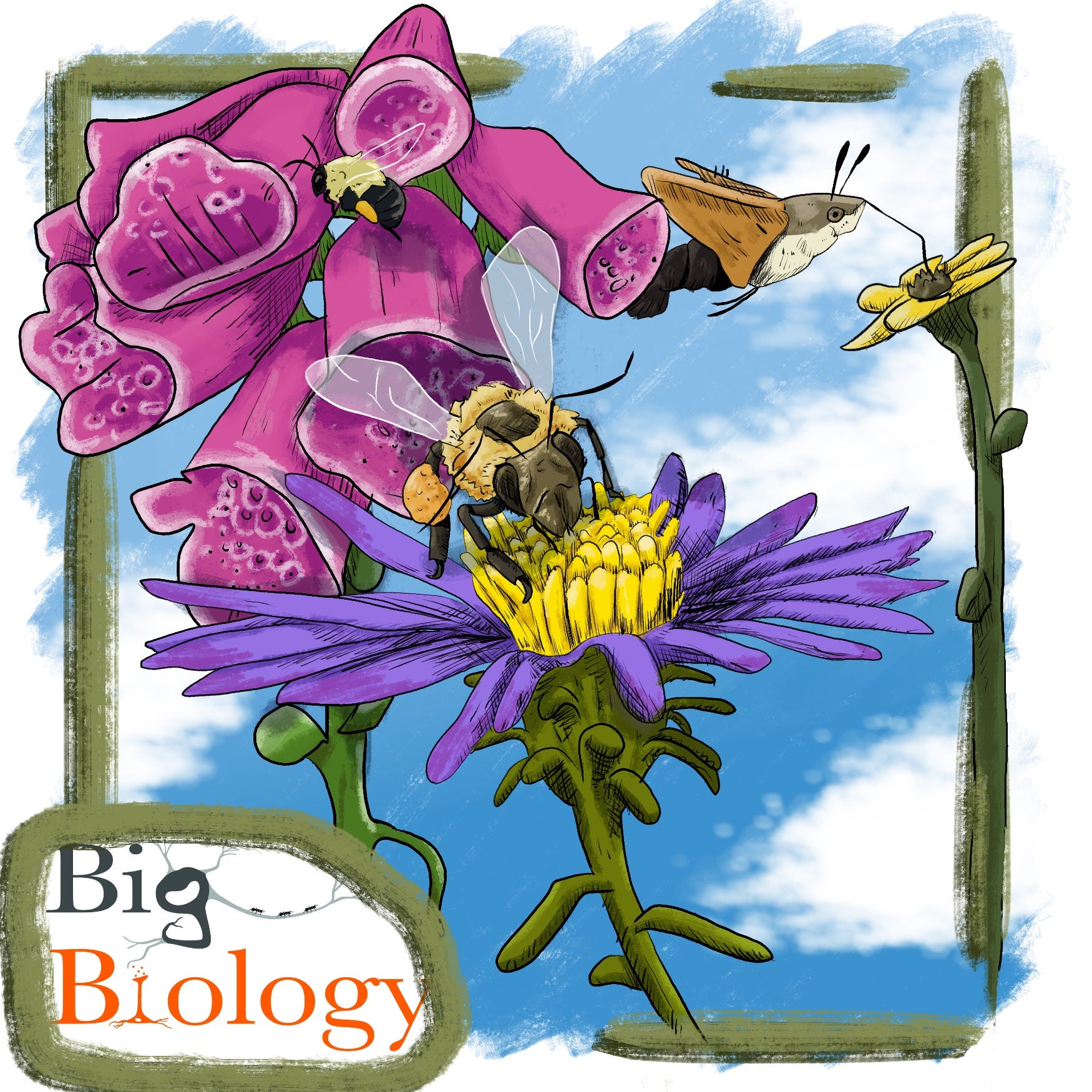
In this episode, we talk with Diego Vázquez, a community ecologist at CONICET in Mendoza, Argentina, who has spent his career mapping the networks of interaction between plants and pollinators. Textbooks still teach coevolution as tight, faithful pairs, but Diego’s work tells a different story, that specialists mostly interact with generalists, and the best predictor of pollinator visits to plants turns out to be not matching traits or shared ancestry but abundance. Much of the structure ecologists prize in these networks can emerge from “neutral” models that know only who is common and when. We dig into why predicting these interactions remains hard, what his twenty-years of data on declining solitary bees is showing, and what it takes to keep long-term ecology alive in Argentina after deep cuts to science funding.
Cover art by Brianna Longo
This is a public episode. If you'd like to discuss this with other subscribers or get access to bonus episodes, visit bigbiology.substack.com/subscribe
This is a free preview of a paid episode. To hear more, visit bigbiology.substack.com
What have so many influential scientists been at some time been ridiculed and disbelieved by their peers or institutions? What reforms could foster bolder and more innovative science?
In this episode we talk with Matt Kaplan, a science correspondent at The Economist and author, about his most recent book I Told You So! Scientists Who Were Ridiculed, Exil…
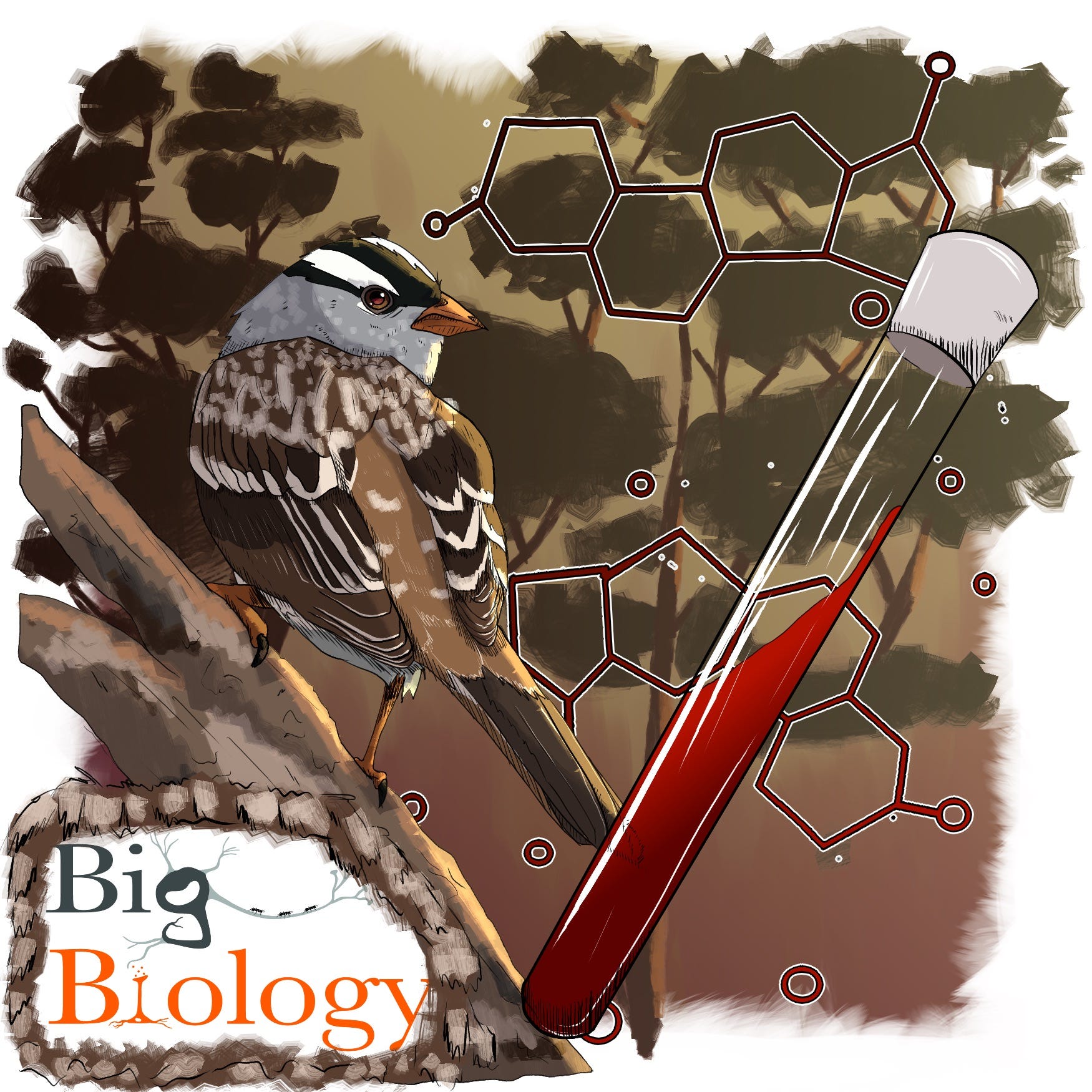
How do hormones help animals cope with stress, seasons, and climate change? What is allostasis?
In this episode, our guest is John Wingfield, Emeritus Professor of Physiology and Behavior, at the University of California, Davis. John helped develop many fundamental hypotheses in the field of endocrinology through his work on wild bird populations, in particular the white-crowned sparrow. Fran Bonier, a former PhD student of John’s and now Professor of Biology at Queen’s University in Kingston, Ontario, also joined us for the chat.
We talk with John about how he got interested in understanding wildlife endocrinology, and discuss how he helped formulate the “challenge hypothesis”, “emergency life history hypothesis”, and the concept of “allostasis”. And at the end, John gives some advice to early career researchers, based on his experience as the head of the Biology Directorate at the National Science Foundation.
Cover art by Brianna Longo.
This is a public episode. If you'd like to discuss this with other subscribers or get access to bonus episodes, visit bigbiology.substack.com/subscribe
This is a free preview of a paid episode. To hear more, visit bigbiology.substack.com
How do you experimentally test theories of island biogeography? Who were the Tallahassee Mafia? Why do some introduced species become invasive and reshape ecosystems?
On this episode, we bring you a live recorded conversation we had with Daniel (Dan) Simberloff at the Laurel Theater in Knoxville, Tennessee. Dan Simberloff is the Nancy Gore Hunger Chair o…
This is a free preview of a paid episode. To hear more, visit bigbiology.substack.com
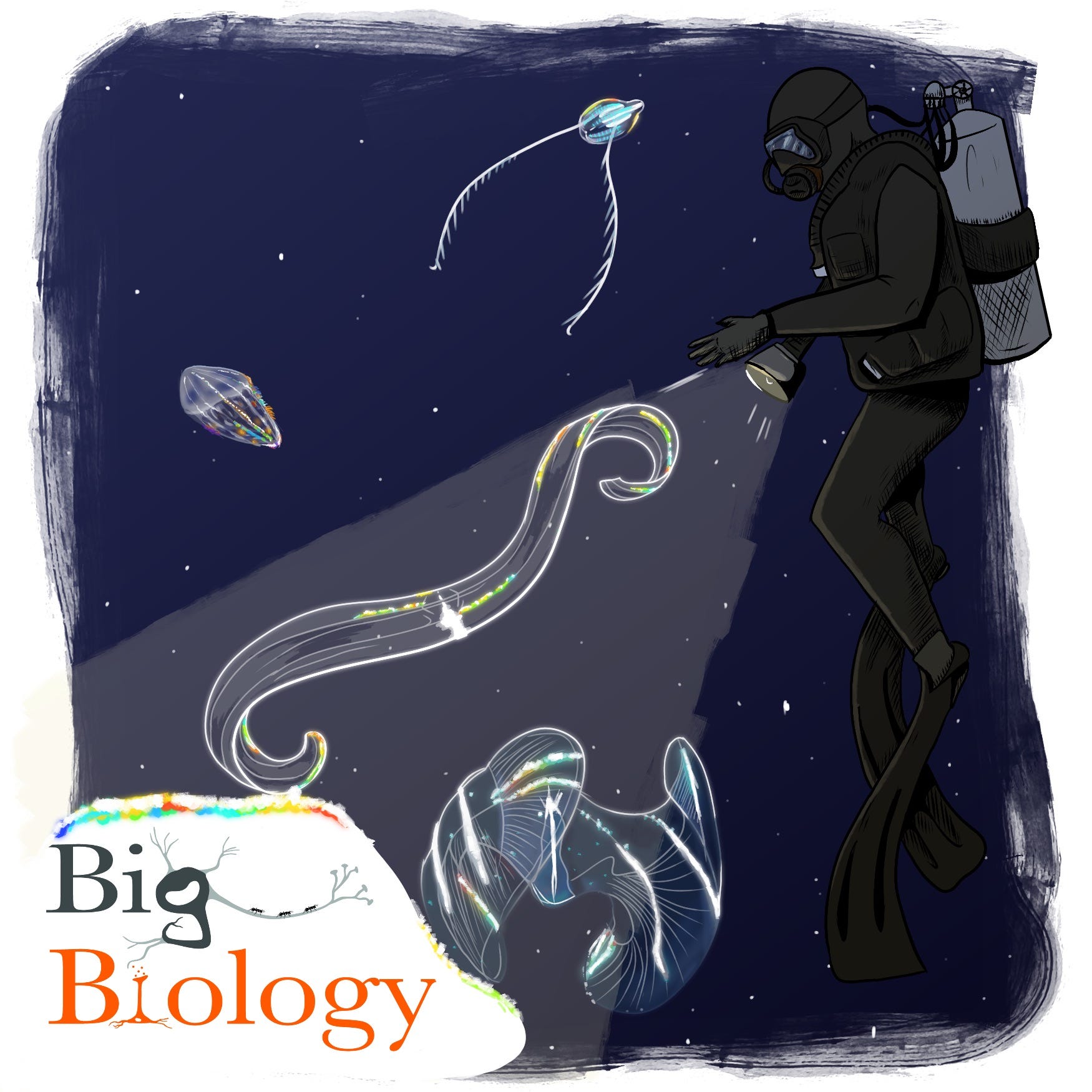
How is climate change affecting the movements of small predators in the sea? How do diatoms affect ocean carbon cycling? How do Cassiopea jellyfish act like ecosystem engineers?
On this episode, we bring you a live conversation from the recent University of South Florida Climate Teach-In where Marty interviewed his colleague, Associate Professor from the…
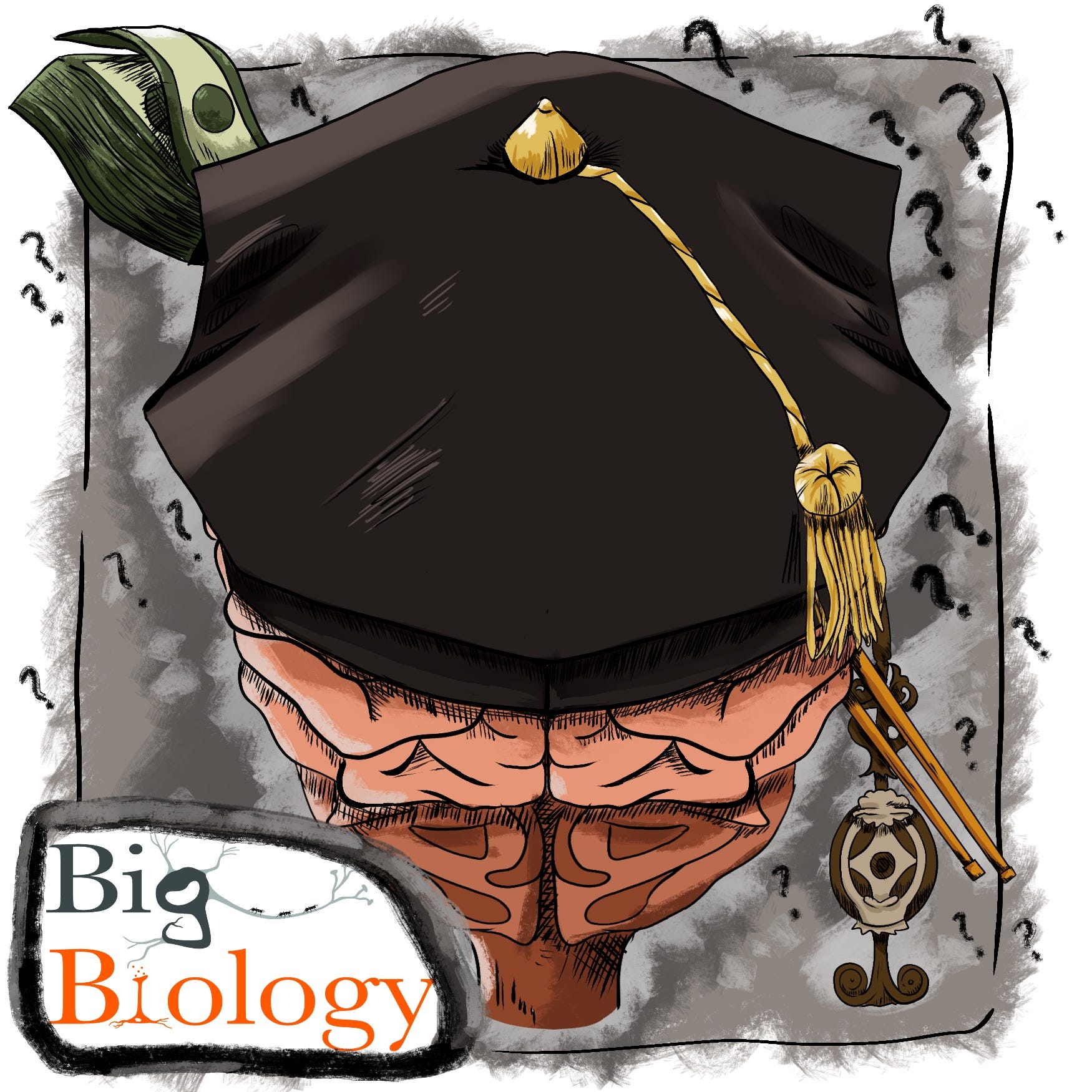
What role do genes play in complex human behaviors? If behavior is largely shaped by a combination of experience and luck, how should we rethink blame, punishment, and forgiveness?
In this episode, we talk with Kathryn Paige Harden, a Professor of Psychology at the University of Texas at Austin, where she leads the Developmental Behavior Genetics lab and teaches Introduction to Psychology. Paige is also the author of the recent book Original Sin: On The Genetics of Vice, The Problem of Blame, and The Future of Forgiveness. We talk with Paige about her book, which explores long-standing questions about what role genes play in moral and ethical human behavior. She says that whereas genetic variation does cause differences in behavior, such effects are rarely simple and direct.
If you like this episode, check out our other episode with Paige about her first book The Genetic Lottery: Why DNA Matters for Social Equality.
Cover art by Brianna Longo.
This is a public episode. If you'd like to discuss this with other subscribers or get access to bonus episodes, visit bigbiology.substack.com/subscribe
How can neuroscience be more naturalistic? Will lessons from behavioral ecology and evolution have value?
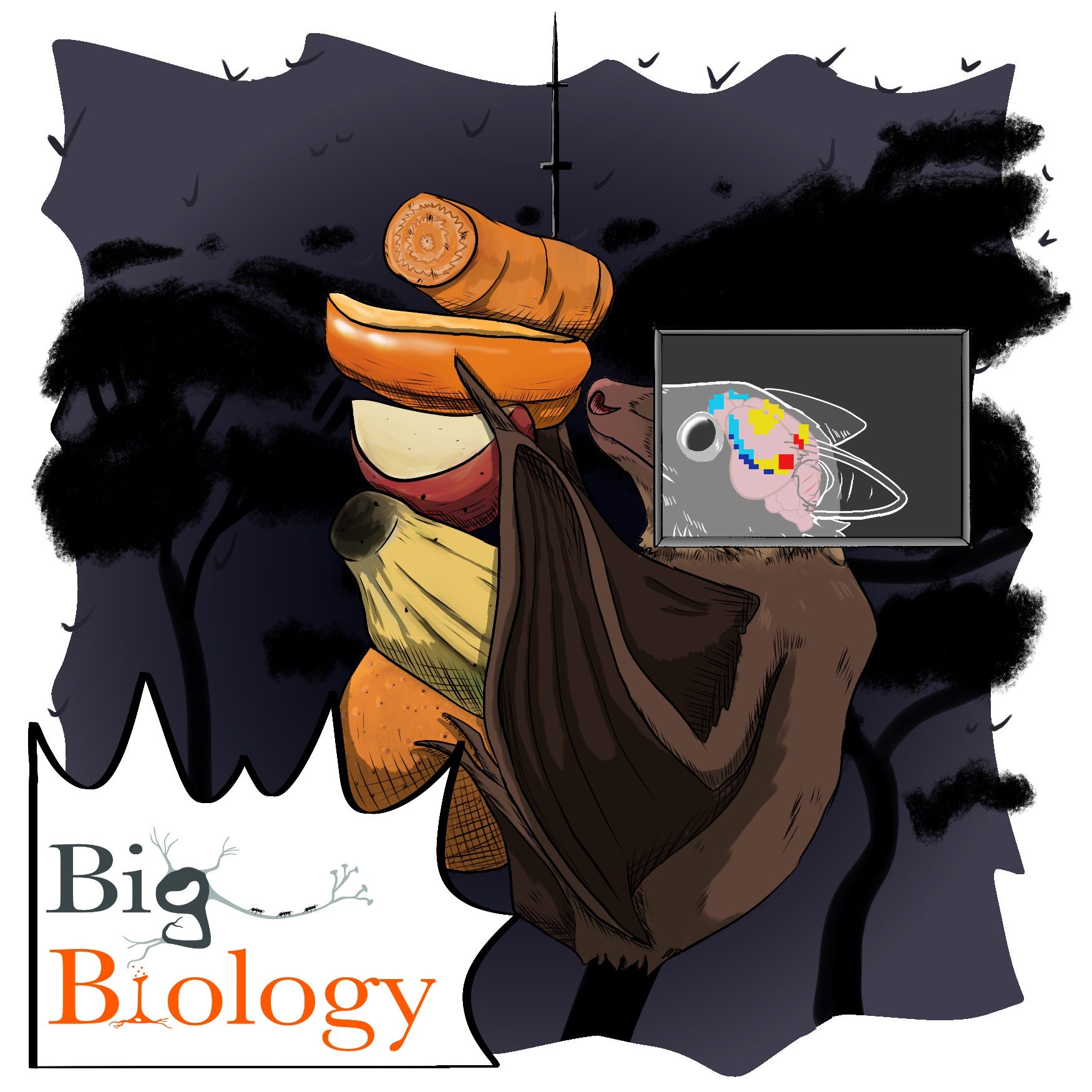
In this episode, we talk with Nachum Ulanovsky, Professor of Neuroscience and Head of the Zuckerman Center for Learning, Memory & Cognition at the Weizmann Institute of Science and author of the book Natural Neuroscience: Toward a Systems Neuroscience of Natural Behaviors. We talk with Nachum about his book, which makes the case that if we want to understand the brain and its effects on behavior, we have to do better about studying it ina natural environment. He also talks about new technologies and cross-disciplinary perspectives that could provide better insight into basic brain function but also new ideas for how to treat or manage neurobehavioral diseases.
Cover art by Brianna Longo
This is a public episode. If you'd like to discuss this with other subscribers or get access to bonus episodes, visit bigbiology.substack.com/subscribe
What are eco‑evolutionary dynamics and how can we study them in the wild? Why do some fish evolve placentas?
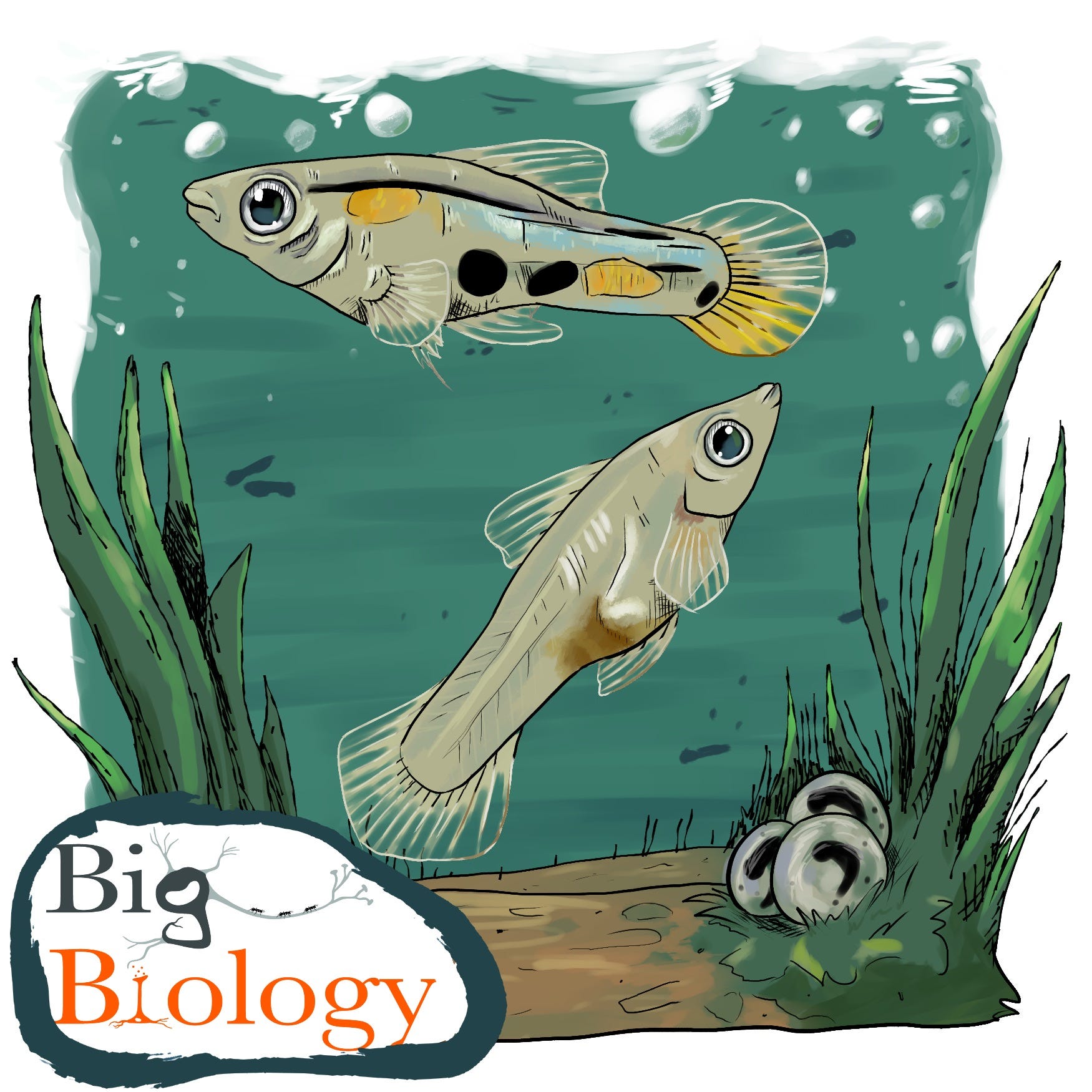
In this episode, we talk with David Reznick, Distinguished Professor of Biology at the University of California, Riverside. David has spent much of his career studying Trinidadian guppies to understand adaptation in the wild. In our conversation, we discuss this work with David and in particular how his research provided evidence for rapid life history evolution. We also talk with him about his recent research into placental evolution in live-bearing fish.
Episode art by Brianna Longo.
This is a public episode. If you'd like to discuss this with other subscribers or get access to bonus episodes, visit bigbiology.substack.com/subscribe
How are camera traps used in the conservation of cryptic species such as the African golden cat? How can local communities be engaged to foster the success of conservation?
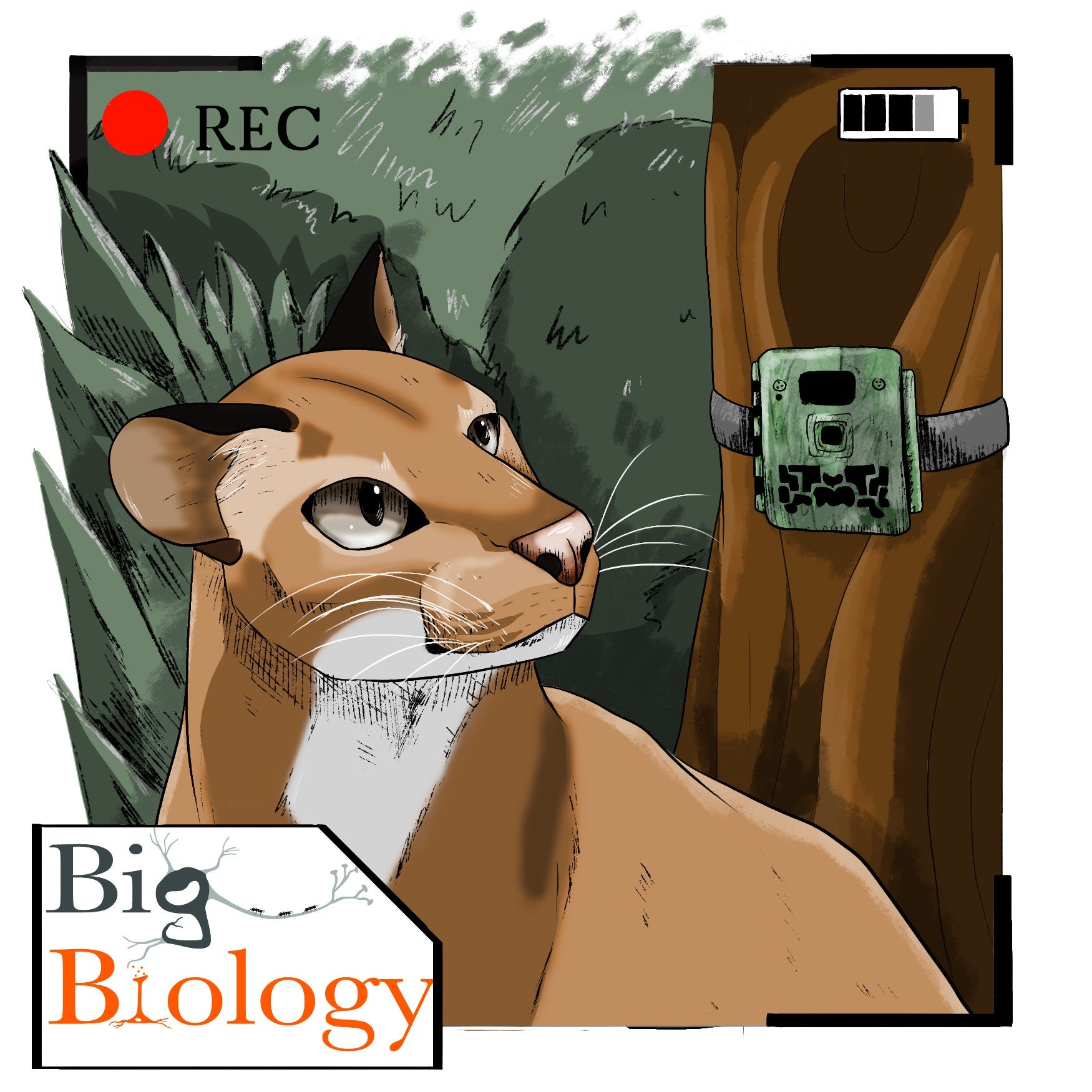
In this episode, we talk with Mwezi Mugerwa, winner of the 2025 Indianapolis Prize Emerging Conservationist, a National Geographic Explorer, and President of the Society for Conservation Biology. Our conversation focuses on how he and his team at Bwindi Impenetrable National Park use a network of camera traps to study the African golden cat, Africa’s rarest wild cat. We also discuss some of the community-led conservation projects that Mwezi has been involved including Embaka, which inspires local support for African golden cat conservation.
Cover art by Brianna Longo.
This is a public episode. If you'd like to discuss this with other subscribers or get access to bonus episodes, visit bigbiology.substack.com/subscribe
How did life originate on Earth? Why is it that eukaryotes but not bacteria or archaea evolved large size and complicated body forms? How likely is that life has arisen independently elsewhere in the universe?
On this episode, we talk with Nick Lane, a biochemist and professor at University College London, about his 2015 book The Vital Question. Nick argues that protolife arose in alkaline hydrothermal vents deep in the early Earth’s oceans. The key early event was the evolution of metabolism powered by proton gradients. In other words, metabolism came first, and all of the rest of traits we think of as universal to life -- DNA, RNA, proteins, transcription, and translation -- came later. He also invokes an energetic perspective on the origin of eukaryotes, arguing that the acquisition of mitochondria distributed energy production through the cell volume, provided vastly more energy per gene, and allowed the dramatic expansion of eukaryotic genomes that in turn support the astonishing diversity of eukaryotic forms we see today.
This episode was originally aired in October 2020.
This is a public episode. If you'd like to discuss this with other subscribers or get access to bonus episodes, visit bigbiology.substack.com/subscribe
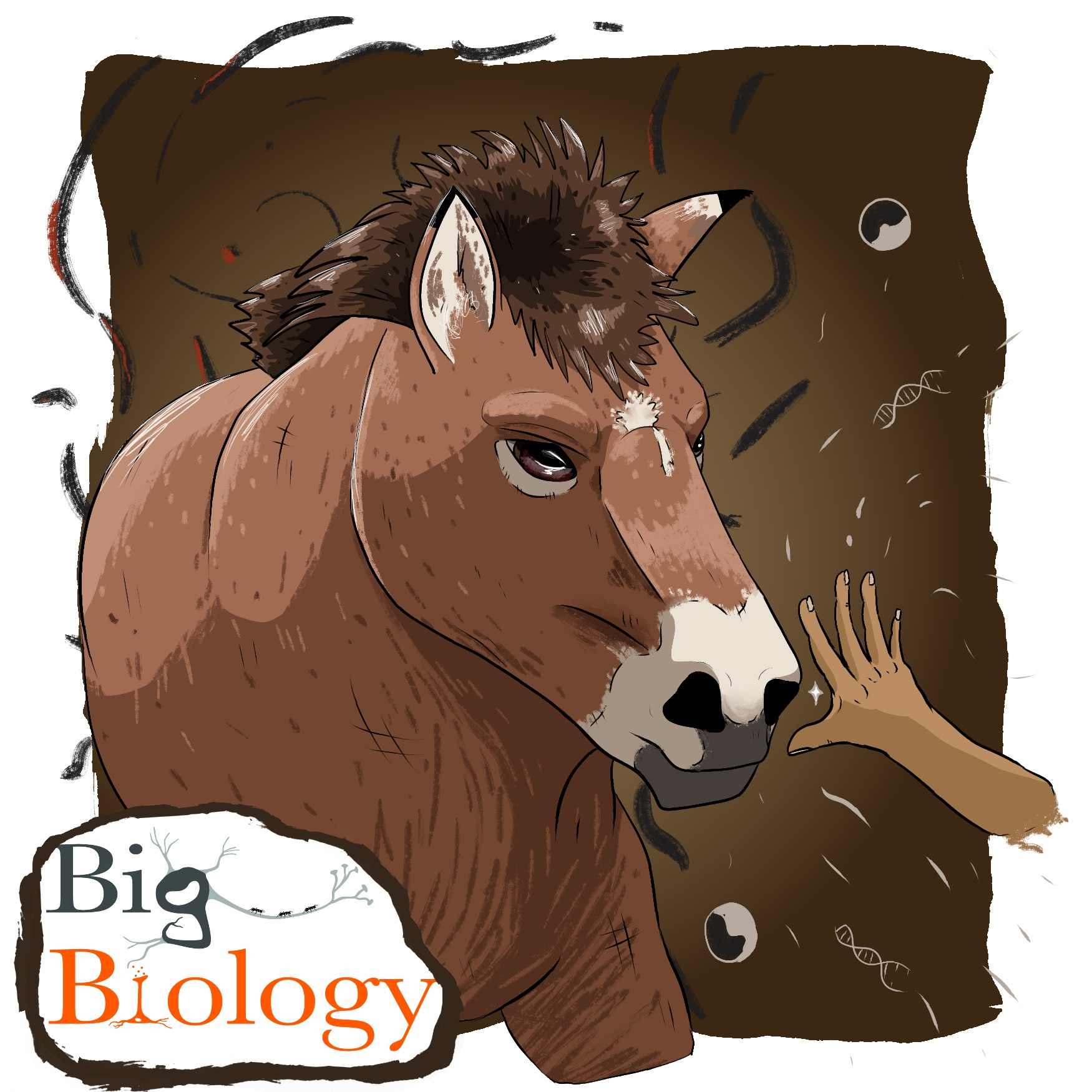
How and when did humans domesticate the horse? How did horses shape our language, culture, and history?
On this episode, we talk with Dr. Ludovic Orlando, a research director for the French National Center for Scientific Research and founding director of the Centre for Anthropobiology & Genomics of Toulouse. Ludovic is also the author of the new book Horses: A 4,000-Year Genetic Journey Across the World. We talk with Ludovic about when, where, and how horses were domesticated, with a particular emphasis on the role of genomics in those discoveries. We also discuss several famous horses and our entangled history with this amazing creature.
Cover art by Brianna Longo.
This is a public episode. If you'd like to discuss this with other subscribers or get access to bonus episodes, visit bigbiology.substack.com/subscribe
1 h 28 minAbspielen in:
Gäste, die länger als 12 Monate zurückliegen, gibt es mit Pro. Pläne ansehen

 SA