From ghost stories to alien encounters to medical mysteries, every culture holds some belief in the paranormal. But why do so many of us believe in things that science can’t explain? On Beyond the Human, join two anthropologists as we explore the mysteries that unite us – strange experiences, supernatural beliefs…
What if Bigfoot isn't simply an undiscovered animal?
On this episode of Beyond the Human, we're joined by Tim Renner, host of Strange Familiars and co-author of Where the Footprints End: High Strangeness and the Bigfoot Phenomenon, to explore the possibility that Sasquatch encounters may involve something far stranger than an unknown primate.
Renner takes us through his own journey into paranormal research and explains how his understanding of Sasquatch evolved toward a high-strangeness interpretation. We discuss the possibility that something could simultaneously leave physical evidence and exhibit seemingly ethereal characteristics— and why that possibility can be so difficult for both skeptics and flesh-and-blood researchers to reconcile.
We also explore one of the strangest elements of the Sasquatch phenomenon: the “Men in Plaid,” mysterious figures described in connection with some Bigfoot encounters and reminiscent of the infamous Men in Black associated with UFO experiences. What are these figures, why do some experiencers describe encounters with them as threatening or intimidating, and what might their presence tell us about the broader phenomenon?
Finally, we tackle the ongoing divide between biological and supernatural interpretations of Bigfoot, including accusations of cherry-picking evidence, the strengths and weaknesses of the flesh-and-blood hypothesis, and whether either side can genuinely account for the full range of reported experiences.
If Bigfoot is real, what kind of phenomenon are we actually dealing with?
Show Notes:
https://www.strangefamiliars.com/
Tim's Etsy shop
The Keystone Hagstone: Faeries and Other Mysterious Entities of Pennsylvania
What happened in Cape Girardeau, Missouri, in April 1941 more than six years before the infamous Roswell incident?
On this special episode of Beyond the Human, we’re joined by author Paul Blake Smith, whose new book The UFO Bombshell Before Roswell: Missouri’s 1941 Crash and Coverup explores one of the lesser-known alleged UFO crash stories in American history.
Smith takes us through the crash, the evidence he uncovered while researching the case, and why he believes the incident deserves a place in the larger history of UFO crashes and government secrecy. We discuss the unusual circumstances surrounding the reported crash, the potential involvement of local and military figures, and why this incident has produced far fewer whistleblowers and deathbed revelations than cases like Roswell.
We also explore Smith’s research into Franklin D. Roosevelt’s activities around the time of the crash and his theories about possible Masonic connections to the events and subsequent cover-up. Finally, we look beyond Missouri to the alleged 1933 Magenta UFO crash in Italy, including claims about Vatican knowledge of the incident and its possible connection to the MO41 story.
What can the Cape Girardeau case, and the stories that have grown around it, tell us about the history of UFO crash narratives, secrecy, and the ongoing search for answers about UAPs?
Show Notes
Paul Blake Smith's website
Buy The UFO Bombshell Before Roswell
What can years of systematic field research actually tell us about Sasquatch?
In this episode of Beyond the Human, we’re joined by Michael Mayes, author of Valley of the Apes: The Search for Sasquatch in Area X and Shadow Cats: The Black Panthers of North America, and former Chairman of the Board of Directors for the North American Wood Ape Conservancy (NAWAC).
As the second interview in our cryptohominid series, Mayes takes us deeper into the evidence emerging from NAWAC's long-term research in Area X. Drawing on the experiences documented in Valley of the Apes, we explore why encounters appear to increase with time spent in the field and what researchers can learn by developing a detailed understanding of an environment and the animals that inhabit it.
We take a closer look at some of NAWAC's most intriguing findings, including Tag 7 and the remarkable range associated with the animal, as well as the group's efforts to document and communicate its research. Mayes also discusses the challenges of publishing research on a subject that remains controversial within mainstream science.
We also turn to the larger questions raised by the research: what would constitute convincing evidence for a biological cryptohominid, and how should researchers respond when years of fieldwork produce compelling observations but no physical specimen?
Finally, we discuss the reception of Valley of the Apes, the divide between academic and popular paranormal research, and what it might take to build a more productive relationship between the two.
From long-term fieldwork and animal behavior to the limits of evidence and the challenges of studying controversial phenomena, this conversation asks a deceptively simple question: after years of looking, what do we actually know about Sasquatch?
Show Notes:
Michael Mayes' website
Valley of the Apes: The hunt for Sasquatch in Area X
Shadow Cats: The Black Panthers of North America
North American Wood Ape Conservancy
What happens when researchers try to bring scientific rigor to one of the most controversial areas of paranormal research?
In this episode of Beyond the Human, we’re joined by James Waldo, a member of the North American Wood Ape Conservancy (NAWAC) and a podcaster with Seven Ages Research Associates, for an in-depth conversation about the search for Sasquatch and other cryptohominids.
Waldo discusses how he first became interested in cryptozoology and eventually became involved with NAWAC, including what the organization is, who participates in its research, and what it’s actually like to take part in an operation in the field.
We also explore how NAWAC’s goals have evolved over the course of its research, from its original objective of obtaining a wood ape specimen to its current projects and investigations. Waldo shares some of the Conservancy’s most significant findings from Area X and elsewhere, as well as the reactions their work has received from academic researchers, paranormal enthusiasts, and the broader public.
In one of the most compelling parts of the conversation, Waldo reflects on his own experiences researching Sasquatch and addresses one of the central debates within cryptohominid research: if these creatures are biological organisms, why hasn't a specimen been recovered?
Finally, we discuss a question at the heart of Beyond the Human: how can we bridge the divide between academic researchers and the popular researchers who investigate the paranormal outside of traditional institutions? And what would it take to create a more rigorous, productive conversation between the two?
From field research and cryptozoology to anthropology, science, and the boundaries of paranormal research, this conversation explores what it means to seriously investigate a phenomenon that remains deeply contested—and what researchers can learn from one another along the way.
Show Notes:
North American Wood Ape Conservancy
Seven Ages Research Associates
What happens when lived religious experience challenges how we define the paranormal?
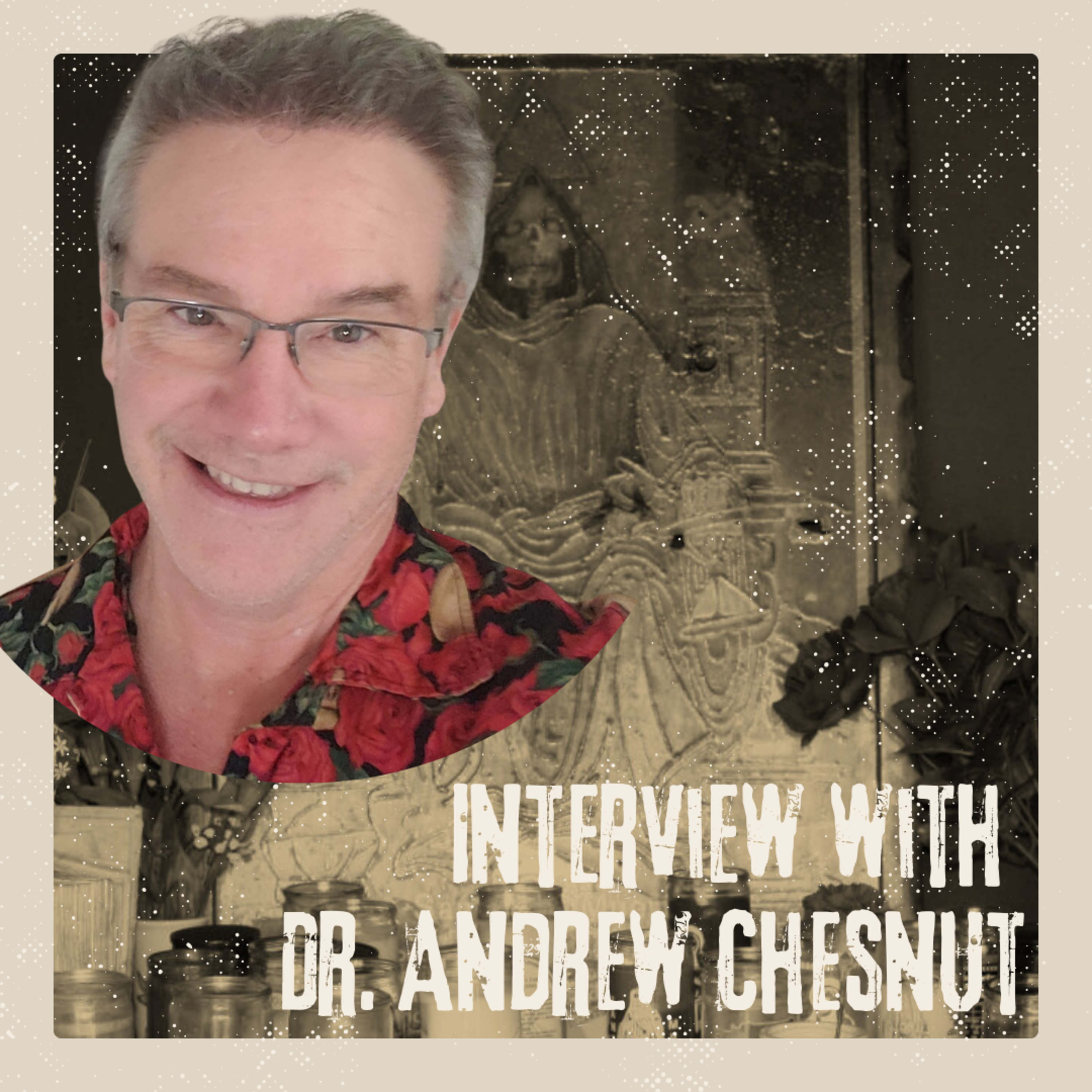
In this episode of Beyond the Human, we’re joined by Andrew Chesnut, one of the leading scholars on Santa Muerte, for an in-depth conversation on devotion, healing, and the realities behind one of the fastest-growing religious movements in the world.
Building on our previous episode, we go beyond history and symbolism to explore lived experiences of devotion to Santa Muerte through the voices, practices, and reported miracles of her devotees.
Drawing on his book Devoted to Death, Dr. Chesnut discusses how Santa Muerte devotion has evolved since he began his research in 2009, including its rapid growth in the United States, its spread beyond Hispanic communities, and its place within broader political and cultural conversations around immigration and identity.
We also explore Santa Muerte's role in healing—examining how practitioners understand supernatural illness, protection, and healing in ways that often fall outside Western scientific frameworks.
In one of the most compelling parts of the conversation, Dr. Chesnut reflects on the reports of miracles among Santa Muertistas, from physical healing to protection in life-threatening situations, and why it’s essential for scholars to take these experiences seriously, even when they challenge conventional explanations
From anthropology and religious studies to the broader question of how we define the paranormal, this episode pushes the boundaries between belief, experience, and reality.
Topics discussed in this episode:
(0:35) - Welcoming Dr. Chesnut and the State of Santa Muerte Devotion
(18:00) - Santa Muerte as Healer
(24:39) - Gender and Santa Muerte
(35:32) - Santa Muerte and the Paranormal
(41:00) - Military and Law Enforcement Devotion
(43:56) - Studying Anomalous Phenomena
(47:21) - Dr. Chesnut's Upcoming Work
Show Notes:
Instagram - @drdeathanddivinity
Threads -@drdeathanddivinity
X - @AndrewChesnut1
Facebook - Andrew Chesnut
Devoted to Death, 3rd Edition
Campfire ambience: “Campfire at night soundscape (louder fire, quieter animals)” by SilverIllusionist, via Freesound (CC BY 4.0).
Music: “Backwoods BBQ” by Chris Haugen, via the YouTube Audio Library.
52 minAbspielen in:
Gäste, die länger als 12 Monate zurückliegen, gibt es mit Pro. Pläne ansehen