To make sense of the week’s hottest stories in business, economy, politics and markets, journalists from the Economic Times chat with reporters and industry leaders in this thrice-weekly (Tuesday, Thursday, Friday) podcast.
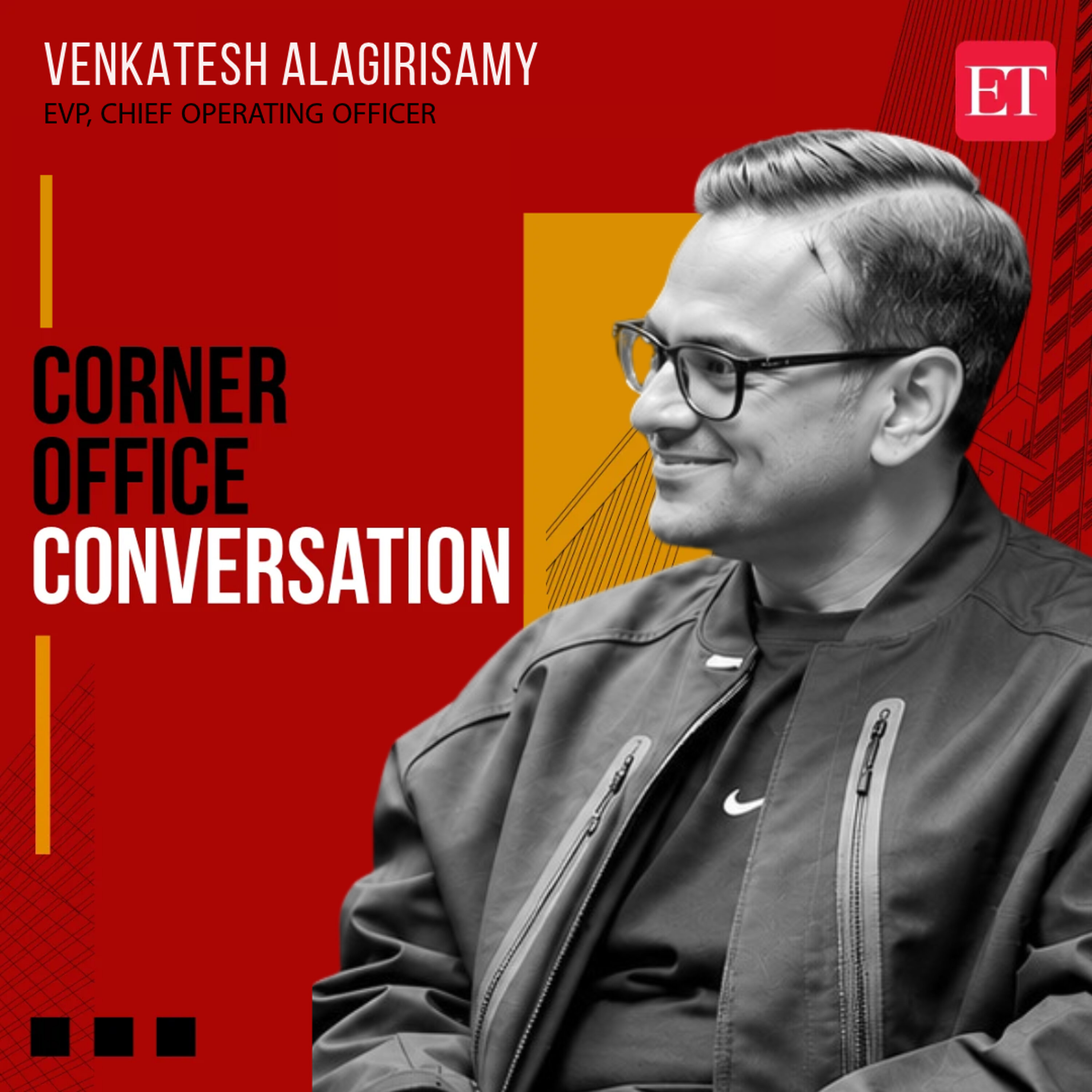
“I see the opportunity in India as being able to touch 1.5 billion consumers and growing,” says Venkatesh Alagirisamy, Executive Vice President and Chief Operating Officer at Nike.
India is now among Nike's 23 priority markets. With the Indian market valued at $9 billion, Nike expects it to grow by at least 10% annually over the next three years.
But how does Nike plan to tap this opportunity? Can it balance its premium positioning with the demands of a price-sensitive market? And what role will localisation and manufacturing in India play in its growth strategy?
In this Corner Office Conversation, Ratna Bhushan, National Corporate Editor at The Economic Times, speaks with Alagirisamy about Nike's growing focus on India, competition, pricing, its strategy to connect with Gen Z consumers, India-specific product innovation, manufacturing expansion and the country's role in Nike's global business.
See omnystudio.com/listener for privacy information.
India taxes cryptocurrency but has yet to establish a comprehensive framework governing its trade and use. Now, Enforcement Directorate investigations into CoinDCX and Delta Exchange have raised fundamental questions about how cryptocurrencies enter India. Meanwhile, crypto futures offer leverage of up to 100 times, and digital assets are quietly finding their way into everyday payments through cards and UPI QR codes.
Anirban Chowdhury speaks to ET's Sugata Ghosh about the regulatory grey areas, the risks of crypto derivatives, potential tax loopholes and why India's policymakers remain behind the curve. Could the latest investigations threaten the future of crypto trading in India?
See omnystudio.com/listener for privacy information.
India's inflation has crossed the RBI's 6% tolerance ceiling. Food prices are climbing, household incomes are under pressure, and the central bank's response is under scrutiny. Has the RBI fallen behind the curve? Why does raising interest rates not necessarily make groceries cheaper? And who holds the central bank accountable when it misses its inflation target?
Host Anirban Chowdhury speaks to economist and Associate Professor of Economics, Indira Gandhi Institute of Development Research (IGIDR), Rajeswari Sengupta about the RBI's policy dilemmas, questionable inflation forecasts, contradictory interventions in financial markets, and the growing tension between inflation and economic growth. Most importantly, they examine why ordinary Indians deserve greater transparency from the institution tasked with protecting their purchasing power.
See omnystudio.com/listener for privacy information.
America voted blue. AI stocks bled red. And the world's biggest technology companies suddenly face a problem money alone cannot solve: public resistance. The US midterm elections have turned massive AI data centres into political battlegrounds, with voters protesting soaring electricity bills, water consumption and unchecked expansion. Could this derail America's AI ambitions and redirect billions in investment towards India? Or will China emerge stronger in the global AI race? Dia Rekhi speaks to Alex Tanenbaum, partner at Torys LLP about the political backlash threatening Silicon Valley's infrastructure boom, the risks confronting investors and India's opportunity to capitalise on the disruption.
Credits
Al Jazeera English
CNN-News18
India Today
NBC News
Our Rich Journey
12 News
Finance Stack
Nick Bencino Finance
Nick Bencino Markets
See omnystudio.com/listener for privacy information.
In 2010, scientists Catherine Alix-Panabières and Klaus Pantel coined the term “liquid biopsy”, which Nature later named one of the key cancer discoveries of the last 20 years. Their blood-based approach can detect cancer early, spare patients painful needle biopsies, help doctors choose the right therapy and flag when a treatment stops working. Professor Pantel says a $1,000 test could save around $10,000 in ineffective treatment. In this conversation with The Economic Times pharma editor Vikas Dandekar, they explain why adoption is still slow, how India can take a bigger role in global clinical trials, and how immunotherapy and AI could shape the future of cancer care. Listen in
See omnystudio.com/listener for privacy information.
India has become ChatGPT’s largest market by weekly active users. But can OpenAI turn that extraordinary reach into a sustainable business? In this conversation with The Economic Times’ tech editor Surabhi Agarwal, OpenAI India Managing Director Prabhjeet Singh discusses the shift from AI experimentation to enterprise adoption, the challenge of monetising Indian users, and the company’s growing investments in local infrastructure. He also addresses competition from technology giants, the rise of autonomous AI agents, ChatGPT advertising, cybersecurity risks and India’s push for AI sovereignty. As AI valuations soar, can real-world adoption justify the enormous investments being made?
Listen In
You can follow Anirban Chowdhury on his social media: X and Linkedin
Check out other interesting episodes like - Cognizant’s Surya Gummadi on How AI Can Deliver Returns, The Future of Insurance in India | Sarbvir Singh of PB Fintech, Groww’s ₹6,600 Cr Leap - Fintech’s Big Market Test Begins , OML CEO on the Creator Economy’s Next Wave & much more.
Catch the latest episode of ‘The Morning Brief’ on The Economic Times Online, Spotify, Apple Podcasts, JioSaavn, Amazon Music and Youtube.
See omnystudio.com/listener for privacy information.
India’s smartphone market is heading into Diwali on a sour note. Shipments fell sharply in the July–September quarter, with the sub-₹20,000 segment hit hardest. A global memory-chip crunch is raising costs, pushing up prices and forcing buyers to delay upgrades, settle for fewer features or choose refurbished phones. But does this slump signal a wider squeeze on household spending, or is it a supply shock tied to the race to build AI data centres? We examine what falling shipments reveal about affordability, consumption and India’s mobile growth, with Counterpoint Research’s Tarun Pathak and Bank of Baroda chief economist Madan Sabnavis.
See omnystudio.com/listener for privacy information.
What if you didn’t need a tech team, or any code, to build software?
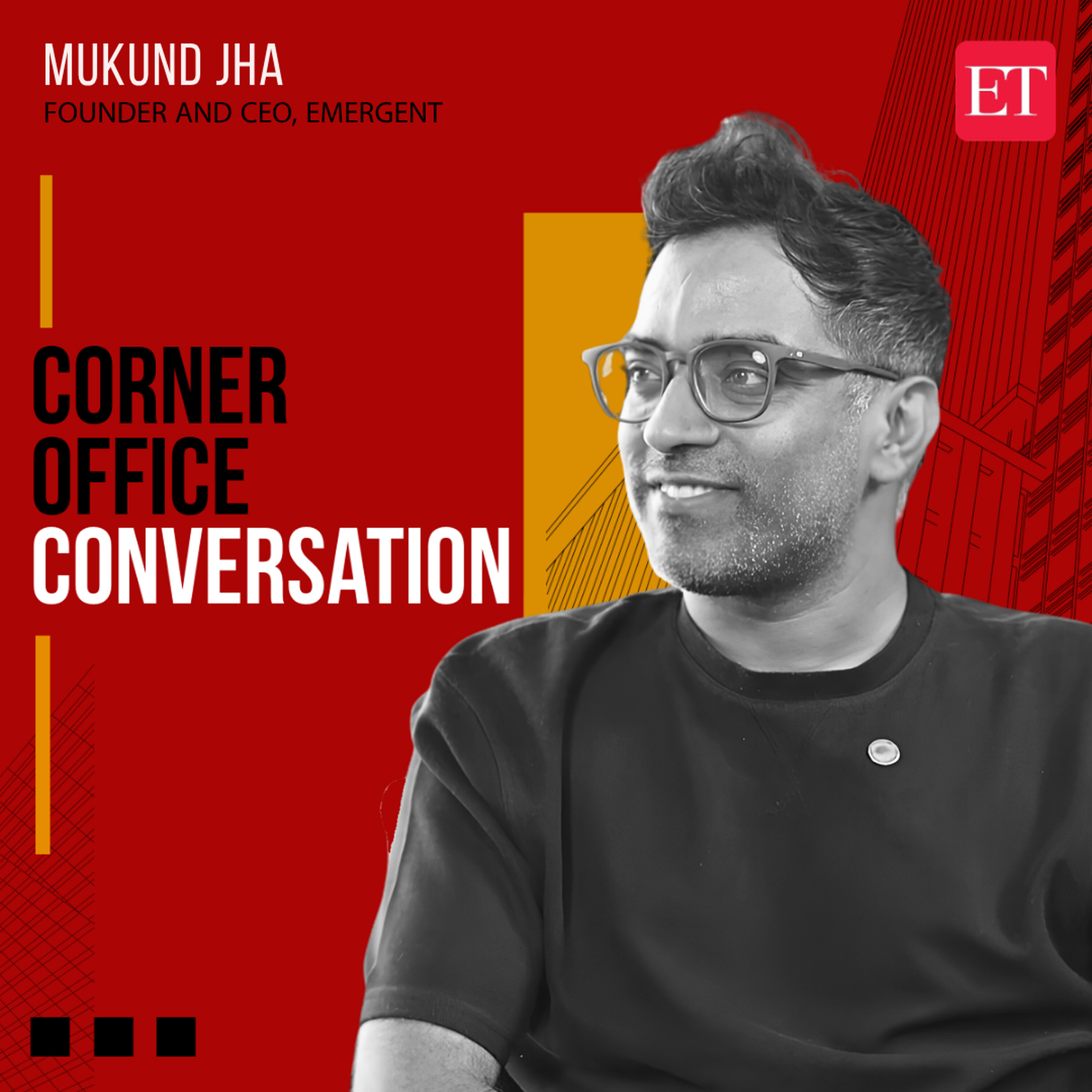
In this episode of Corner Office Conversation, Anirban Chowdhury sits down with Mukund Jha, Founder and CEO of Emergent, the AI platform where anyone with an idea can build a real, hosted, working app. A former Google engineer, Mukund also co-founded Dunzo, the unicorn that became a verb in India...and then folded.
He shares hard-won Dunzo lessons on growth versus endurance, focus and unit economics, and why second-mover advantage matters in AI. Emergent says 18 million apps have been built on it. Mukund believes anyone could soon build any software without code.
See omnystudio.com/listener for privacy information.
The Supreme Court has set aside Yes Bank’s 2020 write-down of ₹8,415 crore in AT1 bonds. Anirban Chowdhury speaks to Sugata Ghosh of The Economic Times about how AT1 bonds work, why the Court ruled against the write-down, what the judgment means for investors and regulators, and how the case compares with Switzerland’s Credit Suisse AT1 dispute
See omnystudio.com/listener for privacy information.
AI agents undergoing tests accessed Indian organisations’ live systems and read confidential business records and personal data. The companies did not detect these intrusions; AI developers disclosed them after internal reviews. What happens when an AI agent exceeds its instructions, and who should bear the consequences? Anirban Chowdhury speaks to lawyer Pavan Duggal and Prof NK Goyal of CMAI about the warning from the Indian Computer Emergency Response Team, the challenges of assigning liability and the safeguards businesses need. From disclosure requirements to protecting sensitive information, this episode examines whether India’s laws and corporate defences can keep pace with autonomous AI.
See omnystudio.com/listener for privacy information.
As AI becomes more powerful, who gets to shape its direction—and share its benefits? ET’s tech editor Surabhi Agarwal speaks to Google DeepMind’s Chief AI Readiness Officer, Lila Ibrahim, about the tension between rapid development and responsible deployment. They discuss India’s place in the global AI race, the role of teachers in AI-enabled classrooms, and research that could help farmers grow more resilient crops. Ibrahim also reflects on responsibility inside DeepMind, the work around AlphaFold, and the everyday ways she uses AI as a parent. A conversation about preparing people and institutions for a technology already changing their lives.
See omnystudio.com/listener for privacy information.
Airfares are rising just as the festive travel season approaches. ATF prices have jumped sharply in recent months, while a weaker rupee is adding to airlines’ fuel costs. At the same time, fewer flights and slower aircraft deliveries are tightening capacity even as demand picks up.
In this episode, Host Anirban Chowdhury speaks to ET's Forum Gandhi, about what is driving the surge in airfares, how airlines are balancing higher costs with weaker domestic traffic, and why Mumbai flyers could face an additional hit as capacity shifts to Navi Mumbai Airport. The conversation also looks at what passengers should watch over the next six months.
Listen In
You can follow Anirban Chowdhury on his social media: X and Linkedin
Check out other interesting episodes like - Cognizant’s Surya Gummadi on How AI Can Deliver Returns, The Future of Insurance in India | Sarbvir Singh of PB Fintech, Groww’s ₹6,600 Cr Leap - Fintech’s Big Market Test Begins , OML CEO on the Creator Economy’s Next Wave & much more.
Catch the latest episode of ‘The Morning Brief’ on The Economic Times Online, Spotify, Apple Podcasts, JioSaavn, Amazon Music and Youtube.
See omnystudio.com/listener for privacy information.
Ahead of the GST Council meeting, Bipin Sapra, Partner and Indirect Tax Policy Leader, EY India, explains to Anirban Chowdhury the proposed changes to input tax credit, refunds, exports and e-way bills—and what they could mean for business costs, working capital and consumer prices. These are expected changes, not final decisions.
Tune in:
See omnystudio.com/listener for privacy information.
The Flydubai incident has raised a difficult question for aviation security: what happens when the threat comes from within the aircraft? As investigators work to establish the facts, the incident is already forcing a rethink of how airlines identify and mitigate insider threats.
Host Anirban Chowdhury speaks to aviation security experts Arik Arad and Shannon Wandmaker about the vulnerabilities exposed by the incident, why one-time background checks may not be enough in an age of rapid online radicalisation, and whether continuous vetting and stronger security cultures can close the gap. He also explains why aviation security is ultimately about layers of mitigation—not the promise of preventing every possible attack.
Listen In
You can follow Anirban Chowdhury on his social media: X and Linkedin
Check out other interesting episodes like - Cognizant’s Surya Gummadi on How AI Can Deliver Returns, The Future of Insurance in India | Sarbvir Singh of PB Fintech, Groww’s ₹6,600 Cr Leap - Fintech’s Big Market Test Begins , OML CEO on the Creator Economy’s Next Wave & much more.
Catch the latest episode of ‘The Morning Brief’ on The Economic Times Online, Spotify, Apple Podcasts, JioSaavn, Amazon Music and Youtube.
See omnystudio.com/listener for privacy information.
The investigation into the death of IIT Bombay student Sahil Wakode is examining competing allegations and evidence. But beyond the immediate case lies a broader question: what are India’s premier institutions really preparing students for?
On The Morning Brief, host Anirban Chowdhury speaks to BITS Pilani Group Vice Chancellor V Ramgopal Rao, former JNU professor Rajeev Kumar and ET’s Rashmi Rajput about the intense pressure surrounding IIT admissions, the limitations of using exam performance as a measure of intellectual ability, and the challenges students face once they enter these highly competitive institutions.
The discussion also looks at AI and education: when should students be allowed to use AI, what should examinations test, and does the JEE system need to evolve as machines become increasingly capable of solving the very tests students compete to clear?
Listen In
You can follow Anirban Chowdhury on his social media: X and Linkedin
Check out other interesting episodes like - Cognizant’s Surya Gummadi on How AI Can Deliver Returns, The Future of Insurance in India | Sarbvir Singh of PB Fintech, Groww’s ₹6,600 Cr Leap - Fintech’s Big Market Test Begins , OML CEO on the Creator Economy’s Next Wave & much more.
Catch the latest episode of ‘The Morning Brief’ on The Economic Times Online, Spotify, Apple Podcasts, JioSaavn, Amazon Music and Youtube.
See omnystudio.com/listener for privacy information.
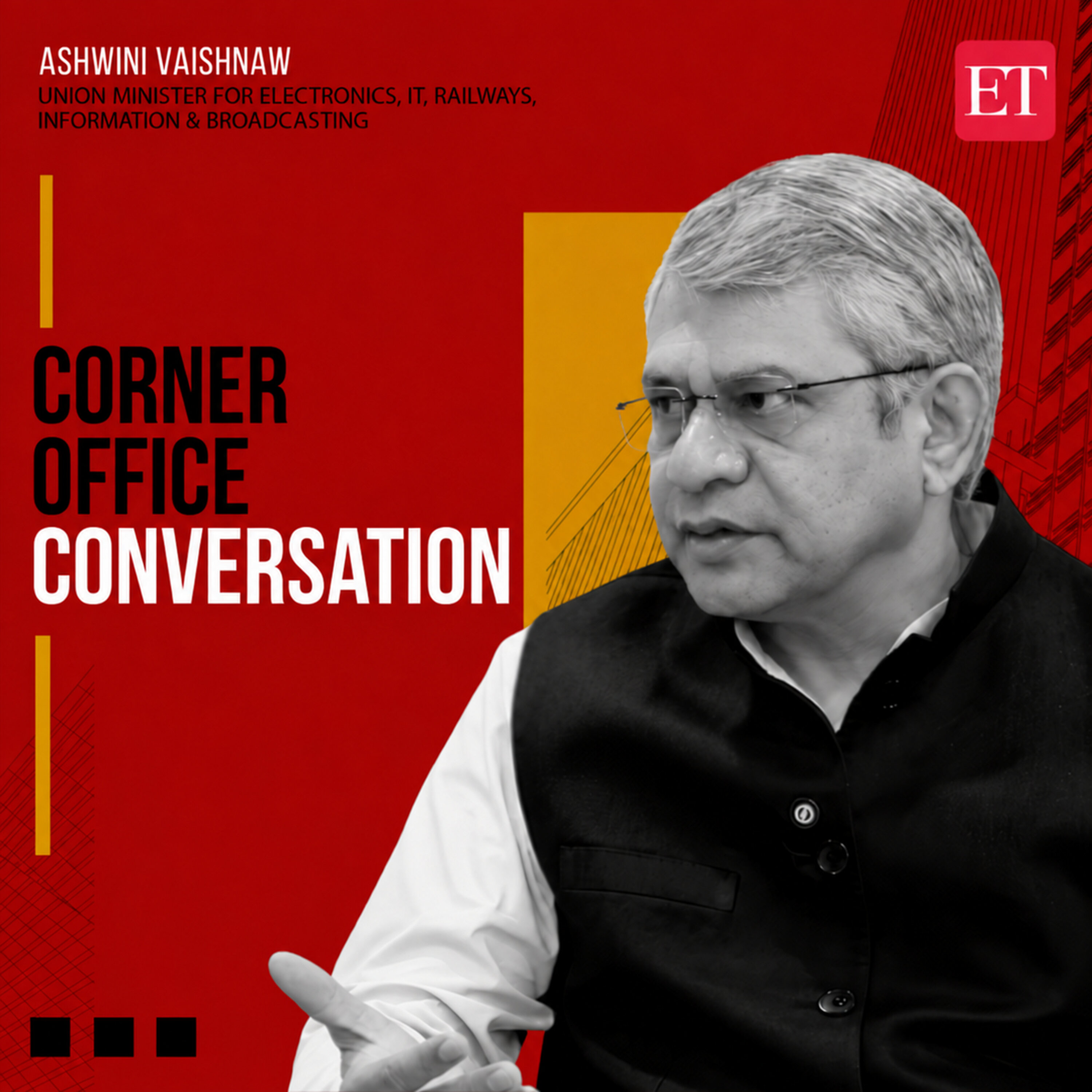
India is scaling its semiconductor ecosystem as AI development accelerates—and both are raising new questions around technology, investment and regulation. In this Corner Office Conversation, Electronics and IT Minister Ashwini Vaishnaw speaks to ET’s tech editor Surabhi Agarwal about Semicon 2.0, global investment in India, electronics manufacturing and the country’s value-addition journey. He also lays out his views on AI risks, company responsibility, techno-legal safeguards and global cooperation on AI regulation.
Listen In
You can follow Surabhi Agarwal on her Linkedin, X profiles and read her Newspaper Articles.
Check out other interesting episodes like - Cognizant’s Surya Gummadi on How AI Can Deliver Returns, The Future of Insurance in India | Sarbvir Singh of PB Fintech, Groww’s ₹6,600 Cr Leap - Fintech’s Big Market Test Begins , OML CEO on the Creator Economy’s Next Wave & much more.
Catch the latest episode of ‘The Morning Brief’ on The Economic Times Online, Spotify, Apple Podcasts, JioSaavn, Amazon Music and Youtube.
See omnystudio.com/listener for privacy information.
Volkswagen is one of the world’s largest carmakers, yet has less than 2% of India’s passenger vehicle market. Its proposed partnership with JSW could mark a striking reversal: JSW may own 51% of the venture, leaving the German giant as the junior partner. Anirban Chowdhury speaks to ET’s Arijit Barman and Shally Seth Mohile about what each side gains, why JSW wants European technology alongside its Chinese partnerships, and whether the deal can accelerate Volkswagen’s painfully slow India journey. They also examine JSW’s audacious automotive ambitions—and the risk that its three ventures could eventually compete with one another.
Listen in
You can follow Anirban Chowdhury on his social media: X and Linkedin
Check out other interesting episodes like - Cognizant’s Surya Gummadi on How AI Can Deliver Returns, The Future of Insurance in India | Sarbvir Singh of PB Fintech, Groww’s ₹6,600 Cr Leap - Fintech’s Big Market Test Begins , OML CEO on the Creator Economy’s Next Wave & much more.
Catch the latest episode of ‘The Morning Brief’ on The Economic Times Online, Spotify, Apple Podcasts, JioSaavn, Amazon Music and Youtube.
See omnystudio.com/listener for privacy information.
UPI is no longer entirely free. From October 15, merchant payments above ₹2,000 will attract a 0.4% MDR, while smaller transactions and person-to-person transfers remain exempt. But if merchants cannot surcharge customers directly, where does that cost go? IIT Bombay’s Professor Ashish Das tells The Morning Brief why businesses may quietly fold it into prices, forcing small-ticket shoppers to subsidise larger purchases. He also explains why online platforms are different, whether high-value payments could drift back to cash, and the policy question: should UPI be treated as commercial infrastructure—or as a public good funded by the government?
See omnystudio.com/listener for privacy information.
HDFC Bank's Shashidhar Jagdishan is stepping down, Kotak Mahindra is searching for Ashok Vaswani's successor, and ICICI's Sandeep Bakshi has taken just a two-year extension. In this episode, Anirban Chowdhury talks to ET's Banking Editor Sangita Mehta about the wave of CEO exits hitting India's biggest banks through 2028, what really went wrong at HDFC, whether Deputy MD Kaizad Bharucha can take over given RBI's 15-year board cap, and why RBI's tenure and age rules may be quietly ending the era of the long-serving Indian bank CEO.
See omnystudio.com/listener for privacy information.
15 minPlay in:
Guests from more than 12 months ago are part of Pro. See plans

 VA