What matters most right now in Commercial Real Estate. Business leaders join economic, industry and subject matter experts to share their distinct views and latest thinking. The Weekly Take is hosted by Spencer Levy, CBRE’s Senior Economic Advisor and Global Client Strategist. More at cbre.com/TheWeeklyTake
Ken Rosen has been an astute analyst of the real estate world for 50 years. The highly regarded economist, consultant and educator explains why today’s higher interest rates could force investors back to the fundamentals. He also provides a framework for strategic investment and operational excellence in a rapidly evolving landscape.
· Higher real interest rates mean returns must come from real estate fundamentals, including better asset selection, leasing, operations and placemaking.
· Rosen notes that capital is a short-term asset, while real estate rewards long-term value creation.
· Deep repricing, constrained supply and renewed demand can turn challenged markets like San Francisco into compelling opportunities.
· Office-to-residential conversions may become a bigger opportunity as cities look for ways to address housing shortages.
· Better data can improve decision-making, but it can’t replace human judgment, common sense and a real, experience-driven understanding of market conditions.
Ken Rosen has been an astute analyst of the real estate world for 50 years. The highly regarded economist, consultant and educator explains why today’s higher interest rates could force investors back to the fundamentals. He also provides a framework for strategic investment and operational excellence in a rapidly evolving landscape.
· Higher interest rates mean returns must come from real estate fundamentals, including better asset selection, leasing, operations and placemaking.
· Rosen notes that capital is a short-term asset, while real estate rewards long-term value creation.
· Deep repricing, constrained supply and renewed demand can turn challenged markets like San Francisco into compelling opportunities.
· Office-to-residential conversions may become a bigger opportunity as cities look for ways to address housing shortages.
· Better data can improve decision-making, but it can’t replace human judgment, common sense and a real, experience-driven understanding of market conditions.
Retail is thriving and investors are taking a fresh look at existing assets amid high construction costs and shrinking availablility. Greenberg Gibbons’ Eric Walter and CBRE’s Ryan Sciullo discuss where capital is flowing, why the Southeast stands out and how mixed-use retail can create long-term value.
Retail's resurgence is particularly marked in Southeast markets.
Mixed-use development plus e-commerce can transform the retail landscape.
Data-driven underwriting can improve cash flows.
Limited supply creates strategic investment opportunities.
Before they lifted the Cup, here’s how they built an arena worthy of a champion. Raleigh has long been one of the best-performing secondary markets. Its arena district is poised to be the next engine in its growth. Carolina Hurricanes CEO Brian Fork and Greater Raleigh Chamber CEO Adrienne Cole discuss how the Lenovo Center anchors a mixed-use redevelopment on state-owned land—structured through a complex public-private partnership.
In this episode:
Public-Private Partnerships: The Lenovo Center anchors an 80-acre, 15-year, $1 billion arena-district redevelopment via a public-private/ground-lease structure.
Talent, Talent, Talent: Raleigh’s three tier-one research universities and multi-node job base keep attracting talent, companies and capital.
By the Numbers: Strong population growth (2.2 million to 2.6 million by 2027) plus low cost-of-living (around 3% below national average) signal opportunity for investors.
Local Color: Lenovo Center preserves a tailgating culture while adding retail, restaurants, structured parking and year-round activation.
Data centers are the hottest asset class in CRE right now. Digital Realty CEO Andy Power and CBRE's Pat Lynch discuss the sector’s dynamics, including power constraints, evolving location strategies and international markets. They also offer key insights from CBRE’s hot-off-the-presses Global Data Center Trends Report 2026.
AI demand fuels near-zero data center vacancy rates in some key markets.
Power availability and permitting slow new data center development.
Asia and Southern Europe are seeing data center expansion.
Community engagement can facilitate data center growth.
What do “higher for longer” interest rates mean for investors? CBRE Investment Management’s Achal Gandhi and Rik Eertink break down the practical ways they identify and pursue opportunities in the living, logistics, office and retail sectors across Europe, in both direct and indirect execution formats.
The latest market data from Europe reveals that NOI growth remains the primary driver of investment performance.
A K-shaped economic recovery is creating opportunities in both necessity-based and luxury real estate.
Secondary investment opportunities in Europe offer investors access to assets at a discount and positive yield spreads.
Asset operations are critical for enhancing value.
A focus on niche sectors—student housing, healthcare and industrial outdoor storage—enables investors to capitalize on current demand and demographic trends.
Retail real estate requires an operator's mindset. While attending ICSC Las Vegas, CBRE's Americas Head of Retail Research, Ebere Anokute, spoke with us about the state of the market, challenging conventional wisdom and leveraging robust data to navigate an evolving retail landscape.
Key Takeaways:
· Investors should prioritize assets in secondary markets with strong population growth and limited new retail supply. These markets have lower vacancy rates and above-average rent growth.
· Retailers can benefit from repeat foot traffic and community loyalty by locating in centers anchored by grocery stores and in-demand service tenants.
· E-commerce accounts for about 16% of total retail sales. This requires retailers to balance brick-and-mortar and digital strategies to sustain growth.
· Grocery-anchored retail remains a compelling long-term investment, with stable cap rates and strong demand from other tenants.
· Service-oriented tenants—such as fitness, healthcare and personal care—are expanding, offering investors attractive income streams.
· Advanced analytics and local market data can pinpoint emerging opportunities and mitigate risks in a rapidly evolving retail landscape.
Futurist and author Jacob Morgan has a plan for building future-ready organizations: cultivating a thriving, accountable workforce; embracing flexibility; and applying technology to foster resilience and employee growth.
Future-ready organizations track change early, plan proactively and communicate and act with clarity.
Employee experience can be enhanced by setting clear expectations, providing consistent support and candidly communicating performance standards and growth paths.
· Learning and growth are essential to career security, which means investing in training and continual skills-building.
· The best leaders align support with specific employee needs and career paths rather than enacting broad policies.
· AI creates value when it helps people spend more time on high-impact work that requires judgment, creativity and communication.
Private club entrepreneur Tommy Shuey and CBRE’s Kelly Whaley discuss how these venues fill a growing need for personalized service and engagement outside the home or office, while driving value for both property owners and local communities.
· A new “third place” is emerging: Private clubs are filling a growing desire for curated spaces where people can connect outside the home and workplace—a trend worth watching.
· Landlords stand to benefit: These venues come with specialized space requirements that can translate into enhanced asset value and differentiated tenant mixes.
· Investment opportunities are expanding: “Clubonomics” is carving out a distinct niche, especially in markets undergoing transformation and reinvention.
· Dallas offers a blueprint: The city's embrace of upscale amenities outside the traditional downtown illustrates how this trend could impact urban real estate.
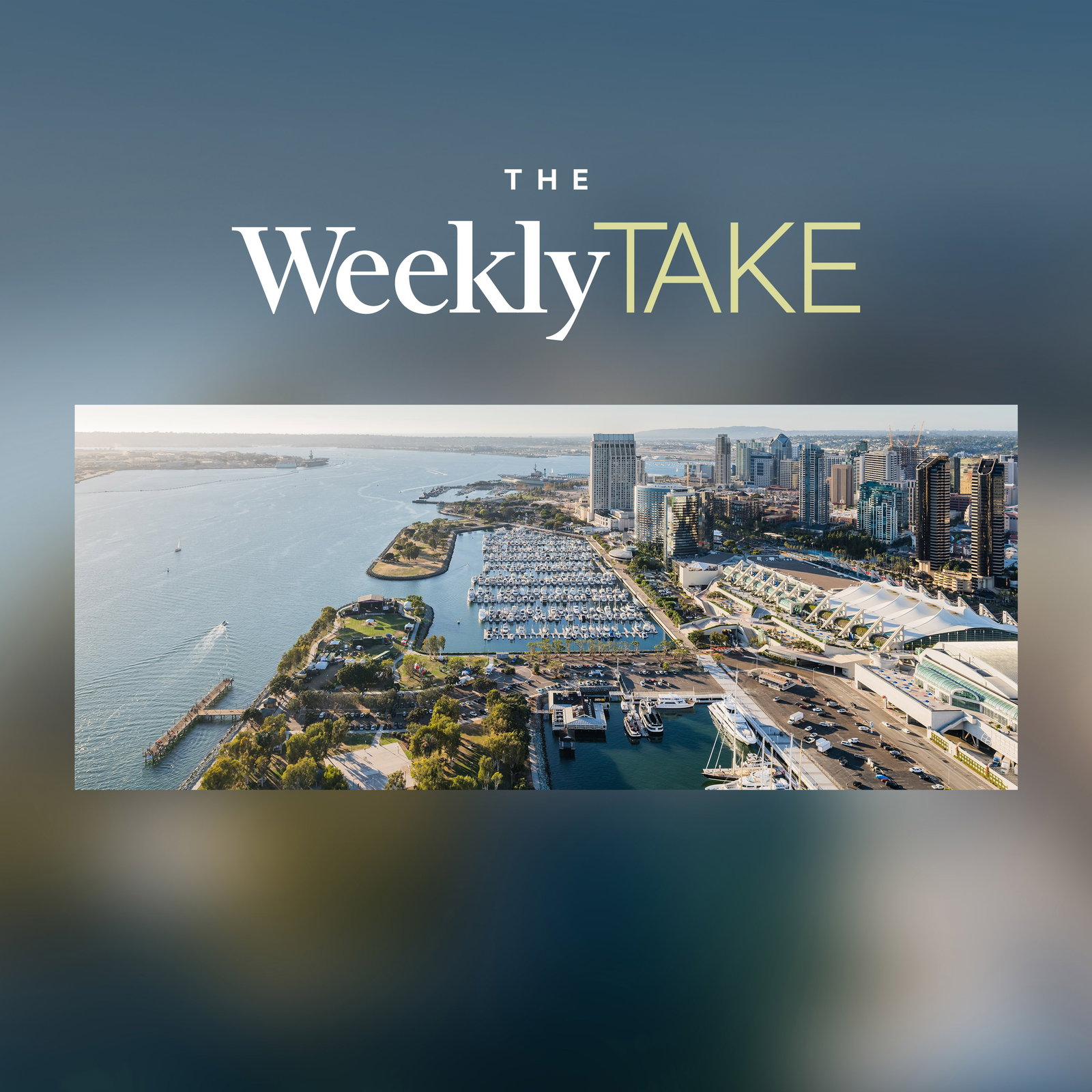
LBA Realty's John Garrigan and Eric Brown and CBRE’s Matt Carlson discuss the resilient drivers propelling growth in the San Diego market. They also make a compelling case for value-add office investments, dissect the nuances of industrial capital markets and explore the role of relationships in navigating opportunities.
• Industrial leasing is gaining momentum.
• A flight to quality still defines office demand.
• Smart value‑add strategies can restore positive leverage in certain sectors.
• In industrial & logistics, infrastructure, power and relationships are key.
• San Diego’s economic diversity lessens volatility.
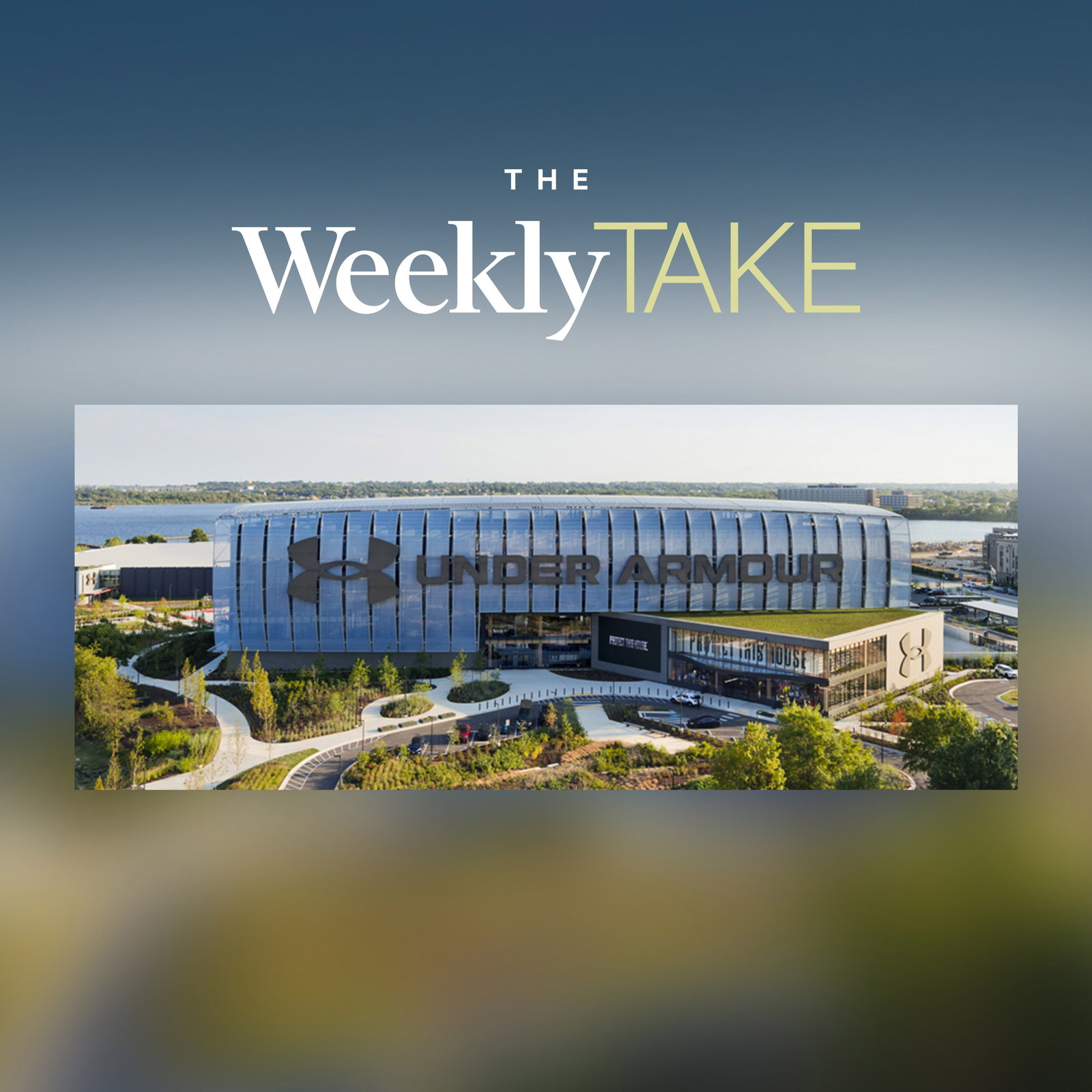
Under Armour’s Kathy Blessington shares the playbook for using real estate to support performance, culture and growth. From headquarters planning to retail and supply chain strategies to community engagement, Kathy explains how intentional, flexible spaces help global companies stay competitive and future-ready.
Corporate real estate can be a powerful strategic asset, driving productivity, collaboration and business performance.
Modern workplaces are shifting away from individual workstations to collaborative, brand-forward environments that better support how teams work today.
A well-designed headquarters can support innovation, operations, sustainability and community engagement.
Large, global portfolios require intentional design that balances brand consistency with flexibility across offices, retail and logistics space.
Building flexibility into real estate portfolios allows companies to adapt more easily to hybrid work, new technologies and evolving business needs.
Two of the parking industry’s most influential leaders— LAZ Parking’s Alan Lazowski and Parkway Corporation’s Rob Zuritzky—explore parking’s role as critical infrastructure, a cash-flow-generating asset and a platform for EVs, autonomous vehicles and urban mobility innovation.
* Parking is vital urban infrastructure, supporting economic growth.
* Technology, like EV charging, revolutionizes parking operations.
* Parking assets can deliver stable cash flow and attractive investment returns.
* Parking structures of the future will become essential urban mobility hubs.
On this episode, we feature a wide-ranging discussion with Henry Chin, CBRE’s Global Head of Research—recorded at CBRE’s annual Capital Markets Symposium—where we explore global capital flows, the forces shaping investment strategies and why 2026 may be a compelling vintage for real estate investment.
* 2026 offers prime investment opportunities in U.S. real estate.
* Income growth, not cap rates, will drive future real estate returns.
* Value-add industrial assets with access to power are positioned for strong returns.
* Amenity-rich, well-located office space should continue to outperform.
* Rekindled global capital inflows could boost U.S. real estate transaction volume.
34 minAbspielen in:
Gäste, die länger als 12 Monate zurückliegen, gibt es mit Pro. Pläne ansehen

 KR