We Fixed It, You're Welcome cover
Podcast

We Fixed It, You're Welcome

We Fixed It, You're Welcome hatte in den letzten 12 Monaten 17 bestätigte Gäste in 20 Folgen. Zuletzt: Brandon Solano, 3. Nov. 2026.

Website der SendungApple PodcastsSo werden Gäste bestätigt

Armchair quarterbacking isn’t just for sports anymore. We’re taking the same approach to companies: what would you do in their shoes? Each episode, our lively panel will debate a new issue ripped from the headlines involving a different well-known company. Between our instincts, experiences, and unsolicited opinions…

Gäste der Sendung

Di3Nov
We Fixed It, You're WelcomeBS

Brandon SolanoGast

Reheating Pizza Hut: Can We Deliver a Comeback?

The majority of Pizza Hut was just sold to investors for roughly $1.5 billion. Hot deal, right? Not exactly. The pizza category has cooled off, and one of America's most iconic brands is struggling to keep up. Can its new owners turn things around, or do we need to fix it for them? Join Chino Nnadi and Aaron Wolpoff with guest Brandon Solano, former VP at Domino's Pizza, CMO of Papa Murphy's and Wendy's, and current CEO of RAVE Restaurant Group, to dig into why Yum! Brands sold Pizza Hut to LongRange Capital. Stacking Pizza Hut up against Domino's, Papa John's, Little Caesars and Pizza Inn, the panel tackles third-party delivery, dine-in versus takeout, franchisee challenges and Domino's legendary turnaround, which happened during Brandon's tenure. They also question whether yet another limited-time offer can bring customers back, or whether the real fix starts with the product itself, right down to the freshness of the dough. The conversation lands on a turnaround plan: a handful of flagship dine-in restaurants with retro vibes and live stages for local talent, warmer delivery-and-carryout locations, a bigger personality on social media, and a quiet recommitment to fresh ingredients. Did we actually fix Pizza Hut, or is it just another half-baked idea? Panelists: Chino Nnadi – https://www.linkedin.com/in/chino-talentstrategist/ Guest Brandon Solano – https://www.linkedin.com/in/brandon-solano-48459392/ Aaron Wolpoff – https://www.linkedin.com/in/marketingaaron/ Connect With the Show Subscribe for more deep dives where we fix big business problems with fresh perspectives. • Website – www.wefixeditpod.com • Follow us on: Instagram – https://www.instagram.com/wefixeditpod LinkedIn – https://www.linkedin.com/company/wefixeditpod YouTube – https://www.youtube.com/@WeFixedItPod If you liked this episode, don't forget to subscribe, leave a review, and share it with your friends! Keep listening to find out how we fix companies and put them back better than we found them. Disclaimer A quick disclaimer. We are going into this somewhat cold and nothing we say should be construed as legal advice, financial advice or anything that would get us in trouble. These are our views and opinions. We're here to ask the kinds of questions everyone's thinking, have an engaging conversation and maybe come to some conclusions that we feel are worth exploring. By the end, if we fixed it, you're welcome. All trademarks, IP and brand elements discussed are property of their respective owners. Learn more about your ad choices. Visit megaphone.fm/adchoices
51 minAbspielen in:

Di20Okt
We Fixed It, You're WelcomeAB

Abhijit BhaduriGast

Middle Managers Are Back?!

Middle managers were supposed to be one of the layers companies could do without. Organizations flattened their org charts, invested heavily in AI, and removed roles in the name of efficiency. Now the question is whether they also removed the people who help teams think, learn, and work effectively. Abhijit Bhaduri joins Aaron Wolpoff and Melissa Eaton to unpack the management reset happening in an AI-enabled workplace. Drawing on his experience in talent management and global learning and development, he explains why efficiency and effectiveness are not the same, how repeated restructures erode trust, and why employees need enough security to learn new skills. The conversation explores the future of middle management, the entry-level talent pipeline, the human cost of treating employees as interchangeable line items, and why AI needs thoughtful human escalation when systems fail. The answer is not to stop using AI. It is to redesign work so technology and people can make each other more effective. In this episode: Why companies are reconsidering middle management Efficiency versus effectiveness How layoffs and reversals damage trust Why fear makes learning harder The role of managers in coaching, culture, and escalation What happens when entry-level jobs disappear Why AI needs human judgment and customer-service escalation How employers can invest in employees’ next roles Connect with Abhijit Bhaduri: LinkedIn: https://www.linkedin.com/in/abhijitbhaduri/ Connect With the Show Subscribe for more deep dives where we fix big business problems with fresh perspectives. • Website – www.wefixeditpod.com • Follow us on: Instagram – https://www.instagram.com/wefixeditpod LinkedIn – https://www.linkedin.com/company/wefixeditpod YouTube – https://www.youtube.com/@WeFixedItPod If you liked this episode, don’t forget to subscribe, leave a review, and share it with your friends! Keep listening to find out how we fix companies and put them back better than we found them. Disclaimer A quick disclaimer. We are going into this somewhat cold and nothing we say should be construed as legal advice, financial advice or anything that would get us in trouble. These are our views and opinions. We’re here to ask the kinds of questions everyone’s thinking, have an engaging conversation and maybe come to some conclusions that we feel are worth exploring. By the end, if we fixed it, you’re welcome. All trademarks, IP and brand elements discussed are property of their respective owners. Learn more about your ad choices. Visit megaphone.fm/adchoices
57 minAbspielen in:

Di13Okt
We Fixed It, You're WelcomeEB

Erica BoekeGast

Advertising Week 2027: Imagining What's Possible

Advertising Week and the future of industry conferences get a full rebuild on We Fixed It You're Welcome, recorded live in New York with Erica Boeke, CEO of XP Land. Aaron sits down with Erica in NYC while Melissa and Chino join remotely to ask why Advertising Week New York now runs out of an old Herald Square mall, why event sponsorship budgets are shrinking, and why the best conference networking happens at fringe events. Erica, who spent years creating brand experiences for Condé Nast titles, lays out an experiential marketing and event marketing strategy playbook for Advertising Week 2027 built around the attendee experience. In this episode: - Why Erica last spoke at Advertising Week in a former JC Penney boys department - The dirty little secret: why she hasn't bought a badge for SXSW, AWNY or Cannes in years - How 86 devices for the 86th Oscars beat a $250,000 logo-on-a-napkin package - Why Canva, Sephora and Target no longer need conferences to reach their fans - The fixes: make New York the campus, program downtime, design moments of awe What you will learn Why Advertising Week moved from Broadway theaters to a Herald Square mall, where Erica last spoke inside the old JC Penney boys department The dirty little secret of big conferences: why Erica hasn't bought a badge for SXSW, AWNY or Cannes in years, and why that should worry organizers How Erica got Samsung to deliver 86 devices for the 86th Oscars green room, and why that story beats a $250,000 logo-on-a-napkin sponsorship Why one major insurance tech conference's sponsor list shrank to roughly half of what it was three years ago How Canva, Sephora and Target built audiences big enough that conferences now need them more than they need conferences Why the best feedback from a Fast Company Innovation Festival survey was about networking on the shuttle buses The 2027 fixes: audit the attendee journey, make New York the campus, get out of the mall, program downtime and design moments of awe About the guest Erica Boeke started her career as a journalist before moving to the brand side at Condé Nast, where she created experiences for titles including GQ, Teen Vogue, Wired and Architectural Digest. Her work includes the Oscars green room with designer David Rockwell. Today she runs XP Land, which hosts experiential events alongside Advertising Week and is launching its first experience upfront next year. Connect with Erica Boeke: LinkedIn: https://www.linkedin.com/in/erica-boeke/ Connect With the Show Subscribe for more deep dives where we fix big business problems with fresh perspectives. • Website – www.wefixeditpod.com • Follow us on: Instagram – https://www.instagram.com/wefixeditpod LinkedIn – https://www.linkedin.com/company/wefixeditpod YouTube – https://www.youtube.com/@WeFixedItPod If you liked this episode, don’t forget to subscribe, leave a review, and share it with your friends! Keep listening to find out how we fix companies and put them back better than we found them. Disclaimer A quick disclaimer. We are going into this somewhat cold and nothing we say should be construed as legal advice, financial advice or anything that would get us in trouble. These are our views and opinions. We’re here to ask the kinds of questions everyone’s thinking, have an engaging conversation and maybe come to some conclusions that we feel are worth exploring. By the end, if we fixed it, you’re welcome. All trademarks, IP and brand elements discussed are property of their respective owners. Learn more about your ad choices. Visit megaphone.fm/adchoices
57 minAbspielen in:

Di22Sep
We Fixed It, You're WelcomeRW

Renee WashingtonGast

Tackling Sports Streaming: The Hidden Cost of Watching Sports

Watching your favorite team used to be simple. Turn on the television, find the channel, and watch the game. Today, following one team can mean navigating multiple streaming platforms, subscriptions, blackout restrictions, premium tiers, and constantly changing media-rights deals. In this episode of We Fixed It, Renee Washington joins the conversation to unpack the rapidly changing business of sports media and what it means for the people who actually watch the games. Renee brings experience from across sports broadcasting, including work with ESPN, FIFA, NBC Sports and other major sports platforms, along with her background as a former professional soccer player and three-time All-American. The conversation explores why sports leagues are increasingly prioritizing global audiences, how enormous media-rights deals are reshaping distribution, why local broadcasters and communities still matter, and why athletes themselves are becoming increasingly powerful brands. For decades, sports broadcasting was built around a relatively simple relationship between fans, teams and television. That relationship has changed dramatically. Today, leagues are negotiating enormous media-rights agreements with traditional networks and streaming platforms. A single sport can appear across multiple services, forcing fans to figure out where individual games are being broadcast. Renee Washington explains that the driving force behind much of this change is money. Sports media rights represent enormous revenue opportunities, while streaming platforms see live sports as a way to attract audiences, collect viewing data, build habits and introduce viewers to their broader entertainment ecosystems. But the financial opportunity comes with a cost: complexity. Fans can find themselves juggling multiple subscriptions simply to follow one team. Local broadcasts have also become less prominent in some markets, while national and global programming has become increasingly important. What You Will Learn • Why watching sports has become increasingly complicated • How the battle for sports media rights is reshaping broadcasting • Why streaming platforms are aggressively pursuing live sports • How multiple subscriptions affect the fan experience • Why sports leagues are increasingly focused on global audiences • What local broadcasters bring to a team's relationship with its community • Why some sports broadcasts are produced away from the actual venue • How athlete-driven fandom is changing traditional team loyalty • Why players can now build audiences that transcend teams and countries • How soccer's global model has influenced American sports • Why the NFL's predictable broadcast structure works differently from other sports • Why baseball, basketball and other leagues face different streaming challenges • How exclusive media-rights agreements affect where fans can watch games • Why streaming platforms care about more than the game itself • How sports broadcasts can become gateways into movies, shows and other programming • Why audience data has become such an important part of sports media • Whether a single team-based login could simplify sports streaming • Why leagues and networks may resist simplifying access • How sports could preserve local communities while expanding globally • Why more in-person experiences could become important in the future Connect With Renee Washington Website: www.reneepwashington.com Renee Washington can also be found across social platforms under Renee Washington, with her X account using @ReneePwash Connect With the Show Subscribe for more deep dives where we fix big business problems with fresh perspectives. Website: www.wefixeditpod.com Follow us on: Instagram: @wefixeditpod LinkedIn: @wefixeditpod YouTube: @wefixeditpod Disclaimer If you liked this episode, don’t forget to subscribe, leave a review, and share it with your friends! Keep listening to find out how we fix companies and put them back better than we found them. A quick disclaimer. We are going into this somewhat cold and nothing we say should be construed as legal advice, financial advice or anything that would get us in trouble. These are our views and opinions. We’re here to ask the kinds of questions everyone’s thinking, have an engaging conversation and maybe come to some conclusions that we feel are worth exploring. By the end, if we fixed it, you’re welcome. All trademarks, IP and brand elements discussed are property of their respective owners. Learn more about your ad choices. Visit megaphone.fm/adchoices
1 h 06 minAbspielen in:

Di1Sep
We Fixed It, You're WelcomeCD

Chris DeaverGast

Apple's Core Dilemma: Should a New CEO Preserve or Evolve?

Apple has a new CEO. But should John Ternus try to change Apple — or protect what already works? Chris Deaver, former Apple and Disney leader and co-founder of BraveCore, joins Aaron Wolpoff and Melissa Eaton to unpack one of the biggest questions facing Apple's next chapter: how do you evolve a company without losing the culture that made it great? Chris brings an unusually close perspective to the conversation. He worked in leadership development at Apple and worked extensively with John Ternus over more than a decade as Ternus developed into the leader Apple ultimately chose to succeed Tim Cook. The conversation explores why Steve Jobs and Tim Cook were so different, why that difference actually helped Apple, and why John Ternus doesn't need to become either one. They discuss Apple's collaborative culture, the shift from "Think Different" to "Different Together," the company's approach to AI and privacy, the future of AR, the challenge of creating Apple's next major product category, and the pressure on a new CEO to deliver a "mic drop" moment. Chris also explains why Apple's current transition is less about fixing a broken company and more about preemptively positioning a healthy company for its next phase. In this episode: Why Steve Jobs chose a fundamentally different successor in Tim Cook What Apple actually needs from John Ternus Why culture may be Apple's most important product The shift from "Think Different" to "Different Together" Why Apple promotes people based on principles, not just results The danger of a CEO trying to control every function Apple's "category one" philosophy What Disney's succession problems can teach Apple Why Apple's approach to AI is different Privacy vs. AI's dependence on massive amounts of data Why Apple doesn't need to be first The future of AR glasses What would make consumers actually want Apple's next wearable Why Apple's next major product doesn't have to replace the iPhone The pressure on John Ternus to deliver a major signal Why Apple should preserve its culture while evolving its operating mechanics Why Apple needs to sell the thesis, not just live it What you will learn Why Steve Jobs and Tim Cook were intentionally different leaders Why Apple needs the right leader for the right phase, rather than another Steve Jobs Why Apple's culture may actually be its most important "product" How Apple shifted from **"Think Different" to "Different Together" Why John Ternus's biggest challenge isn't hardware — it's becoming a truly enterprise-wide CEO Why Apple promotes leaders who demonstrate its principles, not just performance How Apple's "category one" philosophy allows leaders to own their expertise while trusting other leaders to own theirs Why CEOs can damage companies by trying to have their hands in everything What Apple's approach to AI reveals about its commitment to privacy Why Apple may deliberately refuse to be first in AI Why "we don't care about being the first, we care about being the best" is central to Apple's strategy Why AR could become Apple's next meaningful product category What Apple needs to prove before consumers will actually want AR glasses Why Apple's biggest challenge may be explaining the use case, not building the technology Why the pressure for a "mic drop" product announcement could become a problem for Ternus What Apple can learn from its failed succession stories Why Chris sees the current situation as preemptive positioning rather than fixing a broken company Why Ternus needs to become a deeper collaborator rather than trying to impose a singular vision Why Apple should "sell the thesis, don't just live it" Why the best future for Apple may involve preserving its culture while changing the mechanics around it Notable quotes "The culture is the gift that keeps on giving." — Chris Deaver "For Apple, incremental is revolutionary." — Chris Deaver "Apple's always been a company that is first about getting the principles right." — Chris Deaver "We don't care about being the first, we care about being the best." — Chris Deaver "You don't want to be educating the consumer about this. You want them to experience it." — Chris Deaver "There's not really a broken per se." — Chris Deaver "It's almost a preemptive, like, let's not let it break." — Chris Deaver "Do you really wanna rush Michelangelo's sculpture?" — Chris Deaver About our guest Chris Deaver is the co-founder of BraveCore, a leadership and culture consultancy focused on helping organizations build cultures around co-creation and collaboration. His LinkedIn describes his work as spanning two decades inside organizations including Apple and Disney Connect with Chris Deaver: Linkedin - LinkedIn Website - BraveCore Connect with We Fixed It , You're Welcome: Website- https://www.wefixeditpod.com Instagram - https://www.instagram.com/wefixeditpod Linkedin - https://www.linkedin.com/company/wefixeditpod YouTube -https://www.youtube.com/@WeFixedItPod If you liked this episode, don’t forget to subscribe, leave a review, and share it with your friends! Keep listening to find out how we fix companies and put them back better than we found them. Disclaimer A quick disclaimer. We are going into this somewhat cold and nothing we say should be construed as legal advice, financial advice or anything that would get us in trouble. These are our views and opinions. We’re here to ask the kinds of questions everyone’s thinking, have an engaging conversation and maybe come to some conclusions that we feel are worth exploring. By the end, if we fixed it, you’re welcome. All trademarks, IP and brand elements discussed are property of their respective owners. Learn more about your ad choices. Visit megaphone.fm/adchoices
1 h 02 minAbspielen in:

Di25Aug
We Fixed It, You're WelcomeRJ

Rebeca JohnsonGast

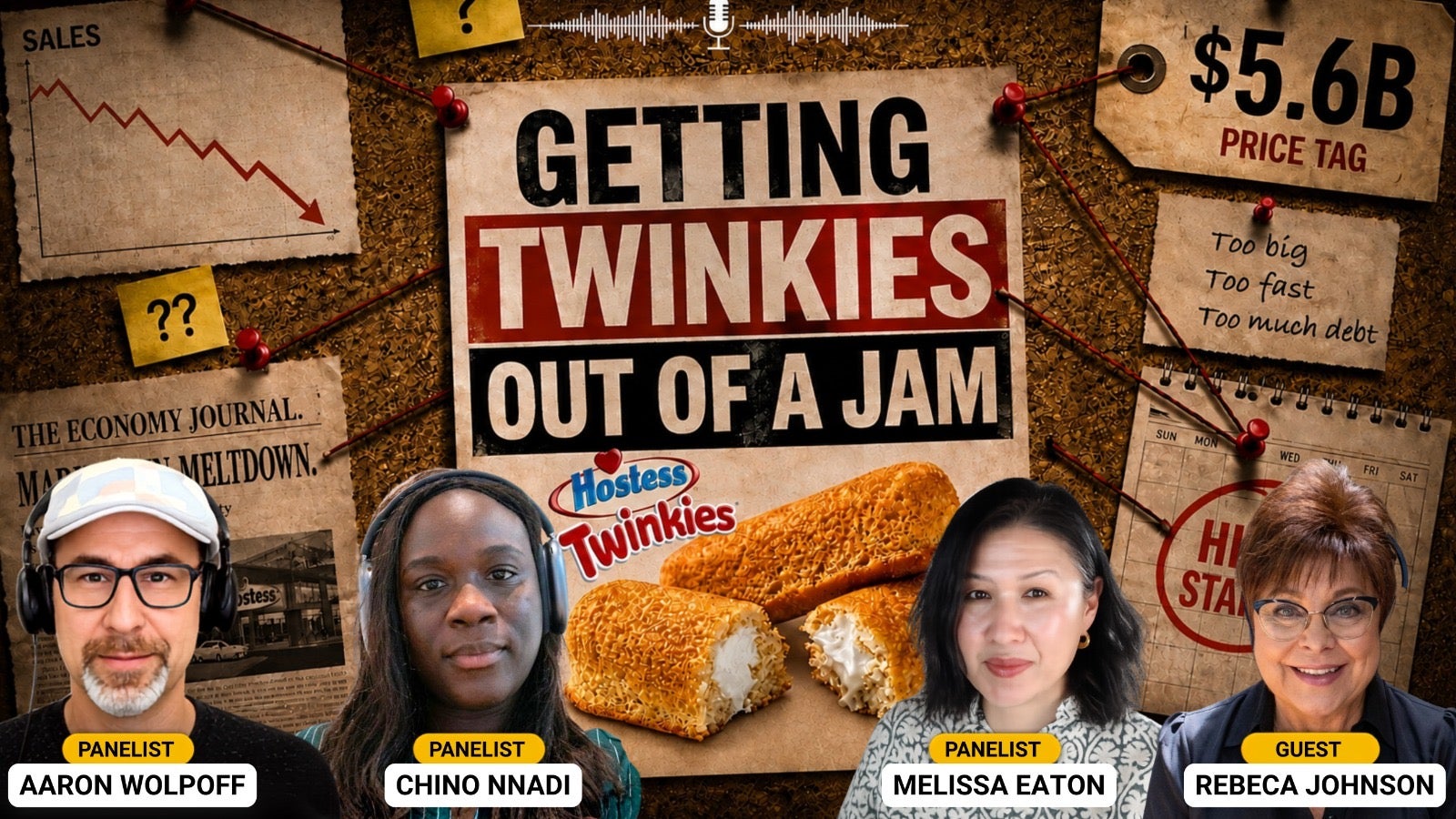
Getting Twinkies Out of a Jam | Saving Smucker's Hostess Acquisition

What happens when one of America's most iconic snack brands becomes a multi-billion-dollar acquisition that’s not as sweet as it once seemed? In this episode of We Fixed It, You're Welcome, the team tackles Smucker's $5.6 billion acquisition of Hostess and asks why beloved brands like Twinkies, Ho Hos, Ding Dongs, and Donettes have struggled since joining the Smucker's portfolio. Joining the discussion is Rebeca Johnson, former VP of Marketing at Frito-Lay and a veteran CMO who has spent decades transforming legacy brands. Together, our panel explores why operational fit matters just as much as brand equity, how evolving consumer habits have reshaped the snack aisle, and what Smucker's could do to turn the Hostess situation around. In this episode: Why Smucker's acquisition has struggled despite Hostess' iconic status The operational mismatch between grocery and convenience store distribution Why nostalgia alone can't revive legacy brands How healthier consumer preferences changed the snack category The importance of shopper psychology and shelf placement Our own product innovation ideas including healthier Twinkies and Smucker's-inspired flavors Why great acquisitions fail despite strong financial models How social media, influencer marketing, and cultural relevance could revive Hostess The team's complete turnaround strategy for one of America's most recognizable snack brands If you enjoy lively conversations about business strategy, branding, marketing, operations, acquisitions, and customer experience, this episode is for you. Connect With the Show Subscribe for more deep dives where we fix big business problems with fresh perspectives. 🌐 Websitewww.wefixeditpod.com 📲 Follow Us Instagram: https://www.instagram.com/wefixeditpod LinkedIn: https://www.linkedin.com/company/wefixeditpod YouTube: https://www.youtube.com/@WeFixedItPod If you enjoyed this episode, don't forget to Like, Subscribe, and leave a review. Share it with someone who loves business strategy, branding, or marketing. Disclaimer A quick disclaimer. We are going into this somewhat cold, and nothing we say should be construed as legal advice, financial advice, or anything that would get us in trouble. These are simply our views and opinions. We're here to ask the kinds of questions everyone is thinking, have engaging conversations, and explore ideas worth discussing. If, by the end, we fixed it... you're welcome. All trademarks, intellectual property, and brand elements discussed remain the property of their respective owners. Learn more about your ad choices. Visit megaphone.fm/adchoices
55 minAbspielen in:

Di4Aug
We Fixed It, You're WelcomeRH

Ron HetrickGast

Replay: Are There Too Many Managers?

Are too many people being promoted into leadership roles? As a result, are companies becoming too top heavy? If we’ve created a system that values managers over executers, is this a recipe for disaster? In this episode, we’re joined by Ron Hetrick, Principal Economist at Lightcast and one of the most influential labor economists in the country. Together, we unpack one of the most important questions facing today’s labor market: whether modern organizations are overloaded with managers and what that means for productivity, hiring, layoffs, and career paths. Drawing on decades of labor market research and macro workforce data, Ron explains why middle managers are often the first cut during layoffs, how that decision can negatively impact companies, and why a contributor-based evaluation might be a better approach. This dynamic conversation digs into provocative questions we’re all asking, challenges assumptions, and poses some very real solutions about improving our collective thinking about the labor force. If organizations want stability, they must create career ladders where experts can grow financially without being pushed into management roles if it creates misalignment. As Ron explains during the episode: The farther your role is from creating revenue or protecting margin, the harder it becomes to justify during restructuring. About the Guest: Ron Hetrick Ron Hetrick is a leading labor economist and Principal Economist at Lightcast. He previously worked at the U.S. Bureau of Labor Statistics and advises Fortune 100 companies, policymakers, and workforce strategists. Subscribe for more deep dives where we fix big business problems with fresh perspectives. • Website – www.wefixeditpod.com • Follow us on: Instagram – https://www.instagram.com/wefixeditpod LinkedIn – https://www.linkedin.com/company/wefixeditpod YouTube – https://www.youtube.com/@WeFixedItPod If you liked this episode, don’t forget to subscribe, leave a review, and share it with your friends! Keep listening to find out how we fix companies and put them back better than we found them. Disclaimer A quick disclaimer. We are going into this somewhat cold and nothing we say should be construed as legal advice, financial advice or anything that would get us in trouble. These are our views and opinions. We're here to ask the kinds of questions everyone's thinking, have an engaging conversation and maybe come to some conclusions that we feel are worth exploring. By the end, if we fixed it, you're welcome. All trademarks, IP and brand elements discussed are property of their respective owners. Learn more about your ad choices. Visit megaphone.fm/adchoices
54 minAbspielen in:

Di28Jul
We Fixed It, You're WelcomeBR

Brad ReeseGast

Replay: The Reese’s Controversy with Brad Reese

For generations, a bite of a Reese’s Peanut Butter Cup meant one thing: Milk chocolate. Real peanut butter. That unmistakable taste. Now, many loyal fans say something is different. In this episode, we sit down with Brad Reese, grandson of H. B. Reese and self-appointed “Protector of Reese’s Brand Integrity,” to unpack a controversy that has caught the world’s attention. Brad and others are upset about the current quality of Reese’s products under Hershey’s control, pointing to a shift in taste and either proven or alleged ingredient swaps. Emotions are high - people love Reese’s. They want real answers. This isn’t just about candy. It’s about trust, heritage, and a beloved company at a cultural tension point with its best customers. What Sparked the Controversy? Brad published an open letter to Hershey’s on LinkedIn calling out what he and many consumers observed: Certain varieties no longer list milk chocolate Some now use “chocolate candy,” “chocolatey coating,” or compound coating Peanut butter replaced in some products with “peanut butter creme” Ingredient changes implemented quietly, without announcement While The Hershey Company has publicly stated that core ingredients have not changed, consumers began comparing labels and conducting side-by-side taste tests online. The consumer pushback and Hershey’s response quickly went viral, drawing attention from major media outlets and even commentary from MrBeast while promoting his own line of Feastibles. A Powerful Quote from Brad “They’re stooping for pennies and passing up dollars.” Subscribe for more deep dives where we fix big business problems with fresh perspectives. Brad Reese https://www.linkedin.com/in/bradreesecom/ • Website – www.wefixeditpod.com • Follow us on: Instagram – https://www.instagram.com/wefixeditpod LinkedIn – https://www.linkedin.com/company/wefixeditpod YouTube – https://www.youtube.com/@WeFixedItPod If you liked this episode, don’t forget to subscribe, leave a review, and share it with your friends! Keep listening to find out how we fix companies and put them back better than we found them. Disclaimer A quick disclaimer. We are going into this somewhat cold and nothing we say should be construed as legal advice, financial advice or anything that would get us in trouble. These are our views and opinions. We're here to ask the kinds of questions everyone's thinking. Have an engaging conversation and maybe come to some conclusions that we feel are worth exploring. By the end, if we fixed it, you're welcome. All trademarks, IP and brand elements discussed are property of their respective owners. See Privacy Policy at ⁠https://art19.com/privacy⁠ and California Privacy Notice at ⁠https://art19.com/privacy#do-not-sell-my-info⁠. Learn more about your ad choices. Visit megaphone.fm/adchoices

1 h 13 minAbspielen in:

Do16Jul
We Fixed It, You're WelcomeLW

Lisa W. MillerGast

Reshaping the GLP-1 Economy: A Breaking Consumer Study

GLP-1 medications like Ozempic® and Wegovy® are transforming far more than weight loss. They're changing how people eat, shop, spend money, dine out, and interact with brands, creating ripple effects across retail, restaurants, healthcare, apparel, and the broader economy. In this episode of We Fixed It, You're Welcome, Aaron Wolpoff and Chino Nnadi sit down with Lisa W. Miller, ex PepsiCo VP Consumer Strategy & Insights and founder of Lisa W. Miller & Associates, to discuss groundbreaking findings from her latest proprietary research on the rapidly evolving GLP-1 economy. With insights from more than 30 industry studies and a survey of 6,500 U.S. consumers, Lisa reveals what businesses need to know as consumer behavior changes in real time. From the surprising rise of male GLP-1 users to the future of retail, employee benefits, and restaurant innovation, this conversation explores why companies that adapt early will likely have a competitive advantage while those that ignore these shifts risk being left behind. What You'll Learn • How GLP-1 medications are reshaping consumer spending habits • Why restaurants, retailers, and grocery brands are being forced to adapt • The surprising growth of male GLP-1 adoption and why most brands are missing it • Why simply labeling products "GLP-1 Friendly" isn't enough • How apparel companies and wedding retailers are responding to rapid weight loss • The impact of GLP-1s on HR, employee benefits, and workplace policies • The opportunities and risks businesses should prepare for over the next several years • Why understanding consumer behavior matters more than following headlines. About Our Guest Lisa W. Miller is a Consumer Insights & Innovation Strategist with more than 30 years of experience helping organizations turn consumer insights into business growth. She previously served as Vice President of Insights at PepsiCo and Vice President of Innovation at Brinker International. Today, through Lisa W. Miller & Associates, she helps leadership teams translate research into actionable business strategies. Connect with Lisa: • LinkedIn: Lisa W. Miller • Website: Lisa W. Miller & Associates Connect With the Show Subscribe for more deep dives where we fix big business problems with fresh perspectives. • Website – www.wefixeditpod.com • Follow us on: Instagram – https://www.instagram.com/wefixeditpod LinkedIn – https://www.linkedin.com/company/wefixeditpod YouTube – https://www.youtube.com/@WeFixedItPod If you liked this episode, don’t forget to subscribe, leave a review, and share it with your friends! Keep listening to find out how we fix companies and put them back better than we found them. Disclaimer A quick disclaimer. We are going into this somewhat cold and nothing we say should beconstrued as legal advice, financial advice or anything that would get us in trouble. These are our views and opinions. We’re here to ask the kinds of questions everyone’s thinking, have an engaging conversation and maybe come to some conclusions that we feel are worth exploring. By the end, if we fixed it, you’re welcome. All trademarks, IP and brand elements discussed are property of their respective owners. Learn more about your ad choices. Visit megaphone.fm/adchoices
1 h 04 minAbspielen in:

Di9Jun
We Fixed It, You're WelcomeKK

Kirsten K. HarrisGast

Unraveling High Fashion

What happens when luxury brands sell more than products, but the promise of ethics, craftsmanship, and sustainability? In this episode, our panel explores the growing tension between luxury fashion's premium pricing and the increasing scrutiny surrounding supply chain transparency, labor practices, and sustainability claims. Using LVMH and several of its iconic brands as a case study, the conversation examines whether today's luxury consumers are buying status, quality, or a set of values. Joining the discussion is Kirsten K. Harris (Nordstrom, Nike, Amazon), sustainability strategist and founder of eavolu®, who shares insights from more than two decades in the fashion industry. Together, we unpack the realities of ESG compliance, traceability, greenwashing concerns, counterfeit markets, resale opportunities, and the future of ethical luxury. The episode highlights why transparency, authenticity, and accountability are becoming essential business strategies for brands that want to maintain consumer trust in an increasingly skeptical marketplace. Connect with Kirsten K. Harris LinkedIn: https://www.linkedin.com/in/kirstenkharris/ eavolu®: https://eavolu.com Final Thought Luxury brands have long sold aspiration and exclusivity. The next generation of luxury may be defined not by what brands say, but by what they can prove. As consumers demand greater transparency, the future of fashion will belong to companies that can align premium products with authentic business practices. Subscribe for more deep dives where we fix big business problems with fresh perspectives. • Website – www.wefixeditpod.com • Follow us on: Instagram – https://www.instagram.com/wefixeditpod LinkedIn – https://www.linkedin.com/company/wefixeditpod YouTube – https://www.youtube.com/@WeFixedItPod If you liked this episode, don’t forget to subscribe, leave a review, and share it with your friends! Keep listening to find out how we fix companies and put them back better than we found them. Disclaimer A quick disclaimer. We are going into this somewhat cold and nothing we say should be construed as legal advice, financial advice or anything that would get us in trouble. These are our views and opinions. We’re here to ask the kinds of questions everyone’s thinking, have an engaging conversation and maybe come to some conclusions that we feel are worth exploring. By the end, if we fixed it, you’re welcome. All trademarks, IP and brand elements discussed are property of their respective owners. Learn more about your ad choices. Visit megaphone.fm/adchoices
59 minAbspielen in:

Mi3Jun
We Fixed It, You're WelcomeTS

Talia SolomonGast

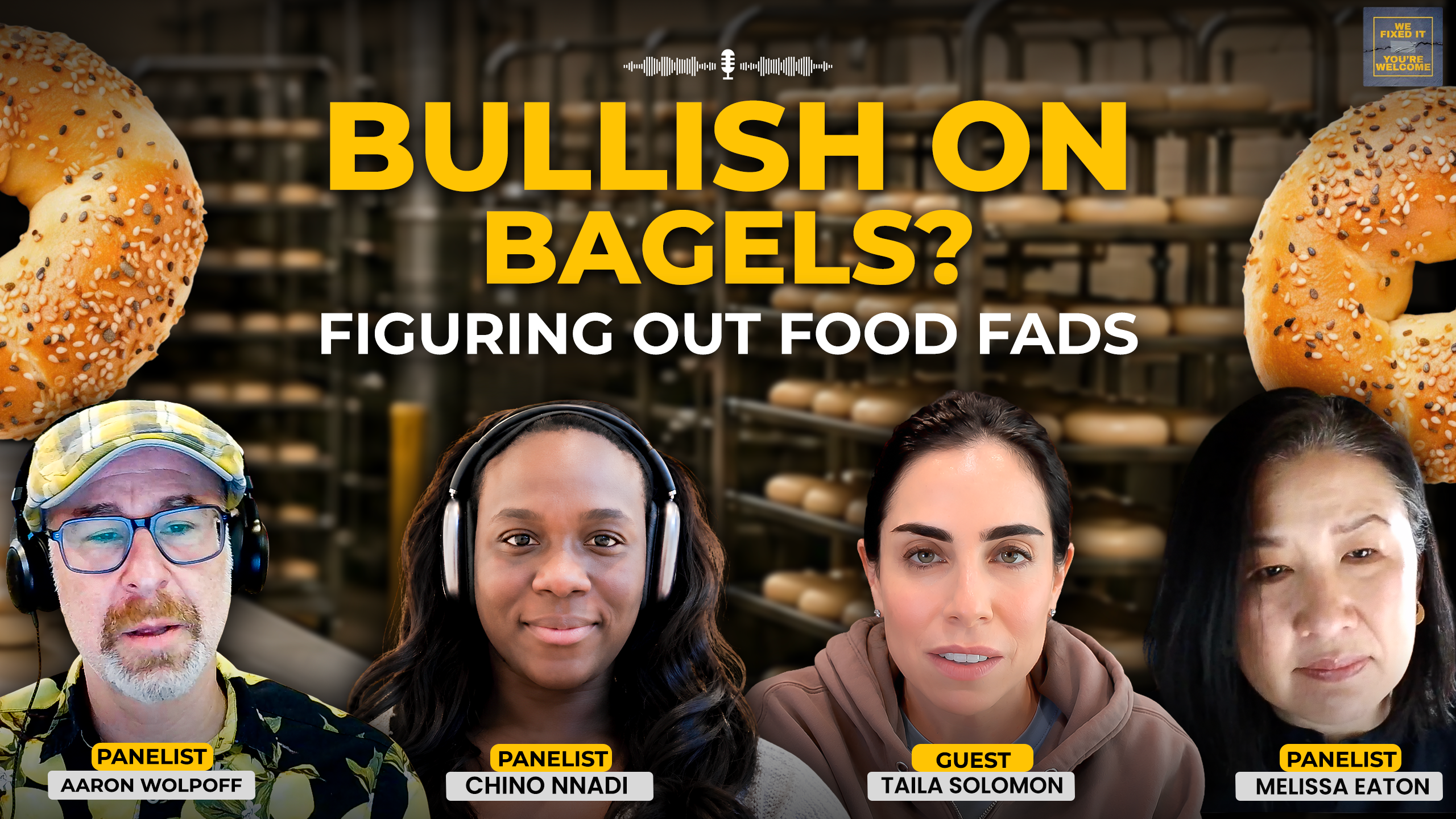
Bullish on Bagels? Figuring Out Food Fads

What separates a food fad that burns out from one that becomes a lasting brand? This episode dives into the psychology and business strategy behind viral food trends, with Pop-Up Bagels as a current example, to answer the question every food founder and investor is asking: how do you turn a moment into a movement? Featured Guest Talia Solomon — Founder, The Brand Economist Talia is a fractional CMO and brand advisor with a background in marketing and behavioral science. She has impacted companies across food, media, and consumer tech including Pizza Hut, Papa John's, Maggiano's, Del Taco, Ruby Tuesday, Weight Watchers, Bravo TV, Showtime, and Ring Doorbell. Her cross-industry experience gives her a unique lens on habit formation and consumer psychology. The Problem Food trends explode fast, and fizzle just as quickly. Category saturation, cultural shifts, and the gap between first-time curiosity and repeat habit have ended many promising brands. The real question isn't how to generate buzz. It's how to make people come back. Connect with Talia Linkedin - https://www.linkedin.com/in/taliasacks Subscribe for more deep dives where we fix big business problems with fresh perspectives. • Website – www.wefixeditpod.com • Follow us on: Instagram – https://www.instagram.com/wefixeditpod LinkedIn – https://www.linkedin.com/company/wefixeditpod YouTube – https://www.youtube.com/@WeFixedItPod If you liked this episode, don’t forget to subscribe, leave a review, and share it with your friends! Keep listening to find out how we fix companies and put them back better than we found them. Disclaimer A quick disclaimer. We are going into this somewhat cold and nothing we say should be construed as legal advice, financial advice or anything that would get us in trouble. These are our views and opinions. We’re here to ask the kinds of questions everyone’s thinking, have an engaging conversation and maybe come to some conclusions that we feel are worth exploring. By the end, if we fixed it, you’re welcome. All trademarks, IP and brand elements discussed are property of their respective owners. Learn more about your ad choices. Visit megaphone.fm/adchoices
53 minAbspielen in:

Di26Mai
We Fixed It, You're WelcomeAL

Andrew LebbosGast

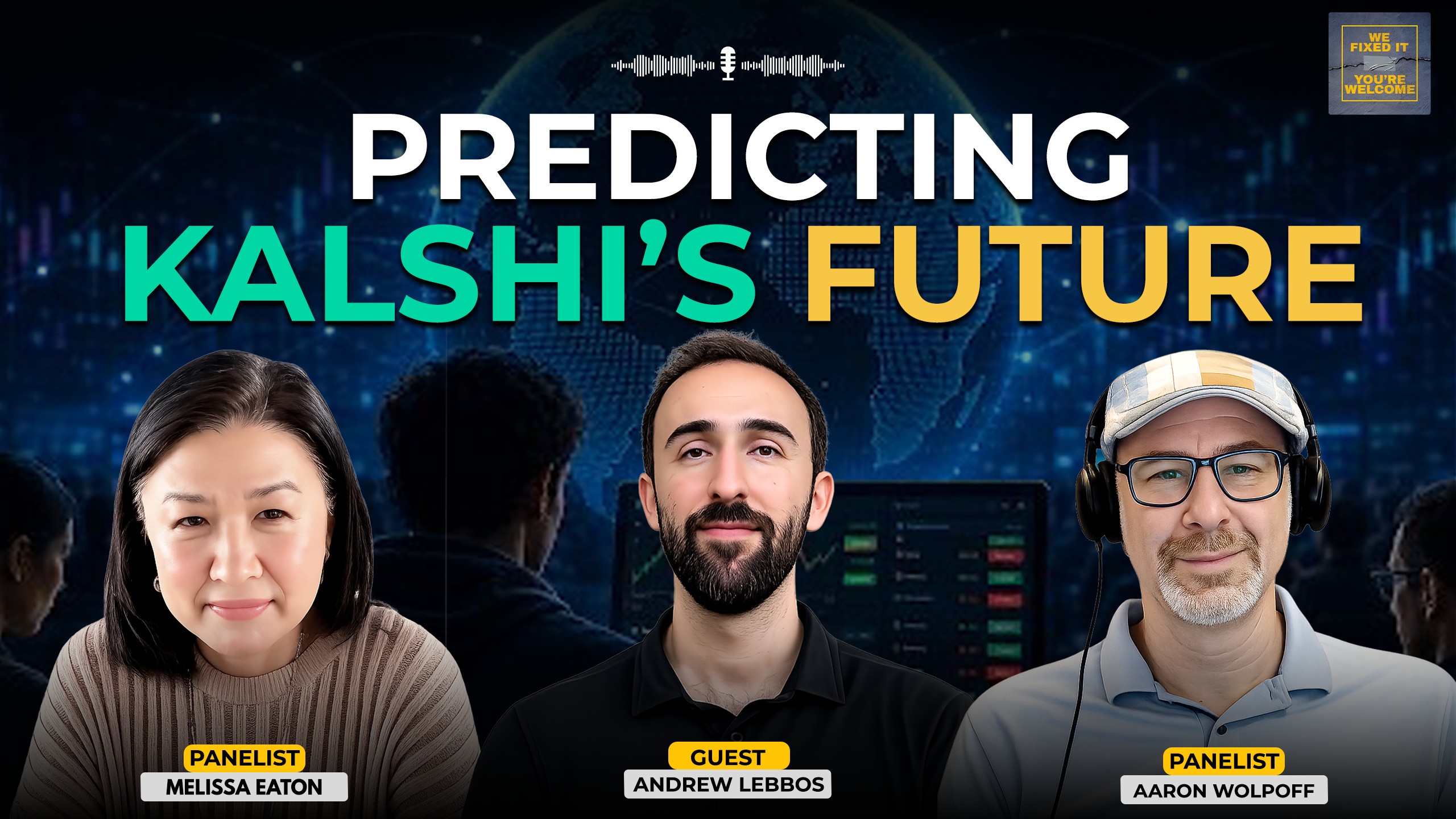
Predicting Kalshi’s Future

With billions of dollars traded weekly across non-traditional and traditional investors, prediction markets have quickly become one of the hottest crazes in finance. In this episode, we grab time with Andrew Lebbos of Benzinga (SVP of Licensing) to explore the current state of prediction market platforms like Kalshi and speculate about their long-term potential for good. This provocative conversation examines why prediction markets have gained mainstream attention, how they differ from traditional investing and sports betting, and whether crowdsourced forecasting can produce more accurate outcomes than other established methods. The discussion also tackles hot-button topics such as regulation, threats of insider information, concerns over gambling addiction, and the importance of customer retention. From the psychology of gambling to the speculative future of financial markets, this episode explores both the promise and possible risks of turning real-world events into tradable assets. Connect with Andrew LinkedIn: Andrew Lebbos on LinkedIn Benzinga: Benzinga APIs & Data Solutions Subscribe for more deep dives where we fix big business problems with fresh perspectives. • Website – www.wefixeditpod.com • Follow us on: Instagram – https://www.instagram.com/wefixeditpod LinkedIn – https://www.linkedin.com/company/wefixeditpod YouTube – https://www.youtube.com/@WeFixedItPod If you liked this episode, don’t forget to subscribe, leave a review, and share it with your friends! Keep listening to find out how we fix companies and put them back better than we found them. Disclaimer A quick disclaimer. We are going into this somewhat cold and nothing we say should be construed as legal advice, financial advice or anything that would get us in trouble. These are our views and opinions. We’re here to ask the kinds of questions everyone’s thinking, have an engaging conversation and maybe come to some conclusions that we feel are worth exploring. By the end, if we fixed it, you’re welcome. All trademarks, IP and brand elements discussed are property of their respective owners. Learn more about your ad choices. Visit megaphone.fm/adchoices
1 h 00 minAbspielen in:

Di12Mai
We Fixed It, You're WelcomeZW

Zach WichterGast

Spirit Airlines Out of Runway: What Happens From Here?

What happens when a major airline simply runs out of money? In this episode, USA Today’s consumer travel reporter Zach Wichter joins the conversation to break down the shocking collapse of Spirit Airlines and its impact on passengers, employees, competitors, and the future of budget air travel. After years of financial instability, failed merger attempts, mounting debt, and rising fuel costs, Spirit Airlines officially ceased operations on May 2, 2026, leaving travelers stranded and thousands of employees without jobs. But while the shutdown felt sudden to customers, the warning signs had been visible for years. Together, we unpack how the airline industry handles collapse, why ultra low cost carriers are becoming harder to sustain, and whether Spirit’s downfall signals a much bigger shift in the economics of air travel. In This Episode, We Cover Why Spirit Airlines officially shut down operations How fuel prices accelerated the company’s collapse The real reason ultra low cost airlines struggle long term What happened to stranded passengers and canceled flights Why airline shutdowns often happen abruptly The WARN Act and employee notification responsibilities How airline creditors influence shutdown decisions Why Spirit’s collapse could lead to higher airfare industry-wide The hidden role Spirit played in keeping ticket prices low The rise of premium travel after the pandemic How other airlines are responding to Spirit’s disappearance What happens to loyalty points and travel rewards after an airline dies Key Insight from the Episode Spirit Airlines may be gone, but its impact on pricing across the airline industry was enormous. As discussed during the episode: Whether or not you flew Spirit, you benefited from Spirit Airlines because they helped drive down prices in every market they touched. Without that pressure, travelers may soon face significantly higher airfare across the board. About the Guest: Zach Wichter Zach Wichter is a consumer travel reporter at USA Today, where he covers aviation, travel trends, airlines, and passenger experience through his column Cruising Altitude. Previously, Zach reported for: The New York Times The Points Guy He was also part of the reporting team recognized with a Loeb Award for coverage of the Boeing 737 MAX crisis. Connect with Zach on LinkedIn:https://www.linkedin.com/in/zlwichter/ Subscribe for more deep dives where we fix big business problems with fresh perspectives. • Website – www.wefixeditpod.com • Follow us on: Instagram – https://www.instagram.com/wefixeditpod LinkedIn – https://www.linkedin.com/company/wefixeditpod YouTube – https://www.youtube.com/@WeFixedItPod If you liked this episode, don’t forget to subscribe, leave a review, and share it with your friends! Keep listening to find out how we fix companies and put them back better than we found them. Disclaimer A quick disclaimer. We are going into this somewhat cold and nothing we say should be construed as legal advice, financial advice or anything that would get us in trouble. These are our views and opinions. We’re here to ask the kinds of questions everyone’s thinking, have an engaging conversation and maybe come to some conclusions that we feel are worth exploring. Learn more about your ad choices. Visit megaphone.fm/adchoices

54 minAbspielen in:

Do7Mai
We Fixed It, You're WelcomeTM

Todd M. SchoenbergerGast

Allbirds’ AI Reboot: Bold Leap or Giant Misstep

Can a financially devastated footwear brand reinvent itself overnight as an AI infrastructure company? In this episode, noted investment strategist Todd M. Schoenberger joins the discussion to unpack one of the boldest corporate pivots in recent memory: Allbirds’ decision to reposition itself as an AI business after losing nearly all of its market value. Is this the beginning of a revolutionary turnaround or a last-minute headline grab designed to buy time? Together, our panel explores whether brand loyalty is enough to survive a category shift this extreme, what investors are really reacting to when companies announce “AI pivots,” and whether Allbirds might still have viable paths forward to pursue its original footwear business instead of such a drastic departure. Are we entering an era where struggling companies can simply add “AI” to their story and reset investor expectations? As discussed in the episode: The company didn’t pivot to AI. They pivoted to a headline. That distinction may define whether Allbirds’ reboot becomes a turnaround story or a cautionary case study. Across industries, companies are racing to reposition themselves around artificial intelligence. But investors, employees, and customers are increasingly asking: What counts as a real pivot? What signals credibility? And what separates strategy from survival tactics? Allbirds provides a rare real-time example of what happens when brand identity, capital constraints, and market hype collide. Todd M. Schoenberger is CEO of CrossCheck Media and Chief Investment Officer at CrossCheck Management. He is a veteran financial commentator whose analysis has appeared on: CNBC Fox News CNN Todd specializes in interpreting market signals, investor behavior, and strategic corporate positioning during periods of economic transition. Connect with Todd on LinkedIn:https://www.linkedin.com/in/todd-m-schoenberger Some standout insights from this episode: ✔ AI announcements can trigger short-term stock spikes without long-term strategy✔ GPU infrastructure businesses require massive capital investment to compete✔ Brand trust weakens when companies abandon their founding mission abruptly✔ Direct-to-consumer footwear strategy may have been a stronger recovery path✔ Meme-stock momentum helped amplify Allbirds’ temporary rally✔ Sustainable brand positioning could have supported a more credible pivot✔ Timing, culture shifts, and retail expansion decisions accelerated decline The Allbirds story raises a broader question for founders and executives: When reinvention becomes necessary, should companies evolve within their strengths or leap into entirely new categories? Sometimes survival depends less on moving fast and more on moving credibly. Subscribe for more deep dives where we fix big business problems with fresh perspectives. • Website – www.wefixeditpod.com • Follow us on: Instagram – https://www.instagram.com/wefixeditpod LinkedIn – https://www.linkedin.com/company/wefixeditpod YouTube – https://www.youtube.com/@WeFixedItPod If you liked this episode, don’t forget to subscribe, leave a review, and share it with your friends! Keep listening to find out how we fix companies and put them back better than we found them. Disclaimer A quick disclaimer. We are going into this somewhat cold and nothing we say should be construed as legal advice, financial advice or anything that would get us in trouble. These are our views and opinions. We’re here to ask the kinds of questions everyone’s thinking, have an engaging conversation and maybe come to some conclusions that we feel are worth exploring. By the end, if we fixed it, you’re welcome. All trademarks, IP and brand elements discussed are property of their respective owners. Key Question Driving the EpisodeWhy This Conversation Matters Right NowAbout the Guest: Todd M. SchoenbergerDiscussion HighlightsA Bigger Strategic Lesson Learn more about your ad choices. Visit megaphone.fm/adchoices

1 h 05 minAbspielen in:

Di21Apr
We Fixed It, You're WelcomeLB

Leo BattersbyGast

Replay: Lego’s Grown Up Gamble

LEGO built one of the most iconic brands in history by standing for children, creativity, and open-ended play. But in recent years, a major shift has taken hold. The company is increasingly chasing adult fans with premium, expensive, highly detailed sets, licensed IP, and collector-focused experiences. In this episode, the panel is joined by toy industry veteran Leo Battersby to examine whether LEGO’s pivot toward adults is a smart growth strategy or a dangerous drift away from the very thing that made the brand legendary. The conversation explores the deep tension between imagination vs instruction, open-ended creativity vs rigid build-by-numbers kits, and long-term cultural pipeline vs short-term revenue growth. With declining birth rates, rising screen time, and changing childhood behavior, LEGO is navigating a radically different world than the one it helped shape. The group debates whether LEGO is slowly turning from a system of play into a premium model-building brand and what that means for future generations of builders. Key Topics & Takeaways Why adult collectors now make up ~25–30% of the toy market How LEGO’s “Adults Welcome” strategy and 18+ sets changed the brand The shift from imaginative play to instruction-following construction Why modern LEGO sets leave less room for creative reinterpretation The impact of screens, media, and IP on how kids play today Declining birth rates and what that means for toy company pipelines The difference between “paint by numbers” and a blank canvas Why nostalgia is powerful but not a long-term growth strategy How LEGO risks losing the next generation of builders The hidden danger of optimizing only for adult money Subscribe for more deep dives where we fix big business problems with fresh perspectives. • Website – www.wefixeditpod.com • Follow us on: Instagram – https://www.instagram.com/wefixeditpod LinkedIn – https://www.linkedin.com/company/wefixeditpod YouTube – https://www.youtube.com/@WeFixedItPod If you liked this episode, don’t forget to subscribe, leave a review, and share it with your friends! Keep listening to find out how we fix companies and put them back better than we found them. Disclaimer A quick disclaimer. We are going into this somewhat cold and nothing we say should be construed as legal advice, financial advice or anything that would get us in trouble. These are our views and opinions. We're here to ask the kinds of questions everyone's thinking. Have an engaging conversation and maybe come to some conclusions that we feel are worth exploring. By the end, if we fixed it, you're welcome. All trademarks, IP and brand elements discussed are property of their respective owners. Learn more about your ad choices. Visit megaphone.fm/adchoices
46 minAbspielen in:

Di14Apr
We Fixed It, You're WelcomeRH

Rene Huey-LiptonGast

Replay: Southwest’s LUV Lost

Southwest Airlines is financially strong. Record revenues. Stock price near multi-year highs. Yet longtime customers are walking away angry. In this episode, we unpack the growing tension between Wall Street performance and customer loyalty at Southwest Airlines. Host Aaron Wolpoff sits down with brand strategist Rene Huey-Lipton, founder of The Dame Collective and former strategy lead on Southwest during its golden years. The question at the center of the conversation: How can a brand be winning financially while simultaneously losing its best customers? From controversial assigned seating to unpopular baggage fees to the triggering “Boarding Royale” Super Bowl campaign, we analyze how strategic shifts have taken the most beloved airline identity in America off course for many consumers. What We Cover 1️⃣ The Core Problem: Financial Success vs Brand Equity Southwest reported record revenue, yet load factors are declining Loyal flyers publicly declaring they are leaving The emotional equity of “We’re all in this together” is eroding The danger of extracting more revenue per customer while shrinking the customer base Rene explains how this mirrors classic Wall Street optimization: maximize short-term revenue, risk long-term brand health. 2️⃣ The Boarding Royale Backfire Southwest’s Super Bowl ad mocked its former open seating model. Instead of feeling like a self-aware evolution, customers felt: Belittled Gaslit Reduced to the punchline Rene breaks down why making your most loyal customers the joke is a strategic miscalculation. 3️⃣ Hierarchy Changes Behavior Referencing research from Harvard Business School and the University of Toronto, Rene highlights how: Class distinctions increase conflict Introducing hierarchy shifts employee roles from hosts to referees Southwest’s once-democratic seating model helped create community When tiered seating and baggage fees entered the picture, the cultural dynamic shifted. 4️⃣ Internal Culture Risk Southwest’s frontline employees have historically been its greatest asset: Humor Warmth Human connection But layoffs, operational constraints, and policy changes are altering that culture. The episode explores whether internal friction could accelerate brand decline faster than customer dissatisfaction alone. 5️⃣ What Should Southwest Do? Rene proposes a bold alternative: A Dual-Brand Strategy Modeled after Qantas and Jetstar: Preserve Southwest as a high-trust, economy-focused domestic brand Launch a separate premium or long-haul sub-brand Protect the emotional equity instead of diluting it Other ideas discussed: Restore fee transparency Recommit to “Bags Fly Free” Monetize passenger engagement through paid brand research partnerships Re-empower employees as ambassadors rather than enforcers Subscribe for more deep dives where we fix big business problems with fresh perspectives. Rene Huey-Lipton https://www.linkedin.com/in/hueylipton/ • Website – www.wefixeditpod.com • Follow us on: Instagram – https://www.instagram.com/wefixeditpod LinkedIn – https://www.linkedin.com/company/wefixeditpod YouTube – https://www.youtube.com/@WeFixedItPod If you liked this episode, don’t forget to subscribe, leave a review, and share it with your friends! Keep listening to find out how we fix companies and put them back better than we found them. Disclaimer A quick disclaimer. We are going into this somewhat cold and nothing we say should be construed as legal advice, financial advice or anything that would get us in trouble. These are our views and opinions. We're here to ask the kinds of questions everyone's thinking. Have an engaging conversation and maybe come to some conclusions that we feel are worth exploring. By the end, if we fixed it, you're welcome. All trademarks, IP and brand elements discussed are property of their respective owners. Learn more about your ad choices. Visit megaphone.fm/adchoices
59 minAbspielen in:

Di7Apr
We Fixed It, You're WelcomeRH

Ron HetrickGast

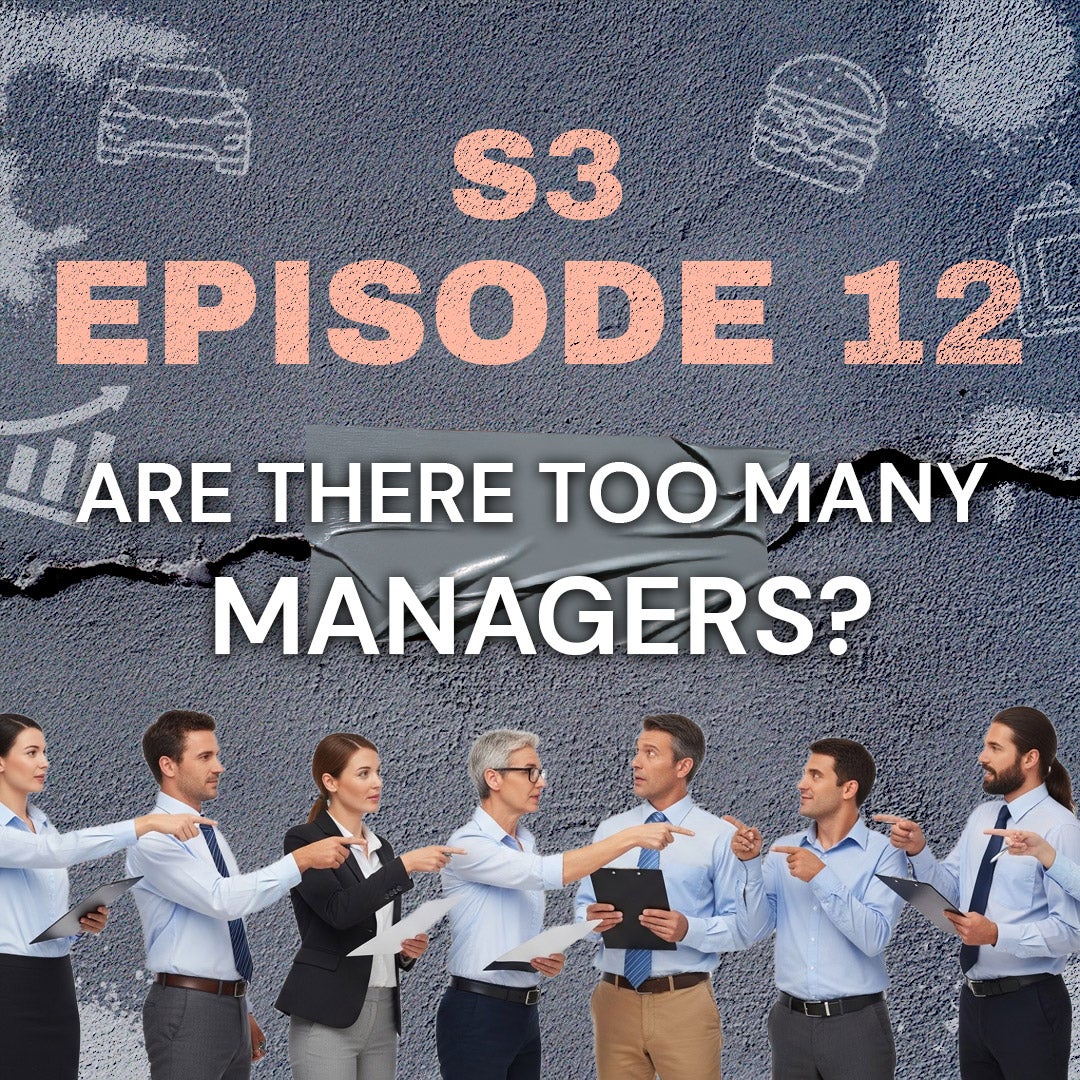
Are There Too Many Managers?

Are too many people being promoted into leadership roles? As a result, are companies becoming too top heavy? If we’ve created a system that values managers over executers, is this a recipe for disaster? In this episode, we’re joined by Ron Hetrick, Principal Economist at Lightcast and one of the most influential labor economists in the country. Together, we unpack one of the most important questions facing today’s labor market: whether modern organizations are overloaded with managers and what that means for productivity, hiring, layoffs, and career paths. Drawing on decades of labor market research and macro workforce data, Ron explains why middle managers are often the first cut during layoffs, how that decision can negatively impact companies, and why a contributor-based evaluation might be a better approach. This dynamic conversation digs into provocative questions we’re all asking, challenges assumptions, and poses some very real solutions about improving our collective thinking about the labor force. In This Episode, We Cover ● Why organizations naturally accumulate management layers over time ● The hidden risk of promoting top performers into leadership roles ● How layoffs disproportionately affect middle managers ● The mismatch between workforce expectations and available leadership roles ● Why companies reward management more than execution ● The growing importance of Individual Contributor career paths ● How interest rates and capital costs influence layoffs ● The long term consequences of overhiring during economic spikes ● Why forecasting failures create workforce instability ● How companies can rethink compensation structures to retain expertise ● The role AI may play in reshaping management structures ● Why trades and technical careers are becoming more attractive again Key Insight from Ron Hetrick One of the biggest workforce challenges today is not simply too many managers. It is a system that rewards leadership titles more than execution excellence. If organizations want stability, they must create career ladders where experts can grow inancially without being pushed into management roles if it creates misalignment. As Ron explains during the episode: The farther your role is from creating revenue or protecting margin, the harder it becomes to justify during restructuring. About the Guest: Ron Hetrick Ron Hetrick is a leading labor economist and Principal Economist at Lightcast. He previously worked at the U.S. Bureau of Labor Statistics and advises Fortune 100 companies, policymakers, and workforce strategists. He is also the author of: ● Demographic Drought ● Who’s Going to Do the Work ● The Rising Storm (contributor) ● Fault Lines (co-author) Ron is widely recognized for translating workforce data into practical strategic insight for organizations navigating talent shortages and economic change. Connect with Ron on LinkedIn: https://www.linkedin.com/in/ronlhetrick/ Discussion Highlights Some standout takeaways from this episode: ✔ Promotions are often used as retention tools rather than structural necessities ✔ Middle management roles expand fastest during economic growth cycles ✔ Overhiring during temporary demand spikes leads directly to layoffs later ✔ Organizations rarely forecast workforce demand accurately ✔ Execution roles are often undervalued compared to leadership titles ✔ Skilled experts need compensation parity with managers ✔ Career ladders must evolve beyond title based advancement Our Panel ● Aaron Wolpoff – Host and Marketing panelist ● Melissa Eaton – Operations and C/X panelist ● Chino Nnadi – People, Talent and Culture panelist ● Ron Hetrick (Guest) - Labor economist and Principal Economist at Lightcast. Subscribe for more deep dives where we fix big business problems with fresh perspectives. • Website – www.wefixeditpod.com • Follow us on: Instagram – https://www.instagram.com/wefixeditpod LinkedIn – https://www.linkedin.com/company/wefixeditpod YouTube – https://www.youtube.com/@WeFixedItPod If you liked this episode, don’t forget to subscribe, leave a review, and share it with your friends! Keep listening to find out how we fix companies and put them back better than we found them. Disclaimer A quick disclaimer. We are going into this somewhat cold and nothing we say should be onstrued as legal advice, financial advice or anything that would get us in trouble. These are our views and opinions. We're here to ask the kinds of questions everyone's thinking, have an engaging conversation and maybe come to some conclusions that we feel are worth exploring. By the end, if we fixed it, you're welcome. All trademarks, IP and brand elements discussed are property of their respective owners. See Privacy Policy at https://art19.com/privacy and California Privacy Notice at https://art19.com/privacy#do-not-sell-my-info. Learn more about your ad choices. Visit megaphone.fm/adchoices

53 minAbspielen in:

Di31Mär
We Fixed It, You're WelcomeCH

Christopher HearseyGast

Is Outer Space for Everyone?

Space exploration used to be reserved for governments and elite astronauts only. Today, commercial launches, private space stations, and civilian missions are raising questions about opening up space travel and making access more widely available. In this episode, global space policy executive Christopher Hearsey joins the conversation to explore the future of commercial spaceflight, the role of private companies, and whether humanity is entering a new era where space truly becomes accessible to everyone. From billionaire tourism headlines to satellite infrastructure that powers everyday life on Earth, this discussion separates myth from reality and explains what space tourism and space commercialization actually means for society. What You’ll Learn in This Episode Why space is no longer just for astronauts and governments How private companies like SpaceX and Blue Origin are accelerating the push for space travel The legal reality behind the Outer Space Treaty and ownership in space The economics of space tourism and why costs are still high How satellites already power GPS, banking, communications, and security systems Whether governments or private companies should lead the next phase of exploration About Christopher Hearsey Christopher Hearsey is a global space executive and founder of OSA Consulting, specializing in commercial space policy and regulatory strategy. He previously worked at the U.S. State Department and helped support implementation of the National Space Policy. He also co-founded the Space Court Foundation, which promotes global education around space law and governance. Learn more: https://www.linkedin.com/in/hearsey/ Our Panel Aaron Wolpoff – Host and Marketing panelist Melissa Eaton – Operations and C/X panelist  Chino Nnadi – People, Talent and Culture panelist Christopher Hearsey - Guest and global space executive Subscribe for more deep dives where we fix big business problems with fresh perspectives. • Website – www.wefixeditpod.com • Follow us on: Instagram – https://www.instagram.com/wefixeditpod LinkedIn – https://www.linkedin.com/company/wefixeditpod YouTube – https://www.youtube.com/@WeFixedItPod If you liked this episode, don’t forget to subscribe, leave a review, and share it with your friends! Keep listening to find out how we fix companies and put them back better than we found them. Disclaimer A quick disclaimer. We are going into this somewhat cold and nothing we say should be construed as legal advice, financial advice or anything that would get us in trouble. These are our views and opinions. We're here to ask the kinds of questions everyone's thinking, have an engaging conversation and maybe come to some conclusions that we feel are worth exploring. By the end, if we fixed it, you're welcome. All trademarks, IP and brand elements discussed are property of their respective owners. See Privacy Policy at https://art19.com/privacy and California Privacy Notice at https://art19.com/privacy#do-not-sell-my-info. Learn more about your ad choices. Visit megaphone.fm/adchoices

46 minAbspielen in:

Di10Mär
We Fixed It, You're WelcomeRH

Rene Huey-LiptonGast

Southwest’s LUV Lost

Southwest Airlines is financially strong. Record revenues. Stock price near multi-year highs. Yet longtime customers are walking away angry. In this episode, we unpack the growing tension between Wall Street performance and customer loyalty at Southwest Airlines. Host Aaron Wolpoff sits down with brand strategist Rene Huey-Lipton, founder of The Dame Collective and former strategy lead on Southwest during its golden years. The question at the center of the conversation: How can a brand be winning financially while simultaneously losing its best customers? From controversial assigned seating to unpopular baggage fees to the triggering “Boarding Royale” Super Bowl campaign, we analyze how strategic shifts have taken the most beloved airline identity in America off course for many consumers. What We Cover 1️⃣ The Core Problem: Financial Success vs Brand Equity Southwest reported record revenue, yet load factors are declining Loyal flyers publicly declaring they are leaving The emotional equity of “We’re all in this together” is eroding The danger of extracting more revenue per customer while shrinking the customer base Rene explains how this mirrors classic Wall Street optimization: maximize short-term revenue, risk long-term brand health. 2️⃣ The Boarding Royale Backfire Southwest’s Super Bowl ad mocked its former open seating model. Instead of feeling like a self-aware evolution, customers felt: Belittled Gaslit Reduced to the punchline Rene breaks down why making your most loyal customers the joke is a strategic miscalculation. 3️⃣ Hierarchy Changes Behavior Referencing research from Harvard Business School and the University of Toronto, Rene highlights how: Class distinctions increase conflict Introducing hierarchy shifts employee roles from hosts to referees Southwest’s once-democratic seating model helped create community When tiered seating and baggage fees entered the picture, the cultural dynamic shifted. 4️⃣ Internal Culture Risk Southwest’s frontline employees have historically been its greatest asset: Humor Warmth Human connection But layoffs, operational constraints, and policy changes are altering that culture. The episode explores whether internal friction could accelerate brand decline faster than customer dissatisfaction alone. 5️⃣ What Should Southwest Do? Rene proposes a bold alternative: A Dual-Brand Strategy Modeled after Qantas and Jetstar: Preserve Southwest as a high-trust, economy-focused domestic brand Launch a separate premium or long-haul sub-brand Protect the emotional equity instead of diluting it Other ideas discussed: Restore fee transparency Recommit to “Bags Fly Free” Monetize passenger engagement through paid brand research partnerships Re-empower employees as ambassadors rather than enforcers Subscribe for more deep dives where we fix big business problems with fresh perspectives. Rene Huey-Lipton https://www.linkedin.com/in/hueylipton/ • Website – www.wefixeditpod.com • Follow us on: Instagram – https://www.instagram.com/wefixeditpod LinkedIn – https://www.linkedin.com/company/wefixeditpod YouTube – https://www.youtube.com/@WeFixedItPod If you liked this episode, don’t forget to subscribe, leave a review, and share it with your friends! Keep listening to find out how we fix companies and put them back better than we found them. Disclaimer A quick disclaimer. We are going into this somewhat cold and nothing we say should be construed as legal advice, financial advice or anything that would get us in trouble. These are our views and opinions. We're here to ask the kinds of questions everyone's thinking. Have an engaging conversation and maybe come to some conclusions that we feel are worth exploring. By the end, if we fixed it, you're welcome. All trademarks, IP and brand elements discussed are property of their respective owners. See Privacy Policy at https://art19.com/privacy and California Privacy Notice at https://art19.com/privacy#do-not-sell-my-info. Learn more about your ad choices. Visit megaphone.fm/adchoices

55 minAbspielen in:

Di3Mär
We Fixed It, You're WelcomeBR

Brad ReeseGast

The Reese’s Controversy with Brad Reese

For generations, a bite of a Reese’s Peanut Butter Cup meant one thing: Milk chocolate. Real peanut butter. That unmistakable taste. Now, many loyal fans say something is different. In this episode, we sit down with Brad Reese, grandson of H. B. Reese and self-appointed “Protector of Reese’s Brand Integrity,” to unpack a controversy that has caught the world’s attention. Brad and others are upset about the current quality of Reese’s products under Hershey’s control, pointing to a shift in taste and either proven or alleged ingredient swaps.  Emotions are high - people love Reese’s. They want real answers. This isn’t just about candy. It’s about trust, heritage, and a beloved company at a cultural tension point with its best customers. What Sparked the Controversy? Brad published an open letter to Hershey’s on LinkedIn calling out what he and many consumers observed: Certain varieties no longer list milk chocolate Some now use “chocolate candy,” “chocolatey coating,” or compound coating Peanut butter replaced in some products with “peanut butter creme” Ingredient changes implemented quietly, without announcement While The Hershey Company has publicly stated that core ingredients have not changed, consumers began comparing labels and conducting side-by-side taste tests online. The consumer pushback and Hershey’s response quickly went viral, drawing attention from major media outlets and even commentary from MrBeast while promoting his own line of Feastibles. A Powerful Quote from Brad “They’re stooping for pennies and passing up dollars.” Subscribe for more deep dives where we fix big business problems with fresh perspectives. Brad Reese https://www.linkedin.com/in/bradreesecom/ • Website – www.wefixeditpod.com • Follow us on: Instagram – https://www.instagram.com/wefixeditpod LinkedIn – https://www.linkedin.com/company/wefixeditpod YouTube – https://www.youtube.com/@WeFixedItPod If you liked this episode, don’t forget to subscribe, leave a review, and share it with your friends! Keep listening to find out how we fix companies and put them back better than we found them. Disclaimer A quick disclaimer. We are going into this somewhat cold and nothing we say should be construed as legal advice, financial advice or anything that would get us in trouble. These are our views and opinions. We're here to ask the kinds of questions everyone's thinking. Have an engaging conversation and maybe come to some conclusions that we feel are worth exploring. By the end, if we fixed it, you're welcome. All trademarks, IP and brand elements discussed are property of their respective owners. See Privacy Policy at https://art19.com/privacy and California Privacy Notice at https://art19.com/privacy#do-not-sell-my-info. Learn more about your ad choices. Visit megaphone.fm/adchoices

1 h 12 minAbspielen in:

Gäste, die länger als 12 Monate zurückliegen, gibt es mit Pro. Pläne ansehen