A podcast hosted by L.-C. Campeau and Dani Schultz that dives into the stories about the people behind the chemistry and science that happens at #MerckChemistry. Follow us on X (formerly Twitter) at @PharmToTablePod, @DrLCSquare, @danithechemist Email us comments and suggestions at pharmtotablepod@gmail.com
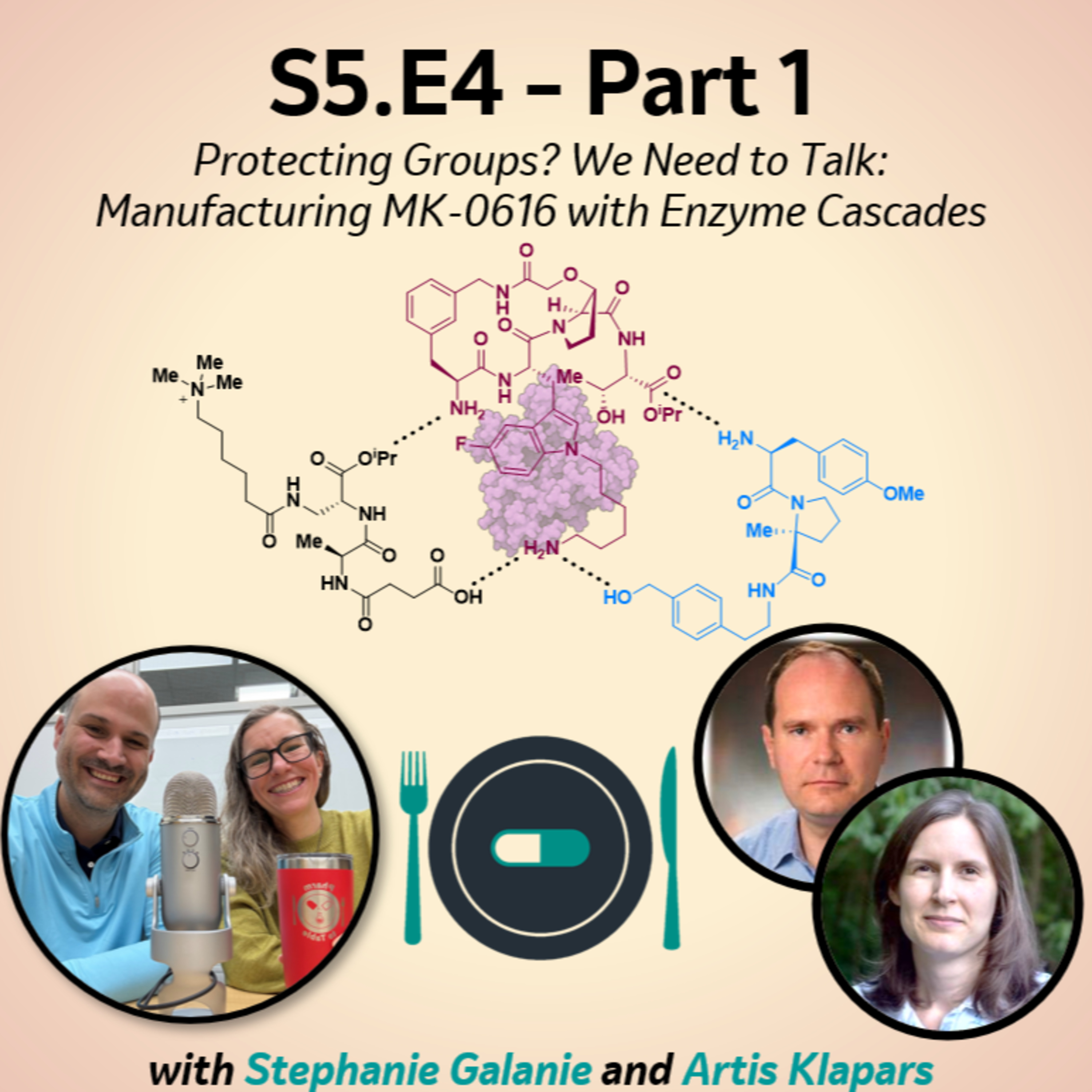
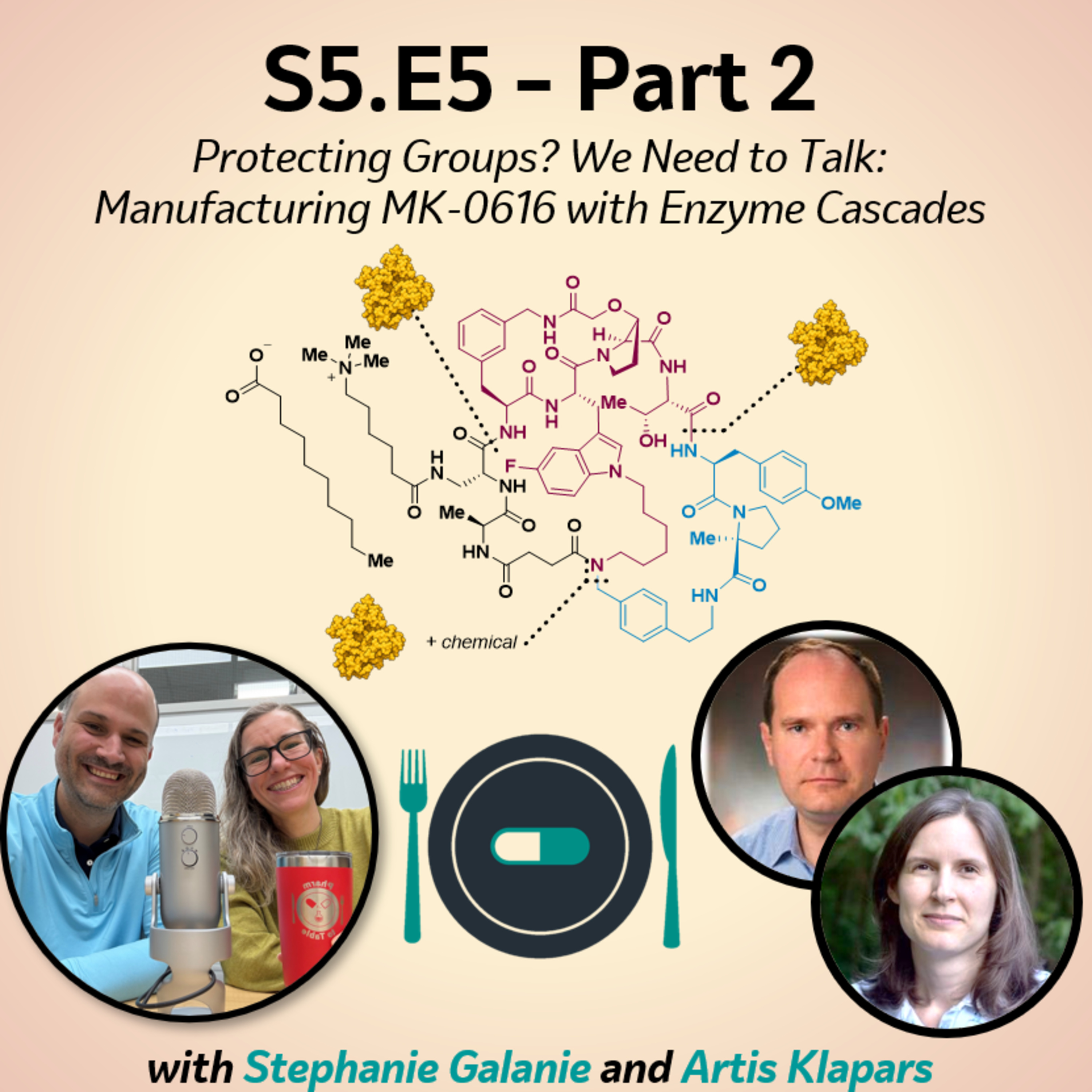
Part 1 laid out the strategy. Now, it’s time to make the molecule. Four enzymes, one vessel, and plenty of competing amines. What could possibly go wrong? Dani and LC return with Stephanie Galanie, Director in Biocatalysis, and Artis Klapars, Distinguished Scientist in Process Chemistry, for a closer look at the chemistry behind MK-0616 manufacturing.
We start with the northern fragment, where making three bonds selectively means getting four engineered enzymes to play well together, ATP recycling included. Then we tackle fragment ligation with an evolved thioesterase and a hydrogen-borrowing cascade that closes a macrocycle. How do you drive an uphill reaction toward completion? And why would you start engineering an enzyme with the “wrong” substrate? Stephanie and Artis explain the solutions behind the synthesis.
Finally, traditional coupling chemistry gets its moment alongside enzymatic macrocyclization, and a “counterion dance” gets MK-0616 out of solution in the right purity and salt form. We wrap up with what it takes to turn ambitious chemistry into a manufacturing process, and why protecting-group-free fragment coupling, concentrated macrocyclizations, and crystallization could change how we make complex peptides.
Read some of the papers we discussed today:
Biocatalytic cascades enable manufacture of the macrocyclic peptide MK-0616 - Science
More on Pharm to Table
Follow the Pharm to Table podcast on X - @PharmtoTablePod
‘Pharm to Table’ podcast duo bridges the academia-industry divide' - C&EN
Should You Start a Chemistry Podcast? - Organic Letters
The Future of Science Communication - ACS BrandLab
Visit our website at https://podcasters.spotify.com/pod/show/pharm-to-table
How do you design a manufacturing process for a molecule as complex as MK-0616? In Part 1 of this Pharm to Table series, Dani and LC join Stephanie Galanie, Director in Biocatalysis, and Artis Klapars, Distinguished Scientist in Process Chemistry, to discuss the manufacturing route behind their Science paper on biocatalytic cascades for this macrocyclic peptide.
We start with a central question: why develop a new synthesis when an existing route already delivers hundreds of kilograms? Artis and Stephanie explain how the team worked backward from MK-0616’s complex structure to choose key disconnections, then developed three interconnected cascades to assemble it. Along the way, we unpack the tools behind those decisions, including directed evolution and enzymes that selectively form amide bonds without relying on protecting groups.
Part 2 takes us inside the cascades, from four enzymes working in one vessel to fragment ligation and macrocyclization, then tackles the final challenge: isolating MK-0616 in the right purity and salt form.
Read some of the papers we discussed today:
Biocatalytic cascades enable manufacture of the macrocyclic peptide MK-0616 - Science
More on Pharm to Table
Follow the Pharm to Table podcast on X - @PharmtoTablePod
‘Pharm to Table’ podcast duo bridges the academia-industry divide' - C&EN
Should You Start a Chemistry Podcast? - Organic Letters
The Future of Science Communication - ACS BrandLab
Visit our website at https://podcasters.spotify.com/pod/show/pharm-to-table
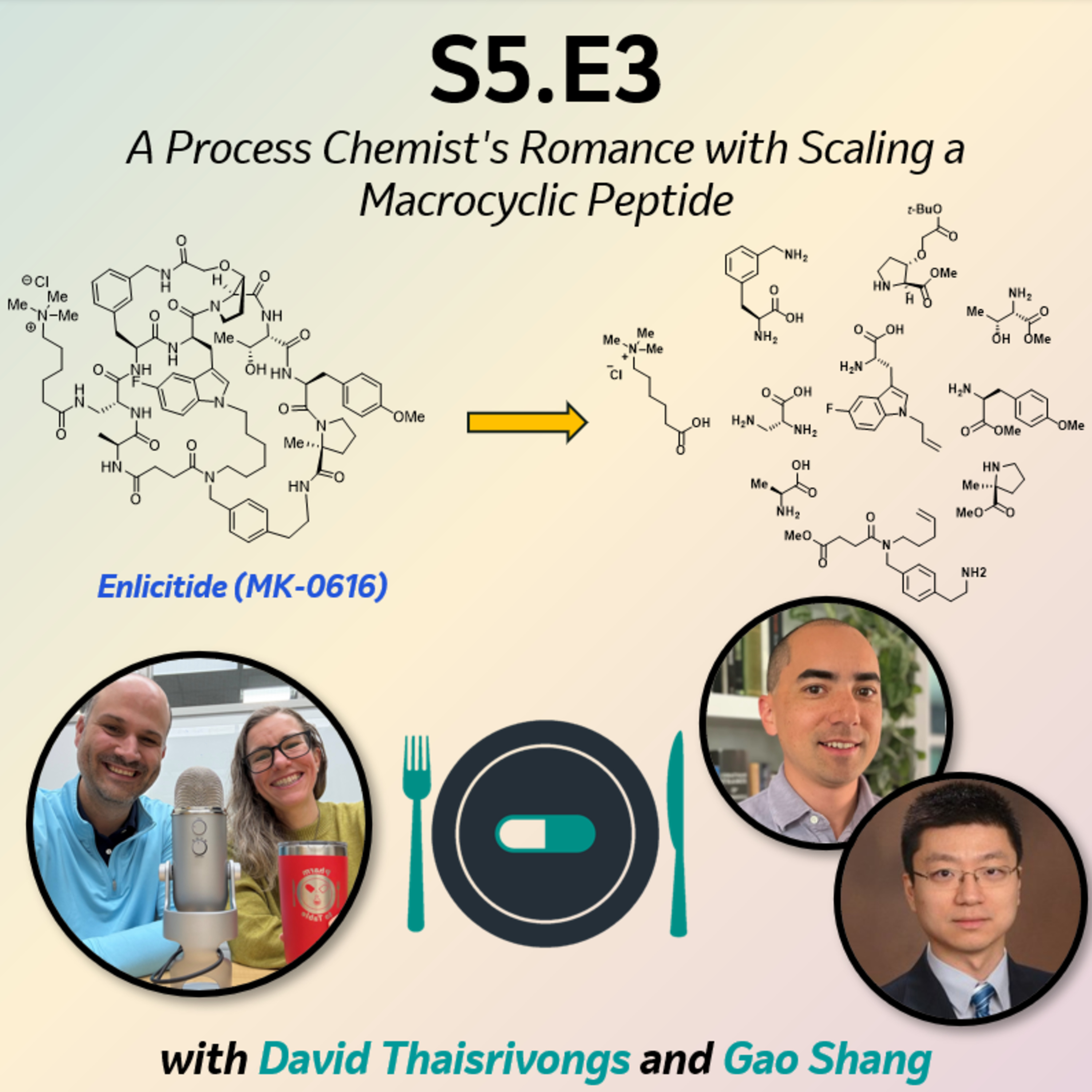
Last episode, we watched medicinal chemistry dream up enclitide (MK-0616) — this week we find out what happens when someone actually has to make it. Dani and LC are joined by David Thaisrivongs and Gao Shang to unpack their recent JACS paper on the total synthesis of enlicitide, a macrocyclic peptide complex enough to keep company with taxol, vancomycin, and eribulin. Along the way they get into the pivot from solid-phase to solution-phase peptide synthesis, the perpetual headache of sourcing non-canonical amino acids and how biocatalysis cracked it open, and the crystallization detective work that let the team ditch chromatography entirely. There's also a great discussion on why a late-stage macrolactamization became a late-stage RCM — the kind of route decision that looks obvious only in hindsight.
Fair warning: this one was among JACS's top-accessed papers of 2025, so you're in good company!
If you enjoyed this chapter of the enlicitide story, stay tuned—we've got plenty more peptide chemistry, process development adventures, and behind-the-scenes drug discovery stories coming your way this season.
Read some of the papers we discussed today:
Total Synthesis of Enlicitide Decanoate - J. Am. Chem. Soc.
Follow the Pharm to Table podcast on X - @PharmtoTablePod
Visit our website at https://podcasters.spotify.com/pod/show/pharm-to-table
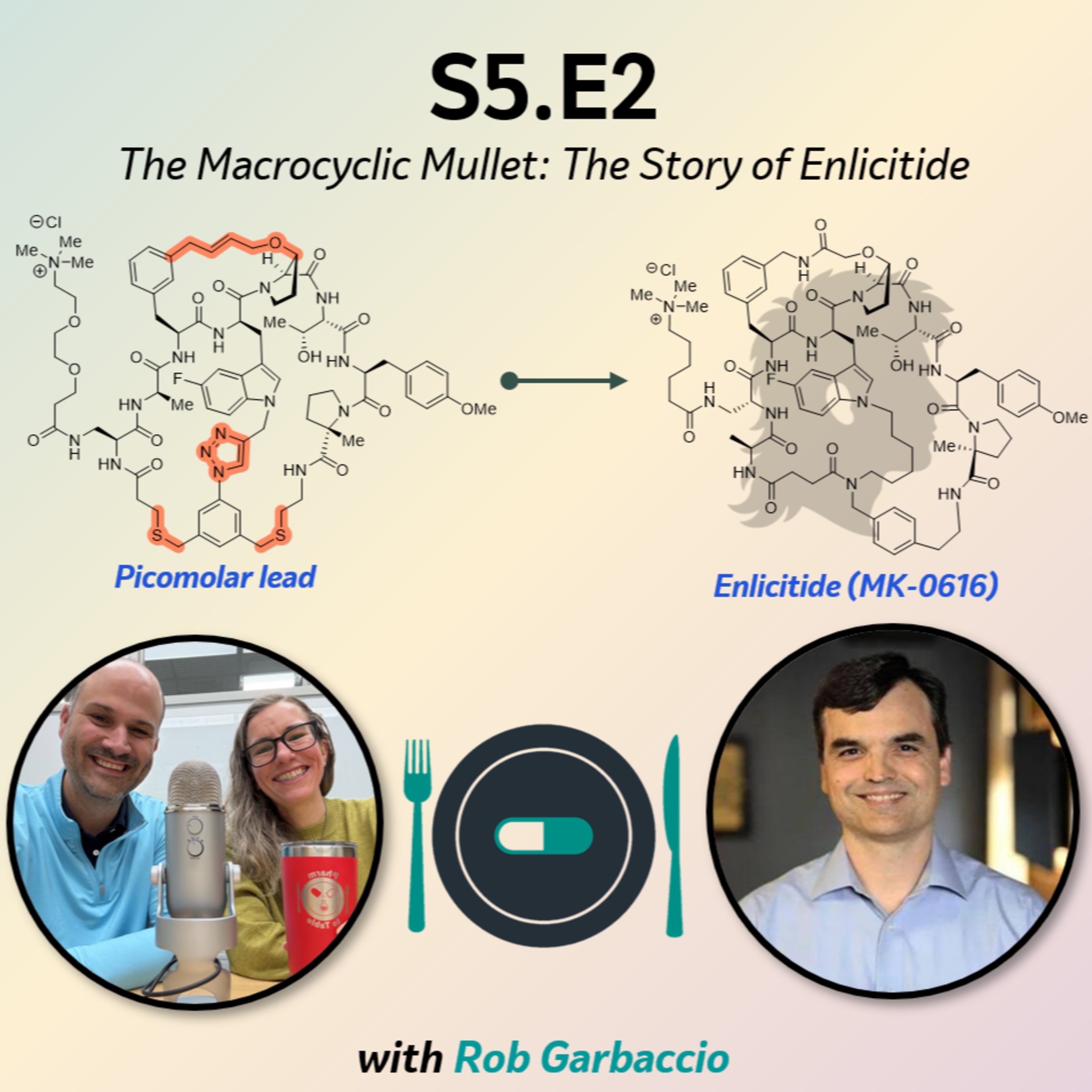
What happens when the textbook SAR playbook stops working? On this episode of Pharm to Table, Rob Garbaccio joins Dani and LC to share the discovery story behind enlicitide (MK-0616), a journey filled with unusual SAR, creative problem-solving, and plenty of chemistry twists along the way. From issue-driven drug design to non-canonical amino acids and modular synthesis strategies, this conversation offers a behind-the-scenes look at how real medicines are discovered. If you're training as a chemist today, this is a story you won't want to miss.
If you enjoyed this chapter of the enlicitide story, stay tuned—we've got plenty more peptide chemistry, process development adventures, and behind-the-scenes drug discovery stories coming your way this season.
Read some of the papers we discussed today:
Discovery Process of Enlicitide, a Highly Engineered Macrocyclic Peptide Therapeutic, through Issue-Driven Fragment-Based Synthetic Assembly and SAR - J. Med. Chem.
Follow the Pharm to Table podcast on X - @PharmtoTablePod
Visit our website at https://podcasters.spotify.com/pod/show/pharm-to-table
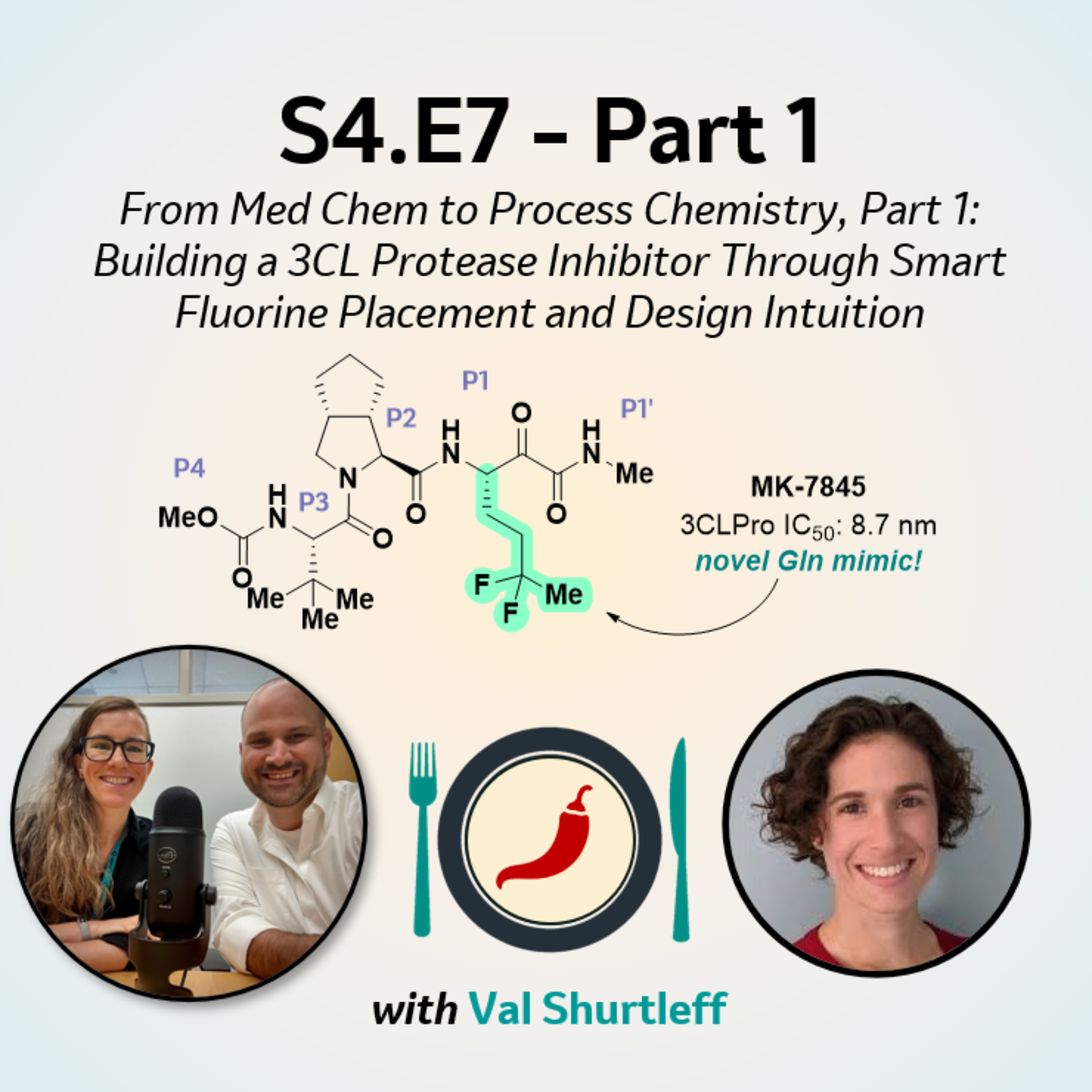
In this first installment of our two‑part Pharm to Table special on MK‑7845, Dani and LC sit down with medicinal chemist Valerie Shurtleff to unpack the discovery journey behind this 3CL protease inhibitor—from early structural insights to an unexpectedly effective difluorobutyl isostere. Val walks us through how the team balanced potency, VLE, metabolic challenges, and design intuition to land on a well‑rounded preclinical candidate - one of the most dynamic programs of her career. Along the way, she reminds us why asking good questions, collaborating relentlessly, and occasionally surviving a “Hot Ones” challenge are all essential scientific skills. It’s an episode packed with chemistry, creativity, and just enough fluorine to keep things spicy.
Stay tuned for Part 2, where we shift from invention to implementation and explore how the process chemistry team brought MK‑7845 to life at scale.
Read some of the papers we discussed today:
Invention of MK-7845, a SARS-CoV-2 3CL Protease Inhibitor Employing a Novel Difluorinated Glutamine Mimic - J. Med. Chem.
Follow the Pharm to Table podcast on X - @PharmtoTablePod
Visit our website at https://podcasters.spotify.com/pod/show/pharm-to-table
29 minAbspielen in:
Gäste, die länger als 12 Monate zurückliegen, gibt es mit Pro. Pläne ansehen

 AK