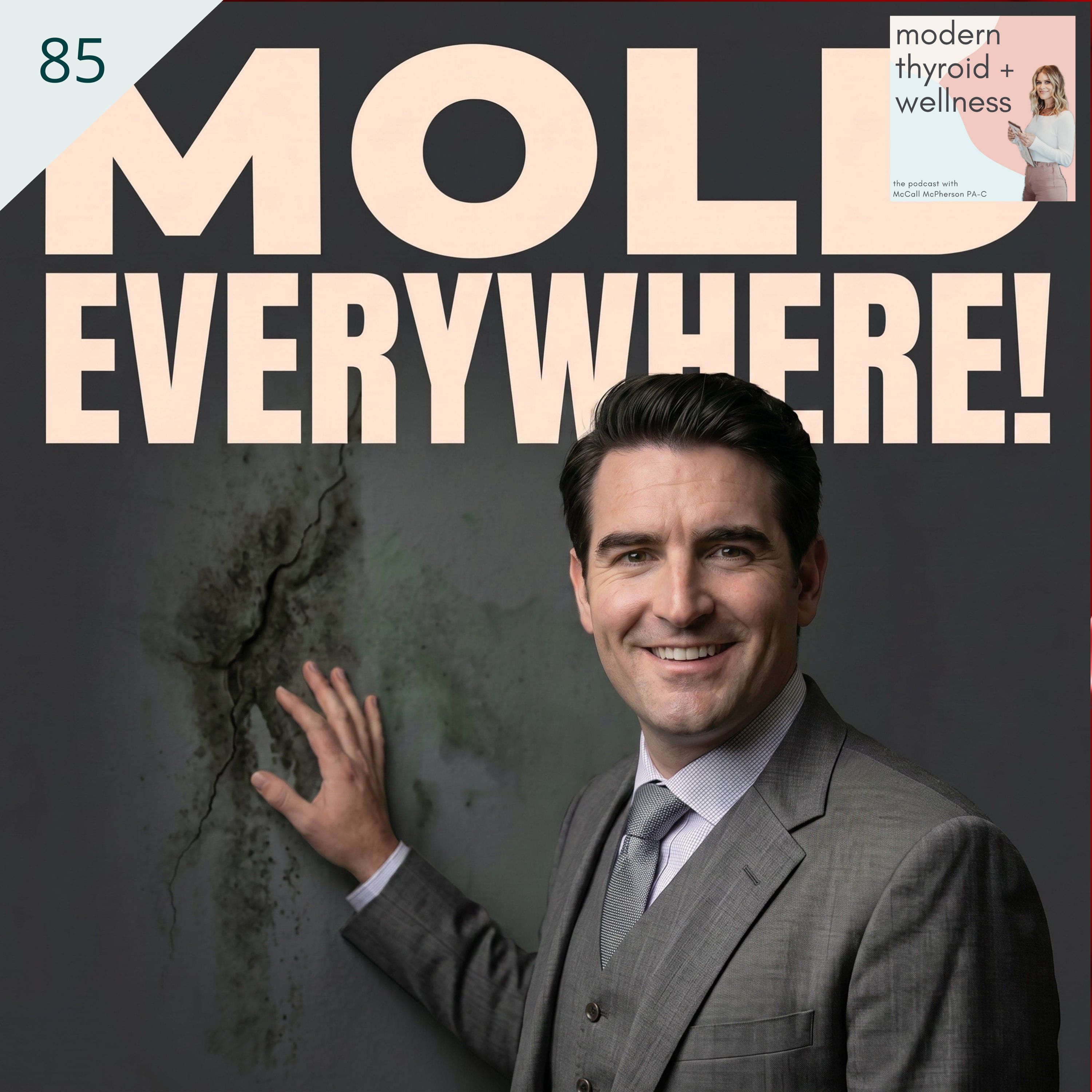
85: Your Home Could Be Making You Sick – The Hidden Mold Exposure Keeping You Tired, Inflamed, and Stuck with Dr. Philip Oubre
Wer in dieser Folge vorkommt
Philip OubreGast
Warum PodAppear „Gast“ sagt
“85: Your Home Could Be Making You Sick – The Hidden Mold Exposure Keeping You Tired, Inflamed, and Stuck with Dr. Philip Oubre”Beschreibung der Folge
What if the reason you're still struggling with fatigue, brain fog, inflammation, gut issues, or hormone imbalances isn't because your treatment isn't working—but because you're being exposed to mold every single day?
In this episode of Modern Thyroid and Wellness, McCall McPherson sits down with Philip Oubre to explore one of the most overlooked drivers of chronic illness: mold exposure. Drawing from years of clinical experience treating complex chronic conditions, Dr. Oubre explains why mold is often missed, how it disrupts nearly every system in the body, and why many patients continue struggling despite doing "all the right things."
Ganze Beschreibung zeigen
Together, they discuss mold's impact on thyroid health, gut function, hormones, brain health, autoimmune conditions, and chronic inflammation. Dr. Oubre also shares practical guidance on identifying mold exposure, testing your home, understanding common symptoms, and supporting recovery through a gut-first treatment approach.
If you've been told your labs are normal but still don't feel like yourself, this conversation may help uncover a missing piece of the puzzle.
🔑 Key Topics Covered
Why mold is one of the most overlooked causes of chronic illness
The connection between mold exposure and persistent thyroid symptoms
Common mold symptoms including brain fog, fatigue, eczema, and hormone dysfunction
Why many mold-related illnesses go undiagnosed for years
The concept of "ongoing toxic exposure" and why some patients never fully improve
Why mold doesn't always have a musty smell
The surprising mold story hidden inside Dr. Oubre's own home
How newer homes can sometimes be riskier than older homes
The impact of mold on the nervous system, hormones, mitochondria, and immune function
Mold's relationship with gut dysfunction, microbiome imbalance, and nutrient deficiencies
How mold can contribute to autoimmune conditions and chronic inflammation
The role of black mold in neurological symptoms
Understanding the VCS (Visual Contrast Sensitivity) test
Why home testing is often more important than testing the person
How the ERMI dust test works and why it can reveal hidden mold exposure
Why mold inspectors may miss hidden mold behind walls
The relationship between mold, children, ADHD, and neurological symptoms
A gut-first approach to mold recovery
Why rebuilding the microbiome is critical for healing
Common mistakes people make when trying to detox mold
What realistic recovery from mold exposure looks like
🏠 Mold Is Often the Missing Piece
One of the most powerful insights from this conversation is that mold can affect nearly every system in the body, creating symptoms that often seem unrelated.
Dr. Oubre explains that many of the patients who eventually discover mold exposure have already seen multiple doctors and completed extensive testing without finding answers.
Common symptoms include:
Brain fog
Chronic fatigue
Memory issues
Hormone imbalances
Thyroid dysfunction
Digestive problems
Skin conditions
Neurological symptoms
Autoimmune issues
Because mold affects so many biological systems simultaneously, it can be difficult to recognize unless providers specifically know what to look for.
🦋 Mold and Thyroid Health
For thyroid patients, mold can become a major obstacle to recovery.
Dr. Oubre explains that mold has the ability to disrupt:
Thyroid function
Hormonal balance
Brain health
Immune regulation
Mitochondrial function
This is one reason some patients continue struggling despite optimized thyroid treatment.
Even when:
Thyroid medication is adjusted
Nutrients are addressed
Hormones are balanced
Patients may still feel unwell if they remain exposed to mold in their environment.
🧠 Why Mold Often Causes Brain Fog and Fatigue
According to Dr. Oubre, the most common symptoms he sees are:
👉 Brain fog
👉 Fatigue that feels out of proportion
Patients frequently describe:
Forgetfulness
Difficulty concentrating
Mental sluggishness
Reduced stamina
Loss of motivation
These symptoms often appear gradually, making them easy to dismiss as aging, stress, or burnout.
However, Dr. Oubre emphasizes that severe changes in energy and cognition should always prompt deeper investigation.
🏡 Why New Homes Are Not Always Safer
One of the most surprising parts of the discussion involves newer homes.
Many people assume:
👉 New house = no mold
Unfortunately, that isn't always true.
Modern homes are often:
Highly sealed
Energy efficient
Less ventilated
While these features reduce energy costs, they can also allow mold toxins to become concentrated indoors.
Dr. Oubre explains that older homes often "breathe" more naturally, while newer homes may trap contaminants inside for extended periods.
👃 Mold Doesn't Always Smell
A major misconception discussed during the episode:
👉 Mold does not always smell musty.
In fact, many significant mold problems remain completely odorless.
Dr. Oubre shares the story of hidden mold behind a window in his own home that remained undetected for years despite extensive investigations.
The lesson:
You cannot rely on smell alone to determine whether mold is present.
🦠 The Gut Connection
One of the most fascinating aspects of the conversation centers on mold's impact on gut health.
Dr. Oubre describes mold as a major disruptor of the microbiome.
Potential consequences include:
Digestive dysfunction
Bloating
Food sensitivities
Nutrient deficiencies
Dysbiosis
Chronic inflammation
He explains that mold exposure often creates an environment where harmful microbes thrive while beneficial bacteria decline.
Over time, this can contribute to:
Sugar cravings
Poor digestion
Reduced nutrient absorption
Ongoing health challenges
👀 The VCS Test: A Simple Screening Tool
One low-cost tool discussed during the episode is the Visual Contrast Sensitivity (VCS) Test.
The test evaluates how well the eyes distinguish subtle differences in contrast.
Because mold can disrupt mitochondrial function and nervous system performance, some individuals with mold exposure demonstrate measurable changes on this assessment.
Dr. Oubre describes it as an affordable screening option that may help identify people who should investigate mold exposure further.
🏠 Why Home Testing Matters
One of Dr. Oubre's strongest recommendations:
👉 Test the home first.
Rather than focusing solely on mold testing for the person, he believes identifying environmental exposure is often more valuable.
His preferred method is an ERMI-style dust test that analyzes household dust for mold DNA.
This approach can help identify:
Hidden mold
Water damage
Ongoing exposure
Areas requiring remediation
The goal is not to achieve a completely mold-free environment, but rather to create a healthy space where the body can recover.
🌱 Why Gut Healing Comes Before Detox
One of the most important treatment insights shared in this episode is that mold recovery is not primarily about detoxification.
According to Dr. Oubre:
👉 The gut must be rebuilt first.
He explains that many people focus immediately on:
Detox protocols
Binders
Mold toxin removal
While these tools can be helpful, true recovery requires:
Restoring digestion
Supporting the microbiome
Improving nutrient absorption
Rebuilding the body's natural detox pathways
When the gut improves, the body's own detoxification systems become much more effective.
🌟 Final Takeaway
Mold exposure is often invisible, difficult to detect, and frequently overlooked.
Yet it can profoundly impact:
Thyroid health
Hormones
Gut function
Energy
Brain health
Immune regulation
Overall wellbeing
As Dr. Oubre explains throughout this conversation, many people continue searching for answers because they're treating symptoms without addressing an ongoing environmental exposure.
If you've been doing everything right but still don't feel better, it may be worth asking a simple question:
👉 Could your environment be part of the problem?
👤 About the Guest
Philip Oubre is a physician focused on identifying and addressing the root causes of chronic disease. He has extensive experience helping patients navigate complex conditions involving mold exposure, environmental illness, gut dysfunction, hormones, inflammation, and metabolic health.
🔗 Resources & Links
💼 LinkedIn: Philip Oubre, MD LinkedIn
🌐 Wellness Products & Resources:
Oubre Medical Store
📲 Follow McCall McPherson & Modern Thyroid and Wellness
💻 Website: modernthyroidclinic.com
🐦 X / Twitter: @thyroidexpert
🌐 Host Website: mccallmcpherson.com
📺 YouTube: McCall McPherson Channel
📘 Facebook: McCall McPherson PAC
📸 Instagram: @mccallmcphersonpa