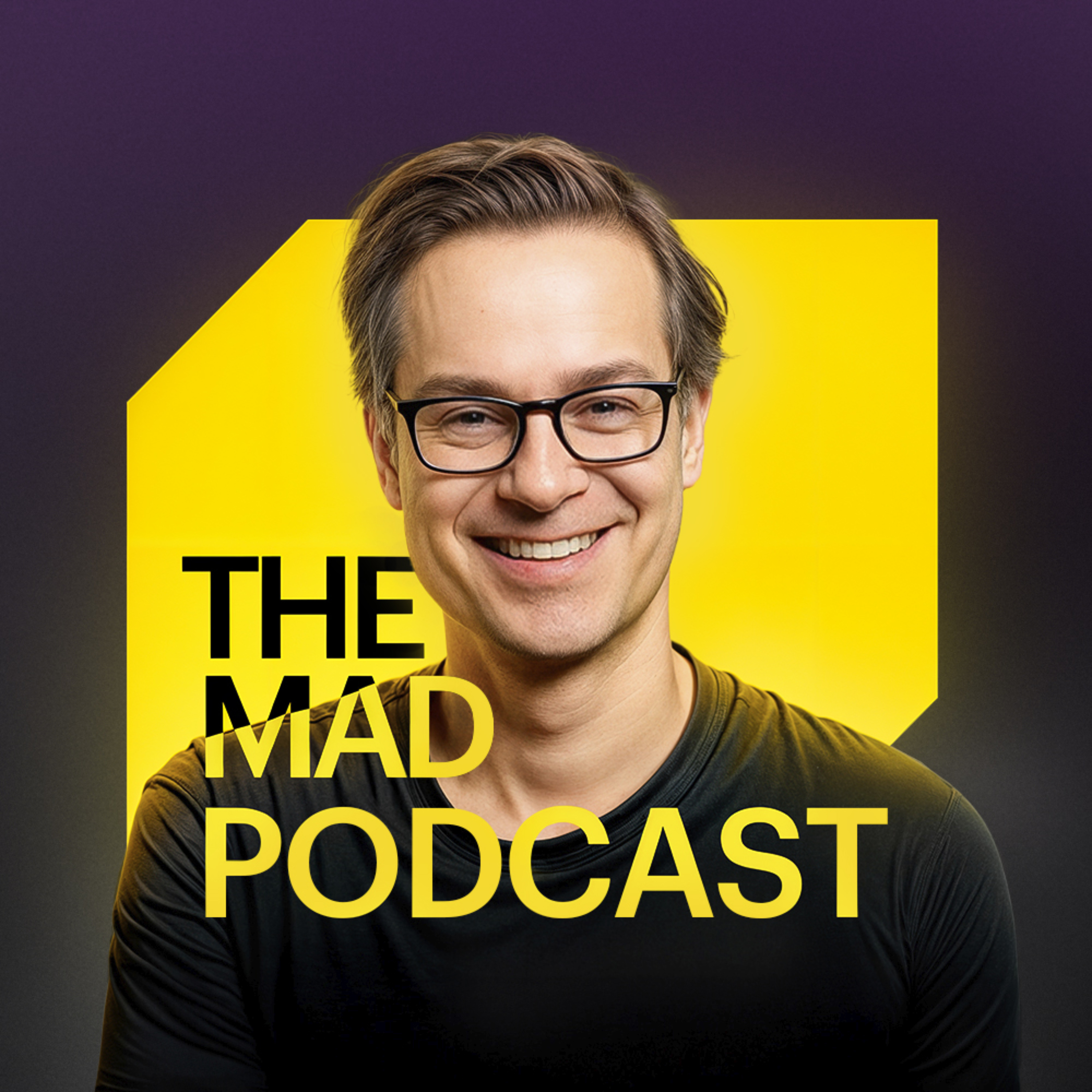
The MAD Podcast: How AI Gets Built — with Matt Turck
Who Feeds the GPUs? Inside AI's Hidden $30B Layer | Renen Hallak, VAST Data
Wer in dieser Folge vorkommt
Renen HallakGast
Warum PodAppear „Gast“ sagt
“Who Feeds the GPUs? Inside AI's Hidden $30B Layer | Renen Hallak, VAST Data”Matt TurckHost

Elon MuskErwähnt
Warum PodAppear „Erwähnt“ sagt: Name im Folgentext gefunden. Nicht von der KI geprüft.
“Plus: the demand signal that scares even him (a customer went from 500 petabytes to 2 exabytes), circular financing, which neoclouds survive, sovereign AI, working with NVIDIA and Elon Musk's xAI — and why the next 10 years will bring mo…”Kapitel
Zeitmarken aus den Shownotes. Tippe auf eine, um dort weiterzuhören. Werbung, die der Anbieter bei jedem Abruf einfügt, kann diese Zeiten um ein, zwei Minuten verschieben.
Beschreibung der Folge
Everyone talks about GPUs. Almost nobody talks about the layer that feeds them. Renen Hallak is the founder & CEO of VAST Data — the $30 billion company powering xAI and some of the world's biggest AI clouds — and he sits in the hidden layer of the AI stack.
In this episode, we cover what an AI factory actually is, why every company will eventually own its own AI, the architecture bet behind VAST (DASE, explained simply), KV caches and agent memory, and DataEnclave — VAST's brand-new confidential AI announcement with NVIDIA that lets leading models run on the world's most sensitive data.
Plus: the demand signal that scares even him (a customer went from 500 petabytes to 2 exabytes), circular financing, which neoclouds survive, sovereign AI, working with NVIDIA and Elon Musk's xAI — and why the next 10 years will bring more change than the last 1,000.
(00:00) Intro
Ganze Beschreibung zeigen
(00:51) The hidden software layer in NVIDIA's AI stack
(02:28) What actually makes an "AI factory"?
(05:13) Should Walmart and Goldman Sachs build their own AI?
(06:20) "We infer during the day, fine-tune at night"
(13:16) The announcement: models become a resource to manage
(15:32) From P vs. NP to founding VAST Data
(17:32) OpenAI, Navier–Stokes and 10,000 collaborating agents
(20:25) The pre-transformer insight behind VAST
(21:55) DASE: VAST's "shared everything" architecture explained
(25:18) "Storage was where startups go to die"
(27:39) Trillions of vectors: why old databases break
(29:01) Are S3, Snowflake and Databricks ready for AI?
(31:29) Data gravity, vendor lock-in and zero churn
(33:13) Training vs. inference: why the infrastructure changes
(34:46) Model routing, KV caches, RAG and agent memory
(36:59) Identity, permissions and security for AI agents
(40:27) Can multi-agent systems unlock scientific discovery?
(41:55) DataEnclave: how confidential AI protects data and weights
(45:16) Who should be AI's trust layer?
(46:37) "Sometimes it scares me": 500 petabytes to 2 exabytes
(50:08) Is circular AI financing creating systemic risk?
(51:32) Why VAST is profitable when AI infra isn't
(53:24) What separates the winning neoclouds?
(55:06) "Their lunch is being eaten": why hyperscalers lag
(59:10) Where will the trillions accrue across the AI stack?
(1:01:18) NVIDIA: "There's no legal document between us"
(1:03:59) What VAST learned from xAI and Elon Musk
(1:05:36) "Bad things loudly and often": building at AI speed
(1:06:53) More change in 10 years than the previous 1,000?
(1:08:39) VAST's endgame: all the data in the world