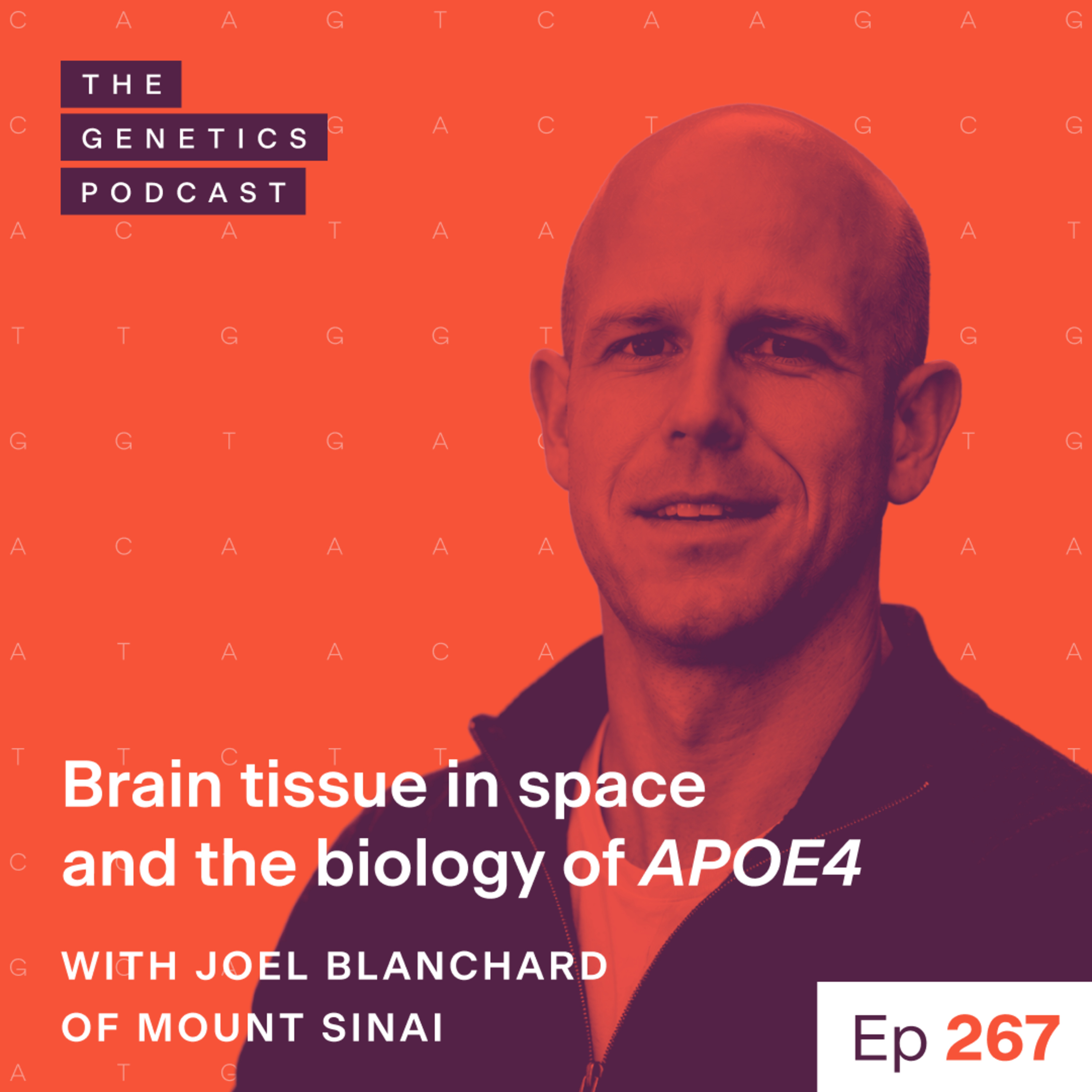
EP 267: Brain tissue in space and the biology of APOE4 with Joel Blanchard of Mount Sinai
Who is on this episode
Joel BlanchardGuest
Why PodAppear says guest
“EP 267: Brain tissue in space and the biology of APOE4 with Joel Blanchard of Mount Sinai”Chapters
Time stamps from the show notes. Tap one to play from there. Ads that the host adds to each listen can move these times by a minute or two.
Episode notes
This week on The Genetics Podcast, Patrick is joined by Dr. Joel Blanchard, Associate Professor of Neuroscience at the Icahn School of Medicine at Mount Sinai. They discuss sending MiBrains to the International Space Station, how the MiBrain system is built and used to model Alzheimer's disease, how spaceflight stress may affect APOE3 and APOE4 tissue, whether lab-grown tissue can capture aging, and early-life myelin differences in APOE4 carriers.
Show Notes
0:00 Intro to The Genetics Podcast
00:59 Welcome to Joel
01:45 How the MiBrains developed in Joel's lab ended up in space and the aims of the NASA research
06:01 How MiBrains are built from stem cells and benchmarked against real human biology
09:14 Using MiBrains to functionally validate genetic data, including APOE4 and vascular degeneration
Show all notes
12:58 Whether APOE4 carriers have a distinct form of Alzheimer's or APOE4 is a prototype for lipid dysregulation more broadly
15:11 Modeling single variants and whole patient genetic backgrounds
17:03 Hypotheses for how spaceflight stress affects APOE3 and APOE4 MiBrains
19:38 Current Alzheimer's therapies and competing approaches for APOE4
22:26 Other brain diseases MiBrains can model and the limits of the system
25:12 Modeling aging and long-term disease progression in MiBrains
29:12 Using MiBrains for neurotoxicity testing across the drug development process
30:52 Whether a diverse MiBrain bank could represent the population and why oligodendrocytes are hard to make
34:35 Joel's family history of Alzheimer's and subsequent path into stem cell research
37:52 How AI is changing the work and training of PhD students and postdocs
39:52 Early-life myelin differences in APOE4 carriers and what they mean for treating Alzheimer's
41:34 Closing remarks